Author: john@qwf.org

  • Slow Writing by Chris Galvin

    Like bread dough, my writing seems to require time to rise in a warm, draft-free place. The long proofing period is necessary; turn up the heat to hurry the rising, or don’t leave it long enough, and I get a stodgy, dense loaf.

    Under ideal conditions – solitude, free time and excitement about what I’m writing – the words pour forth quickly. It’s exhilarating. But normally, I write when I can. I like to have control over an essay or story as it forms, and I edit as I write, considering each sentence as I put it to paper – does it say what I want it to say, or does it imply something else? I read what I’ve written aloud – does it have the right rhythm?Is my translation of Vietnamese dialogue as true to the original as possible? Does it sound natural?

    The second proofing of the dough is as important as the first. Even when the writing happens quickly, I know from experience that it’s best to put it away overnight before taking another look at it, and then to put it aside again for at least a few days, or better yet, weeks. Sometimes it takes years. My essay Floating Life began as a food and travel vignette about visiting a family in the Mekong Delta. It worked, but it was bland. The recipe was missing something.

    Chris bakes muffins too

    I kept looking for directions in which the essay might develop. I didn’t find the core of the piece, the defining ingredient, until a few years later when a friend read it and asked me how flooding in the delta affected the farmers. Coincidentally, I was reading about how the delta is one of the areas most adversely affected by sea level change in the world. I realized that this was what I wanted to write about. The words flowed and the essay doubled in length. The anthology that was to publish it, Foreign and Far Away, limited submissions to 1,200 words, but time had given me the distance to recognize that some of my words added nothing and stole space from important details. Rereading my essay with fresh eyes, I was able to see what needed to be added or culled.

    Sometimes, the needed words, the mots justes, can be stubborn. They elude me; they won’t be forced out. I need almost as much time away from a piece, not writing it, as I need for writing it. As with a crossword puzzle, I put it away for a while, think of something entirely different, walk by the lake or try out a new recipe, and suddenly, the words come to mind.

    When I’m struggling with a piece, wondering if it will ever be ready, I remind myself that the long proofing time that frustrates me so much is often just what my essays need to rise properly, to develop their best texture and to emerge from the oven tempting and toothsome.
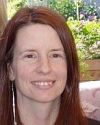

    Chris Galvin divides her time between Quebec and Việt Nam. She writes mostly about food, travel and nature, and sometimes pens short fiction. Her writing and photography have appeared in various anthologies and literary journals, including DescantPRISM InternationalAsian ChaThe Winnipeg Review, and others. She has written in Vietnamese and English for several Vietnamese publications. Chris is currently working on a collection of essays about living in Việt Nam.

  • Writing Tragedy by Jack Todd

    Writing Tragedy by Jack Todd

    In any life, there are events that shake us to the core. Some occur when we are very young, and they remain the reach of memory. Others persist in detail so heightened that it verges on the surreal, as if painted onto our retinas by a Salvador Dalí employing a tiny brush.

    When I was eighteen months old, I was trampled by a boar hog with tusks. He ripped my head open, left a deep dent in my skull and nearly took out my left eye. Had my father not been able to kick the five-hundred pound beast away just in time, he would have eaten me for breakfast.

    I have no recollection of the event whatsoever, except what I was told by my parents, and the occasional nightmare, in which hogs are rooting around in my bed.

    More than forty years later, I stood in the season’s first snowfall on the slopes of Mount Royal, witness to the surreal aftermath of the massacre at the École Polytechnique. As city columnist for The Gazette and one of the first journalists to arrive on the scene, it was my job to write something coherent about an event so overwhelming that even then, I understood that there was a truth about it that would lie forever beyond language.

    Those two incidents represent the poles of my writing life. One is not recalled at all, the other remembered in hallucinatory detail. One is intensely private, the other entirely public. The only thing the private near-tragedy and the public tragedy have in common is that I have found them both extraordinarily difficult to write.

    In one form or another, I have attempted to get that boar attack into satisfactory prose for decades; most recently, it appears as a chapter in a new novel called Rose & Poe. It was a pivotal event in my family because my mother never forgave my father for letting me get into that corral. She was laid up with a broken leg and he was supposed to be watching me, but he was distracted by a horse he was working, and my near-fatal injury became the focal point for her intense hostility toward the feckless man she married.


    “… it was my job to write something coherent about an event so overwhelming that even then, I understood that there was a truth about it that would lie forever beyond language.”


    This is, or should be, the stuff of fiction. On the other hand, the difficulty with my endless attempts to write the story of the Polytechnique massacre is that the tragedy is so unequivocally real. Above all, every time I try to write it, there is a sense of duty to the fourteen women who were slain that day, a need to live up to their memory – and a perpetual sense of failure in meeting that task, which carried through to my recently completed 25th anniversary piece for The Gazette.

    The writer’s role in these public tragedies is particularly important in our age of disposable grief. As public tragedies are endlessly invoked, they lose their power to shock and, eventually, their ability to arouse any genuine emotional response whatsoever. Think of the crumbling towers of the World Trade Center, and the gap between our reaction today and during those first horrible hours on September 11, 2001 when we watched it unfold on our television screens.

    As an event is trotted out again and again on television, accompanied by the sententious tones of the talking heads who tell us how to feel – and when we are expected to stop feeling, meaning as soon as the next tragic event crowds itself into the news cycle – the repetition drains it of its emotional charge. The result is a pro forma response, accompanied by the public expectation that we behave in a certain manner: buy a poppy, express again the shock, horror and outrage, take part in public displays of grief that have been hijacked as photo ops by politicians – and move on.

    Given sufficient talent, persistence and compassion, a writer ought to be able to get behind all that, or, at least, to work at a tangent to the prevailing winds in order to tap into an authentic well of emotion and to provide new insight

    “The writer’s role in these public tragedies is particularly important in our age of disposable grief.”

    That is easier said than done. We have many potential responses to catastrophic events. Silence, even for writers, is one. There is something noble about remaining silent in the face of the most deplorable events – except that when you are a professional writer, the only way to avoid writing about them entirely is to walk away from your career. If you choose to write you will have to accept that you will always fall short, that you will come up against the boundaries of talent and perception, that you will always feel some more profound truth lies just beyond your grasp.

    Our aspirations, the stories we imagine that we will write, are always greater than the result. When the story we are trying to get at is not one of great import, we can shrug and move on. After all, even the most deceptively simple narratives are fraught with pitfalls and opportunities to founder. When the occasion is one of those iconic moments that shape our age, especially when the core of the experience is profoundly tragic, the inadequacy of mere words is inevitably more painful to a writer struggling to live up to the demands of the craft.

    Ultimately, to struggle and fail when the stakes are higher imposes a greater burden – but it is one we have to accept if we are to write at all. And with each new failure, you tell yourself the same thing:

    Next time, I’ll get it right.


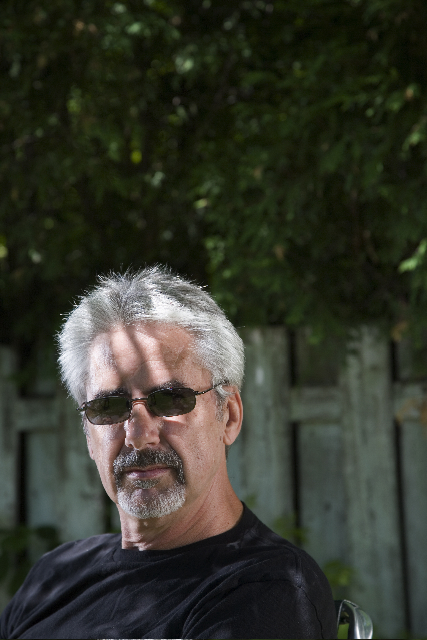
    Jack Todd is a native Nebraskan whose flight to Montreal during the Vietnam War is the subject of his QWF prize-winning memoir, The Taste of Metal. Todd has been a columnist for The Gazette for the past twenty-five years and has also published three novels.


  • Writing Post-Partum by Darrah Teitel

    I have this memory that I can’t shake. It is from a time of rebellion. I was in university, a baby feminist, aspiring playwright and general know-it-all. I was listening to Tori Amos’s latest album, Scarlet’s Walk, written post-partum. It stank, I declared to my roommate. Tori had lost her edge. She was writing about domestic themes, instead of masturbation and hating God. I began cultivating a theory: babies killed the cool in female artists.

    A few years later, I was in Montreal studying playwriting at The National Theatre School and Maureen Labonté was giving a class on this Canadian playwright none of us had ever heard of, Gwen Pharis Ringwood. Ringwood had written the award-winning Still Stands the House before getting married in 1939 and having four children. Although she continued to write, her main commitment, until the 1970s, was her family. A mother herself, Maureen raised her eyebrows at me. She knew it would plague me. The next few plays I wrote were explorations of why maternity and feminism were incompatible. I wrote one play about the contempt that ambitious, public women have for maternal, domestic women. I wrote another about how cool and sexually experimental Mary Shelley was before she accidentally had babies. And then, because I had tempted fate, I fell pregnant myself.

    And then, because I had tempted fate, I fell pregnant myself.

    What I knew of parenthood was that it is exhausting; I’d be harried with responsibilities but also full of joy. Though I wished this joy for myself and ultimately chose it, a fear began to grow alongside my fetus. I had learned that in order to write, a girl needs time, money and a room of her own. But I work for the federal Status of Women Critic, and I know the statistics. They show that the gender wage gap grows exponentially as soon as women become parents.

    Even if I tried to ignore the socio-economic barriers, I couldn’t help but notice the interpersonal ones. Many of my childless friends stopped inviting me to hang out, just assuming I was never doing drugs or having hot sex again. The fact that these assumptions were largely correct for the time being didn’t make them less upsetting. I found community elsewhere, which is to say online. One third of the blogosphere is composed of mommy blogs. Many mommy bloggers are really good writers who are totally obsessed with the experience of motherhood. They made me feel less lonely and for that I am thankful. I’ll digress to note that there is no daddy blogosphere.

    When I became a parent, I discovered that there is a fourth thing a girl needs in order to write. She needs something to write about. The greatest threat to my writing career was actually myself, or loss thereof. My plays usually discuss liberated feminine bodies, and they make my parents blush from their seats in the audience. Since having my son, I can’t even watch upsetting scenes from Game of Thrones without covering my eyes. I am not who I used to be.

    The greatest threat to my writing career was actually myself, or loss thereof.

    It’s hard for me to admit that I’ve changed. I’m not sure that I’m okay with it. But now, for the first time in two years, I have managed to get the time, money and space to write. I have a residency at a supportive theatre company, and my wonderful boss is willing to give me some time off to write. These opportunities are essential to writers like me, and are also so infrequent that I feel like the luckiest girl in the world. That’s three out of four. As for number four, it’s coming. I find myself faking it a little, but starting to feel glimpses of the real thing. Like learning to have an orgasm with a new partner, I must familiarize myself with a new body and for the first time, the new body is my own.

    I have come to realize that there are women with small children working, writing. When I was at rehearsals for my play, The Apology, I had a nursing five-week-old in a sling. Joan MacLeod came up to me and welcomed me to the club. On Mother’s Day she sent me a section of Kim Collier’s Siminovitch Prize acceptance speech from 2010: “In a lot of ways I felt like a pioneer – creating ways for these two huge commitments to live together. And I believe one of the great gifts Jon and I gave to our theatre community was an example that it was possible, that family can be the centre of your life while your theatre work is too. To all women director/creators with children: bravo, be brave and break the mould – carry them in the hall, breastfeed between the seats, go on tour together, whisper about process and actors and what worked and what didn’t. Include your kids in your life, let them learn from your passion.”

    And so this is where I am at: I have vowed not to confuse first words or breastfeeding with interesting material for plays, and this article is the closest I plan to come to mommy blogging myself. But I’m writing through my fears. And sometimes, I even write about the kid.


    Darrah Teitel is a playright and graduate of the University of Toronto and the National Theatre School of Canada’s Playwriting program. Her plays have been produced across Canada and her journalism, fiction and poetry have appeared in various periodicals and journals throughout the country. Darrah’s play Corpus is the winner of the Calgary Peace Play Prize, the In The Beginning Playwriting Award and the 2011 Canadian Jewish Playwriting Award. Her play The Apology was nominated for the Dora Mavor Moore Award and the Betty Mitchell Award for best new play. The Apology won the Calgary FFWD Audience Choice Award for 2013. She was a member of the Banff Playwrights Colony in 2007, 2011 and 2012, and was a 2010 MacDowell Colony Fellow. Darrah is currently the playwright-in-residence for the Great Canadian Theatre Company and is working for the NDP Status of Women Critic. Corpus will be produced by Teesri Duniya Theatre in November 2014 in Montreal.

  • Why I Teach Brand-New CanLit by Natalee Caple


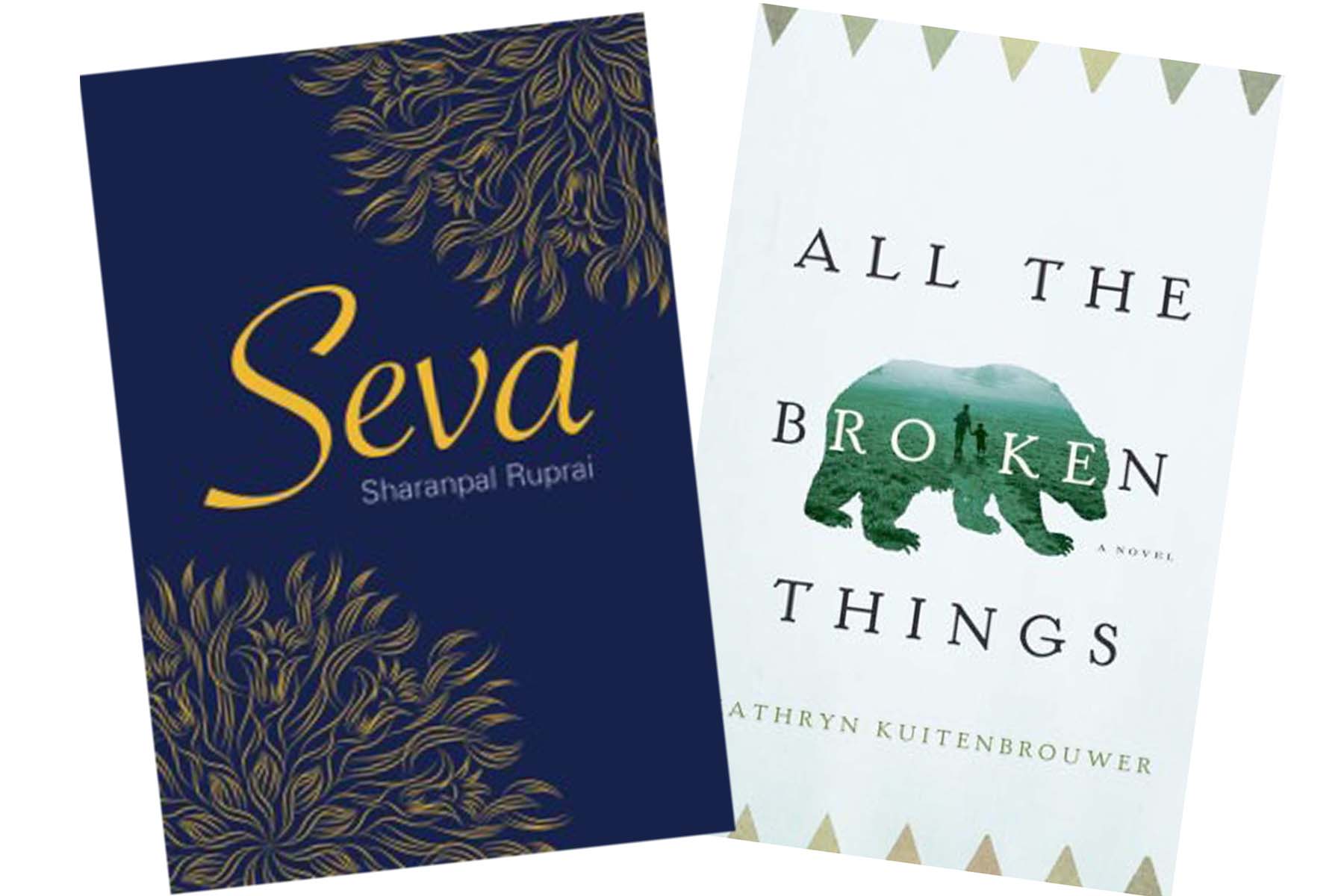
    This year, Natalee will teach Sharanpal Ruprai’s “Seva” and Kathryn Kuitenbrouwer’s “All The Broken Things.”

    I have my dream job. I write, review and teach Canadian literature and creative writing. When I think about why I am so happy teaching new CanLit I recall when, a few years back, my friend, writer Andrew Pyper, asked me in an interview what had changed for me as I evolved from an aspiring writer to an established author.

    The truth is everything has changed. In the beginning my desire to write was about me. It was about trying to see who I could be, what I might be good at and where I might find a community to belong to. Now, being a writer, being a parent and being a professor are all part of participating fully in the culture that sustains me. I feel that there is no better way to demonstrate how varied and valuable I think Canadian culture is than to devote my life to producing, promoting and teaching CanLit.

    Now, being a writer, being a parent and being a professor are all part of participating fully in the culture that sustains me.

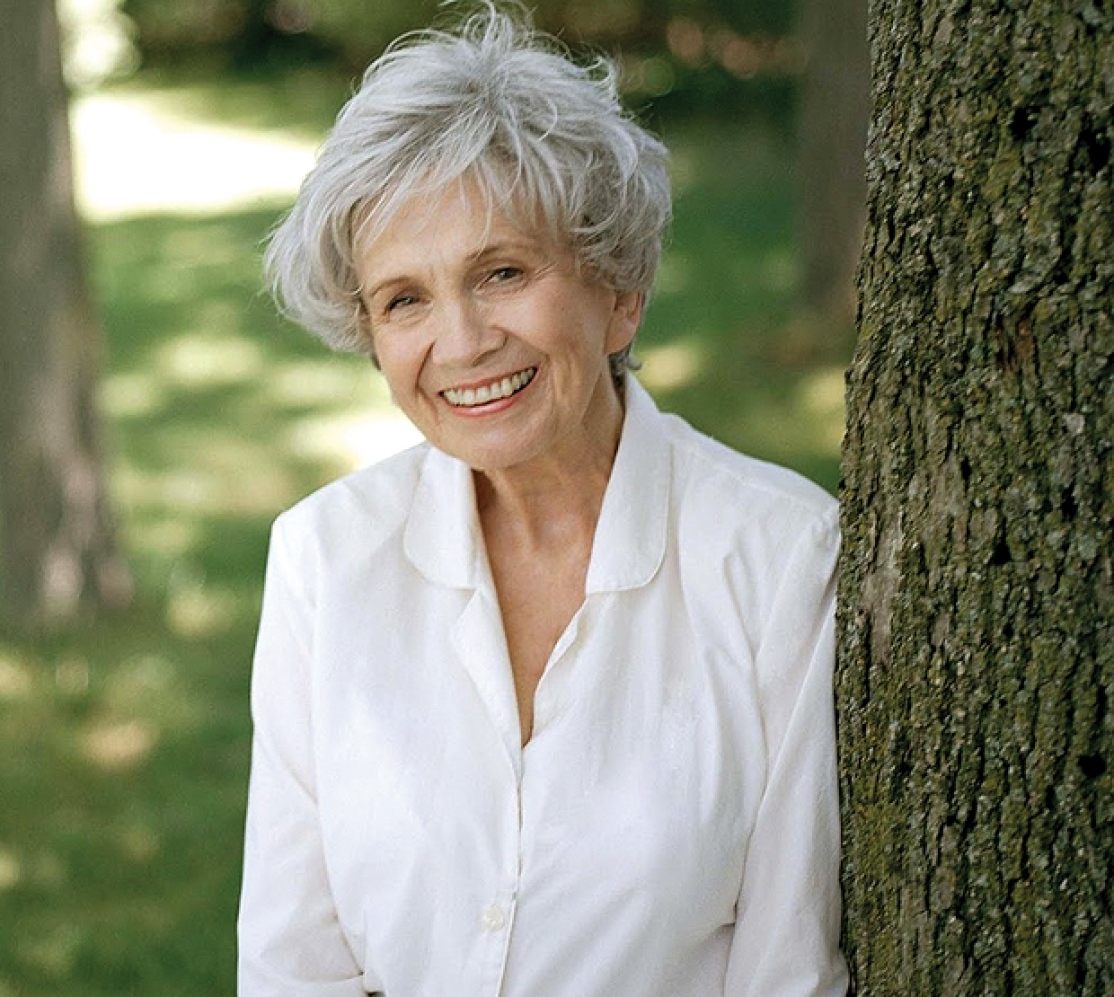
    Because it is so important to me that students see the books they read as part of something familiar and real, something that they are already impacting and being impacted by, I often use brand new books. I also teach some of the canon: Atwood, Ondaatje, Munro. After all, these are writers who have helped to raise awareness of Canada as a significant site for cultural production (teaching Alice Munro the week she won the Nobel Prize was incredibly moving). But I also teach books that are literally printed days before classes begin.

    …teaching Alice Munro the week she won the Nobel Prize was incredibly moving.

    Designing my syllabus a few weeks ago, I realized that there are only two major drawbacks to this style of teaching. The first is that I am constantly redesigning my courses, which means new lectures, new assignments and research on what is coming out. The second is that I feel a lot of anxiety about the books arriving on time. But in spite of the extra work and anxiety, there are so many benefits to teaching contemporary literature within the context of the now. Here is a list of some of them.

    • The books are never out of print.
    • Pre-ordering books helps to let the publisher and the bookstore know that the titles are desired.
    • The material is often quite relevant to students’ daily lives. This allows students to identify better with the settings, characters and scenarios.
    • Authors are accessible, alive and often available to Skype into the classroom so that students can ask them questions directly.
    • Student presentations are much better. Instead of Googling a biography and retyping a handful of academic quotes they have to read the whole book (they do complain about this).
    • Student essays are much better. Their close reading skills really improve because that is all they have to rely on.
    • Student confidence in their own readings improves. Because they don’t have to compete with the scholarly opinions of experts they learn that it is okay to rely on and develop faith in their own readings. This causes them to engage more deeply and so…
    • Students get better marks. When they see this they start to appreciate the work they did.
    • Students become more willing to take risks in thinking.
    • Plagiarism is greatly reduced. In fact, because a brand new book is so unlikely to have essays on it in circulation, to plagiarize really means paying someone to create an essay. Far fewer students are willing to take this extra step as it requires more planning and seems somehow more actively dishonest.
    • Canadian culture is reinforced as real and ongoing, lively, diverse and present.
    • Book sales show up in a timely fashion for authors. Titles get circulating at a time when it is most beneficial. We all know that numbers have become incredibly important to the sale of future books and that there is some self-fulfilling prophesy there.
    • I get to stay engaged with my peers in the writing community. I am giving them my support and staying on top of my field.
    • I get to read all the books I wanted to anyway and call it work! Did I say that it is my dream job?

    For the teachers out there: why do you – or don’t you – teach new CanLit?


    Natalee Caple’s latest novel, In Calamity’s Wake, was published by HarperCollins in Canada and by Bloomsbury in the US. She is a professor of English, teaching Canadian literature and Creative Writing at Brock University. www.nataleecaple.com

  • Writing About Ukraine by Alexandra Hawryluk

    Kyiv_at_night

    Seeing the images on my television screen, I froze in shock and anguish. People running for cover behind piles of rubber tires, a man being struck down by sniper fire. This was Maidan – Independence Square in the centre of Kiev, a place where I had talked to the book vendors, met friends, watched a busker do a routine with his two little monkeys. Those were the paving stones my feet had crossed and re-crossed and now those stones were stained with blood. In that one moment, as I watched the scene unfold from my living room couch, I understood something of how the people who had entrusted their stories to me may have felt as eyewitnesses to the destruction of their homeland under Soviet rule.

    As the Maidan revolution in Ukraine turned into an international story, I developed an almost obsessive need to know what was happening there hour by hour. It took a good dose of fatigue and a beautifully reasoned e-mail from a friend in Kiev to make me realize that it would be more useful to finish writing about my 1998 trip to Ukraine than to trade second-hand opinions about events in which I played no part. Weeks had gone by without my adding a single new page to my book.

    To take my mind back into the 1990s, the heady time of Ukraine’s newly won independence, I listened again to the interviews I’d done, re-read passages in my favourite reference books and immersed myself in Ukrainian music and contemporary literature. I remembered the impassioned, witty conversations in Lviv’s coffee houses with writers, publishers, students and community leaders. We’d talked about the function of opposition in a democracy, the ethics of responsible journalism, the role of education and religion in building a new civil society. Students, once they found out I was Canadian, wanted to know how we had achieved a peaceful pluralistic society. If I mentioned multiculturalism and inter-faith dialogue they inevitably wanted to know which group was winning. A discussion about Western wages always led to an explanation of income tax, medical insurance, mortgages, the cost of university education and personal accountability – concepts entirely foreign to the Soviet world view and social order. Political pundits at the table said that it would be more than twenty years before the prevailing mindset could change.

    Sometimes, I lost the thread of a story because people alternated freely between place names from the Austro-Hungarian Empire, the Polish Commonwealth, the Russian Empire and the USSR. (In the 18th century, Ukraine was partitioned between three political entities before being annexed by the Soviet Union in the 20th century.)

    Eventually the Ukrainians told me their side of history: World War II and the successive advance and retreat of Nazi and Soviet armies across their country, Nazi and Soviet labour camps, an atmosphere of relentless suspicion and fear. The elderly would talk about those who perished in Stalin’s deliberately planned famine of 1932-33. Many regretted that Communist war criminals had never been brought to justice. Writers complained that the only change undertaken by the newly elected deputies was to replace the hammer and sickle on their lapel pins with a trident.

    As these tales of loss, death, sorrow and anxiety poured out, my writer’s objectivity often abandoned me, and I silently grieved with the storyteller. All I understood then was that after seventy years of state-enforced silence, there was a great need to speak and to be heard. Now it is the young Ukrainians born and educated after the fall of the USSR who are speaking out. And the world is listening.


    Alexandra HawrylukAlexandra Hawryluk, an editor and translator, was a correspondent for Radio Canada International. At present, she’s writing a memoir about her time in Ukraine during the 1990s.

    Photo of Kiev, top: Anton Molodtsov/Tony Wan Kenobi [CC-BY-SA-2.0], via Wikimedia Commons

  • The Creative Power of Memory by Shelagh Plunkett

    A_picture_is_worth_a_thousand_words

    “– but there’s one great advantage in it, that one’s memory works both ways.” – the White Queen, Through the Looking-Glass

    I’m a writer of literary non-fiction and my first book is a memoir. Seems likely that memory would be important to my work. It is. But it’s of equal value to writers of all stripes – poets, or those who write short and long fiction and any of the myriad forms non-fiction takes. Memory is one of the most powerful tools any artist or creative person has in her arsenal. As in physics, so in literature: one cannot create something from nothing. Creativity is the combining of bits and pieces of memory in a unique way. The way you’ve made that character walk is because, whether you consciously remember it or not, you once saw somebody or something move that way.

    Since writing my memoir, I’ve been asked frequently how I was able to remember in such detail events that took place more than thirty years ago. It’s caused me to investigate the nature of memory: how we retain detail, how we access those details and how we can enhance our ability to remember events sharply and fully.

    On one level, there are tricks that help. To retrieve the details of a life in the tropics, I ate Guyanese food, listened to Indonesian angklung music, played the mid-1970s hits of the Mighty Sparrow. My father had shot hundreds of slides and many hours of Super 8 film when we lived overseas. I sat in a dark, hot and muggy room and played those over and over and over again. I found obscure websites where the recorded songs of birds all over the world could be played. I used Google Earth to find the homes I’d lived in and to retrace the path I took from home to school.

    But those tricks will only get you so far. They’ll help place you in a context and they will start triggering your memory, but to go further, to make the emotional connection that is needed for the best work, you’ll have to do something that is counterintuitive. You’ll have to forget to remember.

    The funny thing is, this forgetting to remember is also what we need to do when we are encountering or experiencing something that we hope to set firmly in our memory bank for future recall.

    How do you forget in order to remember? It’s a bit like what a dancer, a painter, a musician must achieve to move from good to great. You have to become so utterly familiar with the steps of the dance, with the details of the memory, that you can move into it without being aware that you are doing so. Forget what you are trying to do. Forget that you are remembering. Mesmerize yourself with the particulars of your memory and then stop paying attention to them. Wander into the blank spaces between, find yourself experiencing rather than consciously remembering events.

    That’s all about recall, but a very similar process takes place when we work hard to encode and store memory. It is much the same as what experts tell us to do in order to enhance memory, to keep a memory intact with all its unique and valuable details for future use in that story you’re starting to write: Pay attention. Focus narrowly on the details. Shut off the nitter-natter that is so often going on in all our heads at all times and just listen, smell, see the particulars of what is going on around you. If you can do that – and don’t give up; it’s hard but manageable – you will be staggered by the results.

    You’ll also have upped your store of that which makes your writing good: concrete detail.


    Shelagh Plunkett won the CBC Literary Prize for creative non-fiction in 2007. Her winning essay grew into a memoir, The Water Here is Never Blue, published by Penguin in 2013 and shortlisted for both the Mavis Gallant Prize for Non-Fiction and the Concordia University First Book Prize. Visit her blog at http://shelaghplunkett.wordpress.com

    Photo credits: Niamh Malcolm (headshot); “A picture is worth a thousand words” by HikingArtist (top). Licensed under Creative Commons Attribution-Share Alike 3.0 via Wikimedia Commons.

  • Liberating the Book by Bryan Demchinsky

    Get ready for it – the next big thing in the digital revolution is nearly upon us. It’s called social reading and it will change the way books are produced and consumed.

    So says digital publishing guru Bob Stein, someone with the cred to know what he’s talking about. Stein played a role in creating the e-book, and he is the founder of The Institute for the Future of the Book, a think tank described on the website ifbookthen.com as “exploring and influencing the evolution of new forms of intellectual expression.”

    An American based in New York, Stein was at the Atwater Library recently talking to a handful of publishers, editors and writers about his vision. Essentially, SocialBook, as he calls it, will be a website that allows publishers, readers and writers to upload books, new and old, so they can be read and discussed interactively. The book will appear on one side of the screen with a commentary panel on the other side. The uploads will be subject to copyright restrictions and the site will be curated in order to maintain quality. You might think of it as a giant book club, with potential for all kinds of adjunct activities. For example, Stein sees the possibility of a dating component – what better way to meet a like-minded companion than by sharing a book?

    Some who listened to Stein’s pitch were skeptical. Aren’t there already enough time-sucks on the internet? Isn’t reading a desirably solitary activity? And where’s the money in this? The guru seemed mildly irritated by his listeners’ lack of vision, especially the money part. It is his job, he said more or less, to throw off sparks and let others figure out how to stoke the fire. Fair enough. If you had heard about Twitter in its development stage you might rightly have expressed doubts about connecting to the world in 140-character bursts. And it still doesn’t make money.

    There is a bigger issue at play. I call it the liberation of the book. Digital technology has unshackled literature from the printed page where it has mainly reposed since the Chinese began putting it there in the 11th century. We lament the decline of books, bookstores and libraries as we have known them. But put the requiem aside for a moment to celebrate what has been gained – choice.

    Personally, I don’t care for e-readers, so I don’t read e-books. But I’ve taken to audio books downloaded from the internet in a big way. They are much more portable than books on paper – or e-readers. I listen to them in the gym, on long car trips, while out for a walk or even just running errands. The performance of the reader can enhance an appreciation of the text – think of hearing Dickens or Ian Rankin with each character endowed with an appropriate accent.

    I still buy books on paper, but hardly ever from mega bookstores like Chapters/Indigo. I buy online, but I don’t care for Amazon, the Walmart of digital technology. I prefer to buy from sites like AbeBooks, which aggregates booksellers from across the English-speaking world and sells their books, used and often new. (And I still love buying and trading books at The Word.)

    You get the picture. You can tailor your reading habits according to your needs and desires. The same holds true these days for music and video (let’s not say TV or movies anymore). In this new digital world, not so much is lost – heck, even vinyl has made a comeback and radio is still with us – but much is gained. The proliferation of choice has created a richer environment, even if it hasn’t yet made writers and performers richer.  Not every new thing will survive. But I’m glad Bob Stein is offering me social reading, whether I take to it or not.


    Bryan Demchinsky is a Montreal editor and writer. He is the author or co-author of four books and was formerly a senior editor at the Montreal Gazette.

    Photo credits: Bryan Demchinsky (top); Gabor Szilasi (headshot)

  • Trading Places with Yourself by Sean Michaels

    Trading Places with Yourself by Sean Michaels

    For as long as I can remember I’ve been telling musicians, “I’m a fiction writer.” And for just as many years I’ve been telling other writers, “I’m a music critic.” As a writer, it’s not unusual to cultivate a handful of different identities but it feels strange when these identities begin to reorganize themselves. I know far more people in the music industry than I do in publishing. Yet I aspire to be a novelist, a taleteller, and with the publication of my first novel, Us Conductors, this label automatically and unexpectedly seems privileged above the other.

    Music’s where I come from. Or at least it’s where I accidentally come from. I started reviewing albums while studying English at McGill. Soon I had launched a blog called Said the Gramophone which opened doors at publications like The Believer and The National Post. Throughout it all I was still writing fiction – short stories about whispering objects, magical animals, melancholy gods. But the 22-year-old who idolized Salman Rushdie and F. Scott Fitzgerald was soon covering Montreal loft concerts for magazines that wouldn’t give his fables a second look.

    Ten years later, the music-writing life has become second nature. I know the protocol of set times and guest lists, the cycles of new bands and old bands and labels and tours. I know how to coil a guitar cord. I never learned much about Montreal’s poets or Canada’s independent presses, but I’ve helped at music festivals and battles of the bands.

    Yet I adore fiction. For all my album reviews and band bios, my heart remains faithful to stories. I love the way a novel is a rollicking yarn and also a parade of images. I love the way these convoluted lies can feel so true, can feel truer than the truth. I could spend whole lifetimes in the prose of Michael Ondaatje or Tim O’Brien, where similes move like sunsets on the horizon.

    Us Conductors, in its way, is at the intersection of both these loves: music journalism and fiction. It’s a story, but it’s a story full of music. And Montreal’s vibrant music scene was the ecosystem that fostered the book’s creation. When I consider its artistic influences my mind veers to Arcade Fire’s album Funeral and Wolf Parade’s Apologies for the Queen Mary before the works of any writers.

    The strange thing is now that I’ve published a novel, one identity seems to trump the others. I’m a novelist, before I’m a music journalist. By publishing Us Conductors, I seem to have switched clans. It’s a choice – a proud, deliberate choice! – and I feel lucky to be joining the family of authors. But I’m also still learning the secret passwords of the fiction-writing world, still figuring out the way power flows and the way it doesn’t.

    I’ll admit my relief, last week, when I slipped into the back of Casa del Popolo for a music gig by some friends. I recognized everyone in the room; I knew when to applaud, and how loud. I felt like the old, familiar version of myself. It’s a version that’s nearly worn through, one I’m ready to slough off – almost, in a few moments, just a few moments more, soon.


    Sean Michaels is the author of the novel Us Conductors. His music journalism has appeared in The Guardian, The Globe and Mail, The Believer, Rolling Stone, McSweeney’s and Pitchfork. He is the recipient of two national magazine awards and founded the peculiar music blog Said the Gramophone in 2003.

    Graphic (top) by Crystal Chan.

  • A Tale of Two Meetings by Lori Schubert

    Two hundred and fifty buzzing literati from across Canada – writers, storytellers, translators, booksellers, publishers, and directors of literary organizations – settled in at tables of ten in an underground conference room at the McGill New Residence. Around the perimeter were the impresarios of this unprecedented two-day extravaganza: the team from the Canada Council for the Arts. The ambitious goal of the gathering, dubbed the National Forum on the Literary Arts, was to establish a manageable handful of priorities for addressing the challenges facing the literary ecosystem. This seemed a worthy goal, but it quickly became apparent that the single greatest challenge was getting people to see themselves as members of a group with common interests rather than lobbyists for the segments of the community they represented. At the end of two days, we had a list of what must have been over a hundred “priorities,” so, as one fellow at my table put it, no priorities at all.

    A few weeks later, I headed off to Banff for another two-day conference, the National Summit of Writers’ Associations. This one brought together a more cohesive group, the directors of Canada’s provincial writers’ organizations, the Writers’ Union of Canada and the Writers’ Trust of Canada, who organized the event. The schmoozing was great, as it had been in Montreal. But more than that, we gloried in finding one another. Most of us had been working in silos, with no peers or mentors. Imagine the thrill of finding ourselves among “our peeps” for the first time, with hours and hours for in-depth discussion of what we do and how we do it. Imagine the relief of finally getting answers to those pesky questions we’d carried around for years; the pleasure of providing helpful suggestions to our less experienced colleagues. Every item on the agenda was apt. Every contact made promised concrete mutual benefits.

    And the payoffs have already begun to roll in: since returning to my desk, I’ve sent QWF’s “literary dinners” documentation to my new colleague in Saskatchewan, who is interested in setting up a similar fundraising initiative; I’ve answered an SOS from my New Brunswick counterpart, putting him in touch with a YA literature juror from Montreal when one of the people he’d lined up pulled out at the last minute; we’ve begun to talk about a 2016 national writers’ “super-conference” that would include other groups like the Canadian Society of Children’s Authors, Illustrators and Performers; the League of Canadian Poets; and the Professional Writers Association of Canada. We’ve also set up a calendar to share information about when our writers are traveling to each other’s provinces, a practice I hope will lead to more variety in QWF’s one-day workshop offerings as well as more out-of-town opportunities for our members to lead workshops and promote their new books.

    So what to make of the difference between these two conferences, both admirable in intention, but – to my mind, at least – miles apart in impact? My take-away is this: even in a group of people with similar values, it’s hard to let go of your own point of view and see yourself as a single cell of something larger. In Banff, we didn’t have to sacrifice anything to see anyone else’s point of view because it was our point of view. Each one of us immediately understood the mutual benefit of collaboration and everyone glowed with enthusiasm for building on what we’d started. But most of the time when we work in groups, we need to work hard to find the core of what unites us.

    Only then can we agree on priorities and begin to put them into action.

    In Banff for the National Summit of Writers’ Associations. Lori is in the back row, third from the right.


    A straggler who didn't want to take part in our ice-breaking activities in Banff
    A straggler who didn’t want to take part in our ice-breaking activities in Banff.


    Dawn in Banff.
    Dawn in Banff.


    The Professional Development Centre in Banff, where the delegates stayed and worked.
    The Professional Development Centre in Banff, where the delegates stayed and worked.


    What do you think should be the priorities when addressing the challenges facing the literary ecosystem today?

    Do you think “the literati” aren’t as good in business meetings because they often work alone?

    How can a group of people with different goals work together productively?


    Lori Schubert is the Executive Director of the Quebec Writers’ Federation.

  • I Do Not Write Alone by Gina Roitman

    Some people maintain that writing is a lonely business. In my experience, that’s not necessarily true. When I sit down to write, I am joined by a crowd of internal negative voices: the infernal censor, the cranky critic, and the whiner who keeps reminding me of all the other things I could or should be doing.

    About once a month, however, I escape that crowd when I meet with my writing group to refresh my creative energies. I am not alone in this pursuit. Read the acknowledgements of first-time authors and you’re likely to find shout-outs to the people in their writing groups. For the past ten years, I have been a member of a critique group that meets to break bread, gossip, and review current work. It was with the help of this group that I crafted many of the pieces which appear in my book of nine linked short stories, Tell Me a Story, Tell Me the Truth.

    The original group, which we eventually dubbed MontrealWrites, first met while taking a QWF workshop given by Ami Sands Brodoff. Ami laid down the rules for critiquing that we use to this day. Over the years, we have acknowledged our good fortune at coming together as we did. It was one of those remarkably synchronistic occasions: people of like minds but different talents found themselves, over the course of two months, sitting in a room together for two hours a week.

    When the workshop session ended, eight of us did not want the experience to end. We had found a pleasant camaraderie despite the differences in our ages and styles. Initially, we thought we’d need a fearless leader to guide us but soon realized that we had all the skills and experience we needed. Some of us were good at analyzing the themes while others were meticulous about storylines.

    In our original group, we had mostly short story writers as that was the focus of the workshop we had signed up for. However, as some members moved away or moved on and others came in, many of us explored other genres including children’s stories and picture books, personal essays, travel writing, screenwriting, poetry and, of course, novels.

    Why does our group dynamic work so well? We are all blessed with a general lack of ego and we have ‘grown up’ together as writers. It is the love of the process, I believe, that nurtures our commitment to each other. As a result of reading so much of each other’s work, we have formed a collective memory from which to draw on when discussing any new work.

    Elizabeth Ulin could be our poster child. Her story exemplifies how the influence of the group comes into play. She wrote a short story geared to middle grade children starring a young girl named Mitzi and a host of spiders. The group became so enamored with Mitzi that we suggested Liz might want to expand the short story to book length. In the end, she was accepted by the QWF Mentorship Program and turned Mitzi’s story into a screenplay. Elizabeth has now adapted three of her pieces for presentation at Centaur Theatre.

    In my case, when a publisher indicated interest in my work, I made certain to have the group vet the material I had selected before sending it off. Their input was invaluable in keeping the linked stories relevant and on track.

    The members of MontrealWrites continue to evolve as writers as well as friends. We work well as a team. We organized, publicized and orchestrated two public readings with great success. And even now, through all the exigencies of life – births, weddings, work deadlines and far-flung travel – we find it hard to let go of each other.

    How we have grown together and challenged each other, and what we have accomplished as individuals as well as a group, give the lie to the “lonely-business” theory.


    Gina Roitman is a writer, editor and author of the acclaimed short-story collection Tell Me a Story, Tell Me the Truth, and the co-producer, co-writer and subject of the award-winning documentary My Mother, the Nazi Midwife and Me. www.ginaroitman.com

    Learn more about MontrealWrites by clicking here. MontrealWrites will be celebrating their 10th anniversary with readings from most of the group members at the next QWF membership schmoozer in May 2014. Date TBA soon.

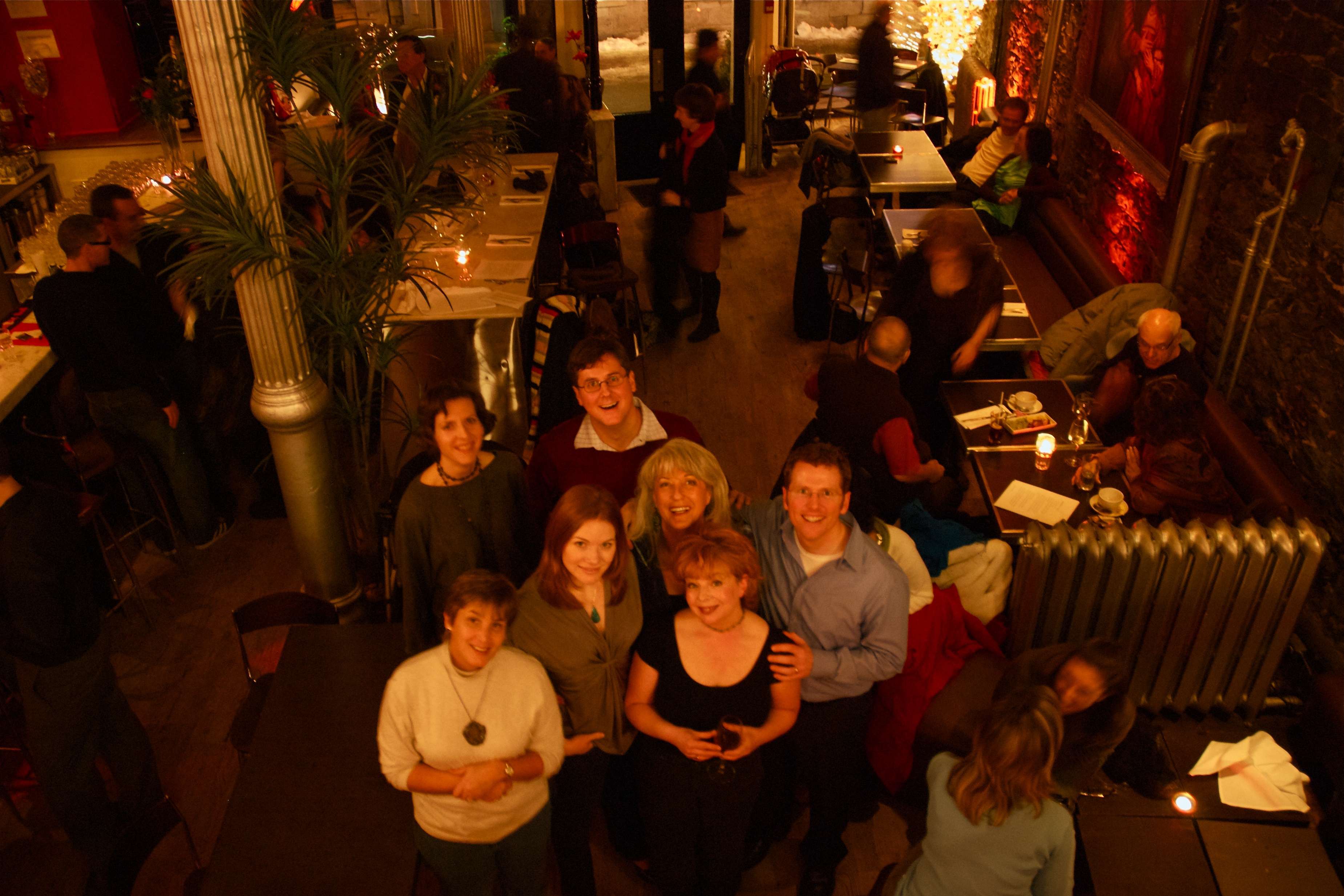
    Pictured from left to right—Front row: Elizabeth Ulin, Sarah Lolley, Gina, Maggie Kathwaroon and Paul Edmond Robichaud; Back row: Jane Affleck and Derek Webster.
    MontrealWrites
    Pictured from left to right – Front row: Elizabeth Ulin, Sarah Lolley, Gina, Maggie Kathwaroon and Paul Edmond Robichaud;
    Back row: Jane Affleck and Derek Webster.

    Do you write alone? Is writing is a lonely business?

    Have you been part of a writing group? Why?

    Not in one yet? Do you want to be?

    QWF would be happy to help bring together people who are eager to start/join a writing group. Please contact Lori at admin@qwf.org if you’re interested.