Author: john@qwf.org

  • Realists of a Larger Reality (Or Why I Read and Write Science Fiction)—By J. DeLeskie

    Realists of a Larger Reality (Or Why I Read and Write Science Fiction)—By J. DeLeskie

    I started reading science fiction young, before realizing it wasn’t suitable material for a girl with aspirations of fitting in with her fourth-grade contemporaries. It was the genre my dad and older brother favoured, and the surfaces of my childhood home were littered with paperbacks with lurid covers: a dinosaur riding an ichthyosaur across the desert (Jack Chalker’s Midnight at the Well of Souls); or a humanoid cat glowering over a worried-looking, two-headed tripod (Larry Niven’s Ringworld). Who could resist opening these books to see what tales lay inside? Not I.

    I soon discovered that the sex scenes in these books were way more interesting than the chaste kissing and petting the kids at Sweet Valley High were up to (albeit in a Dürer’s Rhinoceros sort of way; in retrospect, many of these old-school SF authors did not appear to possess firsthand knowledge of female anatomy or— you know—the actual mechanics of sex). Soon I was hooked, and not just for the salacious content. When the reality of being an introverted, slightly awkward kid attending Catholic school in rural Ontario became unbearable, I’d escape to Arrakis and lose myself in the messianic journey of Maud’Dib, or follow the adventures of a resurrected Richard Burton (the explorer, not the actor) as he searched for the source of the great river on Riverworld.

    By my teens, I contained within me an archive of worlds, characters, concepts, and stories that enriched my life immeasurably. The trade-off—a sense of not quite existing on the same planet as many of my peers—was worth it, even if it didn’t always feel that way. Not only did science fiction provide escape, it was an antidote for religious indoctrination, challenging the conservative, Catholic vision of the world I had been raised to accept as my own. My allegiance was to a universe far bigger and weirder than anything Christian dogma could encompass.  

    At some point in my early twenties, however, I stopped reading science fiction. I lost patience with the flat characters, clunky prose, and outright misogyny that typifies so much of the genre. My reading began to veer toward realism and non-fiction. In retrospect, I think I was trying to accept the world as it was, to put away childish things. I went to law school, got married, had kids, and embarked on a career as a corporate lawyer. I felt I no longer had the luxury of questioning the world as it was; my job as an adult was to succeed according to its metrics.

    Yet gradually, as my kids grew older and began asking the thorny questions that kids ask, I started to wonder if my acceptance of things had gone, perhaps, too far. It took a few years, but I managed to find my way out of the corporate cul de sac. And slowly, I found science fiction again. I rekindled a childhood love for Ursula K. Le Guin and was dazzled by her ability to imagine less destructive ways of organizing society. I read Octavia Butler for the first time and was astonished by her depiction of society collapsing into a racialized dystopia— and then being rebuilt, one community at a time. These authors and others—Marge Piercy, Kim Stanley Robinson, Corey Doctorow, Karel Čapek, etc.—eroded the shell of cynicism I’d formed over my conscience by insisting that there was nothing inevitable about environmental degradation, white supremacy, capitalism or misogyny.

    Thus, when I decided to try my hand at writing, it was science fiction that called to me. I’m now in final revisions of my first novel, Everclear, a coming-of-age story set in the near future in northern Quebec. The act of imagining this future feels laden with responsibility, and I’m attempting to construct this story with great care. I believe firmly that our words bring potential worlds into being.

    In her brilliant and fearless acceptance speech at the 2014 National Book Awards, Ursula K. Le Guin put out a call to “realists of a larger reality” who “see alternatives to how we live now and can see through our fear-stricken society […] to other ways of being, and even imagine some real grounds for hope.” The call is increasingly being answered by Indigenous, Black, and LGBTQIA writers of science fiction such as jaye simpson, Cherie Dimaline, Nnedi Okorafor, and N.K. Jemison— writers who, because of their lived experiences, assemble the pieces of our shared reality in unexpected ways. To me, this is the opposite of escapism; it’s an invitation to see the world with new eyes and answer the moral imperative this vision affords us. This is why I read science fiction, and why I write it: not to escape this world, but to re-imagine it.

    And, of course, for the cringy sex scenes.

    Suggested Reading List

    Love After the End: An Anthology of Two-Spirit & Indigiqueer Speculative Fiction, edited by Joshua Whitehead, 2020

    The Dispossessed: An Ambiguious Utopia, by Ursula K. Le Guin, 1974

    Woman on the Edge of Time, by Marge Piercy, 1976

    The Parable of the Sower, by Octavia Butler, 1993

    Ministry for the Future, by Kim Stanley Robinson, 2020
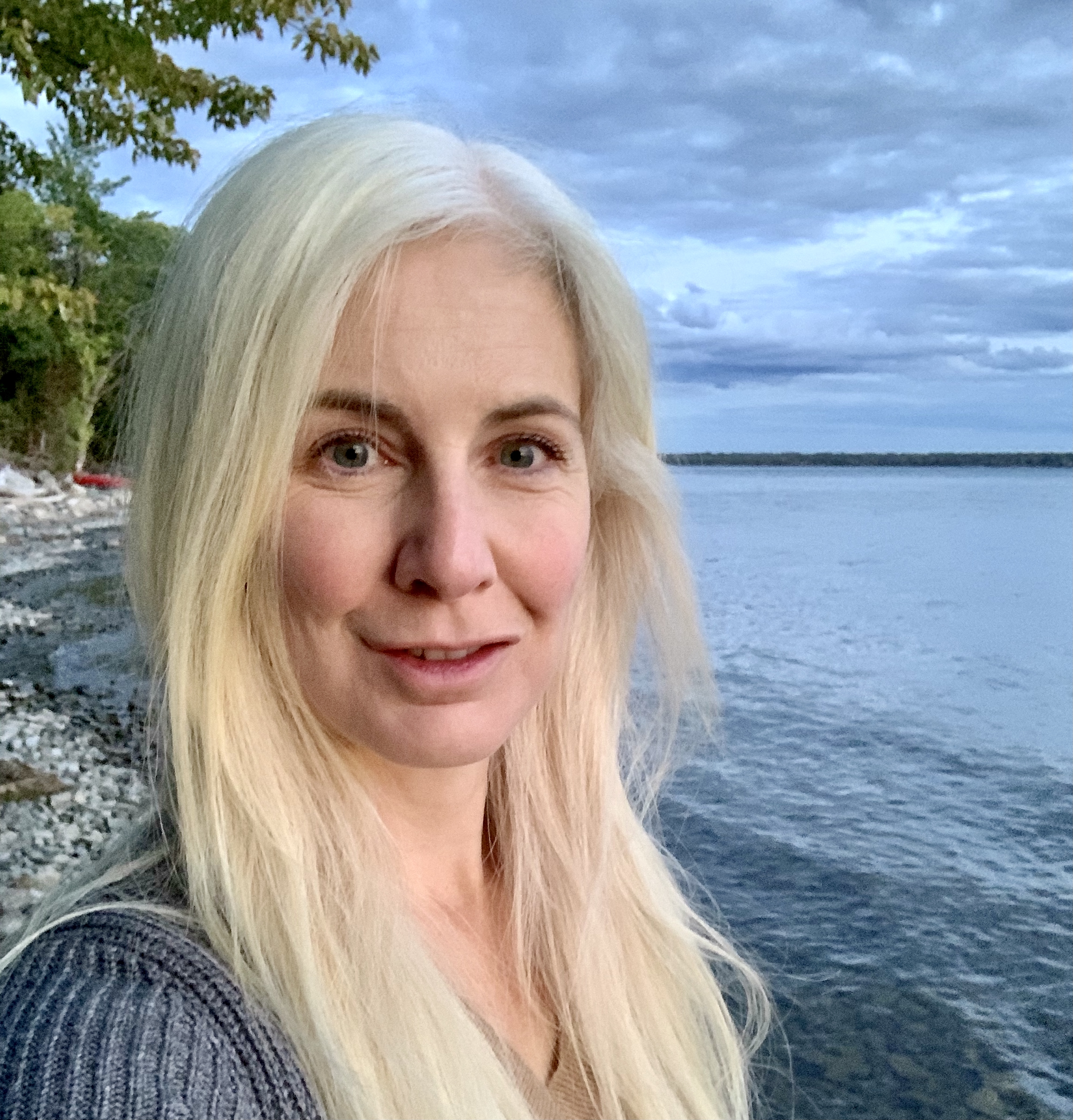

    Jennifer DeLeskie is a former lawyer and new writer, currently revising a draft of her first novel. Her non-fiction piece, “April 2, 2020,” will appear in Chronicling the Days (Guernica Editions), forthcoming in Spring 2021. Jennifer volunteers on the board of the Quebec Writers’ Federation.

    Photo credits: Header banner is licensed under CC BY-SA 2.0; Annabel Simons (headshot)
  • Writers Need Libraries; So Do Our Children—By Deborah Ostrovsky

    Writers Need Libraries; So Do Our Children—By Deborah Ostrovsky

    Not long ago, during the Before Times, I received a small award to pursue a non-fiction project. I planned to dedicate an entire week, maybe two or three, to writing without interruptions.

    The morning I opened my laptop to begin—it was World Book Day, which seems ironic now—I found an email from my daughter’s primary school. They needed a parent to volunteer at the library.

    Our primary school is fortunate to have a library at all. Many schools don’t have libraries. A primary school a few blocks from ours recently turned their library into a supply closet. Over 20 per cent of Laval’s public schools are without libraries, or enough books in classrooms.

    Radio-Canada reports that a quarter of all school boards in Quebec don’t have librarians. Our library is run by volunteers. We shelve. We search for lost books. Like a team of amateur first responders in an emergency room that should be staffed by qualified surgeons, we learn to repair the broken spines of bandes dessinées from video tutorials.

    The email from the school said that a few classes hadn’t been able to borrow books for months. Could you come today, maybe now, to turn on the computer and let the kids finally take some out?

    So I did what any emerging writer starved for time to write would do. I closed my laptop. I put on my coat. I rushed to the school. I stayed all morning and returned in the following weeks until the pandemic shut everything down. 

    Writing, editing, and translating are jobs that can sometimes feel easy to walk away from. This is especially so when other urgent business gets in the way—like helping to provide literacy and library resources for kids when neoliberal education budgets consistently sap them dry.

    It’s overwhelming to try and comprehend all the ways the arts, books, and writing are shaped by government policy. Even more overwhelming is the thought of my own personal luck at being born at the twilight of a golden age of state interventionism—right before the neoliberal assault on education. The idea of dedicating a life to writing would have never been possible for someone of my family’s background without policies that made public libraries, and librarians, part of every school.

    “Books have their sources in, are made from readers (would-be writers) reading other people’s books,”muses Kate Briggs in her book This Little Art. “All books are made from other books,”she writes. Anything I have ever written, then, has come in some way from other books, and in turn from a childhood of reading books that had date due slips glued to the back cover, and which were tucked under my pillow at night. The stories within these books made their way into my dreams. These books were always borrowed. They belonged to my public school.

    Now school libraries only open when parents have the income and the time to spend mornings taping together torn pages of Astérix.

    It’s okay, a parent told me a while ago when we talked about this. We have plenty of books at home.

    Lucky you, I thought. And what about those who don’t?  

    Lucky me, though. I get to write. It’s a privilege, in today’s economy, to do this thing with my life. But access to a school library should be a right, and not a privilege. The deep connections between my privilege and this right are buried somewhere within the early manifestations of my own creative desires over which I can take some measure of ownership; but they were undeniably helped along by state policy, making it possible for the artistic inclination and writerly imagination to be fostered by something other than luck, wealth, or family. It can’t be denied. My writing life is a result of private ambitions but also public will.

    For now, I’ll keep writing until the school library finally reopens, when the pandemic is under control. Then the school will call and say that they need somebody to help the kids take out books. I should really say no, and stay at my desk, to avoid more interruptions.

    But I will say yes. I will do this until something in the system changes radically, so kids can get their hands on more books. Maybe some of those kids can write in the future, too. In the meantime they’re waiting, hopefully not for long.


    Deborah Ostrovsky is an editor, writer, and translator. Her work has been generously supported by the Barbara Deming Memorial Fund, the Marian Hebb Research Grant, the Banff Centre for Arts and Creativity, and the Writers’ Trust of Canada.

    Photo credit: Gopesa Paquette

  • On Best-of Lists and How We Actually Read—By Genny Zimantas

    On Best-of Lists and How We Actually Read—By Genny Zimantas

    I am a big believer in lists. Grocery lists. To-do lists. Lists on phones and bits of envelopes and bills. Lists are satisfying to write, and even more satisfying to work through. But best-of lists, the kind of lists which flood journals and newspapers towards the end of each year, summarising “The 10 Best Books of 2019” or “The 100 Best Books of the 21st Century”—even though we’re only a fifth of the way through that century—are a pet peeve of mine.

    It’s no secret that yearly best-of lists are a marketing tool: for specific books, and publishers, and the journals or newspapers in which they appear. Few journalists, after all, can boast of having read every book they enumerate come December, let alone the thousands of other titles published in English and translated into English each year. The “best” books are usually chosen from an already shallow pool of previously successful titles, titles already supported by big marketing machines.

    That best-of lists so often equate financial success with literary value can be deflating, but my problem with best-of lists isn’t the “best” books themselves. It isn’t even whatever methods the list-makers use to arrive at their final selections. Instead, my issue with year-end best-of lists is how they dominate mainstream readerly conversation and keep us so focused on the immediate past—on the latest publishing triumph or controversy. To be clear: at this point in history, more books have been published than any of us could feasibly read in a dozen lifetimes. So why restrict our focus to the last year, or even fifty? Best-of lists help solve the problem of picking a next title out of overwhelming choice, but they distort perceptions of how we can (and do) read.

    In what I like to think of as defiance of market-driven, “of the moment” reading, booklovers around the world have come up with inspiring and invigorating criteria for deciding what to read next. UK-based reader and author Ann Morgan launched a project called “A Year of Reading the World” in 2012, embarking on a mission to read one book from each of the “196 independent countries—plus one extra territory chosen by blog visitors.” Making a similar readerly commitment the year he turned 25, Jerome Blanco decided to “stop reading white people,” in the process discovering more about himself, reorienting what he thought of as “real” literature, and revaluing his own work as a writer, too.

    These selection methods are, of course, restrictive in their own ways, and both readers relinquished complete adherence to their own rules after the periods in question. Both also maintained, however, that their reading habits were more open and varied after their readerly experiments than they had been before. Other bibliophiles set themselves more pointed challenges, like reading all of Proust during lockdown or responding to each of Emily Dickinson’s 1789 poems (from the Franklin variorum edition) online. Perhaps the most prominent rebellion against “best-of” reading, though, comes in the form of the counter list.

    Claiming to present “The Best Overlooked Books of 2019” or “The 13 Most Underrated Books of All Time,” counter lists seek to redress the presumed authority of yearly best-of lists and to expand our horizons beyond the already popular. They are, however, comparable to their more mainstream analogues in several key ways. Like year-end lists, they select and elevate specific titles. Also like year-end lists, they make an authoritative claim for quality, privileging not just books they identify as great, but books they claim are better than all the other great books. Counter lists thus fall into the same myopic trap: they claim objectivity and project a knowable universe of reading, where neither objectivity nor comprehensive knowledge exists.

    I’m not trying to suggest that best-of lists should be discarded, or even that we should shift our focus away from popular contemporary authors. We owe a certain responsibility, I think, to read work that is being produced now, to engage with our world and support living writers—especially writers from continually underrepresented backgrounds and marginalized groups. Best-of lists do, of course, bring attention to deserving new titles, and so have an important role to play. But a list, any list, is first and foremost a way to collect and categorize information, to make that information seem manageable, finite, knowable, known. Fortunately, if overwhelmingly, that just isn’t how the catalogue of 21st-century reading works.

    So, this year, I’ve started making my own lists, of books I want to read but also of new routes to discovery: talking to independent bookstore owners, and librarians, and friends; reading non-list articles; consulting catalogues from local small presses; seeking out books written in languages I’ve never read in translation before. I’ll be looking for books I can share with hundreds of thousands of other readers around the world, but also books few other people have read, books from two thousand years ago and books written this year, but from perspectives unlike my own. Best-of lists are fine, of course, but books are just so much cooler than “best.”


    Genevieve Zimantas is a writer and educator from Montreal whose poems and essays have appeared in journals across North America. She holds degrees from McGill University, Dalhousie University, and the University of Cambridge. In 2018, she was pleased to have been selected as the QWF’s poetry mentee and had the privilege of working with poet Peter Richardson. She now lives and reads in the United Kingdom.

    Photo credit: Lewis Weinberger

  • How Podcasting Took Over My Life—By Catherine Austen

    How Podcasting Took Over My Life—By Catherine Austen

    If a podcast airs in a forest but there’s no one there to hear it, did it really make a sound?

    I started a creative-writing podcast in August to take the place of school visits during COVID-19. I write for children and teens, and I do a lot of writing workshops in normal years. During the pandemic, I’m offering teachers a podcast instead: “Cabin Tales: Spooky Stories for Young Writers.” Each episode tackles one creative writing topic (setting, point of view, etc.) and features stories, writing exercises, interviews, and prompts to help listeners write their own tales. It’s fun, it’s informative, it’s consuming my life.

    I fall asleep muttering my next intro. I walk my dog composing commentary. I blurt, “I forgot to normalize the volume!” in the middle of dinner. And on Sunday nights, I sit at my desk and edit “um”s from interviews instead of writing fiction. My family has never seen me so devoted to a pastime. If only she’d work that hard on a new book, they think.

    I’m disciplined about getting episodes planned and podcasted—far more than I am about finishing books. In part, that’s because of the weekly deadline and public face. (If I don’t revise a work-in-progress, no one cares because no one knows. If I don’t upload a promised episode, my subscribers will call me on it.) But mostly, I’m working so hard on the podcast because it’s fun. Creative fun. Challenging fun. The same sort of fun that writing fiction can be.

    Have you ever had a story in a literary journal that you’re pretty sure no one read except the editor? But you didn’t care because you knew it was a good story? My podcast is like that. There may be only two classes tuning in, but I don’t care because it’s a pleasure to make, and my listeners like it.

    “You should put your podcast on YouTube to get more listens,” my son says. Like I’m not already spending Saturday mornings making audiograms for guest authors. There is only one Saturday morning in the week. I used to spend it housecleaning. Someone else had better change the cat box because I’m doing a podcast now.

    Recording interviews; editing audio; fixing voice-to-text transcription—those tedious chores take far more time than coming up with content. But should the time-consuming nature of podcasts stop you from starting your own? No. If you have something to say, say it loud. (But normalize the volume before you upload.)

    There is something deeply satisfying about having one week to create something and never having to recreate it. A podcast isn’t like the short story you revise each time it gets rejected, or the novel you repeatedly edit, or the poetry collection you add to for years. You plan; you create; you upload; and then you move on. It’s like being a kid again.

    So I encourage you to join the podverse. There are 1,000,000 podcasts already out there—but that shouldn’t stop you from starting a new one, any more than 100,000,000 books stop you from writing. Just know that, like any creative endeavour, it will take more time than you expect. And your few hundred downloads might feel like boxes of self-published books in your garage. But there’s a pandemic of loneliness in the world right now, so grab a mic. Even if you only find a few ears.

    My podcast has allowed me to reach the teachers whose classes I can’t visit this year, and help them help their students write. It has brought two dozen YA and children’s literature authors together virtually.

    The best thing, though, is that writing fiction is now a reward instead of a chore. I spent half of Thursday on the podcast, so Friday I had time to write. Hurrah! Before “Cabin Tales” consumed my time, I felt burdened by the to-do: “Write.” I’ve rediscovered writing for the fun of it. My podcast taught me that.


    Catherine Austen writes short stories for adults, novels for children and teens, and reports for corporate clients. Her stories have appeared in The Fiddlehead and The New Quarterly. Her books have won the CLA Young Adult Book Award and the QWF Prize for Children’s and YA Literature. Listen to her podcast, Cabin Tales: Spooky Stories for Young Writers, at CabinTales.ca. 

    Photo credits: Catherine Austen

    If you’re interested in podcasting, check out a 2-part QWF workshop this November: https://qwf.org/activity/the-essentials-of-starting-your-own-podcast

  • Creating Community with Disabled Writers—By seeley quest

    Creating Community with Disabled Writers—By seeley quest

    Now is a time to gather disabled writers and our allies in direct community together. Writing practice shared in company among disabled people expands our consideration of how embodied variations inform our writing perspectives, and how our writing helps us understand embodiment. Whether virtually through videoconferencing or in person, I am keen to encourage events specifically centering disabled writers.

    Bodies and minds are linked; psychological and other cognitive differences manifest through a brain’s interactions with its bodily systems, so all of our experiences are fundamentally embodied. Our unique body-minds are what our writing comes through; let’s celebrate how the written word can share our particularities with the world.

    Writing practices that occur when we’re solitary can be powerful and necessary lifelines. Many people, disabled or not, get satisfaction and relief from journaling, “morning pages,” and other forms of writing for themselves; sometimes there’s no need to connect output to a larger community.

    Yet, sharing creative writing via virtual platforms can be particularly important to people who have less access to public spaces physically or cognitively. Familiar with social isolation, linking ourselves through correspondence helps sustain us. When health conditions permit them, more in-person gatherings are also valuable to grow the collective body of our writing work.

    Part of my agenda is to uplift disabled writers who are sharing work in public events and productions. The essay “My Arrival at Crip” makes excellent observations on becoming attentive to the presence and impact of disabled, chronically ill, and Deaf writers assembling in civic spaces. For writers with a newer relationship to disability, it’s especially profound to learn how poets who are “out” as disabled can change the political possibilities for everyone. Public notions of “ableness” are shifting, as living conditions shift during the pandemic, challenging our mental and physical health. The legacies of fierce “out” writers can offer guidance.

    Language is fundamental to how we conceptualize disability. Word choices undermine or reinforce associations that valorize hyper-ability, and have consequences. We have the option of using more neutral vocabulary instead of terms freighted by stigma like “handicapped” or “deficient.” “Atypical” is one option, and “atypique” in French is emerging as a descriptor chosen by the disabled community in Quebec. For more on how to shift from oppressive choices, there are great resources like this one: https://www.autistichoya.com/p/ableist-words-and-terms-to-avoid.html.

    Our work may get special attention in the frame of “disability arts” or “disability aesthetics,” a category for funding support. However, defining such writing as separate from and more worthy of recognition than art therapy, stream-of-consciousness writing, or fan fiction by disabled authors doesn’t serve the whole. Our future lies away from capitalist divisions. We must embrace arts practices associated with therapy. The need for therapeutic pursuits and for accessible arts engagement will grow. In workshopping and community spaces, I invite those with different experience levels of writing. Whether we are neurodiverse, are experiencing new or episodic disabilities, or are a language and sensory minority like the Deaf: all our work has value. People who aren’t sure of applying the term “disability” to their experiences are welcome comrades too!

    When we don’t shy away, there’s so much to explore of what our body-minds might know in common: those considered able and typical, those that vary and diverge, writing both from individual experiences and in relationship to each other. Let our texts layer into expanding knowledge to enrich the entire writers’ community.


    Photo credit: Coral Feigin

    seeley quest is a trans disabled writer, organizer, and environmentalist, in Montreal since 2017. Sie has made literary and body-based performance since 2001, and presented in Vancouver, Toronto, Ottawa, and many U.S. cities. Sie has poems in the book Disability Culture and Community Performance: Find a Strange and Twisted Shape, and in Fiction International. Hir playscript Crooked will be published in September in At the Intersection of Disability and Drama: A Critical Anthology of New Plays. Recent appearances include reading at le Salon du livre de Montréal and leading workshops with QPIRG-McGill, articule, and Head and Hands. Not on social media, sie email connects with comrades: find more at https://questletters.substack.com.

    Look for an announcement soon about new plans in 2021 for seeley’s QWF workshop; visit https://qwf.org/activity/poetry-and-prose-writing-from-the-body-mind.

  • Poetry via Videoconference—By Louise Carson

    Poetry via Videoconference—By Louise Carson

    Back in the old days—pre-March 2020—we used to have these literary events called book launches, festivals, and poetry readings, which often included open mics. People would gather at little cafes downtown, and/or, in my case, on or off the West Island of Montreal, or in art galleries, book shops, even people’s homes. Sometimes, authors and poets would travel long distances to attend such events in other regions, provinces or (rarely) countries. Sometimes we’d get paid, sometimes not. But it was all stimulating. Nerve-wracking until one had completed one’s contribution to the evening, but enjoyable.

    Now, after a tentative, sometimes fumbling start, the various hosts who were willing to make the transition to virtual events have made it, and we have a plethora of online events to choose from. As I write this mid-July, I am registered to attend before the end of the month: two open mics, a workshop, and a literary group’s business meeting. And because I’m a writer and notice things, and because these video conferences put us all into a fishbowl, it’s become evident that we are still on the upward slope of a pretty steep learning curve vis-à-vis etiquette.

    One of my regular Zoom poetry groups is made up of very docile members. When the moderator says mute, we mute. Well, most of us mute—there’s always one, isn’t there? The idea being, and this may or may not be true, that mics left open weaken the signal for receiving the one mic that should be open. Many open mics are certainly distracting. A sneeze or cough can displace the crucial emotional moment of a poem.

    Another of my groups is the opposite of the one above. About half of us mute. The other half, not so much. Some of the participants are married couples who chat with each other; others have, on occasion, set up their computer at the kitchen table, where they can be observed preparing snacks, moving from fridge to sink, muttering, laughing. The poor designated reader struggles on, their voice fading, returning, fading, returning.

    At one conference, there was an attack. A poet, possibly frightened of participating in her first live video presentation, and unable to make herself visible (although it was not her turn to read), panicked and, unfortunately, made herself only too audible as she accused the moderator of purposely shutting her out. “How could you do this to me?” and other similar comments were made. The moderator didn’t even blink. Peace was eventually restored, and we finally saw the unabashed poet smirking, preening for the camera.

    Then there are the readers who start each line strongly, only to fade away, so you get the verb perhaps or the subject, but not the object or conclusion. It’s most frustrating for the listener. We, as a group, don’t like to interrupt the reader. Sadly, in one instance the partially inaudible poet was the first reader of the night. I just assumed it was me alone who couldn’t hear him. Everyone else did likewise, I guess, as each subsequent reader was quite audible. We had inadvertently conspired against him. At least I didn’t have the nerve to praise him after the reading—like some. I honestly hadn’t heard enough to have an opinion.

    We must now turn to the visual component of Zoom. Where should I look when reading? At myself? At various members of the audience as I do when reading in person? Or at the camera above my screen? If I look there, I have to raise the text from which I’m reading, which then obscures my face. My compromise is to pretend it’s a live reading. I study my text and look up briefly—only to be distracted by a comment box from the chat stream briefly popping into view at the bottom of my screen. I know it’s about me and my words, so I want to look, but if I look I’ll lose my spot. I only did this once. Now it’s “Look away! Look away!”

    Another visual consideration is how do I and my room look to others? I tend, in life and online, to go for neat. I rejoice in the fact that I don’t need to wear a bra for Zoom. I’ve got a nice picture-free pale green wall behind me, which could function, I sometimes imagine, as a green screen, whereon a clever computer manipulator, which I’m not, could project anything. I could be underwater, in outer space, in a monkey house…

    At last night’s Zoom I noticed my floor fan, cooling my back, had made it onto the set and appeared to be attached to my left shoulder, lending it a larger than normal appearance. Innocuous, I thought, and shrugged. But then, more than once, I caught a glimpse of one of my cats, desiring to position himself in the room’s one window, there to view the chipmunks and robins and chickadees in the large cedar outside, leaping from my bed through the air, also behind my left shoulder—a ginger blur. So not monkeys, fish, stars—but cats.

    Let us now discuss Zoom visual no-nos. Please don’t recline while you’re listening to others. It’s too intimate, like we’re all in bed, or soon to be, together. Please, please, if you’re male and wearing short shorts, don’t sit on the sofa with your legs on the coffee table facing your computer. Avert eyes, all.

    It’s time to mention the hosts. With grace and persistence, you are allowing us to connect, not only within our local groups but with far-flung writers and poets, some of whom join us in the middle of their nights. From South America, Nepal, or even, far off Kingston (Ontario). So hats off to you, hosts, as you pilot us through this strange new literary landscape.


    Louise Carson’s latest books are Dog Poems (Aeolus House 2020) and The Cat Possessed, a mystery (Signature Editions 2020). She lives in St. Lazare, Quebec.

    Photo credit: Yasmine Carson (headshot)

  • The Importance of Being Silent—By John Arthur Sweet

    The Importance of Being Silent—By John Arthur Sweet

    A DIALOGUE. Persons: John Arthur and Pal.

    Scene: A deck in Hochelaga-Maisonneuve, one summer day.

    JOHN ARTHUR: Would you like some more kombucha? No? … Hey, I’ve got a little story for you. A while ago, I submitted one of my monologues to a theatre festival where I was hoping to perform it. The comment I got back from the Artistic Director was that the show had too few words in it, relative to the show’s length. He estimated, based on the word count, that the show should take thirty-five minutes, but I’d indicated that it takes sixty minutes in performance, and he said that twenty-five minutes of non-verbal action is too much. Can you believe that?

    PAL: Well, yeah. I mean, people are busy these days. If you give them silence, they’ll just start checking their phones. How many words was it, anyway?

    JOHN ARTHUR: According to the appropriately named Word, it was 4,522.

    PAL: So, that’s a lot of words. Get them out, and let your audience get on their way. Don’t be precious! Everyone has their story to tell, opinions to deliver. But you don’t need to milk it. Get your message across, and then make room for others.

    JOHN ARTHUR: But … First of all, I’m not delivering opinions. It’s a piece of theatre.

    PAL: That’s fine, but there’s a point to it, I imagine. You just need to make your point without dragging things out.

    JOHN ARTHUR: Why does everyone assume that everything has to have a point?

    PAL: You’re a writer, yeah? So when you sit down to write, you must have some point you want to get across.

    JOHN ARTHUR: I have something to communicate, yes. But it’s not necessarily a “point,” as you call it. I’m not a journalist.

    PAL: Okay, let’s say you have an imaginative notion—how’s that?—an imaginative notion to transmit. So, in the monologue you were just telling me about, you had—what was it?—4,522 words by which to transmit that notion. That’s a lot of words! There’s no need to then drag it out—

    JOHN ARTHUR: If you say “drag it out” one more time! Anyway, all this “dragging out,” as you call it, is what is otherwise known as Life.

    PAL: Oh no, please, don’t get all metaphysical on me, it’s ten o’clock in the morning. What I’m saying is, words have meanings. You’re a writer, so express your meaning in words and then leave it at that, don’t dr—

    JOHN ARTHUR: Oh no, stop! Words, words, words!! It’s not all about the words. There’s another way of looking at this. Look, if that artistic director is right, and my monologue features twenty-five minutes where I’m not speaking, then that means a group of people who mostly don’t know one another are sitting in a darkened room together in quasi-silence for twenty-five minutes. When else does that ever happen?

    [Silence.]

    PAL: Look, I’m sorry that guy didn’t want your show. But I don’t really understand what point you’re making here.

    JOHN ARTHUR: The point I’m making, since you’re so fond of “points,” is that we’re drowning in words. As a society, we are gasping for air, desperately thrashing around for a glimpse of the sun as we go under, dragged down beneath a tidal wave of words. Listen, back in about 1999, an editor I worked with raised tired eyes from her computer screen one afternoon and said to me wryly, “I’ve just been dealing with my e-mails. God help us, there is not a thought these days that is allowed to go unexpressed!” That was twenty years ago she said that, and all we were dealing with then was e-mail. Now it’s social media, smartphones, apps, and they’re all talking to us all the time, in words. We have words coming out of our mouths and entering our ears, we’ve got earbuds stuck in our ears to replace some words with other words, we’re writing like mad in the virtual world, tweets, posts, blogs, vlogs. Everybody’s a writer! We’ve got words seeping out of our—

    PAL: Don’t be vulgar.

    JOHN ARTHUR: No, but honestly, how many more words do we need?

    PAL: Right! So don’t do your show at all. That’s 4,522 fewer words in the world.

    JOHN ARTHUR: But I’m a writer-performer! And also an editor. I live by words.

    PAL: Sweetie, you’re getting all worked up and not making any sense. So you’re a writer and you want to make words. But, you insist, there are too many words in the world. So what can I do to help you? You seem to be at an impasse. Would you like some lemonade?

    JOHN ARTHUR: I guess what I’m asking is, are we simply aiming to cram as many words into our lives—into the available time, be it sixty minutes or sixty years—as possible? Or does silence (or, at the very least, word-free time) have a place? I just think that maybe, in 2020, one should have an opinion about this—especially if one is a writer. As writers, maybe we have a responsibility to write less and better, and even to think sometimes about what maybe doesn’t need to be expressed in words. What opinion or thought or observation can we just let sit, without formulating it in prose and then putting it out there? Do people really need to know that I thought Call Me By Your Name was a shitty film? Centuries ago, Saint John of the Cross wrote to a correspondent: “It was not from want of will that I have refrained from writing to you, for truly do I wish you all good; but because it seemed to me that enough has been said already to effect all that is needful, and that what is wanting is not writing or speaking—whereof ordinarily there is more than enough—but silence and work.”

    [Silence.]

    PAL: Um … did you just deliver a fairly lengthy quote from Saint John of the Cross?

    JOHN ARTHUR: I did.

    PAL: Do people even do that in real life?

    JOHN ARTHUR: No, but in literature they do.

    PAL: Okay … So, we’ll just sit with that, then, shall we?

    JOHN ARTHUR: Why not?

    [Silence, broken only by the bells of the church of Très-Saint-Nom-de-Jésus.]

    NOTE: This dialogue was inspired by the form used by Oscar Wilde in “The Critic as Artist.” It may or may not have actually taken place.


    John Arthur Sweet usually writes words that he expects to speak, as opposed to words he hopes others will read. In other words, he is a monologist and occasional spoken word poet. If we were living normal lives, he would currently be in England, performing at three theatre festivals. As it is, his last full-length show (Running to Saint Sebastian) was last year, at the Montreal Fringe, and before that, at the Prague Fringe (where he has performed four shows). He is a regular invited artist at Words and Music, most recently for a live-streaming edition in May. www.johnarthursweet.online

    Photo credits: John Arthur Sweet

  • A Body Divided—By Joe Bongiorno

    A Body Divided—By Joe Bongiorno

    In April 2020, we invited writers in Quebec to submit a story of a single day during the strange, uneasy time of coronavirus and pandemic, of social distancing and self isolation, of lockdown and quarantine.

    We’re thrilled to announce that these stories have been gathered in Chronicling the Days: Dispatches from a Pandemic (Guernica Press). To learn more and buy the book, please visit https://www.guernicaeditions.com/title/9781771836579.

    Please also join us on the QWF FB Community page, and let the authors know if their words resonated.

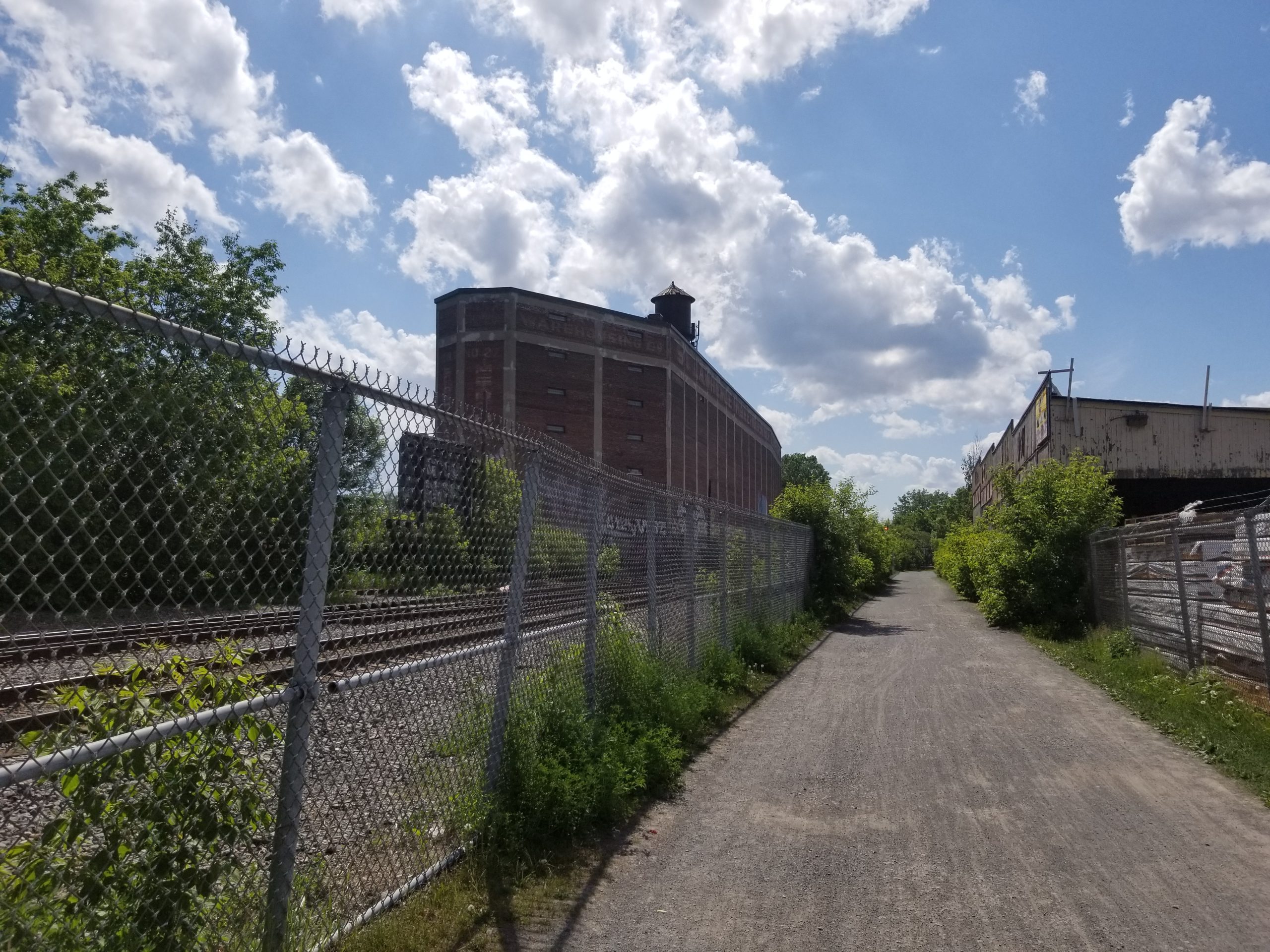
    I jog on the gravel path along the train tracks. I readjust my surgical mask and stray off into the grass to maintain a two-metre distance from a cyclist. My butt throbs. Pain gives way to numbness. Hamstring nerve pinched. I’m out of breath. My lungs open up to the cool air, fortunate to be left breathless by exercise and not COVID-19.

    To read the rest of the story, please support our community and check out Chronicling the Days: Dispatches from a Pandemic

  • The View From My Living Room—By Ariela Freedman

    The View From My Living Room—By Ariela Freedman

    In April 2020, we invited writers in Quebec to submit a story of a single day during the strange, uneasy time of coronavirus and pandemic, of social distancing and self isolation, of lockdown and quarantine.

    We’re thrilled to announce that these stories have been gathered in Chronicling the Days: Dispatches from a Pandemic (Guernica Press). To learn more and buy the book, please visit https://www.guernicaeditions.com/title/9781771836579.

    Please also join us on the QWF FB Community page, and let the authors know if their words resonated.

    The term “living room” came into common use after the First World War. Before the living room, there was the front parlour. This room was a formal showpiece, and before the proliferation of funeral homes, they were used to lay out the dead. After the many deaths of the First World War and the Spanish Flu, the front parlour became a haunted space. As early as 1910, the Dutch-born editor of Ladies’ Home Journal published an article titled “A Living Room is Born,” suggesting it was time to revive the staid front parlour; that is, it was time for the room to come back to life. The living room was a rebranding of a space where the dead were once venerated, at a time when they were so many that the house could no longer hold them.

    To read the rest of the story, please support our community and check out Chronicling the Days: Dispatches from a Pandemic

  • Words Matter: A QWF Statement Supporting #BlackLivesMatter

    Words Matter: A QWF Statement Supporting #BlackLivesMatter

    The Quebec Writers’ Federation condemns racism. We hear and support those who are on the front lines fighting injustice.

    Anti-Blackness is systemic and exists in Quebec and Canada. What can we do with our heartbreak and outrage? As writers, we know that words matter. So do actions. QWF will use our platforms and advocacy position to promote works, activities, and resources by Black writers in Quebec and beyond. We encourage all our members to read and purchase books by Black authors. Let’s educate ourselves about anti-Black racism. Support Black-owned bookstores and bookstores donating profits to anti-racist causes.

    Useful Resources:

    Bookstores: