Tag: advice

  • Writer vs. Editor: The Showdown Within—By Malcolm Fraser

    Writer vs. Editor: The Showdown Within—By Malcolm Fraser

    The relationship between writer and editor is complicated, fraught, an emotional and ethical minefield ready to detonate and splatter the room with shattered egos at any moment.  I would know—I witness this brutal conflict from both sides on a regular basis. (And right now, my editor side is telling my writer side to chill the hell out with the over-the-top imagery.)

    I’ve been a writer since I could speak; I started making up stories, and unlike most kids I just never stopped. My dad is a writer, and his father was too—I guess it’s the family business. And since high school, when there were yearbooks and school newspapers that needed staff, I’ve also been an editor. If I’m being honest, I think my attraction to editing is probably a manifestation of OCD, or just uptightness—I just really don’t like mistakes, and I always feel a compulsion to fix them. Everything else is just finessing details.

    The first time I worked as a professional writer was in 1999. Conrad Black had founded the National Post and was raining money on an old-fashioned newspaper war with The Globe and Mail. One of his projects was rebooting the moribund Saturday Night magazine as a weekly insert in the Post. Adam Sternbergh, today a novelist based in New York City, was hired to edit the front section, which he envisioned as a collection of eccentric tidbits. He approached me to contribute after a mutual friend showed him one of my zines. I would pitch him ideas, and he would always pick the weirdest ones, like a found poem made of notes I’d seen inside a parking lot attendant’s booth. The pay was good—without getting into numbers, let’s just say that a single-line gag (about how Toronto’s Anarchist Free School was not, in fact, free of anarchists) paid me more than twice what I’m getting for this entire article. As I write this, nearly every sentence reads like a snapshot of a bygone era; at the time, I figured my career would just grow from there—little did I know!

    (Right now, my inner editor is asking whether all this detail is important; my inner writer insists that it adds context and colour to the story.)

    Just as the era was, in retrospect, impossibly freewheeling and prosperous by the standards of our current Darwinian capitalist dystopia, Adam was the kind of editor you’d dream of having, but rarely actually end up with. His notes would always lead with praise, then get into constructive, actually helpful suggestions for how I could flesh out my ideas to make them better. I try to follow his example, though I don’t always succeed.

    As an editor, I want to respect the writer’s voice, but sometimes you have to do some heavier lifting. You might be surprised at the state of the raw copy that comes in from some professional writers, even some you might have heard of. As much as I like to encourage good technique, the truth is that if you have a strong voice and a solid area of expertise, that can be much more valuable in a career than writing chops per se—as long as you are okay with trusting your editor to clean up your mess.

    Some editors will just change your copy without asking. Needless to say, as a writer that always bugs me, except on the odd occasion when I can’t deny that it has improved on the original. For example, when I first moved to Montreal, I did some writing for a fashion magazine that was essentially just the vanity project of some rich douchebros. My editor, frustrated with his publishers’ demands for low-quality content, had assigned me a piece about how TV is really great, or something (the details are a little fuzzy in retrospect). He ended up rewriting it to the point where it was much more his piece than mine, but secretly I had to admit that what he wrote was funnier.

    A few years later, I was working as an editor at the alt-weekly Montreal Mirror. A writer submitted her review very close to the deadline, and I rewrote some of her copy at the last minute. She was not happy and went over my head to complain to the editor-in-chief (pro tip: this is a risky move), who gently advised me to take it easy with my on-the-fly rewrites. I was extremely irritated and bitched about it to a few close people. When I told my dad, after a pause he said, “Yeah, I used to spend as much time writing angry letters to my editor as I did writing the article.” It was only then that I began to perceive that I might have been in the wrong. I regret my actions now, but I console myself that if my most heinous editorial sin was a misguided rewrite of a Jim Carrey comedy review for a now-shuttered paper, it could be worse.

    So I always try to look at things from both sides, the writer’s perspective as well as the editor’s. I have to, because I never know which side I might end up on. Last year, I found myself assigning and editing an article by my former editor at the long-gone fashion magazine. And one of the writers I hired at the Mirror is editing this very piece that you’re reading right now. I hope she’s not too hard on me. It’ll be in on time (pretty much) and at the right word count (more or less). After all, I am a writer: a neurotic ball of insecurity, sensitivity, and need. Just the kind of writer my inner editor can’t stand, really. But that is a story for another time (specifically, the next time I can afford therapy).


    Credit: Daniel Lafleche

    Malcolm Fraser is a writer, musician, and filmmaker based in Montreal. His book Wooden Stars: Innocent Gears was published by Invisible Publishing in 2013. Malcolm is currently Associate Editor with Montreal Review of Books.

  • Dear Everyone I’ve Ever Known: Thank You. This Book Is Dedicated to You.—By April Ford

    Dear Everyone I’ve Ever Known: Thank You. This Book Is Dedicated to You.—By April Ford

    I’m two seasons away from the release of my debut novel. This will actually be my third book publication, yet there are elements of the publishing process that still intimidate me. Two I believe I’ve mastered by now are how to dedicate a book, and how to thank people who’ve helped me along the way—“mastered,” that is, until I start imagining how Person A might feel when she doesn’t see her name on the “Acknowledgements” page even though she treated me to coffee during a rough patch in my life, or when I finally admit I don’t want to dedicate my debut novel to my ex-husband even though, while we were married, I said I would.

    For all the slow writers out there like myself—and this isn’t counting the time it takes for a book to go through the publishing process—a lot can happen between the first and final drafts. It can be startling to see how these changes manifest on paper, especially if you’ve told someone you’re going to mention them in your book but you change your mind. So while you’re fantasizing about eloquent dedications and thorough acknowledgements (a fun and necessary exercise), why not keep a list to help you remember whom to thank and whom not to thank? There will always be someone’s name you add to the list and then remove. And then add again out of guilt. Seeing this name next to the ones you’re 100 percent certain you want to thank might clear your doubt. Update the list as needed, right up until the day your publisher asks for the final iteration. And do not to show it to anyone before your book is published. This is your list. Writing the book was your experience. You owe no explanation for why you did or didn’t thank someone, in the end.

    Being a writer means skillfully riding the constant waves of people’s ideas about what a writer is, does, and how we do it. For example, a past partner of mine used to urge me to write whenever I felt unhappy. He couldn’t seem to accept that it was the last thing on earth I wanted to do when I was troubled (it’s when I produce my most unsalvageable work), and he seemed truly dissatisfied by the fact that I don’t write every day. I wasn’t adhering to his vision of the writer’s life and how he might play a role in it—later to be thanked. It’s worth considering people’s motivations when you’re crafting dedications and acknowledgements. No matter how thoughtfully you execute those pages, there will always be someone who feels slighted for not receiving public recognition from you. While in your mind, all Person B did was occasionally ask you questions about the book you’d been writing “forever,” in Person B’s view, they supported you by expressing ongoing interest in your work (but mostly talked at length about themselves, their darling children, and their even darlinger Shih-Poo named Ackerly).

    Historically, the dedication page was a siren’s call to potential benefactors. Writers dedicated their works to significant public figures and sometimes even entire cities, with the goal of attracting funding for their future publishing endeavors. Today’s dedication page is more of a forum for displays of affection (“For my spouse and children: You are my life.”) or an opportunity for the author to give readers an intimate glimpse of their personality by acting as a micro-autobiography (“I dedicate this novel to my iguana, because why not?”). When it was time for me to dedicate my short story collection, my then-husband graciously helped me brainstorm (it didn’t make sense to dedicate the book to him, since I had started it years before we met). Together we came up with “for the poor children,” the title of the collection, which sets an ironic, somewhat glib tone—and as it turns out, I’m a somewhat glib person who uses irony to process the world around me.

    The “Acknowledgements” page is a demonstration of good literary citizenship. Here, you thank people by order of importance, starting with your agent (if you have one), editor, designer, publicist. Without these hardworking allies, your book would still be a MS Word file. You want to also mention sources of funding you received while you worked on the manuscript, public readings you gave from your book to be, extracts (poem, story, essay, chapter) that were published elsewhere, and peers who read and critiqued your work. Then you can start on that fantasy list you’ve been keeping! In the case of my forthcoming novel, I’m attempting to make amends for not dedicating it to my ex-husband by thanking him high up on the page, right after my publishing team and before everyone else. Were his feelings hurt when I first told him about my change of heart? Of course. We had a long conversation about it by telephone and this was when I gained a deeper appreciation for the responsibility that comes with writing dedication and acknowledgements pages: they’re meaningful and symbolic not only to the author but also to those mentioned—and to those not mentioned. 


    Nicolas01April Ford is a genderfluid author living in Montreal, Quebec with her rescue family. Her fiction, poetry, and essays have appeared in print and online journals in Canada, the United States, Mexico, Germany, and Scotland. She is the recipient of a Pushcart Prize for her short story “Project Fumarase,” and has held fully-funded residencies at Virginia Center for the Creative Arts and Ucross Foundation. Her books include Death Is a Side-Effect: Poems (Frog Hollow Press, 2019) and the award-winning story collection, The Poor Children (SFWP, 2015). Her debut novel, Carousel, is forthcoming in Spring 2020 with Inanna Publications. www.aprilfordauthor.com

    Photo credits: “Cliche: Have a Heart”by Carol (vanhookc) is licensed under CC BY-SA 2.0 (header image); Bernardo Fernandez, Verdun, Quebec, 2019 (headshot)

  • How to Get Out of the Slush Pile—by Rachel Thompson

    How to Get Out of the Slush Pile—by Rachel Thompson

    I yawn and keep flicking through my virtual stack of submissions. I need one more piece that will not only fill a few pages in the next issue but also resonate with the writing I have already accepted for the magazine.

    A short story pops up; a few lines in and I’m wondering: is anything going to happen? Flick to the next one, and words start to blur together. Is this the same story, or another one? Why does it sound like everything I’ve already read today? I click, click, click, until I land on one that startles me at the first line. I read on. And on. Now I’m alert, driven to read to the end. I scan the cover letter and see it’s submitted somewhere else at the same time; a competitive voice in my head says, Mine first! I hit the “accept” button.

    Reading, accepting, and rejecting lit mag submissions has taught me so much about writing and publishing.

    For one thing, I’m totally over the idea that if my writing doesn’t make it into an issue of a magazine, it means they think my work is no good. Editors get many, many submissions: far too many for us to print. The people reading these can be tired (see above) and overlook things. We try to give it our best attention, but at our drop-dead deadlines, we have to make quick and cold choices.

    Writing that doesn’t begin at a critical moment upon which everything else hinges, or with an opening line that raises more questions than answers, is unlikely to hold my attention for long. You never quite appreciate in media res until you’ve read hundreds of submissions that languish in the beginning. If you’re writing narrative work, and you don’t open with an action or decision point, you’re going to lose me. Consider the opening line of Rebecca Fisseha’s story, “What Grows”[1]:

    “Once, upon a day of politics trouble, I saw my mother burying her gold in the vegetable and herb garden at the back of our house.”

    After just one sentence, I have so many questions. What is the politics trouble? Who calls it “politics trouble”? Why is the mother burying the gold? Where is this home? When is this trouble happening? When an opening line makes me ask at least three of the five W’s, I feel as if I have struck gold. No wonder I picked her piece for Room issue 38.1.

    More often I read submissions that start by explaining things to me—where we are, when we are, who these people are, etc., etc., when the most compelling narratives make us curious and allow us to savour the discovery of these answers. There’s a simple explanation for why this happens. New writers just don’t have the experience to know how many drafts professional writers go through before publishing. (It’s more than most think, likely by a factor of ten.)

    “You never quite appreciate in media res until you’ve read hundreds of submissions that languish in the beginning.”

    Speaking of explaining, in cover letters I find writers are often tempted to tell me what their writing is about, and why it’s important for me to read it. But I’m going to read it anyway. You don’t need to convince me. And telling me why I should read something I’m already going to read puts me off a bit. Let your work show me what it’s about. Let the cover letter just deliver the facts we ask for.

    Writers often ask me if simultaneous submissions are cast in a negative light. Quite the opposite. It’s more likely to compel me to accept something I like more quickly and it has never had the effect of turning me off of reading something.

    Another thing I’ve learned is that the earlier you submit in a reading period, the likelier your piece will make the cut. Remember how I said earlier I was looking to fill not only a space but to find a piece that would join in a conversation started by the other pieces I’ve already accepted? We truly do sometimes turn down some of the best work because it a) either repeats themes, styles or settings in work we’ve already accepted for the issue, or b) is too long to fit into the space we have left. Because most magazines will read the work in order of receipt, if your piece is in an early stack and we like what you’re doing, there’s a better chance we’ll make other pieces fit around your writing than vice versa.

    “New writers just don’t have the experience to know how many drafts professional writers go through before publishing. (It’s more than most think, likely by a factor of ten.)”

    Start in the middle. Revise, revise again, revise better. Don’t explain in your story or in your cover letter. Tell us you sent it elsewhere. And submit early. My last bit of advice is to submit more often. You’re only going to increase the chance your work is published by sending it out to more places.

    But make sure it’s the right place. If you’re sending to Room, a journal that publishes women and genderqueer writers, and you are in fact a man (this happens a lot)—then I can’t help you.


    rachelthompsonRachel Thompson’s book of poetry, Galaxy (Anvil Press, 2011), won the SFU First Book Competition. Contest judge Gregory Scofield said her poems had “Wonderful and clear imagery as well as a ‘real’ and ‘true’ sense of place, love, longing, family, and the constant struggle and re-negotiation of self and experience.” She’s a current editorial collective member and former Managing Editor at Room. Rachel helps writers level-up their writing lives with practical advice and kind support at LitWriters.co.
    [1] Used with permission.

    Photo credits: Joel Penner (top banner); Vivienne McMaster (headshot)

  • Running a Small Press in 2015 by Guillaume Morissette

    Running a Small Press in 2015 by Guillaume Morissette

    Located in Montreal, Canada, Metatron is a small, independent press that publishes contemporary literature and works by new and rising authors. Almost all of its authors are under thirty years old, and their works reflect concerns such as love and relationships in the age of social media, existential angst, reconciling the spiritual with the digital and MySpace-era nostalgia, among others. Along with Ashley Opheim, who founded the press, I currently serve as co-editor of Metatron. We’re both writers with good intentions but limited time, and we have no concrete experience running a business. Metatron Press started with no safety net, investors or carefully thought-out business plan. Yet so far, everything is going great. When I joined Metatron in 2014, the press had already published six titles and received positive media coverage.

    I met Ashley in 2011, through Concordia University’s Creative Writing program. Our literary tastes overlapped, so we became friends and began working together on countless projects. We organized several well-attended readings in Montreal, a little miracle as we had virtually no budget. Later, in the fall of 2013, Ashley applied for a small grant from Emploi Québec’s Jeunes Volontaires program. At the time, I was living in Toronto, so I could only follow her progress through the grant application system from a distance. Though I knew she might receive money in the end, it didn’t feel like a game show, where you spin a wheel and win thousands of dollars and maybe a cruise, but more like something procedural and mysterious, as if she was defending herself in a court of law, trying to argue that she deserved retribution.

    The grant wasn’t an overwhelming amount of money, but it was enough for Ashley to start experimenting with different ideas. She made good use of this initial flexibility. It helped Metatron exit the grant stage and become a self-funded, independent entity. When I moved back to Montreal in 2014, it seemed perfectly natural for me to start helping Ashley with Metatron

    A few lessons from Metatron’s journey so far:

    1) Leverage pre-existing chemistry. My friendship with Ashley (pictured below) is a huge asset for Metatron, I feel, as we can pitch ideas to each other quickly, delegate tasks knowing the other will get things done and generally feel good when working together on projects. The sub-text of mutual respect and trust in our communications can only be earned through years of working together, and sometimes failing together. And countless other friends (and friends of friends) have helped Metatron. Ridiculously talented (and busy) local graphic designers Freyja & Zamudio, for example, took the time to create two high-quality book covers for the press. Metatron has also received a lot of support from Montreal artists like Claire Milbrath, Rachel Shaw and Rebecca Storm, and bookstores like Drawn & Quarterly. These contributions, big or small, are all invaluable. I am often surprised by how eager our friends are to pitch in.

    Ashley Opheim

    2) Work fast. One advantage of running a small indie press is that we’re usually able to fast-track the typical production cycle of a book. Instead of a book coming out a year or more after the initial publishing agreement is signed, it can come out a few months after work begins. This can give the final product an increased sense of urgency, though it also means there will be less time to let the work “rest” and to return to it later with fresh eyes.

    3) Build your community. Metatron doesn’t present itself as a literary press that takes itself very seriously, but rather as something artistic powered by positive energy and good intentions. It doesn’t only publish books and booklets – it also promotes the work of local writers, artists and musicians on its blog, fostering good vibes and a sense of community. This, I feel, gives the press a distinct flavour. In addition to being thought-provoking, literature can be entertaining, welcoming and serve as the basis for a strong community.

    Metatron pin

    4) Keep things small. Metatron’s finances often feel like an aquarium to me, like a delicate ecosystem. All profits made by the press are pumped right back into reprinting current titles or publishing future ones. To keep costs down, it’s been helpful to focus on smaller print runs, and to keep distribution entirely in-house. Moreover, some of Metatron’s titles are booklets rather than books. The booklets are a little bigger than your average chapbook, but more compact than a full-length, perfect-bound book. I really like this format, as it allows us to work with a lot of new and rising authors who haven’t been published in print before. Since booklets are also cheaper to produce and ship, they can also be sold for less.

    5) Have no idea what you’re doing. And finally: it’s okay to try new things, or figure them out as you go. In Spring 2015, Metatron will publish the full-length, perfect-bound debut of Toronto-based writer Sophia Katz, a big release for us. If we have to change our methods to produce and ship more copies, we’re confident that we’ll be able to figure out a way to adapt. Metatron has also announced the inaugural 2015 Metatron Prize for contemporary writers. The winner will receive $150, a publication deal with Metatron and a selection of past Metatron titles. Before announcing the contest, it seemed impossible for us to estimate how many submissions we would be receiving for something like this, so we simply decided to go for it and see what happened. In the end, we were blown away by the quality, quantity and diversity of manuscripts that we received, and we are now hoping to do the prize on a yearly basis. 

    Though not all of Metatron’s experiments will pay off, they should all prove valuable in some way, and it seems likely that this willingness to be playful and try out new ideas will remain an important part of the press’s identity.

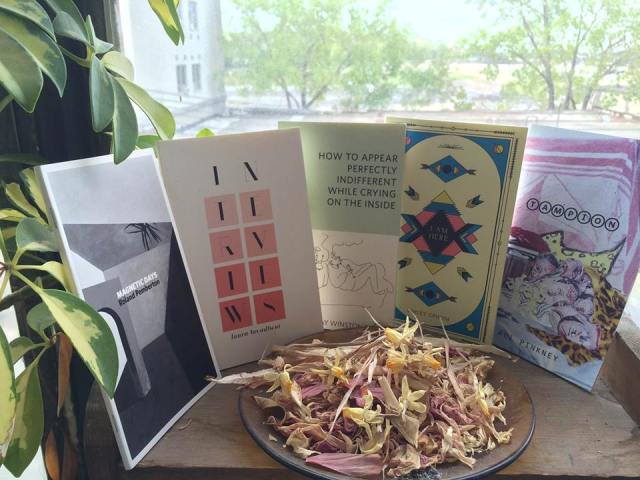
    Metatron Books


    Guillaume MorissetteGuillaume Morissette is the author of New Tab (Vehicule Press, 2014), which was shortlisted for the Paragraphe Hugh MacLennan Prize for Fiction. You can find him on Twitter at @anxietyissue