Tag: artist residency

  • Writing by Numbers—by B.A. Markus

    Writing by Numbers—by B.A. Markus

    1. Show Up

    A link to the Spoken Word residency at the Banff Centre shows up in my feed. I didn’t get a teaching contract with the English Montreal School Board in the fall so I’m not feeling too enthusiastic about spending the $65 non-refundable application fee. I’ve applied to the Banff Centre residencies at least six times and never gotten in. And I’m not convinced that what I’m working on, a collection of dramatic monologues based on interviews with mothers called “What Mommy Needs,” is even a spoken word piece. Most of all, I’m not ready for another rejection. In the end I justify spending the money because it counts as “Doing something about my writing.”

    2. Pay Attention to What Has Heart and Meaning

    In January, I get offered a contract at the school board that’s going to last until the end of June. The application for Banff is out there but I know my chances of getting into the residency are even less than my chances of getting a permanent teaching gig in Montreal. It’s amazing I got the contract for six months. Money is important to me. I’m two kids beyond not worrying about heat, secure housing, and groceries. But I haven’t given up on “What Mommy Needs.” I’m doing interviews when I can. And I’ve started to tell stories at Confabulation and Yarn in Montreal. It’s great to be performing again. I start to think about how I could use storytelling in the mommy monologues. Maybe my project is spoken word after all.

    3. Tell Your Truth as You Understand It

    A month into my teaching contract I get the acceptance letter from Banff with an offer of financial aid. In ten seconds I go from delight to despair. I can’t go to Banff. I just signed a contract. Two days later it occurs to me that I could ask the principal if there is any way I could leave my job for two weeks to do the residency. But I have my doubts. He’s young and ambitious. He likes to follow the rules. And there are fifty teachers who would gladly grab my contract if I left. I practice my speech, aiming for the sweet spot. Somewhere between grovelling employee and self-assured writer. He cuts me off mid-grovel. He says I can go.
    banff residencycohort
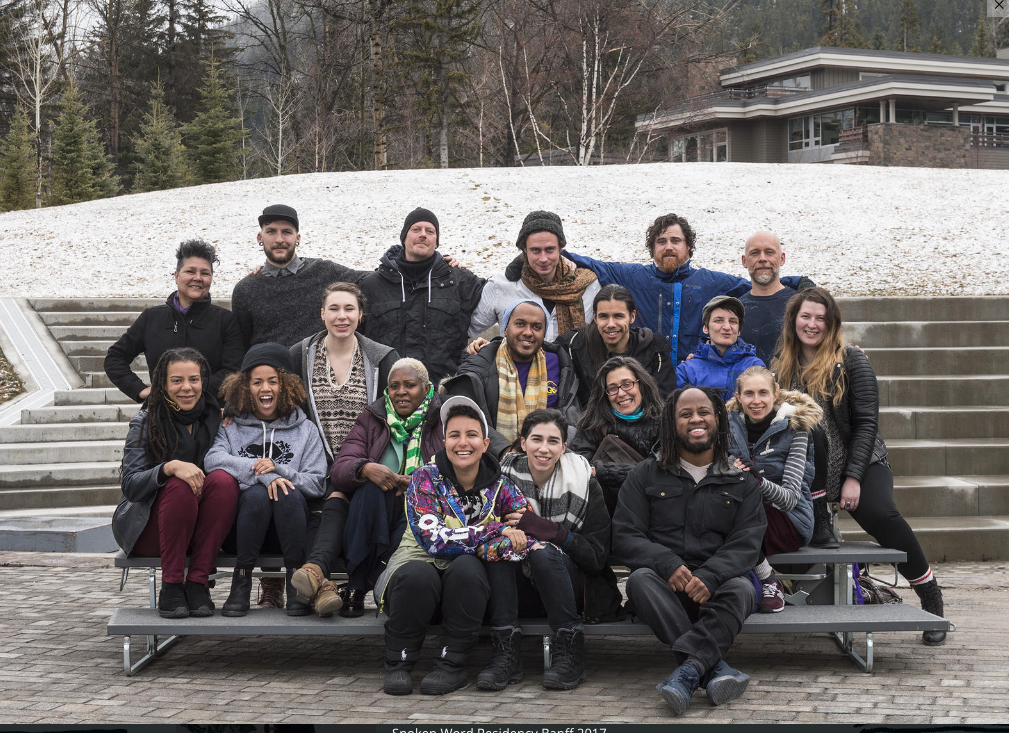
    My cohort: participants and faculty of the 2017 spoken word residency at the Banff Centre (I am in the second row from the bottom, second from the right). The photo above this essay shows me performing at Confabulation, a storytelling series in Montreal.

    4. Remain Open to Outcomes

    Waiting for the plane to Calgary, I download the schedule for the residency. I’d assumed that my time at Banff would be two weeks of uninterrupted writing time. Now I see that most of my days at the residency will be filled with workshops led by the faculty. Attendance is compulsory. I vow that I will spend all my unscheduled time either working on “What Mommy Needs” or getting regular exercise in the pool at the Banff Centre.

    At the end of the first day, one of the faculty members asks if anyone plays the piano and I put up my hand. He’s doing a poem at the faculty show in a couple of nights and he wants some simple piano in the background. In Montreal, I live surrounded by professional musicians. Now I feel like an amateur. I practice for the show on a Steinway grand because that’s the kind of piano you get to play at the Banff Centre. The show goes well. Afterwards, one of the other residents asks me if I’d like to collaborate with her and play piano while she performs her poem. She wants to record us in the studio.

    Despite my promise to devote my unscheduled time to “What Mommy Needs,” I spend many hours in my hut playing piano and singing Jewish prayers, Christian spirituals, and French cabaret songs.

    My plans for daily swims are also squashed, by the appearance of a giant sty that swells my right eye shut.

    We are going to do a show at the end of the residency. I intended to perform an excerpt from “What Mommy Needs,” but instead I write a story about identity that includes three sung sections. I’ve never sung while telling a story. I start to think about how I could integrate music into “What Mommy Needs,” which is now definitely a spoken word project.

    “This writing project has transformed me. And all I had to do was follow the numbers.”

    On the last day of the residency, I meet with one of the faculty members, a historian and dub poet whose work weaves together poetry, performance, and primary research. When I start describing my ideas for enhancing the performance experience in “What Mommy Needs,” she starts shaking her wise head. “No, no,” she says. “‘What Mommy Needs’ is a book.”

    I come back to Montreal with a musical story about identity, a professional recording of me playing piano behind someone else’s poetry, and the possibility that I’m actually writing a book. This writing project has transformed me. And all I had to do was follow the numbers.

    The four “rules” I followed are by Angeles Arrien.

    You can watch an example of my spoken word performance below:

    [vimeo 108630079 w=640 h=360]


    bamarkusphotoB.A. Markus is a writer, teacher, and performer living in Montreal. She is an award-winning creative nonfiction writer, a Grammy- and Juno-nominated songwriter, and her reviews, essays, and stories can be found in anthologies and publications such as Carte Blanche, Queen’s Quarterly, and The Montreal Review of Books. She tells stories live at the Confabulation and The Yarn storytelling events and is currently writing a series of monologues, entitled “What Mommy Needs,” about what mothers do to survive the realities of motherhood. BAMarkus.com

    Photo credit: Jean-Sébastien Dénommé (header banner)
  • Transcendence—by Francine Cunningham

    Transcendence—by Francine Cunningham

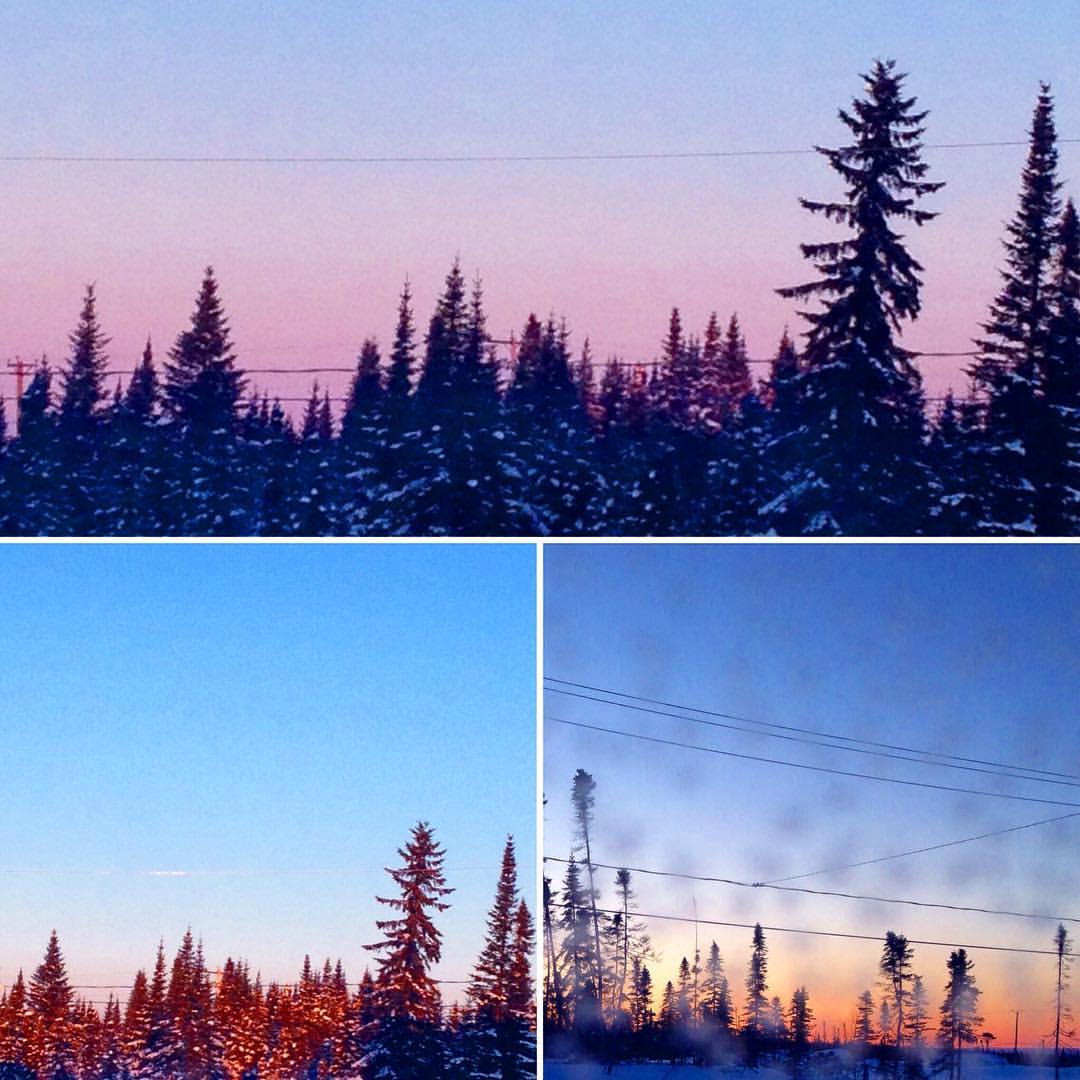
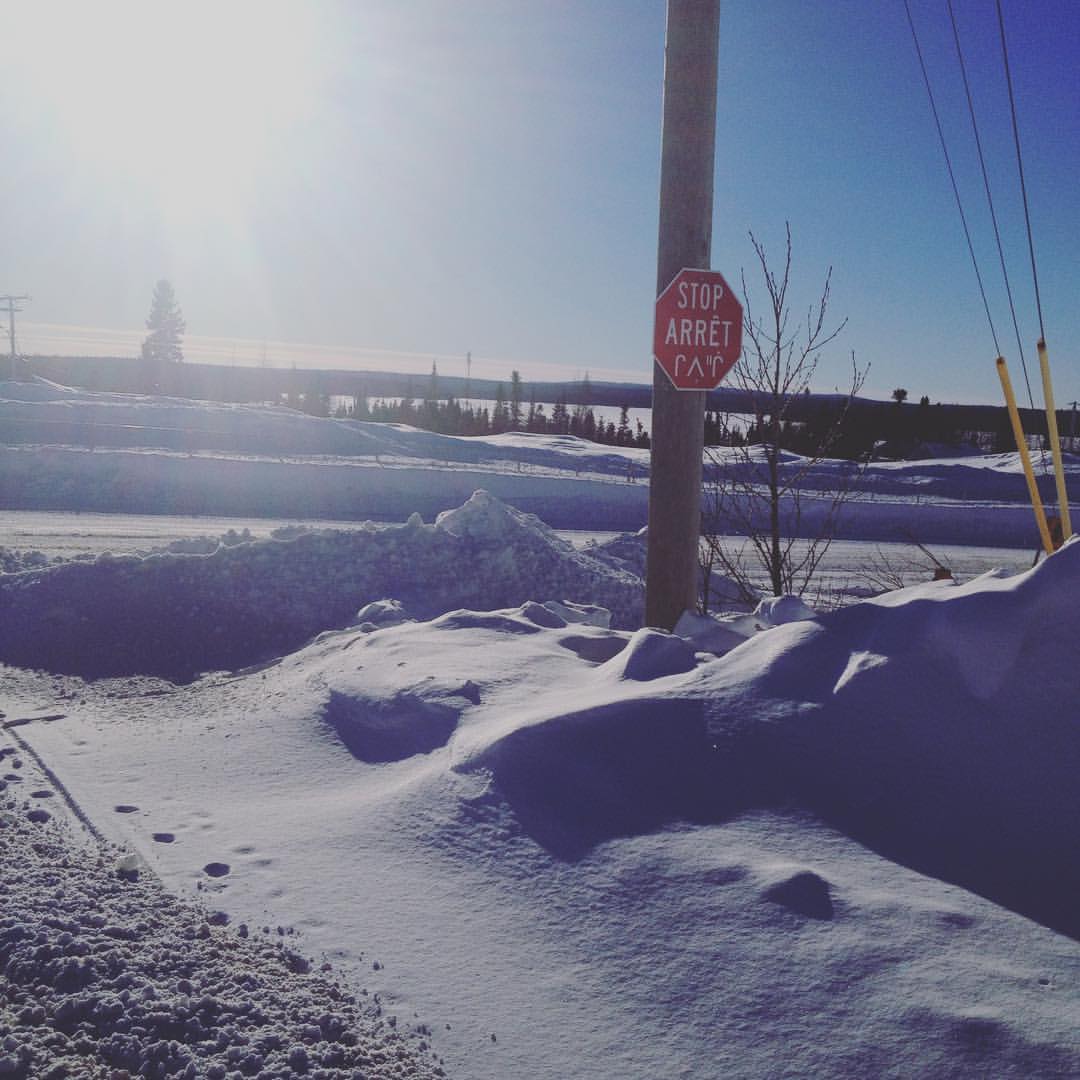
    I had the privilege of being an artist in residence in Mistissini, a community in northern Quebec, this February and March. The community was small and welcoming; the snow, on the other hand, was otherworldly. There were mountains of it piled and strung along the road to the school, like a miniature version of the Rockies I am used to. While I struggled with the overwhelming volume of the white stuff, I welcomed the natural beauty of the land, the quiet of the nights, and the stillness that comes from being outside the city. With nothing to distract me I was able to spend hours every night writing and painting. I read something like ten books and slept deeper than I have in a long time. It was a treat to turn off my email for six weeks, not take on any additional contracts, and really focus on my writing and visual art. I was teaching youth how to integrate their visual art with their writing through zines, so it was the perfect time for me to spend some time doing the same.

    16463091_10154140278245286_1071419733135569396_o

    The Mikw Chiyâm arts program was commissioned by the Quebec Cree School Board in 2015 and has just finished its second successful year. It brings together artists and students, the hope being that by creating a safe and creative space, students will be inspired to come to school more often and have a more positive experience once there.

    I am an Indigenous writer, artist, and educator, and have been working with Indigenous youth for over ten years. I have been a part of many different programs that use artistic practice as a way to intercede and help guide students onto a path that will give them confidence and knowledge so they can succeed in the world. The thing I hear most from students is how much they wish that they, as budding artists, were treated with the same level of care and given the same number of opportunities as in the sports or science concentration programs. Having an arts concentration program inside of a high school is remarkable; having one that has the level of support of Mikw Chiyâm is something I have never seen. It is literally making opportunities for young artists that they would not get otherwise.

    Often the arts can go unrecognized as a valid life path for a young person, but you just have to look to who the people are that are revitalizing our Indigenous communities and you will see artists at the forefront. When working with youth, Indigenous or not, I try to help them infuse their work, whether it’s fiction, poetry, or non-fiction, with a spark of who they are and their own unique point of view, with their own experience, tradition, and culture. Whether that takes the form of simply setting their dystopian dramas in their own community, or adding in bits of their language, or having characters that speak and act like them and their friends, these sparks are what makes their writing so unique.

    “I try to help them infuse their work, whether it’s fiction, poetry, or non-fiction, with a spark of who they are and their own unique point of view, with their own experience, tradition, and culture.”

    Growing up, I never read a story from a viewpoint that felt like my own: that of someone considered white passing, who grew up off the land, was raised in the city, yet is still Indigenous. I’ve found in my work with Indigenous youth that many are craving a varied point of view in the stories they read, something different than the stories they have thus far been presented with. There is a shame that comes with feeling like you are disconnected from your community. When you don’t know your language. When you can’t answer all the questions from non-Indigenous people. There is a shame that can infect a person when you aren’t what you see in movies, in stories—when you aren’t a real “Indian.”

    If not treated like a valid feeling, this void only serves to make youth feel more alone, more different, when in reality they have a whole network of people around them who feel the same way. Opening up space, letting discussion flow through these gut-wrenching topics, is so important. Oftentimes this can be the first time they’ve been allowed to talk about such things. I have found that once you break down those thick walls a flood of words come out. And eventually they land on the page. And they become something more than art. They transcend the writer. They help. They heal.

    “Once you break down those thick walls a flood of words come out… They transcend the writer. They help. They heal.”

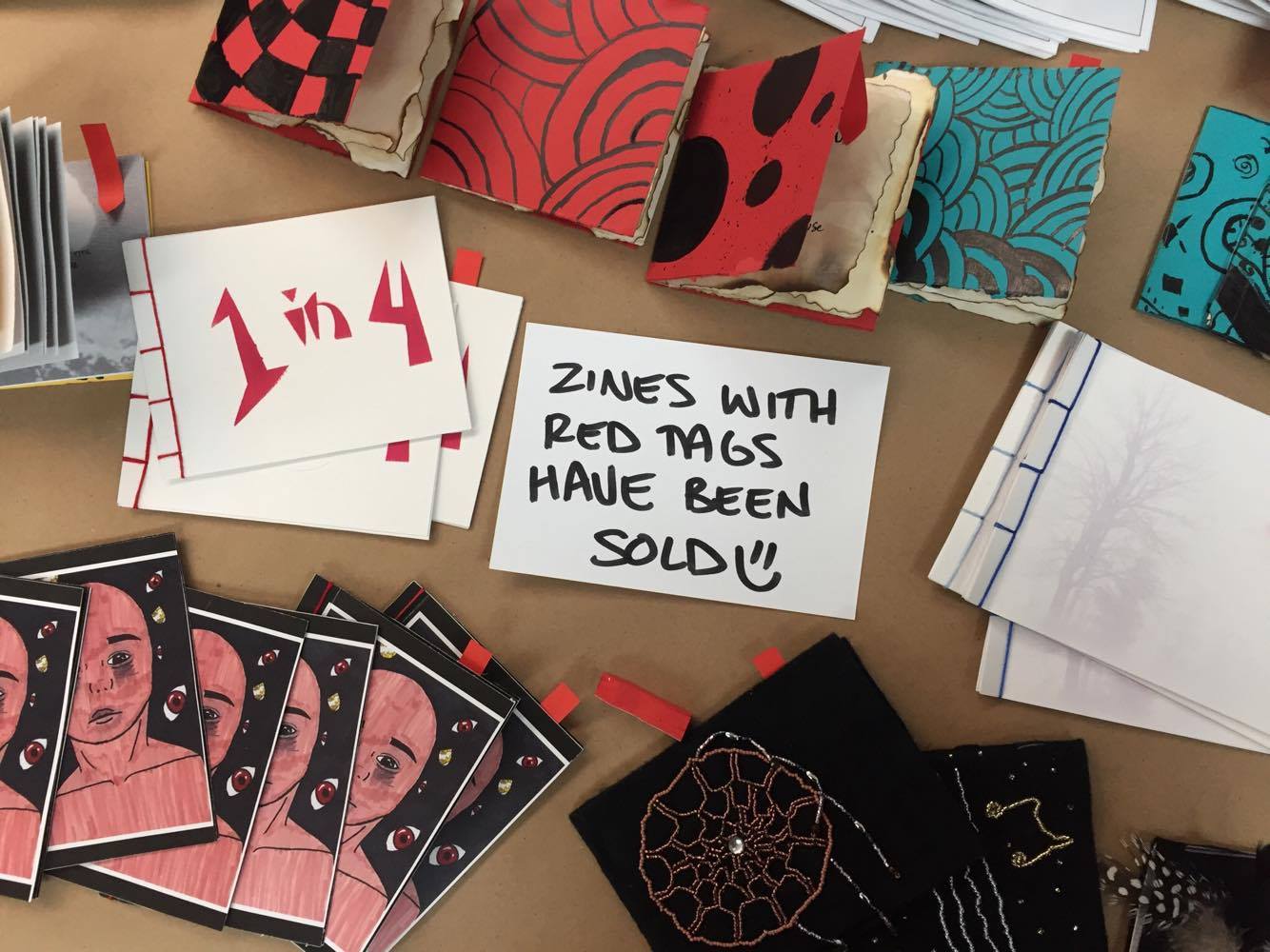
    The zines that the students created were powerful. They tackled issues like sexual abuse in the community, the stigmatization of mental illness, loneliness, and identity. These stories were told through humor, visual art, prose, and end-of-the-world disasters. At a final celebration night, we invited the community to come see the students’ work. For weeks, I had been telling them that people would buy their zines, that people other than me cared about what they were writing. The students wouldn’t believe me.

    Right before we opened the doors to let people in, they again tried to let me down easy, telling me not to get my hopes up, that no one would come and that was okay. They were trying to protect my feelings because I was so excited. But the community did come out. They read through all the zines, and by the end of the night we had sold out of everything we had created and made over five hundred dollars. The students were shocked. I was elated. I knew their words were valuable, that they were worth listening to. And now they had the proof.

    16998859_1686364578047373_2753448752955219953_n17015651_1686364321380732_2066677641393624379_o


    Headshot 2

    Francine Cunningham is a Canadian Indigenous writer, artist, and educator. Her creative non-fiction has appeared in The Malahat Review, the anthology Boobs: women explore what it means to have breasts (Caitlin Press), and more. Her fiction and poetry have appeared in The Puritan, Joyland Magazine, Echolocation Magazine, The Maynard, and more. She is a graduate of the UBC Creative Writing MFA program and a recent winner of The Hnatyshyn Foundation’s REVEAL Indigenous Art Award. You can find more about her at www.francinecunningham.ca.

    All photos in this piece are by Francine Cunningham.