
Ma was so many things; a Jehovah’s Witness preacher, an alcoholic with a troubled past, and an avid reader, poet, and writer. When she was sober she was engaged, a bright star in our neighborhood and religious community. But then she was also a yeller: when she kicked her sisters out of her life, she literally cut them out of any photos she had. Ma would punish me because I chatted in class, ate pumpkin seeds during Halloween, and was sent to the corner by the teacher. Lying wasn’t an option to save my own hide.

I escaped by reading fiction. Little Bear by Else Holmelund Minarik was an early favorite for me. In the first set of stories, little bear’s mum makes him clothes when he is cold and throws him a birthday party. Nine-year-old Pippi Longstocking took me on all her adventures with her monkey Mr. Nilsson on the South Seas. Although she was parentless, she seemed resilient and nothing could stop her. I related to A Wrinkle in Time’s Meg: she never seemed to fit in anywhere and was devoted to her father; my dad was my idol until Ma kicked him out for his infidelities. I moved on to the worlds of the Brontës and Austen, where I felt safe and where the ending always seemed to work out. I would write and draw pictures of my stories and plays. There was no such thing as writer’s block.
My first attempt at writing fiction as an adult came under the guise of autobiographical fiction. I mixed up truth and fiction so no one would know that it was mostly me I was writing about. My story was about Keaton, a suicidal fourteen-year-old. Keaton’s angelic mother worked all the time, made a hell of a bunch of tea, and didn’t really know her kid or see her for who she was. Keaton wrote lousy poetry, had a bestie, and obsessively liked a boy named Josh. She ended up getting help after being hospitalized, taking anti-depressants, and undergoing extensive therapy. I wrote it after my own stint in the hospital after a suicide attempt. But there were truths missing in the story that I couldn’t write down yet. I made the father the alcoholic and the mother a loving TV mom, a cardboard cut-out of a mother. There was nothing about religion anywhere. Then I got stalled and didn’t work on it.
Things didn’t really click for me until two year later, when I decided to try out a non-fiction writing course with Ayelet Tsabari. God, she made me fall in love with it. I wrote and wrote and wrote. I couldn’t stop. The words came easier than in fiction for me. The only things that interfered with my writing were my day job and sleep. Ayelet introduced me to her stories and so many other great diverse writers and made me realize that there were so many ways to spin a story.
I took a second course with her, and then another. It was the first time I had written about being a Jehovah’s Witness and my parents, my siblings, and our lives. Once I had a taste for non-fiction, I didn’t want to let go. I started reading less fiction and more non-fiction. I submitted to contests and literary magazines, and revised my stories. When my creative non-fiction piece, “Father Hallowed Be Thy Name” got accepted at RicepaperMagazine, I was ecstatic. Ayelet encouraged me to write a memoir. I had only started writing non-fiction in her classes and she believed in me! Something had started shifting for me.
In an earlier creative writing class, I had written fiction about a Catholic girl who got pregnant, a dog called Jehovah, and Medusa. Nothing was really wrong with those stories but they lacked a depth of what I really wanted to say. They were starting points that were necessary for me to get where I had to go. Testing out the waters until I could go in myself, immerse myself in the work.
I realized I had been hiding behind fiction so no one would know about my real life and who I was. What if others judged my life choices or no one wanted to read my stories, or they thought that I had nothing original to say? I was terrified of people’s reactions. I had been so good at hiding my trauma. When I was penning fiction, I could take those risks. After all, it was imaginary. No one would ever know it really happened.
When I shelved the idea of writing a fiction novel, non-fiction stories emerged in its place. I’ve been working with them for months now, reading them, revising them, losing and finding Ma, collecting our stories together. Non-fiction freed me to tell my real-life story on the page in a way that fiction couldn’t. When I was growing up fiction had protected me by letting me escape in stories, to live another’s narrative.
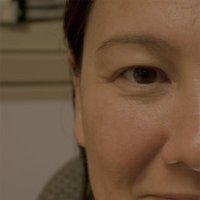 Tamara Jong is a Montreal-born mixed-race writer of Chinese and European ancestry. Her work has appeared in Ricepaper, Room, carte blanche, The New Quarterly, Invisible Publishing, and Body & Soul: Stories for Skeptics and Seekers. She is a graduate of The Writer’s Studio (Simon Fraser University) and recently had her piece “Thanks for All the Lice, Pharaoh” longlisted in The New Quarterly’s 2019 Edna Staebler Personal Essay Contest. You can find her on Twitter @bokchoygurl.
Photo credits: Tamara Jong (header image); Charles Marschuetz (headshot)

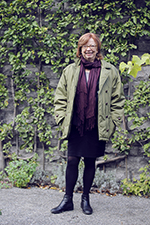 Kate Henderson lives and writes in Montreal. She recently published a story about her thesis advisor, who died too soon, and is currently working on a memoir about her mother.