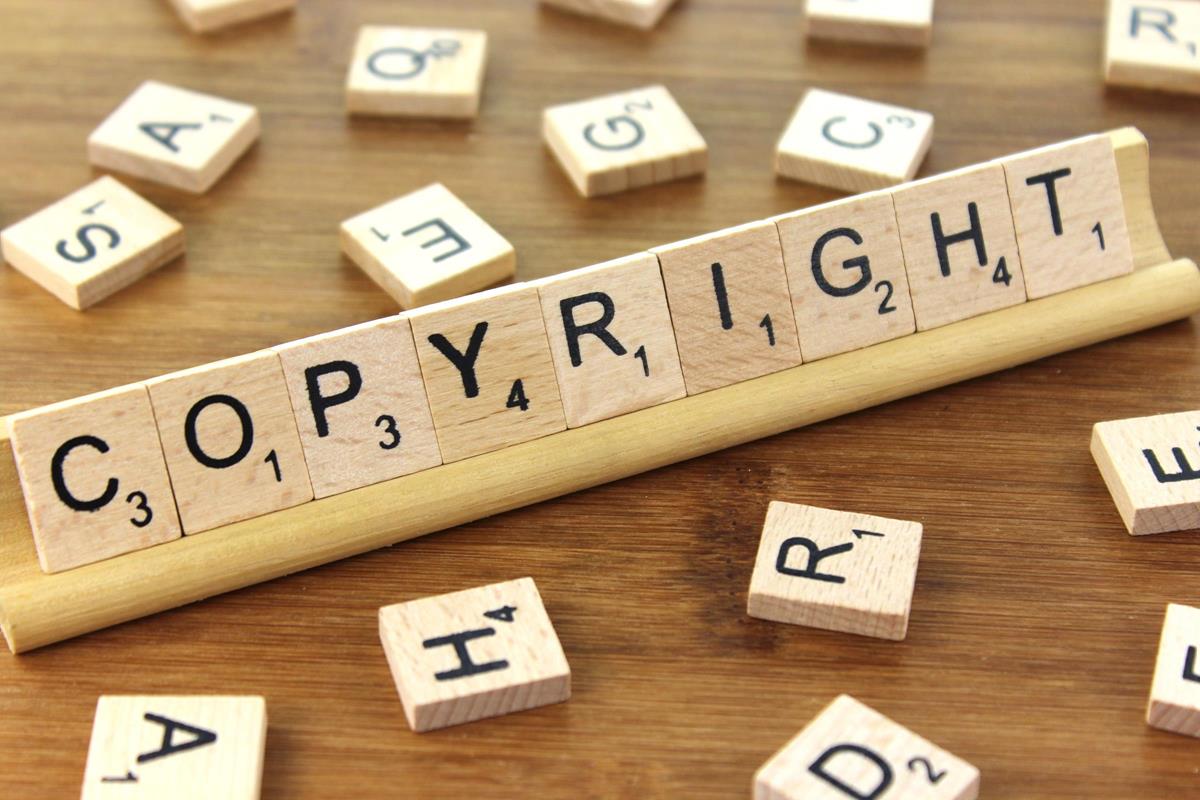
The Federal government is in the process of revising the Copyright Act. If you don’t think that matters to writers, think again.
I’m always surprised to see blank stares on writers’ faces when I launch into a speech about copyright. Some of them aren’t clear why copyright really matters. Others aren’t sure what copyright even is. Fair enough—it’s not the sexiest topic in the writing world. But even if you don’t notice it, it’s fundamental to our business.
Here’s why. I am a non-fiction author of six books and a magazine writer. To earn my living I sell the right to use my work, either to publishers who pay me advances and royalties or to magazines who pay me fees to publish my articles. For most of my twenty-five-year career, this revenue has constituted most of my income.
Simply put, copyright law is what makes it possible for me to get paid for my work. The Oxford dictionary defines copyright as: “The exclusive and assignable legal right, given to the originator for a fixed number of years, to print, publish, perform, film, or record literary, artistic, or musical material.” That’s me—the originator. The Copyright Act is what legally makes my work mine as soon as I create it, and mine to sell.
It sounds solid in principle, and I wish it was. Unfortunately, it’s getting harder and harder to enforce my copyright and get paid for it. So I jumped at the opportunity to attend a hearing hosted by the federal government’s Standing Committee on Industry, Science and Technology, held May 8 in downtown Montreal.
First, let me explain why it’s getting harder to make money from copyright. The reason, in a nutshell, is the Internet and digitization. By making it easier to “publish” and “distribute” creative work, the Internet has made many, many consumers of culture think they should get what’s online for free. The ripple effect in the publishing industry has led to dramatically less revenue for publishers, magazines, and of course writers.
“By making it easier to “publish” and “distribute” creative work, the Internet has made many, many consumers of culture think they should get what’s online for free.”
Magazine revenues fell when advertisers turned to online outlets. So magazines are trying to increase their profits by demanding (and the word is not too strong) more copyright from writers, but for the same fee. Whereas the standard when I started publishing in 1995 was to sell first publication rights (giving the magazine the right to publish it once), I now have to sign contracts in which I hand over the right to resell my articles in any form, in any language, anywhere on the planet, sometimes for periods longer than the rest of my life. I used to resell my pieces, sometimes up to five times. Now that’s impossible. Some magazines have even demanded I give them “moral rights” to my work, which means they can alter my work any way they want without my permission – or even take my name off it (I don’t work for those ones).
The case in book publishing is a little harder to explain. The industry as a whole is suffering from the forces of technology and book advances to authors are falling. When I Google my own work, I discover so many sites offering free (i.e., illegal) PDFs of my books that I can’t keep track of them anymore. And neither can my publisher.
In 2012, the Conservative government recognized that the Internet and digital economy were changing the dynamics of publishing, so it set out to revise the Copyright Act, originally passed in 1921, to take digital realities into account. But the resulting revisions made it harder for both writers and publishers to earn money. The Act already stipulated situations when consumers don’t have to pay creators. For example, “fair dealing” allows you to share one of my articles with a friend for personal consumption without infringing my copyright. The 2012 revisions broadened fair dealing to include situations like “education.” The problem was, the revised Copyright Act didn’t stipulate how much of the work could be used without infringement. The result? Universities and schools across Canada have been refusing to pay fees for copies of my articles or excerpts from my books. Since 2013, the revenue that Access Copyright collects from universities, schools, and other institutions to distribute to writers has declined by 80 percent.
As a writer, what do I want the government do to about this? I’m not expecting them to turn back the clock—the Copyright Act has to be adapted to work in the digital world. But most writers would agree that in this already difficult context, we deserve at least as much protection as we had before, not less.
“As a writer, what do I want the government do to about this?”
Today, the government appears to recognize the 2012 revision was a misstep. One committee member told me in private that the previous committee let copyright users like universities pretty much dominate the agenda during the last reform, while we creators had little say. So this year the government decided to go back to the drawing board and start by asking for our input.
At the Standing Committee on Industry, Science and Technology meeting on May 8, about thirty-five creators spoke during the “open mic session.” We each got two minutes to make our case. The vast majority told their own variation on a common tale: over the last 20 years it’s become dramatically more difficult to earn money from our work because it’s harder to get anyone that should pay for the privilege of reading (writers’) or listening to (musicians’) or looking at (photographers’) work to actually pay for it.
Creators are looking to the government to strengthen the copyright law so it protects our interests. For example, this means minimizing exceptions to fair dealing. I told the committee: “Some people own real estate and make money by selling it. I own copyright and make money by charging magazines and publishers for the right to publish my writing. Why would I be expected to donate my work for free to people who are making money using my work?” (Last time I checked, universities weren’t charities and professors didn’t work for free.)
“Why would I be expected to donate my work for free to people who are making money using my work?”
I actually feel a strange kinship with the taxi drivers and hotel owners out there whose livelihood is threatened by digital technology in the form of Uber and Airbnb. The difference, of course, is that the general public seems to get why taxi drivers and hotel owners ask for protection, whereas few understand how infringing on copyright takes money directly out of creators’ pockets.
This time, I hope the government listens to creators. If they don’t, I’m not sure how we can be expected to make all the stuff people want to copy in the first place.
I encourage other QWF members and all creators to draw on their own experience and submit a brief to the Standing Committee on Industry, Science and Technology, explaining why copyright is important to creators. Here’s the link.

Julie Barlow is a Montreal-based magazine writer and author of books on language and France, including her latest, The Bonjour Effect: The Secret Codes of French Conversation Revealed (St. Martin’s Press) and The Story of French, winner of the 2007 Mavis Gallant Prize for Non-Fiction. She teaches the Quebec Writers’ Federation workshop, Narrative Non-Fiction: Finding the Story Among the Facts. Visit her at nadeaubarlow.com.
Photo credits: Nick Youngson CC BY-SA 3.0 Alpha Stock Images (header banner); Julia Marois (headshot)


 Guillaume Morissette is the author of New Tab (Vehicule Press, 2014), which was shortlisted for the Paragraphe Hugh MacLennan Prize for Fiction. You can find him on Twitter at