Tag: career

  • Writer vs. Editor: The Showdown Within—By Malcolm Fraser

    Writer vs. Editor: The Showdown Within—By Malcolm Fraser

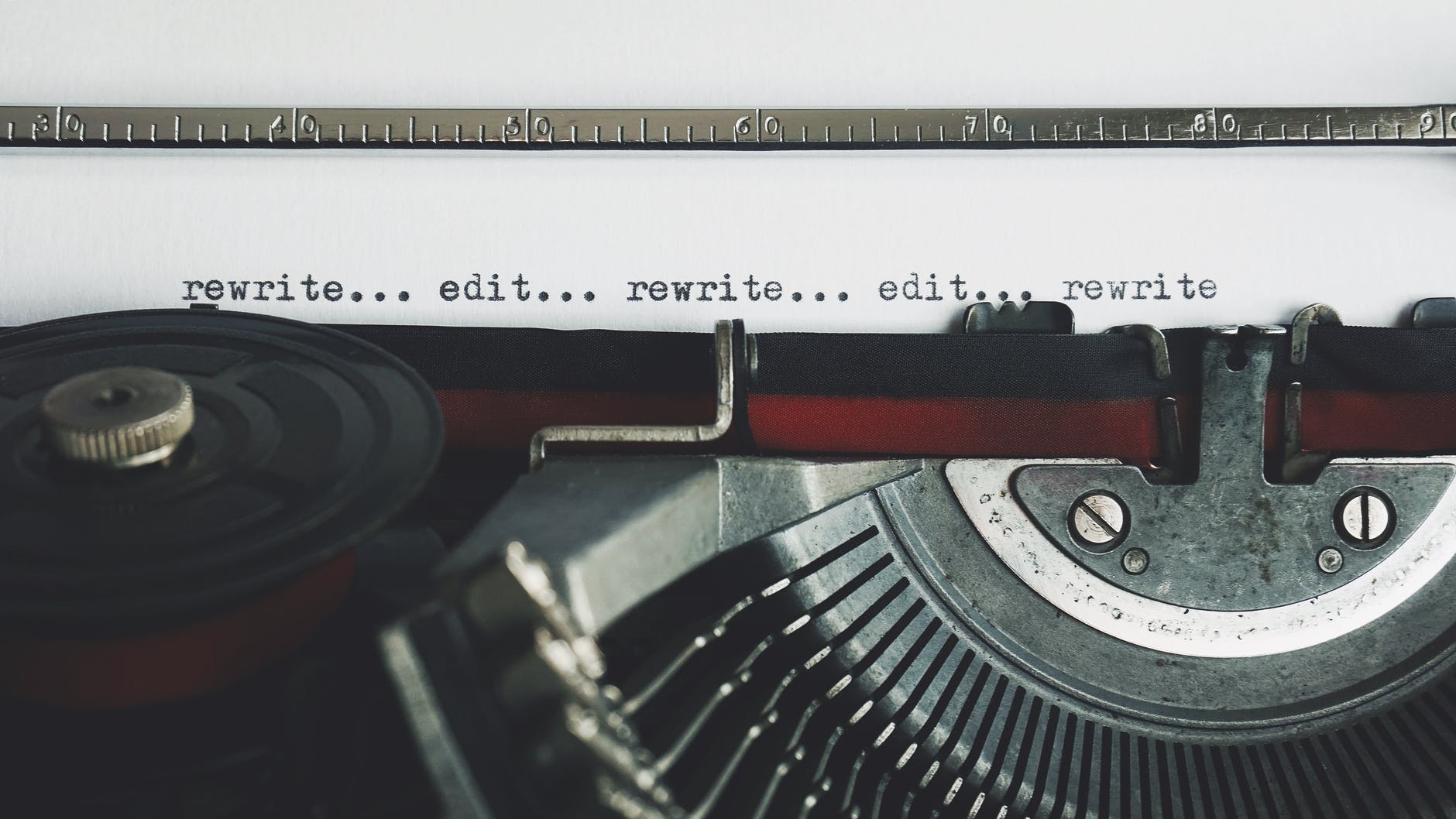
    The relationship between writer and editor is complicated, fraught, an emotional and ethical minefield ready to detonate and splatter the room with shattered egos at any moment.  I would know—I witness this brutal conflict from both sides on a regular basis. (And right now, my editor side is telling my writer side to chill the hell out with the over-the-top imagery.)

    I’ve been a writer since I could speak; I started making up stories, and unlike most kids I just never stopped. My dad is a writer, and his father was too—I guess it’s the family business. And since high school, when there were yearbooks and school newspapers that needed staff, I’ve also been an editor. If I’m being honest, I think my attraction to editing is probably a manifestation of OCD, or just uptightness—I just really don’t like mistakes, and I always feel a compulsion to fix them. Everything else is just finessing details.

    The first time I worked as a professional writer was in 1999. Conrad Black had founded the National Post and was raining money on an old-fashioned newspaper war with The Globe and Mail. One of his projects was rebooting the moribund Saturday Night magazine as a weekly insert in the Post. Adam Sternbergh, today a novelist based in New York City, was hired to edit the front section, which he envisioned as a collection of eccentric tidbits. He approached me to contribute after a mutual friend showed him one of my zines. I would pitch him ideas, and he would always pick the weirdest ones, like a found poem made of notes I’d seen inside a parking lot attendant’s booth. The pay was good—without getting into numbers, let’s just say that a single-line gag (about how Toronto’s Anarchist Free School was not, in fact, free of anarchists) paid me more than twice what I’m getting for this entire article. As I write this, nearly every sentence reads like a snapshot of a bygone era; at the time, I figured my career would just grow from there—little did I know!

    (Right now, my inner editor is asking whether all this detail is important; my inner writer insists that it adds context and colour to the story.)

    Just as the era was, in retrospect, impossibly freewheeling and prosperous by the standards of our current Darwinian capitalist dystopia, Adam was the kind of editor you’d dream of having, but rarely actually end up with. His notes would always lead with praise, then get into constructive, actually helpful suggestions for how I could flesh out my ideas to make them better. I try to follow his example, though I don’t always succeed.

    As an editor, I want to respect the writer’s voice, but sometimes you have to do some heavier lifting. You might be surprised at the state of the raw copy that comes in from some professional writers, even some you might have heard of. As much as I like to encourage good technique, the truth is that if you have a strong voice and a solid area of expertise, that can be much more valuable in a career than writing chops per se—as long as you are okay with trusting your editor to clean up your mess.

    Some editors will just change your copy without asking. Needless to say, as a writer that always bugs me, except on the odd occasion when I can’t deny that it has improved on the original. For example, when I first moved to Montreal, I did some writing for a fashion magazine that was essentially just the vanity project of some rich douchebros. My editor, frustrated with his publishers’ demands for low-quality content, had assigned me a piece about how TV is really great, or something (the details are a little fuzzy in retrospect). He ended up rewriting it to the point where it was much more his piece than mine, but secretly I had to admit that what he wrote was funnier.

    A few years later, I was working as an editor at the alt-weekly Montreal Mirror. A writer submitted her review very close to the deadline, and I rewrote some of her copy at the last minute. She was not happy and went over my head to complain to the editor-in-chief (pro tip: this is a risky move), who gently advised me to take it easy with my on-the-fly rewrites. I was extremely irritated and bitched about it to a few close people. When I told my dad, after a pause he said, “Yeah, I used to spend as much time writing angry letters to my editor as I did writing the article.” It was only then that I began to perceive that I might have been in the wrong. I regret my actions now, but I console myself that if my most heinous editorial sin was a misguided rewrite of a Jim Carrey comedy review for a now-shuttered paper, it could be worse.

    So I always try to look at things from both sides, the writer’s perspective as well as the editor’s. I have to, because I never know which side I might end up on. Last year, I found myself assigning and editing an article by my former editor at the long-gone fashion magazine. And one of the writers I hired at the Mirror is editing this very piece that you’re reading right now. I hope she’s not too hard on me. It’ll be in on time (pretty much) and at the right word count (more or less). After all, I am a writer: a neurotic ball of insecurity, sensitivity, and need. Just the kind of writer my inner editor can’t stand, really. But that is a story for another time (specifically, the next time I can afford therapy).


    Credit: Daniel Lafleche

    Malcolm Fraser is a writer, musician, and filmmaker based in Montreal. His book Wooden Stars: Innocent Gears was published by Invisible Publishing in 2013. Malcolm is currently Associate Editor with Montreal Review of Books.
  • Dreadlines: Conquering the Fear of Submission—by Nicola Sibthorpe

    Dreadlines: Conquering the Fear of Submission—by Nicola Sibthorpe

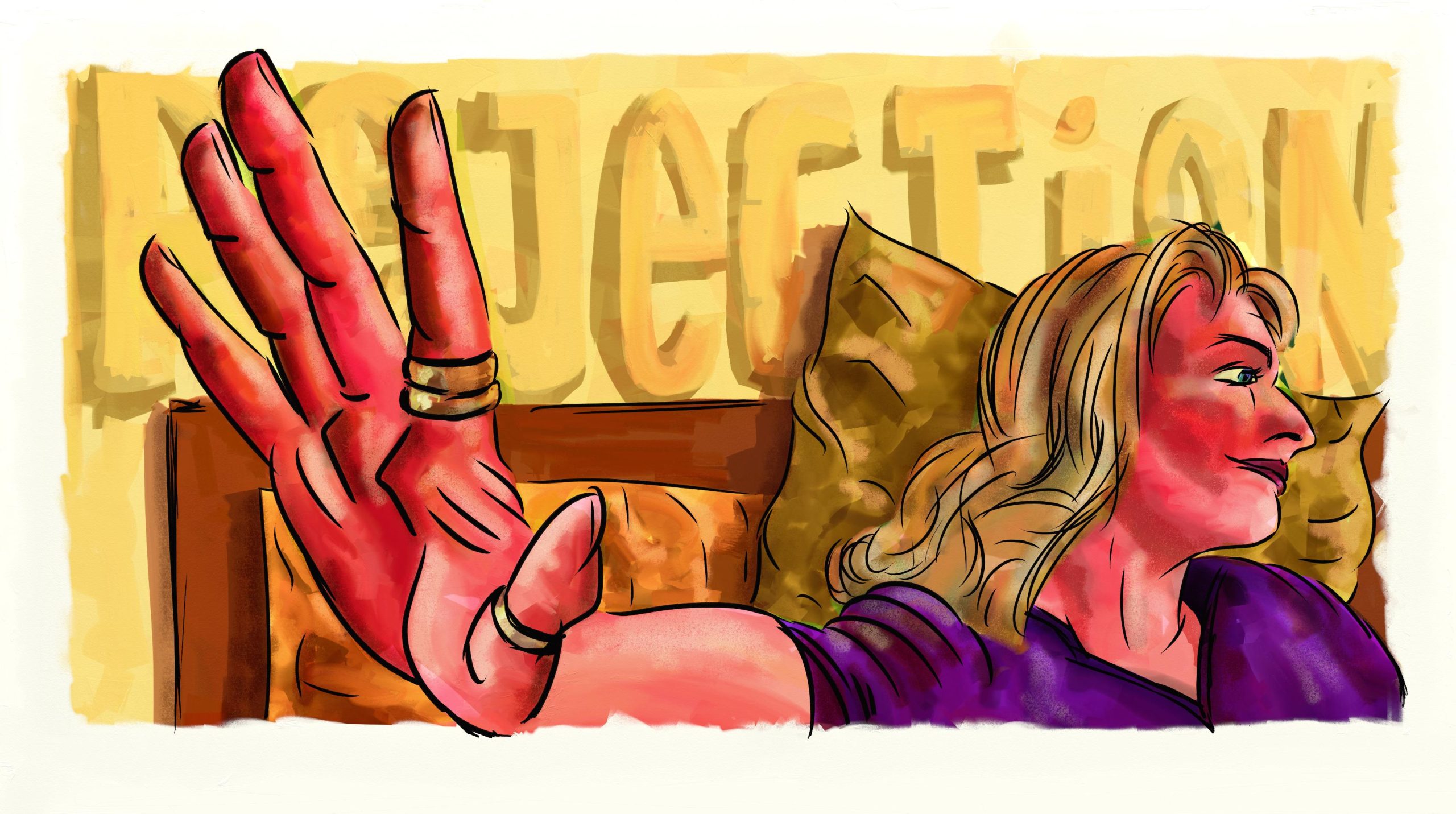
    I am bad at submitting my work. Too often I build up rejection in my mind to be a personal commentary on my writing and on my future as a writer. Yet rejection, as any writer can tell you, is anything but final.

    First there is the self-rejection. I find it difficult to tell when a piece of work is done. I nitpick and fuss over it during the editing process until I resent the work. All I see are its faults. When I feel like I can still improve upon it, I don’t want to submit a piece to an editor or contest judge.

    Setting aside a piece is sometimes the most effective way of continuing to love a piece. I can return to it weeks, or months, or even years, later to rediscover the bits that worked and fix the parts that didn’t. I find editing difficult to do until I’ve put distance between myself and the work. Confidence is important in publishing, and it’s easier to be confident in my abilities as a writer when I can read the work as an outsider.

    “I nitpick and fuss over it during the editing process until I resent the work.”

    Then there’s the fear of outside rejection. The faceless and powerful jury intimidates me. I wrote the poem, “Artemisia Absinthium,” in the first year of my undergrad, and the editing I did for it was minimal. I remember the poem developed naturally from its source material. It poured out in one sitting. I was excited and passionate about it, and I remained so when I submitted it the first time to Headlights, a journal published by graduate students in the English Department of Concordia University.

    This was my second time submitting to a publication, and I saw it as a low-risk way to practice the process. Having it accepted gave me the boost in confidence I needed to begin considering larger competitions and publications.

    Less than a year later, I submitted the now-published poem to the QWF Literary Prize for Young Writers. It felt like the next step. I had submitted my piece to a journal that was unpaid and circulated almost exclusively within Concordia, and now I could submit it to a competition that was professionally judged and would potentially reach a wider audience.

    Submitting it was hard, but waiting for a response was easy. I had been working on making rejection a thing to look forward to, saving each email and using them as a mark of pride. The best ones included a note of encouragement or advice that I could proudly print off to remind myself that I was learning and growing as a writer.

    “I had been working on making rejection a thing to look forward to, saving each email and using them as a mark of pride.”

    Submitting to the QWF prize was the culmination of several important lessons and writing practices. When I heard the positive news—I’d won!—what was even more exciting than receiving the award was receiving the jury’s comments. I am a staunch believer in the work no longer belonging to the author once it has been released into the world. One of the most rewarding parts is learning what other people thought of a piece without your input or thought process. Having the opportunity to share my work with a larger community, and to meet so many wonderful Quebec and Canadian authors at the QWF Awards Gala, is an experience I will cherish fondly for the rest of my life.

    NicolaSibthorpeLindaMorra
    Nicola Sibthorpe receives the inaugural QWF Literary Prize for Young Writers for a published short story, poem or work of non-fiction by writers age 16 to 24. You can read Nicola’s winning piece, “Artemisia Absinthium,” in Carte Blanche.


    NSibthrope_headshotNicola Sibthorpe is a Montreal-born, Creative Writing MA student at Concordia University. She is interested in folktale and mythology, and the subversions that accompany them. She was the inaugural winner of the QWF’s Literary Prize for Young Writers in 2017. Beyond spending her days writing, she is also a teacher, and she enjoys spending time with her cat and a good cup of tea. You can find her on Twitter @NicolaSibthorpe.

    Photo Credits: Roy Blumenthal (header banner); John Fredericks (Nicola Sibthorpe receives prize); Michael Araujo (headshot)

  • Ghostwriter by Peter McFarlane

    Ghostwriter by Peter McFarlane

    Working as a ghostwriter is not something you plan for; it is something you stumble into. In my case, it began when an old friend, a political activist who had long spoken about wanting my help in putting a book together, called to say he had found a private source of funding for it. Was I interested in writing it?

    It was a subject I had some a background in so I was able to rough out an outline in a couple of weeks. We got together every couple of months for two-day work sessions and within a year we had a manuscript and a publisher. While I was wrapping up that project, another friend recommended me to someone else who had a story they wanted told, and some funding for it.

    This time the world I would be writing about was one I was unfamiliar with, but I liked the subject of the book and I decided to give it a shot. It was during this project that I began to understand what a privilege it can be to tell someone else’s story. I had written biography before, but this was a strange hybrid: a first-person biography. In a very real sense, you become the person you are writing for, internalizing their thoughts and feelings as you use all of the tools at your disposal to tell their story as if was your own.

    “I began to understand what a privilege it can be to tell someone else’s story.”

    Part of the job is also putting the subject and their life in a larger context. This means researching time and place and weaving their narrative into the world they inhabit. In this, you can allow yourself a measure of literary freedom, secure in the knowledge that the character whose life you are temporarily inhabiting will get a chance to look over your shoulder and make whatever corrections are necessary.

    In this case, the book was for someone who had a brief media fame but for the most part lived under the radar. And it was an admirable life. A man with principles and convictions and an unwavering sense of solidarity, moving through a world that was often unwelcoming and at times outright hostile. But he stood his ground and pushed forward and through the force of character made a success of things. That is how the story played out. An honest man confronting his times without compromising his principles. I was pleased that the first publisher I approached picked it up. The experience confirmed to me the truth of the cliché that everyone has a book in them—at least in the sense that all of our stories are worth telling. And for a writer, telling those stories can be as rewarding as any other literary form.

    “The experience confirmed to me the truth of the cliché that everyone has a book in them—at least in the sense that all of our stories are worth telling.”

    About ghosting in particular, I learned that even what was supposed to be a negative turned out to be a positive. I am speaking about the fact that your work goes unrecognized by the larger public. This might have mattered when I was twenty-five but now that I am over sixty it is a hidden benefit, as I discovered at the launch of my activist friend’s book. It was a relatively big event, with about 200 people packing a hall in Toronto for an on-stage interview. I sat near the back and it was one of the most pleasant literary events I ever attended. I had dinner with my friend before the event and we went out later with others to celebrate. The next day, my friend left for a long but low-budget book tour. I returned to my home in the Laurentians, realizing that I had the best of both worlds: the satisfaction of having written a decent book that was off to find its public and freedom from the obligations that accompany book publishing.

    So when the publisher of the recently completed book asked if I would like him to add my name on the cover, I unhesitatingly declined. When the work is finished, better to be free to move on to the next project while someone else has the chore of flogging it. Ghostwriting a book, I discovered, can be a bit like ghosting a party. When you have had your fill, and your fun, you can slip away without stopping for those awkward good-byes.


    Peter McFarlane has written five books of nonfiction, including two ghostwritten books, as well as more than 100 newspaper and magazine features. He has specialized in Indigenous history and politics and has worked on several CBC radio programmes as a researcher and on-air contributor. He is currently completing another ghostwritten book and a new work of non-fiction.

    Photo: Flickr