Tag: children

  • Writing, Mothering, and the Wild In-Between—By Gillian Sze

    Writing, Mothering, and the Wild In-Between—By Gillian Sze

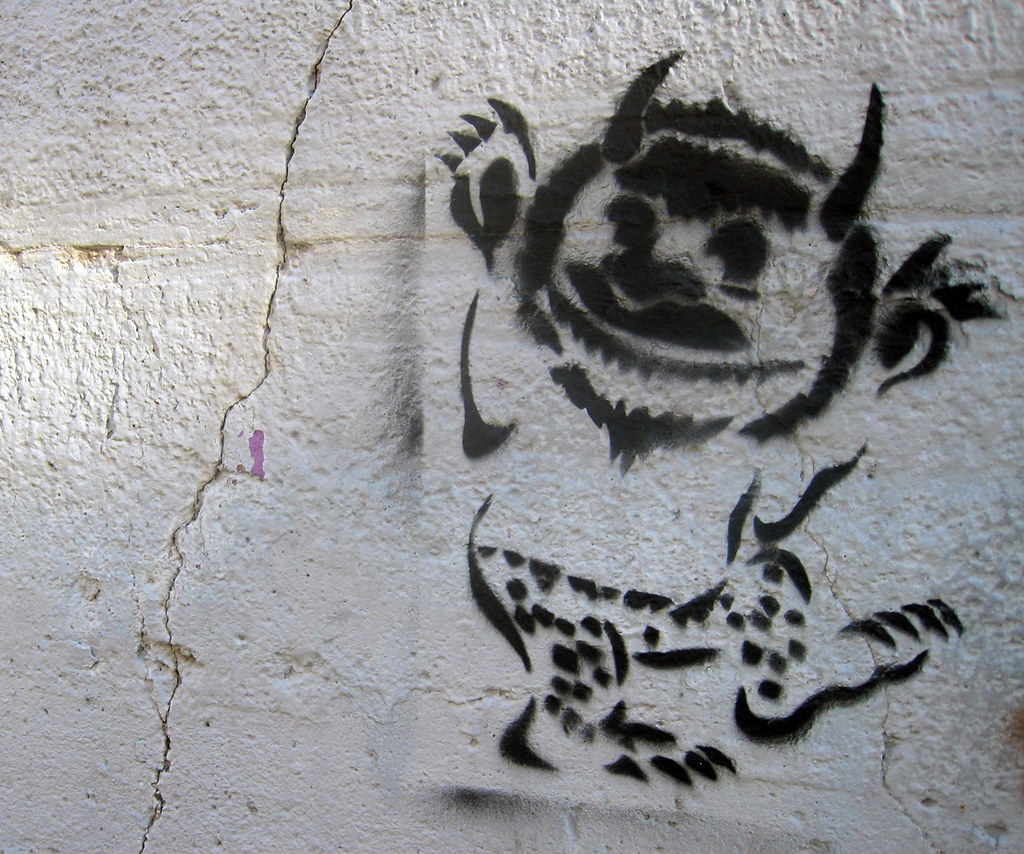
    My first reading of Maurice Sendak’s Where the Wild Things Are was as a parent. Growing up, I somehow managed to miss this childhood classic, which I now recognize as surprising given its widespread popularity. I was given the book as a gift when I was pregnant with my son, and even then I didn’t read it until after he was born. I kept it safe, waiting on a bookshelf along with the other picture books we received.  

    After my son was born, we were advised that it was never too early to start reading to him. We filled those tiny periods when he was awake with reading. I reacquainted myself with books I hadn’t picked up in years: Mercer Mayer, Robert Munsch, Margaret Wise Brown, Eric Carle. My husband, who took the advice to heart, started with Beezus and Ramona, Charlotte’s Web, and The Hobbit. (It took weeks but we eventually completed them in small increments.) Included in our stack was, of course, Where the Wild Things Are. 

    I was struck by the sparsity of the opening pages of text, words just hanging on their own like Sapphic fragments, sentences spilling across pages. With each page turn, the white frames of the illustrations shrink, the images fill up each page until we follow Max into his dream. When Max announces the commencement of the wild rumpus, what follows is three illustrated spreads of the boy reigning over the beasts. Time passes on those pages, without a single word in sight. 

    *

    When I entered motherhood, I simultaneously found myself entering a period of wild wordlessness. Bleary eyed, I was keenly aware of time and sleep. I saw time racing along as my son filled out his onesies. I saw time cherished as much as it was squandered as I lay beneath my sleeping son, not daring to move lest he wake up again for the thousandth time. I saw time slipping away as more (if not all) of it became devoted to caring for him. I oscillated between too little time (his naps were either short or nonexistent) and too much (nursing in the dark, exhausted and impatient as each passing minute stole from what was left of my own slumber). Moreover, I struggled with how to use my time as both a writer and a mother—the former of which I had identified with for much, much longer. I didn’t know how to fill—or not fill—that time with words as I once had. 

    Sendak’s illustrative spreads in the middle of Where the Wild Things Are remind me of what Anne Carson says about the middle section of To the Lighthouse. Carson describes Woolf’s book as “a novel that falls asleep for twenty-five pages in the middle” (22). Set at night, Part II of To the Lighthouse is entitled “Time Passes,” and describes the changes that affect the characters, their lives, and the house. As the characters in both Sendak’s and Woolf’s works go through their necessary transformations, I realized how possible it was to hold these books and sense Time passing both in words, as Woolf had written, and wordlessness, as Sendak had drawn.  

    In truth, I didn’t know how to “read” those illustrations when I flipped to them with my son. At first I felt compelled to fill the silence with my own commentary, and so I did. “Howling at the moon! (page flip) Swinging! (page flip) Marching!” Eventually, I learned just to observe my son take in the pages, looking at the images without my input.

    However which way Time moved (Mr. Ramsey stumbling in grief along a passage, or little Max riding triumphantly on a wild thing, or my son letting go of the table edge for his first steps), it just did. My anxiety about never writing again lived along with me through those day naps and night feedings. I accepted that becoming a mother meant having to lose myself as a writer. This primal and sleepy period of adjusting to a new person was tinged with mourning. My husband, supportive if exasperated, would remark on my melodrama. But at the time it felt true. It’s only now as my son is approaching six and his toddler-sister is starting to sleep through the night, that I recognize this tumultuous era as something transformative for me as a writer. I think of Carson’s wise assertion of the chapter “Time Passes”: “Virginia Woolf offers us, through sleep, a glimpse of a kind of emptiness that interests her. It is the emptiness of things before we make use of them, a glimpse of reality prior to its efficacy” (23). 

    Words, much like Max voyaging towards wakefulness, eventually “sailed back over a year and in and out of weeks and through a day.” It may have taken a little longer, but we arrived together… changed, relieved, and a little sleepier. 

    Works Cited 

    Carson, Anne. Decreation. Vintage Canada, 2005. 

    Sendak, Maurice. Where the Wild Things Are. Fiftieth Anniversary ed., Harper Collins, 2013.

    Gillian Sze is the author of multiple poetry books, including Peeling RambutanRedrafting Winter, and Panicle, which were finalists for the QWF’s A.M. Klein Prize for Poetry. Her forthcoming prosimetrical collection, Quiet Night Think, explores the early shaping of a writer, the creative process, and motherhood, and will be published next spring with ECW Press. Since becoming a mother, Gillian has started writing picture books and has two books forthcoming with Philomel Books (Penguin Random House USA). Her first picture book, The Night Is Deep and Wide, was recently released in March. www.gilliansze.com

    Photo credit: “Where the Wild Things Are” by Skinned Mink is licensed under CC BY-SA 2.0 (header banner); Nadia Zheng (headshot)

  • Realists of a Larger Reality (Or Why I Read and Write Science Fiction)—By J. DeLeskie

    Realists of a Larger Reality (Or Why I Read and Write Science Fiction)—By J. DeLeskie

    I started reading science fiction young, before realizing it wasn’t suitable material for a girl with aspirations of fitting in with her fourth-grade contemporaries. It was the genre my dad and older brother favoured, and the surfaces of my childhood home were littered with paperbacks with lurid covers: a dinosaur riding an ichthyosaur across the desert (Jack Chalker’s Midnight at the Well of Souls); or a humanoid cat glowering over a worried-looking, two-headed tripod (Larry Niven’s Ringworld). Who could resist opening these books to see what tales lay inside? Not I.

    I soon discovered that the sex scenes in these books were way more interesting than the chaste kissing and petting the kids at Sweet Valley High were up to (albeit in a Dürer’s Rhinoceros sort of way; in retrospect, many of these old-school SF authors did not appear to possess firsthand knowledge of female anatomy or— you know—the actual mechanics of sex). Soon I was hooked, and not just for the salacious content. When the reality of being an introverted, slightly awkward kid attending Catholic school in rural Ontario became unbearable, I’d escape to Arrakis and lose myself in the messianic journey of Maud’Dib, or follow the adventures of a resurrected Richard Burton (the explorer, not the actor) as he searched for the source of the great river on Riverworld.

    By my teens, I contained within me an archive of worlds, characters, concepts, and stories that enriched my life immeasurably. The trade-off—a sense of not quite existing on the same planet as many of my peers—was worth it, even if it didn’t always feel that way. Not only did science fiction provide escape, it was an antidote for religious indoctrination, challenging the conservative, Catholic vision of the world I had been raised to accept as my own. My allegiance was to a universe far bigger and weirder than anything Christian dogma could encompass.  

    At some point in my early twenties, however, I stopped reading science fiction. I lost patience with the flat characters, clunky prose, and outright misogyny that typifies so much of the genre. My reading began to veer toward realism and non-fiction. In retrospect, I think I was trying to accept the world as it was, to put away childish things. I went to law school, got married, had kids, and embarked on a career as a corporate lawyer. I felt I no longer had the luxury of questioning the world as it was; my job as an adult was to succeed according to its metrics.

    Yet gradually, as my kids grew older and began asking the thorny questions that kids ask, I started to wonder if my acceptance of things had gone, perhaps, too far. It took a few years, but I managed to find my way out of the corporate cul de sac. And slowly, I found science fiction again. I rekindled a childhood love for Ursula K. Le Guin and was dazzled by her ability to imagine less destructive ways of organizing society. I read Octavia Butler for the first time and was astonished by her depiction of society collapsing into a racialized dystopia— and then being rebuilt, one community at a time. These authors and others—Marge Piercy, Kim Stanley Robinson, Corey Doctorow, Karel Čapek, etc.—eroded the shell of cynicism I’d formed over my conscience by insisting that there was nothing inevitable about environmental degradation, white supremacy, capitalism or misogyny.

    Thus, when I decided to try my hand at writing, it was science fiction that called to me. I’m now in final revisions of my first novel, Everclear, a coming-of-age story set in the near future in northern Quebec. The act of imagining this future feels laden with responsibility, and I’m attempting to construct this story with great care. I believe firmly that our words bring potential worlds into being.

    In her brilliant and fearless acceptance speech at the 2014 National Book Awards, Ursula K. Le Guin put out a call to “realists of a larger reality” who “see alternatives to how we live now and can see through our fear-stricken society […] to other ways of being, and even imagine some real grounds for hope.” The call is increasingly being answered by Indigenous, Black, and LGBTQIA writers of science fiction such as jaye simpson, Cherie Dimaline, Nnedi Okorafor, and N.K. Jemison— writers who, because of their lived experiences, assemble the pieces of our shared reality in unexpected ways. To me, this is the opposite of escapism; it’s an invitation to see the world with new eyes and answer the moral imperative this vision affords us. This is why I read science fiction, and why I write it: not to escape this world, but to re-imagine it.

    And, of course, for the cringy sex scenes.

    Suggested Reading List

    Love After the End: An Anthology of Two-Spirit & Indigiqueer Speculative Fiction, edited by Joshua Whitehead, 2020

    The Dispossessed: An Ambiguious Utopia, by Ursula K. Le Guin, 1974

    Woman on the Edge of Time, by Marge Piercy, 1976

    The Parable of the Sower, by Octavia Butler, 1993

    Ministry for the Future, by Kim Stanley Robinson, 2020


    Jennifer DeLeskie is a former lawyer and new writer, currently revising a draft of her first novel. Her non-fiction piece, “April 2, 2020,” will appear in Chronicling the Days (Guernica Editions), forthcoming in Spring 2021. Jennifer volunteers on the board of the Quebec Writers’ Federation.

    Photo credits: Header banner is licensed under CC BY-SA 2.0; Annabel Simons (headshot)

  • Writers Need Libraries; So Do Our Children—By Deborah Ostrovsky

    Writers Need Libraries; So Do Our Children—By Deborah Ostrovsky

    Not long ago, during the Before Times, I received a small award to pursue a non-fiction project. I planned to dedicate an entire week, maybe two or three, to writing without interruptions.

    The morning I opened my laptop to begin—it was World Book Day, which seems ironic now—I found an email from my daughter’s primary school. They needed a parent to volunteer at the library.

    Our primary school is fortunate to have a library at all. Many schools don’t have libraries. A primary school a few blocks from ours recently turned their library into a supply closet. Over 20 per cent of Laval’s public schools are without libraries, or enough books in classrooms.

    Radio-Canada reports that a quarter of all school boards in Quebec don’t have librarians. Our library is run by volunteers. We shelve. We search for lost books. Like a team of amateur first responders in an emergency room that should be staffed by qualified surgeons, we learn to repair the broken spines of bandes dessinées from video tutorials.

    The email from the school said that a few classes hadn’t been able to borrow books for months. Could you come today, maybe now, to turn on the computer and let the kids finally take some out?

    So I did what any emerging writer starved for time to write would do. I closed my laptop. I put on my coat. I rushed to the school. I stayed all morning and returned in the following weeks until the pandemic shut everything down. 

    Writing, editing, and translating are jobs that can sometimes feel easy to walk away from. This is especially so when other urgent business gets in the way—like helping to provide literacy and library resources for kids when neoliberal education budgets consistently sap them dry.

    It’s overwhelming to try and comprehend all the ways the arts, books, and writing are shaped by government policy. Even more overwhelming is the thought of my own personal luck at being born at the twilight of a golden age of state interventionism—right before the neoliberal assault on education. The idea of dedicating a life to writing would have never been possible for someone of my family’s background without policies that made public libraries, and librarians, part of every school.

    “Books have their sources in, are made from readers (would-be writers) reading other people’s books,”muses Kate Briggs in her book This Little Art. “All books are made from other books,”she writes. Anything I have ever written, then, has come in some way from other books, and in turn from a childhood of reading books that had date due slips glued to the back cover, and which were tucked under my pillow at night. The stories within these books made their way into my dreams. These books were always borrowed. They belonged to my public school.

    Now school libraries only open when parents have the income and the time to spend mornings taping together torn pages of Astérix.

    It’s okay, a parent told me a while ago when we talked about this. We have plenty of books at home.

    Lucky you, I thought. And what about those who don’t?  

    Lucky me, though. I get to write. It’s a privilege, in today’s economy, to do this thing with my life. But access to a school library should be a right, and not a privilege. The deep connections between my privilege and this right are buried somewhere within the early manifestations of my own creative desires over which I can take some measure of ownership; but they were undeniably helped along by state policy, making it possible for the artistic inclination and writerly imagination to be fostered by something other than luck, wealth, or family. It can’t be denied. My writing life is a result of private ambitions but also public will.

    For now, I’ll keep writing until the school library finally reopens, when the pandemic is under control. Then the school will call and say that they need somebody to help the kids take out books. I should really say no, and stay at my desk, to avoid more interruptions.

    But I will say yes. I will do this until something in the system changes radically, so kids can get their hands on more books. Maybe some of those kids can write in the future, too. In the meantime they’re waiting, hopefully not for long.


    Deborah Ostrovsky is an editor, writer, and translator. Her work has been generously supported by the Barbara Deming Memorial Fund, the Marian Hebb Research Grant, the Banff Centre for Arts and Creativity, and the Writers’ Trust of Canada.

    Photo credit: Gopesa Paquette

  • Homeschooling in a Pandemic—By Greg Santos

    Homeschooling in a Pandemic—By Greg Santos

    In April 2020, we invited writers in Quebec to submit a story of a single day during the strange, uneasy time of coronavirus and pandemic, of social distancing and self isolation, of lockdown and quarantine.

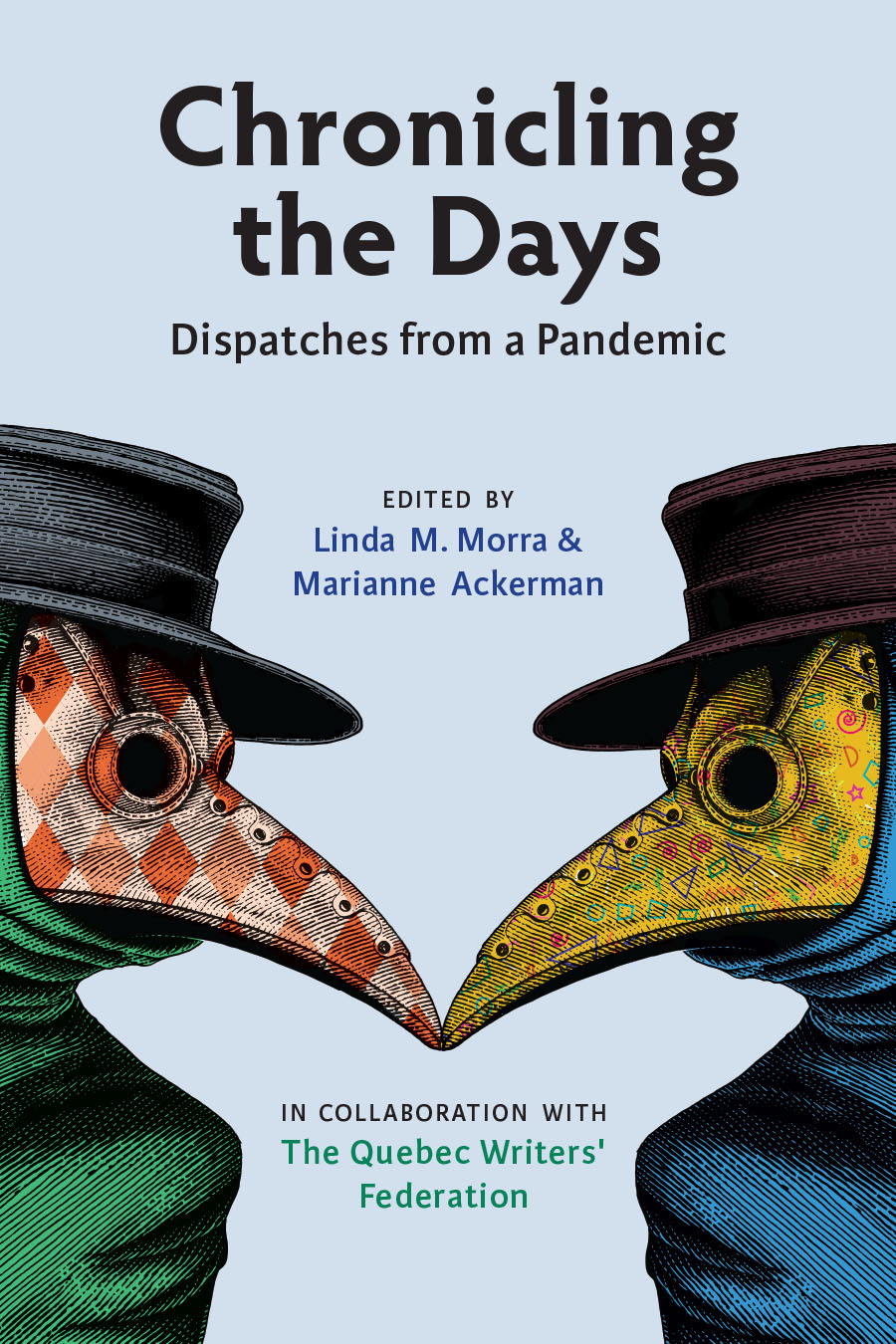
    We’re thrilled to announce that these stories have been gathered in Chronicling the Days: Dispatches from a Pandemic (Guernica Press). To learn more and buy the book, please visit https://www.guernicaeditions.com/title/9781771836579.

    Please also join us on the QWF FB Community page, and let the authors know if their words resonated.

    “You’re used to homeschooling your kids. What’s your advice to other parents who are now in your shoes?”

    In a Zoom meeting recently, I was asked this question by an acquaintance. Taken aback, I found myself struggling for a good answer. I rambled something incoherent about how it’s different now during the global COVID-19 pandemic, but I couldn’t properly articulate my thoughts, which left me terribly frustrated. As I write this, I am still struggling to make sense of all of this.

    To read the rest of the story, please support our community and check out Chronicling the Days: Dispatches from a Pandemic

  • Writing Post-Partum by Darrah Teitel

    I have this memory that I can’t shake. It is from a time of rebellion. I was in university, a baby feminist, aspiring playwright and general know-it-all. I was listening to Tori Amos’s latest album, Scarlet’s Walk, written post-partum. It stank, I declared to my roommate. Tori had lost her edge. She was writing about domestic themes, instead of masturbation and hating God. I began cultivating a theory: babies killed the cool in female artists.

    A few years later, I was in Montreal studying playwriting at The National Theatre School and Maureen Labonté was giving a class on this Canadian playwright none of us had ever heard of, Gwen Pharis Ringwood. Ringwood had written the award-winning Still Stands the House before getting married in 1939 and having four children. Although she continued to write, her main commitment, until the 1970s, was her family. A mother herself, Maureen raised her eyebrows at me. She knew it would plague me. The next few plays I wrote were explorations of why maternity and feminism were incompatible. I wrote one play about the contempt that ambitious, public women have for maternal, domestic women. I wrote another about how cool and sexually experimental Mary Shelley was before she accidentally had babies. And then, because I had tempted fate, I fell pregnant myself.

    And then, because I had tempted fate, I fell pregnant myself.

    What I knew of parenthood was that it is exhausting; I’d be harried with responsibilities but also full of joy. Though I wished this joy for myself and ultimately chose it, a fear began to grow alongside my fetus. I had learned that in order to write, a girl needs time, money and a room of her own. But I work for the federal Status of Women Critic, and I know the statistics. They show that the gender wage gap grows exponentially as soon as women become parents.

    Even if I tried to ignore the socio-economic barriers, I couldn’t help but notice the interpersonal ones. Many of my childless friends stopped inviting me to hang out, just assuming I was never doing drugs or having hot sex again. The fact that these assumptions were largely correct for the time being didn’t make them less upsetting. I found community elsewhere, which is to say online. One third of the blogosphere is composed of mommy blogs. Many mommy bloggers are really good writers who are totally obsessed with the experience of motherhood. They made me feel less lonely and for that I am thankful. I’ll digress to note that there is no daddy blogosphere.

    When I became a parent, I discovered that there is a fourth thing a girl needs in order to write. She needs something to write about. The greatest threat to my writing career was actually myself, or loss thereof. My plays usually discuss liberated feminine bodies, and they make my parents blush from their seats in the audience. Since having my son, I can’t even watch upsetting scenes from Game of Thrones without covering my eyes. I am not who I used to be.

    The greatest threat to my writing career was actually myself, or loss thereof.

    It’s hard for me to admit that I’ve changed. I’m not sure that I’m okay with it. But now, for the first time in two years, I have managed to get the time, money and space to write. I have a residency at a supportive theatre company, and my wonderful boss is willing to give me some time off to write. These opportunities are essential to writers like me, and are also so infrequent that I feel like the luckiest girl in the world. That’s three out of four. As for number four, it’s coming. I find myself faking it a little, but starting to feel glimpses of the real thing. Like learning to have an orgasm with a new partner, I must familiarize myself with a new body and for the first time, the new body is my own.

    I have come to realize that there are women with small children working, writing. When I was at rehearsals for my play, The Apology, I had a nursing five-week-old in a sling. Joan MacLeod came up to me and welcomed me to the club. On Mother’s Day she sent me a section of Kim Collier’s Siminovitch Prize acceptance speech from 2010: “In a lot of ways I felt like a pioneer – creating ways for these two huge commitments to live together. And I believe one of the great gifts Jon and I gave to our theatre community was an example that it was possible, that family can be the centre of your life while your theatre work is too. To all women director/creators with children: bravo, be brave and break the mould – carry them in the hall, breastfeed between the seats, go on tour together, whisper about process and actors and what worked and what didn’t. Include your kids in your life, let them learn from your passion.”

    And so this is where I am at: I have vowed not to confuse first words or breastfeeding with interesting material for plays, and this article is the closest I plan to come to mommy blogging myself. But I’m writing through my fears. And sometimes, I even write about the kid.


    Darrah Teitel is a playright and graduate of the University of Toronto and the National Theatre School of Canada’s Playwriting program. Her plays have been produced across Canada and her journalism, fiction and poetry have appeared in various periodicals and journals throughout the country. Darrah’s play Corpus is the winner of the Calgary Peace Play Prize, the In The Beginning Playwriting Award and the 2011 Canadian Jewish Playwriting Award. Her play The Apology was nominated for the Dora Mavor Moore Award and the Betty Mitchell Award for best new play. The Apology won the Calgary FFWD Audience Choice Award for 2013. She was a member of the Banff Playwrights Colony in 2007, 2011 and 2012, and was a 2010 MacDowell Colony Fellow. Darrah is currently the playwright-in-residence for the Great Canadian Theatre Company and is working for the NDP Status of Women Critic. Corpus will be produced by Teesri Duniya Theatre in November 2014 in Montreal.