Tag: community

  • Keep Calm, Shut Up, and Write—By Lea Beddia

    Keep Calm, Shut Up, and Write—By Lea Beddia

    One full-time teaching job (hybrid online teaching included), three school-aged children (complete with homework, lunches and the occasional emotional meltdown), and one pandemic (anxiety I never thought I’d have, a bonus). Add a house to help maintain, and there’s no time for a creative outlet. It’s enough to turn me into a Netflix zombie. You may be busy like me, but even if you’re not, you may find your creativity stifled, vacuum-packed, and freeze-dried during this whole soul-sucking, stay-at-home-and-don’t-come-out situation. The state of the world is so real, yet surreal and heart-breaking, that my aspirations for all my wonderful ideas and plots are twisted up with anxiety, sleeplessness, and an obsession with watching the news. Enter Shut Up and Write.

    Shut up and Write: the name says it all. We really just shut up and write, for twenty-five minutes at a time followed by five-minute breaks. I don’t know about other writers, but in twenty-five minutes of absolute silence, with nothing but focus and my fingers tapping away, I’m more productive than during a full weekend in front of the television with my kids on my lap spilling popcorn all over me. It’s such a great stress-reliever to know I’m prioritizing myself ahead of my to-do list. I commit to be present when all my best-laid schemes have gone awry, and it’s the only chance for the stories swarming my head.

    I myself never attended the in-person sessions. I live an hour out of the city, and taking a Saturday morning away from busy mom life was not feasible. But since the sessions have moved online, we’re only limited to the distance our laptop charges will allow us to roam. I started attending after my QWF mentorship ended last June. I was so close to finishing what I had started and needed a little extra push to get my manuscript done. The result, for me: a manuscript completed and queries written.

    More importantly for my soul and morale, however, are these tenacious people, who like me, are ignoring real life for a little while to meet online and pursue personal or professional writing. Every time I sign up for a session, there’s this excitement: I’m going to see other people, and they’ll be writing, because their writing is important to them, too!

    I miss meeting with my writing critique group: an ensemble of talented, funny women who I met during a workshop, now almost two years ago. We still keep in touch, but each of us admits to lacking the energy and/or time for our writing, because “How can I not place my family, health, work, fresh air, and rabbit hole of online shopping ahead of writing?”

    SUAW is my antidote to isolation. I have something to look forward to in a time with no appointments or visits. I’ve found a community of writers willing to have my face in a two-inch square on their screen for two and a half hours a few Saturdays a month. Loneliness is at bay when I write during these sessions. There’s camaraderie in knowing we’re all struggling for time to be creative. I am grateful for the connections I’ve made.

    In our five minutes off, we chat, and in a short time, we share what we’re working on, or talk about recipes and make each other laugh. We’re all starving for positive human connections to people with a common interest and here it is, at my fingertips! When those five minutes are up, I’m like a superhero, relinquishing the destructive powers of procrastination because I’ve got twenty-five minutes to make the rest of my story shine, or at least get it from my head to my screen. Good enough.

    We may all be “Zoomed-out” and tired of hearing “You’re on mute” or “Can you mute yourself, please?” But to be honest, I kind of like it when someone forgets to turn off their mic and I can hear their keyboard clicking. It’s not a race, but it gets me going every time.


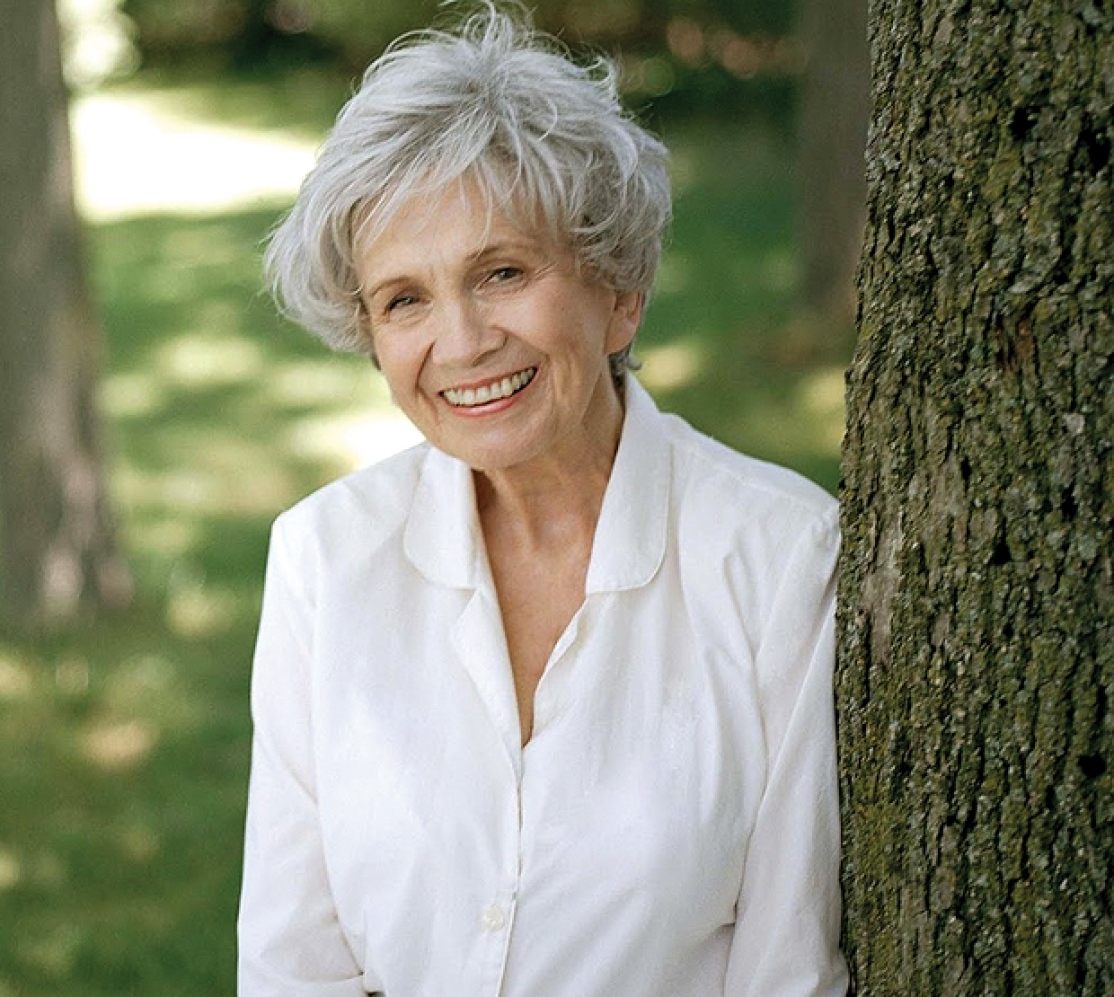
    Lea Beddia is a high school teacher, writer for young adults, and mom of three. She grew up in Montreal and now lives in the woods, on top of a mountain. She’s published short stories for young and old and you can find her work @LeaBeddia or www.leabeddia.com. In her free time (those rare, glorious moments), you can find her with her nose in a book, tuning everything out.

    Photo credits: Header banner is licensed under CC BY-NC-SA 2.0; Sarah Fortin Photographe (headshot)

  • Creating Community with Disabled Writers—By seeley quest

    Creating Community with Disabled Writers—By seeley quest

    Now is a time to gather disabled writers and our allies in direct community together. Writing practice shared in company among disabled people expands our consideration of how embodied variations inform our writing perspectives, and how our writing helps us understand embodiment. Whether virtually through videoconferencing or in person, I am keen to encourage events specifically centering disabled writers.

    Bodies and minds are linked; psychological and other cognitive differences manifest through a brain’s interactions with its bodily systems, so all of our experiences are fundamentally embodied. Our unique body-minds are what our writing comes through; let’s celebrate how the written word can share our particularities with the world.

    Writing practices that occur when we’re solitary can be powerful and necessary lifelines. Many people, disabled or not, get satisfaction and relief from journaling, “morning pages,” and other forms of writing for themselves; sometimes there’s no need to connect output to a larger community.

    Yet, sharing creative writing via virtual platforms can be particularly important to people who have less access to public spaces physically or cognitively. Familiar with social isolation, linking ourselves through correspondence helps sustain us. When health conditions permit them, more in-person gatherings are also valuable to grow the collective body of our writing work.

    Part of my agenda is to uplift disabled writers who are sharing work in public events and productions. The essay “My Arrival at Crip” makes excellent observations on becoming attentive to the presence and impact of disabled, chronically ill, and Deaf writers assembling in civic spaces. For writers with a newer relationship to disability, it’s especially profound to learn how poets who are “out” as disabled can change the political possibilities for everyone. Public notions of “ableness” are shifting, as living conditions shift during the pandemic, challenging our mental and physical health. The legacies of fierce “out” writers can offer guidance.

    Language is fundamental to how we conceptualize disability. Word choices undermine or reinforce associations that valorize hyper-ability, and have consequences. We have the option of using more neutral vocabulary instead of terms freighted by stigma like “handicapped” or “deficient.” “Atypical” is one option, and “atypique” in French is emerging as a descriptor chosen by the disabled community in Quebec. For more on how to shift from oppressive choices, there are great resources like this one: https://www.autistichoya.com/p/ableist-words-and-terms-to-avoid.html.

    Our work may get special attention in the frame of “disability arts” or “disability aesthetics,” a category for funding support. However, defining such writing as separate from and more worthy of recognition than art therapy, stream-of-consciousness writing, or fan fiction by disabled authors doesn’t serve the whole. Our future lies away from capitalist divisions. We must embrace arts practices associated with therapy. The need for therapeutic pursuits and for accessible arts engagement will grow. In workshopping and community spaces, I invite those with different experience levels of writing. Whether we are neurodiverse, are experiencing new or episodic disabilities, or are a language and sensory minority like the Deaf: all our work has value. People who aren’t sure of applying the term “disability” to their experiences are welcome comrades too!

    When we don’t shy away, there’s so much to explore of what our body-minds might know in common: those considered able and typical, those that vary and diverge, writing both from individual experiences and in relationship to each other. Let our texts layer into expanding knowledge to enrich the entire writers’ community.


    Photo credit: Coral Feigin

    seeley quest is a trans disabled writer, organizer, and environmentalist, in Montreal since 2017. Sie has made literary and body-based performance since 2001, and presented in Vancouver, Toronto, Ottawa, and many U.S. cities. Sie has poems in the book Disability Culture and Community Performance: Find a Strange and Twisted Shape, and in Fiction International. Hir playscript Crooked will be published in September in At the Intersection of Disability and Drama: A Critical Anthology of New Plays. Recent appearances include reading at le Salon du livre de Montréal and leading workshops with QPIRG-McGill, articule, and Head and Hands. Not on social media, sie email connects with comrades: find more at https://questletters.substack.com.

    Look for an announcement soon about new plans in 2021 for seeley’s QWF workshop; visit https://qwf.org/activity/poetry-and-prose-writing-from-the-body-mind.

  • The Art of Connecting—By Joel Yanofsky

    The Art of Connecting—By Joel Yanofsky

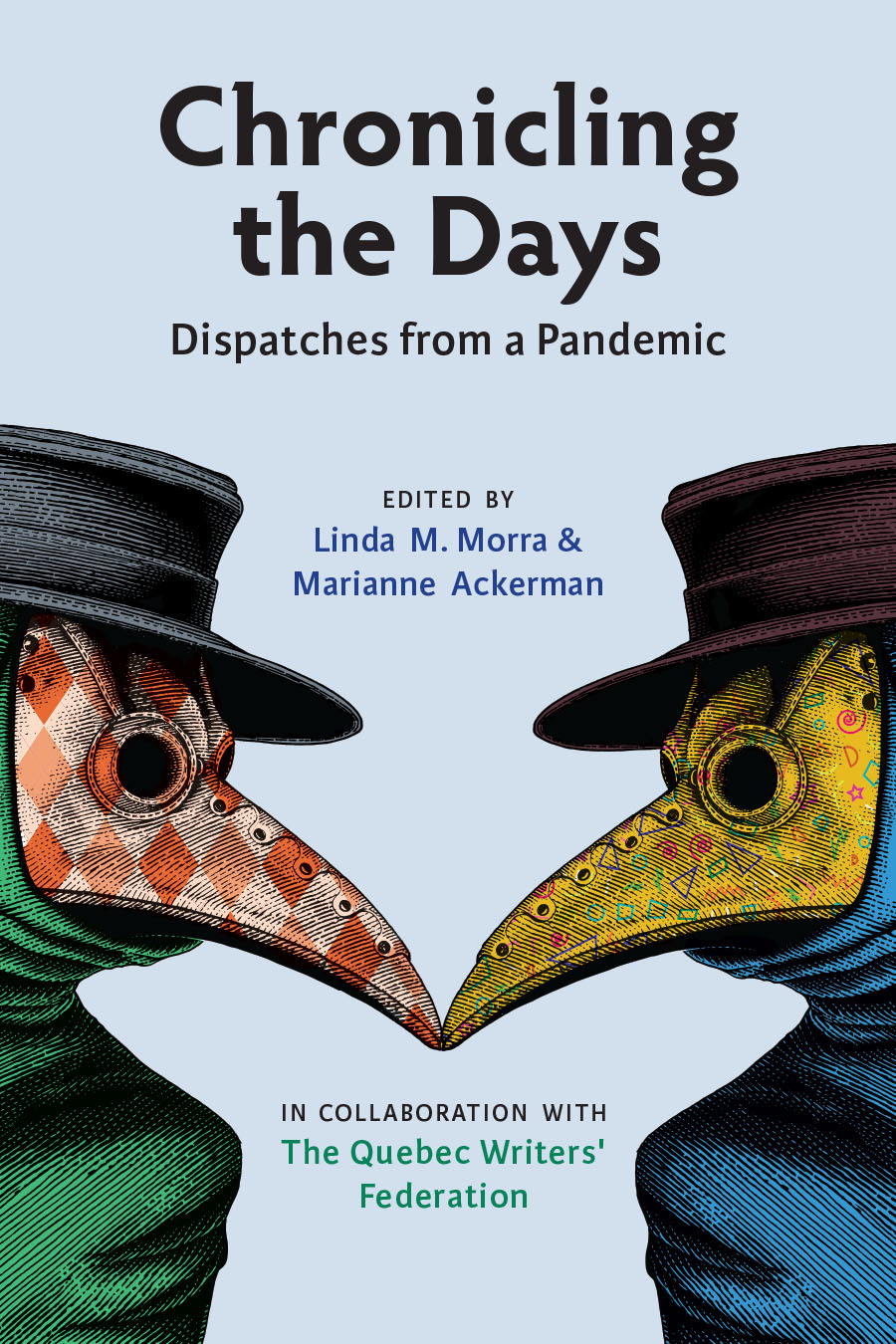
    In April 2020, we invited writers in Quebec to submit a story of a single day during the strange, uneasy time of coronavirus and pandemic, of social distancing and self isolation, of lockdown and quarantine.

    We’re thrilled to announce that these stories have been gathered in Chronicling the Days: Dispatches from a Pandemic (Guernica Press). To learn more and buy the book, please visit https://www.guernicaeditions.com/title/9781771836579.

    Please also join us on the QWF FB Community page, and let the authors know if their words resonated.

    This self-isolation business is playing right into my hands. From the time I started thinking of myself as a writer, some forty years ago now, I knew my main talent for the job lay in my ability to cut myself off from other people. In fact, it seemed to be the whole point of the endeavour.

    To read the rest of the story, please support our community and check out Chronicling the Days: Dispatches from a Pandemic

  • Living and Writing in The Country—By Angela Leuck

    Living and Writing in The Country—By Angela Leuck

    In April 2020, we invited writers in Quebec to submit a story of a single day during the strange, uneasy time of coronavirus and pandemic, of social distancing and self isolation, of lockdown and quarantine.

    We’re thrilled to announce that these stories have been gathered in Chronicling the Days: Dispatches from a Pandemic (Guernica Press). To learn more and buy the book, please visit https://www.guernicaeditions.com/title/9781771836579.

    Please also join us on the QWF FB Community page, and let the authors know if their words resonated.

    “We’re thinking of moving to the country,” I told mystery writer Louise Penny when I bumped into her at the Knowlton Literary Festival in 2010, adding that my husband and I weren’t sure if it was the right thing for our writing careers. Penny was enthusiastic: “Do it,” she said, “while you can!” A few months later, we bought a 200-year-old farmhouse in the tiny hamlet of Hatley.

    To read the rest of the story, please support our community and check out Chronicling the Days: Dispatches from a Pandemic

  • Transcendence—by Francine Cunningham

    Transcendence—by Francine Cunningham

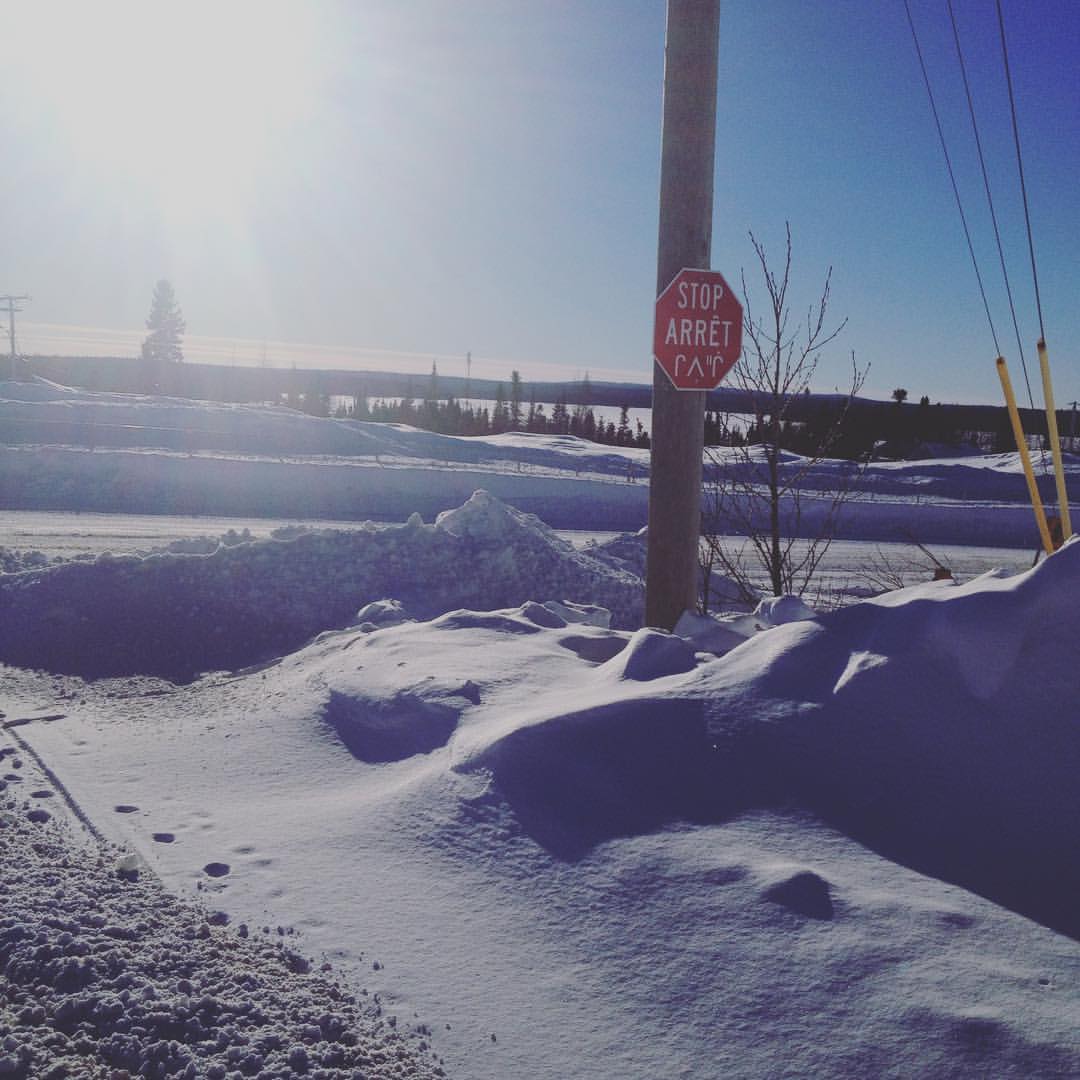
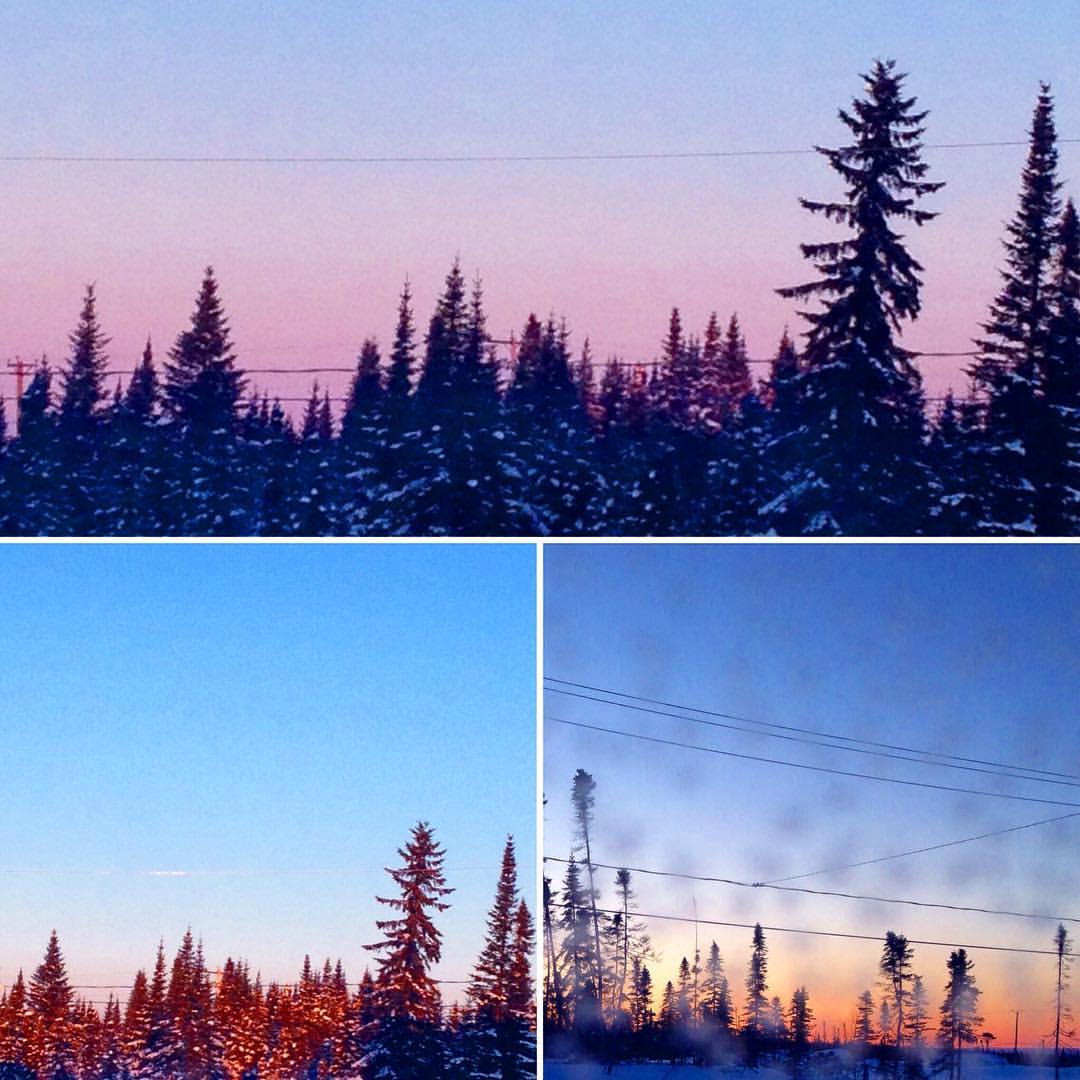
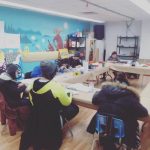
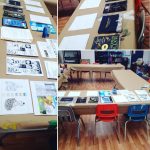
    I had the privilege of being an artist in residence in Mistissini, a community in northern Quebec, this February and March. The community was small and welcoming; the snow, on the other hand, was otherworldly. There were mountains of it piled and strung along the road to the school, like a miniature version of the Rockies I am used to. While I struggled with the overwhelming volume of the white stuff, I welcomed the natural beauty of the land, the quiet of the nights, and the stillness that comes from being outside the city. With nothing to distract me I was able to spend hours every night writing and painting. I read something like ten books and slept deeper than I have in a long time. It was a treat to turn off my email for six weeks, not take on any additional contracts, and really focus on my writing and visual art. I was teaching youth how to integrate their visual art with their writing through zines, so it was the perfect time for me to spend some time doing the same.

    16463091_10154140278245286_1071419733135569396_o

    The Mikw Chiyâm arts program was commissioned by the Quebec Cree School Board in 2015 and has just finished its second successful year. It brings together artists and students, the hope being that by creating a safe and creative space, students will be inspired to come to school more often and have a more positive experience once there.

    I am an Indigenous writer, artist, and educator, and have been working with Indigenous youth for over ten years. I have been a part of many different programs that use artistic practice as a way to intercede and help guide students onto a path that will give them confidence and knowledge so they can succeed in the world. The thing I hear most from students is how much they wish that they, as budding artists, were treated with the same level of care and given the same number of opportunities as in the sports or science concentration programs. Having an arts concentration program inside of a high school is remarkable; having one that has the level of support of Mikw Chiyâm is something I have never seen. It is literally making opportunities for young artists that they would not get otherwise.

    Often the arts can go unrecognized as a valid life path for a young person, but you just have to look to who the people are that are revitalizing our Indigenous communities and you will see artists at the forefront. When working with youth, Indigenous or not, I try to help them infuse their work, whether it’s fiction, poetry, or non-fiction, with a spark of who they are and their own unique point of view, with their own experience, tradition, and culture. Whether that takes the form of simply setting their dystopian dramas in their own community, or adding in bits of their language, or having characters that speak and act like them and their friends, these sparks are what makes their writing so unique.

    “I try to help them infuse their work, whether it’s fiction, poetry, or non-fiction, with a spark of who they are and their own unique point of view, with their own experience, tradition, and culture.”

    Growing up, I never read a story from a viewpoint that felt like my own: that of someone considered white passing, who grew up off the land, was raised in the city, yet is still Indigenous. I’ve found in my work with Indigenous youth that many are craving a varied point of view in the stories they read, something different than the stories they have thus far been presented with. There is a shame that comes with feeling like you are disconnected from your community. When you don’t know your language. When you can’t answer all the questions from non-Indigenous people. There is a shame that can infect a person when you aren’t what you see in movies, in stories—when you aren’t a real “Indian.”

    If not treated like a valid feeling, this void only serves to make youth feel more alone, more different, when in reality they have a whole network of people around them who feel the same way. Opening up space, letting discussion flow through these gut-wrenching topics, is so important. Oftentimes this can be the first time they’ve been allowed to talk about such things. I have found that once you break down those thick walls a flood of words come out. And eventually they land on the page. And they become something more than art. They transcend the writer. They help. They heal.

    “Once you break down those thick walls a flood of words come out… They transcend the writer. They help. They heal.”

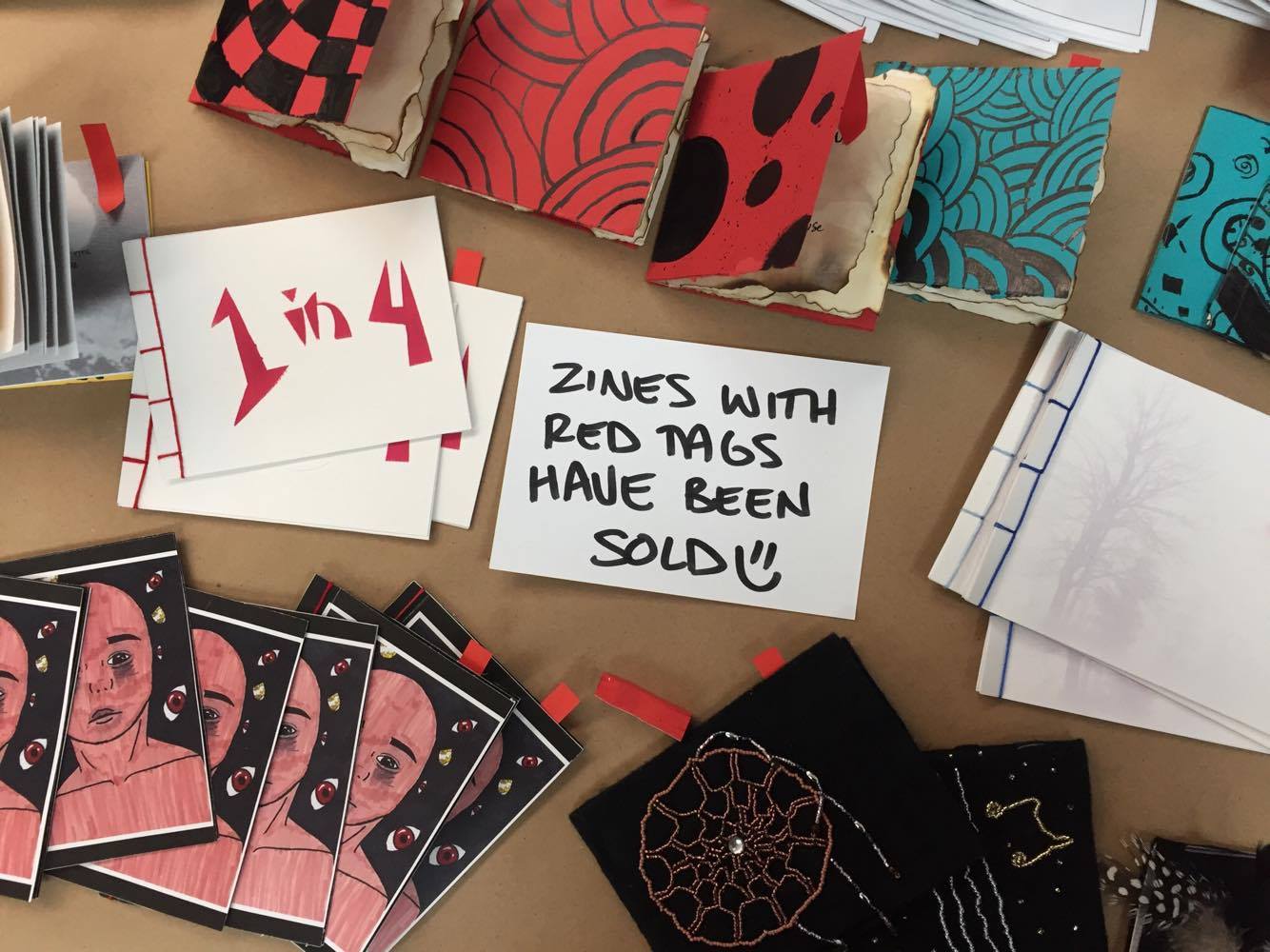
    The zines that the students created were powerful. They tackled issues like sexual abuse in the community, the stigmatization of mental illness, loneliness, and identity. These stories were told through humor, visual art, prose, and end-of-the-world disasters. At a final celebration night, we invited the community to come see the students’ work. For weeks, I had been telling them that people would buy their zines, that people other than me cared about what they were writing. The students wouldn’t believe me.

    Right before we opened the doors to let people in, they again tried to let me down easy, telling me not to get my hopes up, that no one would come and that was okay. They were trying to protect my feelings because I was so excited. But the community did come out. They read through all the zines, and by the end of the night we had sold out of everything we had created and made over five hundred dollars. The students were shocked. I was elated. I knew their words were valuable, that they were worth listening to. And now they had the proof.

    16998859_1686364578047373_2753448752955219953_n17015651_1686364321380732_2066677641393624379_o


    Headshot 2

    Francine Cunningham is a Canadian Indigenous writer, artist, and educator. Her creative non-fiction has appeared in The Malahat Review, the anthology Boobs: women explore what it means to have breasts (Caitlin Press), and more. Her fiction and poetry have appeared in The Puritan, Joyland Magazine, Echolocation Magazine, The Maynard, and more. She is a graduate of the UBC Creative Writing MFA program and a recent winner of The Hnatyshyn Foundation’s REVEAL Indigenous Art Award. You can find more about her at www.francinecunningham.ca.

    All photos in this piece are by Francine Cunningham.

  • From the Underground: A Writer’s Life with Zines by Jeff Miller

    From the Underground: A Writer’s Life with Zines by Jeff Miller

    It wasn’t reading the classics that convinced me to become a writer. My gateway drug to the world of letters was zines—cheap, photocopied, self-published magazines filled with their authors’ reflections on the world.

    Over twenty years later I still remember some of the first zines I read in the early 1990s. There was Saucy, a thick zine from Cornwall featuring interviews with bands. There was a bilingual political zine from Hull, titled Moo in English and Meuh in French, where I first read about vegetarianism. And there was Design 816, full of personal essays, which I picked up when the author was visiting Ottawa from Chicago.

    JM image 3
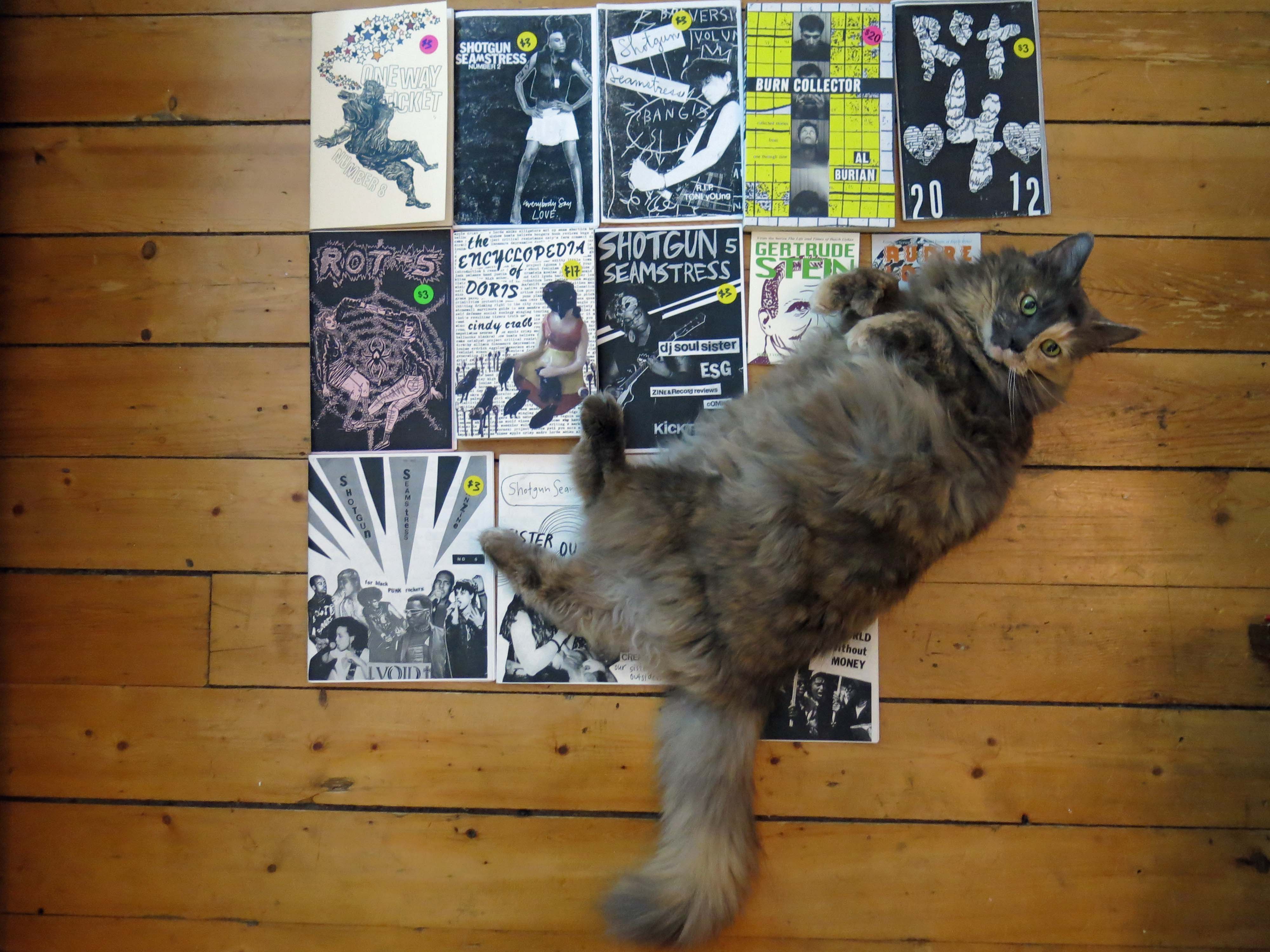
    Cats love zines too!

    From the first moment I encountered them, I became a zine obsessive. My suburban teen years were spent hunting these underground publications, picking them up on my trips to record stores and punk shows downtown. I sent large chunks of my allowance, a dollar or two at a time, to post office boxes across North America, ordering zines with titles like Dishwasher, Fuzzy Heads Are Better, Tyger Voyage, and Spunk. Needless to say, this was long before the Internet became ubiquitous.

    Coming home after school, I often found the mailbox at my parents’ house filled with literary treasures in envelopes from faraway postmarks. The zines I read covered many topics: political polemics, music, food, train-hopping, feminism, secret histories, and intimate personal narratives from the underground. I devoured them all, but I was particularly drawn to those telling true stories from the author’s life. In the pages of Cometbus, Doris, Scam, and I’m Johnny and I Don’t Give a Fuck I found compelling narrative voices that I deeply related to. Reading them felt like getting a letter from a close friend. I had tapped into a vibrant community of punk writers who crafted great stories and then cut and pasted their work together, photocopied it, and released it with no thought of gaining attention from the world of mainstream literature. These were my first literary heroes. In a time before our current memoir boom, they wrote honest and true stories full of grit and heart.

    “I had tapped into a vibrant community of punk writers who crafted great stories and then cut and pasted their work together, photocopied it, and released it with no thought of gaining attention from the world of mainstream literature.”

    I instantly wanted to make a zine and the democratic nature of the form made me feel that I could do it. Reading other zines gave me a model for how I might write my own stories and get them out into the world. I also voraciously read contemporary novels as a teenager, but unlike those books­­—perfect works with no typos or evidence of the human hand that made them—zines convinced me that I, too, could be a writer. The status of zines as unofficial publications in a time of media conglomeration made the prospect of publishing one even more entrancing. Zines were secret, precious, hard to obtain. This, along with their tactility, made them almost magical objects, even as I tattered them with frequent re-reading.

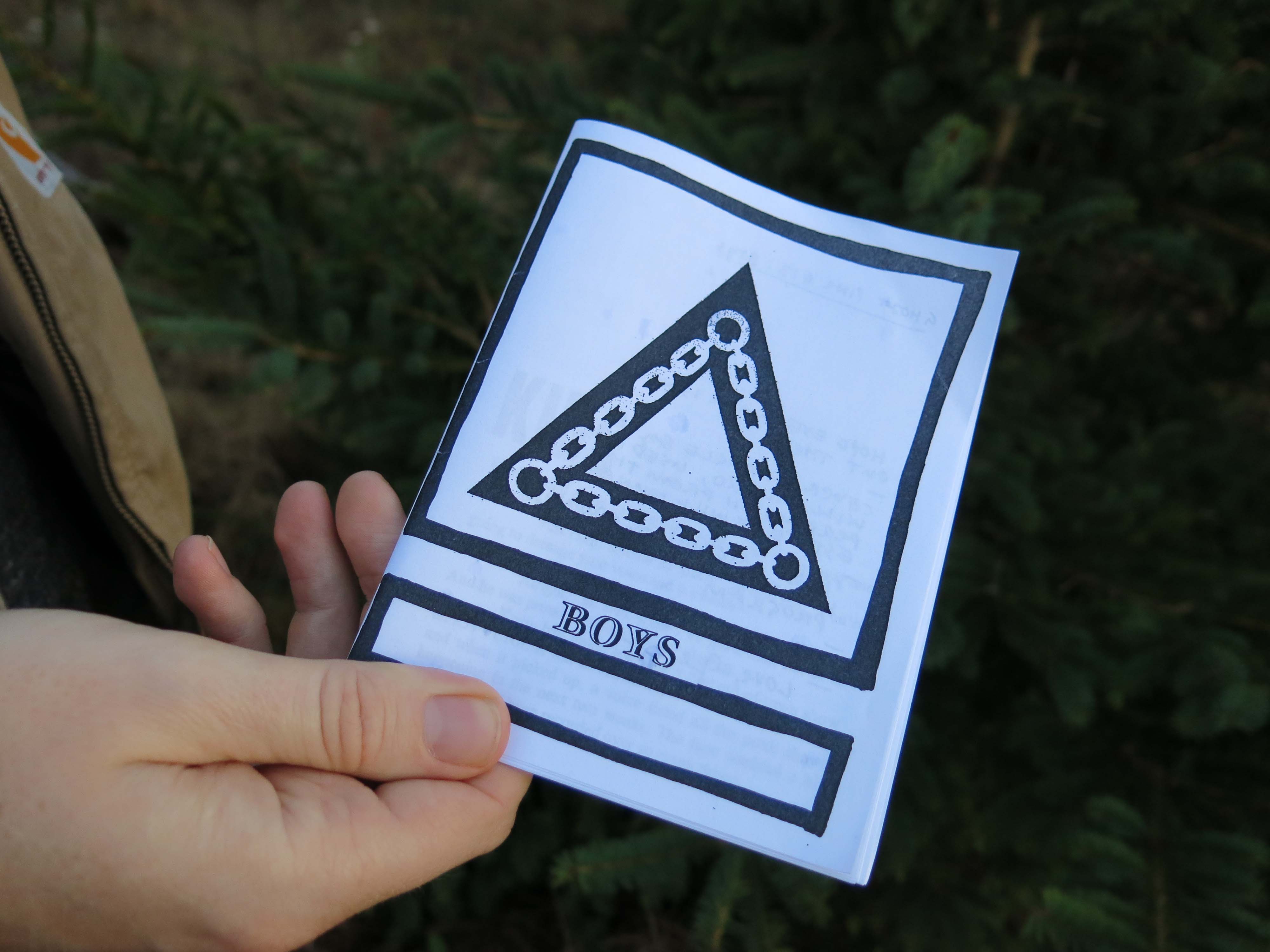
    Since its first issue in 1996, my zine Ghost Pine has been made up of true stories about my life. When I was younger I wrote about hitchhiking, long Greyhound bus rides, and visiting the cities where my many zine pen pals lived across North America. But as I got older and moved around less, I still wrote about my life in short creative non-fiction pieces, discussing things like my relationships with my grandparents, late night conversations with friends, and recollections of my high school social justice club. In all my stories for the zine I tried for honesty and hoped to improve my writing with each new issue. Over the years I have sold more than 10,000 copies. In 2010, a collection of the best stories from Ghost Pine was published by Invisible Publishing.

    JM image 2
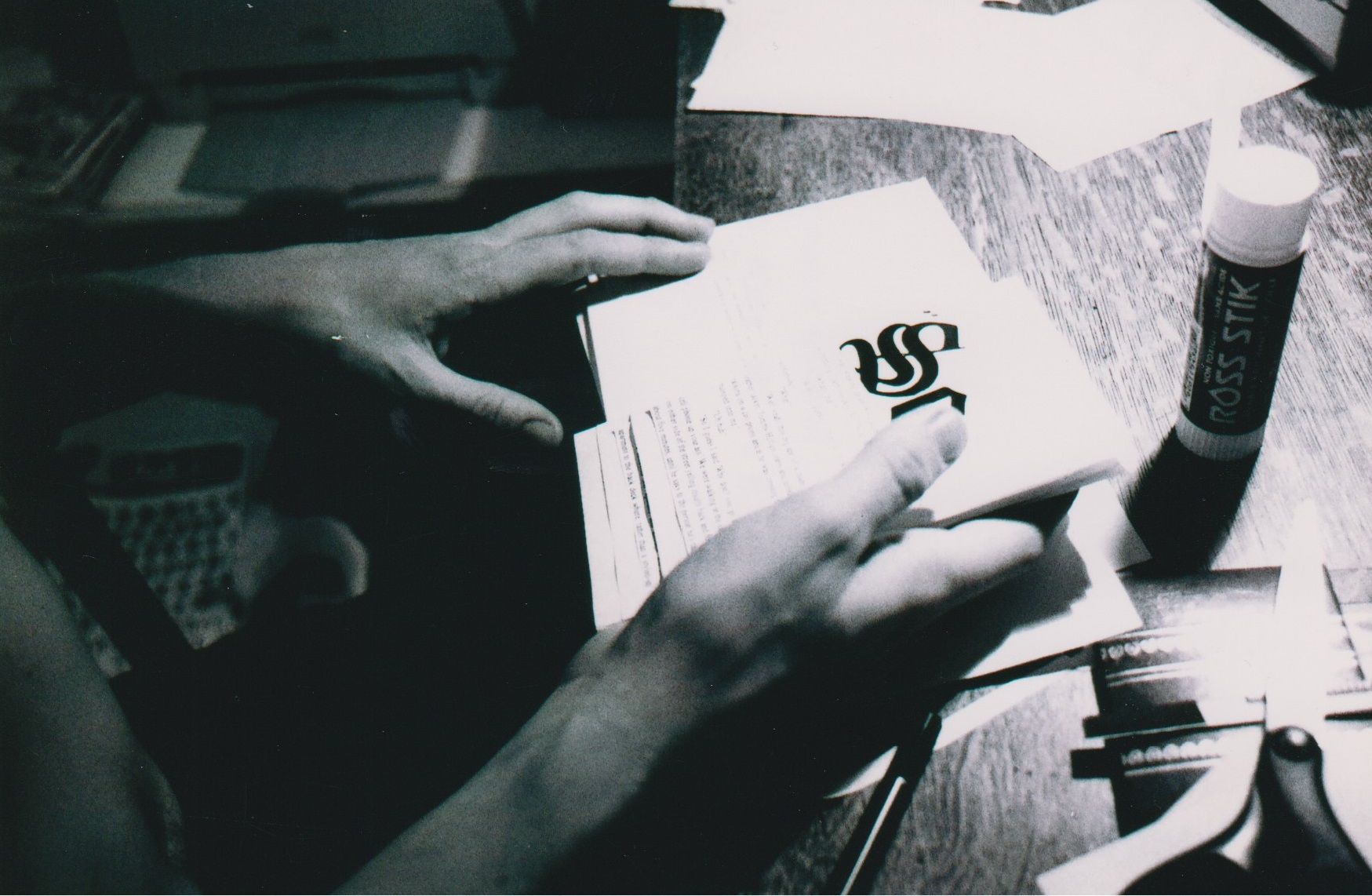
    Ghost Pine #13 (2014). Featured photo at top of article: Assembling Ghost Pine #8 (2004).

    Ghost Pine’s publication schedule has slowed from annual to once every few years as my writing practice has grown and diversified into the “overground” with formal publications, cultural journalism, creation grants and a Master’s degree. Nevertheless, the work I did on my zine over the last twenty years remains at the heart of who I am as a writer. There might be an assumption that one graduates from making zines to publishing books and other “real” writing, but I’ve put out two new issues of Ghost Pine since the book came out.

    Twenty years and fourteen issues later there is still a thrill to making a new zine. Writing and editing the stories, then doing my antiquated cut-and-paste layout (every year I make a resolution to learn how to lay it out on the computer and then don’t) and going to the copy shop to print, cut, and staple it together. I sell them at zine fairs and mail copies to my pen pals and to the people who order them online from as far away as Kuala Lumpur and Florianopolis, Brazil, often getting their zines in return.

    Slipping them into their envelopes, I’m reminded that this subcultural community that nurtured me as a young writer continues to thrive and produce amazing writing from voices that might otherwise have remained silent without this low-cost and low-pressure art form. The endurance of this feisty corner of the wider world of writing is extremely gratifying. Long live zines.


    JM headshot

    Jeff Miller has written the zine Ghost Pine since 1996. In 2010, the best stories from the zine were published as Ghost Pine: All Stories True (Invisible Publishing). His creative non-fiction and cultural journalism also appear in a number of anthologies and periodicals. He will be a CALQ Writer-in-Residence at the Banff Centre in February-March 2016.

    ghostpine.wordpress.com

    Photos: Sara Spike

  • Why I Teach Brand-New CanLit by Natalee Caple


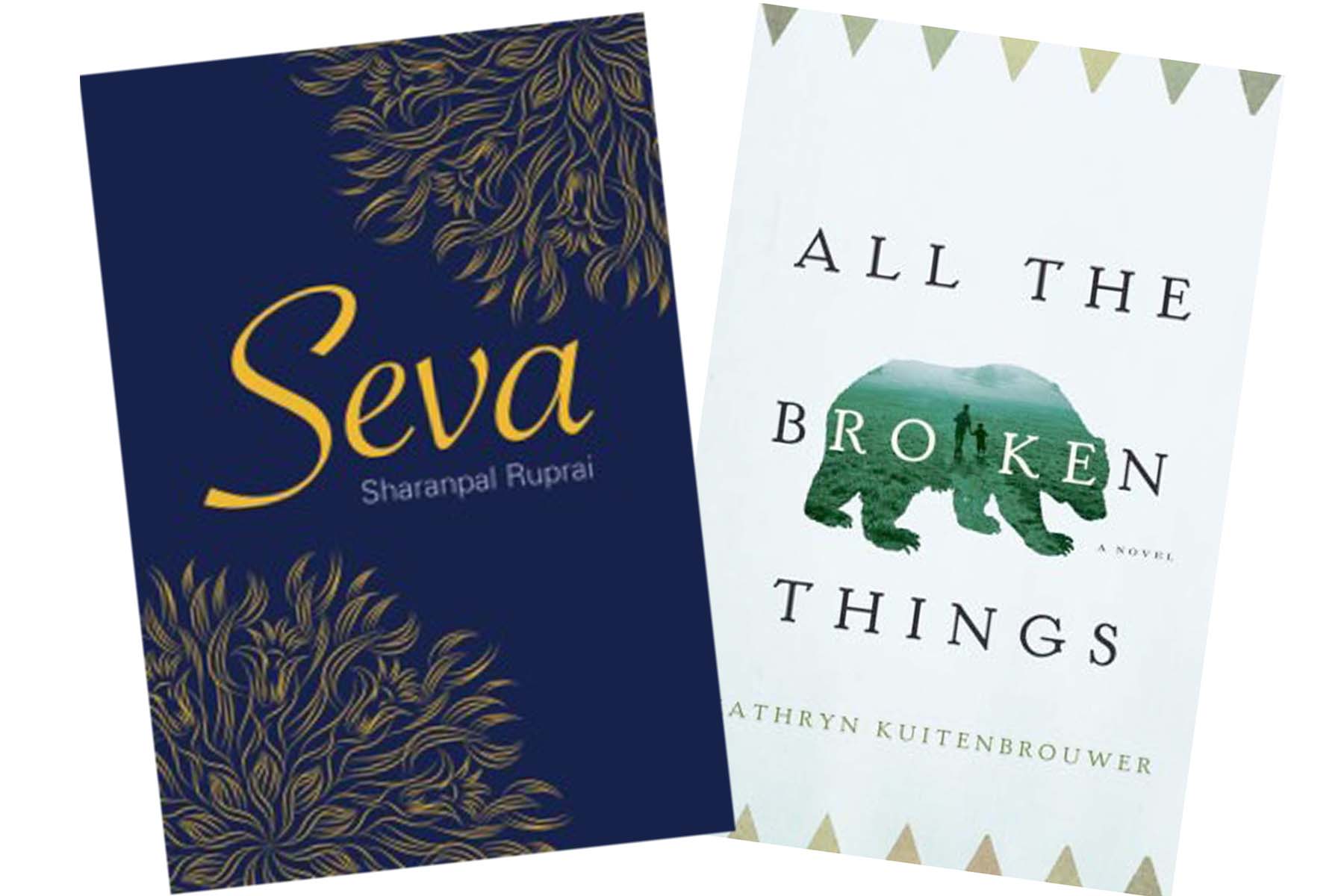
    This year, Natalee will teach Sharanpal Ruprai’s “Seva” and Kathryn Kuitenbrouwer’s “All The Broken Things.”

    I have my dream job. I write, review and teach Canadian literature and creative writing. When I think about why I am so happy teaching new CanLit I recall when, a few years back, my friend, writer Andrew Pyper, asked me in an interview what had changed for me as I evolved from an aspiring writer to an established author.

    The truth is everything has changed. In the beginning my desire to write was about me. It was about trying to see who I could be, what I might be good at and where I might find a community to belong to. Now, being a writer, being a parent and being a professor are all part of participating fully in the culture that sustains me. I feel that there is no better way to demonstrate how varied and valuable I think Canadian culture is than to devote my life to producing, promoting and teaching CanLit.

    Now, being a writer, being a parent and being a professor are all part of participating fully in the culture that sustains me.

    Because it is so important to me that students see the books they read as part of something familiar and real, something that they are already impacting and being impacted by, I often use brand new books. I also teach some of the canon: Atwood, Ondaatje, Munro. After all, these are writers who have helped to raise awareness of Canada as a significant site for cultural production (teaching Alice Munro the week she won the Nobel Prize was incredibly moving). But I also teach books that are literally printed days before classes begin.

    …teaching Alice Munro the week she won the Nobel Prize was incredibly moving.

    Designing my syllabus a few weeks ago, I realized that there are only two major drawbacks to this style of teaching. The first is that I am constantly redesigning my courses, which means new lectures, new assignments and research on what is coming out. The second is that I feel a lot of anxiety about the books arriving on time. But in spite of the extra work and anxiety, there are so many benefits to teaching contemporary literature within the context of the now. Here is a list of some of them.

    • The books are never out of print.
    • Pre-ordering books helps to let the publisher and the bookstore know that the titles are desired.
    • The material is often quite relevant to students’ daily lives. This allows students to identify better with the settings, characters and scenarios.
    • Authors are accessible, alive and often available to Skype into the classroom so that students can ask them questions directly.
    • Student presentations are much better. Instead of Googling a biography and retyping a handful of academic quotes they have to read the whole book (they do complain about this).
    • Student essays are much better. Their close reading skills really improve because that is all they have to rely on.
    • Student confidence in their own readings improves. Because they don’t have to compete with the scholarly opinions of experts they learn that it is okay to rely on and develop faith in their own readings. This causes them to engage more deeply and so…
    • Students get better marks. When they see this they start to appreciate the work they did.
    • Students become more willing to take risks in thinking.
    • Plagiarism is greatly reduced. In fact, because a brand new book is so unlikely to have essays on it in circulation, to plagiarize really means paying someone to create an essay. Far fewer students are willing to take this extra step as it requires more planning and seems somehow more actively dishonest.
    • Canadian culture is reinforced as real and ongoing, lively, diverse and present.
    • Book sales show up in a timely fashion for authors. Titles get circulating at a time when it is most beneficial. We all know that numbers have become incredibly important to the sale of future books and that there is some self-fulfilling prophesy there.
    • I get to stay engaged with my peers in the writing community. I am giving them my support and staying on top of my field.
    • I get to read all the books I wanted to anyway and call it work! Did I say that it is my dream job?

    For the teachers out there: why do you – or don’t you – teach new CanLit?


    Natalee Caple’s latest novel, In Calamity’s Wake, was published by HarperCollins in Canada and by Bloomsbury in the US. She is a professor of English, teaching Canadian literature and Creative Writing at Brock University. www.nataleecaple.com

  • A Tale of Two Meetings by Lori Schubert

    Two hundred and fifty buzzing literati from across Canada – writers, storytellers, translators, booksellers, publishers, and directors of literary organizations – settled in at tables of ten in an underground conference room at the McGill New Residence. Around the perimeter were the impresarios of this unprecedented two-day extravaganza: the team from the Canada Council for the Arts. The ambitious goal of the gathering, dubbed the National Forum on the Literary Arts, was to establish a manageable handful of priorities for addressing the challenges facing the literary ecosystem. This seemed a worthy goal, but it quickly became apparent that the single greatest challenge was getting people to see themselves as members of a group with common interests rather than lobbyists for the segments of the community they represented. At the end of two days, we had a list of what must have been over a hundred “priorities,” so, as one fellow at my table put it, no priorities at all.

    A few weeks later, I headed off to Banff for another two-day conference, the National Summit of Writers’ Associations. This one brought together a more cohesive group, the directors of Canada’s provincial writers’ organizations, the Writers’ Union of Canada and the Writers’ Trust of Canada, who organized the event. The schmoozing was great, as it had been in Montreal. But more than that, we gloried in finding one another. Most of us had been working in silos, with no peers or mentors. Imagine the thrill of finding ourselves among “our peeps” for the first time, with hours and hours for in-depth discussion of what we do and how we do it. Imagine the relief of finally getting answers to those pesky questions we’d carried around for years; the pleasure of providing helpful suggestions to our less experienced colleagues. Every item on the agenda was apt. Every contact made promised concrete mutual benefits.

    And the payoffs have already begun to roll in: since returning to my desk, I’ve sent QWF’s “literary dinners” documentation to my new colleague in Saskatchewan, who is interested in setting up a similar fundraising initiative; I’ve answered an SOS from my New Brunswick counterpart, putting him in touch with a YA literature juror from Montreal when one of the people he’d lined up pulled out at the last minute; we’ve begun to talk about a 2016 national writers’ “super-conference” that would include other groups like the Canadian Society of Children’s Authors, Illustrators and Performers; the League of Canadian Poets; and the Professional Writers Association of Canada. We’ve also set up a calendar to share information about when our writers are traveling to each other’s provinces, a practice I hope will lead to more variety in QWF’s one-day workshop offerings as well as more out-of-town opportunities for our members to lead workshops and promote their new books.

    So what to make of the difference between these two conferences, both admirable in intention, but – to my mind, at least – miles apart in impact? My take-away is this: even in a group of people with similar values, it’s hard to let go of your own point of view and see yourself as a single cell of something larger. In Banff, we didn’t have to sacrifice anything to see anyone else’s point of view because it was our point of view. Each one of us immediately understood the mutual benefit of collaboration and everyone glowed with enthusiasm for building on what we’d started. But most of the time when we work in groups, we need to work hard to find the core of what unites us.

    Only then can we agree on priorities and begin to put them into action.

    In Banff for the National Summit of Writers’ Associations. Lori is in the back row, third from the right.


    A straggler who didn't want to take part in our ice-breaking activities in Banff
    A straggler who didn’t want to take part in our ice-breaking activities in Banff.


    Dawn in Banff.
    Dawn in Banff.


    The Professional Development Centre in Banff, where the delegates stayed and worked.
    The Professional Development Centre in Banff, where the delegates stayed and worked.


    What do you think should be the priorities when addressing the challenges facing the literary ecosystem today?

    Do you think “the literati” aren’t as good in business meetings because they often work alone?

    How can a group of people with different goals work together productively?


    Lori Schubert is the Executive Director of the Quebec Writers’ Federation.