Tag: creative non-fiction

  • The Circle of Mentorship—By Shelagh Plunkett

    The Circle of Mentorship—By Shelagh Plunkett

    Linda Kay—author, journalist and teacher—died last October. In 2006 she was assigned to mentor me by the Quebec Writers’ Federation, and in the twelve years that followed became a great friend as well as remaining a generous-hearted and gracious advisor. In the months since she died, during the hundreds of times I’ve missed being able to email or call her, I’ve thought often about what I’ve lost without her in my life and what I learned from having her in it. Perhaps most importantly, Linda showed me how essential mentorship is for a writer.
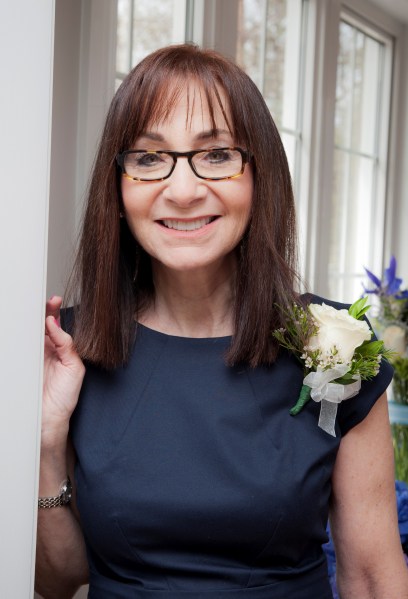
    Linda Kay
    Linda Kay

    Linda’s achievements as a writer and teacher were impressive (including no less than a Pulitzer won as part of a team early in her career), but recording them here would leave nothing more than a superficial sketch that failed to convey who she was. Similarly, outlining the empty space that her death has opened in my life would leave a hollow impression of our friendship. I’m left wanting to convey one of the most important things I learned from Linda: that mentorship is essential for a writer.

    When I moved to Montreal, I joined the QWF to meet writers. I applied to the mentorship program and was introduced to Linda. The first time we met she brought the essay I’d submitted with my application—a short piece about growing up in Guyana, in South America. “Send this in to the CBC Literary contest,” she urged me.

    I’d written it in a flurry of frustration one afternoon. It was the sort of writing I wanted to do but was unlike anything I’d ever tried, because it was not the kind of piece my freelance clients were interested in publishing. I didn’t know if the piece was good or bad, but I’d had fun writing it. Linda was adamant, so I took her advice.

    She was right; the essay won the CBC Literary Award for creative non-fiction. Linda told me my life would change, and it did. With that award to reflect on and with her encouragement, I began to think I could write more than just simple news pieces, arts profiles, or lifestyle columns. I began to think I might have the chops to string a few words together that might have a deeper purpose, that might offer something more to a reader than a few minutes of entertainment. Linda suggested I approach publishers. “They’ll pay attention to you now,” she said. She was right. Penguin signed a contract with me and my memoir of adolescence overseas—born out of the essay I’d written—was published in 2013.

    In the years that followed, Linda continued to inspire me to take the work of writing seriously, because that’s what she did. She applied all her skill, insight, and effort to everything she did, from writing to teaching to friendship; to every assignment, be it a book or a short piece for Costco Connections. Ultimately, what we try to do as writers is communicate. Linda showed me that without giving one’s full passion, focus, and commitment, communication isn’t worth the effort.

    Linda didn’t tell me she was sick until quite close to her death, but in her last months we wrote often and our conversations continued to ramble around writing, family, new and old loves, life. She remained as she’d always been, even in our last correspondence, an email sent less than a week before her death from her hospital bed. Linda wrote that she’d passed on my name and the title of my book to a Guyanese intern she’d met, encouraging the woman to seek out my writing. Right to the end, Linda remained a supporter and mentor.

    It is not an exaggeration to say I would not be a published author, and would not be writing still, if not for Linda. And now, things have circled back for me: I’ve been hired by the QWF to fill the role for someone else that Linda did for me when we first met. As I key these words, I am embarking on three months of mentoring a promising writer in our community. Though I miss Linda immensely and often, I’ve not lost the gifts she was lavish in bestowing. I will turn to my memories of Linda now and into the future, knowing that by doing so I’ll be motivated to achieve much more than I imagine myself capable of. More significantly, her memory will inspire me to pass on to my mentee what Linda gave me as a mentor.


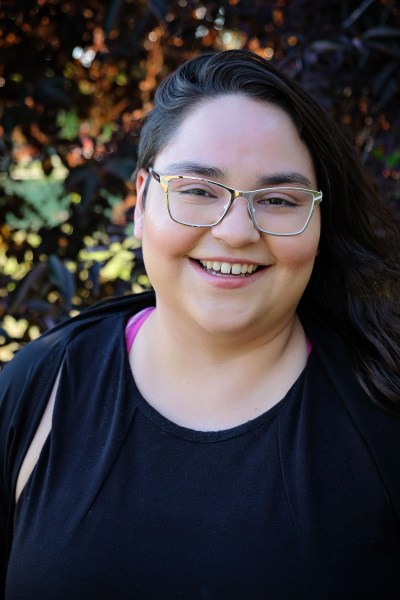
    ShelaghPlunkett_photocredit-NiamhMalcolmShelagh Plunkett is a past winner of the CBC Literary Prize for creative non-fiction. In 2013 her memoir, The Water Here is Never Blue, an extension of her winning essay, was published by Penguin Canada. It was shortlisted for both the QWF Mavis Gallant Prize for Nonfiction and the QWF Concordia University First Book Prize. Shelagh now lives in Montreal, where she is at work on too many projects. Her past hometowns have included Georgetown, Guyana; Kupang, Timor; Vancouver, Victoria, and Toronto; Ricón-de-la-Victoria, Spain; and Salt Spring Island.

    Photo credits: Flickr (header banner), Courtesy of Emily Kay-Rivest (photo of Linda Kay), Niamh Malcolm (headshot of Shelagh Plunkett)
  • Trauma Ethics—By Lindsay Nixon

    Trauma Ethics—By Lindsay Nixon

    Recently, I was lucky enough to sit on a panel with fellow writers Erín Moure and Will Aitken. During the question period, an audience member asked: Is it ethical to write, publish, and profit off books that include accounts of personal traumas? An interesting question, indeed, and one that Indigenous writers are often pressed to answer.

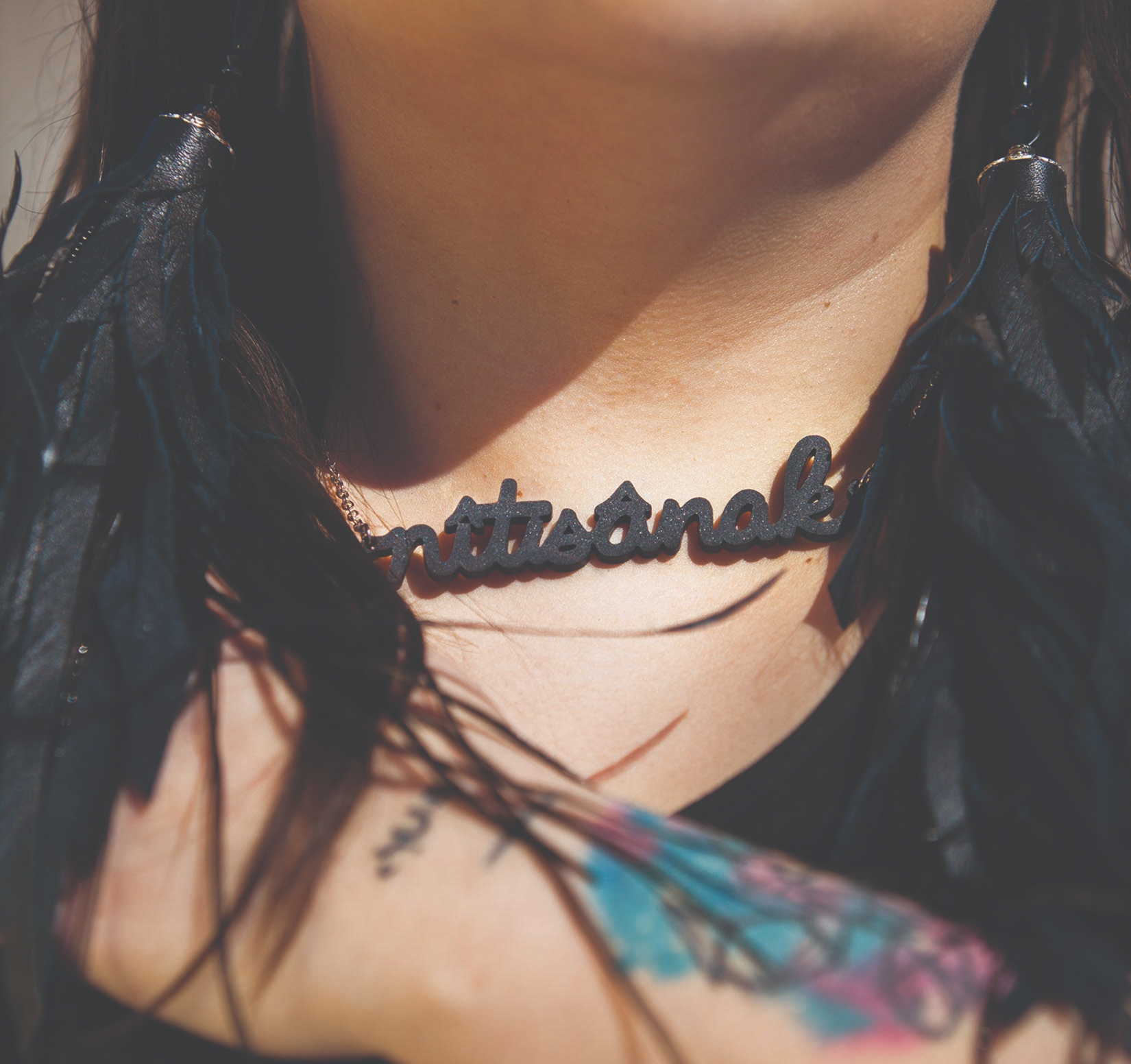
    Having just published my first creative non-fiction collection, nîtisânak, through Metonymy Press, I’m no stranger to weighing the ethics of writing about myself, and my relations, embodying various forms of trauma. I’m especially conscious of the vulnerable states some of my Indigenous relations live in, a fact that remains ever in the back of my mind when I write creative non-fiction. I’m also interested in the role that audiences play in how trauma-based writing is received. I would argue, even, that the audience—the reader—has a great deal of responsibility in how Indigenous trauma is perceived.

    As a thought experiment, I will draw examples from the ethics associated with publishing personal traumas in the recently-released television series based on a Shirley Jackson novel, The Haunting of Hill House. It tells the story of the Crain children, who grew up in (spoiler alert) a haunted house, experiencing various traumas culminating in their mother’s suicide one supernatural night. Oldest son Steven has made millions selling books depicting the now infamous murder trial against his father, after his mother’s death was presumed a homicide.

    Steven does not gain consent from the family members whose trauma he depicts. He also describes trauma he has not himself experienced. Viewers learn it was actually the other siblings who saw everything that happened that night, while Steven was fast asleep. What Steven depicts, as his sister would later tell him, is wholly untrue. He takes liberties with many events that occurred, fabricating his own account based on bits of information he has gathered over the years. It is not just that he publishes experiences that are inaccurate and not his own, but that the people who experienced them are still working through their understanding of what did happen. Steven’s publication of his fabricated version of events only further exacerbates the siblings’ already fragile states.

    Yet Steven’s stories are presented as authoritative truth. Understanding “truth” in this context means understanding positionality. When Steven goes to visit a fan, she is enamoured by Steven’s celebrity. She assures him he did the right thing by publishing and asks when the next book will come out. Steven’s authority is assumed.

    The Crains’ story is supernatural fiction. But for Indigenous peoples in Canada, the embodied traumas of colonialism can be a daily experience—not unusual, just a facet of everyday life. When Indigenous narratives are described as “traumatic,” I wonder: whose truths are we centering as the consciousness of Canada’s literary canon? Whose authorities, whose “truths” are deemed true, and whose are not?

    In reply to the question, Is it ethical to publish (Indigenous) trauma, I would ask: trauma to whom? Who gauges what constitutes trauma? Now, are we talking about the ethics of writing about trauma, or the ethics of writing about Indigenous lives? Because, the lives of Indigenous peoples might seem traumatic to a largely white audience. What some might call trauma is just what we call life. So are we just not allowed to write our lives? Some of the power I feel comes through in my own writing, and that of my peers, is the biting wit we can tell our stories with despite what some might call “trauma.” As I told the audience member who asked about trauma, there are so many Indigenous narratives that haven’t been told because of the overwhelming whiteness of CanLit, as Vivek Shraya termed it.

    The literary industry and Canadian publics are constantly, and especially, denying the truths of Indigenous women. McClelland & Stewart recently garnered negative media when it was uncovered that they had censored a portion of Maria Campbell’s Half-Breed that described her account of being raped by a Mountie. The ethics of Indigenous peoples writing their own lives is constantly called into question because of a normalized culture of paternalism in publishing when dealing with Indigenous stories. A white-coded lens propagates the assumption that Indigenous peoples are not equipped to make judgments about what stories are ethical to tell, and what stories might be harmful to tell, because their lives are positioned as inherently traumatic. Colonial actors such as ethics boards, in the supposed interest of Indigenous peoples, are seen as better equipped to make authoritative judgments regarding Indigenous knowledge and knowledge production about Indigenous communities than Indigenous communities themselves. All this denies Indigenous peoples self-determined representation. Indigenous peoples internalize that their truths are not, indeed, true.

    Indigenous writing forces Canadian literary communities to confront the question of whose truth is witnessed as authoritative truth, and whose truths are not considered truth at all, because they negate a naturalized colonial and capitalist order in Canada (and Canadian publishing). Questions about the ethics of publishing trauma are seldom asked about fiction writing, though many a fiction writer has smarmed to me over cocktails, It’s all non-fiction darling, we just change the names. I remember reading Joseph Boyden’s The Orenda for the first time, taken aback at the incredibly violent, traumatic, and disturbing depictions of exploitative Indigenous trauma. But, because it was fiction, because it was in the name of literary writing, somehow it was presumed ethically above board. The Orenda is an example of the literary aesthetic of trauma written for a voyeuristic, non-Indigenous audience. It should come as no surprise, then, that it remains one of the most successful works of “Indigenous” fiction in Canada.

    I won’t say that writing about trauma is always black and white. In my book nîtisânak, I was very thoughtful about the narratives I did include. In fact, a lot of it deals with working through my relationships with my white relations. That said, it would be nice to have the kind of conversations I want to about my work, not just from the perspective of the aesthetic trauma that CanLit so loves. Because I’m not trying to write about trauma. I’m just trying to write about what it’s like to be in this body. I’m just trying to write a beacon of light for all the other poor, queer, prairie NDNs trying to survive into the Indigenous future.

    As I wrote in my book: Don’t mistake my words for trauma porn, because this is just how it went down for us. If these stories can’t be told without yt* tears being shed, that’s not my problem. No, my trauma is not a commodity, but my story doesn’t always have to be uplifting, resurgent, or revolutionary to be my truth, either.

    * “Yt” is an abbreviation for the word “white.”


    Lindsay_Nixon_headshot_new

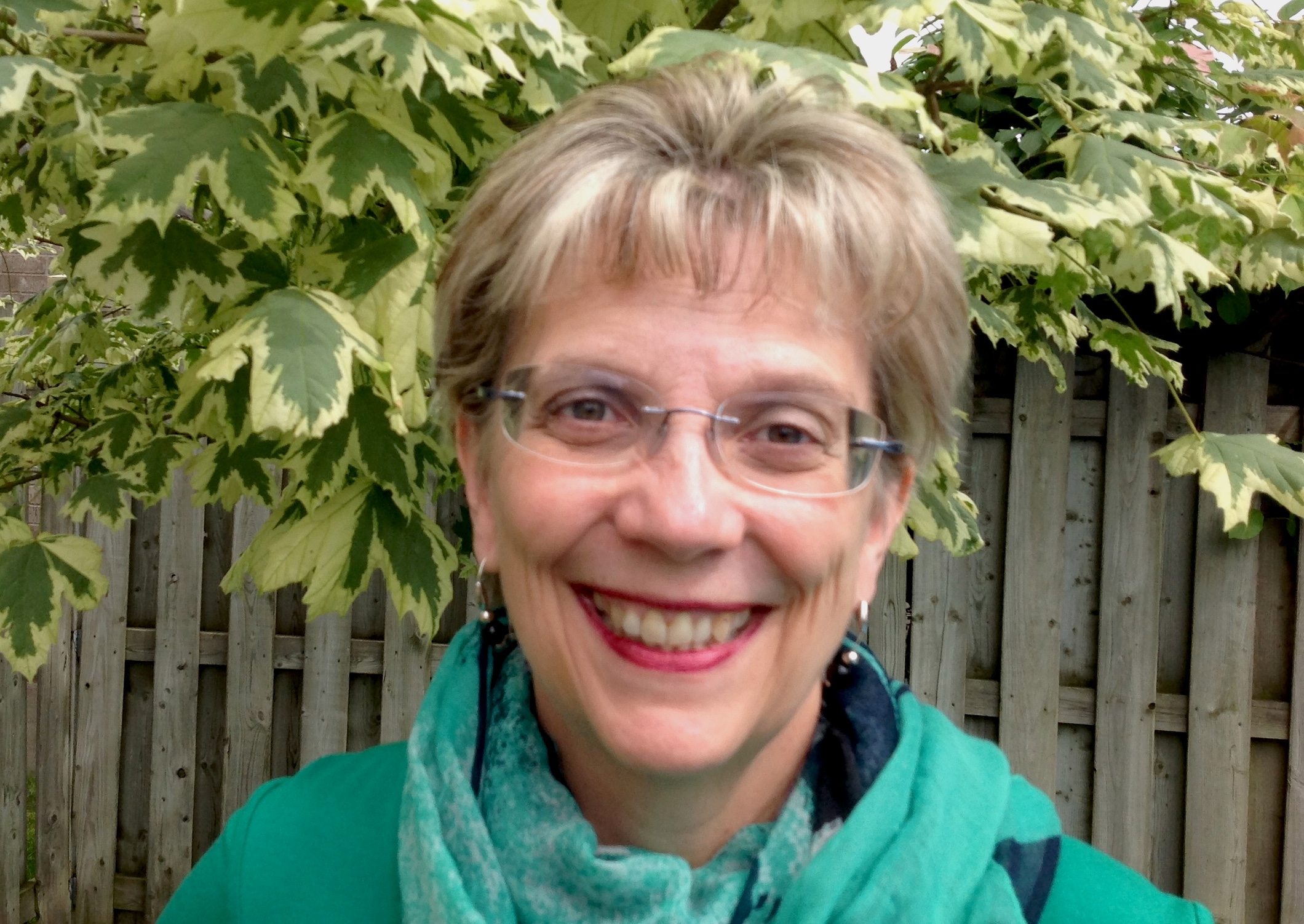
    Lindsay Nixon is a Cree-Métis-Saulteaux curator, award-nominated editor, award-nominated writer, and McGill Art History Ph.D. student. They currently hold the position of Editor-at-Large for Canadian Art. Nixon’s first book, nîtisânak, is out now through Metonymy Press.

    Photo credits: Dayna Danger (header image); Jackson Ezra (headshot)

  • What’s the refrain you keep circling back to?—by Jess Zimmerman

    What’s the refrain you keep circling back to?—by Jess Zimmerman

    The last personal essay I wrote started out as a travel guide. I wanted to write about secret spaces in Berlin, just a list of interesting off-the-beaten-path options for tourists—the kind of thing you might find in an in-flight magazine. Instead it turned into a lyrical 3,000-word piece about love and literature. “I didn’t mean this to wind up this way,” I lamented in a writers’ chat room, “but it’s just my personality. Everything I write boils down to ‘remember that time my marriage failed?’”

    “I feel you,” said my friend Angela Chen. “Sometimes I feel like all my essays come back to the thesis ‘I was a very anxious person and now I’m less anxious.’” Amused by the idea that we could express our entire writing careers in one sentence, I put out a call on Twitter: If you’re a writer of personal work, what’s the refrain you keep circling back to?

    The exercise proved to be wildly popular; I got nearly 100 responses. (By comparison, I had a recent tweet about gun control go mini-viral, getting about 1,500 retweets; there were still fewer than half as many replies to that tweet than to this one.) The idea of an obsessive writing theme struck a nerve. Most of us, it seemed, were using our writing to send constant, repetitive signals of personal distress: “I’m grieving,” “I’m sick,” “I’ve been abused.”

    Some examples:

    • “Grief permeates every aspect of my life but somehow I’m still alive.”
    • “Parenting is difficult and tiring, but magical sometimes. My kids are funny. Also, did I mention I’m tired, demoralized, and depressed?”
    • “My brother died. My other brother and I survived by clinging to one another. Then he died too. Despite it all, I wound up okay, and loved, and in a real place. But everyone died.”
    • “I am very ill and being very ill sucks.”
    • “I’ve suffered more sexual violence than I realized, but I’ve discovered x about it and I’m still not okay.”
    • “I want to be a better person, but it’s hard.”
    • “I’m terrified.”
    • “Please like me. Please.”

    “If you’re a writer of personal work, what’s the refrain you keep circling back to?”

    Dozens of people recognized immediately that everything we wrote, if you boiled it down, was an expression of the same hole in our hearts. I imagined us as castaways, trying to signal for help in any way we could: fires on the beach, messages in bottles, Morse code cast blindly into the stratosphere, each one carrying the same SOS. I’m terrified. I’m terrified. .. / .- — / – . .-. .-. .. ..-. .. . -..

    “Most of us, it seemed, were using our writing to send constant, repetitive signals of personal distress.”

    But I also started to notice refrains that stood out from the rest: people who had thought about what their individual obsessions meant for the reader. Maybe they’d taken the assignment more seriously than I had (I hadn’t really meant it as an assignment, after all!), or maybe they were just naturally more giving writers than me, more immediately attuned to the way their work was not only a personal exercise but a vector to bring value to others. Some of the best responses:

    • “I don’t know anything and have never known anything and no one ELSE knows anything and we are all striving after meaning and truth together.”
    • “Wrestling with how the labels we put on ourselves are always inadequate, which I’ve always known cause I’m biracial.”
    • “Shaky individual kindness is all we have because there is no system that will not ultimately betray you.”
    • “If you think closely enough about something, you can begin to understand why it will inevitably one day make you sad.”
    • “I’m plagued by a congenital loneliness and it’s probably some recent ancestor’s fault. But a lot of us are connected by how disconnected we are, and that’s kinda cool.”

    I describe myself sometimes as being obsessed with generosity in writing (other people’s, but also my own). So I was a little embarrassed about how self-centered and parsimonious my refrain was, stacked against some of the ones that spoke to me. An account of my individual history—“remember the time my marriage failed”—gives almost nothing to the reader besides a little more knowledge about me (not a particularly valuable currency). Angela’s SOS call—“I used to be anxious and now I’m less anxious”—was also inward-looking, with no hint of what value it might contain for the reader. Had we both been failing to live up to the principles of generosity?

    Luckily, I’m an avid reader of Angela’s (I even suggested one of her essays as a reading for the workshop I’m teaching for QWF on March 24!), so I know that her tongue-in-cheek description doesn’t say it all. Though the form of her essays is sometimes “I was a very anxious person and now I’m less anxious,” the substance is always something like “we seek certainty because uncertainty makes us anxious, but uncertainty can also be beautiful.” In other words, while her essays are sometimes about her, they’re always really about you. That’s always my goal, too—to say something about you, by way of saying something about me. Maybe I just didn’t finish describing my refrain; maybe it’s something more like “remember that time my marriage failed? Well, it was a distillation of the messed-up messages women get about love.”

    “That’s always my goal, too—to say something about you, by way of saying something about me.”

    When I initially wrote the tweet, I’d only been trying to make a self-deprecating joke about my particular monomanias. What I discovered, instead, was a reminder to take a step back from my work and recognize not only what refrain I kept on playing, but why. Why does my writing tend to tread familiar paths—why does all our writing do this, apparently? And what value can that hold?

    It’s not really a mystery why that tweet resonated; humans in general tend to want to communicate our pain and have it heard, and we keep worrying away at the same old griefs because, frankly, communication is hard and it doesn’t always work the first time, or the first twenty. We’re isolated on our separate rocky shores, so we keep broadcasting the same distress signal over and over, trying to get someone’s attention, trying to make a connection from our desert island across the huge gulf of the sea. The challenge, I think, is to make our signal not an SOS but a lighthouse: not I’m in distress and I need someone to know it, but there’s danger here, I’ve seen it, and I’m telling you before it’s too late. Recognizing the signal you keep sending, and how you send it, may be the first step in refining that signal into something that will help prevent wreck after wreck.

    “The challenge, I think, is to make our signal not an SOS but a lighthouse.”


    Jess_headshotJess Zimmerman is the editor-in-chief of Electric Literature. @j_zimms jesszimmerman.com

    Jess Zimmerman will lead the Quebec Writers’ Federation workshop “Gazing Beyond the Navel: Personal Essay for a Global Audience” in Montreal on March 24. This workshop is NOW FULL. To be added to the waiting list, please email workshops@qwf.org.

    Photo credits: See-ming Lee (header banner), Helen Rosner (headshot)

  • Tuesday, or Was It Wednesday?—by Joshua Levy

    Tuesday, or Was It Wednesday?—by Joshua Levy

    One Tuesday—or was it Wednesday? —I visited my parents.

    Written anything lately? asked my dad, during supper.

    I had. I fetched my laptop from my car and read a short story about my brother’s recent engagement to them while we ate.

    When I was done, my dad said it was very witty, great use of metaphor, but why hadn’t I told the truth, the whole truth, and nothing but the truth, so help me God?

    My dad’s a lawyer.

    But, I said, it really happened. You were there!

    I never said those things, said my mom. And I made butternut squash lasagna that day, not hummus or feta salad.

    I felt accused. You uttered extremely similar things, I said. I can’t remember exact dialogue. But you’re right about the butternut squash lasagna. I’ll change that.

    They looked at me sadly, my parents did.

    I don’t think Menachem was wearing a fanny pack that day, added my dad.

    The point, I said, is that the major facts are all true, if not the minor ones.

    My dad stood up and went to the freezer, bent down behind the kitchen island, and resurfaced holding a tub of Neapolitan ice cream.

    None for me, Ricky, said my mom.

    Josh? asked my dad.

    Sure, I said.

    “My dad said it was very witty, great use of metaphor, but why hadn’t I told the truth, the whole truth, and nothing but the truth, so help me God?”

    He opened a cabinet next to the sink and grabbed two ceramic bowls. Each had a different colourful made-up bird painted on it. Or were they real bird species? My parents had bought them a decade earlier in Nova Scotia, while visiting my sister at university. Mind you, it could have been New Brunswick where they bought the bowls….

    I wasn’t sure. The facts felt like slippery fish in my hands.

    If you’re going to write non-fiction, offered my dad, while running a spoon under hot water, it should be 100 percent true.

    I agree, said my mom. Don’t make anything up.

    But, I said, I’m not. Memories change colours and shapes under different conditions.

    Two scoops or three? asked my dad.

    Different what? asked my mom.

    Two, I said.

    Different what? repeated my mom.

    Conditions. Like the passage of time or evolving perspectives. That stuff.

    My mom said, ah, I don’t buy it.

    A fact’s a fact, Josh, said my dad, handing me an ice cream bowl.

    One, two. I count two scoops in your bowl, declared my mom.

    My dad nodded. That’s a fact, he said.

    I sighed. I didn’t disagree with my parents. Facts are vital and I wanted them all.

    But my story had been about shining a light on unverifiable, deeper truths: family relations, love, loneliness. Whether Menachem wore his fanny pack or not on that particular day was, in my opinion, such a minor fact that researching it could stifle the creative process.

    “Memories change colours and shapes under different conditions.”

    Another Tuesday—or was it Wednesday?—I visited my parents.

    Written anything lately? asked my dad, during supper.

    I had. I fetched my laptop from my car and read a factually bullet-proof story about Visiting Day during my first summer at sleepaway camp to them while we ate:

    On Visiting Day, my parents came with my younger brother, Daniel. They brought me a bag of Archie and Spider-Man comics and some candy. My sister, Samantha, was probably also there, since she was less than a year old at the time.

    The camp director made a speech to all parents and campers. The speech was almost certainly in English, since that was the only language he spoke. I think we then went to the waterfront and paddled in a canoe, but that could be a memory from the following summer.

    I don’t remember if it was a sunny or rainy day, but I do remember the emptiness I felt when Visiting Day ended.

    That’s a terrible story, said my dad.

    Embellish a little, said my mom.


    linkedinJoshua Levy splits his time between Montreal, Canada, and Lisbon, Portugal. He is grateful to the QWF for their support over the years and has participated in eight QWF writing workshops to improve his craft. Joshua is a winner of the 2010 QWF Quebec Writing Competition and was longlisted for the 2007 competition. He has had poetry published in Carte Blanche, told stories live at Blue Metropolis for This Really Happened, and written for QWF Writes. Joshua has been published by the Oxford University Press, Véhicule Press, Maisonneuve, Vallum, The Feathertale Review, The Rumpus, and The Malahat Review. He is a regular storyteller on CBC Radio and recently received a grant from the Canada Council for the Arts to write a memoir.

    Photo credit: Seth Sawyers (top banner); Steve Gerrard (headshot)

  • My Invincible Summer: Rebooting My Writing Purpose by Susan Doherty Hannaford

    My Invincible Summer: Rebooting My Writing Purpose by Susan Doherty Hannaford

    In the midst of winter, I found there was, within me, an invincible summer.
    Albert Camus, Return to Tipasa

    In May 2014, I learned that the publication of my debut novel, A Secret Music, would be delayed by twelve months. It was heartbreaking news, but not unusual coming from a small Canadian publisher who grooms first-time authors.

    During the interim, I began what would become my second book, The Ghost Garden – a deep-in-the-trenches, creative non-fiction work about one woman’s forty-year struggle with schizophrenia. I spent my days researching. I even worked in the field: I volunteered at group homes, in the Douglas Hospital and at Nazareth House, a shelter for homeless men. I worked with those suffering from extreme psychosis, and many people shared the heart-breaking stories of their volcanic lives with me.

    Then, finally, my box of books arrived this May. It was one of the most gratifying moments of my fledgling career as a writer. But as Claire Holden Rothman told me, “This is just the beginning, not the end.” Days later, I had my Montreal book launch, quickly followed by a Toronto launch and several library readings, book talks, radio interviews. Somehow the euphoria of my launch allowed me to cartwheel over a dire condition that was progressing in the most virulent way. My adrenaline overshadowed the symptoms that persisted all of May and June and July.

    “Somehow the euphoria of my launch allowed me to cartwheel over a dire condition that was progressing in the most virulent way.”

    I had migraines, fevers, night sweats and swollen lymph nodes. The radiologist who examined the CT scan pointed out a possible lymphoma that would need to be confirmed by neck biopsy. (Take that off your bucket list.) The results of the biopsy came back inconclusive. The lymph nodes were necrotic, meaning that all cells were dead. I was back to waiting and wondering what was wrong.

    On August 1, my condition became acute and I was hospitalized for what turned out to be a month at the Jewish General Hospital. My fevers were raging around the clock, reaching over 40.5 degrees. I had biopsies, MRI and PET Scans, and a lumbar puncture. The good news was that I was cancer-free, but the diagnosis – a rare illness called adult-onset HLH – seemed just as ominous.

    HLH is an autoimmune disease where the immune system goes psychotic. It never turns off. It hunts your body for tumors and bacteria and viruses, and when it finds nothing, it destroys your blood cells. (Think of a John Deere mower in your beautifully groomed garden, without a driver, operating in tenth gear.) The treatment protocol is aggressive. Chemotherapy. Corticosteroids. Antibiotics. Neupogen. I needed twenty-two blood transfusions before beginning chemo.

    I began chemo on August 6 at 7 p.m. At 9 p.m. HLH launched its final spear. For seven hours I had convulsive chills, fevers, profuse sweating… but also, visions. I saw the cells that were dying. I saw the macrophages leaving the bone marrow. I saw my deceased father agonizing over me. When the fever finally ended, the gratitude I felt was overwhelming. I felt the weight of a thousand hands lift me back up.

    “For seven hours I had convulsive chills, fevers, profuse sweating… but also, visions.”

    As sick as I was, I saw my purpose as a writer. I’d written A Secret Music to heal a part of myself, but in The Ghost Garden, I saw an opportunity to enlighten a society where the everyday violence of movie theatre shootings and Greyhound bus beheadings had stigmatized the mentally unwell more than ever. I wanted to be a voice for those who had none. The Ghost Garden needed to be written. My ambition as a writer would be re-focused on a higher purpose. From that exact moment, I began my recovery with positivity and the certainty that my health would return.

    I consider myself lucky. The diagnosis for HLH is most often missed until it’s too late. I was diagnosed within the two-month fatal cut-off. Writing is a passion, and faith is a grace note. Blissfully, all my passions are still intact.


    Susan Doherty HannafordSusan Doherty Hannaford is a Montreal writer. Her debut novel, A Secret Music was published by Cormorant Books in May, 2015

    Photo (headshot): Kathy Slamen

  • A Memoirist’s Dilemma: Telling the Truth Without Betrayal by Karen Zey

    A Memoirist’s Dilemma: Telling the Truth Without Betrayal by Karen Zey

    In another life, I worked in schools as a special education teacher and administrator. I gathered stories for thirty-five years, and as a writer, I wanted to recapture my classroom days so that readers would land in the scene and see a flicker of universal truth. But as a teacher with a longstanding commitment to confidentiality, sharing my insider’s view was sticky.

    I was a newcomer to memoir, and I faced the usual hurdles. I had an imperfect memory and was still developing my craft. But in addition to juggling voice, scene, structure and imagery, I wrestled with divulging personal attributes. Advice from the sages of creative non-fiction – don’t add or embellish, don’t deceive – was not particularly helpful here. The discussion about naming real people usually focuses on possible fall-out from family and friends. Writers of memoir are urged towards honesty and disclosure. Yet I had a moral and legal obligation to protect the privacy of my former students and their families. How do teachers (and nurses, psychologists and social workers) write about their working life while respecting professional obligations?


    “Writers of memoir are urged towards honesty and disclosure. Yet I had a moral and legal obligation to protect the privacy of my former students and their families.”


    In my first published story about a student, I was able to get the family’s permission to use their son’s name. “Lessons from my Favourite Student” recounted my experience teaching a child with Down syndrome. Mark, now in his forties, loved having his story appear in his community newspaper. His parents, both teachers, were thrilled that their son was the subject of a teacher’s fond memories.

    But as I dug deeper and began writing about vulnerable students, difficult parents or my floundering efforts as a young teacher, the dilemma of what to divulge and what to keep hidden soon emerged. Were pseudonyms enough? Was it okay to change physical features, like hair colour or age, to hide a child’s identity? Were fictitious locales and made-up school names sometimes necessary? I wanted to remain faithful to what happened, but I was walking a tightrope between revelation and secrecy.

    Altering names was an immediate decision. What did it matter if an eight-year-old student was called Matthew or Jake? As a story developed and I imagined someone – a parent, a colleague, a former student now an adult – reading what I’d written, I realized I had to avoid causing hurt. I had a responsibility to safeguard privacy. While presenting authentic details about people and what they said, I needed to keep my characters anonymous.

    If the child is in grade one rather than two, if she’s blonde not brunette, if the family has three kids, not four – do these tiny changes undermine the truth of what happened? No. Since I taught fewer than seven students a year in my Special Ed. classes, will naming the school make identities too obvious? Sometimes. If I write about the boy with autism who hated parachute games – the flapping cloth, the descent of the dark billowing shape – and confessed he threw out his sneakers to avoid gym class, should I modify parts of the scene? No. I don’t want to obscure any precious moments of insight or connection. To ensure confidentiality, should I use the disguise of a composite character? Never. This would dishonour the individuality of the people who came into my life.

    A few months ago, I had lunch with a former colleague who thought she recognized a troubled boy in one of my stories. “I presume he was one of ours,” said Kathy. She pushed me for details, but I just smiled. As she reached for her coffee, she added, ”Well, it doesn’t really matter, does it? We knew so many students like him. Too many. And you’ve captured what it was like for us.”

    For many years, a village of special children taught me how to be a better teacher and a better human being, and I’m deeply grateful. Now I’m a writer. I don’t change facts for the sake of art. I try to write the truth while avoiding betrayal. I hope no one can say for sure who “Michael,” “Jimmy” or “Tina” are, or where they went to school. They deserve privacy. But when I write about how our paths crossed, I hope my readers will recognize every one of their souls.


    Karen ZeyKaren Zey is a writer and full-time student of life who treasures her past career in special education. Her stories and essays have appeared in Artsforum Magazine, Gazette Vaudreuil-Soulanges, Hippocampus Magazine, Prick of the Spindle and The Globe and Mail. Karen lives in Pointe-Claire, Quebec, and is currently working on a school-based memoir.
  • Nature’s Way of Getting Books Written by Raquel Rivera

     A couple of years ago I was cycling around the ex-garbage dump that is the St-Michel Environmental Complex in Montreal North, collecting details for a scene in my novel.

    I pedaled across the street from the Complex’s Cirque du Soleil headquarters, and peered through the windows of the National Circus School. Inside was a highly padded gym-like space, full of pulleys and ropes – and some very fit teenagers. Not wanting to be taken for a peeping-creep, I dashed around to the front reception and asked if they offered tours.

    I attended the school’s open house the following week, hoping to gather useful tidbits to feather my scene’s nest. As it happens, I was also stepping into my next crazy-making topic of all-consuming passion: a creative non-fiction book for children, featuring the lives of students at the National Circus School. My next Great Idea.

    I surprised myself as I blustered my way into the institution through emails, meetings and follow-up proposals. They had a responsibility to share their story with the world, I insisted. The guilt-trip finally seemed to convince the school’s extremely busy (and intimidating) directors. They were swayed by my conviction: this was a Great Idea.

    Everyone will want to read about these young superheroes, facing down risk and their own limits every day. They’ll be charmed by the gaspésien who left home to pursue juggling. They’ll be impressed by that skinny little twelve-year-old who boards at the school, so he can train twenty hours a week in addition to his full academic schedule. Readers will gasp as the eighth-grader makes her first tightwire jump; they’ll wince as the cruel wire tries to bisect her feet. Ultimately, just like me, readers will be fascinated by an inside peek at the tremendous efforts these young people make so that their performances can look easy to the rest of us.

    Topsy-turvy
    Topsy-turvy: You don’t need to turn yourself inside-out trying to sell a beloved manuscript – it just feels that way sometimes.

    As I began my visits and interviews, “Why not?” seemed to be the motto of the school. It’s what they tell one another in response to every new and impossible notion. (Stand on your partner’s shoulders, jump into a back flip and land back on – why not? Now do it en pointe, in ballet toe-shoes – why not?)

    “Why not?” It’s what the aerial instructor said when I asked if someone like me (old and untrained) might learn rope. I signed up for aerial classes at my local community centre and, week after demoralizing week, was the sole student unable to pull herself off the ground. Yet somehow, when it was finally over, I signed up with a private trainer at a circus studio and carried on. If nothing else, my acrobatics training would make me better equipped to relay The Great Idea to a waiting world. Publishers would scramble for my original material, appreciating its historic value and the uplifting message that we may achieve the impossible, whatever that means to each of us. This Great Idea was a winner – a shoo-in.

    Now I’m thinking, passionate belief like this is just nature’s way of getting books written. I wish it got them published, too.

    But that’s the other part of the writing life: when I gain new perspective on The Great Idea. Over lunch, one editor speculated on the cost of producing my full-colour, fully illustrated Idea. Responses came in from more editors: “The circus school certainly seems like an interesting place,” (but no thanks). “I loved your proposal, but that wasn’t enough to convince the powers that be.” Passion died, and determination stepped up, struggling against quaking doubt. Would anyone want my Great Idea? Would it receive the blessings of timing and dumb luck that brought past manuscripts to print? Or had my portion of blessings run out?

    At this stage, keeping faith is huge: you have to believe that one day all this thinking and writing will be a real book. This requires that my ears and my mind stay open – and that I conserve effort, to avoid burnout. I listen to feedback; I try to be flexible because The Great Idea deserves to be among readers. But there’s any number of great ideas floating around out there, looking for a publisher. (Which is actually a comfort, when I’m feeling more mature.)

    throw2catchduotissu
    Julie gives Natalia a hand during warm-ups for RESET, the latest show by acrobatic troupe THROW2CATCH

    Maybe this pause in progress (I won’t call it a halt) is a necessary stage in the forging process. Maybe it will shape up my Idea and make it stronger. I remind myself of the reason these circus kids inspire me so – they push their limits, they never give up.

    After the latest rejection, I transformed disappointment, frustration and the urge to throw a hissy fit into a new series of emails. I sought publishing leads, editors’ names, introductions to agents – anything to get The Idea some notice. And it worked. I still don’t have a book contract, but I have more leads to pursue, and the support and interest of fellow writers. It’s enough; for now, it’s everything.


    raquelrivera_smRaquel Rivera is the author of three books for children, and the aspiring author of four more. Her author website is at www.imho-reviews.com/raquel. Photo credits: Raquel Rivera

  • The Creative Power of Memory by Shelagh Plunkett

    A_picture_is_worth_a_thousand_words

    “– but there’s one great advantage in it, that one’s memory works both ways.” – the White Queen, Through the Looking-Glass

    I’m a writer of literary non-fiction and my first book is a memoir. Seems likely that memory would be important to my work. It is. But it’s of equal value to writers of all stripes – poets, or those who write short and long fiction and any of the myriad forms non-fiction takes. Memory is one of the most powerful tools any artist or creative person has in her arsenal. As in physics, so in literature: one cannot create something from nothing. Creativity is the combining of bits and pieces of memory in a unique way. The way you’ve made that character walk is because, whether you consciously remember it or not, you once saw somebody or something move that way.

    Since writing my memoir, I’ve been asked frequently how I was able to remember in such detail events that took place more than thirty years ago. It’s caused me to investigate the nature of memory: how we retain detail, how we access those details and how we can enhance our ability to remember events sharply and fully.

    On one level, there are tricks that help. To retrieve the details of a life in the tropics, I ate Guyanese food, listened to Indonesian angklung music, played the mid-1970s hits of the Mighty Sparrow. My father had shot hundreds of slides and many hours of Super 8 film when we lived overseas. I sat in a dark, hot and muggy room and played those over and over and over again. I found obscure websites where the recorded songs of birds all over the world could be played. I used Google Earth to find the homes I’d lived in and to retrace the path I took from home to school.

    But those tricks will only get you so far. They’ll help place you in a context and they will start triggering your memory, but to go further, to make the emotional connection that is needed for the best work, you’ll have to do something that is counterintuitive. You’ll have to forget to remember.

    The funny thing is, this forgetting to remember is also what we need to do when we are encountering or experiencing something that we hope to set firmly in our memory bank for future recall.

    How do you forget in order to remember? It’s a bit like what a dancer, a painter, a musician must achieve to move from good to great. You have to become so utterly familiar with the steps of the dance, with the details of the memory, that you can move into it without being aware that you are doing so. Forget what you are trying to do. Forget that you are remembering. Mesmerize yourself with the particulars of your memory and then stop paying attention to them. Wander into the blank spaces between, find yourself experiencing rather than consciously remembering events.

    That’s all about recall, but a very similar process takes place when we work hard to encode and store memory. It is much the same as what experts tell us to do in order to enhance memory, to keep a memory intact with all its unique and valuable details for future use in that story you’re starting to write: Pay attention. Focus narrowly on the details. Shut off the nitter-natter that is so often going on in all our heads at all times and just listen, smell, see the particulars of what is going on around you. If you can do that – and don’t give up; it’s hard but manageable – you will be staggered by the results.

    You’ll also have upped your store of that which makes your writing good: concrete detail.


    Shelagh Plunkett won the CBC Literary Prize for creative non-fiction in 2007. Her winning essay grew into a memoir, The Water Here is Never Blue, published by Penguin in 2013 and shortlisted for both the Mavis Gallant Prize for Non-Fiction and the Concordia University First Book Prize. Visit her blog at http://shelaghplunkett.wordpress.com

    Photo credits: Niamh Malcolm (headshot); “A picture is worth a thousand words” by HikingArtist (top). Licensed under Creative Commons Attribution-Share Alike 3.0 via Wikimedia Commons.