Tag: creative process

  • Writing Fiction in the Age of Artificial Intelligence—By Duncan Hart Cameron

    Writing Fiction in the Age of Artificial Intelligence—By Duncan Hart Cameron

    Has it all been for nothing? 

    All of the hours that I have spent in front of my computer, rising at dawn to be at my station, pounding out stories, working through the fear of not being good enough, of not being able to put something great on the page, something that is part of me, that is me. The scrawls in my notebook, the daydreaming when I walk. The small steps and incremental gains. The steady getting there.

    All for naught.

    Because ChatGPT or something like it—an artificial intelligence—will one day write a poem or a short story or even a novel that is as compelling as one of my own. Somewhere, a bunch of programmers are laughing at me: “You think what you do is special? I can make an app for that.” And they have.

    So why should I bother to write at all?

    Because it is not just about the result or the finished product. Not even close. I’m sitting here, holding one of my books in my hand, an anthology of short stories that I helped edit and to which I contributed. I admire the cover that took so many hours to format and the font that we debated for far too long. I flip to my piece, about falling in love in Paris while on exchange, and I remember when I wrote it. The feeling of gliding across the keyboard because I was on a roll. The delight I took in capturing a tender, painful moment in my life in words. Giving it existence and conveying it to others.

    The process I went through to publish the story imbued the entire project with meaning, like looking down a trail that you have hiked and taking pride in the work that it required to get there. That sweaty, joyful glow. The trail is just a trail, a path in the woods, until you have walked every foot of its length. Then it becomes something more. Something that is part of you. Imagine being plunked down at the end and looking back. Would you feel the same pride? Of course not. The trail would be meaningless, and your only relationship would be with the shortcut. (Which, in the case of AI, is very short indeed!) Likewise, a book is not just the words on the page. It is the physical manifestation of our grit and our pain and our faith. It is a symbol of our effort to impose meaning on our lives. Because that is what writing does. It gives us purpose. I know where I will be tomorrow morning and the morning after. I organize my social life, my diet, my sleep, and my family time around this central goal. There is clarity and comfort in that, not to mention satisfaction. I don’t think us writers can imagine living any other way.

    And what about the reader? Reading is about the writer, not just about the book. We read to be entertained, sure, but we also read to have a kind of communion with the author. We want to hear their voice in our minds and to know what they know. We want to taste their insight and their imagination and their courage. A bot could theoretically write a book like One Day in the Life of Ivan Denisovich or The Gulag Archipelago. But would those bot-made pieces really have the same meaning as Aleksandr Solzhenitsyn’s work, published after having spent eight years in a Russian prison? Of course not.

    Incidentally, ChatGPT can “write” in the style of Solzhenitsyn, or Ernest Hemingway, or Jane Austen, because their books already exist. It is essentially a massive synthesizer of existing data, improved by constant refinement of its answers to prompts, and it predicts what is likely to be the next sentence based on billions of previously written texts. Without authors (without us!) producing real work, Chat GPT, and other AI models like it, have nothing to say.

    And that’s the core of it, isn’t it? You can’t untether art from the world. Art is inextricably linked to human experience and to human will. Otherwise, what the heck is it? Writing is not plagiarizing thoughts and feelings, it is confronting our own inadequacy, our fears, our yearnings and spilling it on the page in a way that resonates with others. The catalyst is empathy, which links the reader and the writer together. Bots do not know what it is like to lose a loved one or to suffer rejection or to yearn for revenge. Only humans do. And it is that knowledge that readers seek when they open a book. 

    In the end, bots will produce cool stuff, even great stuff, things we could never have imagined before (check out DALL-E); but writers will continue to write, and readers will continue to read human work, because the process itself makes the act and the result meaningful. If anything, we will start to see more novels that explore the ways that AI intersects with and changes art, rather than rendering that art extinct.

    As that unfolds, you know where I’ll be. In front of my computer toiling away, or daydreaming on a walk.
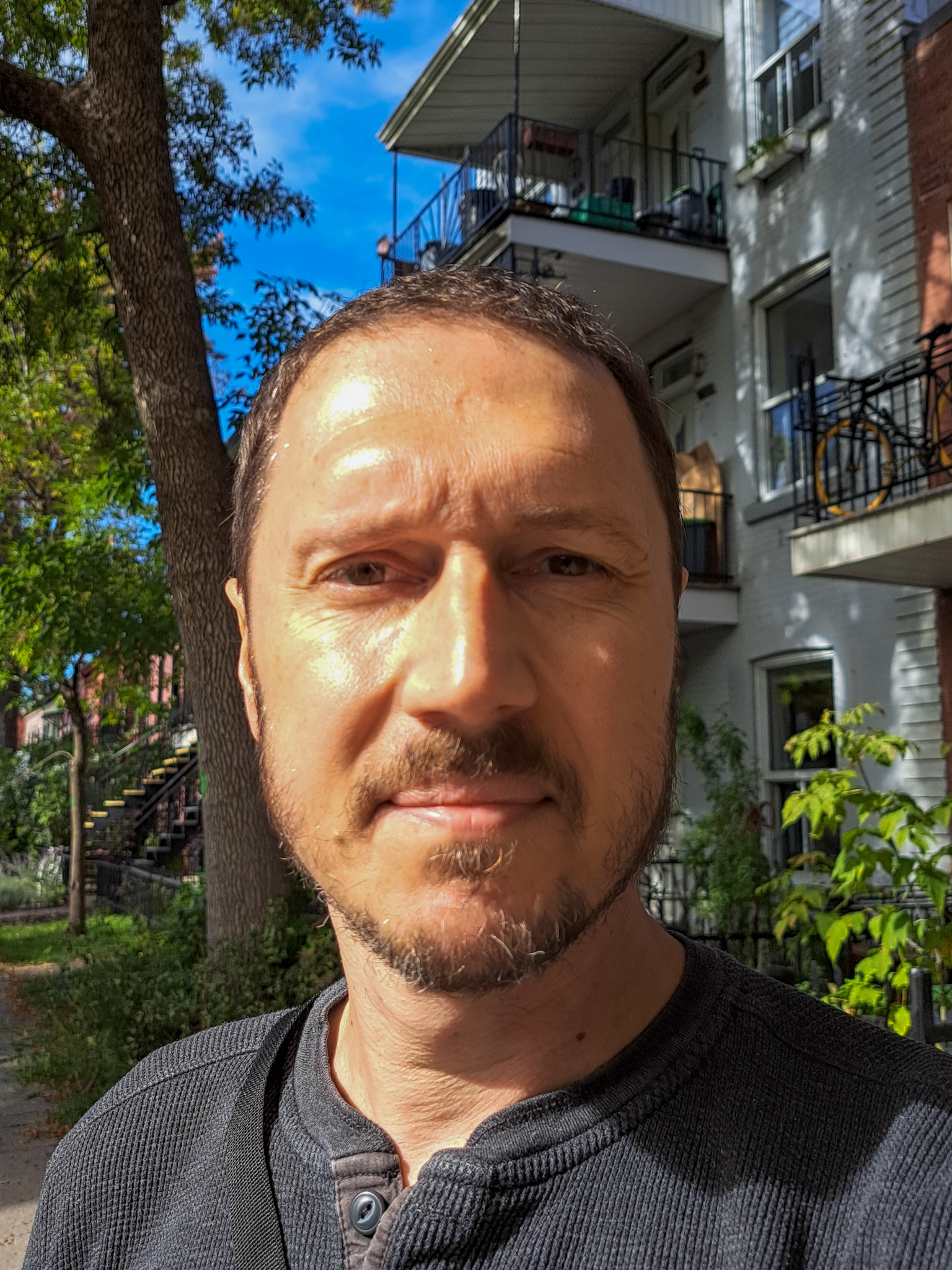

    Duncan Hart Cameron has taught college-level philosophy in Quebec for over twelve years. Born in Ontario, he lived in BC before moving to Montreal in 2001 to pursue a Master’s in Philosophy. A passionate writer and editor, he recently helped found Les éditions comme au vingtièmea bilingual literary review and independent publisher focused on supporting emerging writers, poets, and screenwriters living in Montreal and the Laurentians. His first novella, Eclipsed, is set to appear in the Fall of 2023 and explores the hold that our past can have on our present, especially in our most intimate relationships.

    Photos: Loz Pycock via Flickr (header banner); Duncan Hart Cameron (headshot)

  • Changing the Scenery to Refresh Your Writing—By Kate Hammer

    Changing the Scenery to Refresh Your Writing—By Kate Hammer


    There’s a bit of writing advice that I receive a lot: treat writing like your full-time job, sit down at the same time and place everyday, train your brain to be creative. I’ve heard it again and again, because it works. 

    For others, I’m assuming. 

    I’ve never been able to hold down a routine. Consistency makes my skin crawl, so I’ve had to find another way to inspire creativity and meet deadlines. By changing where you write, you change the way you write: it becomes varied, rooted in distinct experiences, and tonally original. And when was the last time you complained about writing too dynamically?

    Being in a different place can help our stories feel easier, inspire us to notice more, and make returning to our writing place a whole new experience. It can be as small as changing the direction of your desk, or as big as a weekend away without a whisper of internet connection. Or, you can uproot your entire life and move across an ocean.

    At the end of 2020, I moved to Scotland for a writing Master’s. I’d lived in Montreal for a few years, the longest I’d settled down anywhere for a decade, and was starting to get the itch. I was aware moving in the middle of a pandemic wouldn’t be easy, but I also knew it was the challenge I needed. Not only did I instantly become an outsider, but all the habits I’d labeled as normal in myself became something to scrutinize, something of interest.

    Without meaning to, we put our surroundings into everything we write. Maybe the sun is shining, you’ve just had an argument, or you’ve been given an eclectic mug that you know the protagonist of your story would also have; we are sponges that ooze plot. Now, I’m not trying to convince anyone to move halfway across the world like I did, but I am trying to inspire you to get out of your comfort zone. 

    Perhaps it is sitting outside, acting like a tourist in your own city, or treating yourself to a cafe that you’d normally walk past. It can be directly useful, such as visiting the same city as your character, or discovering a hobby by chance that you never thought they’d be into. 

    As soon as I landed in the UK, I knew my brain was aware in a whole new way, and I have the journal entries to prove it. From the roads never being wide enough for two cars, to the public walking paths taking you through fields of sheep who think you have food and charge towards you with impressive speed. I was learning again how I react under pressure; meeting new types of people with traits that could easily be given to characters; feeling the familiar stress of not immediately belonging.

    Putting ourselves in different environments makes us think differently about our stories, and our characters. As much as you know them on paper, knowing what they’d notice in an all-night pharmacy at 1 a.m., or who else would be there, is another matter entirely. You’re reconnecting with your world, and observing the behaviours of strangers as they unknowingly walk through your homework. Those real character actions aren’t something you can buy with money, only with your time. 

    It can take a lot of energy, to suddenly be aware of what’s around you again, or to take on new places, but alongside a healthy relationship with discomfort comes a balanced connection with rejection. As writers with a list of submission dates, we need to practice resilience against the vulnerability and fear of the job.

    The best part of switching up your space, however, is coming back home. Whenever I return to Canada, to my family farm, to my writing desk, I see everything all over again. Not as if for the first time, but I notice different things, items I’ve forgotten to look for. It’s that nostalgia of returning somewhere that makes you comfortable. I guarantee you’d describe your living room in a whole new way if you went a few days without seeing its walls, its stained carpet, how the afternoon sunshine has faded the couch.

    Changing your writing space may not always go well, but this is part of the magic: we’re rarely lost for words when complaining. Every experience feeds into your writing and characters in unexpected ways. 

    Remember that writing isn’t always putting words on paper. Even if you don’t get a lot of work done, changing the scenery can be an excuse for a vacation, a walk, or a redecoration. It’s how we turn ourselves into our own best editors, looking at things in a whole new way, as a slightly different person. And if you need to move to the UK to do that, I’ll be here to support you. 


    Kate Hammer is a writer, producer, and performer born in Canada, and living in Scotland. An award-winning playwright, director, and published writer, Kate constantly strives to create community representation in order to tell the stories that need to be heard. They now work in television development and are publishing a non-fiction book later this year called, Bruce Willis is My Dad. They are a queer, neurodivergent creator who never forgets their goat farming heritage. katethehammer.com

    Photos: Monstera via Pexels; Jeremy Cabrera (headshot)

  • Pushing Past the Fear of Writing Nonfiction—By Chanel M. Sutherland

    Pushing Past the Fear of Writing Nonfiction—By Chanel M. Sutherland

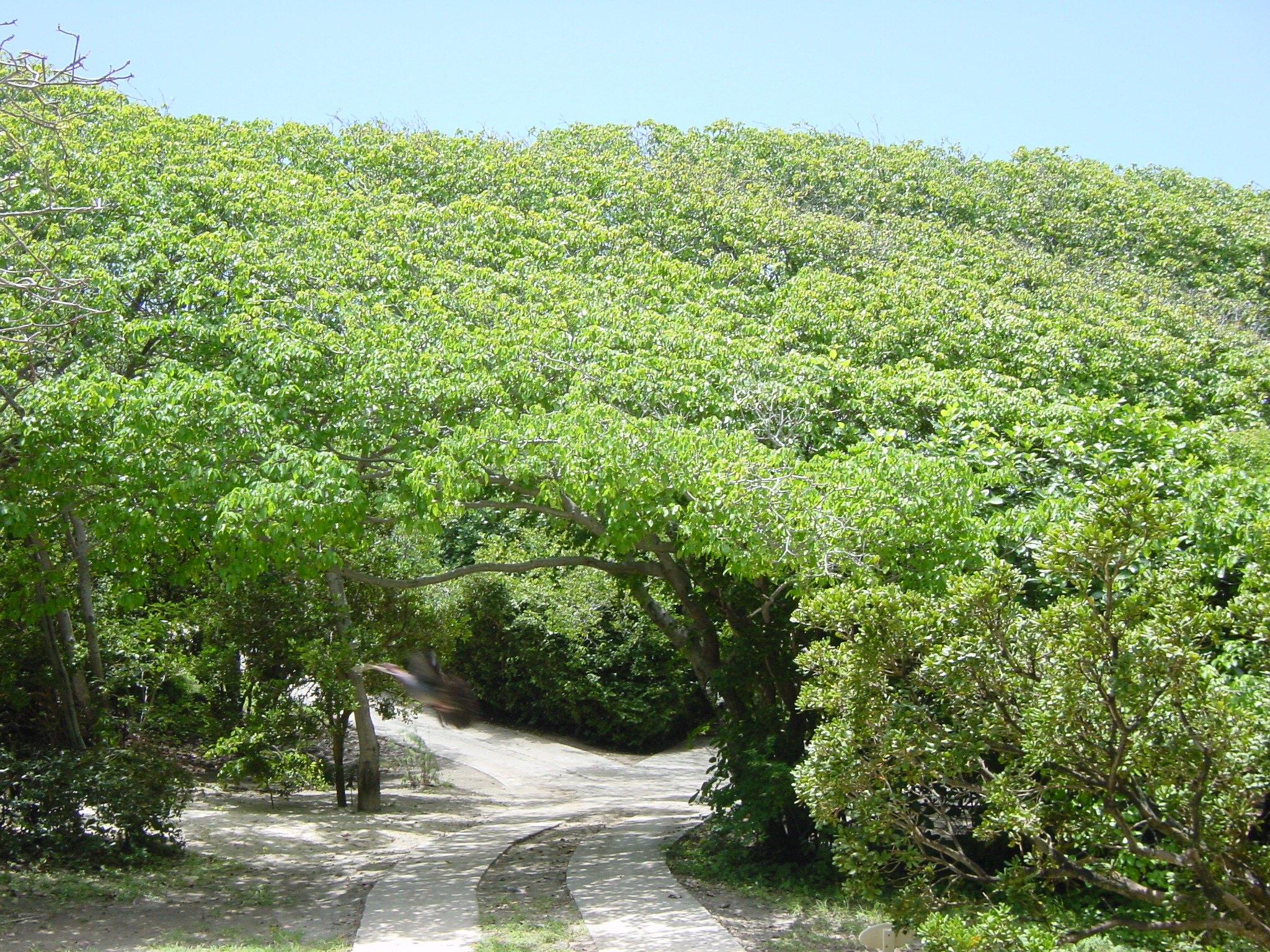
    The trees of St. Vincent and the Grenadines.


    If I’m being completely honest, writing nonfiction terrifies me. 

    But recently, I’ve felt compelled to write the truth.

    To write the stories that have shaped the trajectory of my life and—as if that wasn’t enough—have lodged themselves into my creative conscience, demanding to be told at all costs.

    It started with a single story, “Umbrella,” that I wrote out of pure exigency two years ago. 2020 was a heavy year for many reasons. The world became saturated with personal stories and confessions. Everywhere I turned—social media sites, the news, books, conversations with friends—people spoke out about their experiences with various kinds of discrimination and violence. 

    Suddenly, I found myself confronted by my own memories. They rose out of the trenches of my mind like shadows growing bolder in my darkest hours. They wanted to be written.

    Before, if you had asked anyone who knew me as a writer, they would have told you that my stories mainly deal with the unreal or unproven: futuristic robots, aliens walking around in human skin, scarecrows climbing down from their perch to seek revenge on those who impinge on their domains. This is the realm of storytelling where I feel most at home. One can argue that I write these stories to stay detached from real life.

    I had spent more than two decades circumnavigating my memories and deferring the day when I’d have to finally write about them. When they began to emerge unprompted, I knew my time had come. For the first time in a long while, I found myself turning away from speculative fiction to write something that made me uncomfortable. Nonfiction.

    “Umbrella” is the second nonfiction story I have ever written and the only piece I have shared with readers. Perhaps it is short and breathy for that reason. A panic attack on paper. When it won the 2021 CBC Nonfiction Prize, not only was I surprised, I was frantic. 

    Was I ready to expose myself in this way?

    The simple answer was no, but I’ve since learned that nothing is ever simple when it comes to writing. If it were, it would hardly be worth it.

    It became clear that nonfiction had chosen me, and I had no choice but to take the plunge and see it through. Once I decided to start curating a collection of stories based on my experience as a Black Caribbean immigrant child, I faced another difficult question.

    How much can I reveal about others in my stories?

    In this case, the “others” were primarily my family, and without their support, I knew that I would not be able to write the collection. There were no stories without them. My mother was the catalyst for many integral moments in my childhood. My grandparents the glue that fixed the pieces together in many ways—however imperfect. 

    I’ve always been a solitary writer. I prefer to be completely isolated when writing, and I usually avoid discussing any story until it is completed. With these stories, I knew there were people I needed to speak to and include from the start. 

    Not only was nonfiction changing my craft, but it was also now impeding on my process.

    Having that first conversation with my mom was one of the greatest moments we have shared. It was a warm autumn day; mom and I were meeting up for our weekly walk around the neighbourhood. I don’t recall how I broached the subject of writing the stories. Knowing myself, it would not have been direct.

    What I do remember is the excitement mom expressed in learning that I wanted to do this. She answered any questions I had, voluntarily filled in gaps in my recollection, and even offered to help with the research. Her reaction trickled down to my sisters and aunts, and before I knew it, everyone else was on board.

    I will forever cherish a messaging thread between mom, my sisters, aunts, and me. We were trying to remember the name of a tree native to St. Vincent and the Grenadines. We all knew it by a different name and had our own tales about it, but no one could figure out its one true name.

    This tree became the emblem of my nonfiction endeavor. A thing from my family’s collective past that—though still elusive—we are learning more about each day from one another. 

    As I continue to research and write these nonfiction stories, there is a certain sense of unshackling from the past. And while I begin to see who I am today refracting from each new piece, I am also illuminated by another light: that of my family. 

    So, maybe being terrified of writing nonfiction is not such a bad thing after all.


    Chanel M. Sutherland is the winner of the 2021 CBC Nonfiction Prize for her story “Umbrella” and the recipient of the 2022 Mairuth Sarsfield Mentorship, a component of the Quebec Writers’ Federation’s Fresh Pages initiative. Born in St. Vincent and the Grenadines, Chanel moved to Montreal, Quebec when she was ten years old. She holds a BA in English Literature from Concordia University, and is currently writing her first book, a collection of short stories that explore the Black Caribbean immigrant experience. csuther.com

    Photos: Lyn Gateley via flickr; Chanel M. Sutherland (headshot)

  • I Thought I Was Writing a Potboiler—By Robyn Sarah

    I Thought I Was Writing a Potboiler—By Robyn Sarah

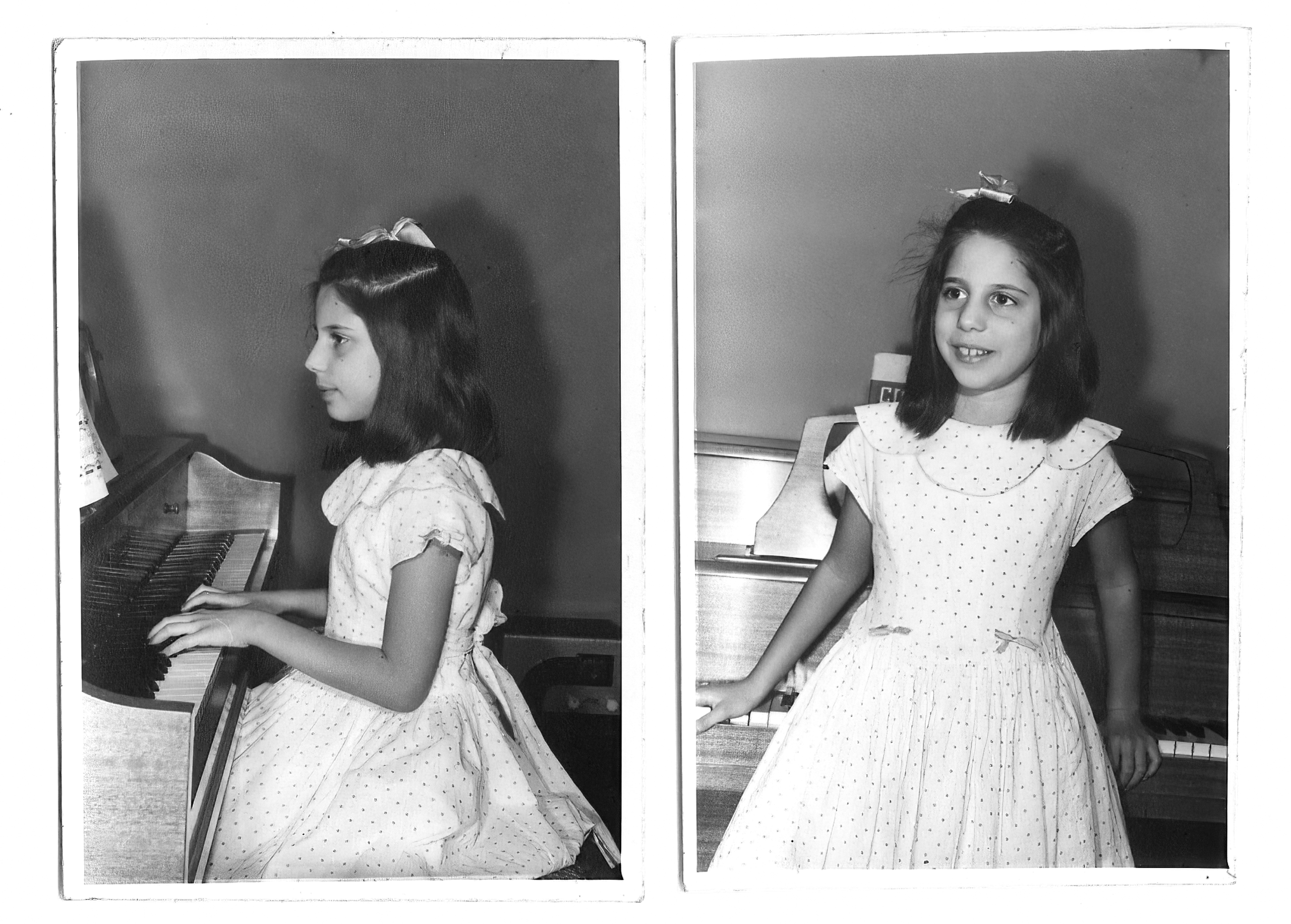
    Robyn Sarah, age eight. (Photo courtesy of author)


    I’m a literary writer to the bone: nothing I’ve written has ever paid enough to keep food on the table for long. But in 2009, during a spell when my muse for poetry and fiction seemed to have gone AWOL, I had the idea to write a short personal narrative, a book I could finish quickly and get published quickly. A potboiler, so to speak—not in the commercial sense, but to reassure myself that I was still a writer. It would be a story about returning to study piano at the age of fifty-nine, after a thirty-five-year lapse, culminating (hopefully) in a modest recital on my sixtieth birthday. A debut at sixty! I had never performed on piano as a teen or young adult. Of course, I would have to live this story before I could tell it. One year of goal-oriented piano lessons, during which I would track my progress in a journal; then a few months to turn the field notes into a book.

    Ten years later, the manuscript still wasn’t finished. And it wasn’t short.  A two-year purgatory of editing and revising had yet to begin. Music, Late and Soon was finally published in August 2021. Only vaguely does it resemble the book I thought I was going to write. What happened? How did I lose control over the best-defined, most straightforward writing project I had ever conceived? 

    The key may be in that term, “writing project.” Poetry is my primary genre, and while some poets do conceive poetry collections around a premeditated subject, I’m not one of them; my poems have always been composed individually, to be gathered later into collections. Even individual poems tend to begin without a clear subject in mind, but rather with some observation of the moment—an image, a feeling, a memory fragment, maybe just a phrase I like the sound of. My short stories begin similarly; there’s never much plot or a clear idea of where I’m going. This makes for some anxiety while writing, but it’s my natural process as a writer.

    When I contacted my old piano teacher (then in his eighties) and outlined my project, asking if he might be willing to give me some guidance, he wondered why I was fixated on the idea of performing, especially on a schedule. “Why not just start working again, and see where it leads? Playing the piano is like any art form, any creative process. It can’t be forced, it doesn’t work by deadline.”

    In retrospect, he had answered my “What happened?” question before it could need to be asked—had I really been listening. Wasn’t I listening? I thought I was. I thought he was saying something I already understood as a writer. But I didn’t think what he was saying applied to the book I had in mind. This book was going to be different. It was going to be easy—a straight line from here to there. The return to lessons, the year of preparation, the recital, The End.

    But wait. A “return” to lessons implied a past. Why had I stopped studying piano? Why was I now fixated on the idea of performing? Moment of truth: I might need to provide a bit of backstory if I expected to interest a reader in my late-life musical venture. I did, in fact, have some experience of musical performance; the trouble was, it wasn’t on piano. For a decade I had studied clarinet in a professional music school, aspiring to a career as an orchestral musician. I had graduated, but had not pursued that path. Nor had I ever really looked back or asked myself why.

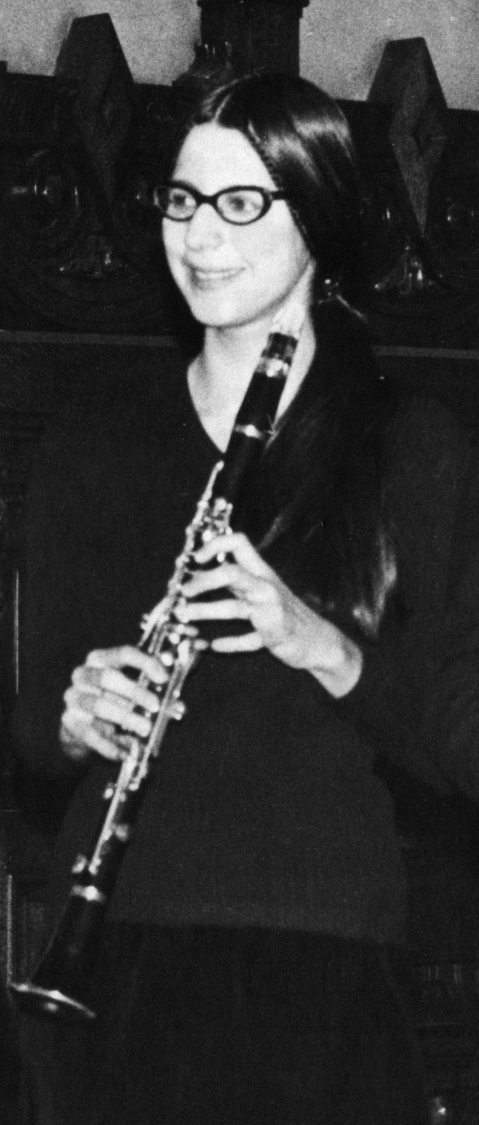
    Robyn Sarah, circa 1972.
    (Photo courtesy of author)

    Obviously this wasn’t the time or place to get into all that: it would just complicate the main story. Sticking to my plan, I began studying piano again, keeping detailed notes on the lessons. In tandem, I wrote some reminiscences of childhood: earliest memories surrounding the piano, early lessons with three different teachers before I came to study with the mentor I’d just reconnected with. I drafted a first chapter based on this material—a summary that, I thought, adequately contextualized where I was coming from. It glossed over my music school years on clarinet, allotting them a passing mention but keeping the focus on piano.

    Next moment of truth. I read the chapter aloud to a friend I’d known since high school, who had studied piano with the same teacher-mentor and was now a professional pianist and educator. After listening affably, expectantly, to the end, he was silent a moment, then blunt. “So, what’s the purpose here? I’m not getting a sense of why I should care about all this. And how could you leave out your ten years as a clarinetist?”

    “I didn’t! They’re there.” I pointed to the relevant paragraph. 

    “What, that’s it? Are you telling a story, or writing a CV? Those years were a fundamental part of your musical history! You aren’t being honest with the reader here. This isn’t you. I’m not hearing your real voice, because you’re not telling your real story.”

    My heart sank, because I recognized immediately that he was right. The bottom had just dropped out of my “project.” But once I accepted that, the book suddenly came to life. I realized I did have a story to tell—a buried one, on which the significance of the current one depended. I was going to have to delve into that unexamined past and make some sense of it, find out how it connected to my present moment. There were mysteries to explore here…

    I began asking myself questions: one led to another. I dug up and pored over surviving journals and letters from my high school and music school years. Present self and past selves collided and seemed to have things to say to each other. The pianist and the clarinetist had things to say to each other. The writer and the musician had things to say to each other. They all had questions of their own about creative process: what nurtures it, what can get in the way of it?

    A familiar anxiety swept over me as I realized that my “potboiler” was morphing from a brief narrative with a one-year time frame into a musical autobiography spanning my whole life. How was I going to weave all these strands into something coherent and beautiful that I sensed could be made of them, the way a composer weaves together multiple voice-lines in contrapuntal music? A familiar excitement tempered the anxiety, giving me the patience to spend ten years finding out.


    A Biblioasis Interview with Robyn Sarah

    Robyn Sarah reads her poem “Station”, from her Selected Poems, Wherever We Mean to Be (Biblioasis, 2017).

    “The book’s title is taken from this poem. I chose it because it expresses something that runs through all my poetry: a fascination with the way past and future, memory and intention, inhabit our present moment.”


    Spotlight on Wherever We Mean to Be by Robyn Sarah


    Photo by Stephen Brockwell

    Robyn Sarah is a Montreal poet and writer whose 2015 poetry collection, My Shoes Are Killing Me, won the Governor General’s Award for that year. Her “potboiler” was short listed for last year’s Mavis Gallant Prize for nonfiction.

  • Writer’s Block in the Time of Corona—By Carolyn Marie Souaid

    Writer’s Block in the Time of Corona—By Carolyn Marie Souaid

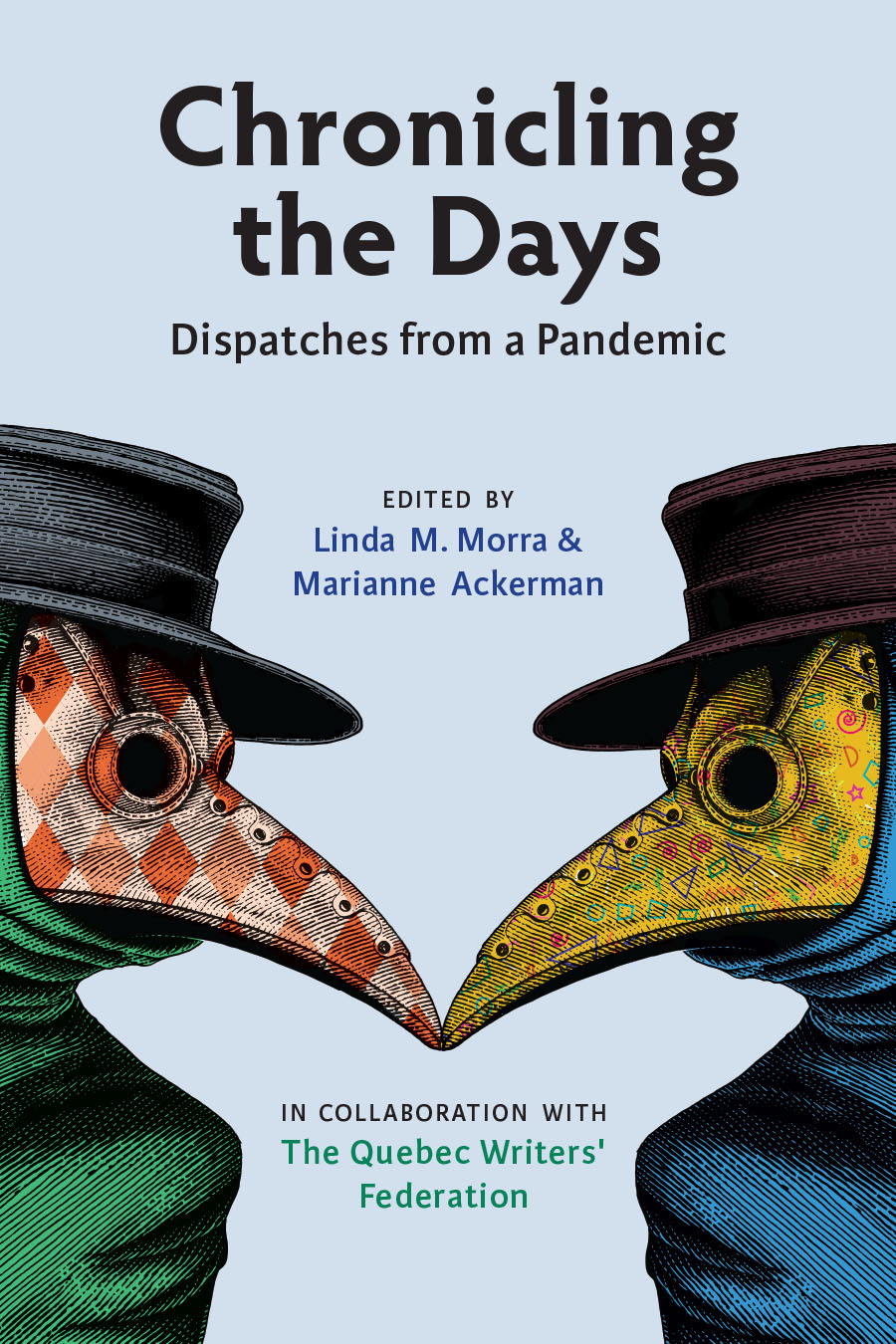
    In April 2020, we invited writers in Quebec to submit a story of a single day during the strange, uneasy time of coronavirus and pandemic, of social distancing and self isolation, of lockdown and quarantine.

    We’re thrilled to announce that these stories have been gathered in Chronicling the Days: Dispatches from a Pandemic (Guernica Press). To learn more and buy the book, please visit https://www.guernicaeditions.com/title/9781771836579.

    Please also join us on the QWF FB Community page, and let the authors know if their words resonated.

    In mid-March, COVID-19 was getting out of hand, according to Premier Legault. There was too much handholding, not enough handwashing. I was sent home on a paid, two-week hiatus while they rejigged my job to allow me to work from the confines of my condo.

    Wait, what?

    To read the rest of the story, please support our community and check out Chronicling the Days: Dispatches from a Pandemic

  • Writing about Not Writing—By Sivan Slapak

    Writing about Not Writing—By Sivan Slapak

    Is a writer who isn’t writing still a writer? And if so, for how long a stretch? These are the questions I’ve been asking myself—actually, tormenting myself with—for the last year or two.

    Even at my most active I’ve never had a writing routine. I wish I could say I’ve always woken up to meet my muse at 9 a.m. each morning. Nevertheless, I’ve somehow managed to amass material over the past few years, with a collection of interwoven short stories as the intended goal.

    When I began crafting some stories about five years ago, I didn’t call myself a writer. The verb was okay: “Writing a bit,” but not the noun. I’ve kept journals since childhood, met in writing groups since my teens. Then came academic papers, grant writing gigs, and so on. So, I’ve been engaged in the act in various ways throughout my life. But “writer”? It seemed pretentious, or premature at best. Like the difference between having an artistic spirit, and creating art.

    Despite some early successes—getting published, shortlisted, even awarded (!)—I found it challenging to accept, and introduce, myself as a writer. (“I just write a bit!”) But with time, I allowed myself to settle into the identity. In some ways this has calmed other questions about my place in the world, when I, like so many of us, feel I’ve made a life of living on the seams. For a writer, that’s not a bad spot to be.

    But what does a writer who hasn’t been writing call herself? (“Lost,” when she’s panicking.) I know we’re supposed to believe that lulls and blocks are part of the creative process (I’ve read The Artist’s Way, too) and that resting and inputting—reading, seeing art, living life without notating it—is an incubation period. And I suppose I do essentially think that. Yet at some point this ‘incubation’ begins to feel more like stagnation, and the idea of ‘writer experiencing a lull’ is harder to buy than ‘not a writer anymore.’ Especially when the pause becomes longer than the writing that preceded it.

    Of course, there are lots of reasons for a writing hiatus. The simple ones are limits of time and energy. For me, I’ll say work: over the years it’s mainly been in the community and arts sectors (to my joy), often as a coordinator or editor. I love these roles and they offer flexibility, but I’ve noticed I easily choose working on others’ projects over my own, even when I don’t have to. Before I had a job, my blocks were caused by the paralyzing anxiety of NOT having enough work, or not having work I like. So, there’s always something. And there’s always the hauling undertow of social media to compound the issue. In any case, like many writers I know, I struggle to prioritize writing time, and the obvious excuses are less complicated than facing other, less conscious motives. Whatever the reasons, the longer I go without writing, the more miserable I feel.

    What about my short story collection? What about being a writer?

    In recent years I’ve hung on, by my fingertips, to the fragile thread of a notion that I’m still a writer. An unproductive one, but still.

    Thankfully, I seem to be slowly emerging from my dry spell, and I’ve been looking back on what’s kept me holding on: I have to credit the writing group I’ve been part of for several years. I haven’t submitted in ages, but I’ve stayed in as a reader and tried to be an active presence in our little community. Their support has buoyed me.

    I also took two QWF workshops. I didn’t produce new work, but it gave me a chance to revisit some pieces and say, “Hey, this isn’t horrible!” (And have peers say similarly encouraging things.)

    This year I began writing daily morning pages, which put a pen back in my hand and is as close to a routine as I get. In the winter, riled up about a political issue, I wrote an op ed, which was published. Soon after, so was an old story I’d dusted off. I attended a ‘Shut Up and Write’ session in a QWF writer’s house. And just recently I met the criteria to have my “Literary Writer” profile approved by the Canada Council for the Arts. Bureaucratic recognition though it is, I felt grateful to receive it.

    So, there have been steps, some small and some more significant, in the realm of writerly activity. Not (yet) my completed short story collection. Or even another short story. But something, maybe more than I thought. Enough movement to feel reassured that while I’ve been fretting over stagnation versus incubation, my writer-self has kept busy.


    profile 2017 leslie schachter

    Sivan Slapak is a writer working in the arts and culture sector of Montreal. Her short stories have won and been shortlisted for fiction awards, and appeared in publications such as The New Quarterly, Montréal SeraiJONAHmagazine, and in an anthology published by Véhicule Press. Sivan lived abroad for many years and is fascinated by the encounters that take place when distinct communities meet, a theme she enjoys exploring in her writing, and in her life—and in the short story collection she hopes to complete soon.

    Photo credits: Sivan Slapak (header image); Leslie Schachter (headshot)