Tag: education

  • Writing to Perform, and Performing to Write—By Deb Vanslet

    Writing to Perform, and Performing to Write—By Deb Vanslet

    I always go back and forth between telling and writing when I create a story. Below is an audio file and a transcript of that process.


    I write a story by telling a story. I started to call myself a writer when I was around fifty. But in the late 1980s and 1990s, I was a video artist, performing stories for the camera. I discovered a Video 8 camera in a university art class. It was small, easy to handle, tape was afforable, but mostly, I was kind of amazed that the teacher thought that it was a great idea for me to just talk into the camera, confessional-style—it was a genre.

    So I go for it: telling unrehearsed stories about dead pigeons, barking dogs, late night TV, bus trips across the country, and the insanity of Botox, pet hotels, and plastic surgery. Nothing is ever resolved, there’s not much reflection, and I don’t really know what I’m doing.  But that’s part of the magic: it’s a first, and it’s fun, and so unselfconscious. I’m telling stories like hardly anyone is listening, or watching. The finished video, Sick World, is a modest hit at film festivals. I’m still surprised. I make more videos, but now I know that people are watching.

    The last time I told a story on video was in 1996. Sick World 3: the baby. It’s about my girlfriend and me having a baby with a gay sperm donor friend. It’s an unusual story, and it’s even more unusual to talk about it, even though lesbians became very hip in the mid-nineties—the cover of Newsweek, the Ellen show! We got a lot of publicity for being so out about having a child this way. My story practically wrote itself. Practically.

    In 2012, an incredible story unfolds in my life. My aunt Christine dies in the hospital of blood poisoning, a few days after cutting herself on a beer bottle in her small apartment. I’d been close to her as a kid, but she’d been gone most of my adult life, struggling with mental health and addictions.

    When she finally reappeared she’d kicked heroin, but she was never able to really function again.

    Christine’s final year was brutal. She fell three times in her apartment breaking her wrist, her hip, and finally her ankle. Six days after my aunt dies, I get a message from a man looking for a Christine Vanslet. I don’t even have to think about this. I knew right away. This was the son that she had give up for adoption.

    I tell everyone the story. The synchronicity is incredible. 

    People are rapt. 

    “Write it down! You have to share it.”

    I know it’s a special story, especially the ending. But so what? Lots of people have incredible stories. And, I’m not really a writer. I just have a beginning, and an ending. What do I put in between? Stories, as I learned over the years, don’t really write themselves.

    I spot a storytelling workshop with Taylor Tower at the QWF, and she introduces me to Confabulation, Monreal’s monthly live storytelling event. This changes everything.

    I start writing to perform, and performing to write. Working between the two genres is an excercise in finding my voice. My middle-aged voice, maybe I should say my mature voice, even if that’s cliché. I didn’t learn much about putting a story together in the early performance videos; I learned about getting comfortable, becoming acquainted even, with my face, my body, the sound of my voice, and then, of being able to separate myself from that person on the screen. 

    Writing for performance is different than writing for page but it also really informs how I write for the page. My voice is stronger, the writing is looser, playful, more conversational. More me. I can’t get to me just by writing it down. I have to perform it first. 


    Deb Vanslet is a media artist, videographer, and writer. Her independent videos, including Sick WorldWeather Permitting, and Rules of the Road, explore storytelling, performance, and dance. For sixteen years Deb produced and hosted Dykes on Mykes, at CKUT 90.3 FM. Deb is a producer at Confabulation, Montreal’s live storytelling show. She also produces and hosts the Confabulation podcast. She won the 2015 3Macs carte blanche QWF prize for her short story Self-Serve, and published Ghost Station in the Queer Perspectives edition of The Malahat Review. Deb is the production coordinator at Ada-X, a feminist artist-run centre.

    Photo credit: Liz Miller (headshot)
  • Writers Need Libraries; So Do Our Children—By Deborah Ostrovsky

    Writers Need Libraries; So Do Our Children—By Deborah Ostrovsky

    Not long ago, during the Before Times, I received a small award to pursue a non-fiction project. I planned to dedicate an entire week, maybe two or three, to writing without interruptions.

    The morning I opened my laptop to begin—it was World Book Day, which seems ironic now—I found an email from my daughter’s primary school. They needed a parent to volunteer at the library.

    Our primary school is fortunate to have a library at all. Many schools don’t have libraries. A primary school a few blocks from ours recently turned their library into a supply closet. Over 20 per cent of Laval’s public schools are without libraries, or enough books in classrooms.

    Radio-Canada reports that a quarter of all school boards in Quebec don’t have librarians. Our library is run by volunteers. We shelve. We search for lost books. Like a team of amateur first responders in an emergency room that should be staffed by qualified surgeons, we learn to repair the broken spines of bandes dessinées from video tutorials.

    The email from the school said that a few classes hadn’t been able to borrow books for months. Could you come today, maybe now, to turn on the computer and let the kids finally take some out?

    So I did what any emerging writer starved for time to write would do. I closed my laptop. I put on my coat. I rushed to the school. I stayed all morning and returned in the following weeks until the pandemic shut everything down. 

    Writing, editing, and translating are jobs that can sometimes feel easy to walk away from. This is especially so when other urgent business gets in the way—like helping to provide literacy and library resources for kids when neoliberal education budgets consistently sap them dry.

    It’s overwhelming to try and comprehend all the ways the arts, books, and writing are shaped by government policy. Even more overwhelming is the thought of my own personal luck at being born at the twilight of a golden age of state interventionism—right before the neoliberal assault on education. The idea of dedicating a life to writing would have never been possible for someone of my family’s background without policies that made public libraries, and librarians, part of every school.

    “Books have their sources in, are made from readers (would-be writers) reading other people’s books,”muses Kate Briggs in her book This Little Art. “All books are made from other books,”she writes. Anything I have ever written, then, has come in some way from other books, and in turn from a childhood of reading books that had date due slips glued to the back cover, and which were tucked under my pillow at night. The stories within these books made their way into my dreams. These books were always borrowed. They belonged to my public school.

    Now school libraries only open when parents have the income and the time to spend mornings taping together torn pages of Astérix.

    It’s okay, a parent told me a while ago when we talked about this. We have plenty of books at home.

    Lucky you, I thought. And what about those who don’t?  

    Lucky me, though. I get to write. It’s a privilege, in today’s economy, to do this thing with my life. But access to a school library should be a right, and not a privilege. The deep connections between my privilege and this right are buried somewhere within the early manifestations of my own creative desires over which I can take some measure of ownership; but they were undeniably helped along by state policy, making it possible for the artistic inclination and writerly imagination to be fostered by something other than luck, wealth, or family. It can’t be denied. My writing life is a result of private ambitions but also public will.

    For now, I’ll keep writing until the school library finally reopens, when the pandemic is under control. Then the school will call and say that they need somebody to help the kids take out books. I should really say no, and stay at my desk, to avoid more interruptions.

    But I will say yes. I will do this until something in the system changes radically, so kids can get their hands on more books. Maybe some of those kids can write in the future, too. In the meantime they’re waiting, hopefully not for long.


    Deborah Ostrovsky is an editor, writer, and translator. Her work has been generously supported by the Barbara Deming Memorial Fund, the Marian Hebb Research Grant, the Banff Centre for Arts and Creativity, and the Writers’ Trust of Canada.

    Photo credit: Gopesa Paquette

  • Transcendence—by Francine Cunningham

    Transcendence—by Francine Cunningham

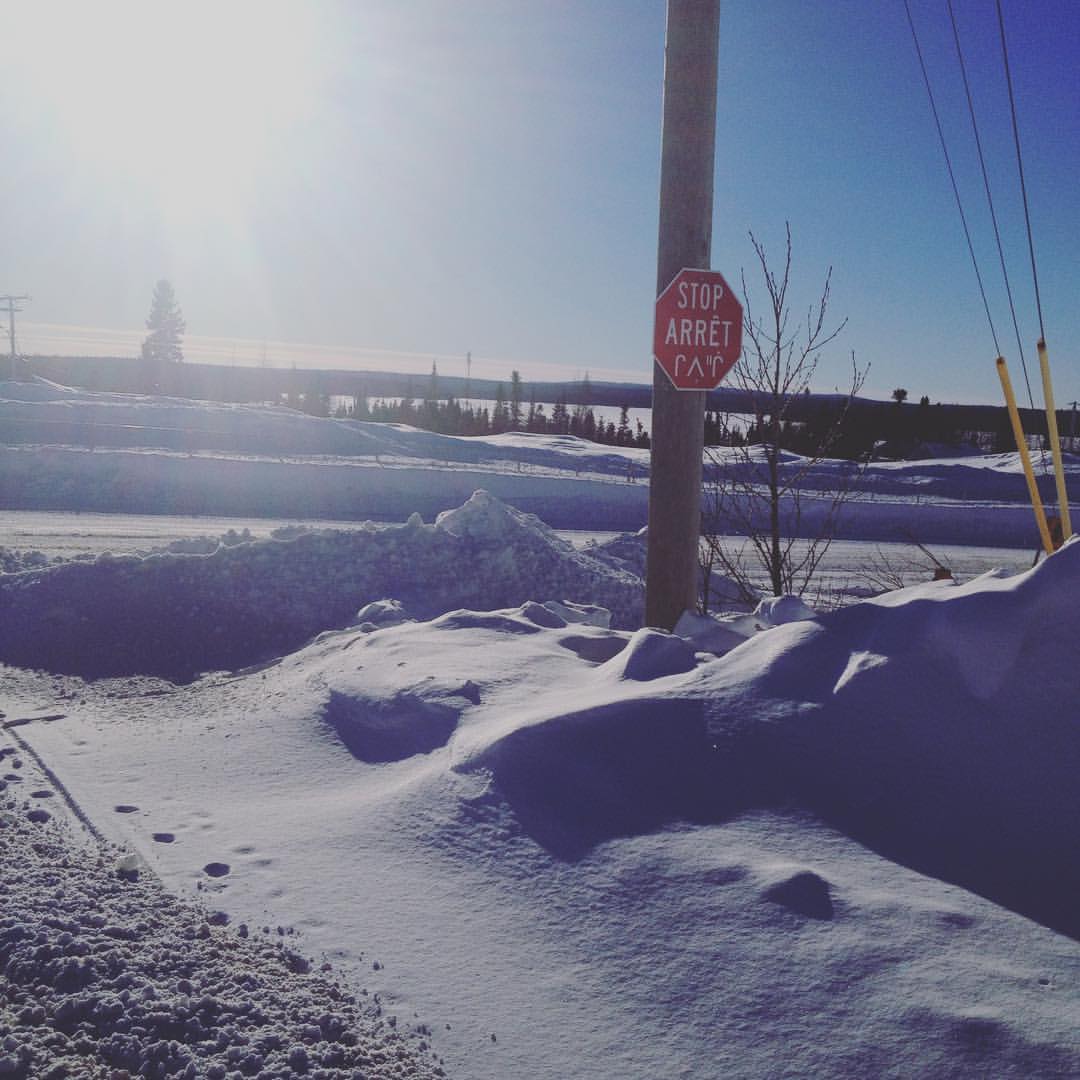
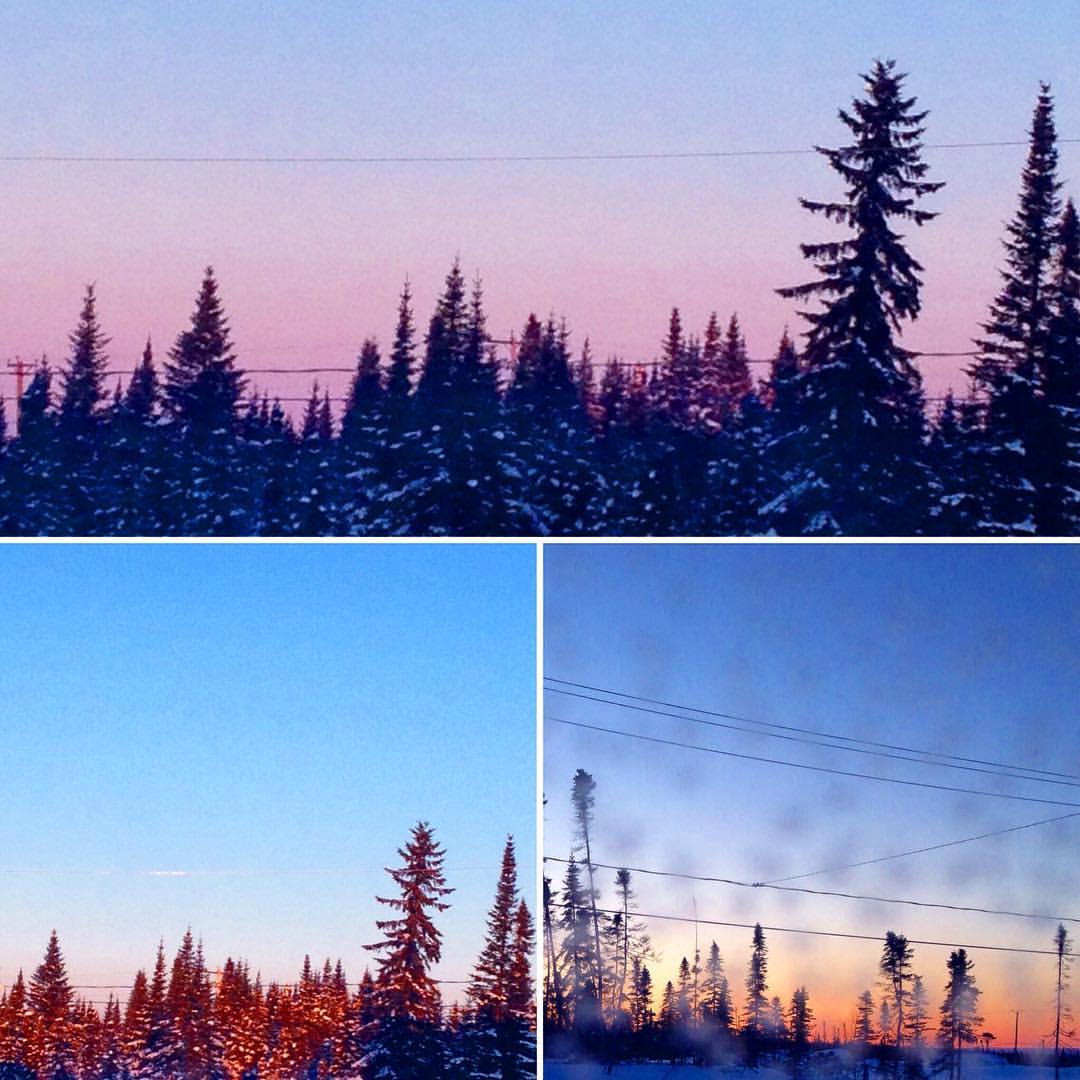
    I had the privilege of being an artist in residence in Mistissini, a community in northern Quebec, this February and March. The community was small and welcoming; the snow, on the other hand, was otherworldly. There were mountains of it piled and strung along the road to the school, like a miniature version of the Rockies I am used to. While I struggled with the overwhelming volume of the white stuff, I welcomed the natural beauty of the land, the quiet of the nights, and the stillness that comes from being outside the city. With nothing to distract me I was able to spend hours every night writing and painting. I read something like ten books and slept deeper than I have in a long time. It was a treat to turn off my email for six weeks, not take on any additional contracts, and really focus on my writing and visual art. I was teaching youth how to integrate their visual art with their writing through zines, so it was the perfect time for me to spend some time doing the same.

    16463091_10154140278245286_1071419733135569396_o

    The Mikw Chiyâm arts program was commissioned by the Quebec Cree School Board in 2015 and has just finished its second successful year. It brings together artists and students, the hope being that by creating a safe and creative space, students will be inspired to come to school more often and have a more positive experience once there.

    I am an Indigenous writer, artist, and educator, and have been working with Indigenous youth for over ten years. I have been a part of many different programs that use artistic practice as a way to intercede and help guide students onto a path that will give them confidence and knowledge so they can succeed in the world. The thing I hear most from students is how much they wish that they, as budding artists, were treated with the same level of care and given the same number of opportunities as in the sports or science concentration programs. Having an arts concentration program inside of a high school is remarkable; having one that has the level of support of Mikw Chiyâm is something I have never seen. It is literally making opportunities for young artists that they would not get otherwise.

    Often the arts can go unrecognized as a valid life path for a young person, but you just have to look to who the people are that are revitalizing our Indigenous communities and you will see artists at the forefront. When working with youth, Indigenous or not, I try to help them infuse their work, whether it’s fiction, poetry, or non-fiction, with a spark of who they are and their own unique point of view, with their own experience, tradition, and culture. Whether that takes the form of simply setting their dystopian dramas in their own community, or adding in bits of their language, or having characters that speak and act like them and their friends, these sparks are what makes their writing so unique.

    “I try to help them infuse their work, whether it’s fiction, poetry, or non-fiction, with a spark of who they are and their own unique point of view, with their own experience, tradition, and culture.”

    Growing up, I never read a story from a viewpoint that felt like my own: that of someone considered white passing, who grew up off the land, was raised in the city, yet is still Indigenous. I’ve found in my work with Indigenous youth that many are craving a varied point of view in the stories they read, something different than the stories they have thus far been presented with. There is a shame that comes with feeling like you are disconnected from your community. When you don’t know your language. When you can’t answer all the questions from non-Indigenous people. There is a shame that can infect a person when you aren’t what you see in movies, in stories—when you aren’t a real “Indian.”

    If not treated like a valid feeling, this void only serves to make youth feel more alone, more different, when in reality they have a whole network of people around them who feel the same way. Opening up space, letting discussion flow through these gut-wrenching topics, is so important. Oftentimes this can be the first time they’ve been allowed to talk about such things. I have found that once you break down those thick walls a flood of words come out. And eventually they land on the page. And they become something more than art. They transcend the writer. They help. They heal.

    “Once you break down those thick walls a flood of words come out… They transcend the writer. They help. They heal.”

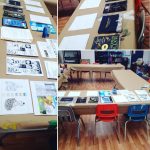
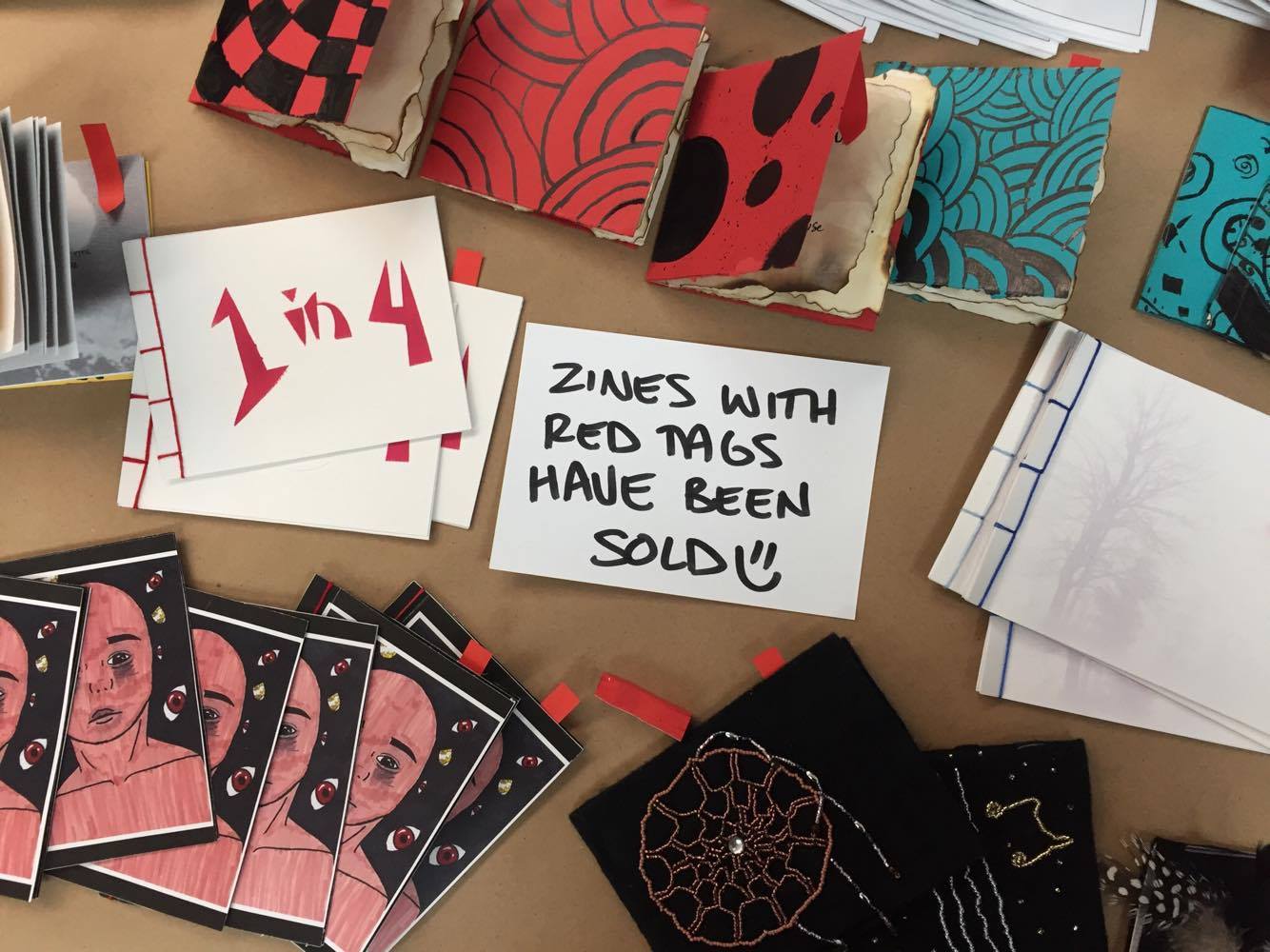
    The zines that the students created were powerful. They tackled issues like sexual abuse in the community, the stigmatization of mental illness, loneliness, and identity. These stories were told through humor, visual art, prose, and end-of-the-world disasters. At a final celebration night, we invited the community to come see the students’ work. For weeks, I had been telling them that people would buy their zines, that people other than me cared about what they were writing. The students wouldn’t believe me.

    Right before we opened the doors to let people in, they again tried to let me down easy, telling me not to get my hopes up, that no one would come and that was okay. They were trying to protect my feelings because I was so excited. But the community did come out. They read through all the zines, and by the end of the night we had sold out of everything we had created and made over five hundred dollars. The students were shocked. I was elated. I knew their words were valuable, that they were worth listening to. And now they had the proof.

    16998859_1686364578047373_2753448752955219953_n17015651_1686364321380732_2066677641393624379_o


    Headshot 2

    Francine Cunningham is a Canadian Indigenous writer, artist, and educator. Her creative non-fiction has appeared in The Malahat Review, the anthology Boobs: women explore what it means to have breasts (Caitlin Press), and more. Her fiction and poetry have appeared in The Puritan, Joyland Magazine, Echolocation Magazine, The Maynard, and more. She is a graduate of the UBC Creative Writing MFA program and a recent winner of The Hnatyshyn Foundation’s REVEAL Indigenous Art Award. You can find more about her at www.francinecunningham.ca.

    All photos in this piece are by Francine Cunningham.

  • The Art of Mentorship: An Interview with Robert Edison Sandiford

    The Art of Mentorship: An Interview with Robert Edison Sandiford

    Every couple of weeks, Robert Edison Sandiford calls me from Barbados. Robert is one of this year’s QWF fiction mentors, and I am his protégé. We’ve made arrangements to speak at 5 p.m. via Skype so this interview would feel more face-to-face. At 5:10, we still have no audio so he switches from his desktop to his laptop. At 5:25 the recording app on my phone stops working. At 5:37 we decide we’ll have to hobble back and forth between the computers, a phone, and another phone app to somehow make it work. Afterwards, when it’s all sorted, he says: “Well, there’s a lesson about tenacity.”

    Robert was born in Montreal to Barbadian parents. He is the author of nine books that range in form from short and long fiction to memoir, graphic novels, and erotica. Over a period of four months, he’s worked with me on my own collection of stories and we’ve talked about many things: process and voice, the German writer Jenny Erpenbeck, and how baking helps to reduce stress. Robert answers my questions below.

    —Pamela Hensley

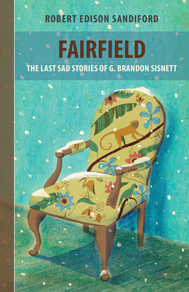
    Fairfield Cover

    PAMELA HENSLEY

    Let’s start with a quote from Fairfield, your most recent collection of short stories. In reference to engaging fiction, you say: “All that matters… is the individual and the moment.” Can you expand on that?

    ROBERT EDISON SANDIFORD

    In the context of the collection, it had to do with making the most of art. It had to do with knowing when something is ready or when an artist has what it takes. It comes from a quote by Matthew Arnold [“For the creation of a masterwork… two powers must concur, the power of the man and the power of the moment, and the man is not enough without the moment”]. How do you know when you’ve got what it takes? All we are is who we are and the talent that we have. My contention is that most people are a little better than they think they are. They can do better than they’ve done.

    HENSLEY

    Besides being a mentor, you’re an editor and teacher. How does one turn a good manuscript into a great one? Or a good writer into a great writer?

    SANDIFORD

    There has to be that spark within the work itself, or within the writer. There has to be something inside that person already that lends itself to greatness. And it may depend on how we define greatness. There are a lot of artists, not just writers, people who never enjoyed recognition while they were alive or young enough to enjoy it. So there’s that question again, of the individual and the moment and the individual and talent. There are certain things you can teach people to make them better writers but that sort of greatness, that may also depend on them.

    HENSLEY

    In Fairfield, a fictional editor writes that the character G. Brandon Sisnett borrowed from other authors, including one from Montreal who wrote Caribbean fiction on the themes of “familial loss and managing the pain of living.” Which are themes that recur in your work. Would you like to talk about theme?

    SANDIFORD

    I’m curious about theme. Both of us are writing from a particular place. Germany finds its way into your stories, as well as Canada. For me, it’s Barbados and Canada. Theme is distinct from subject matter but they inform each other. I write out of where I am but also where I come from. I do believe that all writing is regional, in a sense. People talk about things being universal but I think it goes to honesty. If you write in a way that is honest, the regional will get you to the universal. Someone will pick up the story halfway around the world and say, “I relate.”


    “There are certain things you can teach people to make them better writers but that sort of greatness, that may also depend on them.”


    HENSLEY

    Is place a detail?

    SANDIFORD

    Place is a necessary detail: your characters have got to be somewhere. But it’s more than that. It’s a space in which you invite the reader to share an experience. It’s about learning, actually. If I write about a particular place, I want you to feel that place. I want you to experience it as if you were actually there. Unless having a non-descript setting is important to telling the story, then why have this non-descript thing? I get the answer, “But I want it to be universal.” I just say, “Stop. What you may be doing is taking out the necessary edges that people need to relate to the story even more.”


    “I do believe that all writing is regional, in a sense. People talk about things being universal but I think it goes to honesty. If you write in a way that is honest, the regional will get you to the universal.”


    HENSLEY

    What’s the difference between style and voice?

    SANDIFORD

    Style and voice tend to be synonymous. But to make a differentiation, when writers are starting out I like to talk about approach. I used to talk about style but I think writers get confused. They say, “But the way I put it down is a style. I like to use all these ellipses when I write, that’s my style.” And I say, “No, that’s more of an approach and it may even be a bad approach.” Style is something that you develop over time. Voice is all those things combined. It’s reading a work and recognizing who it is. Ultimately, it’s telling a story in a particular way. It can’t be told by anybody else.

    HENSLEY

    You published your first story collection more than 20 years ago. Does it get any easier?

    SANDIFORD

    Hell, no! Publishing is more difficult now than it was before. Coming up with a story, I don’t know that that gets any easier. What gets easier, maybe, is knowing what works and what doesn’t. But I wake up every morning doing what I do and I have no regrets. Ever. That’s a hell of a thing to be able to say.


    On June 4, the 2017 QWF mentors and mentees will present new writing at the annual public reading in Montreal. Click here for more information.

    Rob Profile, ACA Painting BackgroundRobert Edison Sandiford is the author of nine books, most recently Fairfield: The Last Sad Stories of G. Brandon Sisnett. He is the founder, with the poet Linda M. Deane, of the cultural forum ArtsEtc Inc. A recipient of Barbados’ Governor General’s Award for his fiction and the Harold Hoyte Award for newspaper editing, he has also worked as a teacher and video producer.


    Pamela Hensley is new to Montreal, having relocated once again after returning from Germany to Ontario. She was selected to participate in the 2017 QWF Mentorship program and is currently attending her first QWF workshop. You can read her stories in Canadian journals, including The Dalhousie Review and EVENT magazine, and are invited to hear her read with other QWF mentees at The Comedy Nest, Montreal Forum on Sunday, June 4 at 2 pm.


    Photo credits: Pamela Hensley (top banner); Aeryn Sandiford (Sandiford headshot); Gordon Hensley (Hensley headshot)