Tag: English

  • Writing Between Languages—by Veena Gokhale

    Writing Between Languages—by Veena Gokhale

    What do you do when a lot of the reality you portray in your fiction does not take place in English? Easy answer: you sprinkle your prose with words from other languages. As it turns out, this is not without its problems.

    Growing up in India, I learned my first language, Marathi, at home. I was sent to an English school right from kindergarten, where I had also learned Hindi, the language of the state I lived in. In the Indian Constitution, Hindi and English are designated languages of the Central Government. Presently, India has twenty-one other “official” languages. Generally speaking, every time you cross a state boundary you are in another “language territory.”

    English, though not my mother tongue, is nevertheless my “principal” language. I was in my twenties when I came across an essay by a Hong Kong-born writer of Chinese origin who described English as his principal language. I cannot thank him enough for giving me a way of describing the place of English in my life!

    When I became a journalist, I worked for an English-language magazine in India. But I had always loved mixing languages, using non-English words when I spoke in English. As a writer, I exuberantly introduced some Hindi words into my English articles. This was around the time that Salman Rushdie “decolonized the English language,” as he put it, through the innovative use of multiple languages that included sprinkling Hindi and Urdu words throughout the English text of Midnight’s Children, his groundbreaking Booker Prize winner. He did not translate the words.

    “But I had always loved mixing languages, using non-English words when I spoke in English.”

    I, on the other hand, was immediately challenged by my editor when I employed Hindi words. She came from southern India and knew little Hindi. Reluctantly, she allowed me to retain a few words, with the English translation in brackets.

    Fast forward to Canada in 2012. Guernica Editions had accepted my manuscript entitled Bombay Wali and other stories. Characteristically, the book contained some Hindi, Urdu, and Marathi words. I suggested putting an asterisk next to the words and explaining them in footnotes. My editor, Michael Mirolla, rightly protested. Some pages then would have had five asterisks or more! A solution was found by explaining a word here and there in the main text itself and adding a glossary explaining other words and phrases.

    In my forthcoming novel, Land for Fatimah, the protagonist takes a posting in Kamorga, an imaginary east-African country. This time, I introduced a made-up language for Kamorga, and named it Morga. Despite knowing five other languages to some degree, Anjali, the Indo-Canadian protagonist, is struggling with Morga.

    I used words in Morga in much of the dialogue. I italicised the “foreign” words and phrases and put the translations right next to them. For example: Kabari ani? How are you? Hoori. Good. Perhaps this is awkward and breaks the not-to-be meddled-with flow of the text. But to hell with it!

    Why this insistence on using words from other languages? As I explain in a note on language in Land for Fatimah, “I strongly believe in using non-English words and phrases in my fiction to bring home to the reader, directly and tangibly, the fact that s/he is reading about a non-Anglo culture.”

    “Why this insistence on using words from other languages?”

    There is a much-quoted speech by Indian freedom fighter, Bal Gangadhar Tilak: “Swaraj (self rule) is my birthright and I shall have it.” This original quote has gone around translated as “Freedom is my birthright and I shall have it.”

    Why couldn’t they have let the word “swaraj” be? Some might argue that keeping “swaraj” is awkward and unnecessary, and that freedom resonates more than self-rule. But such misquotation can be seen as a form of linguistic colonialism.

    Inspired by Tilak, I have my own writerly warrior cry: multiple languages are my blessed heritage and reality, and I shall flaunt them! Back when I lived in India, I loved switching between English and Hindi in mid-sentence. Now that I live in Montreal, I use French words when speaking English. Old habits die hard!

    I end Land for Fatimah’s note on language with these words: “Long live the diverse languages of the world! They bring us unfathomable riches.”

    I would love feedback on how other writers deal with the use of non-English words in their text and how readers respond when they come across them. Thanks in advance. Merci. Shukriya.
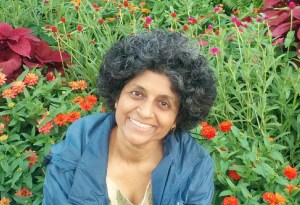

    VG wt flowersVeena Gokhale, an immigrant shape-shifter, started her career as a journalist in Bombay. This tough, tantalizing city inspired Bombay Wali and other stories, published by Guernica Editions in 2013. Veena first came to Canada on a fellowship, then came back again to do a master’s degree. After emigrating to Canada, she worked for non-profits. Land for Fatimah (to be published in 2018) is partly inspired by the two years she spent working in Tanzania. Veena has published fiction and poetry in anthologies and literary magazines and received writing and reading grants. veenago.com

    Photo credit: Shawn Leishman (header banner)

  • Hadassah Arms and Other Quandaries: Translating Cultures by Anna Leventhal

    Hadassah Arms and Other Quandaries: Translating Cultures by Anna Leventhal

    douce-sweet

    In early 2015, I stood in front of a window at Renaud-Bray, looking at a poster that was taller than I was. The poster had my name on it – it was the cover of the French translation of my first book. More than amazement, more than excitement, I felt bemused. This isn’t my book, I thought. Is this my book? Ceci n’est pas mon livre.

    Translation seems to be on everyone’s langue these days, with Kim Thuy’s translated Ru winning Canada Reads, several new translations of Nelly Arcan hot off the presses, and a renewed curiosity about cultural hybridity in the air. The ethical and aesthetic considerations of moving between languages seem like fertile ground for conversations we ought to be having, especially in Quebec.
     

    “Translation seems to be on everyone’s langue these days””


    When I found out that there would be a French translation of my newly published book, I was thrilled; as a transplanted Winnipegger, I felt it implied a level of acceptance in a city where I’m still considered “an outside eye” after fifteen years. I was excited to think that my stories, most of which are set in Montreal, would be accessible to the roughly two-thirds of the city’s population that read in French. But the work of translation isn’t just about making stories accessible. It’s about making them legible: creating a context so that they don’t just exist in another language, they live in it.

    In Neil Smith’s funny and pointed column on this blog from February 2013, he writes about the dangers of translating English Montreal into France-French, where, as he says, a dépanneur becomes chez l’Arabe and câlisse becomes putain de merde. The result: a work that’s as absurd as Duddy Kravitz sipping Earl Grey and exclaiming “jolly good, old fellow!” There was no danger of this for my book, as its translator, Daniel Grenier, is a Québécois writer. Any fears I had were laid to rest when I saw he had titled one story “Un hostie de câlisse de gâteau” (“A Goddamn Fucking Cake”). It’s a richly Québécois translation, a translation full of pis and vinegar. Grenier gamely took on an exhausting number of puns, cultural references, word-plays, and dumb inside jokes, and made them legible to a Franco-Québec audience.

    Some of the equations were simple, he told me. One of my friends wondered how the translator would handle a sign held by an environmental protestor that read ASBESTOS? ASWORSTOS! Easy, Grenier responded: AMIANTE? ENNEMIANTE! He turned a porn star named Iona Dildo into Jaymon Dildo and some misread graffiti from AUNT to FLOTTE. He may have been having almost too much fun.

    But there were complications. At one point, Grenier wrote me to ask about the expression “Hadassah arms.” How to go about making it legible for a Québécois audience?

    Now, even among Jews, “Hadassah arms” isn’t especially well-known. It’s a mean and fairly misogynistic way of naming that particular upper-arm sag/jiggle – so called because Hadassah, a Zionist women’s organization, mainly consists of older women. But it’s not a Jewish term that’s been popularized, like chutzpah or schlemiel. I know it because my friend’s dad used to tell us to lay off the Doritos or we’d end up with Hadassah arms. It may have been specific to her family; I’ve never heard it since. But I stole it for a family I was writing about, because I liked the specificity of it, the suggestion of a family joke or family mythology. Grenier could either do some creative idioming and write “bras style-Hadassah” or something like that, or find a new way of saying it that would make the image clear, but lose the Jewishness of the phrase.

    So what to do? Keep the image, lose the Jewish? Or the other way around?

    How important is it to make your work accessible to an audience unfamiliar with your culture, whether it be ethnic, geographic or social? Do you want your readers to immerse themselves in a warm bath or a cold lake? In a sense this is what writers are always doing: walking the line between over-explaining your characters’ world, and letting the world speak for itself.


    “How important is it to make your work accessible to an audience unfamiliar with your culture, whether it be ethnic, geographic or social?”

     
    In the end, I told Grenier that, in this case, the image was more important. I didn’t want readers to trip over an unfamiliar word and fall out of the story’s world; there would be other opportunities for them to be seduced by unfamiliar expressions and identities.

    The solution? Les gras de bingo. Equally mean, and equally evocative, but of a slightly different family than the one I wrote. In a small way, my characters lost a bit of their identity, and were given a new one, as though they had passed through the Ellis Island of literature. This, I’ve decided, is what I love about translation. My book; not my book. My city; not my city. A beautifully imperfect balance.


    Anna LeventhalAnna Leventhal‘s short story collection Sweet Affliction was published in 2014 (Invisible Publishing). It won the 2014 Quebec Writers’ Federation Concordia University First Book Award, and the French translation (Douce détresse) came out in 2015 with Marchand de feuilles. She lives in Montréal.

  • Why I Teach Brand-New CanLit by Natalee Caple


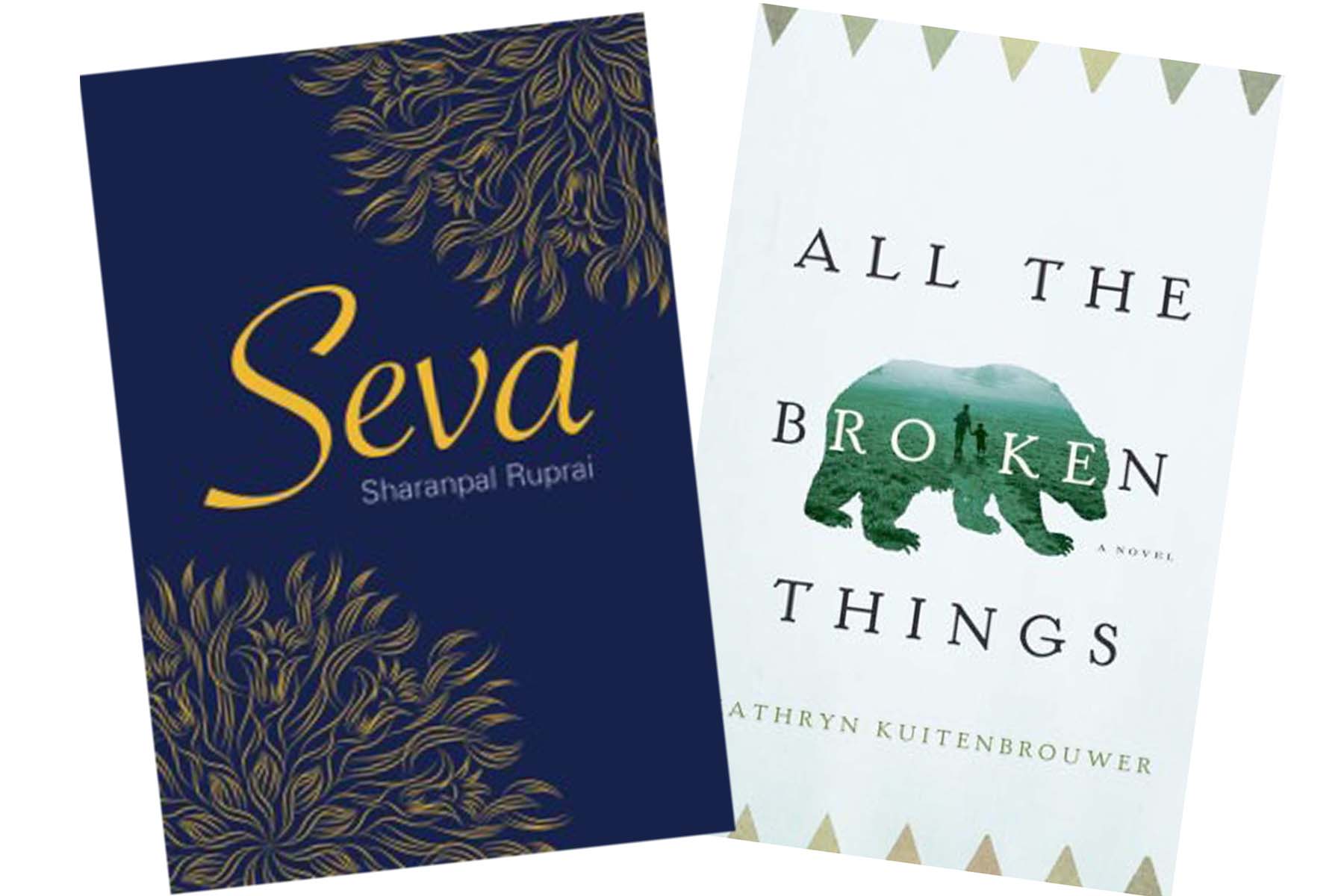
    This year, Natalee will teach Sharanpal Ruprai’s “Seva” and Kathryn Kuitenbrouwer’s “All The Broken Things.”

    I have my dream job. I write, review and teach Canadian literature and creative writing. When I think about why I am so happy teaching new CanLit I recall when, a few years back, my friend, writer Andrew Pyper, asked me in an interview what had changed for me as I evolved from an aspiring writer to an established author.

    The truth is everything has changed. In the beginning my desire to write was about me. It was about trying to see who I could be, what I might be good at and where I might find a community to belong to. Now, being a writer, being a parent and being a professor are all part of participating fully in the culture that sustains me. I feel that there is no better way to demonstrate how varied and valuable I think Canadian culture is than to devote my life to producing, promoting and teaching CanLit.

    Now, being a writer, being a parent and being a professor are all part of participating fully in the culture that sustains me.

    Because it is so important to me that students see the books they read as part of something familiar and real, something that they are already impacting and being impacted by, I often use brand new books. I also teach some of the canon: Atwood, Ondaatje, Munro. After all, these are writers who have helped to raise awareness of Canada as a significant site for cultural production (teaching Alice Munro the week she won the Nobel Prize was incredibly moving). But I also teach books that are literally printed days before classes begin.

    …teaching Alice Munro the week she won the Nobel Prize was incredibly moving.

    Designing my syllabus a few weeks ago, I realized that there are only two major drawbacks to this style of teaching. The first is that I am constantly redesigning my courses, which means new lectures, new assignments and research on what is coming out. The second is that I feel a lot of anxiety about the books arriving on time. But in spite of the extra work and anxiety, there are so many benefits to teaching contemporary literature within the context of the now. Here is a list of some of them.

    • The books are never out of print.
    • Pre-ordering books helps to let the publisher and the bookstore know that the titles are desired.
    • The material is often quite relevant to students’ daily lives. This allows students to identify better with the settings, characters and scenarios.
    • Authors are accessible, alive and often available to Skype into the classroom so that students can ask them questions directly.
    • Student presentations are much better. Instead of Googling a biography and retyping a handful of academic quotes they have to read the whole book (they do complain about this).
    • Student essays are much better. Their close reading skills really improve because that is all they have to rely on.
    • Student confidence in their own readings improves. Because they don’t have to compete with the scholarly opinions of experts they learn that it is okay to rely on and develop faith in their own readings. This causes them to engage more deeply and so…
    • Students get better marks. When they see this they start to appreciate the work they did.
    • Students become more willing to take risks in thinking.
    • Plagiarism is greatly reduced. In fact, because a brand new book is so unlikely to have essays on it in circulation, to plagiarize really means paying someone to create an essay. Far fewer students are willing to take this extra step as it requires more planning and seems somehow more actively dishonest.
    • Canadian culture is reinforced as real and ongoing, lively, diverse and present.
    • Book sales show up in a timely fashion for authors. Titles get circulating at a time when it is most beneficial. We all know that numbers have become incredibly important to the sale of future books and that there is some self-fulfilling prophesy there.
    • I get to stay engaged with my peers in the writing community. I am giving them my support and staying on top of my field.
    • I get to read all the books I wanted to anyway and call it work! Did I say that it is my dream job?

    For the teachers out there: why do you – or don’t you – teach new CanLit?


    Natalee Caple’s latest novel, In Calamity’s Wake, was published by HarperCollins in Canada and by Bloomsbury in the US. She is a professor of English, teaching Canadian literature and Creative Writing at Brock University. www.nataleecaple.com