Tag: family

  • Pushing Past the Fear of Writing Nonfiction—By Chanel M. Sutherland

    Pushing Past the Fear of Writing Nonfiction—By Chanel M. Sutherland

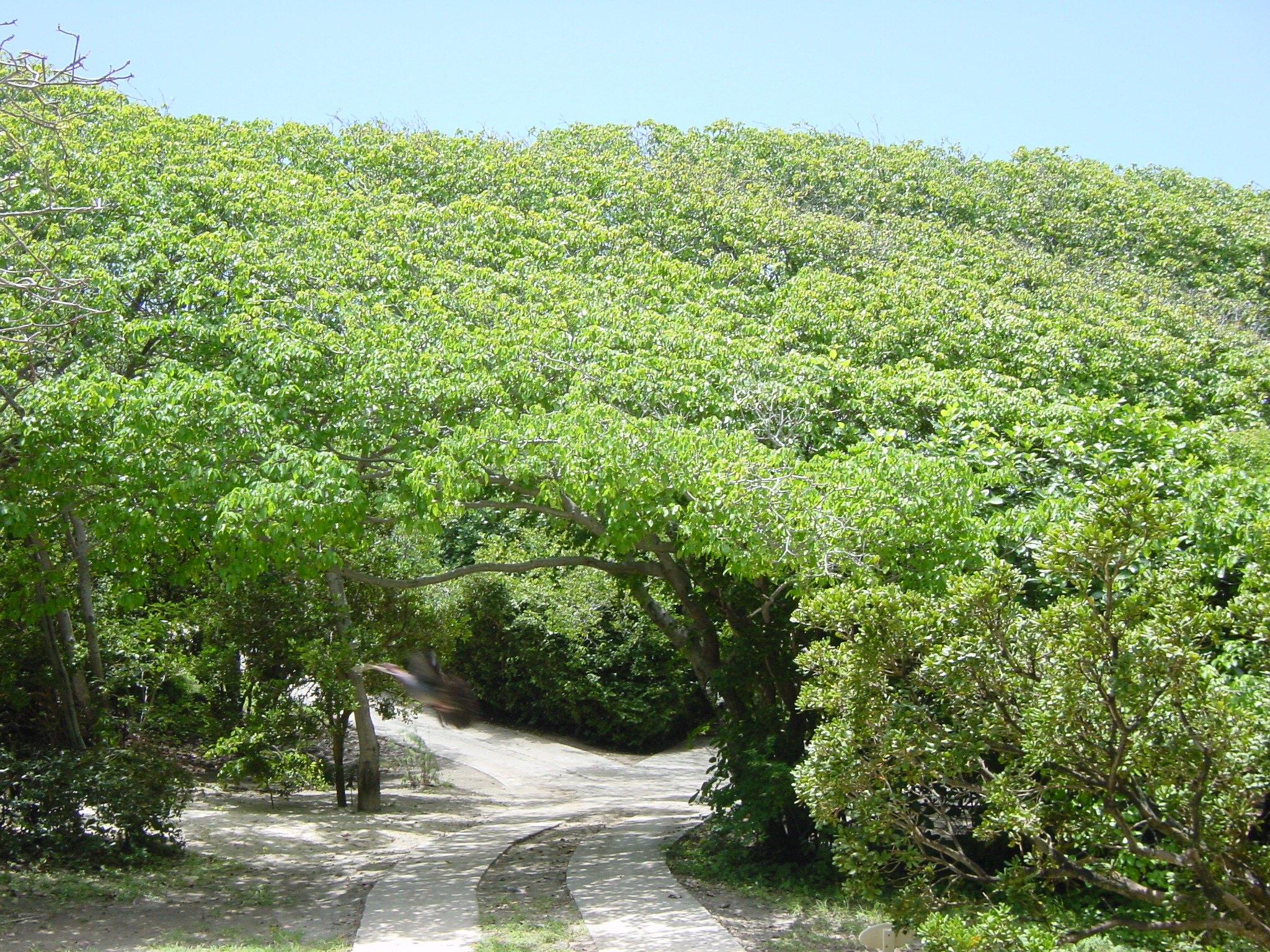
    The trees of St. Vincent and the Grenadines.


    If I’m being completely honest, writing nonfiction terrifies me. 

    But recently, I’ve felt compelled to write the truth.

    To write the stories that have shaped the trajectory of my life and—as if that wasn’t enough—have lodged themselves into my creative conscience, demanding to be told at all costs.

    It started with a single story, “Umbrella,” that I wrote out of pure exigency two years ago. 2020 was a heavy year for many reasons. The world became saturated with personal stories and confessions. Everywhere I turned—social media sites, the news, books, conversations with friends—people spoke out about their experiences with various kinds of discrimination and violence. 

    Suddenly, I found myself confronted by my own memories. They rose out of the trenches of my mind like shadows growing bolder in my darkest hours. They wanted to be written.

    Before, if you had asked anyone who knew me as a writer, they would have told you that my stories mainly deal with the unreal or unproven: futuristic robots, aliens walking around in human skin, scarecrows climbing down from their perch to seek revenge on those who impinge on their domains. This is the realm of storytelling where I feel most at home. One can argue that I write these stories to stay detached from real life.

    I had spent more than two decades circumnavigating my memories and deferring the day when I’d have to finally write about them. When they began to emerge unprompted, I knew my time had come. For the first time in a long while, I found myself turning away from speculative fiction to write something that made me uncomfortable. Nonfiction.

    “Umbrella” is the second nonfiction story I have ever written and the only piece I have shared with readers. Perhaps it is short and breathy for that reason. A panic attack on paper. When it won the 2021 CBC Nonfiction Prize, not only was I surprised, I was frantic. 

    Was I ready to expose myself in this way?

    The simple answer was no, but I’ve since learned that nothing is ever simple when it comes to writing. If it were, it would hardly be worth it.

    It became clear that nonfiction had chosen me, and I had no choice but to take the plunge and see it through. Once I decided to start curating a collection of stories based on my experience as a Black Caribbean immigrant child, I faced another difficult question.

    How much can I reveal about others in my stories?

    In this case, the “others” were primarily my family, and without their support, I knew that I would not be able to write the collection. There were no stories without them. My mother was the catalyst for many integral moments in my childhood. My grandparents the glue that fixed the pieces together in many ways—however imperfect. 

    I’ve always been a solitary writer. I prefer to be completely isolated when writing, and I usually avoid discussing any story until it is completed. With these stories, I knew there were people I needed to speak to and include from the start. 

    Not only was nonfiction changing my craft, but it was also now impeding on my process.

    Having that first conversation with my mom was one of the greatest moments we have shared. It was a warm autumn day; mom and I were meeting up for our weekly walk around the neighbourhood. I don’t recall how I broached the subject of writing the stories. Knowing myself, it would not have been direct.

    What I do remember is the excitement mom expressed in learning that I wanted to do this. She answered any questions I had, voluntarily filled in gaps in my recollection, and even offered to help with the research. Her reaction trickled down to my sisters and aunts, and before I knew it, everyone else was on board.

    I will forever cherish a messaging thread between mom, my sisters, aunts, and me. We were trying to remember the name of a tree native to St. Vincent and the Grenadines. We all knew it by a different name and had our own tales about it, but no one could figure out its one true name.

    This tree became the emblem of my nonfiction endeavor. A thing from my family’s collective past that—though still elusive—we are learning more about each day from one another. 

    As I continue to research and write these nonfiction stories, there is a certain sense of unshackling from the past. And while I begin to see who I am today refracting from each new piece, I am also illuminated by another light: that of my family. 

    So, maybe being terrified of writing nonfiction is not such a bad thing after all.


    Chanel M. Sutherland is the winner of the 2021 CBC Nonfiction Prize for her story “Umbrella” and the recipient of the 2022 Mairuth Sarsfield Mentorship, a component of the Quebec Writers’ Federation’s Fresh Pages initiative. Born in St. Vincent and the Grenadines, Chanel moved to Montreal, Quebec when she was ten years old. She holds a BA in English Literature from Concordia University, and is currently writing her first book, a collection of short stories that explore the Black Caribbean immigrant experience. csuther.com

    Photos: Lyn Gateley via flickr; Chanel M. Sutherland (headshot)
  • Writing Through Grief—By Louise Penny

    Writing Through Grief—By Louise Penny

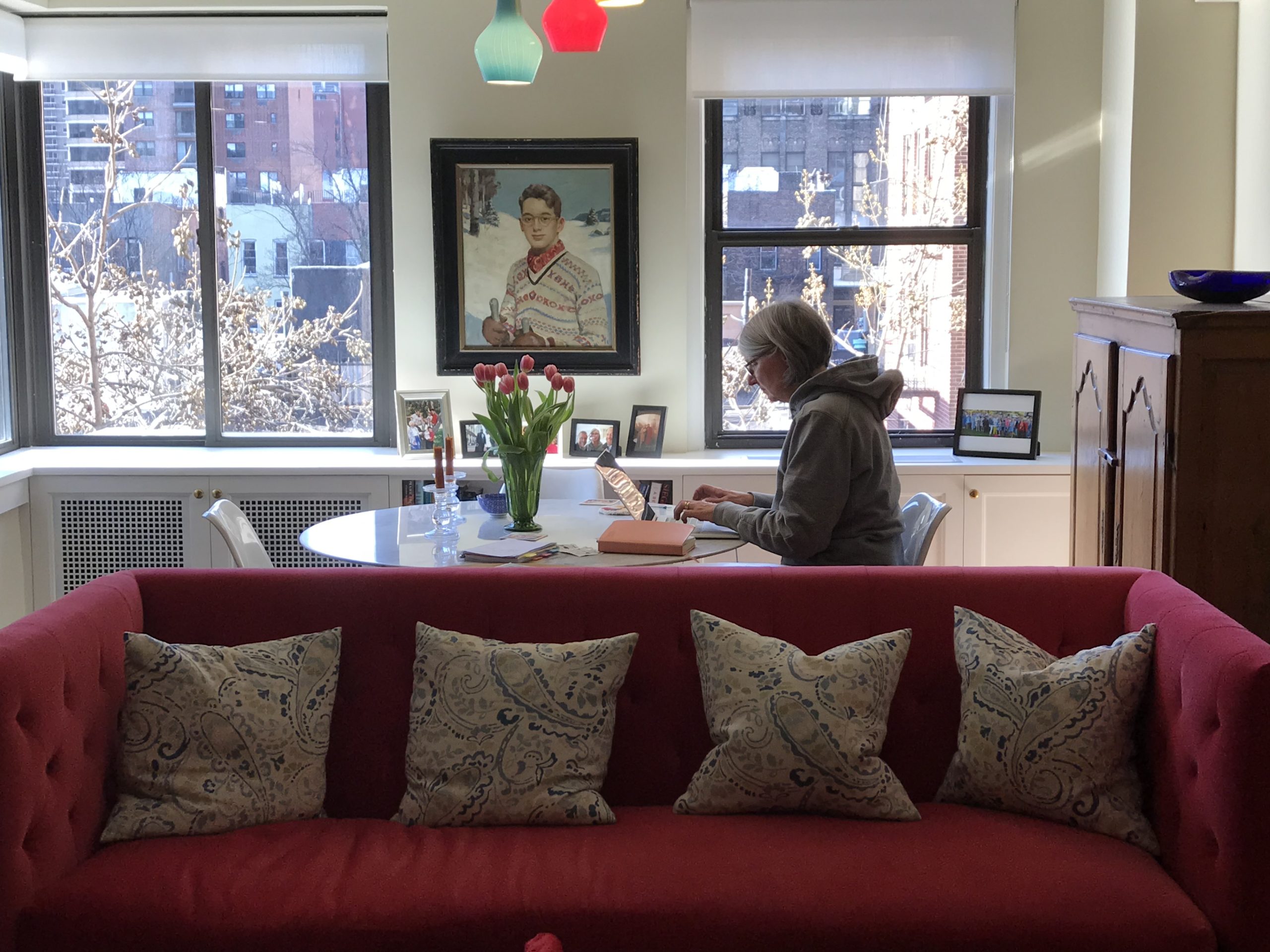
    Louise Penny writes at her dining table. (Photo by Lise Page)


    A funny thing happened on my way to not writing a book.

    I started writing.

    The truth is, I’ve known since I began writing that if my husband Michael died, I couldn’t continue with the Chief Inspector Gamache mystery series. Not simply because he was the inspiration for Armand Gamache, and it would be too painful, but because he’s imbued every aspect of the books. The writing, the promotion, the conferences, the travel, the tours. He was the first to read a new book, and the last to criticize. Always telling me it was great, even when the first draft was quite clearly merde.

    When Michael died peacefully at home in September 2016, I was pretty well spent. Physically, emotionally, and creatively. In French the saying is, tu me manques. Which means ‘I miss you’, but actually, literally, translates into ‘You are missing from me.’ That’s how it felt. Michael was missing from me.

    How could I go on when half of me was missing? I could barely get out of bed.

    I just could not face writing another book. And if I forced myself, the result would be a betrayal of all the previous books, the characters, the world of Three Pines. Of me. It would be a sad way to ruin what I’d created. I’d be writing because I had to, not because I wanted to.

    Now, sometimes, it’s true, a writer just has to sit down, and do it. That’s often the case with me. Some days I’d much rather eat gummy bears and watch The Crown than write. But this would have been different. This would have been going through the motions. Forcing the characters, chocking out some lame plot. My readers deserved better.

    So I spoke to my wonderful agent, and broke the news that I just didn’t think I could write a book. I just didn’t have it in me. I was too tired. Too broken. I’d mend, I knew that. But right then? No. She was wonderful, completely understanding and supportive. And then she had to tell the publishers. She did. And they were fabulous. They agreed that they’d rather have no Gamache book than a crappy one.

    And so, that was the plan.

    I was going to take a year off, to regroup and catch my breath after Michael died. That might have been a lie. In my heart I knew I could never write Gamache again. (And, sadly, would have to give back the next advance.)

    But then, something happened. A few months later, I found myself sitting at the dining table, where I always write. My golden retriever Bishop lying beside me, fireplace on, café au lait in my Vive Gamache mug… opening the laptop.

    I began having ideas—not the usual sort of thoughts of food and vacation, but actual book ideas. Armand began stirring. They all did. I could see them again. Hear them again.

    And I wanted to be with them again.

    I think my desire for distance was not just about exhaustion, but also because Armand was, and always will be, so associated with Michael. I just needed quiet time, to come to terms.

    And then, there he was again.

    I wish I could describe for you the joy I felt. And feel.

    So I quietly, without telling anyone, began writing again. A little at first. Then more, and more. 

    I wrote two words: Armand Gamache

    Then the next day I wrote: slowed his car to a crawl

    And the next day: then stopped on the snow-covered secondary road.

    But I didn’t dare tell anyone. In case I stopped writing. Or the book took a very, very long time to write. The publishers had no idea I was writing. It wasn’t until six months later that I told them. But even then, I warned them the book might not be ready in time. My agent was magnificent. Telling me not to worry. To take whatever time I needed. Stop writing, if I needed.

    And that was all I needed, to keep going.

    I really gave myself permission to just let go and explore.

    I discovered, again, how much I love to write. And, again, what a harbour it is. What would I do with my days otherwise? There are, after all, only so many episodes of Outlander.

    And so Kingdom of the Blind was born. It is the child that was never going to be. But happened. My love child.

    I began the book not with sadness. Not because I had to, but with joy. Because I wanted to. My heart was light. Even as I wrote about some very dark themes, it was with gladness. With relief. That I got to keep doing this.

    Far from leaving Michael behind, he became even more infused in the books. All the things we had together came together. Love, companionship, friendship. His integrity. His courage. Laughter.

    I realized, too, that the books are far more than Michael. Far more than Gamache. They’re the common yearning for community. For belonging. They’re about kindness, acceptance. Gratitude. They’re not so much about death, as life. And the consequences of the choices we make.


    Photo by Mikaël Theimer

    Louise Penny is an international award winning and bestselling author whose books have hit #1 on the New York TimesUSA TODAY, and Globe and Mail (Toronto) lists. Her Chief Inspector Armand Gamache novels, published by Minotaur Books, an imprint of the St. Martin’s Publishing Group, have been translated into thirty-one languages. In 2017, she received the Order of Canada for her contributions to Canadian culture. Louise Penny lives in Knowlton, Quebec. www.louisepenny.com

  • Writing to Perform, and Performing to Write—By Deb Vanslet

    Writing to Perform, and Performing to Write—By Deb Vanslet

    I always go back and forth between telling and writing when I create a story. Below is an audio file and a transcript of that process.


    I write a story by telling a story. I started to call myself a writer when I was around fifty. But in the late 1980s and 1990s, I was a video artist, performing stories for the camera. I discovered a Video 8 camera in a university art class. It was small, easy to handle, tape was afforable, but mostly, I was kind of amazed that the teacher thought that it was a great idea for me to just talk into the camera, confessional-style—it was a genre.

    So I go for it: telling unrehearsed stories about dead pigeons, barking dogs, late night TV, bus trips across the country, and the insanity of Botox, pet hotels, and plastic surgery. Nothing is ever resolved, there’s not much reflection, and I don’t really know what I’m doing.  But that’s part of the magic: it’s a first, and it’s fun, and so unselfconscious. I’m telling stories like hardly anyone is listening, or watching. The finished video, Sick World, is a modest hit at film festivals. I’m still surprised. I make more videos, but now I know that people are watching.

    The last time I told a story on video was in 1996. Sick World 3: the baby. It’s about my girlfriend and me having a baby with a gay sperm donor friend. It’s an unusual story, and it’s even more unusual to talk about it, even though lesbians became very hip in the mid-nineties—the cover of Newsweek, the Ellen show! We got a lot of publicity for being so out about having a child this way. My story practically wrote itself. Practically.

    In 2012, an incredible story unfolds in my life. My aunt Christine dies in the hospital of blood poisoning, a few days after cutting herself on a beer bottle in her small apartment. I’d been close to her as a kid, but she’d been gone most of my adult life, struggling with mental health and addictions.

    When she finally reappeared she’d kicked heroin, but she was never able to really function again.

    Christine’s final year was brutal. She fell three times in her apartment breaking her wrist, her hip, and finally her ankle. Six days after my aunt dies, I get a message from a man looking for a Christine Vanslet. I don’t even have to think about this. I knew right away. This was the son that she had give up for adoption.

    I tell everyone the story. The synchronicity is incredible. 

    People are rapt. 

    “Write it down! You have to share it.”

    I know it’s a special story, especially the ending. But so what? Lots of people have incredible stories. And, I’m not really a writer. I just have a beginning, and an ending. What do I put in between? Stories, as I learned over the years, don’t really write themselves.

    I spot a storytelling workshop with Taylor Tower at the QWF, and she introduces me to Confabulation, Monreal’s monthly live storytelling event. This changes everything.

    I start writing to perform, and performing to write. Working between the two genres is an excercise in finding my voice. My middle-aged voice, maybe I should say my mature voice, even if that’s cliché. I didn’t learn much about putting a story together in the early performance videos; I learned about getting comfortable, becoming acquainted even, with my face, my body, the sound of my voice, and then, of being able to separate myself from that person on the screen. 

    Writing for performance is different than writing for page but it also really informs how I write for the page. My voice is stronger, the writing is looser, playful, more conversational. More me. I can’t get to me just by writing it down. I have to perform it first. 


    Deb Vanslet is a media artist, videographer, and writer. Her independent videos, including Sick WorldWeather Permitting, and Rules of the Road, explore storytelling, performance, and dance. For sixteen years Deb produced and hosted Dykes on Mykes, at CKUT 90.3 FM. Deb is a producer at Confabulation, Montreal’s live storytelling show. She also produces and hosts the Confabulation podcast. She won the 2015 3Macs carte blanche QWF prize for her short story Self-Serve, and published Ghost Station in the Queer Perspectives edition of The Malahat Review. Deb is the production coordinator at Ada-X, a feminist artist-run centre.

    Photo credit: Liz Miller (headshot)

  • Writing, Mothering, and the Wild In-Between—By Gillian Sze

    Writing, Mothering, and the Wild In-Between—By Gillian Sze

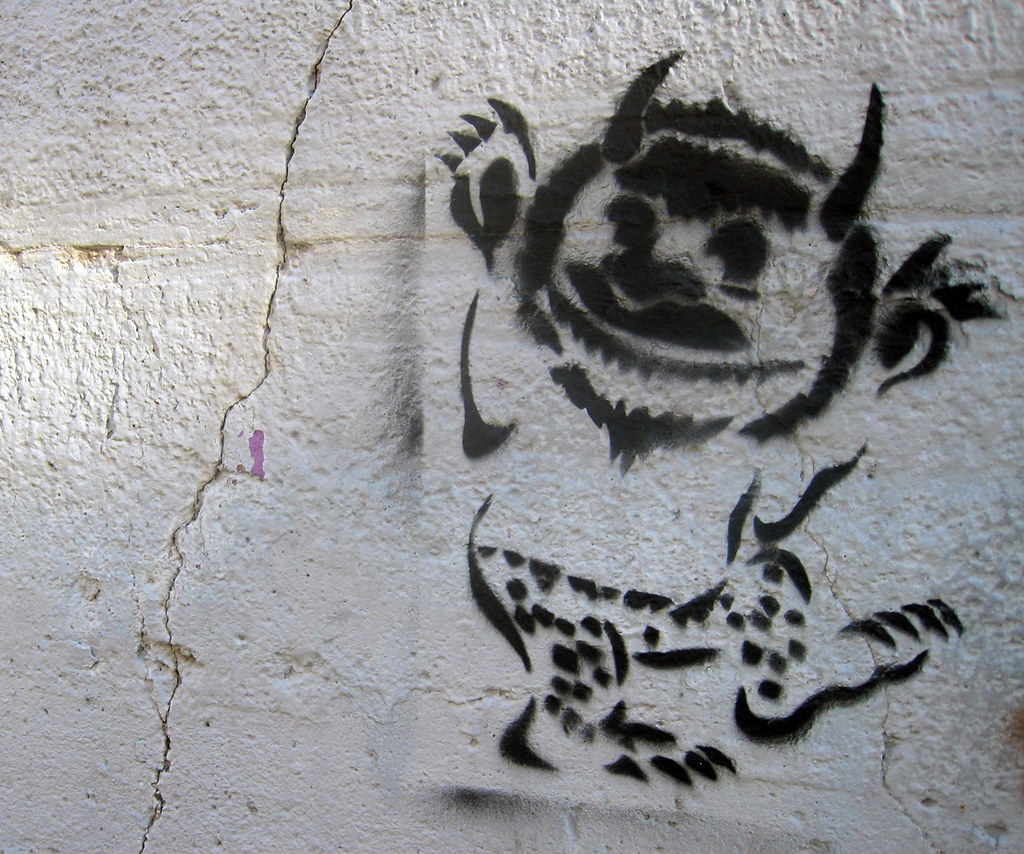
    My first reading of Maurice Sendak’s Where the Wild Things Are was as a parent. Growing up, I somehow managed to miss this childhood classic, which I now recognize as surprising given its widespread popularity. I was given the book as a gift when I was pregnant with my son, and even then I didn’t read it until after he was born. I kept it safe, waiting on a bookshelf along with the other picture books we received.  

    After my son was born, we were advised that it was never too early to start reading to him. We filled those tiny periods when he was awake with reading. I reacquainted myself with books I hadn’t picked up in years: Mercer Mayer, Robert Munsch, Margaret Wise Brown, Eric Carle. My husband, who took the advice to heart, started with Beezus and Ramona, Charlotte’s Web, and The Hobbit. (It took weeks but we eventually completed them in small increments.) Included in our stack was, of course, Where the Wild Things Are. 

    I was struck by the sparsity of the opening pages of text, words just hanging on their own like Sapphic fragments, sentences spilling across pages. With each page turn, the white frames of the illustrations shrink, the images fill up each page until we follow Max into his dream. When Max announces the commencement of the wild rumpus, what follows is three illustrated spreads of the boy reigning over the beasts. Time passes on those pages, without a single word in sight. 

    *

    When I entered motherhood, I simultaneously found myself entering a period of wild wordlessness. Bleary eyed, I was keenly aware of time and sleep. I saw time racing along as my son filled out his onesies. I saw time cherished as much as it was squandered as I lay beneath my sleeping son, not daring to move lest he wake up again for the thousandth time. I saw time slipping away as more (if not all) of it became devoted to caring for him. I oscillated between too little time (his naps were either short or nonexistent) and too much (nursing in the dark, exhausted and impatient as each passing minute stole from what was left of my own slumber). Moreover, I struggled with how to use my time as both a writer and a mother—the former of which I had identified with for much, much longer. I didn’t know how to fill—or not fill—that time with words as I once had. 

    Sendak’s illustrative spreads in the middle of Where the Wild Things Are remind me of what Anne Carson says about the middle section of To the Lighthouse. Carson describes Woolf’s book as “a novel that falls asleep for twenty-five pages in the middle” (22). Set at night, Part II of To the Lighthouse is entitled “Time Passes,” and describes the changes that affect the characters, their lives, and the house. As the characters in both Sendak’s and Woolf’s works go through their necessary transformations, I realized how possible it was to hold these books and sense Time passing both in words, as Woolf had written, and wordlessness, as Sendak had drawn.  

    In truth, I didn’t know how to “read” those illustrations when I flipped to them with my son. At first I felt compelled to fill the silence with my own commentary, and so I did. “Howling at the moon! (page flip) Swinging! (page flip) Marching!” Eventually, I learned just to observe my son take in the pages, looking at the images without my input.

    However which way Time moved (Mr. Ramsey stumbling in grief along a passage, or little Max riding triumphantly on a wild thing, or my son letting go of the table edge for his first steps), it just did. My anxiety about never writing again lived along with me through those day naps and night feedings. I accepted that becoming a mother meant having to lose myself as a writer. This primal and sleepy period of adjusting to a new person was tinged with mourning. My husband, supportive if exasperated, would remark on my melodrama. But at the time it felt true. It’s only now as my son is approaching six and his toddler-sister is starting to sleep through the night, that I recognize this tumultuous era as something transformative for me as a writer. I think of Carson’s wise assertion of the chapter “Time Passes”: “Virginia Woolf offers us, through sleep, a glimpse of a kind of emptiness that interests her. It is the emptiness of things before we make use of them, a glimpse of reality prior to its efficacy” (23). 

    Words, much like Max voyaging towards wakefulness, eventually “sailed back over a year and in and out of weeks and through a day.” It may have taken a little longer, but we arrived together… changed, relieved, and a little sleepier. 

    Works Cited 

    Carson, Anne. Decreation. Vintage Canada, 2005. 

    Sendak, Maurice. Where the Wild Things Are. Fiftieth Anniversary ed., Harper Collins, 2013.


    Gillian Sze is the author of multiple poetry books, including Peeling RambutanRedrafting Winter, and Panicle, which were finalists for the QWF’s A.M. Klein Prize for Poetry. Her forthcoming prosimetrical collection, Quiet Night Think, explores the early shaping of a writer, the creative process, and motherhood, and will be published next spring with ECW Press. Since becoming a mother, Gillian has started writing picture books and has two books forthcoming with Philomel Books (Penguin Random House USA). Her first picture book, The Night Is Deep and Wide, was recently released in March. www.gilliansze.com

    Photo credit: “Where the Wild Things Are” by Skinned Mink is licensed under CC BY-SA 2.0 (header banner); Nadia Zheng (headshot)

  • From Tragedy to a Book—By Catherine McKenzie

    From Tragedy to a Book—By Catherine McKenzie

    I’ve always thought of writers as magpies—we’re known for thievery, and that’s often what we do. We steal little parts of life, sometimes from our own experiences, but often from other people. A conversation overheard in a restaurant. A fight observed in the street. A line of dialogue said by a friend. We’re always collecting, gathering, storing so that we can use what we’ve gathered later, at the appropriate time. Sometimes the connection in the finished work is obvious and sometimes more tenuous, but if you know where to look it’s there.

    This happened to me in a direct way a year and a half ago when my brother-in-law’s mother was suddenly diagnosed with brain cancer and given six weeks to live. The whole family was shocked and saddened, me included. We’d all spent a lot of time together over the years, and she was a vibrant woman in her late sixties who seemed to have boundless energy. How could she be gone so fast?

    As I watched this real-life tragedy play out, my writer’s brain started cataloguing things and asking myself questions. For instance: faced with the same stark deadline, would I spend time going through my things and giving them away? Or would I speed away to a beach somewhere and leave the sifting to others? Would I make a general announcement on social media or through email, or leave it as a family secret that would come as a shock to many once the inevitable happened? Would I try to investigate how this had happened to me—what had been missed, how had it progressed so quickly—or put down my questioning brain and let it all go? And most importantly, was six weeks enough time to leave the world at peace, or was that impossible?

    This is what it’s like to be a writer! Or at least, this writer. In all of these questions, an idea formed. I write suspense, so what was the suspense twist to this premise—a woman given six weeks to live? I researched glioblastoma and found that in some cases, it might be linked to exposure to certain toxins. Aha! Maybe this woman—this theoretical woman, not the sweet woman I knew—had been exposed to a toxin. And maybe this exposure had been on purpose. Maybe someone wanted to get rid of her and they’d tried to poison her? But the poisoning hadn’t worked and here she was, a year later, with an unintended consequence? Interesting, interesting. The idea was sticky—it stayed with me—but, to be honest, it scared me. Was spinning a book out of something so close to me wrong? Was it the right way to honor her? I struggled with that.

    But I also had to propose some book ideas to my new editor. I had two—another idea that I’d been thinking of for longer that was more fleshed out, and SIX WEEKS TO LIVE. I sent them off, and soon I heard back. Oddly, another one my editor’s writers had a similar idea to my “other idea” and she’d already approved that. But she was intrigued by Six Weeks. Write that one, she said. So, I started to. Nervously. I came up with the plot—a woman trying to solve her own murder before she passed away. I added suspects to her life—a soon-to-be ex-husband, her adult daughters. I made sure to make my main character as different from the real woman as possible. In fact, by the time the manuscript was done, the only similarity between them was the diagnosis. But the book was for her. Because of her. I wanted to honor that. I dedicated the book to her, and I let my brother-in-law know what the book was about. He was gracious—as he always is—but part of me still wonders if he’s truly okay with it. 

    But this is what writers do. We’re magpies. We steal things. Hopefully what we give back is enough compensation.


    Catherine McKenzie was born and raised in Montreal, Canada. A graduate of McGill in History and Law, Catherine practiced law for twenty years before leaving the practice to write full time. An avid runner, skier and tennis player, she’s the author of numerous bestsellers including Hidden, Fractured, The Good Liar, and I’ll Never Tell. Her works have been translated into multiple languages and The Good Liar, You Can’t Catch Me and I’ll Never Tell have all been optioned for development into television series.

    Visit her online at www.catherinemckenzie.com, on Facebook at http://www.facebook.com/catherinemckenzieauthor, on Instagram at @CatherineMcKenzieAuthor and on Twitter @CEMckenzie1

    Six Weeks to Live publishes April 20, 2021 in Canada. Join Catherine for the Canadian launch! Event Link: https://www.facebook.com/events/276347913828110

    Photo credit: Jyrki Salmi (header banner)

  • The View From My Living Room—By Ariela Freedman

    The View From My Living Room—By Ariela Freedman

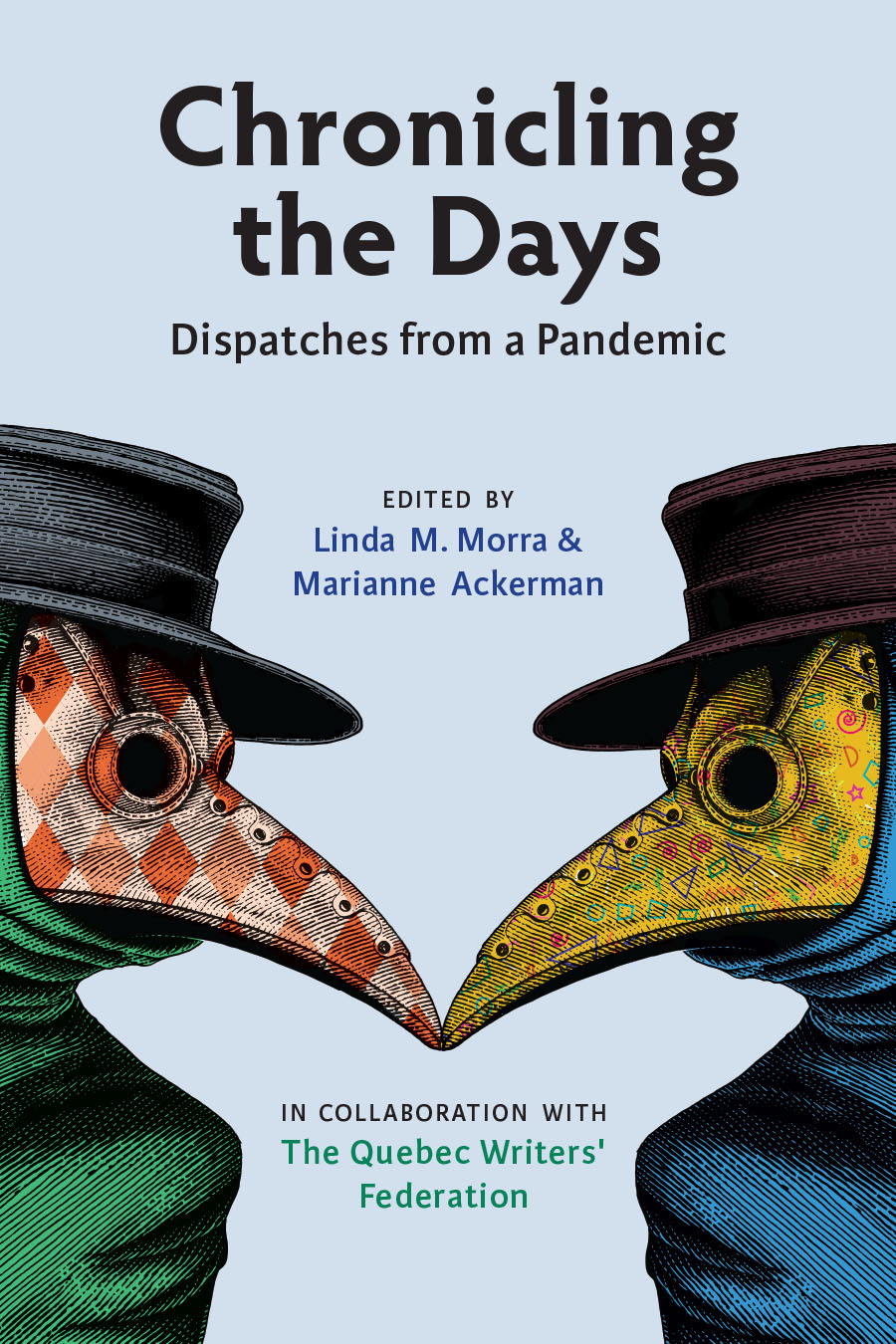
    In April 2020, we invited writers in Quebec to submit a story of a single day during the strange, uneasy time of coronavirus and pandemic, of social distancing and self isolation, of lockdown and quarantine.

    We’re thrilled to announce that these stories have been gathered in Chronicling the Days: Dispatches from a Pandemic (Guernica Press). To learn more and buy the book, please visit https://www.guernicaeditions.com/title/9781771836579.

    Please also join us on the QWF FB Community page, and let the authors know if their words resonated.

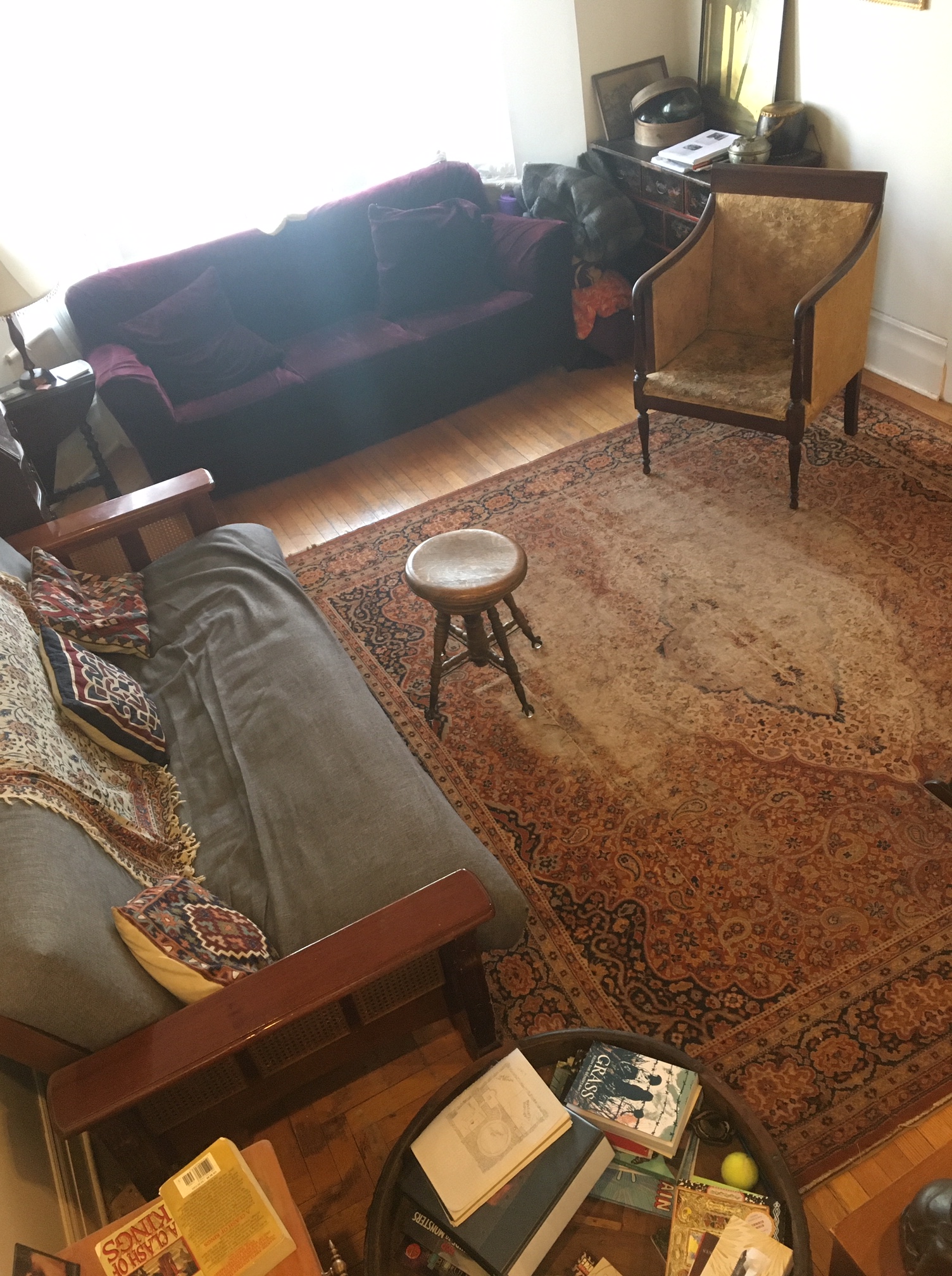
    The term “living room” came into common use after the First World War. Before the living room, there was the front parlour. This room was a formal showpiece, and before the proliferation of funeral homes, they were used to lay out the dead. After the many deaths of the First World War and the Spanish Flu, the front parlour became a haunted space. As early as 1910, the Dutch-born editor of Ladies’ Home Journal published an article titled “A Living Room is Born,” suggesting it was time to revive the staid front parlour; that is, it was time for the room to come back to life. The living room was a rebranding of a space where the dead were once venerated, at a time when they were so many that the house could no longer hold them.

    To read the rest of the story, please support our community and check out Chronicling the Days: Dispatches from a Pandemic

  • Writers: The Truth Can Set You Free—By Tamara Jong

    Writers: The Truth Can Set You Free—By Tamara Jong

    Ma was so many things; a Jehovah’s Witness preacher, an alcoholic with a troubled past, and an avid reader, poet, and writer. When she was sober she was engaged, a bright star in our neighborhood and religious community. But then she was also a yeller: when she kicked her sisters out of her life, she literally cut them out of any photos she had. Ma would punish me because I chatted in class, ate pumpkin seeds during Halloween, and was sent to the corner by the teacher. Lying wasn’t an option to save my own hide.

    TamaraJongreadingyouth
    A younger Tamara Jong.

    I escaped by reading fiction. Little Bear by Else Holmelund Minarik was an early favorite for me. In the first set of stories, little bear’s mum makes him clothes when he is cold and throws him a birthday party. Nine-year-old Pippi Longstocking took me on all her adventures with her monkey Mr. Nilsson on the South Seas. Although she was parentless, she seemed resilient and nothing could stop her. I related to A Wrinkle in Time’s Meg: she never seemed to fit in anywhere and was devoted to her father; my dad was my idol until Ma kicked him out for his infidelities. I moved on to the worlds of the Brontës and Austen, where I felt safe and where the ending always seemed to work out. I would write and draw pictures of my stories and plays. There was no such thing as writer’s block.

    My first attempt at writing fiction as an adult came under the guise of autobiographical fiction. I mixed up truth and fiction so no one would know that it was mostly me I was writing about. My story was about Keaton, a suicidal fourteen-year-old. Keaton’s angelic mother worked all the time, made a hell of a bunch of tea, and didn’t really know her kid or see her for who she was. Keaton wrote lousy poetry, had a bestie, and obsessively liked a boy named Josh. She ended up getting help after being hospitalized, taking anti-depressants, and undergoing extensive therapy. I wrote it after my own stint in the hospital after a suicide attempt. But there were truths missing in the story that I couldn’t write down yet. I made the father the alcoholic and the mother a loving TV mom, a cardboard cut-out of a mother. There was nothing about religion anywhere. Then I got stalled and didn’t work on it.

    Things didn’t really click for me until two year later, when I decided to try out a non-fiction writing course with Ayelet Tsabari. God, she made me fall in love with it. I wrote and wrote and wrote. I couldn’t stop. The words came easier than in fiction for me. The only things that interfered with my writing were my day job and sleep. Ayelet introduced me to her stories and so many other great diverse writers and made me realize that there were so many ways to spin a story.

    I took a second course with her, and then another. It was the first time I had written about being a Jehovah’s Witness and my parents, my siblings, and our lives. Once I had a taste for non-fiction, I didn’t want to let go. I started reading less fiction and more non-fiction. I submitted to contests and literary magazines, and revised my stories. When my creative non-fiction piece, “Father Hallowed Be Thy Name” got accepted at RicepaperMagazine, I was ecstatic. Ayelet encouraged me to write a memoir. I had only started writing non-fiction in her classes and she believed in me! Something had started shifting for me.

    In an earlier creative writing class, I had written fiction about a Catholic girl who got pregnant, a dog called Jehovah, and Medusa. Nothing was really wrong with those stories but they lacked a depth of what I really wanted to say. They were starting points that were necessary for me to get where I had to go. Testing out the waters until I could go in myself, immerse myself in the work.

    I realized I had been hiding behind fiction so no one would know about my real life and who I was. What if others judged my life choices or no one wanted to read my stories, or they thought that I had nothing original to say? I was terrified of people’s reactions. I had been so good at hiding my trauma. When I was penning fiction, I could take those risks. After all, it was imaginary. No one would ever know it really happened.

    When I shelved the idea of writing a fiction novel, non-fiction stories emerged in its place. I’ve been working with them for months now, reading them, revising them, losing and finding Ma, collecting our stories together. Non-fiction freed me to tell my real-life story on the page in a way that fiction couldn’t. When I was growing up fiction had protected me by letting me escape in stories, to live another’s narrative.


    Tamara_Jongph_Photo_Credit_Charles _MarschuetzTamara Jong is a Montreal-born mixed-race writer of Chinese and European ancestry. Her work has appeared in Ricepaper, Room, carte blanche, The New Quarterly, Invisible Publishing, and Body & Soul: Stories for Skeptics and Seekers. She is a graduate of The Writer’s Studio (Simon Fraser University) and recently had her piece “Thanks for All the Lice, Pharaoh” longlisted in The New Quarterly’s 2019 Edna Staebler Personal Essay Contest. You can find her on Twitter @bokchoygurl.

    Photo credits: Tamara Jong (header image); Charles Marschuetz (headshot)

  • Amazing Grace: A Literary Friendship—By S. Nadja Zajdman

    Amazing Grace: A Literary Friendship—By S. Nadja Zajdman

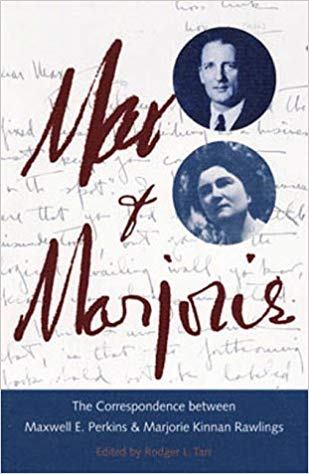
    I was sitting by the gas-lit fireplace in my local library when a book on the table caught my eye. It was the collected correspondence of the novelist Marjorie Rawlings and her editor, Maxwell Perkins. As I read their letters I could hear their long-stilled voices speaking to each other, and to me, across the expanse of decades. I tried to check out the book, but was told it was a reject from a book sale, and if I wanted it I would have to buy it. So I did.

    At home, I looked up Maxwell Perkins on the Internet. A link led me to Perkins’ granddaughter, the novelist Ruth King Porter, who lived in rural Vermont. Ruth was giving away her novels, asking nothing in return but that readers post reviews on her website. I sent for Ruth’s books, and a correspondence began. Soon, we wanted to meet in person. I scheduled a visit to Ruth in spring, then her mother’s dying began. I rescheduled to autumn, then my mother’s dying began.

    Instantly I cancelled travel plans and let go of my already-purchased bus ticket, but a friend with a car offered to take me on a shorter day trip to Vermont. Encouraged by my mother, I accepted.

    “We are two middle-aged women, both wearing glasses.” I wrote to Ruth. “My friend is a blonde with dark roots. I still think of myself as brunette, but there is more salt than pepper in my hair, now.” Ruth wrote that she would be waiting for me under the clock tower of Montpelier’s City Hall. I knew what Ruth looked like from the photographs on her website.

    PerkinsRawlingsBookCoverWe rode into Montpelier on a gloriously warm day at high noon. I saw Ruth sitting on a bench under the clock tower, scribbling in a notebook. Main Street was packed with tourists, and we couldn’t stop the car in front of City Hall. We found a parking space down the street. My friend waited in the car, while I ran down the block. “Ruth?” The woman on the bench looked up, and then leapt up.
    Ruth was a pre-hippie Back-to-the-Lander, in her early seventies when I first met her. At our first encounter, she wore a white work shirt, faded blue jeans, and a black money belt slung over her shoulder. She walked like someone who rode horses.

    “Where’s your friend?” Ruth called through the crowd of tourists blocking the sidewalk.

    “She’s waiting in the car!” I called back. I led Ruth to the car and the friend in it. Ruth led us both on a tour of the golden-domed state capital building. “I hope we don’t run into my son.” Ruth twinkled. “He’d be embarrassed by the way I’m dressed. My son Louis works as an aide to the governor.” When the tour was over Ruth led the way in her battered old car out of Montpelier and higher into the Green Mountains, where another world awaited.

    Ruth’s husband Bill and a second son, Robbie, rode their tractors out of the woods to greet us on the porch of a rambling farmhouse. Nearby, three large dogs stiffened in alert: Ellie and Flora danced in attendance to the top dog, Chief. Ruth’s daughter Molly, an artist who lived, Thoreau-like, in a cabin she built with her hands, bounded up a hill to join us. The open and friendly faces of Ruth’s family smiled at me kindly. I’m sure they were aware of my situation, though no one referred to it. Taut, lean, Alabama-born Bill wiped the grime off his hands and stepped forward to shake mine. I felt as though I’d stepped into an illustration by Norman Rockwell.

    As an early darkness fell my companion and I crossed back over the border, returning to Montreal and my mother’s apartment. “Hello sweetheart.” My dying mother smiled tenderly. “How did it go with the lady in Vermont?”

    What could I say? I felt guilty at having left her, even for a few hours. I didn’t feel like relaying the details of an excursion to Vermont.

    Six months later I returned to Montpelier by bus, alone. Once more, Ruth met me under the clock tower. For a few days I curled under Ruth’s wing, sunning on her roof, sleeping in Max Perkins’ bed, waking to birdsong and skimming the staggering array of autographed out-of-print books dedicated by grateful authors to their engaged and caring editor. “Grieving is hard work,” Ruth would say in greeting when, after a nap, I descended a steep staircase into her dark country kitchen. As we stood side by side in the verdant meadow which was her front yard, Ruth added, as much in amazement as in sadness, “A year ago this time, both our mothers were alive.”

    Ruth King Porter is an American blueblood whose antecedents hark back to a woman who held a door open for George Washington. I am the Canadian-born daughter of refugees. My mother, a woman who survived three invasions and the Warsaw Ghetto, later in life became prominent in Holocaust education. Many people find my mother’s story repellent and turn away from any mention of it, whereas Ruth and her husband Bill were fascinated. Ruth did for me what I had done for my mother; she listened. And she encouraged me to tell my mother’s story.

    Six months after that, I was back on the farm. Ruth and Bill acknowledged what would have been my mother’s birthday by lighting large candles in a spectacularly tangled chandelier made entirely of logs. Through the wall-sized picture window we watched the cold autumn rain and wind lash the last leaves off a forest full of trees. As we ate hot squash and a pot full of peas grown in Ruth’s garden, the lit log chandelier shone, the tree-bark-shaded lamps glowed, and the wood stove burned.

    I have been back to Ruth and Bill’s farm several times since. In between visits Ruth does for me what her grandfather did for Ernest Hemingway, F. Scott Fitzgerald, Thomas Wolfe, and Marjorie Rawlings: she writes to me and elicits writing from me, reads and critiques my material, encourages, cajoles, indicates where and when she believes I have veered off-track, and gently nudges me back. Clutching the psychic lifeline tossed to me by the descendant of a legendary literary editor, I live and work alone and in growing peace in my suburban Montreal apartment, producing a memoir of my mother. My mother knew that my writing would sustain me after she was gone. Ruth Porter’s mentorship sustained me during the darkest days of my life.


    S Nadja Zajdman_HeadshotS. Nadja Zajdman is a Canadian author. Her short stories and non-fiction pieces have been featured in newspapers, magazines, literary journals and anthologies across North America, in the U.K., Australia, and New Zealand. In 2012 Zajdman published the related short story collection Bent Branches, which spans four continents and seventy years in the life of a family. Recently Zajdman completed a second short story collection, as well as the above-mentioned memoir of her mother, the noted Holocaust activist and educator Renata Skotnicka-Zajdman, who passed away at the end of 2013.

    Photo credit: MaxPixel (header banner)

  • Tuesday, or Was It Wednesday?—by Joshua Levy

    Tuesday, or Was It Wednesday?—by Joshua Levy

    One Tuesday—or was it Wednesday? —I visited my parents.

    Written anything lately? asked my dad, during supper.

    I had. I fetched my laptop from my car and read a short story about my brother’s recent engagement to them while we ate.

    When I was done, my dad said it was very witty, great use of metaphor, but why hadn’t I told the truth, the whole truth, and nothing but the truth, so help me God?

    My dad’s a lawyer.

    But, I said, it really happened. You were there!

    I never said those things, said my mom. And I made butternut squash lasagna that day, not hummus or feta salad.

    I felt accused. You uttered extremely similar things, I said. I can’t remember exact dialogue. But you’re right about the butternut squash lasagna. I’ll change that.

    They looked at me sadly, my parents did.

    I don’t think Menachem was wearing a fanny pack that day, added my dad.

    The point, I said, is that the major facts are all true, if not the minor ones.

    My dad stood up and went to the freezer, bent down behind the kitchen island, and resurfaced holding a tub of Neapolitan ice cream.

    None for me, Ricky, said my mom.

    Josh? asked my dad.

    Sure, I said.

    “My dad said it was very witty, great use of metaphor, but why hadn’t I told the truth, the whole truth, and nothing but the truth, so help me God?”

    He opened a cabinet next to the sink and grabbed two ceramic bowls. Each had a different colourful made-up bird painted on it. Or were they real bird species? My parents had bought them a decade earlier in Nova Scotia, while visiting my sister at university. Mind you, it could have been New Brunswick where they bought the bowls….

    I wasn’t sure. The facts felt like slippery fish in my hands.

    If you’re going to write non-fiction, offered my dad, while running a spoon under hot water, it should be 100 percent true.

    I agree, said my mom. Don’t make anything up.

    But, I said, I’m not. Memories change colours and shapes under different conditions.

    Two scoops or three? asked my dad.

    Different what? asked my mom.

    Two, I said.

    Different what? repeated my mom.

    Conditions. Like the passage of time or evolving perspectives. That stuff.

    My mom said, ah, I don’t buy it.

    A fact’s a fact, Josh, said my dad, handing me an ice cream bowl.

    One, two. I count two scoops in your bowl, declared my mom.

    My dad nodded. That’s a fact, he said.

    I sighed. I didn’t disagree with my parents. Facts are vital and I wanted them all.

    But my story had been about shining a light on unverifiable, deeper truths: family relations, love, loneliness. Whether Menachem wore his fanny pack or not on that particular day was, in my opinion, such a minor fact that researching it could stifle the creative process.

    “Memories change colours and shapes under different conditions.”

    Another Tuesday—or was it Wednesday?—I visited my parents.

    Written anything lately? asked my dad, during supper.

    I had. I fetched my laptop from my car and read a factually bullet-proof story about Visiting Day during my first summer at sleepaway camp to them while we ate:

    On Visiting Day, my parents came with my younger brother, Daniel. They brought me a bag of Archie and Spider-Man comics and some candy. My sister, Samantha, was probably also there, since she was less than a year old at the time.

    The camp director made a speech to all parents and campers. The speech was almost certainly in English, since that was the only language he spoke. I think we then went to the waterfront and paddled in a canoe, but that could be a memory from the following summer.

    I don’t remember if it was a sunny or rainy day, but I do remember the emptiness I felt when Visiting Day ended.

    That’s a terrible story, said my dad.

    Embellish a little, said my mom.


    linkedinJoshua Levy splits his time between Montreal, Canada, and Lisbon, Portugal. He is grateful to the QWF for their support over the years and has participated in eight QWF writing workshops to improve his craft. Joshua is a winner of the 2010 QWF Quebec Writing Competition and was longlisted for the 2007 competition. He has had poetry published in Carte Blanche, told stories live at Blue Metropolis for This Really Happened, and written for QWF Writes. Joshua has been published by the Oxford University Press, Véhicule Press, Maisonneuve, Vallum, The Feathertale Review, The Rumpus, and The Malahat Review. He is a regular storyteller on CBC Radio and recently received a grant from the Canada Council for the Arts to write a memoir.

    Photo credit: Seth Sawyers (top banner); Steve Gerrard (headshot)