Tag: father

  • Death is Why I Write by Kate Henderson

    Death is Why I Write by Kate Henderson

    When my grandfather died, it was as if his thoughts were transferred to me. All those years he said I had itchy feet, I’d thought he was criticizing the fact that I changed jobs every year or suggesting I’d had too many boyfriends. But no, he just wanted to see me settle down while he was still alive. I wrote a story about him, and found myself for the first time in a place where it didn’t feel like I was being told what to do or trying to please anyone. Death cuts through the clutter.

    From then on I had to write.

    Now both my parents have died. If it weren’t for my day job, I’d be writing all the time. I wake up early to clutch at details before they are erased by waves on sand. I recall how my mother smiled for a camera, the way my father used to swear through clenched teeth. Small gestures are all that’s left, isolated incidents, and the broad strokes of their lives.

    I used to think that writing about real people was a phase. But then it seemed frivolous to invent characters when they were sitting right in front of me, rich and fully developed. When they stopped living, well, I realized I couldn’t possibly improve upon the compelling arc of a life. My work is to distill. I gravitate to the restraint of truth.

    “If it weren’t for my day job, I’d be writing all the time. I wake up early to clutch at details before they are erased by waves on sand.”

    My mother tried to be a housewife, but she was never comfortable with domesticity. The four of us knew she loved us because she tried so hard. One year, she joined the women who formed a phone chain to keep the price of vegetables down at the local Dominion store. While she talked, she doodled on scraps of paper, creating labyrinths of shapes that eventually took on a life of their own. We all remember the time the face of Batman emerged from the page.

    My mother landed a job reading the news on television. It was how she supported us after divorcing my father. Like Neil Armstrong, Betty Friedan, and John Lennon, she taught us anything was possible. Early morning shifts and dressing for the public ate up a lot of time. It wasn’t until after we’d left home that she went back to school for the degree she’d always wanted and started writing stories and plays.

    I knew my mother would die eventually; there had even been a couple of false alarms. But when the time came, I treated it with the nonchalance I suspect children require to carry on. I have to be at a meeting, I said to her that morning. Can you wait? Yeah, I can wait, she answered, her tone shifting, sounding as if she had waited before. Surely I added I love you—it was how we said goodbye on the phone.

    “It wasn’t until after we’d left home that she went back to school for the degree she’d always wanted and started writing stories and plays.”

    The morning after she died, I woke with the sensation that I’d been left to contemplate fathers. My mother never really got over my father, even though it was she who’d left him all those years earlier. Or was it that she never got over missing her own father? I’ve learned that while adults maneuver around broken connections, children absorb the intensity of missing into their flesh.

    All those years, my mother loved my father. Even after she found out about the affair. Even after another husband. In conversations with us, she had started to refer to him as if they’d kept in touch, each knowing how the other had changed. As if he didn’t have another wife.

    When my father died, my mother’s vision, already clouded, deteriorated. It became harder and harder for her to breathe. It was as if without him in the world, an important part of her was no longer accessible. The last entry in her journal, dated a couple of weeks before her death, recorded a dream where my father had kissed her, just like in the old days. “Wow,” she had written. “I’d forgotten how good that felt.”

    The desire to capture my mother’s essence after she disappeared is more profound than anything I’ve ever felt. I write to sit with her, remember textures, and relieve the missing for a while. I write to piece together meaning. Death is her closing chapter. Writing allows me to sift through the pages of our life together, looking for clues.

    Headshot 2-2.jpgKate Henderson lives and writes in Montreal. She recently published a story about her thesis advisor, who died too soon, and is currently working on a memoir about her mother.

    Photo credits: Lisa Henderson (Batman doodle, drawn by Lynn Henderson); Vanessa di Gregorio (headshot)

  • Hello Baby, Bye Bye Books by Mike Steeves

    Hello Baby, Bye Bye Books by Mike Steeves

    Man holds baby while reading a book

    My daughter was born on August 25, 2014, and during the interminable lead-up to her birth I was, like all new parents, subject to a deluge of unsolicited advice, warnings and thinly-veiled threats from family, friends and complete strangers about what I could expect as a new parent. One of the warnings I heard most often was that the time I had for reading was going to be severely curtailed.

    Maybe my friends didn’t appreciate how dedicated I was to my routine, because I soon discovered that it was actually pretty easy to carve out the three hours I needed in order to stay on top of the steady stream of books that I had begun purchasing early on in my wife’s pregnancy as a way of offsetting my anxiety over not reading enough.

    For starters, I used to bike to work. But once I realized that I could eke out at least forty minutes of reading on my daily commute, I started taking the metro to work, thereby forgoing the last form of physical activity I practiced with any sort of regularity.

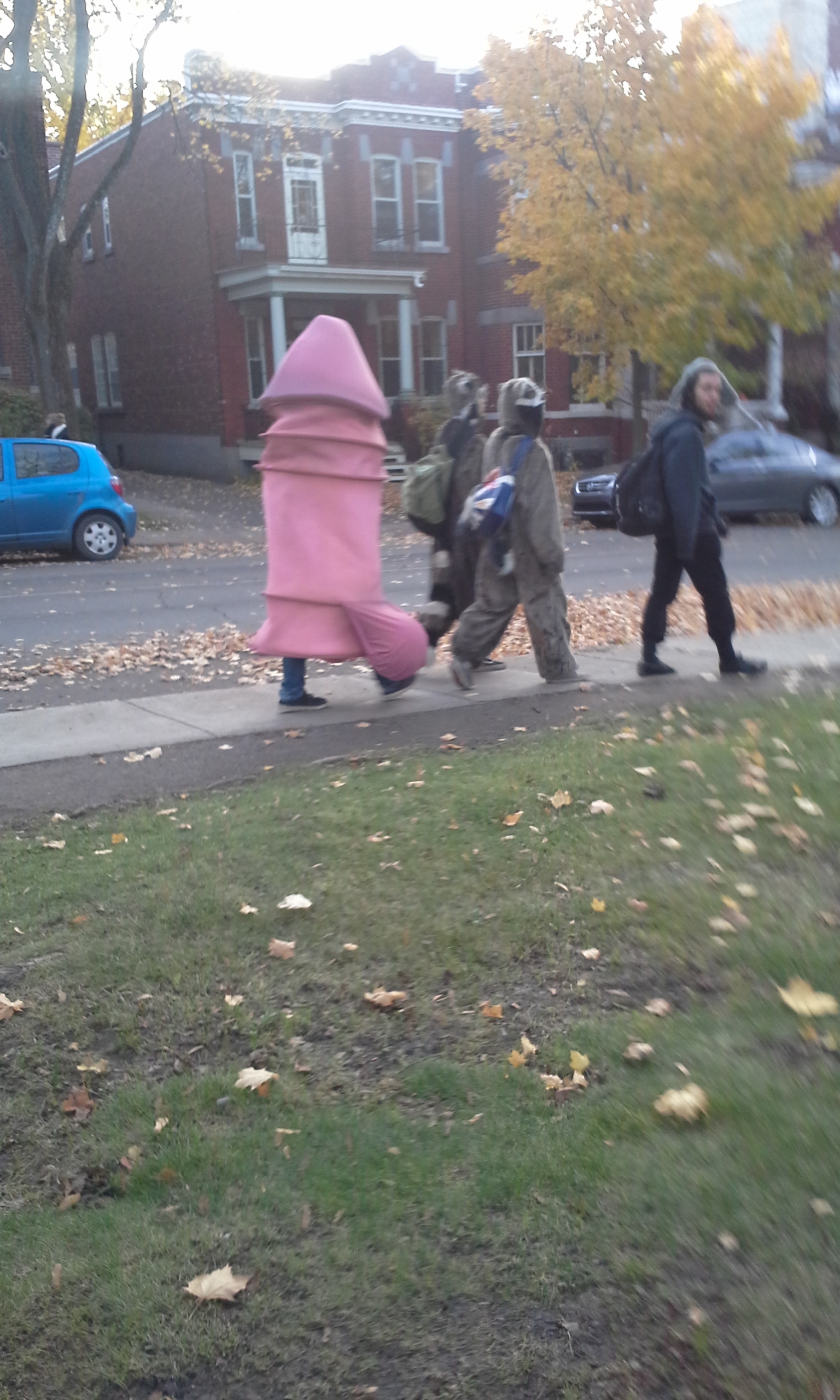
    Another threat to my reading habit was the immense amount of time required to help my daughter sleep. Newborns spend a lot of time sleeping, but they are notoriously bad at it and require assistance (referred to as ‘soothing’). This basically amounts to walking the streets of your neighbourhood with your baby stuffed into one of those obnoxiously priced “carriers.” Once I was over the new-dad jitters and was no longer trying to impress passersby with the baby I had strapped to my chest, I got into the habit of doing laps around the pond at Parc Outremont while reading from a book that I held in front of me. I made my way through Michael Hamburger’s translations of Paul Celan this way, and while I typically have little memory for poetry, many lines from this work are now frozen in place, triggered every time I pass a fountain or leafless tree. And one of the most memorable reading experiences of the last few years is the time I spent on a cold bench at Parc Saint-Viateur with my daughter sleeping in the carrier as I read the final pages of Peter Handke’s A Sorrow Beyond Dreams while kids dressed up as penises made their way to Halloween parties.

    Happy Halloween

    ” …the time I spent on a cold bench at Parc Saint-Viateur with my daughter sleeping in the carrier as I read the final pages of Peter Handke’s A Sorrow Beyond Dreams while kids dressed up as penises made their way to Halloween parties.”


    My aforementioned friends, the ones who warned that I would have to sacrifice my love of reading to my role as a new dad, were also an enormous tax on the time I had for reading. By refusing dinner invitations, birthday party invites, brunch for babies, etc., typically blaming my absence on my daughter, I was not only able to keep up my reading schedule, but, after I had refused enough of these kind invitations, they no longer came in with any regularity, which also spared me the enormous time-suck of responding in a considerate manner something to the effect that “I would love to! But…”

    While it turns out that my friends were wrong about finding the time to read, there is one aspect of parenthood they were right about, but that I’d never taken very seriously: I may still manage to find a comparable quantity of time, but the quality of that time has been seriously degraded. I can sit for hours with Knut Hamsun’s Pan in front of my face, but I regularly find myself rereading the same line over and over again. Or an hour passes and I don’t even make it to the bottom of the page I started on. I’ve managed to read an impressive number of excellent and difficult works, but I’ve hardly retained anything. Within a week or so of finishing a book, I even struggle to remember what I had just read (except for the Celan). So while I have plenty of time to read, I can’t maintain the level of focus and attention I had in my pre-paternal reading sessions.

    Which brings me to the final obstacle to my reading habit – writing. Before my daughter was born I used to try to write at least a few lines every night, but even this small commitment now seems to take an inordinate amount of time away from doing the thing that I really enjoy (it would be quite a stretch to say that I enjoy writing). On account of the soul-wearying exhaustion I feel at the end of every day, I find it pretty easy to excuse myself from writing for the night and to settle into a good book. And by “settle into a good book” I mean “read the same line over and over again until I eventually pass out on the couch.” My friends say that it’s perfectly natural to neglect my writing for the next year or so, and that eventually I will find the time and energy to start up again. I hope they’re right. Goodnight moon.


    Bookjacket_M Steeves

    Mike Steeves lives with his wife and child in Montreal, and works at Concordia University. Giving Up is his first full-length book of fiction. Connect with Steeves on Twitter @SteevesMike.

    Photos: Via Flickr; no changes made (top); Mike Steeves (Halloween); Nikki Tummon (headshot)