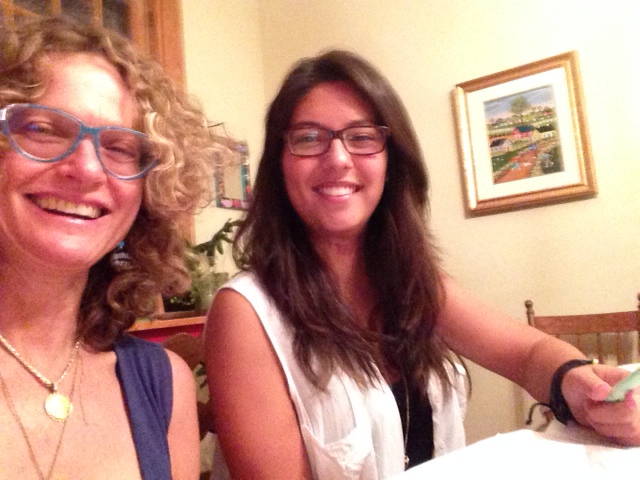
Tag: feedback

  • The Honeymoon Phase—By Ann Cavlovic

    The Honeymoon Phase—By Ann Cavlovic

    Someone with two decades of experience getting critiques of their writing shouldn’t curl into a ball after an editor’s comments, right?

    Then why, after receiving a developmental edit on my first attempt at a novel, did I find myself in such a pit of despair? (Yes, that pit, that ball; I was every cliché imaginable.)

    The simplest explanation involves basic math: a novel is about twenty times the length of a short story, so you have twenty times the problems to fix. On top of this, the stakes for me were especially high: I’d taken a year off work to complete the draft on a small grant, and circumstances left me a single mother, all of which necessitated a weekly budget of $330. Just my son’s weekly piano lessons cost $50.

    After taking this big leap and working so hard, I wanted accolades. Instead, the editor posed neutral questions that my anxious mind could easily un-neutralize: ‘What governed your decision to include character X?’ became ‘Why did you even write this useless asshole?’ She didn’t trust the perceptions of the character whose purpose was to explore the nature of human perception, which sent me into an epistemological head explosion about my own perceptions. Sure, many of us ignore positive feedback and focus on the negative (and I hold a PhD in Catastrophizing). This cognitive distortion comes readily when the things working well are described in one page, and the things that aren’t take up fifteen.

    It wasn’t so much like I felt this editor had seen me naked. It was as if she’d seen me naked upon return from a ten-day backwoods camping trip and offered logical and helpful observations like: ‘Have you considered taking a shower?’ and ‘But first perhaps another go with some toilet paper?

    Naturally, my first inclination was to troll the editor on the internet to find evidence of her incompetence. Instead, I rediscovered her facility for insight, nuance, and skilful prose. Dammit.

    Yet as I followed the advice of friends and allowed myself a break, ideas started popping up in my mind. How to fix this. How I really could cut that. Yes of course that part was misleading. And I really have no idea how to deal with that subplot but perhaps it will become clear after I fix fifty other problems. These were the kind of blind spots my critique circle might have pointed out on a short story too. Maybe, after such a long period of isolation, I was out of the feedback-receiving habit?

    Now my draft manuscript sits on my desk in a neat pile, with dozens of paperclips—all red, I have my standards!—holding together scenes that have literally been cut and collated over months of arduous writing, reworking, and organizing. The day I got back to work, I glanced at my manuscript, and realized the little bubble of joy I’d cradled in my bosom during the brief honeymoon between completion and feedback had popped.

    But it probably had to. When I initiated my de-catastrophization protocol and mulled over places to begin, I saw how the editor’s interventions saved me from spending more energy in fruitless directions. I need that energy, because there is a lot, a whole lot, of work still to be done. Instead of resentment or embarrassment, I’m starting to feel appreciation and even something close to affection for this woman I’ve never even met in person. A stranger who’s seen my work, by necessity, at an earlier stage than I’d ever shared work before. There’s a strange intimacy to this.

    Speaking of intimacy, I met a wonderful man when finalizing the draft (which is, by the way, not ideal timing for a wannabe novelist, but I’ll take it). Months in, we are still in our honeymoon phase and I am enjoying it fully. Surprisingly, I see that phase more positively than ever, whether it’s for a manuscript or a partner. You need it. You need to build up a reserve of good feelings to get you through the work to come.

    Looking at my manuscript now, I realize maybe it was okay how stupidly in love I was. Maybe my delusional vision that my first draft would turn out like a fifth draft wasn’t all bad. Maybe, in part, I needed my delusion to get me through.

    Some relationships break down. Some manuscripts never get published. Don’t even try to tell me it’s the journey, not the destination; to deny the cost of failure is to deny the courage involved in trying. But with both my manuscript and my new relationship, deep down I have a strong sense of potential. So I will again pour my heart into both, with all the attendant hard work and brutal vulnerability.
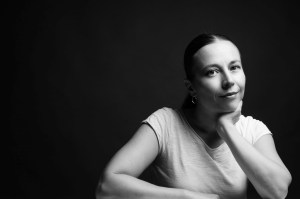

    Headshot1 - AnnCavlovic - Irvine2017-crop all black

    Ann Cavlovic’s fiction and creative non-fiction have appeared in EventThe FiddleheadThe Globe and Mail, Little Bird Stories, PRISM international, Room, SubTerrain, the anthology This Place a Stranger (Caitlin Press), and elsewhere. She wrote Emissions: A Climate Comedy, which won “Best in Fest” at the 2013 Ottawa Fringe theatre festival. If the heart-pouring works, her novel Count on Me will one day see the light of day. Find her in the Gatineau Hills and at: anncavlovic.com.

    Photo credits: Ann Cavlovic (header image); David Irvine (headshot)

  • The Art of Mentorship: An Interview with Robert Edison Sandiford

    The Art of Mentorship: An Interview with Robert Edison Sandiford

    Every couple of weeks, Robert Edison Sandiford calls me from Barbados. Robert is one of this year’s QWF fiction mentors, and I am his protégé. We’ve made arrangements to speak at 5 p.m. via Skype so this interview would feel more face-to-face. At 5:10, we still have no audio so he switches from his desktop to his laptop. At 5:25 the recording app on my phone stops working. At 5:37 we decide we’ll have to hobble back and forth between the computers, a phone, and another phone app to somehow make it work. Afterwards, when it’s all sorted, he says: “Well, there’s a lesson about tenacity.”

    Robert was born in Montreal to Barbadian parents. He is the author of nine books that range in form from short and long fiction to memoir, graphic novels, and erotica. Over a period of four months, he’s worked with me on my own collection of stories and we’ve talked about many things: process and voice, the German writer Jenny Erpenbeck, and how baking helps to reduce stress. Robert answers my questions below.

    —Pamela Hensley

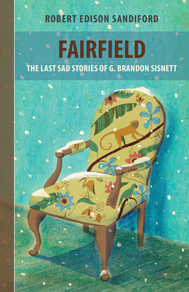
    Fairfield Cover

    PAMELA HENSLEY

    Let’s start with a quote from Fairfield, your most recent collection of short stories. In reference to engaging fiction, you say: “All that matters… is the individual and the moment.” Can you expand on that?

    ROBERT EDISON SANDIFORD

    In the context of the collection, it had to do with making the most of art. It had to do with knowing when something is ready or when an artist has what it takes. It comes from a quote by Matthew Arnold [“For the creation of a masterwork… two powers must concur, the power of the man and the power of the moment, and the man is not enough without the moment”]. How do you know when you’ve got what it takes? All we are is who we are and the talent that we have. My contention is that most people are a little better than they think they are. They can do better than they’ve done.

    HENSLEY

    Besides being a mentor, you’re an editor and teacher. How does one turn a good manuscript into a great one? Or a good writer into a great writer?

    SANDIFORD

    There has to be that spark within the work itself, or within the writer. There has to be something inside that person already that lends itself to greatness. And it may depend on how we define greatness. There are a lot of artists, not just writers, people who never enjoyed recognition while they were alive or young enough to enjoy it. So there’s that question again, of the individual and the moment and the individual and talent. There are certain things you can teach people to make them better writers but that sort of greatness, that may also depend on them.

    HENSLEY

    In Fairfield, a fictional editor writes that the character G. Brandon Sisnett borrowed from other authors, including one from Montreal who wrote Caribbean fiction on the themes of “familial loss and managing the pain of living.” Which are themes that recur in your work. Would you like to talk about theme?

    SANDIFORD

    I’m curious about theme. Both of us are writing from a particular place. Germany finds its way into your stories, as well as Canada. For me, it’s Barbados and Canada. Theme is distinct from subject matter but they inform each other. I write out of where I am but also where I come from. I do believe that all writing is regional, in a sense. People talk about things being universal but I think it goes to honesty. If you write in a way that is honest, the regional will get you to the universal. Someone will pick up the story halfway around the world and say, “I relate.”


    “There are certain things you can teach people to make them better writers but that sort of greatness, that may also depend on them.”


    HENSLEY

    Is place a detail?

    SANDIFORD

    Place is a necessary detail: your characters have got to be somewhere. But it’s more than that. It’s a space in which you invite the reader to share an experience. It’s about learning, actually. If I write about a particular place, I want you to feel that place. I want you to experience it as if you were actually there. Unless having a non-descript setting is important to telling the story, then why have this non-descript thing? I get the answer, “But I want it to be universal.” I just say, “Stop. What you may be doing is taking out the necessary edges that people need to relate to the story even more.”


    “I do believe that all writing is regional, in a sense. People talk about things being universal but I think it goes to honesty. If you write in a way that is honest, the regional will get you to the universal.”


    HENSLEY

    What’s the difference between style and voice?

    SANDIFORD

    Style and voice tend to be synonymous. But to make a differentiation, when writers are starting out I like to talk about approach. I used to talk about style but I think writers get confused. They say, “But the way I put it down is a style. I like to use all these ellipses when I write, that’s my style.” And I say, “No, that’s more of an approach and it may even be a bad approach.” Style is something that you develop over time. Voice is all those things combined. It’s reading a work and recognizing who it is. Ultimately, it’s telling a story in a particular way. It can’t be told by anybody else.

    HENSLEY

    You published your first story collection more than 20 years ago. Does it get any easier?

    SANDIFORD

    Hell, no! Publishing is more difficult now than it was before. Coming up with a story, I don’t know that that gets any easier. What gets easier, maybe, is knowing what works and what doesn’t. But I wake up every morning doing what I do and I have no regrets. Ever. That’s a hell of a thing to be able to say.


    On June 4, the 2017 QWF mentors and mentees will present new writing at the annual public reading in Montreal. Click here for more information.

    Rob Profile, ACA Painting BackgroundRobert Edison Sandiford is the author of nine books, most recently Fairfield: The Last Sad Stories of G. Brandon Sisnett. He is the founder, with the poet Linda M. Deane, of the cultural forum ArtsEtc Inc. A recipient of Barbados’ Governor General’s Award for his fiction and the Harold Hoyte Award for newspaper editing, he has also worked as a teacher and video producer.


    Pamela Hensley is new to Montreal, having relocated once again after returning from Germany to Ontario. She was selected to participate in the 2017 QWF Mentorship program and is currently attending her first QWF workshop. You can read her stories in Canadian journals, including The Dalhousie Review and EVENT magazine, and are invited to hear her read with other QWF mentees at The Comedy Nest, Montreal Forum on Sunday, June 4 at 2 pm.


    Photo credits: Pamela Hensley (top banner); Aeryn Sandiford (Sandiford headshot); Gordon Hensley (Hensley headshot)

  • Saying Yes by Monique Polak

    Saying Yes by Monique Polak

    I am bad at saying no. As part of a better-late-in-life-than-never self-improvement exercise, I try to turn down extra work—especially the non-paying variety. (more…)