Tag: friendship

  • The Circle of Mentorship—By Shelagh Plunkett

    The Circle of Mentorship—By Shelagh Plunkett

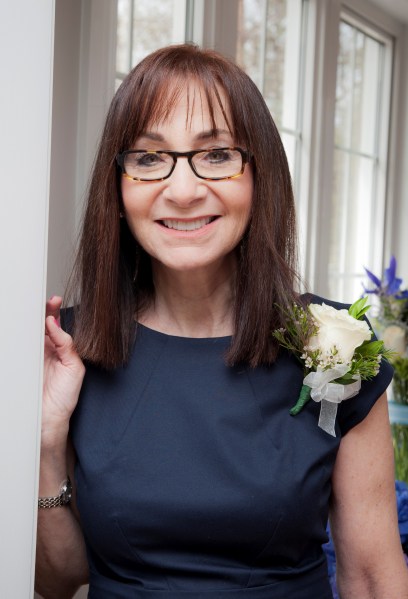
    Linda Kay—author, journalist and teacher—died last October. In 2006 she was assigned to mentor me by the Quebec Writers’ Federation, and in the twelve years that followed became a great friend as well as remaining a generous-hearted and gracious advisor. In the months since she died, during the hundreds of times I’ve missed being able to email or call her, I’ve thought often about what I’ve lost without her in my life and what I learned from having her in it. Perhaps most importantly, Linda showed me how essential mentorship is for a writer.
    Linda Kay
    Linda Kay

    Linda’s achievements as a writer and teacher were impressive (including no less than a Pulitzer won as part of a team early in her career), but recording them here would leave nothing more than a superficial sketch that failed to convey who she was. Similarly, outlining the empty space that her death has opened in my life would leave a hollow impression of our friendship. I’m left wanting to convey one of the most important things I learned from Linda: that mentorship is essential for a writer.

    When I moved to Montreal, I joined the QWF to meet writers. I applied to the mentorship program and was introduced to Linda. The first time we met she brought the essay I’d submitted with my application—a short piece about growing up in Guyana, in South America. “Send this in to the CBC Literary contest,” she urged me.

    I’d written it in a flurry of frustration one afternoon. It was the sort of writing I wanted to do but was unlike anything I’d ever tried, because it was not the kind of piece my freelance clients were interested in publishing. I didn’t know if the piece was good or bad, but I’d had fun writing it. Linda was adamant, so I took her advice.

    She was right; the essay won the CBC Literary Award for creative non-fiction. Linda told me my life would change, and it did. With that award to reflect on and with her encouragement, I began to think I could write more than just simple news pieces, arts profiles, or lifestyle columns. I began to think I might have the chops to string a few words together that might have a deeper purpose, that might offer something more to a reader than a few minutes of entertainment. Linda suggested I approach publishers. “They’ll pay attention to you now,” she said. She was right. Penguin signed a contract with me and my memoir of adolescence overseas—born out of the essay I’d written—was published in 2013.

    In the years that followed, Linda continued to inspire me to take the work of writing seriously, because that’s what she did. She applied all her skill, insight, and effort to everything she did, from writing to teaching to friendship; to every assignment, be it a book or a short piece for Costco Connections. Ultimately, what we try to do as writers is communicate. Linda showed me that without giving one’s full passion, focus, and commitment, communication isn’t worth the effort.

    Linda didn’t tell me she was sick until quite close to her death, but in her last months we wrote often and our conversations continued to ramble around writing, family, new and old loves, life. She remained as she’d always been, even in our last correspondence, an email sent less than a week before her death from her hospital bed. Linda wrote that she’d passed on my name and the title of my book to a Guyanese intern she’d met, encouraging the woman to seek out my writing. Right to the end, Linda remained a supporter and mentor.

    It is not an exaggeration to say I would not be a published author, and would not be writing still, if not for Linda. And now, things have circled back for me: I’ve been hired by the QWF to fill the role for someone else that Linda did for me when we first met. As I key these words, I am embarking on three months of mentoring a promising writer in our community. Though I miss Linda immensely and often, I’ve not lost the gifts she was lavish in bestowing. I will turn to my memories of Linda now and into the future, knowing that by doing so I’ll be motivated to achieve much more than I imagine myself capable of. More significantly, her memory will inspire me to pass on to my mentee what Linda gave me as a mentor.


    ShelaghPlunkett_photocredit-NiamhMalcolmShelagh Plunkett is a past winner of the CBC Literary Prize for creative non-fiction. In 2013 her memoir, The Water Here is Never Blue, an extension of her winning essay, was published by Penguin Canada. It was shortlisted for both the QWF Mavis Gallant Prize for Nonfiction and the QWF Concordia University First Book Prize. Shelagh now lives in Montreal, where she is at work on too many projects. Her past hometowns have included Georgetown, Guyana; Kupang, Timor; Vancouver, Victoria, and Toronto; Ricón-de-la-Victoria, Spain; and Salt Spring Island.

    Photo credits: Flickr (header banner), Courtesy of Emily Kay-Rivest (photo of Linda Kay), Niamh Malcolm (headshot of Shelagh Plunkett)

  • Amazing Grace: A Literary Friendship—By S. Nadja Zajdman

    Amazing Grace: A Literary Friendship—By S. Nadja Zajdman

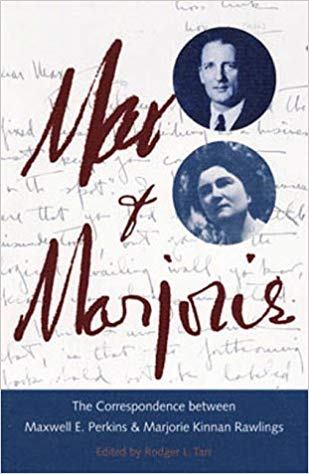
    I was sitting by the gas-lit fireplace in my local library when a book on the table caught my eye. It was the collected correspondence of the novelist Marjorie Rawlings and her editor, Maxwell Perkins. As I read their letters I could hear their long-stilled voices speaking to each other, and to me, across the expanse of decades. I tried to check out the book, but was told it was a reject from a book sale, and if I wanted it I would have to buy it. So I did.

    At home, I looked up Maxwell Perkins on the Internet. A link led me to Perkins’ granddaughter, the novelist Ruth King Porter, who lived in rural Vermont. Ruth was giving away her novels, asking nothing in return but that readers post reviews on her website. I sent for Ruth’s books, and a correspondence began. Soon, we wanted to meet in person. I scheduled a visit to Ruth in spring, then her mother’s dying began. I rescheduled to autumn, then my mother’s dying began.

    Instantly I cancelled travel plans and let go of my already-purchased bus ticket, but a friend with a car offered to take me on a shorter day trip to Vermont. Encouraged by my mother, I accepted.

    “We are two middle-aged women, both wearing glasses.” I wrote to Ruth. “My friend is a blonde with dark roots. I still think of myself as brunette, but there is more salt than pepper in my hair, now.” Ruth wrote that she would be waiting for me under the clock tower of Montpelier’s City Hall. I knew what Ruth looked like from the photographs on her website.

    PerkinsRawlingsBookCoverWe rode into Montpelier on a gloriously warm day at high noon. I saw Ruth sitting on a bench under the clock tower, scribbling in a notebook. Main Street was packed with tourists, and we couldn’t stop the car in front of City Hall. We found a parking space down the street. My friend waited in the car, while I ran down the block. “Ruth?” The woman on the bench looked up, and then leapt up.
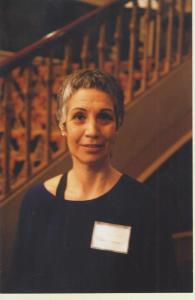
    Ruth was a pre-hippie Back-to-the-Lander, in her early seventies when I first met her. At our first encounter, she wore a white work shirt, faded blue jeans, and a black money belt slung over her shoulder. She walked like someone who rode horses.

    “Where’s your friend?” Ruth called through the crowd of tourists blocking the sidewalk.

    “She’s waiting in the car!” I called back. I led Ruth to the car and the friend in it. Ruth led us both on a tour of the golden-domed state capital building. “I hope we don’t run into my son.” Ruth twinkled. “He’d be embarrassed by the way I’m dressed. My son Louis works as an aide to the governor.” When the tour was over Ruth led the way in her battered old car out of Montpelier and higher into the Green Mountains, where another world awaited.

    Ruth’s husband Bill and a second son, Robbie, rode their tractors out of the woods to greet us on the porch of a rambling farmhouse. Nearby, three large dogs stiffened in alert: Ellie and Flora danced in attendance to the top dog, Chief. Ruth’s daughter Molly, an artist who lived, Thoreau-like, in a cabin she built with her hands, bounded up a hill to join us. The open and friendly faces of Ruth’s family smiled at me kindly. I’m sure they were aware of my situation, though no one referred to it. Taut, lean, Alabama-born Bill wiped the grime off his hands and stepped forward to shake mine. I felt as though I’d stepped into an illustration by Norman Rockwell.

    As an early darkness fell my companion and I crossed back over the border, returning to Montreal and my mother’s apartment. “Hello sweetheart.” My dying mother smiled tenderly. “How did it go with the lady in Vermont?”

    What could I say? I felt guilty at having left her, even for a few hours. I didn’t feel like relaying the details of an excursion to Vermont.

    Six months later I returned to Montpelier by bus, alone. Once more, Ruth met me under the clock tower. For a few days I curled under Ruth’s wing, sunning on her roof, sleeping in Max Perkins’ bed, waking to birdsong and skimming the staggering array of autographed out-of-print books dedicated by grateful authors to their engaged and caring editor. “Grieving is hard work,” Ruth would say in greeting when, after a nap, I descended a steep staircase into her dark country kitchen. As we stood side by side in the verdant meadow which was her front yard, Ruth added, as much in amazement as in sadness, “A year ago this time, both our mothers were alive.”

    Ruth King Porter is an American blueblood whose antecedents hark back to a woman who held a door open for George Washington. I am the Canadian-born daughter of refugees. My mother, a woman who survived three invasions and the Warsaw Ghetto, later in life became prominent in Holocaust education. Many people find my mother’s story repellent and turn away from any mention of it, whereas Ruth and her husband Bill were fascinated. Ruth did for me what I had done for my mother; she listened. And she encouraged me to tell my mother’s story.

    Six months after that, I was back on the farm. Ruth and Bill acknowledged what would have been my mother’s birthday by lighting large candles in a spectacularly tangled chandelier made entirely of logs. Through the wall-sized picture window we watched the cold autumn rain and wind lash the last leaves off a forest full of trees. As we ate hot squash and a pot full of peas grown in Ruth’s garden, the lit log chandelier shone, the tree-bark-shaded lamps glowed, and the wood stove burned.

    I have been back to Ruth and Bill’s farm several times since. In between visits Ruth does for me what her grandfather did for Ernest Hemingway, F. Scott Fitzgerald, Thomas Wolfe, and Marjorie Rawlings: she writes to me and elicits writing from me, reads and critiques my material, encourages, cajoles, indicates where and when she believes I have veered off-track, and gently nudges me back. Clutching the psychic lifeline tossed to me by the descendant of a legendary literary editor, I live and work alone and in growing peace in my suburban Montreal apartment, producing a memoir of my mother. My mother knew that my writing would sustain me after she was gone. Ruth Porter’s mentorship sustained me during the darkest days of my life.


    S Nadja Zajdman_HeadshotS. Nadja Zajdman is a Canadian author. Her short stories and non-fiction pieces have been featured in newspapers, magazines, literary journals and anthologies across North America, in the U.K., Australia, and New Zealand. In 2012 Zajdman published the related short story collection Bent Branches, which spans four continents and seventy years in the life of a family. Recently Zajdman completed a second short story collection, as well as the above-mentioned memoir of her mother, the noted Holocaust activist and educator Renata Skotnicka-Zajdman, who passed away at the end of 2013.
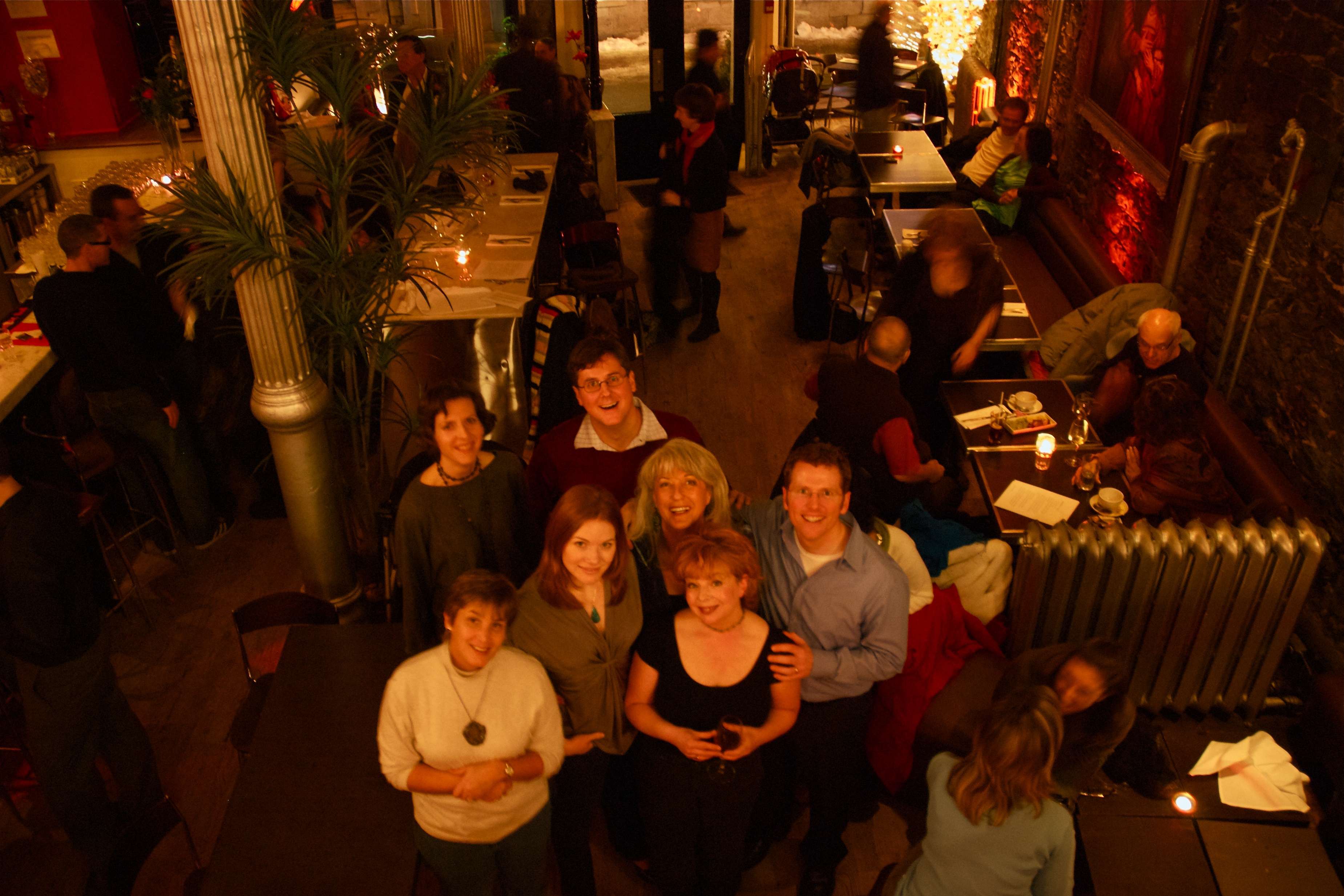
    Photo credit: MaxPixel (header banner)

  • I Do Not Write Alone by Gina Roitman

    Some people maintain that writing is a lonely business. In my experience, that’s not necessarily true. When I sit down to write, I am joined by a crowd of internal negative voices: the infernal censor, the cranky critic, and the whiner who keeps reminding me of all the other things I could or should be doing.

    About once a month, however, I escape that crowd when I meet with my writing group to refresh my creative energies. I am not alone in this pursuit. Read the acknowledgements of first-time authors and you’re likely to find shout-outs to the people in their writing groups. For the past ten years, I have been a member of a critique group that meets to break bread, gossip, and review current work. It was with the help of this group that I crafted many of the pieces which appear in my book of nine linked short stories, Tell Me a Story, Tell Me the Truth.

    The original group, which we eventually dubbed MontrealWrites, first met while taking a QWF workshop given by Ami Sands Brodoff. Ami laid down the rules for critiquing that we use to this day. Over the years, we have acknowledged our good fortune at coming together as we did. It was one of those remarkably synchronistic occasions: people of like minds but different talents found themselves, over the course of two months, sitting in a room together for two hours a week.

    When the workshop session ended, eight of us did not want the experience to end. We had found a pleasant camaraderie despite the differences in our ages and styles. Initially, we thought we’d need a fearless leader to guide us but soon realized that we had all the skills and experience we needed. Some of us were good at analyzing the themes while others were meticulous about storylines.

    In our original group, we had mostly short story writers as that was the focus of the workshop we had signed up for. However, as some members moved away or moved on and others came in, many of us explored other genres including children’s stories and picture books, personal essays, travel writing, screenwriting, poetry and, of course, novels.

    Why does our group dynamic work so well? We are all blessed with a general lack of ego and we have ‘grown up’ together as writers. It is the love of the process, I believe, that nurtures our commitment to each other. As a result of reading so much of each other’s work, we have formed a collective memory from which to draw on when discussing any new work.

    Elizabeth Ulin could be our poster child. Her story exemplifies how the influence of the group comes into play. She wrote a short story geared to middle grade children starring a young girl named Mitzi and a host of spiders. The group became so enamored with Mitzi that we suggested Liz might want to expand the short story to book length. In the end, she was accepted by the QWF Mentorship Program and turned Mitzi’s story into a screenplay. Elizabeth has now adapted three of her pieces for presentation at Centaur Theatre.

    In my case, when a publisher indicated interest in my work, I made certain to have the group vet the material I had selected before sending it off. Their input was invaluable in keeping the linked stories relevant and on track.

    The members of MontrealWrites continue to evolve as writers as well as friends. We work well as a team. We organized, publicized and orchestrated two public readings with great success. And even now, through all the exigencies of life – births, weddings, work deadlines and far-flung travel – we find it hard to let go of each other.

    How we have grown together and challenged each other, and what we have accomplished as individuals as well as a group, give the lie to the “lonely-business” theory.


    Gina Roitman is a writer, editor and author of the acclaimed short-story collection Tell Me a Story, Tell Me the Truth, and the co-producer, co-writer and subject of the award-winning documentary My Mother, the Nazi Midwife and Me. www.ginaroitman.com

    Learn more about MontrealWrites by clicking here. MontrealWrites will be celebrating their 10th anniversary with readings from most of the group members at the next QWF membership schmoozer in May 2014. Date TBA soon.

    Pictured from left to right—Front row: Elizabeth Ulin, Sarah Lolley, Gina, Maggie Kathwaroon and Paul Edmond Robichaud; Back row: Jane Affleck and Derek Webster.
    MontrealWrites
    Pictured from left to right – Front row: Elizabeth Ulin, Sarah Lolley, Gina, Maggie Kathwaroon and Paul Edmond Robichaud;
    Back row: Jane Affleck and Derek Webster.

    Do you write alone? Is writing is a lonely business?

    Have you been part of a writing group? Why?

    Not in one yet? Do you want to be?

    QWF would be happy to help bring together people who are eager to start/join a writing group. Please contact Lori at admin@qwf.org if you’re interested.