Tag: genre

  • Pushing Past the Fear of Writing Nonfiction—By Chanel M. Sutherland

    Pushing Past the Fear of Writing Nonfiction—By Chanel M. Sutherland

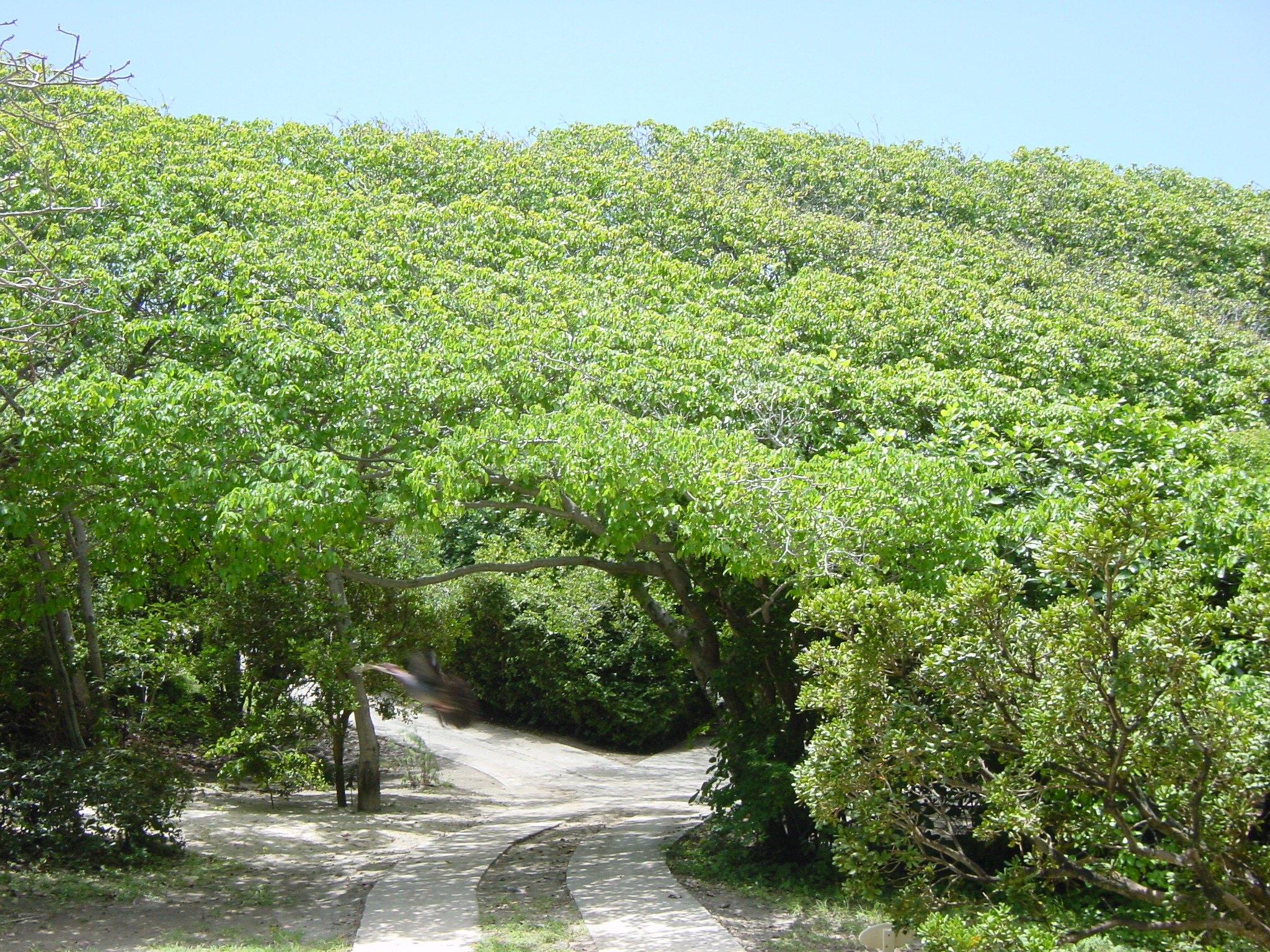
    The trees of St. Vincent and the Grenadines.


    If I’m being completely honest, writing nonfiction terrifies me. 

    But recently, I’ve felt compelled to write the truth.

    To write the stories that have shaped the trajectory of my life and—as if that wasn’t enough—have lodged themselves into my creative conscience, demanding to be told at all costs.

    It started with a single story, “Umbrella,” that I wrote out of pure exigency two years ago. 2020 was a heavy year for many reasons. The world became saturated with personal stories and confessions. Everywhere I turned—social media sites, the news, books, conversations with friends—people spoke out about their experiences with various kinds of discrimination and violence. 

    Suddenly, I found myself confronted by my own memories. They rose out of the trenches of my mind like shadows growing bolder in my darkest hours. They wanted to be written.

    Before, if you had asked anyone who knew me as a writer, they would have told you that my stories mainly deal with the unreal or unproven: futuristic robots, aliens walking around in human skin, scarecrows climbing down from their perch to seek revenge on those who impinge on their domains. This is the realm of storytelling where I feel most at home. One can argue that I write these stories to stay detached from real life.

    I had spent more than two decades circumnavigating my memories and deferring the day when I’d have to finally write about them. When they began to emerge unprompted, I knew my time had come. For the first time in a long while, I found myself turning away from speculative fiction to write something that made me uncomfortable. Nonfiction.

    “Umbrella” is the second nonfiction story I have ever written and the only piece I have shared with readers. Perhaps it is short and breathy for that reason. A panic attack on paper. When it won the 2021 CBC Nonfiction Prize, not only was I surprised, I was frantic. 

    Was I ready to expose myself in this way?

    The simple answer was no, but I’ve since learned that nothing is ever simple when it comes to writing. If it were, it would hardly be worth it.

    It became clear that nonfiction had chosen me, and I had no choice but to take the plunge and see it through. Once I decided to start curating a collection of stories based on my experience as a Black Caribbean immigrant child, I faced another difficult question.

    How much can I reveal about others in my stories?

    In this case, the “others” were primarily my family, and without their support, I knew that I would not be able to write the collection. There were no stories without them. My mother was the catalyst for many integral moments in my childhood. My grandparents the glue that fixed the pieces together in many ways—however imperfect. 

    I’ve always been a solitary writer. I prefer to be completely isolated when writing, and I usually avoid discussing any story until it is completed. With these stories, I knew there were people I needed to speak to and include from the start. 

    Not only was nonfiction changing my craft, but it was also now impeding on my process.

    Having that first conversation with my mom was one of the greatest moments we have shared. It was a warm autumn day; mom and I were meeting up for our weekly walk around the neighbourhood. I don’t recall how I broached the subject of writing the stories. Knowing myself, it would not have been direct.

    What I do remember is the excitement mom expressed in learning that I wanted to do this. She answered any questions I had, voluntarily filled in gaps in my recollection, and even offered to help with the research. Her reaction trickled down to my sisters and aunts, and before I knew it, everyone else was on board.

    I will forever cherish a messaging thread between mom, my sisters, aunts, and me. We were trying to remember the name of a tree native to St. Vincent and the Grenadines. We all knew it by a different name and had our own tales about it, but no one could figure out its one true name.

    This tree became the emblem of my nonfiction endeavor. A thing from my family’s collective past that—though still elusive—we are learning more about each day from one another. 

    As I continue to research and write these nonfiction stories, there is a certain sense of unshackling from the past. And while I begin to see who I am today refracting from each new piece, I am also illuminated by another light: that of my family. 

    So, maybe being terrified of writing nonfiction is not such a bad thing after all.


    Chanel M. Sutherland is the winner of the 2021 CBC Nonfiction Prize for her story “Umbrella” and the recipient of the 2022 Mairuth Sarsfield Mentorship, a component of the Quebec Writers’ Federation’s Fresh Pages initiative. Born in St. Vincent and the Grenadines, Chanel moved to Montreal, Quebec when she was ten years old. She holds a BA in English Literature from Concordia University, and is currently writing her first book, a collection of short stories that explore the Black Caribbean immigrant experience. csuther.com

    Photos: Lyn Gateley via flickr; Chanel M. Sutherland (headshot)
  • I Thought I Was Writing a Potboiler—By Robyn Sarah

    I Thought I Was Writing a Potboiler—By Robyn Sarah

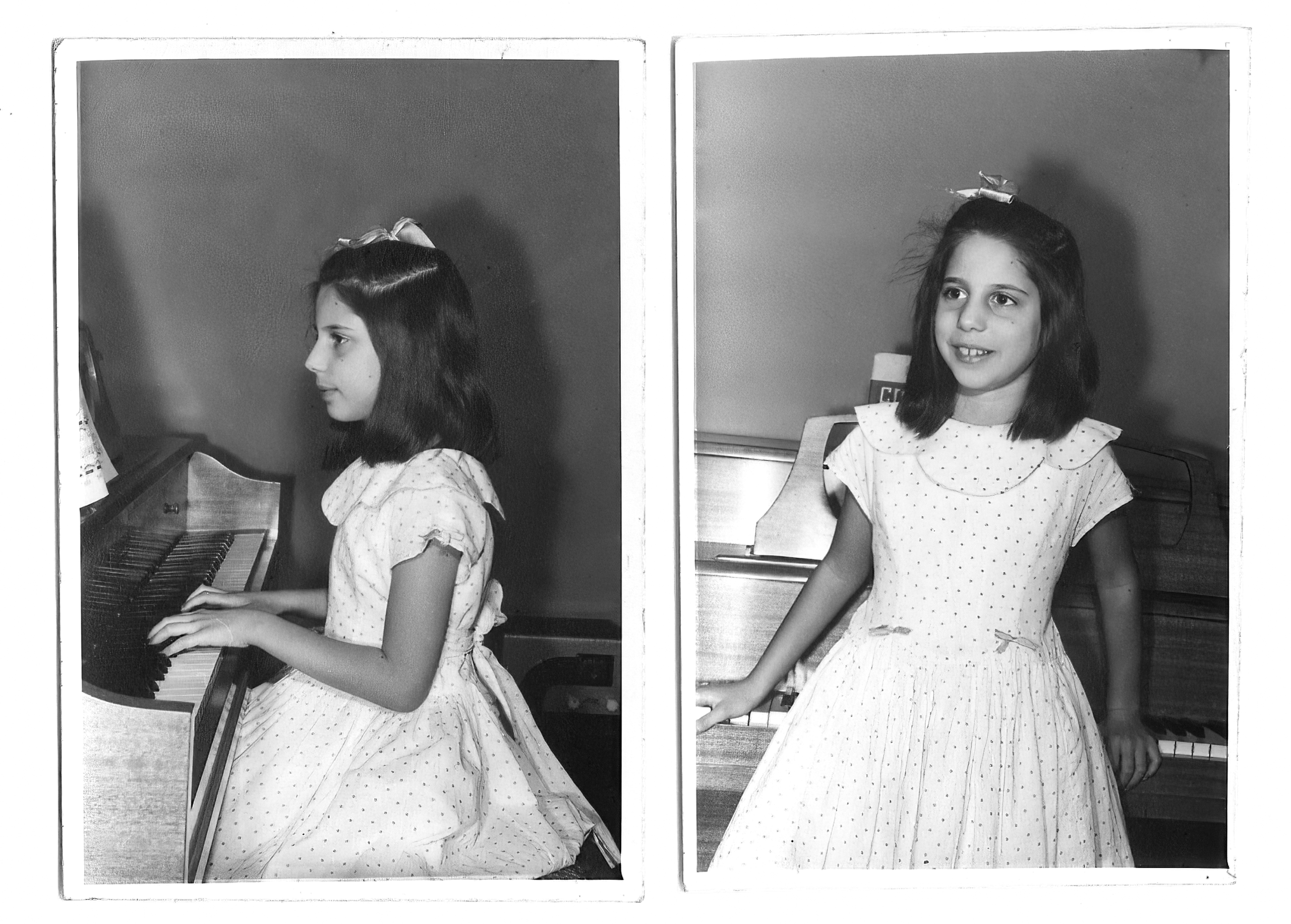
    Robyn Sarah, age eight. (Photo courtesy of author)


    I’m a literary writer to the bone: nothing I’ve written has ever paid enough to keep food on the table for long. But in 2009, during a spell when my muse for poetry and fiction seemed to have gone AWOL, I had the idea to write a short personal narrative, a book I could finish quickly and get published quickly. A potboiler, so to speak—not in the commercial sense, but to reassure myself that I was still a writer. It would be a story about returning to study piano at the age of fifty-nine, after a thirty-five-year lapse, culminating (hopefully) in a modest recital on my sixtieth birthday. A debut at sixty! I had never performed on piano as a teen or young adult. Of course, I would have to live this story before I could tell it. One year of goal-oriented piano lessons, during which I would track my progress in a journal; then a few months to turn the field notes into a book.

    Ten years later, the manuscript still wasn’t finished. And it wasn’t short.  A two-year purgatory of editing and revising had yet to begin. Music, Late and Soon was finally published in August 2021. Only vaguely does it resemble the book I thought I was going to write. What happened? How did I lose control over the best-defined, most straightforward writing project I had ever conceived? 

    The key may be in that term, “writing project.” Poetry is my primary genre, and while some poets do conceive poetry collections around a premeditated subject, I’m not one of them; my poems have always been composed individually, to be gathered later into collections. Even individual poems tend to begin without a clear subject in mind, but rather with some observation of the moment—an image, a feeling, a memory fragment, maybe just a phrase I like the sound of. My short stories begin similarly; there’s never much plot or a clear idea of where I’m going. This makes for some anxiety while writing, but it’s my natural process as a writer.

    When I contacted my old piano teacher (then in his eighties) and outlined my project, asking if he might be willing to give me some guidance, he wondered why I was fixated on the idea of performing, especially on a schedule. “Why not just start working again, and see where it leads? Playing the piano is like any art form, any creative process. It can’t be forced, it doesn’t work by deadline.”

    In retrospect, he had answered my “What happened?” question before it could need to be asked—had I really been listening. Wasn’t I listening? I thought I was. I thought he was saying something I already understood as a writer. But I didn’t think what he was saying applied to the book I had in mind. This book was going to be different. It was going to be easy—a straight line from here to there. The return to lessons, the year of preparation, the recital, The End.

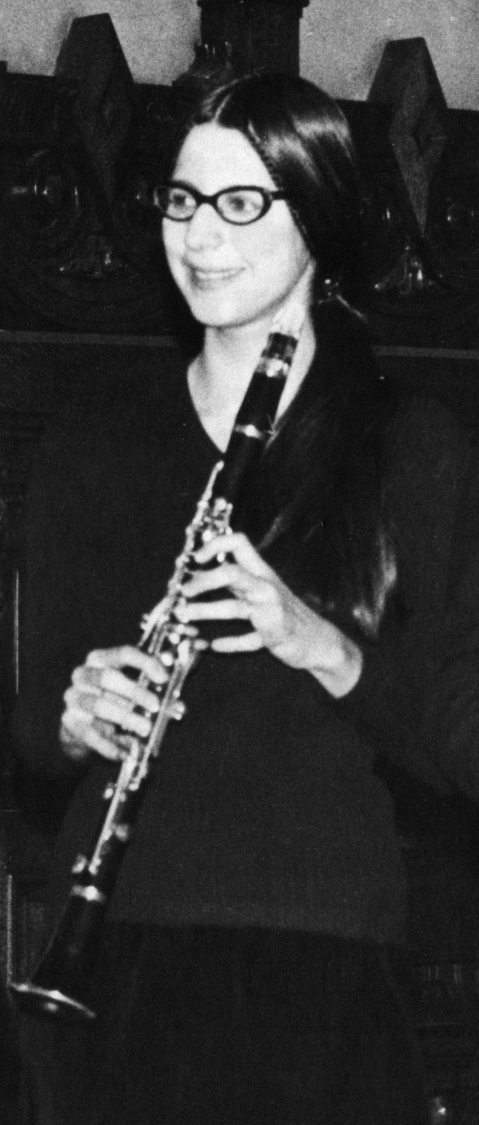
    But wait. A “return” to lessons implied a past. Why had I stopped studying piano? Why was I now fixated on the idea of performing? Moment of truth: I might need to provide a bit of backstory if I expected to interest a reader in my late-life musical venture. I did, in fact, have some experience of musical performance; the trouble was, it wasn’t on piano. For a decade I had studied clarinet in a professional music school, aspiring to a career as an orchestral musician. I had graduated, but had not pursued that path. Nor had I ever really looked back or asked myself why.

    Robyn Sarah, circa 1972.
    (Photo courtesy of author)

    Obviously this wasn’t the time or place to get into all that: it would just complicate the main story. Sticking to my plan, I began studying piano again, keeping detailed notes on the lessons. In tandem, I wrote some reminiscences of childhood: earliest memories surrounding the piano, early lessons with three different teachers before I came to study with the mentor I’d just reconnected with. I drafted a first chapter based on this material—a summary that, I thought, adequately contextualized where I was coming from. It glossed over my music school years on clarinet, allotting them a passing mention but keeping the focus on piano.

    Next moment of truth. I read the chapter aloud to a friend I’d known since high school, who had studied piano with the same teacher-mentor and was now a professional pianist and educator. After listening affably, expectantly, to the end, he was silent a moment, then blunt. “So, what’s the purpose here? I’m not getting a sense of why I should care about all this. And how could you leave out your ten years as a clarinetist?”

    “I didn’t! They’re there.” I pointed to the relevant paragraph. 

    “What, that’s it? Are you telling a story, or writing a CV? Those years were a fundamental part of your musical history! You aren’t being honest with the reader here. This isn’t you. I’m not hearing your real voice, because you’re not telling your real story.”

    My heart sank, because I recognized immediately that he was right. The bottom had just dropped out of my “project.” But once I accepted that, the book suddenly came to life. I realized I did have a story to tell—a buried one, on which the significance of the current one depended. I was going to have to delve into that unexamined past and make some sense of it, find out how it connected to my present moment. There were mysteries to explore here…

    I began asking myself questions: one led to another. I dug up and pored over surviving journals and letters from my high school and music school years. Present self and past selves collided and seemed to have things to say to each other. The pianist and the clarinetist had things to say to each other. The writer and the musician had things to say to each other. They all had questions of their own about creative process: what nurtures it, what can get in the way of it?

    A familiar anxiety swept over me as I realized that my “potboiler” was morphing from a brief narrative with a one-year time frame into a musical autobiography spanning my whole life. How was I going to weave all these strands into something coherent and beautiful that I sensed could be made of them, the way a composer weaves together multiple voice-lines in contrapuntal music? A familiar excitement tempered the anxiety, giving me the patience to spend ten years finding out.


    A Biblioasis Interview with Robyn Sarah

    Robyn Sarah reads her poem “Station”, from her Selected Poems, Wherever We Mean to Be (Biblioasis, 2017).

    “The book’s title is taken from this poem. I chose it because it expresses something that runs through all my poetry: a fascination with the way past and future, memory and intention, inhabit our present moment.”


    Spotlight on Wherever We Mean to Be by Robyn Sarah


    Photo by Stephen Brockwell

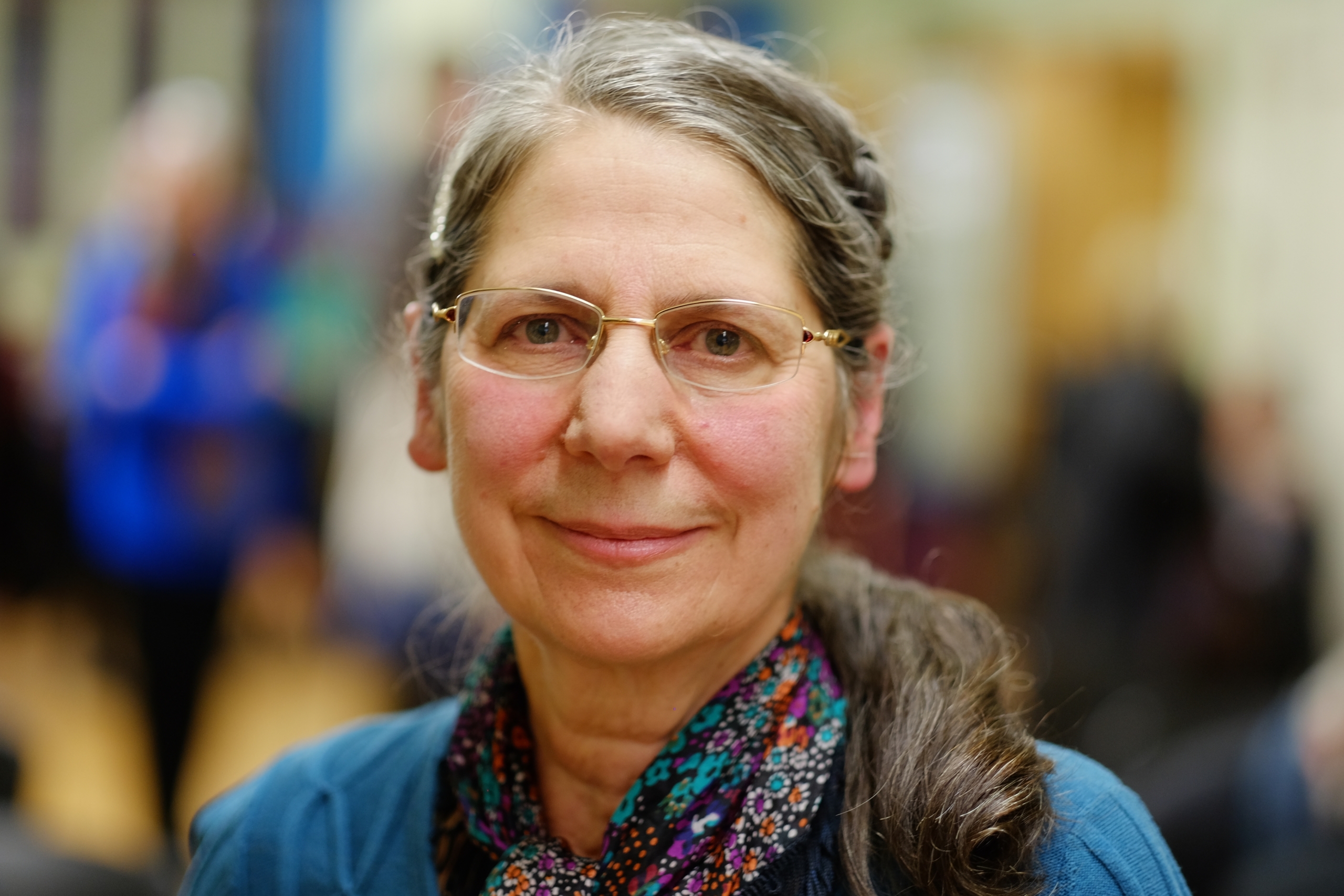
    Robyn Sarah is a Montreal poet and writer whose 2015 poetry collection, My Shoes Are Killing Me, won the Governor General’s Award for that year. Her “potboiler” was short listed for last year’s Mavis Gallant Prize for nonfiction.

  • Writing Through Grief—By Louise Penny

    Writing Through Grief—By Louise Penny

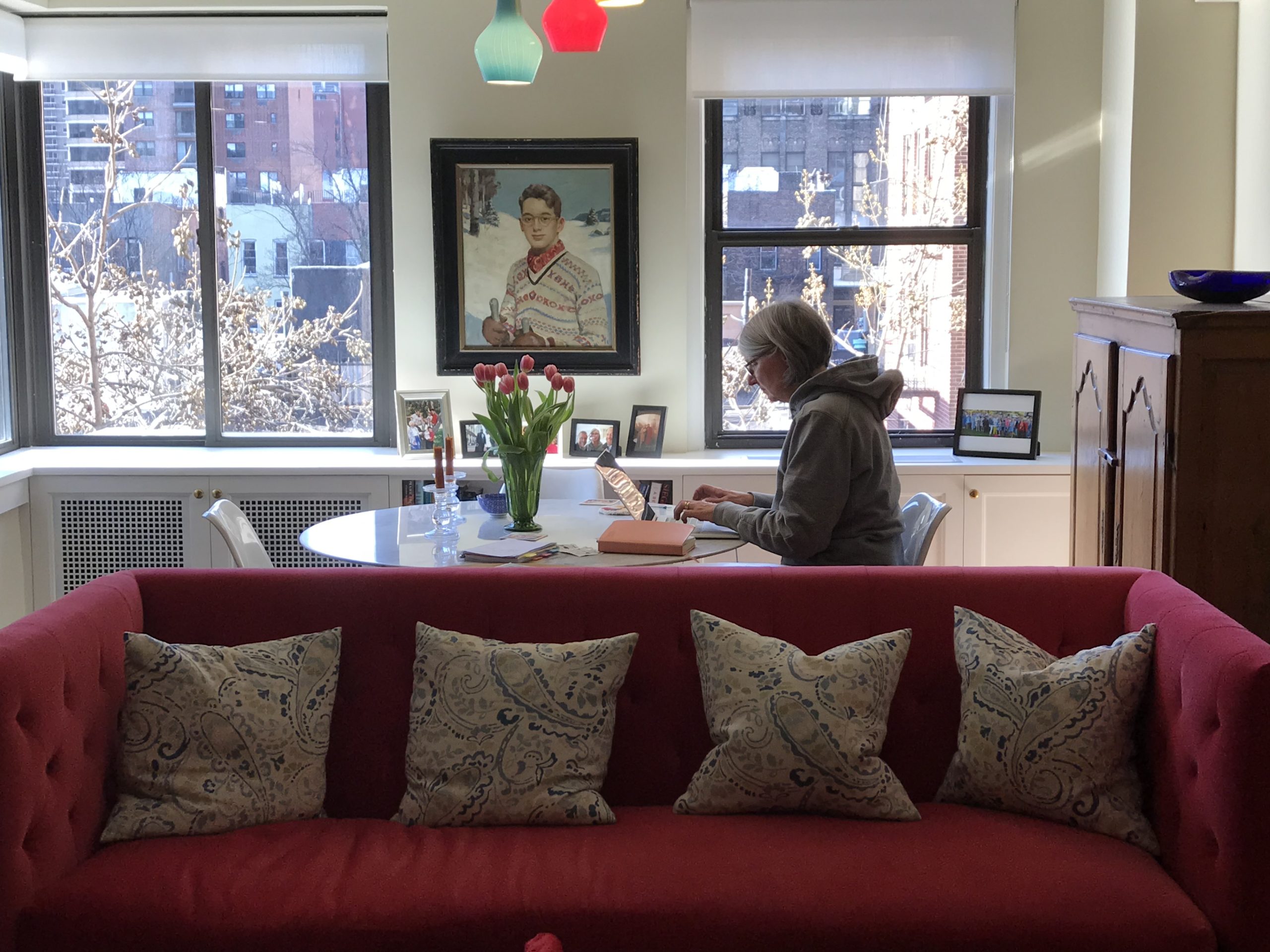
    Louise Penny writes at her dining table. (Photo by Lise Page)


    A funny thing happened on my way to not writing a book.

    I started writing.

    The truth is, I’ve known since I began writing that if my husband Michael died, I couldn’t continue with the Chief Inspector Gamache mystery series. Not simply because he was the inspiration for Armand Gamache, and it would be too painful, but because he’s imbued every aspect of the books. The writing, the promotion, the conferences, the travel, the tours. He was the first to read a new book, and the last to criticize. Always telling me it was great, even when the first draft was quite clearly merde.

    When Michael died peacefully at home in September 2016, I was pretty well spent. Physically, emotionally, and creatively. In French the saying is, tu me manques. Which means ‘I miss you’, but actually, literally, translates into ‘You are missing from me.’ That’s how it felt. Michael was missing from me.

    How could I go on when half of me was missing? I could barely get out of bed.

    I just could not face writing another book. And if I forced myself, the result would be a betrayal of all the previous books, the characters, the world of Three Pines. Of me. It would be a sad way to ruin what I’d created. I’d be writing because I had to, not because I wanted to.

    Now, sometimes, it’s true, a writer just has to sit down, and do it. That’s often the case with me. Some days I’d much rather eat gummy bears and watch The Crown than write. But this would have been different. This would have been going through the motions. Forcing the characters, chocking out some lame plot. My readers deserved better.

    So I spoke to my wonderful agent, and broke the news that I just didn’t think I could write a book. I just didn’t have it in me. I was too tired. Too broken. I’d mend, I knew that. But right then? No. She was wonderful, completely understanding and supportive. And then she had to tell the publishers. She did. And they were fabulous. They agreed that they’d rather have no Gamache book than a crappy one.

    And so, that was the plan.

    I was going to take a year off, to regroup and catch my breath after Michael died. That might have been a lie. In my heart I knew I could never write Gamache again. (And, sadly, would have to give back the next advance.)

    But then, something happened. A few months later, I found myself sitting at the dining table, where I always write. My golden retriever Bishop lying beside me, fireplace on, café au lait in my Vive Gamache mug… opening the laptop.

    I began having ideas—not the usual sort of thoughts of food and vacation, but actual book ideas. Armand began stirring. They all did. I could see them again. Hear them again.

    And I wanted to be with them again.

    I think my desire for distance was not just about exhaustion, but also because Armand was, and always will be, so associated with Michael. I just needed quiet time, to come to terms.

    And then, there he was again.

    I wish I could describe for you the joy I felt. And feel.

    So I quietly, without telling anyone, began writing again. A little at first. Then more, and more. 

    I wrote two words: Armand Gamache

    Then the next day I wrote: slowed his car to a crawl

    And the next day: then stopped on the snow-covered secondary road.

    But I didn’t dare tell anyone. In case I stopped writing. Or the book took a very, very long time to write. The publishers had no idea I was writing. It wasn’t until six months later that I told them. But even then, I warned them the book might not be ready in time. My agent was magnificent. Telling me not to worry. To take whatever time I needed. Stop writing, if I needed.

    And that was all I needed, to keep going.

    I really gave myself permission to just let go and explore.

    I discovered, again, how much I love to write. And, again, what a harbour it is. What would I do with my days otherwise? There are, after all, only so many episodes of Outlander.

    And so Kingdom of the Blind was born. It is the child that was never going to be. But happened. My love child.

    I began the book not with sadness. Not because I had to, but with joy. Because I wanted to. My heart was light. Even as I wrote about some very dark themes, it was with gladness. With relief. That I got to keep doing this.

    Far from leaving Michael behind, he became even more infused in the books. All the things we had together came together. Love, companionship, friendship. His integrity. His courage. Laughter.

    I realized, too, that the books are far more than Michael. Far more than Gamache. They’re the common yearning for community. For belonging. They’re about kindness, acceptance. Gratitude. They’re not so much about death, as life. And the consequences of the choices we make.


    Photo by Mikaël Theimer

    Louise Penny is an international award winning and bestselling author whose books have hit #1 on the New York TimesUSA TODAY, and Globe and Mail (Toronto) lists. Her Chief Inspector Armand Gamache novels, published by Minotaur Books, an imprint of the St. Martin’s Publishing Group, have been translated into thirty-one languages. In 2017, she received the Order of Canada for her contributions to Canadian culture. Louise Penny lives in Knowlton, Quebec. www.louisepenny.com

  • Trading Places with Yourself by Sean Michaels

    Trading Places with Yourself by Sean Michaels

    For as long as I can remember I’ve been telling musicians, “I’m a fiction writer.” And for just as many years I’ve been telling other writers, “I’m a music critic.” As a writer, it’s not unusual to cultivate a handful of different identities but it feels strange when these identities begin to reorganize themselves. I know far more people in the music industry than I do in publishing. Yet I aspire to be a novelist, a taleteller, and with the publication of my first novel, Us Conductors, this label automatically and unexpectedly seems privileged above the other.

    Music’s where I come from. Or at least it’s where I accidentally come from. I started reviewing albums while studying English at McGill. Soon I had launched a blog called Said the Gramophone which opened doors at publications like The Believer and The National Post. Throughout it all I was still writing fiction – short stories about whispering objects, magical animals, melancholy gods. But the 22-year-old who idolized Salman Rushdie and F. Scott Fitzgerald was soon covering Montreal loft concerts for magazines that wouldn’t give his fables a second look.

    Ten years later, the music-writing life has become second nature. I know the protocol of set times and guest lists, the cycles of new bands and old bands and labels and tours. I know how to coil a guitar cord. I never learned much about Montreal’s poets or Canada’s independent presses, but I’ve helped at music festivals and battles of the bands.

    Yet I adore fiction. For all my album reviews and band bios, my heart remains faithful to stories. I love the way a novel is a rollicking yarn and also a parade of images. I love the way these convoluted lies can feel so true, can feel truer than the truth. I could spend whole lifetimes in the prose of Michael Ondaatje or Tim O’Brien, where similes move like sunsets on the horizon.

    Us Conductors, in its way, is at the intersection of both these loves: music journalism and fiction. It’s a story, but it’s a story full of music. And Montreal’s vibrant music scene was the ecosystem that fostered the book’s creation. When I consider its artistic influences my mind veers to Arcade Fire’s album Funeral and Wolf Parade’s Apologies for the Queen Mary before the works of any writers.

    The strange thing is now that I’ve published a novel, one identity seems to trump the others. I’m a novelist, before I’m a music journalist. By publishing Us Conductors, I seem to have switched clans. It’s a choice – a proud, deliberate choice! – and I feel lucky to be joining the family of authors. But I’m also still learning the secret passwords of the fiction-writing world, still figuring out the way power flows and the way it doesn’t.

    I’ll admit my relief, last week, when I slipped into the back of Casa del Popolo for a music gig by some friends. I recognized everyone in the room; I knew when to applaud, and how loud. I felt like the old, familiar version of myself. It’s a version that’s nearly worn through, one I’m ready to slough off – almost, in a few moments, just a few moments more, soon.


    Sean Michaels is the author of the novel Us Conductors. His music journalism has appeared in The Guardian, The Globe and Mail, The Believer, Rolling Stone, McSweeney’s and Pitchfork. He is the recipient of two national magazine awards and founded the peculiar music blog Said the Gramophone in 2003.

    Graphic (top) by Crystal Chan.