Tag: grief

  • Writing Through Grief—By Louise Penny

    Writing Through Grief—By Louise Penny

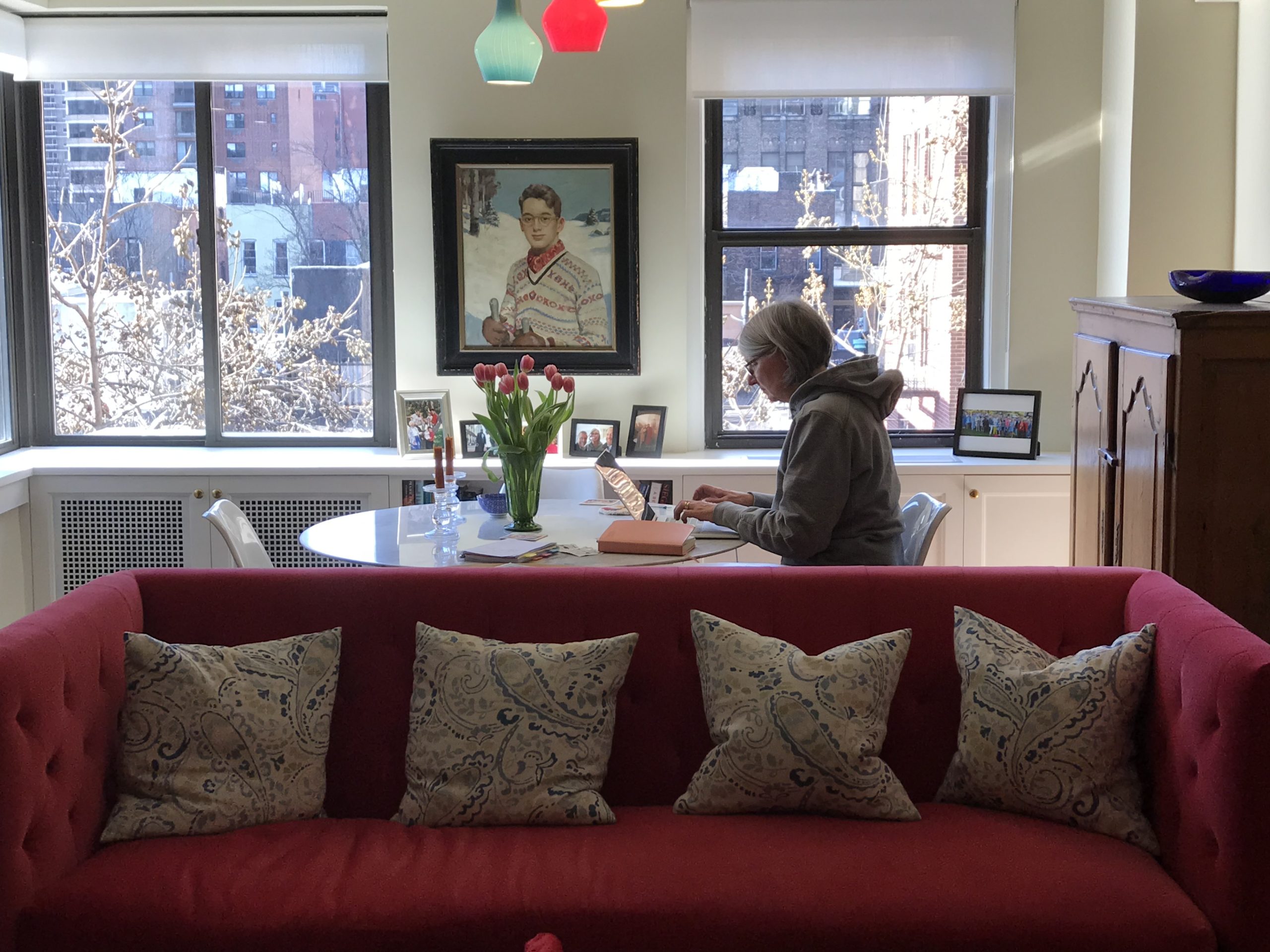
    Louise Penny writes at her dining table. (Photo by Lise Page)


    A funny thing happened on my way to not writing a book.

    I started writing.

    The truth is, I’ve known since I began writing that if my husband Michael died, I couldn’t continue with the Chief Inspector Gamache mystery series. Not simply because he was the inspiration for Armand Gamache, and it would be too painful, but because he’s imbued every aspect of the books. The writing, the promotion, the conferences, the travel, the tours. He was the first to read a new book, and the last to criticize. Always telling me it was great, even when the first draft was quite clearly merde.

    When Michael died peacefully at home in September 2016, I was pretty well spent. Physically, emotionally, and creatively. In French the saying is, tu me manques. Which means ‘I miss you’, but actually, literally, translates into ‘You are missing from me.’ That’s how it felt. Michael was missing from me.

    How could I go on when half of me was missing? I could barely get out of bed.

    I just could not face writing another book. And if I forced myself, the result would be a betrayal of all the previous books, the characters, the world of Three Pines. Of me. It would be a sad way to ruin what I’d created. I’d be writing because I had to, not because I wanted to.

    Now, sometimes, it’s true, a writer just has to sit down, and do it. That’s often the case with me. Some days I’d much rather eat gummy bears and watch The Crown than write. But this would have been different. This would have been going through the motions. Forcing the characters, chocking out some lame plot. My readers deserved better.

    So I spoke to my wonderful agent, and broke the news that I just didn’t think I could write a book. I just didn’t have it in me. I was too tired. Too broken. I’d mend, I knew that. But right then? No. She was wonderful, completely understanding and supportive. And then she had to tell the publishers. She did. And they were fabulous. They agreed that they’d rather have no Gamache book than a crappy one.

    And so, that was the plan.

    I was going to take a year off, to regroup and catch my breath after Michael died. That might have been a lie. In my heart I knew I could never write Gamache again. (And, sadly, would have to give back the next advance.)

    But then, something happened. A few months later, I found myself sitting at the dining table, where I always write. My golden retriever Bishop lying beside me, fireplace on, café au lait in my Vive Gamache mug… opening the laptop.

    I began having ideas—not the usual sort of thoughts of food and vacation, but actual book ideas. Armand began stirring. They all did. I could see them again. Hear them again.

    And I wanted to be with them again.

    I think my desire for distance was not just about exhaustion, but also because Armand was, and always will be, so associated with Michael. I just needed quiet time, to come to terms.

    And then, there he was again.

    I wish I could describe for you the joy I felt. And feel.

    So I quietly, without telling anyone, began writing again. A little at first. Then more, and more. 

    I wrote two words: Armand Gamache

    Then the next day I wrote: slowed his car to a crawl

    And the next day: then stopped on the snow-covered secondary road.

    But I didn’t dare tell anyone. In case I stopped writing. Or the book took a very, very long time to write. The publishers had no idea I was writing. It wasn’t until six months later that I told them. But even then, I warned them the book might not be ready in time. My agent was magnificent. Telling me not to worry. To take whatever time I needed. Stop writing, if I needed.

    And that was all I needed, to keep going.

    I really gave myself permission to just let go and explore.

    I discovered, again, how much I love to write. And, again, what a harbour it is. What would I do with my days otherwise? There are, after all, only so many episodes of Outlander.

    And so Kingdom of the Blind was born. It is the child that was never going to be. But happened. My love child.

    I began the book not with sadness. Not because I had to, but with joy. Because I wanted to. My heart was light. Even as I wrote about some very dark themes, it was with gladness. With relief. That I got to keep doing this.

    Far from leaving Michael behind, he became even more infused in the books. All the things we had together came together. Love, companionship, friendship. His integrity. His courage. Laughter.

    I realized, too, that the books are far more than Michael. Far more than Gamache. They’re the common yearning for community. For belonging. They’re about kindness, acceptance. Gratitude. They’re not so much about death, as life. And the consequences of the choices we make.


    Photo by Mikaël Theimer

    Louise Penny is an international award winning and bestselling author whose books have hit #1 on the New York TimesUSA TODAY, and Globe and Mail (Toronto) lists. Her Chief Inspector Armand Gamache novels, published by Minotaur Books, an imprint of the St. Martin’s Publishing Group, have been translated into thirty-one languages. In 2017, she received the Order of Canada for her contributions to Canadian culture. Louise Penny lives in Knowlton, Quebec. www.louisepenny.com

  • Amazing Grace: A Literary Friendship—By S. Nadja Zajdman

    Amazing Grace: A Literary Friendship—By S. Nadja Zajdman

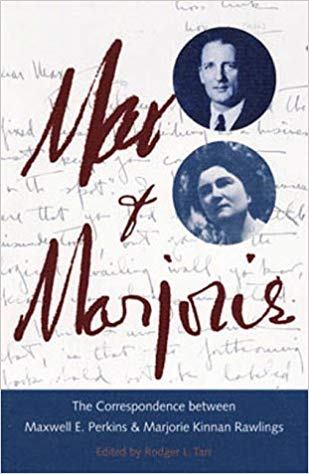
    I was sitting by the gas-lit fireplace in my local library when a book on the table caught my eye. It was the collected correspondence of the novelist Marjorie Rawlings and her editor, Maxwell Perkins. As I read their letters I could hear their long-stilled voices speaking to each other, and to me, across the expanse of decades. I tried to check out the book, but was told it was a reject from a book sale, and if I wanted it I would have to buy it. So I did.

    At home, I looked up Maxwell Perkins on the Internet. A link led me to Perkins’ granddaughter, the novelist Ruth King Porter, who lived in rural Vermont. Ruth was giving away her novels, asking nothing in return but that readers post reviews on her website. I sent for Ruth’s books, and a correspondence began. Soon, we wanted to meet in person. I scheduled a visit to Ruth in spring, then her mother’s dying began. I rescheduled to autumn, then my mother’s dying began.

    Instantly I cancelled travel plans and let go of my already-purchased bus ticket, but a friend with a car offered to take me on a shorter day trip to Vermont. Encouraged by my mother, I accepted.

    “We are two middle-aged women, both wearing glasses.” I wrote to Ruth. “My friend is a blonde with dark roots. I still think of myself as brunette, but there is more salt than pepper in my hair, now.” Ruth wrote that she would be waiting for me under the clock tower of Montpelier’s City Hall. I knew what Ruth looked like from the photographs on her website.

    PerkinsRawlingsBookCoverWe rode into Montpelier on a gloriously warm day at high noon. I saw Ruth sitting on a bench under the clock tower, scribbling in a notebook. Main Street was packed with tourists, and we couldn’t stop the car in front of City Hall. We found a parking space down the street. My friend waited in the car, while I ran down the block. “Ruth?” The woman on the bench looked up, and then leapt up.
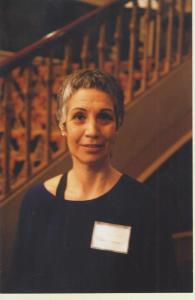
    Ruth was a pre-hippie Back-to-the-Lander, in her early seventies when I first met her. At our first encounter, she wore a white work shirt, faded blue jeans, and a black money belt slung over her shoulder. She walked like someone who rode horses.

    “Where’s your friend?” Ruth called through the crowd of tourists blocking the sidewalk.

    “She’s waiting in the car!” I called back. I led Ruth to the car and the friend in it. Ruth led us both on a tour of the golden-domed state capital building. “I hope we don’t run into my son.” Ruth twinkled. “He’d be embarrassed by the way I’m dressed. My son Louis works as an aide to the governor.” When the tour was over Ruth led the way in her battered old car out of Montpelier and higher into the Green Mountains, where another world awaited.

    Ruth’s husband Bill and a second son, Robbie, rode their tractors out of the woods to greet us on the porch of a rambling farmhouse. Nearby, three large dogs stiffened in alert: Ellie and Flora danced in attendance to the top dog, Chief. Ruth’s daughter Molly, an artist who lived, Thoreau-like, in a cabin she built with her hands, bounded up a hill to join us. The open and friendly faces of Ruth’s family smiled at me kindly. I’m sure they were aware of my situation, though no one referred to it. Taut, lean, Alabama-born Bill wiped the grime off his hands and stepped forward to shake mine. I felt as though I’d stepped into an illustration by Norman Rockwell.

    As an early darkness fell my companion and I crossed back over the border, returning to Montreal and my mother’s apartment. “Hello sweetheart.” My dying mother smiled tenderly. “How did it go with the lady in Vermont?”

    What could I say? I felt guilty at having left her, even for a few hours. I didn’t feel like relaying the details of an excursion to Vermont.

    Six months later I returned to Montpelier by bus, alone. Once more, Ruth met me under the clock tower. For a few days I curled under Ruth’s wing, sunning on her roof, sleeping in Max Perkins’ bed, waking to birdsong and skimming the staggering array of autographed out-of-print books dedicated by grateful authors to their engaged and caring editor. “Grieving is hard work,” Ruth would say in greeting when, after a nap, I descended a steep staircase into her dark country kitchen. As we stood side by side in the verdant meadow which was her front yard, Ruth added, as much in amazement as in sadness, “A year ago this time, both our mothers were alive.”

    Ruth King Porter is an American blueblood whose antecedents hark back to a woman who held a door open for George Washington. I am the Canadian-born daughter of refugees. My mother, a woman who survived three invasions and the Warsaw Ghetto, later in life became prominent in Holocaust education. Many people find my mother’s story repellent and turn away from any mention of it, whereas Ruth and her husband Bill were fascinated. Ruth did for me what I had done for my mother; she listened. And she encouraged me to tell my mother’s story.

    Six months after that, I was back on the farm. Ruth and Bill acknowledged what would have been my mother’s birthday by lighting large candles in a spectacularly tangled chandelier made entirely of logs. Through the wall-sized picture window we watched the cold autumn rain and wind lash the last leaves off a forest full of trees. As we ate hot squash and a pot full of peas grown in Ruth’s garden, the lit log chandelier shone, the tree-bark-shaded lamps glowed, and the wood stove burned.

    I have been back to Ruth and Bill’s farm several times since. In between visits Ruth does for me what her grandfather did for Ernest Hemingway, F. Scott Fitzgerald, Thomas Wolfe, and Marjorie Rawlings: she writes to me and elicits writing from me, reads and critiques my material, encourages, cajoles, indicates where and when she believes I have veered off-track, and gently nudges me back. Clutching the psychic lifeline tossed to me by the descendant of a legendary literary editor, I live and work alone and in growing peace in my suburban Montreal apartment, producing a memoir of my mother. My mother knew that my writing would sustain me after she was gone. Ruth Porter’s mentorship sustained me during the darkest days of my life.


    S Nadja Zajdman_HeadshotS. Nadja Zajdman is a Canadian author. Her short stories and non-fiction pieces have been featured in newspapers, magazines, literary journals and anthologies across North America, in the U.K., Australia, and New Zealand. In 2012 Zajdman published the related short story collection Bent Branches, which spans four continents and seventy years in the life of a family. Recently Zajdman completed a second short story collection, as well as the above-mentioned memoir of her mother, the noted Holocaust activist and educator Renata Skotnicka-Zajdman, who passed away at the end of 2013.
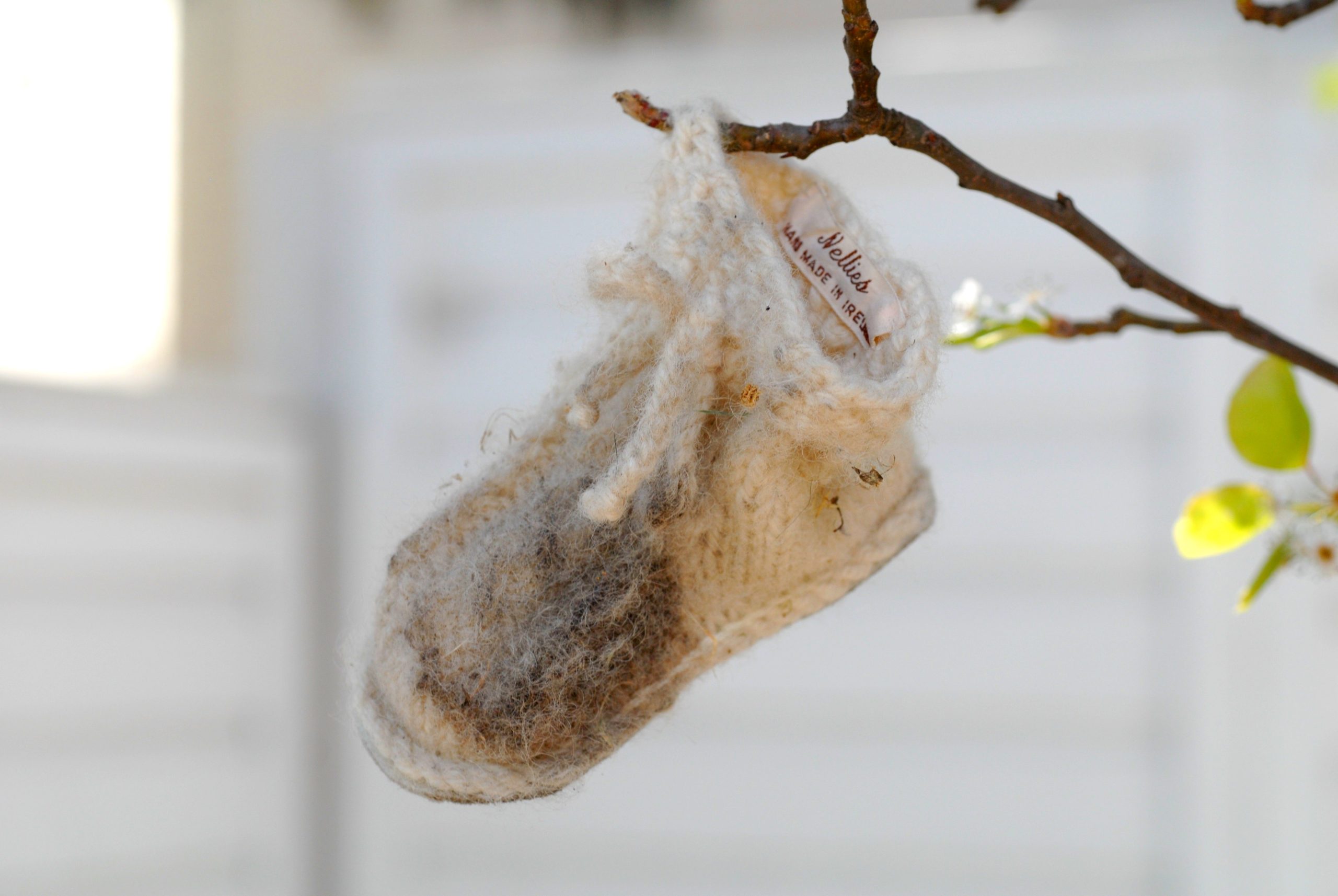
    Photo credit: MaxPixel (header banner)

  • ‘Been good, time to be bad’ by Richard Andrews

    ‘Been good, time to be bad’ by Richard Andrews

    Divorce, surviving a mass shooting, discovery of cancer at 24, and a walk on the wild side in California. Students enrolled in my Magazine Writing course often want to learn more than catchy leads, pitching stories, dealing with grumpy editors, and the Inverted Pyramid. They’re turning to writing as a form of therapy, closure, or a way to chart a life transition.

    Many participants are going through divorce, coming out, bored with their jobs, looking for purpose, or seeking validation of unconventional choices. Passive voice does not come up as a writing issue in these cases.

    One of our warm-up exercises is a version of that job-interview chestnut: Describe a difficult situation. How did you respond? What did you learn? However, the answers are rarely what you’d expect in an interview.

    When I first tried that exercise, I thought a failed recipe or a forgotten anniversary would be the limit of a student’s openness to a room full of strangers. But it turns out that the process of writing somehow gives people the license to share their most intimate feelings and personal experiences.

    “They’re turning to writing as a form of therapy, closure, or a way to chart a life transition.”

    In her piece, Camille* wrote the most moving opening line I’ve ever read: “Mom, I have fucking cancer. I’m a jobless, degreeless, broke 24-year-old that’s going nowhere in life.”

    Camille developed that lede into an article published by the Huffington Post, along with some of her unusual tips to other cancer survivors. Her responses to falling ill included throwing dishes,exploiting her boyfriend’s pity to get a Prince Charles Spaniel, and showing her scar to a club doorman to get in for free. “Go shopping, rock it with a Hermes scarf for your hair loss,” she advised. “And stay true to your emotions. Don’t cover them up.”

    Camille emailed me recently with the latest chapter of her life. Four years on she has things under control and is living happily with her boyfriend, a new baby, and the dog. Less happy was Ingrid, a survivor of the 2011 massacre by a right-wing extremist that left 77 Norwegians dead, including dozens of teenagers at a summer camp. Ingrid escaped death by hiding behind a boulder but left Norway for Canada to put distance between herself and the tragedy. Her writing revealed a young woman trying to deal with the apparent meaninglessness of life, after a horrific experience and the loss of friends.

    When she joined the class she wrote she was at Stage Five of Grieving (acceptance). However, I’m not sure how much meaning she finds in reports that the convicted shooter recently won a human rights case against the Norwegian government about his prison conditions. (He had previously complained that his PlayStation was outdated.)

    Nicole, on the other hand, had no illusions about the meaning of life: it was to blast her husband, who’d left for a younger woman. Despite gentle suggestions that other topics were worth writing about, Nicole shared reports each class about the weight gain and balding of her ex, plus the styling challenges of his mistress.

    Other class writings have included an account by one student who woke up at the minority end of a complex threesome after a wild party. Another wrote of baking hash brownies, forgetting them on the kitchen table, and coming home to find her peckish parents “stoned out of their tree.”

    Sometimes a class exercise changes lives, and here I credit Hemingway’s creation of the Six-Word Story. His ‘saddest short story in the world’ (For sale: baby shoes, never worn) reputedly won him a bar bet and spawned dozens of websites devoted to flash fiction.

    “For sale: baby shoes, never worn.”

    I use the Six-Word Autobiography as a variation on the original concept for an exercise on writing headings. It can produce some telling results when people try to summarize the main theme of their life into a bumper sticker.

    There’s regret (Found true love, married someone else), contentment (Painful nerd kid, happy nerd adult), the search for meaning (Tried it all, but still looking), or resignation (Turning into Mom without being one).

    Some months after the end of one course I received an email from Pamela saying the six-word exercise had made her sit down for the first time in years to think about what she was doing and where she was going.

    “When I saw what came out on the page, I decided to leave my life in Montreal and move to California,” she wrote, leaving most details to my imagination.

    Pamela, if you’re reading this, I hope you’re still writing. Please send me your latest chapter and let me know what happens when your story is:

    Been good, time to be bad.


    richard-seville

    Richard Andrews is a freelance journalist who teaches Magazine Writing at McGill Universityric_andrews@hotmail.com

    *All names have been changed

    Photo credit: FlickR

  • Death is Why I Write by Kate Henderson

    Death is Why I Write by Kate Henderson

    When my grandfather died, it was as if his thoughts were transferred to me. All those years he said I had itchy feet, I’d thought he was criticizing the fact that I changed jobs every year or suggesting I’d had too many boyfriends. But no, he just wanted to see me settle down while he was still alive. I wrote a story about him, and found myself for the first time in a place where it didn’t feel like I was being told what to do or trying to please anyone. Death cuts through the clutter.

    From then on I had to write.

    Now both my parents have died. If it weren’t for my day job, I’d be writing all the time. I wake up early to clutch at details before they are erased by waves on sand. I recall how my mother smiled for a camera, the way my father used to swear through clenched teeth. Small gestures are all that’s left, isolated incidents, and the broad strokes of their lives.

    I used to think that writing about real people was a phase. But then it seemed frivolous to invent characters when they were sitting right in front of me, rich and fully developed. When they stopped living, well, I realized I couldn’t possibly improve upon the compelling arc of a life. My work is to distill. I gravitate to the restraint of truth.

    “If it weren’t for my day job, I’d be writing all the time. I wake up early to clutch at details before they are erased by waves on sand.”

    My mother tried to be a housewife, but she was never comfortable with domesticity. The four of us knew she loved us because she tried so hard. One year, she joined the women who formed a phone chain to keep the price of vegetables down at the local Dominion store. While she talked, she doodled on scraps of paper, creating labyrinths of shapes that eventually took on a life of their own. We all remember the time the face of Batman emerged from the page.

    My mother landed a job reading the news on television. It was how she supported us after divorcing my father. Like Neil Armstrong, Betty Friedan, and John Lennon, she taught us anything was possible. Early morning shifts and dressing for the public ate up a lot of time. It wasn’t until after we’d left home that she went back to school for the degree she’d always wanted and started writing stories and plays.

    I knew my mother would die eventually; there had even been a couple of false alarms. But when the time came, I treated it with the nonchalance I suspect children require to carry on. I have to be at a meeting, I said to her that morning. Can you wait? Yeah, I can wait, she answered, her tone shifting, sounding as if she had waited before. Surely I added I love you—it was how we said goodbye on the phone.

    “It wasn’t until after we’d left home that she went back to school for the degree she’d always wanted and started writing stories and plays.”

    The morning after she died, I woke with the sensation that I’d been left to contemplate fathers. My mother never really got over my father, even though it was she who’d left him all those years earlier. Or was it that she never got over missing her own father? I’ve learned that while adults maneuver around broken connections, children absorb the intensity of missing into their flesh.

    All those years, my mother loved my father. Even after she found out about the affair. Even after another husband. In conversations with us, she had started to refer to him as if they’d kept in touch, each knowing how the other had changed. As if he didn’t have another wife.

    When my father died, my mother’s vision, already clouded, deteriorated. It became harder and harder for her to breathe. It was as if without him in the world, an important part of her was no longer accessible. The last entry in her journal, dated a couple of weeks before her death, recorded a dream where my father had kissed her, just like in the old days. “Wow,” she had written. “I’d forgotten how good that felt.”

    The desire to capture my mother’s essence after she disappeared is more profound than anything I’ve ever felt. I write to sit with her, remember textures, and relieve the missing for a while. I write to piece together meaning. Death is her closing chapter. Writing allows me to sift through the pages of our life together, looking for clues.


    Headshot 2-2.jpgKate Henderson lives and writes in Montreal. She recently published a story about her thesis advisor, who died too soon, and is currently working on a memoir about her mother.
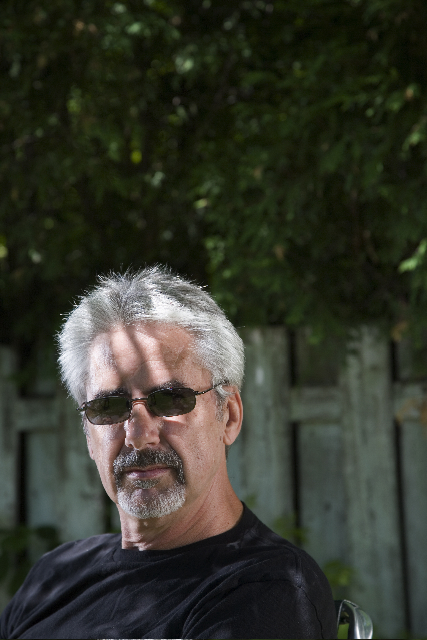
    Photo credits: Lisa Henderson (Batman doodle, drawn by Lynn Henderson); Vanessa di Gregorio (headshot)

  • Writing Tragedy by Jack Todd

    Writing Tragedy by Jack Todd

    In any life, there are events that shake us to the core. Some occur when we are very young, and they remain the reach of memory. Others persist in detail so heightened that it verges on the surreal, as if painted onto our retinas by a Salvador Dalí employing a tiny brush.

    When I was eighteen months old, I was trampled by a boar hog with tusks. He ripped my head open, left a deep dent in my skull and nearly took out my left eye. Had my father not been able to kick the five-hundred pound beast away just in time, he would have eaten me for breakfast.

    I have no recollection of the event whatsoever, except what I was told by my parents, and the occasional nightmare, in which hogs are rooting around in my bed.

    More than forty years later, I stood in the season’s first snowfall on the slopes of Mount Royal, witness to the surreal aftermath of the massacre at the École Polytechnique. As city columnist for The Gazette and one of the first journalists to arrive on the scene, it was my job to write something coherent about an event so overwhelming that even then, I understood that there was a truth about it that would lie forever beyond language.

    Those two incidents represent the poles of my writing life. One is not recalled at all, the other remembered in hallucinatory detail. One is intensely private, the other entirely public. The only thing the private near-tragedy and the public tragedy have in common is that I have found them both extraordinarily difficult to write.

    In one form or another, I have attempted to get that boar attack into satisfactory prose for decades; most recently, it appears as a chapter in a new novel called Rose & Poe. It was a pivotal event in my family because my mother never forgave my father for letting me get into that corral. She was laid up with a broken leg and he was supposed to be watching me, but he was distracted by a horse he was working, and my near-fatal injury became the focal point for her intense hostility toward the feckless man she married.


    “… it was my job to write something coherent about an event so overwhelming that even then, I understood that there was a truth about it that would lie forever beyond language.”


    This is, or should be, the stuff of fiction. On the other hand, the difficulty with my endless attempts to write the story of the Polytechnique massacre is that the tragedy is so unequivocally real. Above all, every time I try to write it, there is a sense of duty to the fourteen women who were slain that day, a need to live up to their memory – and a perpetual sense of failure in meeting that task, which carried through to my recently completed 25th anniversary piece for The Gazette.

    The writer’s role in these public tragedies is particularly important in our age of disposable grief. As public tragedies are endlessly invoked, they lose their power to shock and, eventually, their ability to arouse any genuine emotional response whatsoever. Think of the crumbling towers of the World Trade Center, and the gap between our reaction today and during those first horrible hours on September 11, 2001 when we watched it unfold on our television screens.

    As an event is trotted out again and again on television, accompanied by the sententious tones of the talking heads who tell us how to feel – and when we are expected to stop feeling, meaning as soon as the next tragic event crowds itself into the news cycle – the repetition drains it of its emotional charge. The result is a pro forma response, accompanied by the public expectation that we behave in a certain manner: buy a poppy, express again the shock, horror and outrage, take part in public displays of grief that have been hijacked as photo ops by politicians – and move on.

    Given sufficient talent, persistence and compassion, a writer ought to be able to get behind all that, or, at least, to work at a tangent to the prevailing winds in order to tap into an authentic well of emotion and to provide new insight

    “The writer’s role in these public tragedies is particularly important in our age of disposable grief.”

    That is easier said than done. We have many potential responses to catastrophic events. Silence, even for writers, is one. There is something noble about remaining silent in the face of the most deplorable events – except that when you are a professional writer, the only way to avoid writing about them entirely is to walk away from your career. If you choose to write you will have to accept that you will always fall short, that you will come up against the boundaries of talent and perception, that you will always feel some more profound truth lies just beyond your grasp.

    Our aspirations, the stories we imagine that we will write, are always greater than the result. When the story we are trying to get at is not one of great import, we can shrug and move on. After all, even the most deceptively simple narratives are fraught with pitfalls and opportunities to founder. When the occasion is one of those iconic moments that shape our age, especially when the core of the experience is profoundly tragic, the inadequacy of mere words is inevitably more painful to a writer struggling to live up to the demands of the craft.

    Ultimately, to struggle and fail when the stakes are higher imposes a greater burden – but it is one we have to accept if we are to write at all. And with each new failure, you tell yourself the same thing:

    Next time, I’ll get it right.


    Jack Todd is a native Nebraskan whose flight to Montreal during the Vietnam War is the subject of his QWF prize-winning memoir, The Taste of Metal. Todd has been a columnist for The Gazette for the past twenty-five years and has also published three novels.