Tag: Guernica Editions

  • Writing Between Languages—by Veena Gokhale

    Writing Between Languages—by Veena Gokhale

    What do you do when a lot of the reality you portray in your fiction does not take place in English? Easy answer: you sprinkle your prose with words from other languages. As it turns out, this is not without its problems.

    Growing up in India, I learned my first language, Marathi, at home. I was sent to an English school right from kindergarten, where I had also learned Hindi, the language of the state I lived in. In the Indian Constitution, Hindi and English are designated languages of the Central Government. Presently, India has twenty-one other “official” languages. Generally speaking, every time you cross a state boundary you are in another “language territory.”

    English, though not my mother tongue, is nevertheless my “principal” language. I was in my twenties when I came across an essay by a Hong Kong-born writer of Chinese origin who described English as his principal language. I cannot thank him enough for giving me a way of describing the place of English in my life!

    When I became a journalist, I worked for an English-language magazine in India. But I had always loved mixing languages, using non-English words when I spoke in English. As a writer, I exuberantly introduced some Hindi words into my English articles. This was around the time that Salman Rushdie “decolonized the English language,” as he put it, through the innovative use of multiple languages that included sprinkling Hindi and Urdu words throughout the English text of Midnight’s Children, his groundbreaking Booker Prize winner. He did not translate the words.

    “But I had always loved mixing languages, using non-English words when I spoke in English.”

    I, on the other hand, was immediately challenged by my editor when I employed Hindi words. She came from southern India and knew little Hindi. Reluctantly, she allowed me to retain a few words, with the English translation in brackets.

    Fast forward to Canada in 2012. Guernica Editions had accepted my manuscript entitled Bombay Wali and other stories. Characteristically, the book contained some Hindi, Urdu, and Marathi words. I suggested putting an asterisk next to the words and explaining them in footnotes. My editor, Michael Mirolla, rightly protested. Some pages then would have had five asterisks or more! A solution was found by explaining a word here and there in the main text itself and adding a glossary explaining other words and phrases.

    In my forthcoming novel, Land for Fatimah, the protagonist takes a posting in Kamorga, an imaginary east-African country. This time, I introduced a made-up language for Kamorga, and named it Morga. Despite knowing five other languages to some degree, Anjali, the Indo-Canadian protagonist, is struggling with Morga.

    I used words in Morga in much of the dialogue. I italicised the “foreign” words and phrases and put the translations right next to them. For example: Kabari ani? How are you? Hoori. Good. Perhaps this is awkward and breaks the not-to-be meddled-with flow of the text. But to hell with it!

    Why this insistence on using words from other languages? As I explain in a note on language in Land for Fatimah, “I strongly believe in using non-English words and phrases in my fiction to bring home to the reader, directly and tangibly, the fact that s/he is reading about a non-Anglo culture.”

    “Why this insistence on using words from other languages?”

    There is a much-quoted speech by Indian freedom fighter, Bal Gangadhar Tilak: “Swaraj (self rule) is my birthright and I shall have it.” This original quote has gone around translated as “Freedom is my birthright and I shall have it.”

    Why couldn’t they have let the word “swaraj” be? Some might argue that keeping “swaraj” is awkward and unnecessary, and that freedom resonates more than self-rule. But such misquotation can be seen as a form of linguistic colonialism.

    Inspired by Tilak, I have my own writerly warrior cry: multiple languages are my blessed heritage and reality, and I shall flaunt them! Back when I lived in India, I loved switching between English and Hindi in mid-sentence. Now that I live in Montreal, I use French words when speaking English. Old habits die hard!

    I end Land for Fatimah’s note on language with these words: “Long live the diverse languages of the world! They bring us unfathomable riches.”

    I would love feedback on how other writers deal with the use of non-English words in their text and how readers respond when they come across them. Thanks in advance. Merci. Shukriya.
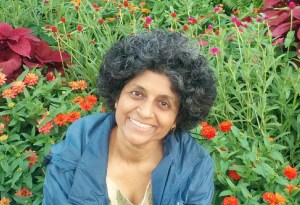

    VG wt flowersVeena Gokhale, an immigrant shape-shifter, started her career as a journalist in Bombay. This tough, tantalizing city inspired Bombay Wali and other stories, published by Guernica Editions in 2013. Veena first came to Canada on a fellowship, then came back again to do a master’s degree. After emigrating to Canada, she worked for non-profits. Land for Fatimah (to be published in 2018) is partly inspired by the two years she spent working in Tanzania. Veena has published fiction and poetry in anthologies and literary magazines and received writing and reading grants. veenago.com

    Photo credit: Shawn Leishman (header banner)
  • A Book Fair to Emulate by Connie Guzzo McParland

    A Book Fair to Emulate by Connie Guzzo McParland

    Più libri più liberi: more books, more freedom. Unlike Frankfurt, London, or Torino, Rome’s book fair has been designed for small- and medium-sized publishers. Big fairs like Frankfurt can be overwhelming for a small publisher. You do meet a lot more people there, but by the end of it, it’s all a haze. As the publisher of Guernica Editions, I participated last December in the Rome fair’s Fellowship Program, an opportunity for foreign publishers to strike deals with Italian publishers.

    What did I learn? Bigger isn’t necessarily more productive.

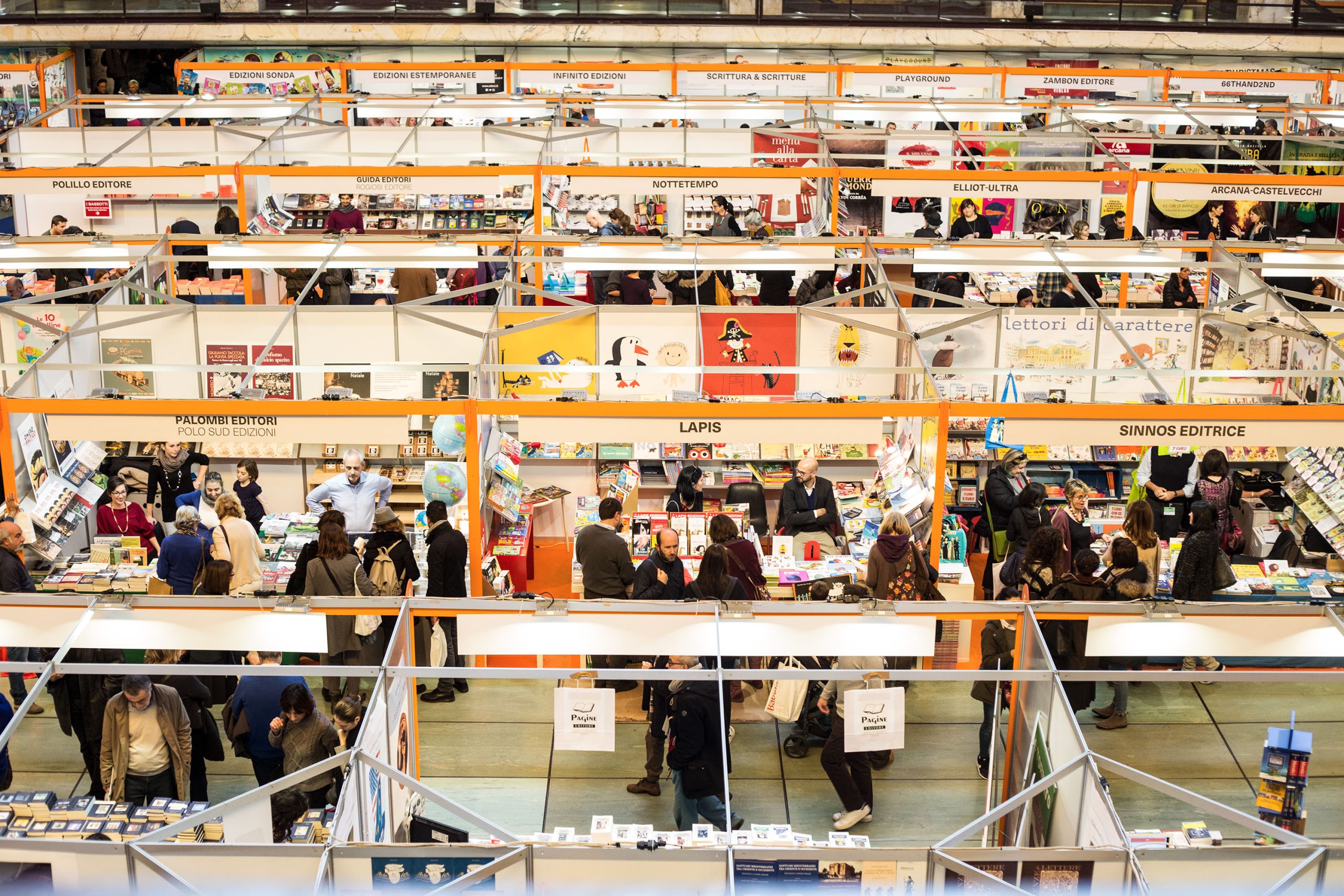
    In the outskirts of Rome, Più libri più liberi’s 400-plus exhibitors were packed in a maze-like configuration in the Palazzo dei Congressi—an imposing marble building on the aptly-named Viale Della Letteratura. What makes this fair unique may be the smaller, more manageable scale that renders it less intimidating and more accessible to small independent publishers, but public attendance is huge and so are book sales. Più libri più liberi, which has been organized by the Association of Italian Publishers since 2002, has become an important event in Italy and Europe, and it receives a lot of press and attention. Held every year just before the Christmas shopping spree, it attracts 50,000 attendees over five days. Besides the book exhibits, this year there were over 1,000 participants in various events, some televised, all well-attended: readings, launches, and discussions with Italian and foreign authors, including Quebec’s Dany Laferrière, who was a featured author. As in Canada, children’s books are of great interest, as well as crime fiction and graphic novels, but the full range of literary genres is represented in Rome.

    “Bigger isn’t necessarily more productive.”

    I was one of sixteen foreign participants in the fellowship program. Others came from the USA, UK, Israel, Portugal, Turkey, Latvia, Poland, and Greece. Because we were put up in the same hotel in the centre of Rome, we shuttled back and forth and lunched together. It was easy to connect and network with each other, and meetings with Italian publishers were also pre-arranged by the organizers.

    As stated, the aim of the program is to promote internationalization of the Italian publishing industry, but there are opportunities for Canadian publishers to promote their own authors. Many Canadian publishers may not know that Italians read a lot more foreign authors in translation than we do in North America.

    In the past, while browsing in Italian bookstores, I had noticed the proliferation of translated foreign authors, both classic and contemporary. As I visited the various book kiosks at the Rome fair, I also noticed the many publishers who specialize in translations of work from particular niche regions: the Slavic countries, Chile, etc., with Canada seemingly underrepresented. For sure, bestselling Canadian authors are pitched in the more prestigious fairs like Torino and Bologna, but I believe that there are as-yet untapped opportunities for interesting exchanges between smaller publishers.

    At Più libri più liberi, there are big players represented by medium-sized publishers, but giant houses like Feltrinelli, Mondadori or Rizzoli aren’t here to overshadow independent publishers. The exhibitors are all given the same space and importance. No one dominates the scene.

    I don’t believe there’s anything like it here in Canada, apart from the Salon du Livre de Montréal, which caters to French-language publications. Just consider what happened to the Inspire Book Fair experiment in Toronto. When the first edition closed and the big conglomerates failed to renew their participation for the following year, the organizers were forced to cancel.

    “I don’t believe there’s anything like it here in Canada.”

    So what event looks after the interest of independent English-language publishers in Canada?

    The Rome Book Fair is not Frankfurt, but it serves independent publishers well. It puts them and their authors at the forefront during the busiest book buying season of the year, and gives them an opportunity to interact with their foreign counterparts. Canadian publishers’ organizations should take notice. This fair is one to emulate.


    connieguzzomcparlandheadshotConnie Guzzo McParland has a BA in Italian Literature and a Master’s degree in Creative Writing from Concordia University. Her first novel, The Girls of Piazza d’Amore, published in 2013 by Linda Leith Publishing, was shortlisted for the Concordia First Novel Award by the Quebec Writers’ Federation. The sequel, The Women of Saturn, will be published by Inanna Publications in April 2017. Since 2010, she has been co-director and president of Guernica Editions. She lives in Montreal. www.conniemcparland.com

    Photo credits: Sara Cervelli (top banner); Anthony Branco (author’s headshot)

  • Don’t Blink by Marianne Ackerman

    Don’t Blink by Marianne Ackerman

    Choosing a book title and cover is a lot like naming a baby. Quite a few people tend to weigh in, so the process can be a serious source of anxiety. Yet somehow, once you settle, the choice seems obvious.

    In the case of my new short story collection, Mankind and Other Stories of Women, the title was spontaneous. The title story, “Mankind,” first saw the light of day last Christmas as a monologue directed by Harry Standjofski, performed by the wonderful Leni Parker at Centaur Theatre’s annual Urban Tales event. For Leni’s character, a lonely woman enduring Christmas Eve with her box of wine and chocolate, the word mankind is a euphemism for the scent of a man. It’s very much a woman’s story. So are the other nine, hence the title. I made a conscious effort to focus on women this time after my last collection, Holy Fools + 2 Stories (Guernica 2014), was full of male characters—puzzling, since I thought I’d won the struggle over the animus-domination of my imagination ages ago.

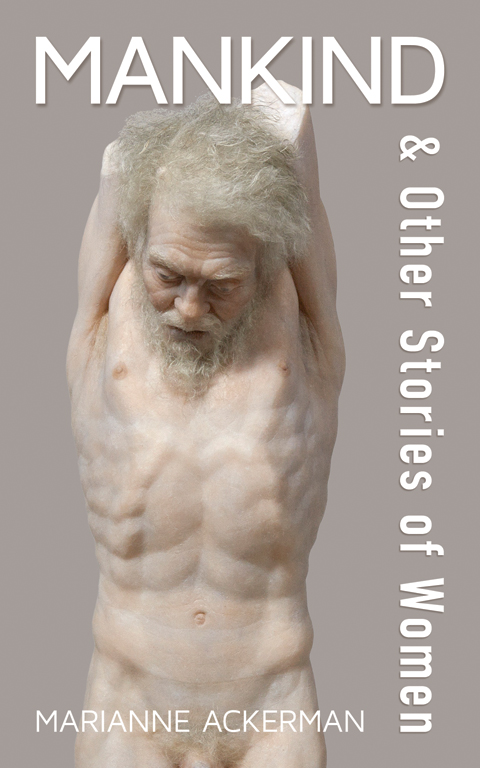
    The cover was not obvious. On a brief trip to Calgary in April, I discovered an amazing sculptor at the Trépanier Baer Gallery. Walking through the door, I was hit by the super elongated shape of a very thin, nearly naked corpse behind glass: Evan Penny’s Homage to Holbein, an eerie rendering in silicone and real hair of a Christ-like figure, almost fourteen feet long and chillingly life-like. My first thought was, this work belongs at the entrance to a church. It’s a religious experience.

    Days later, the images were still strong. Perusing the gallery website, I settled on Marsyas (Model), a twenty-four-inch high sculpture of a male torso, inspired by a Greek statue, which was part of the exhibition. Covers are traditionally the publisher’s domain, with input from the author. But I’ve known my publisher Mike Mirolla for a long time. I know he’s a dark soul. He loved the image immediately. Thus began the dance by which a raw visual idea and text become one.

    I could not explain why that image worked with my stories, which tend to be airy, urban, sometimes playful, and, some people say, funny. Maybe the figure’s vulnerability, resistance or air of fatalism speak to the tragic thread found in all comedy. As I revised the manuscript for publication, I found myself working him into the first story, “Mina,” which is about a friendship of rivalry and complicity between two women, their creative struggle, and one crazy night.

    mankind-final-cover

    “As I revised the manuscript for publication, I found myself working him into the first story…”

    After the normal back and forth, designer David Moratto’s concept was finalized. I slapped the cover up on Facebook, eagerly announcing my forthcoming fall book. It was mid-winter. The response was pretty well total negativity. Some of my dearest friends, smart people, said it was awful, scary, repellent. Nobody would touch this book!

    I was not prepared. I threw myself on the bed, lamenting once again my weakness for getting over-involved in practically everything. Now I’d have to face Mike and David with bad news, not to mention the gallerist, Yves Trépanier, and the artist, whose work I love.

    Mike did not share my panic attack, but held back. Yves did not. “Don’t listen to them! It’s a strong cover,” he barked via email. “You were right the first time. Don’t blink.”

    “The response was pretty well total negativity. Some of my dearest friends, smart people, said it was awful, scary, repellent. Nobody would touch this book!”

    Next to my control freakishness, impulsiveness is probably my greatest flaw. Here was somebody I respected telling me to trust my impulse. I looked at the cover again. At the other options I was trying to like. I asked Yves what his wife thought. He assured me she loved it. So I decided to take his advice, remain faithful to my first impulse. Well, except for a last-minute tussle over (ahem) how much “cleavage” should appear below my name. I did not want readers to be distracted by a dangling sack of flesh.

    Now that a stack of books is sitting on the dining room table, I can’t imagine a better cover than Evan Penny’s classy, classical all-too-human torso. I have no idea what readers will think, how it will affect their desire to pick up this book. But the baby isn’t mine any more. It is thoroughly herself.


    Mankind and Other Stories of Women will be launched along with three other local titles from Guernica Editions at Montreal’s Atwater Library (1200 Atwater Ave.) on Thursday, September 29, 6 p.m. The event is co-sponsored by the QWF. Click here for more information on the launch.

    ma-for-qwf-piece-sept-7

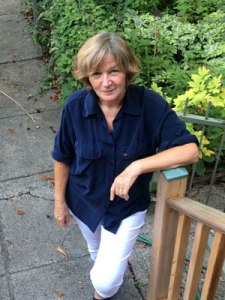
    Marianne Ackerman writes plays and novels. marianneackerman.com

    Photo credits: Photo of Evan Penny’s Marsyas Model (2016) courtesy of Evan Penny, and Kevin Baer – TrépanierBaer Gallery; Lesley McCubbin (headshot)