Tag: healing

  • Writing Through Grief—By Louise Penny

    Writing Through Grief—By Louise Penny

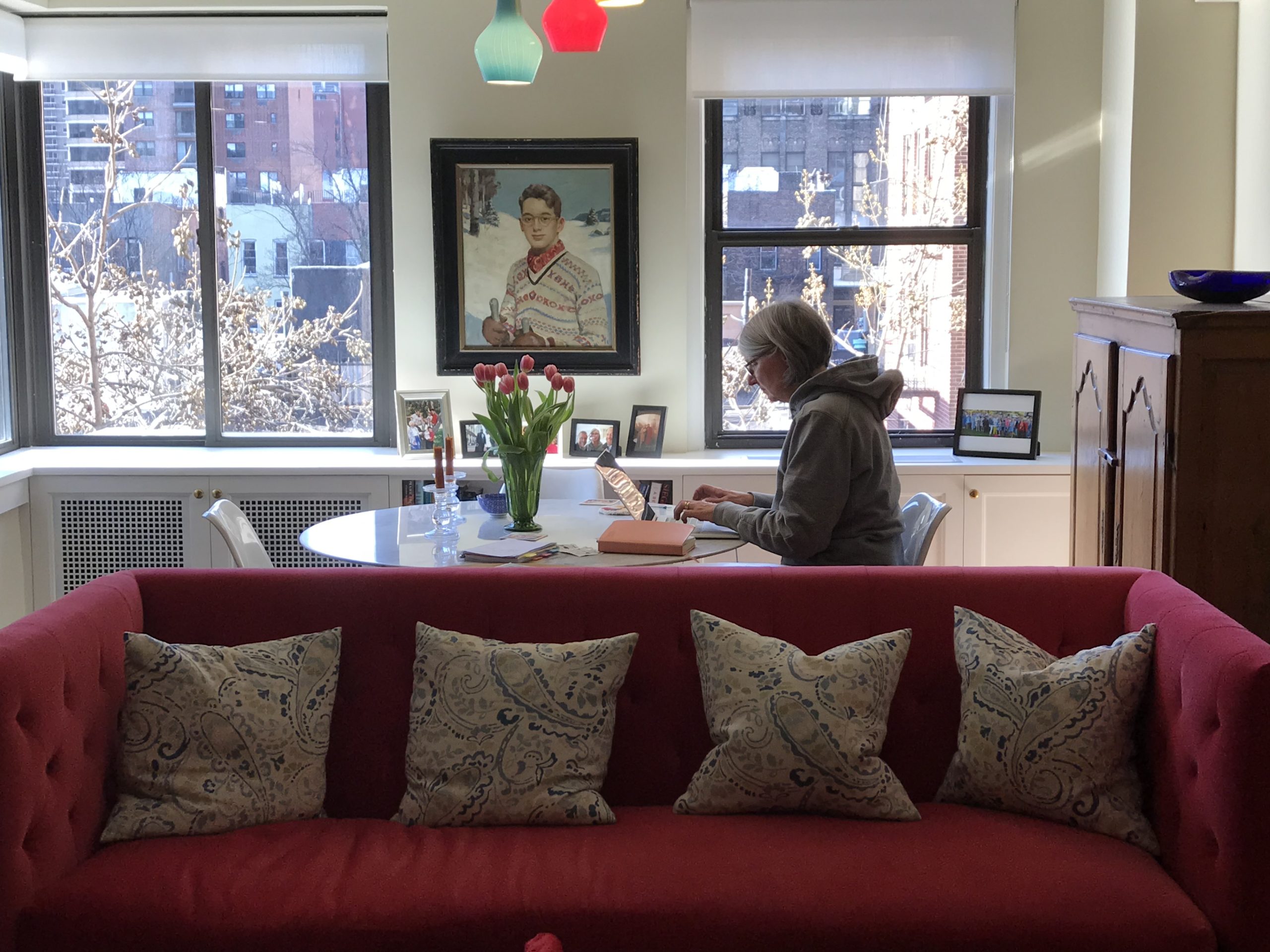
    Louise Penny writes at her dining table. (Photo by Lise Page)


    A funny thing happened on my way to not writing a book.

    I started writing.

    The truth is, I’ve known since I began writing that if my husband Michael died, I couldn’t continue with the Chief Inspector Gamache mystery series. Not simply because he was the inspiration for Armand Gamache, and it would be too painful, but because he’s imbued every aspect of the books. The writing, the promotion, the conferences, the travel, the tours. He was the first to read a new book, and the last to criticize. Always telling me it was great, even when the first draft was quite clearly merde.

    When Michael died peacefully at home in September 2016, I was pretty well spent. Physically, emotionally, and creatively. In French the saying is, tu me manques. Which means ‘I miss you’, but actually, literally, translates into ‘You are missing from me.’ That’s how it felt. Michael was missing from me.

    How could I go on when half of me was missing? I could barely get out of bed.

    I just could not face writing another book. And if I forced myself, the result would be a betrayal of all the previous books, the characters, the world of Three Pines. Of me. It would be a sad way to ruin what I’d created. I’d be writing because I had to, not because I wanted to.

    Now, sometimes, it’s true, a writer just has to sit down, and do it. That’s often the case with me. Some days I’d much rather eat gummy bears and watch The Crown than write. But this would have been different. This would have been going through the motions. Forcing the characters, chocking out some lame plot. My readers deserved better.

    So I spoke to my wonderful agent, and broke the news that I just didn’t think I could write a book. I just didn’t have it in me. I was too tired. Too broken. I’d mend, I knew that. But right then? No. She was wonderful, completely understanding and supportive. And then she had to tell the publishers. She did. And they were fabulous. They agreed that they’d rather have no Gamache book than a crappy one.

    And so, that was the plan.

    I was going to take a year off, to regroup and catch my breath after Michael died. That might have been a lie. In my heart I knew I could never write Gamache again. (And, sadly, would have to give back the next advance.)

    But then, something happened. A few months later, I found myself sitting at the dining table, where I always write. My golden retriever Bishop lying beside me, fireplace on, café au lait in my Vive Gamache mug… opening the laptop.

    I began having ideas—not the usual sort of thoughts of food and vacation, but actual book ideas. Armand began stirring. They all did. I could see them again. Hear them again.

    And I wanted to be with them again.

    I think my desire for distance was not just about exhaustion, but also because Armand was, and always will be, so associated with Michael. I just needed quiet time, to come to terms.

    And then, there he was again.

    I wish I could describe for you the joy I felt. And feel.

    So I quietly, without telling anyone, began writing again. A little at first. Then more, and more. 

    I wrote two words: Armand Gamache

    Then the next day I wrote: slowed his car to a crawl

    And the next day: then stopped on the snow-covered secondary road.

    But I didn’t dare tell anyone. In case I stopped writing. Or the book took a very, very long time to write. The publishers had no idea I was writing. It wasn’t until six months later that I told them. But even then, I warned them the book might not be ready in time. My agent was magnificent. Telling me not to worry. To take whatever time I needed. Stop writing, if I needed.

    And that was all I needed, to keep going.

    I really gave myself permission to just let go and explore.

    I discovered, again, how much I love to write. And, again, what a harbour it is. What would I do with my days otherwise? There are, after all, only so many episodes of Outlander.

    And so Kingdom of the Blind was born. It is the child that was never going to be. But happened. My love child.

    I began the book not with sadness. Not because I had to, but with joy. Because I wanted to. My heart was light. Even as I wrote about some very dark themes, it was with gladness. With relief. That I got to keep doing this.

    Far from leaving Michael behind, he became even more infused in the books. All the things we had together came together. Love, companionship, friendship. His integrity. His courage. Laughter.

    I realized, too, that the books are far more than Michael. Far more than Gamache. They’re the common yearning for community. For belonging. They’re about kindness, acceptance. Gratitude. They’re not so much about death, as life. And the consequences of the choices we make.


    Photo by Mikaël Theimer

    Louise Penny is an international award winning and bestselling author whose books have hit #1 on the New York TimesUSA TODAY, and Globe and Mail (Toronto) lists. Her Chief Inspector Armand Gamache novels, published by Minotaur Books, an imprint of the St. Martin’s Publishing Group, have been translated into thirty-one languages. In 2017, she received the Order of Canada for her contributions to Canadian culture. Louise Penny lives in Knowlton, Quebec. www.louisepenny.com

  • Writing After A Concussion—By Pearl Pirie

    Writing After A Concussion—By Pearl Pirie

    The first year after I had a concussion was a blur. I was dead to the world for three months, going in and out of sleep, exhausted. I had vertigo and difficulties with light, sound, and language. No reading. No computers. No writing. Definitely no multitasking. I had to rest for far more hours than seemed viable and consequently had to suddenly quit a few organizations I led, with no succession plan in place. I closed my small press, or as it turned out, put it on hiatus. I simply had no choice.

    As with a stroke or cancer, a traumatic brain injury can be an opportunity to reexamine one’s life and priorities.

    I had been heading towards burnout, and my concussion forced me to adopt a more balanced life, once I’d recovered enough. Now, when I overdo it, I go on concussion protocol: no screens, no concentration, less activity. The concussion encouraged me to do fewer things better, to slow down, to spend more time in nature and quiet and with friends. To go deeper, not further.

    I stopped attending so many activities. I moved out of the city and started working on editing more, writing deeper. This concussion changed my capacities. I still can’t concentrate for those fourteen-hour editing and writing days like I used to. After one or two hours I need a full break. But I can go deeper because of the slowness and the focus needed to keep on a track.

    You probably had a concussion as a kid. About six out of a thousand people per year get one. After a light bump you may see stars but not black out and feel fine within fifteen minutes. That’s a mild, or Grade 1, concussion. If you’re knocked out and lose memory from the time around the impact, it’s severe, or grade three.

    The kicker is, each time you get a concussion, the next will be worse. I think I’ve had four or five of them, with two at a grade-three level. The one that tipped me over was a Grade 2 concussion.

    I now know of a dozen poets with lasting effects from concussions. Some struggle with physical balance, some with emotional balance, others with energy. Laura Stanfill writes eloquently of how her concussion brought aphasia. A.H. Reaume describes how brain trauma affects her writing. As she makes her way through the brain fog and frustrations of not “getting it,” there are days with spoons and days when she says: “there is no way I can push myself past my capacity even though I desperately want to.” Jane Cawthorne has been compiling interviews which will come out as a book in mid-2021: Impact: The Lives of Women After Concussion.

    The brain is a complicated thing. It follows that traumatic brain injury is as well. Some patients with severe injuries rapidly recover from symptoms, while some with mild injuries have severe, long-term post-concussion symptoms that disrupt daily functioning for weeks or months. When it’s longer, it’s called post-concussion syndrome, which is what I have. (If you’re curious, there’s a scale here.) I’ve always been called out for persistence. I guess sticking to things is on a cellular level.

    My reading rate is slower. I’m impatient for speed, but because life feels more fragile, I have to balance being present with resting enough. I can’t do extended concentration like I used to, and I have to switch up my routine more since extended reading or writing or editing isn’t given carte blanche bodily clearance anymore. So, I compose in my head. Instead of moving ideas visually or digitally, I compose by rolling things around in my mind, editing there first. And by letting things go, instead of making precious and publishable the minutiae. My memory is short, and my working memory is small.

    I try to treat myself as I would a pet. Soft voice, kind acts, clean water, good food. It takes more energy to do things, so I am more conscious of investing or calling it a waste and cutting losses. I prioritize a few people more because I have fewer spoons to go around or to do All The Events. I give myself permission to leave early, to show up late or to not show up, instead of being the first one to come and the last one to go. I socialize mostly though my computer since outings are more taxing. During outings, I take more breaks, pressure myself less. I float and accept catching less than I did.

    Perhaps in combination with anxiety meds, the concussion means I’m better at being methodical and tracking deadlines and calls. Who knows? I may write less, but I get published more. My writing is different, at least. I’m a different person, and so I can resonate with different people. But would I opt to get a concussion? A big no to that.


    IMG_E4449Pearl Pirie’s fourth collection, footlights, comes out in fall 2020 from Radiant Press. Her newest chapbooks are Call Down the Walls (Frog Hollow Press, February 2019) and a haibun collection, Eldon, letters (above/ground, August 2019). Her next chapbook will be Not Quite Dawn, out from Éditions des petits nuages in the spring of 2020. Her next epistolary haibun chapbook, Water loves its bridges: Letters to the dead, is due out in December 2020 from The Alfred Gustav Press, by subscription.
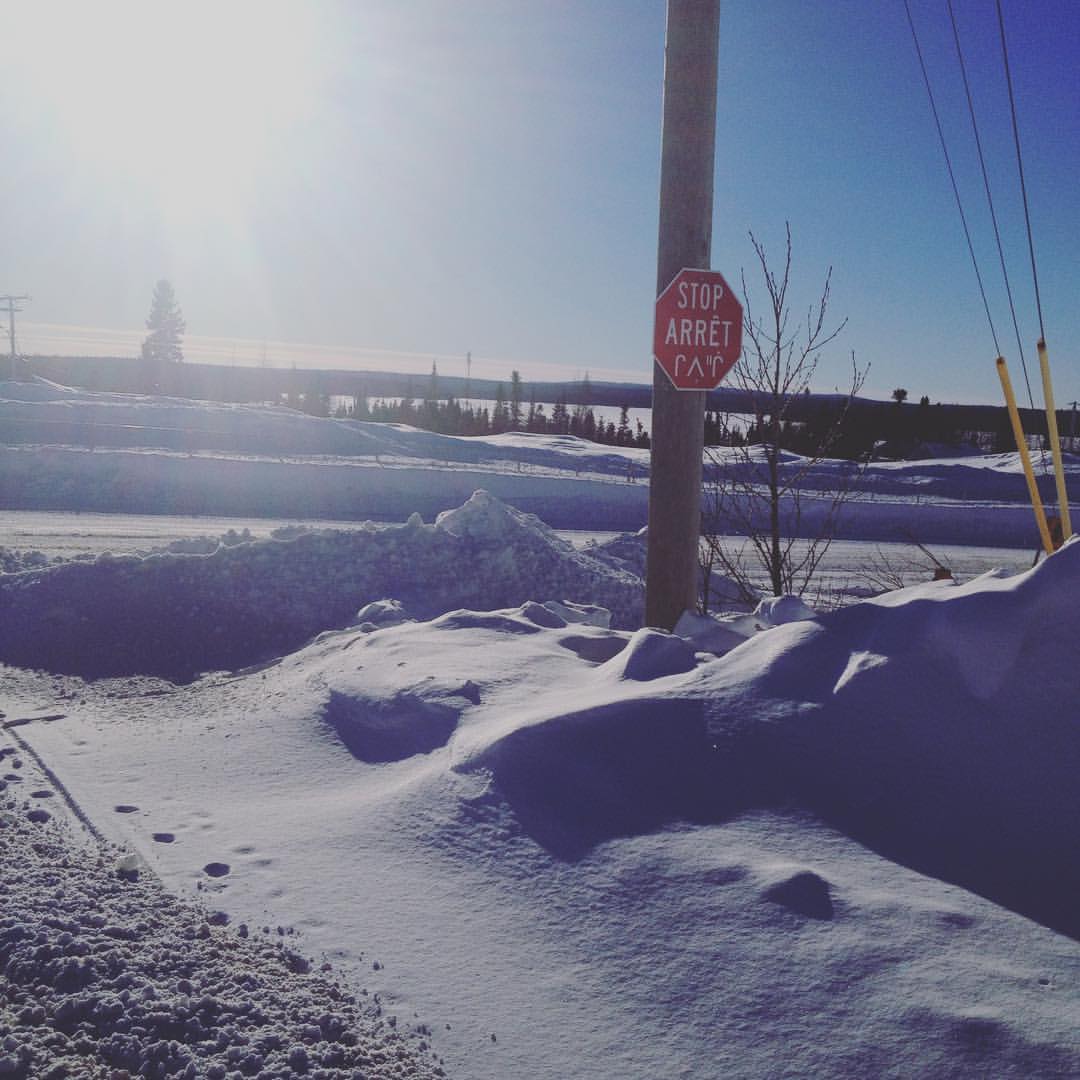
    Photo credits: Pearl Pirie (header banner); Brian Pirie (headshot)

  • Transcendence—by Francine Cunningham

    Transcendence—by Francine Cunningham

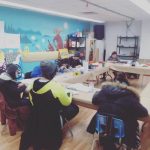
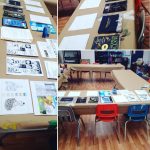
    I had the privilege of being an artist in residence in Mistissini, a community in northern Quebec, this February and March. The community was small and welcoming; the snow, on the other hand, was otherworldly. There were mountains of it piled and strung along the road to the school, like a miniature version of the Rockies I am used to. While I struggled with the overwhelming volume of the white stuff, I welcomed the natural beauty of the land, the quiet of the nights, and the stillness that comes from being outside the city. With nothing to distract me I was able to spend hours every night writing and painting. I read something like ten books and slept deeper than I have in a long time. It was a treat to turn off my email for six weeks, not take on any additional contracts, and really focus on my writing and visual art. I was teaching youth how to integrate their visual art with their writing through zines, so it was the perfect time for me to spend some time doing the same.

    16463091_10154140278245286_1071419733135569396_o

    The Mikw Chiyâm arts program was commissioned by the Quebec Cree School Board in 2015 and has just finished its second successful year. It brings together artists and students, the hope being that by creating a safe and creative space, students will be inspired to come to school more often and have a more positive experience once there.

    I am an Indigenous writer, artist, and educator, and have been working with Indigenous youth for over ten years. I have been a part of many different programs that use artistic practice as a way to intercede and help guide students onto a path that will give them confidence and knowledge so they can succeed in the world. The thing I hear most from students is how much they wish that they, as budding artists, were treated with the same level of care and given the same number of opportunities as in the sports or science concentration programs. Having an arts concentration program inside of a high school is remarkable; having one that has the level of support of Mikw Chiyâm is something I have never seen. It is literally making opportunities for young artists that they would not get otherwise.

    Often the arts can go unrecognized as a valid life path for a young person, but you just have to look to who the people are that are revitalizing our Indigenous communities and you will see artists at the forefront. When working with youth, Indigenous or not, I try to help them infuse their work, whether it’s fiction, poetry, or non-fiction, with a spark of who they are and their own unique point of view, with their own experience, tradition, and culture. Whether that takes the form of simply setting their dystopian dramas in their own community, or adding in bits of their language, or having characters that speak and act like them and their friends, these sparks are what makes their writing so unique.

    “I try to help them infuse their work, whether it’s fiction, poetry, or non-fiction, with a spark of who they are and their own unique point of view, with their own experience, tradition, and culture.”

    Growing up, I never read a story from a viewpoint that felt like my own: that of someone considered white passing, who grew up off the land, was raised in the city, yet is still Indigenous. I’ve found in my work with Indigenous youth that many are craving a varied point of view in the stories they read, something different than the stories they have thus far been presented with. There is a shame that comes with feeling like you are disconnected from your community. When you don’t know your language. When you can’t answer all the questions from non-Indigenous people. There is a shame that can infect a person when you aren’t what you see in movies, in stories—when you aren’t a real “Indian.”

    If not treated like a valid feeling, this void only serves to make youth feel more alone, more different, when in reality they have a whole network of people around them who feel the same way. Opening up space, letting discussion flow through these gut-wrenching topics, is so important. Oftentimes this can be the first time they’ve been allowed to talk about such things. I have found that once you break down those thick walls a flood of words come out. And eventually they land on the page. And they become something more than art. They transcend the writer. They help. They heal.

    “Once you break down those thick walls a flood of words come out… They transcend the writer. They help. They heal.”

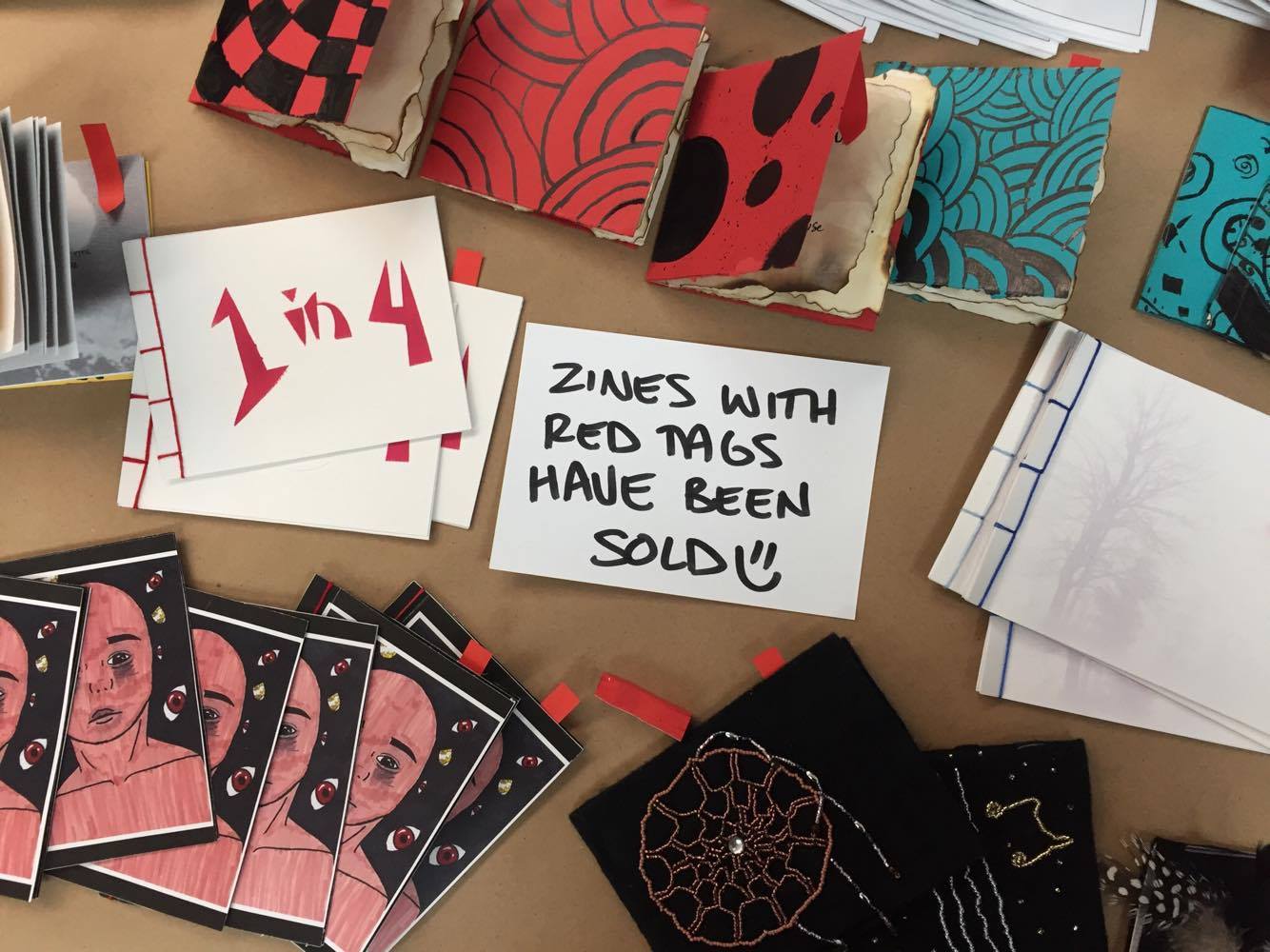
    The zines that the students created were powerful. They tackled issues like sexual abuse in the community, the stigmatization of mental illness, loneliness, and identity. These stories were told through humor, visual art, prose, and end-of-the-world disasters. At a final celebration night, we invited the community to come see the students’ work. For weeks, I had been telling them that people would buy their zines, that people other than me cared about what they were writing. The students wouldn’t believe me.

    Right before we opened the doors to let people in, they again tried to let me down easy, telling me not to get my hopes up, that no one would come and that was okay. They were trying to protect my feelings because I was so excited. But the community did come out. They read through all the zines, and by the end of the night we had sold out of everything we had created and made over five hundred dollars. The students were shocked. I was elated. I knew their words were valuable, that they were worth listening to. And now they had the proof.

    16998859_1686364578047373_2753448752955219953_n17015651_1686364321380732_2066677641393624379_o


    Headshot 2

    Francine Cunningham is a Canadian Indigenous writer, artist, and educator. Her creative non-fiction has appeared in The Malahat Review, the anthology Boobs: women explore what it means to have breasts (Caitlin Press), and more. Her fiction and poetry have appeared in The Puritan, Joyland Magazine, Echolocation Magazine, The Maynard, and more. She is a graduate of the UBC Creative Writing MFA program and a recent winner of The Hnatyshyn Foundation’s REVEAL Indigenous Art Award. You can find more about her at www.francinecunningham.ca.

    All photos in this piece are by Francine Cunningham.

  • Healing, One Story at a Time by Licia Canton

    Healing, One Story at a Time by Licia Canton

    In 2012, a driver pulled up behind me while I was putting a box in the trunk of my car. He crushed my legs between the two bumpers. I was bedridden for four months, and then I started physiotherapy. Within a year I was able to do 95 percent of the activities I had done before the accident. People would ask me how my legs were doing and I would smile and tell them I was doing well. I was, physically—but I didn’t tell them that I wasn’t able to write.

    I wasn’t able to write for clients, organize events or attend networking functions. I didn’t think any of it was worth it. I had lost my drive. In fact, I had lost my desire to do anything at all. A few weeks after the accident, I had looked at the positive side of things: I had decided to finish my second book of stories; I was going to write on my laptop while in bed. But that never happened.

    My insurance agent suggested that I see a therapist. I would only be able to move forward by dealing with the trauma. I decided to try it, and I discovered that writing itself was what would cure my writing block. It’s called narrative therapy, and it changed my perspective on life.

    Vera, my therapist, asked me to do exercises in automatic writing. I had to just put words on the page without thinking about what I was writing. Then she said that I had to write about the accident in order to regain my confidence. At first, this seemed like an impossible task. If I could write, why would I be there? I could talk about the accident during therapy, but I couldn’t write about it. I didn’t want to write about it.

    Eventually, I wrote a story about a writer who was unable to write about a traumatic experience. It took me many months to be able to do that. I could not sit for longer than five minutes at a time. I worked at it early in the morning when everyone was still asleep, when I was least likely to be interrupted—and when no one would see me crying.

    As part of the therapy, I was obliged to read that first story “Because of Leonard Cohen” at every therapy session until I could read it without crying. That accomplishment was priceless. Then, the therapist asked me to read the story at a public venue as I would have done with any of my other stories. But I couldn’t fathom the thought of sharing my very personal writing in public. I come from a background where broken bones get fixed and as for the rest, we simply move on. Everyone knew that I had been in an accident. Very few people knew about the ensuing depression. It was not a topic of discussion.

    “I could not sit for longer than five minutes at a time. I worked at it early in the morning when everyone was still asleep, when I was least likely to be interrupted—and when no one would see me crying.”

    I first read “Because of Leonard Cohen” abroad, at a short story conference where very few people knew me. The story was later published in the international short story anthology Unbraiding the Short Story, edited by Maurice A. Lee. Then, I wrote more, and more. I wrote and published other pieces inspired by my accident, “In Front of the Bell Centre” and “The Woman in the Red Coat.” And I still haven’t finished writing all of the stories that I need to, and want to, write. I have a Table of Contents with the titles of all the stories that I am working on, all part of my narrative therapy. With the completion of each new story, the process is the same. I ask for feedback from several writer friends. I read it repeatedly in private until I feel completely comfortable with it. I read it to my husband and children. Then, I read it in public either before or after it is published. Now, I preface the readings by saying that the story came out of narrative therapy.

    Vera told me about Raymond Queneau’s Exercices de style (1947), a collection of ninety-nine retellings of the same story, each in a different style. Although I am no longer in therapy, I continue working on my own version of Queneau’s book: multiple literary variations of my accident and its aftermath. Just as I was not thrilled about physiotherapy and osteopathy, I am not exactly fond of this literary project—mostly because I have had to postpone other writing projects. On a positive note, however, narrative therapy has encouraged me to go beyond my comfort zone by doing other activities connected to writing that I would not have done a few years ago: guest blogging, giving workshops, mentoring other writers, writing/speaking about depression and narrative therapy, and actively seeking venues to read the writing that has come out of narrative therapy.

    I still cry every time I tackle a new story, but I always feel a great satisfaction when I share it in public. It is part of the process that moves me towards complete healing, as is this piece that you’re reading right now. In fact, I prepared my pitch for this column two years ago. I just wasn’t ready to share my experience then.


    headshotLicia Canton is the author of the short story collection Almond Wine and Fertility (2008), published in Italy as Vino alla mandorla e fertilità (2015). She is also a literary translator and founding editor-in-chief of Accenti Magazine. She has published personal and critical essays and edited nine books. She mentors emerging writers, journalists, and editors. She holds a Ph.D. from Université de Montréal and a Master’s from McGill University. See her profile in LinkedIn or the Hire A Writer directory.

    Photos: Flickr (top); Ohayon (headshot)

  • My Invincible Summer: Rebooting My Writing Purpose by Susan Doherty Hannaford

    My Invincible Summer: Rebooting My Writing Purpose by Susan Doherty Hannaford

    In the midst of winter, I found there was, within me, an invincible summer.
    Albert Camus, Return to Tipasa

    In May 2014, I learned that the publication of my debut novel, A Secret Music, would be delayed by twelve months. It was heartbreaking news, but not unusual coming from a small Canadian publisher who grooms first-time authors.

    During the interim, I began what would become my second book, The Ghost Garden – a deep-in-the-trenches, creative non-fiction work about one woman’s forty-year struggle with schizophrenia. I spent my days researching. I even worked in the field: I volunteered at group homes, in the Douglas Hospital and at Nazareth House, a shelter for homeless men. I worked with those suffering from extreme psychosis, and many people shared the heart-breaking stories of their volcanic lives with me.

    Then, finally, my box of books arrived this May. It was one of the most gratifying moments of my fledgling career as a writer. But as Claire Holden Rothman told me, “This is just the beginning, not the end.” Days later, I had my Montreal book launch, quickly followed by a Toronto launch and several library readings, book talks, radio interviews. Somehow the euphoria of my launch allowed me to cartwheel over a dire condition that was progressing in the most virulent way. My adrenaline overshadowed the symptoms that persisted all of May and June and July.

    “Somehow the euphoria of my launch allowed me to cartwheel over a dire condition that was progressing in the most virulent way.”

    I had migraines, fevers, night sweats and swollen lymph nodes. The radiologist who examined the CT scan pointed out a possible lymphoma that would need to be confirmed by neck biopsy. (Take that off your bucket list.) The results of the biopsy came back inconclusive. The lymph nodes were necrotic, meaning that all cells were dead. I was back to waiting and wondering what was wrong.

    On August 1, my condition became acute and I was hospitalized for what turned out to be a month at the Jewish General Hospital. My fevers were raging around the clock, reaching over 40.5 degrees. I had biopsies, MRI and PET Scans, and a lumbar puncture. The good news was that I was cancer-free, but the diagnosis – a rare illness called adult-onset HLH – seemed just as ominous.

    HLH is an autoimmune disease where the immune system goes psychotic. It never turns off. It hunts your body for tumors and bacteria and viruses, and when it finds nothing, it destroys your blood cells. (Think of a John Deere mower in your beautifully groomed garden, without a driver, operating in tenth gear.) The treatment protocol is aggressive. Chemotherapy. Corticosteroids. Antibiotics. Neupogen. I needed twenty-two blood transfusions before beginning chemo.

    I began chemo on August 6 at 7 p.m. At 9 p.m. HLH launched its final spear. For seven hours I had convulsive chills, fevers, profuse sweating… but also, visions. I saw the cells that were dying. I saw the macrophages leaving the bone marrow. I saw my deceased father agonizing over me. When the fever finally ended, the gratitude I felt was overwhelming. I felt the weight of a thousand hands lift me back up.

    “For seven hours I had convulsive chills, fevers, profuse sweating… but also, visions.”

    As sick as I was, I saw my purpose as a writer. I’d written A Secret Music to heal a part of myself, but in The Ghost Garden, I saw an opportunity to enlighten a society where the everyday violence of movie theatre shootings and Greyhound bus beheadings had stigmatized the mentally unwell more than ever. I wanted to be a voice for those who had none. The Ghost Garden needed to be written. My ambition as a writer would be re-focused on a higher purpose. From that exact moment, I began my recovery with positivity and the certainty that my health would return.

    I consider myself lucky. The diagnosis for HLH is most often missed until it’s too late. I was diagnosed within the two-month fatal cut-off. Writing is a passion, and faith is a grace note. Blissfully, all my passions are still intact.


    Susan Doherty HannafordSusan Doherty Hannaford is a Montreal writer. Her debut novel, A Secret Music was published by Cormorant Books in May, 2015

    Photo (headshot): Kathy Slamen

  • Writing with the Body by Kathleen Winter

    Writing with the Body by Kathleen Winter

    When I finished writing my novel, Annabel, in 2010, I nearly lost the use of my legs. Between books I make things by hand: hats, collages, kegs of kimchi. So I went to the friperie looking for magpie materials – and found I couldn’t walk up the stairs.

    “They feel,” I told my doctor, “like planks of rotten wood instead of legs.” I’d been sitting with them wound around each other in a Celtic leg-knot for a couple of years while I wrote the book. I knew you were supposed to get up and move around and I thought I’d done so once in awhile, but apparently not enough.

    “There’s nothing,” said my doctor, “that can be done.” She gave me a look I was beginning to recognize as that of a youngish person pitying someone over the hill. Damn that, I thought: I’m never going to sit still again. I thought of the sixteen years I’d sat still through school and university, and the decades of sitting I’d done as a writer, and regretted it.

    I walked home, cleaned off my desk, and went outdoors again. I walked to Jean-Talon Market and down Boulevard St-Laurent and through the trees on Mont-Royal. I moved down to Verdun and started getting to know the river: herons and sumacs, willows and wind. Beavers gnawing and ducks upside down in the water and red-winged blackbirds screeching holes in the living daylight. Messages from the wild flying everywhere and into my body, ideas at every turn.

    I knew about ideas coming when you get up from your desk. Annabel would still be a dead manuscript under the bed if I hadn’t budged to make soup or take a shower or walk to the café. The most important metaphors and plot developments and the novel’s deepest psychological structures came to me “out of the blue” when I escaped from my desk. I’d made those escapes as last resorts, when sitting and thinking had brought me to the end of my tether. But now, trying to keep moving to heal my ruined legs, I realized movement might be my new first line of action as a writer: I could write with the body.

    I’ve always known writers walked. One of my favourite books is Journals of Dorothy Wordsworth, in which Dorothy and her brother cover hundreds of miles of heath before collapsing to devour boiled eggs or meat pie against boulders. So I started using every hour of daylight as my personal body-writing time. When November hit and I took out my Seasonal Affective Disorder lamp as I always do in order not to become marrow-deep dismal, I realized I didn’t need it anymore: striding around the riverbank and the city streets in the daylight hours means I have so many ideas gifted to me by the light and the environs that all I have to do is spend an hour or so standing up at home in the night, scribbling it all down. My legs, after months of this, have come back to life. If ideas or images come too fast when I’m moving about, I write or sketch them in my tiny notebook, standing up, in all weather.

    woman bus stop st viateur and parcman corner St. Viateur and Parc

    “If ideas or images come too fast when I’m moving about, I write or sketch them in my tiny notebook, standing up, in all weather.”

    Drawings by Kathleen Winter

    I’ve always felt the brain organizes and computes while writing, but the body is the place where story lives. I guess I just didn’t know until I nearly lost the use of my legs that I have to forget about sitting down in a chair altogether if I want to thrive, both as a writer and as a human. I used to have posted on my wall a quote from Eugenia Zukerman: “Apply your ass to the seat.” I guess maybe that works if you’re a virtuoso flautist. I ripped that quote down – and my ass is smaller now.


    Kathleen Winter’s novel Annabel was a #1 bestseller in Canada and has been translated worldwide. Her story collection boYs, edited by John Metcalf, won numerous awards. Her Arctic memoir Boundless (2014) was shortlisted for Canada’s Hilary Weston Writers’ Trust and RBC Taylor non-fiction prizes and has been sold internationally. The Freedom in American Songs (stories, Biblioasis) also came out in 2014. Born in the UK, Winter lives in Montreal after many years in Newfoundland. http://tinyurl.com/Kathleen-Winter