Tag: identity

  • Writing about Not Writing—By Sivan Slapak

    Writing about Not Writing—By Sivan Slapak

    Is a writer who isn’t writing still a writer? And if so, for how long a stretch? These are the questions I’ve been asking myself—actually, tormenting myself with—for the last year or two.

    Even at my most active I’ve never had a writing routine. I wish I could say I’ve always woken up to meet my muse at 9 a.m. each morning. Nevertheless, I’ve somehow managed to amass material over the past few years, with a collection of interwoven short stories as the intended goal.

    When I began crafting some stories about five years ago, I didn’t call myself a writer. The verb was okay: “Writing a bit,” but not the noun. I’ve kept journals since childhood, met in writing groups since my teens. Then came academic papers, grant writing gigs, and so on. So, I’ve been engaged in the act in various ways throughout my life. But “writer”? It seemed pretentious, or premature at best. Like the difference between having an artistic spirit, and creating art.

    Despite some early successes—getting published, shortlisted, even awarded (!)—I found it challenging to accept, and introduce, myself as a writer. (“I just write a bit!”) But with time, I allowed myself to settle into the identity. In some ways this has calmed other questions about my place in the world, when I, like so many of us, feel I’ve made a life of living on the seams. For a writer, that’s not a bad spot to be.

    But what does a writer who hasn’t been writing call herself? (“Lost,” when she’s panicking.) I know we’re supposed to believe that lulls and blocks are part of the creative process (I’ve read The Artist’s Way, too) and that resting and inputting—reading, seeing art, living life without notating it—is an incubation period. And I suppose I do essentially think that. Yet at some point this ‘incubation’ begins to feel more like stagnation, and the idea of ‘writer experiencing a lull’ is harder to buy than ‘not a writer anymore.’ Especially when the pause becomes longer than the writing that preceded it.

    Of course, there are lots of reasons for a writing hiatus. The simple ones are limits of time and energy. For me, I’ll say work: over the years it’s mainly been in the community and arts sectors (to my joy), often as a coordinator or editor. I love these roles and they offer flexibility, but I’ve noticed I easily choose working on others’ projects over my own, even when I don’t have to. Before I had a job, my blocks were caused by the paralyzing anxiety of NOT having enough work, or not having work I like. So, there’s always something. And there’s always the hauling undertow of social media to compound the issue. In any case, like many writers I know, I struggle to prioritize writing time, and the obvious excuses are less complicated than facing other, less conscious motives. Whatever the reasons, the longer I go without writing, the more miserable I feel.

    What about my short story collection? What about being a writer?

    In recent years I’ve hung on, by my fingertips, to the fragile thread of a notion that I’m still a writer. An unproductive one, but still.

    Thankfully, I seem to be slowly emerging from my dry spell, and I’ve been looking back on what’s kept me holding on: I have to credit the writing group I’ve been part of for several years. I haven’t submitted in ages, but I’ve stayed in as a reader and tried to be an active presence in our little community. Their support has buoyed me.

    I also took two QWF workshops. I didn’t produce new work, but it gave me a chance to revisit some pieces and say, “Hey, this isn’t horrible!” (And have peers say similarly encouraging things.)

    This year I began writing daily morning pages, which put a pen back in my hand and is as close to a routine as I get. In the winter, riled up about a political issue, I wrote an op ed, which was published. Soon after, so was an old story I’d dusted off. I attended a ‘Shut Up and Write’ session in a QWF writer’s house. And just recently I met the criteria to have my “Literary Writer” profile approved by the Canada Council for the Arts. Bureaucratic recognition though it is, I felt grateful to receive it.

    So, there have been steps, some small and some more significant, in the realm of writerly activity. Not (yet) my completed short story collection. Or even another short story. But something, maybe more than I thought. Enough movement to feel reassured that while I’ve been fretting over stagnation versus incubation, my writer-self has kept busy.


    profile 2017 leslie schachter

    Sivan Slapak is a writer working in the arts and culture sector of Montreal. Her short stories have won and been shortlisted for fiction awards, and appeared in publications such as The New Quarterly, Montréal SeraiJONAHmagazine, and in an anthology published by Véhicule Press. Sivan lived abroad for many years and is fascinated by the encounters that take place when distinct communities meet, a theme she enjoys exploring in her writing, and in her life—and in the short story collection she hopes to complete soon.

    Photo credits: Sivan Slapak (header image); Leslie Schachter (headshot)

  • Transcendence—by Francine Cunningham

    Transcendence—by Francine Cunningham

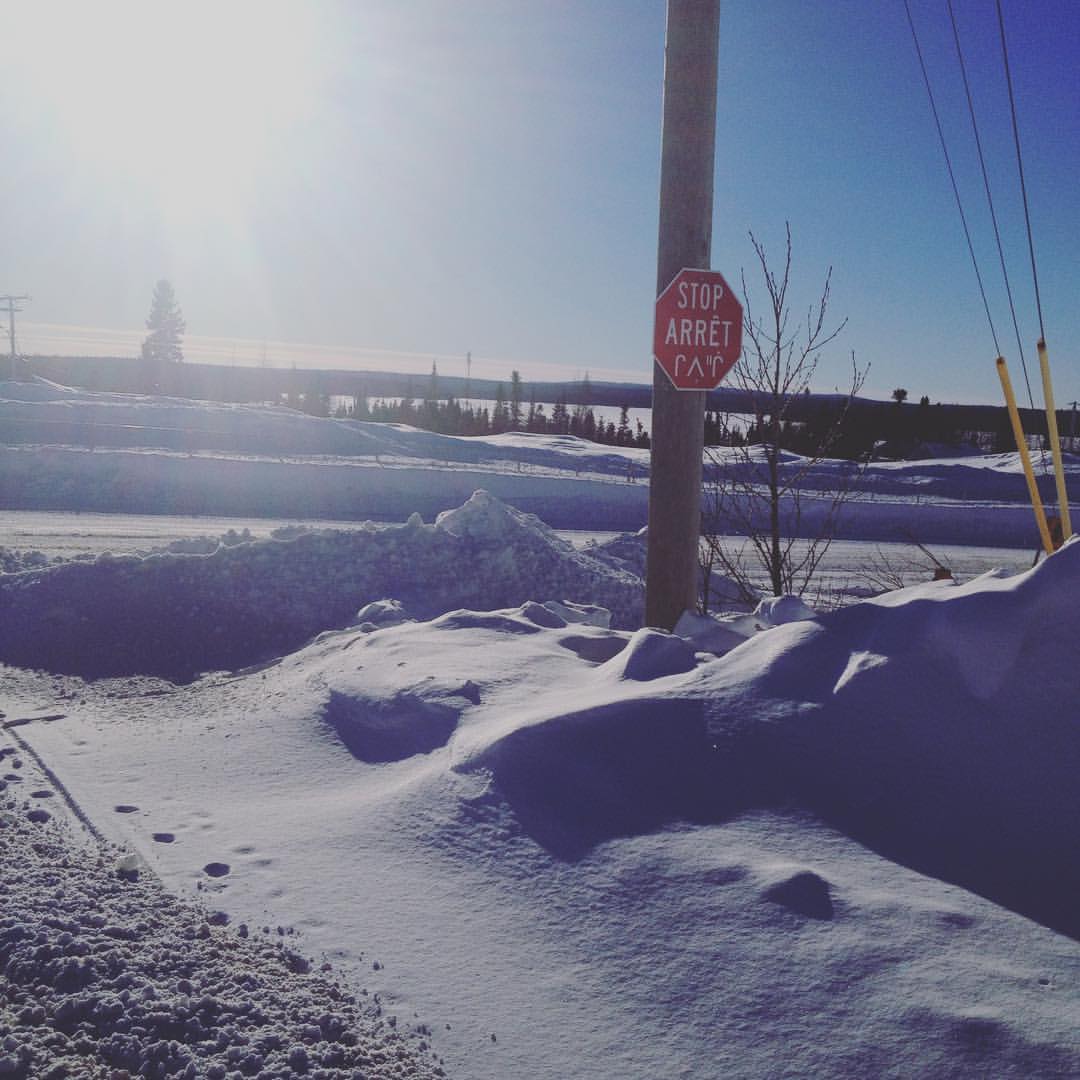
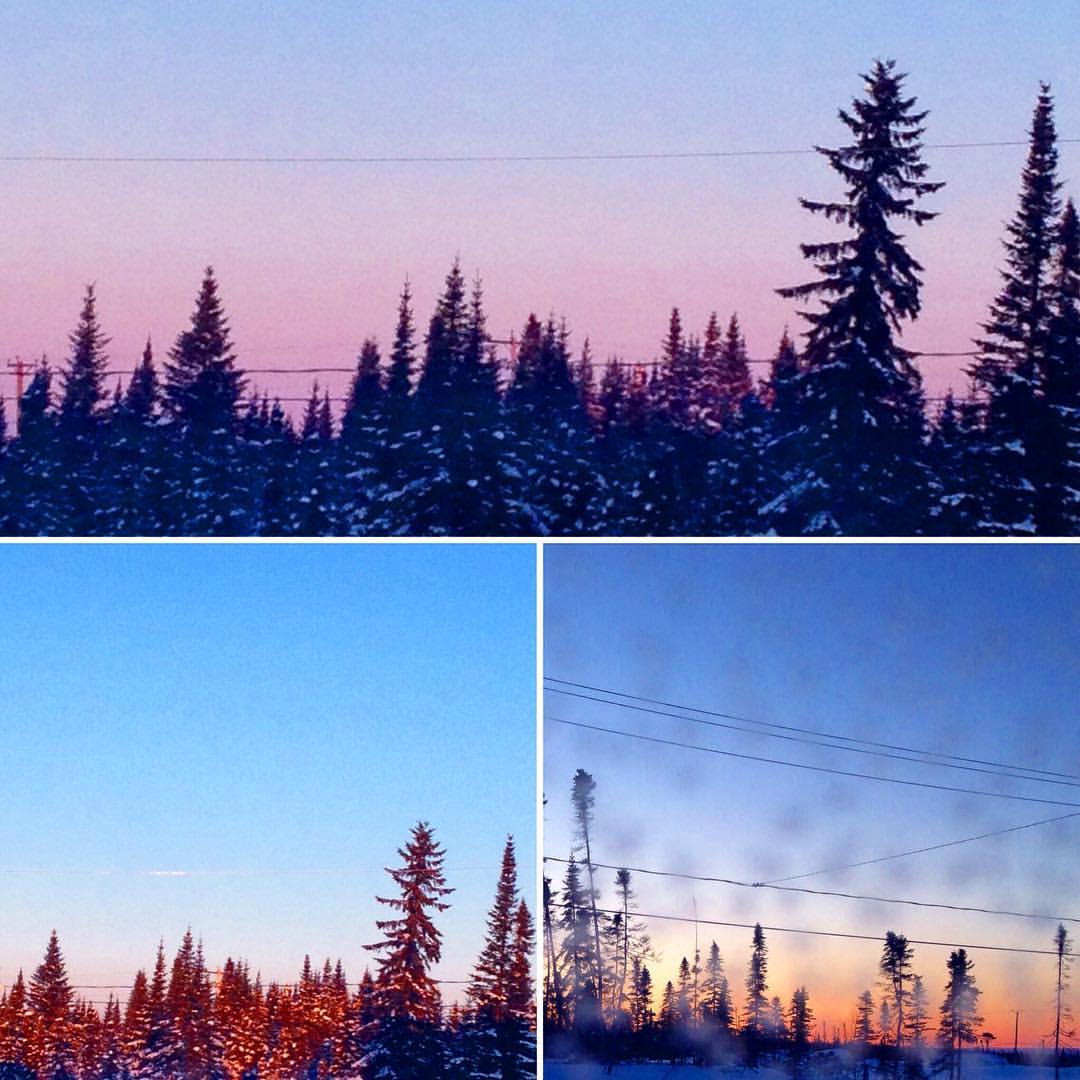
    I had the privilege of being an artist in residence in Mistissini, a community in northern Quebec, this February and March. The community was small and welcoming; the snow, on the other hand, was otherworldly. There were mountains of it piled and strung along the road to the school, like a miniature version of the Rockies I am used to. While I struggled with the overwhelming volume of the white stuff, I welcomed the natural beauty of the land, the quiet of the nights, and the stillness that comes from being outside the city. With nothing to distract me I was able to spend hours every night writing and painting. I read something like ten books and slept deeper than I have in a long time. It was a treat to turn off my email for six weeks, not take on any additional contracts, and really focus on my writing and visual art. I was teaching youth how to integrate their visual art with their writing through zines, so it was the perfect time for me to spend some time doing the same.

    16463091_10154140278245286_1071419733135569396_o

    The Mikw Chiyâm arts program was commissioned by the Quebec Cree School Board in 2015 and has just finished its second successful year. It brings together artists and students, the hope being that by creating a safe and creative space, students will be inspired to come to school more often and have a more positive experience once there.

    I am an Indigenous writer, artist, and educator, and have been working with Indigenous youth for over ten years. I have been a part of many different programs that use artistic practice as a way to intercede and help guide students onto a path that will give them confidence and knowledge so they can succeed in the world. The thing I hear most from students is how much they wish that they, as budding artists, were treated with the same level of care and given the same number of opportunities as in the sports or science concentration programs. Having an arts concentration program inside of a high school is remarkable; having one that has the level of support of Mikw Chiyâm is something I have never seen. It is literally making opportunities for young artists that they would not get otherwise.

    Often the arts can go unrecognized as a valid life path for a young person, but you just have to look to who the people are that are revitalizing our Indigenous communities and you will see artists at the forefront. When working with youth, Indigenous or not, I try to help them infuse their work, whether it’s fiction, poetry, or non-fiction, with a spark of who they are and their own unique point of view, with their own experience, tradition, and culture. Whether that takes the form of simply setting their dystopian dramas in their own community, or adding in bits of their language, or having characters that speak and act like them and their friends, these sparks are what makes their writing so unique.

    “I try to help them infuse their work, whether it’s fiction, poetry, or non-fiction, with a spark of who they are and their own unique point of view, with their own experience, tradition, and culture.”

    Growing up, I never read a story from a viewpoint that felt like my own: that of someone considered white passing, who grew up off the land, was raised in the city, yet is still Indigenous. I’ve found in my work with Indigenous youth that many are craving a varied point of view in the stories they read, something different than the stories they have thus far been presented with. There is a shame that comes with feeling like you are disconnected from your community. When you don’t know your language. When you can’t answer all the questions from non-Indigenous people. There is a shame that can infect a person when you aren’t what you see in movies, in stories—when you aren’t a real “Indian.”

    If not treated like a valid feeling, this void only serves to make youth feel more alone, more different, when in reality they have a whole network of people around them who feel the same way. Opening up space, letting discussion flow through these gut-wrenching topics, is so important. Oftentimes this can be the first time they’ve been allowed to talk about such things. I have found that once you break down those thick walls a flood of words come out. And eventually they land on the page. And they become something more than art. They transcend the writer. They help. They heal.

    “Once you break down those thick walls a flood of words come out… They transcend the writer. They help. They heal.”

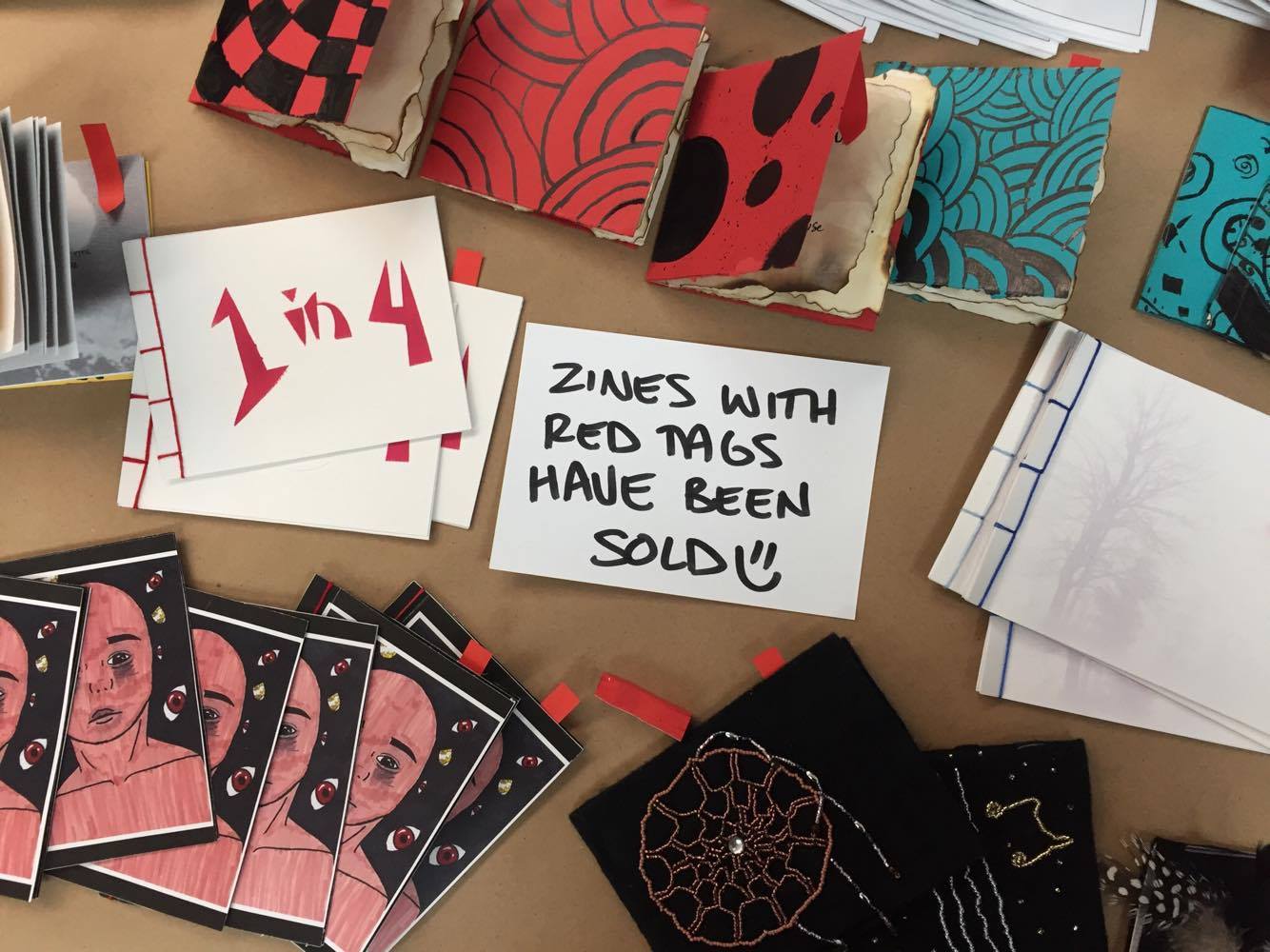
    The zines that the students created were powerful. They tackled issues like sexual abuse in the community, the stigmatization of mental illness, loneliness, and identity. These stories were told through humor, visual art, prose, and end-of-the-world disasters. At a final celebration night, we invited the community to come see the students’ work. For weeks, I had been telling them that people would buy their zines, that people other than me cared about what they were writing. The students wouldn’t believe me.

    Right before we opened the doors to let people in, they again tried to let me down easy, telling me not to get my hopes up, that no one would come and that was okay. They were trying to protect my feelings because I was so excited. But the community did come out. They read through all the zines, and by the end of the night we had sold out of everything we had created and made over five hundred dollars. The students were shocked. I was elated. I knew their words were valuable, that they were worth listening to. And now they had the proof.

    16998859_1686364578047373_2753448752955219953_n17015651_1686364321380732_2066677641393624379_o


    Headshot 2

    Francine Cunningham is a Canadian Indigenous writer, artist, and educator. Her creative non-fiction has appeared in The Malahat Review, the anthology Boobs: women explore what it means to have breasts (Caitlin Press), and more. Her fiction and poetry have appeared in The Puritan, Joyland Magazine, Echolocation Magazine, The Maynard, and more. She is a graduate of the UBC Creative Writing MFA program and a recent winner of The Hnatyshyn Foundation’s REVEAL Indigenous Art Award. You can find more about her at www.francinecunningham.ca.

    All photos in this piece are by Francine Cunningham.

  • Trading Places with Yourself by Sean Michaels

    Trading Places with Yourself by Sean Michaels

    For as long as I can remember I’ve been telling musicians, “I’m a fiction writer.” And for just as many years I’ve been telling other writers, “I’m a music critic.” As a writer, it’s not unusual to cultivate a handful of different identities but it feels strange when these identities begin to reorganize themselves. I know far more people in the music industry than I do in publishing. Yet I aspire to be a novelist, a taleteller, and with the publication of my first novel, Us Conductors, this label automatically and unexpectedly seems privileged above the other.

    Music’s where I come from. Or at least it’s where I accidentally come from. I started reviewing albums while studying English at McGill. Soon I had launched a blog called Said the Gramophone which opened doors at publications like The Believer and The National Post. Throughout it all I was still writing fiction – short stories about whispering objects, magical animals, melancholy gods. But the 22-year-old who idolized Salman Rushdie and F. Scott Fitzgerald was soon covering Montreal loft concerts for magazines that wouldn’t give his fables a second look.

    Ten years later, the music-writing life has become second nature. I know the protocol of set times and guest lists, the cycles of new bands and old bands and labels and tours. I know how to coil a guitar cord. I never learned much about Montreal’s poets or Canada’s independent presses, but I’ve helped at music festivals and battles of the bands.

    Yet I adore fiction. For all my album reviews and band bios, my heart remains faithful to stories. I love the way a novel is a rollicking yarn and also a parade of images. I love the way these convoluted lies can feel so true, can feel truer than the truth. I could spend whole lifetimes in the prose of Michael Ondaatje or Tim O’Brien, where similes move like sunsets on the horizon.

    Us Conductors, in its way, is at the intersection of both these loves: music journalism and fiction. It’s a story, but it’s a story full of music. And Montreal’s vibrant music scene was the ecosystem that fostered the book’s creation. When I consider its artistic influences my mind veers to Arcade Fire’s album Funeral and Wolf Parade’s Apologies for the Queen Mary before the works of any writers.

    The strange thing is now that I’ve published a novel, one identity seems to trump the others. I’m a novelist, before I’m a music journalist. By publishing Us Conductors, I seem to have switched clans. It’s a choice – a proud, deliberate choice! – and I feel lucky to be joining the family of authors. But I’m also still learning the secret passwords of the fiction-writing world, still figuring out the way power flows and the way it doesn’t.

    I’ll admit my relief, last week, when I slipped into the back of Casa del Popolo for a music gig by some friends. I recognized everyone in the room; I knew when to applaud, and how loud. I felt like the old, familiar version of myself. It’s a version that’s nearly worn through, one I’m ready to slough off – almost, in a few moments, just a few moments more, soon.


    Sean Michaels is the author of the novel Us Conductors. His music journalism has appeared in The Guardian, The Globe and Mail, The Believer, Rolling Stone, McSweeney’s and Pitchfork. He is the recipient of two national magazine awards and founded the peculiar music blog Said the Gramophone in 2003.

    Graphic (top) by Crystal Chan.