Tag: language

  • Creating Community with Disabled Writers—By seeley quest

    Creating Community with Disabled Writers—By seeley quest

    Now is a time to gather disabled writers and our allies in direct community together. Writing practice shared in company among disabled people expands our consideration of how embodied variations inform our writing perspectives, and how our writing helps us understand embodiment. Whether virtually through videoconferencing or in person, I am keen to encourage events specifically centering disabled writers.

    Bodies and minds are linked; psychological and other cognitive differences manifest through a brain’s interactions with its bodily systems, so all of our experiences are fundamentally embodied. Our unique body-minds are what our writing comes through; let’s celebrate how the written word can share our particularities with the world.

    Writing practices that occur when we’re solitary can be powerful and necessary lifelines. Many people, disabled or not, get satisfaction and relief from journaling, “morning pages,” and other forms of writing for themselves; sometimes there’s no need to connect output to a larger community.

    Yet, sharing creative writing via virtual platforms can be particularly important to people who have less access to public spaces physically or cognitively. Familiar with social isolation, linking ourselves through correspondence helps sustain us. When health conditions permit them, more in-person gatherings are also valuable to grow the collective body of our writing work.

    Part of my agenda is to uplift disabled writers who are sharing work in public events and productions. The essay “My Arrival at Crip” makes excellent observations on becoming attentive to the presence and impact of disabled, chronically ill, and Deaf writers assembling in civic spaces. For writers with a newer relationship to disability, it’s especially profound to learn how poets who are “out” as disabled can change the political possibilities for everyone. Public notions of “ableness” are shifting, as living conditions shift during the pandemic, challenging our mental and physical health. The legacies of fierce “out” writers can offer guidance.

    Language is fundamental to how we conceptualize disability. Word choices undermine or reinforce associations that valorize hyper-ability, and have consequences. We have the option of using more neutral vocabulary instead of terms freighted by stigma like “handicapped” or “deficient.” “Atypical” is one option, and “atypique” in French is emerging as a descriptor chosen by the disabled community in Quebec. For more on how to shift from oppressive choices, there are great resources like this one: https://www.autistichoya.com/p/ableist-words-and-terms-to-avoid.html.

    Our work may get special attention in the frame of “disability arts” or “disability aesthetics,” a category for funding support. However, defining such writing as separate from and more worthy of recognition than art therapy, stream-of-consciousness writing, or fan fiction by disabled authors doesn’t serve the whole. Our future lies away from capitalist divisions. We must embrace arts practices associated with therapy. The need for therapeutic pursuits and for accessible arts engagement will grow. In workshopping and community spaces, I invite those with different experience levels of writing. Whether we are neurodiverse, are experiencing new or episodic disabilities, or are a language and sensory minority like the Deaf: all our work has value. People who aren’t sure of applying the term “disability” to their experiences are welcome comrades too!

    When we don’t shy away, there’s so much to explore of what our body-minds might know in common: those considered able and typical, those that vary and diverge, writing both from individual experiences and in relationship to each other. Let our texts layer into expanding knowledge to enrich the entire writers’ community.

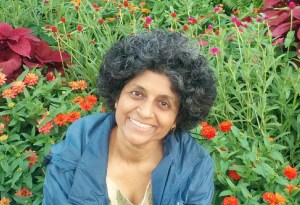
    Photo credit: Coral Feigin

    seeley quest is a trans disabled writer, organizer, and environmentalist, in Montreal since 2017. Sie has made literary and body-based performance since 2001, and presented in Vancouver, Toronto, Ottawa, and many U.S. cities. Sie has poems in the book Disability Culture and Community Performance: Find a Strange and Twisted Shape, and in Fiction International. Hir playscript Crooked will be published in September in At the Intersection of Disability and Drama: A Critical Anthology of New Plays. Recent appearances include reading at le Salon du livre de Montréal and leading workshops with QPIRG-McGill, articule, and Head and Hands. Not on social media, sie email connects with comrades: find more at https://questletters.substack.com.

    Look for an announcement soon about new plans in 2021 for seeley’s QWF workshop; visit https://qwf.org/activity/poetry-and-prose-writing-from-the-body-mind.
  • All Languages / Languages All—By Rachel McCrum

    All Languages / Languages All—By Rachel McCrum

    “Les langues sont toutes les mêmes lorsqu’elles tournent ensemble.”

    —Danny Plourde

    “All languages are the same when they’re in tune.”

    —translated by Antonio D’Alfonso

    “Languages all come together when they’re dancing.”

    —same line, translated by Martha Tremblay-Vilao

    LesNuitsAmerindiennes
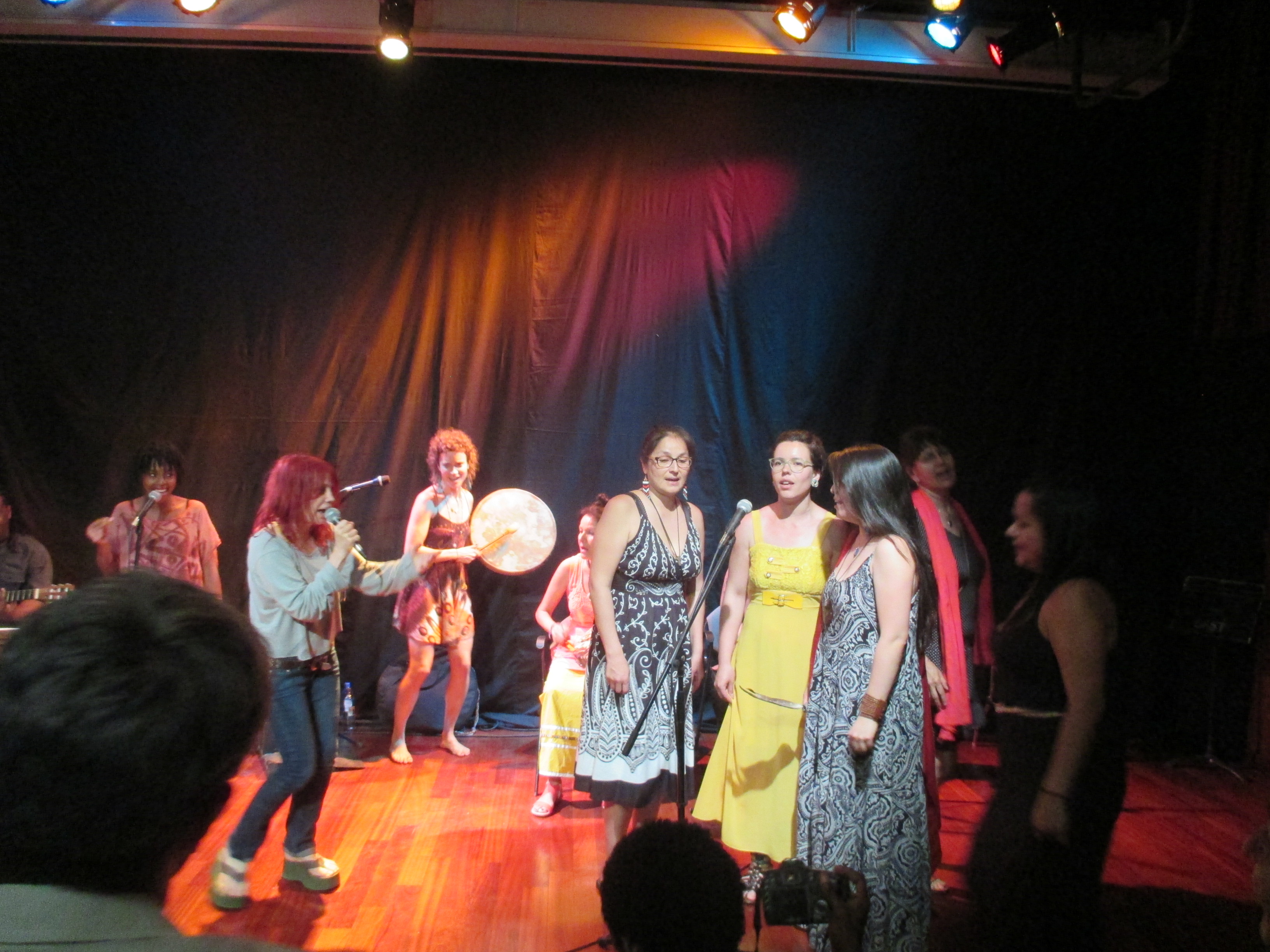
    Les nuits amérindiennes, Port-au-Prince Haiti, May 2015. Performers include: Chloé Sainte-Marie, Moe Clark, Marie-Andrée Gill, Rita Mestokosho, Natasha Kanapé Fontaine, Naomi Fontaine.

    What’s the point of going to see a poetry show if you can’t understand the text? And yet—there it is. That galvanizing, pure communication of the concerns, the beauty, the specificity of another language. The most joyful expression of it that I’ve seen so far was at an unforgettable night with the inzync Poetry sessions in Stellenbosch, South Africa. At least five of South Africa’s eleven official languages were represented onstage, with whispered translations offered by audience members to their neighbours, and whoops of recognition along the way.

    I wanted more.

    Port-au-Prince, May 2015

    I’m nearly the sole Anglophone, and definitely the only Northern Irish, at Les nuits amérindiennes, a festival of First Nations poets and artists in Port-au-Prince, Haiti, curated by the inimitable Rodney Saint-Éloi of Montreal-based publishing house Mémoire d’encrier. The Indigenous poets from Quebec include Joséphine Bacon, Guy Siou Durand, Tomson Highway, Virginia Pésémapéo Bordeleau, Louis-Karl Picard, Natasha Kanapé Fontaine, Moe Clark, Marie-Andrée Gill, and Naomi Fontaine. I’ve been sent by the Edinburgh International Book Festival to meet with Joséphine, Natasha, and Naomi for a collaborative project. This is my introduction to Canadian, to québécois, to Indigenous literature. I have no idea what’s going on, and I can barely understand anyone (my Belfast schoolgirl French being wholly inadequate in the circumstances). But at the shows, I’m electrified by the performance and the politics, the unself-consciousness, the self-awareness, the clear-eyed passion, the trickster craftiness—and well-honed craft—of the various artists.

    Nobody really understands why I’m there either, although it’s not that important—this isn’t about me. But I’m not that good at sitting on the sidelines and I’m desperate to communicate, somehow. At the second late-night session at Café Yanvalou, I sidle up to Rodney and ask, haltingly, if I can take a turn at the microphone. The words will be in English, but it’s the only thing I can think of to do. I sweat through a couple of poems, with halting introductions in French. I talk about my mother, and the sea. It works. I cannot speak, but I can extend words. The connection is made. These will become lifelong friends (and in one case, the love of my life, and the beginning of my journey to Montreal).

    Edinburgh, December 2016

    I am finishing up six years in Edinburgh, Scotland, which has mostly been consumed and absorbed with poetry, performance, promoting events, teaching workshops. It’s been a fantastic life. I have been incredibly lucky, starting from the gritty basics of open mic nights and running shows, and ending up being able to make a living, a good living, from all this. I love my community, I love my work, I love, more than anything, what happens when people get on a stage with their words, and speak them to an audience. And I’m leaving it.

    Even I’m not entirely sure why, except that there is love on the other side of the Atlantic. And there is a chance, a real chance to follow this thread of poetry and of performance, and try to understand how, if one cannot follow the sense of the words in an art form that bases its craft on the finer points of language, one can still be so affected by multilingual performances. In Quebec, my native language—which I have spent the last few years learning how to wield as a poet—becomes one among many.

    Montreal, November 2018

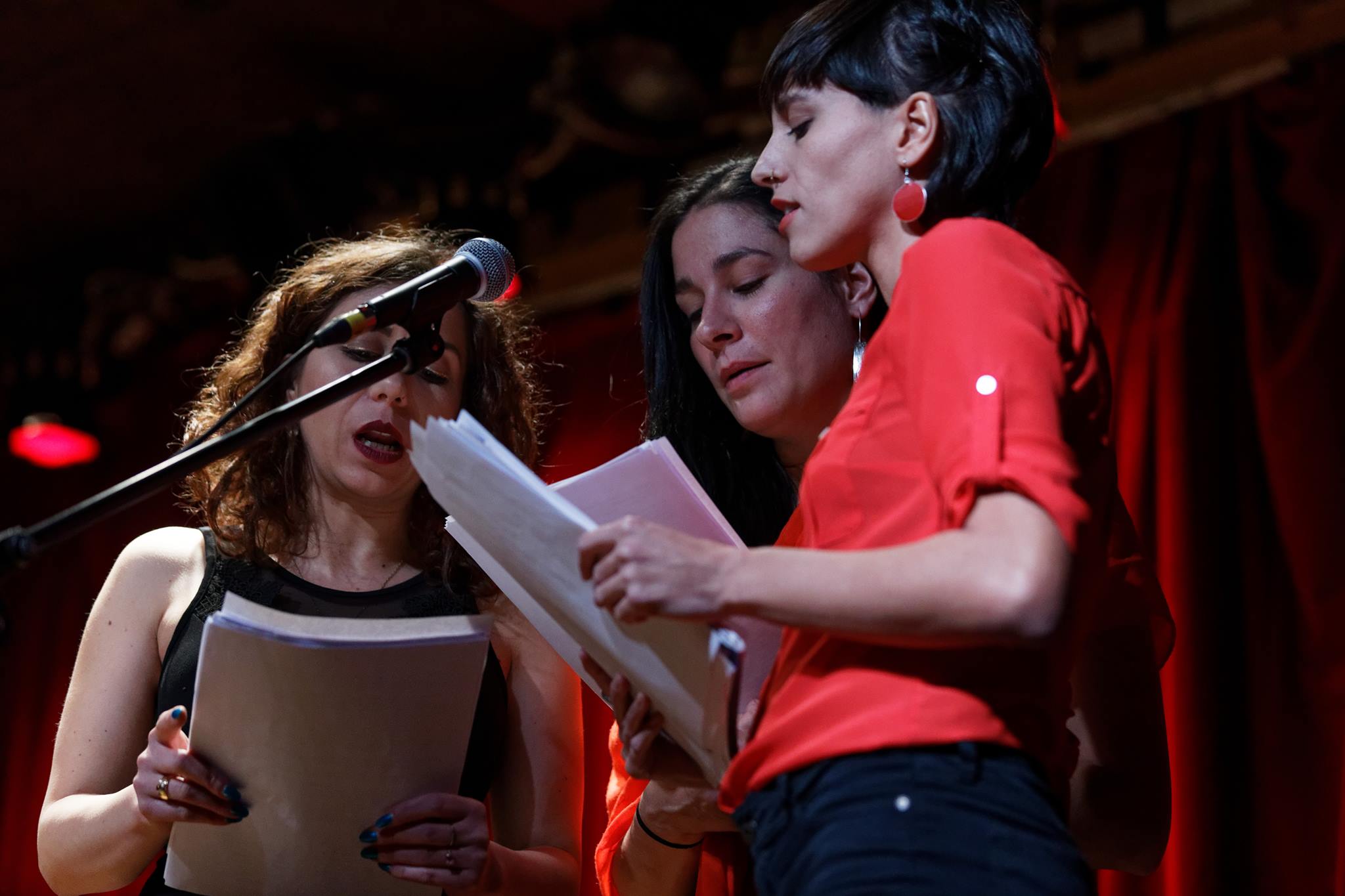
    I’m at Langues liées // Linked Tongues in La Sala Rossa, Boulevard Saint Laurent, Montreal. It’s the opening event of the Mile End Poets’ Festival, and there are ten poets on stage. There are ten languages on the stage. Aside from French and English, there is Arabic, Creole, Korean, Innu-aimun, Italian, Occitan, Persian, Portuguese, Spanish, and Wolof. These are mother tongues, and father tongues; languages of politics, of home, of love.

    Languages talk of their own concerns, at once specific and universal. Martha Tremblay-Vilão sings saudade, the Portuguese longing for a past or a home that no longer exists. Hossein Sharang talks of Iran, of democracy, of the impossibility of a country of eighty-two million terrorists. David Bouchet asks—in Wolof, with the aid of cue cards (and his fellow poets): “Where are you, who are you, how are you?” Marcela Huerta performs the stiltedness, then fluidity, of learning English as the daughter of Chilean refugees.

    The audience doesn’t understand everything that is being said, but there are ripples of comprehension when a new language is presented. There is a table of Arabic speakers, another of Portuguese. Maëlle Dupon’s mother is in the audience to hear her perform in Occitan; another supporter, a Haitian friend of Maëlle’s, is blown away when his ears catch the Creole of Chloé Savoie-Bernard.

    In La Sala Rossa, the last impressions are of joy. Of something ventured and something gained. Of respect. Everyone on that stage can do something that no one else can. They’ve worked for this show, they’ve risked, they’ve listened to one another, translated, called out and responded. And we’re here, and we will listen.


    RachelMcCrum_headshot

    Rachel McCrum is a poet, performer, and promoter—and also the Membership & Communications Co-ordinator of the Quebec Writers’ Federation.* She is originally from Northern Ireland, and has performed and taught poetry in Greece, South Africa, Haiti, Canada, and around the UK. She lived in Edinburgh, Scotland, from 2010 to 2016, where she was the inaugural BBC Scotland Poet-in-Residence, a recipient of an RLS Fellowship, and the co-host of cult spoken word cabaret Rally & Broad. Her first book, The First Blast To Awaken Women Degenerate, was published in 2017. She has lived in Montreal since January 2017, where she co-directs (with Ian Ferrier) the Mile End Poets’ Festival and curates the bilingual poetry performance series, Les Cabarets Bâtards.

    *As an employee of the QWF, Rachel has waived the fee for this article.

    Photo credits: Michael Kovacs (header image, showing Maëlle Dupon, Uasheshkun Bacon, and Martha Tremblay-Vilão reading in Occitan, Innu-aimun, and Portuguese at Langues liées // Linked Tongues); Rachel McCrum (top image); Ryan McGoverne (headshot)

  • Writing Between Languages—by Veena Gokhale

    Writing Between Languages—by Veena Gokhale

    What do you do when a lot of the reality you portray in your fiction does not take place in English? Easy answer: you sprinkle your prose with words from other languages. As it turns out, this is not without its problems.

    Growing up in India, I learned my first language, Marathi, at home. I was sent to an English school right from kindergarten, where I had also learned Hindi, the language of the state I lived in. In the Indian Constitution, Hindi and English are designated languages of the Central Government. Presently, India has twenty-one other “official” languages. Generally speaking, every time you cross a state boundary you are in another “language territory.”

    English, though not my mother tongue, is nevertheless my “principal” language. I was in my twenties when I came across an essay by a Hong Kong-born writer of Chinese origin who described English as his principal language. I cannot thank him enough for giving me a way of describing the place of English in my life!

    When I became a journalist, I worked for an English-language magazine in India. But I had always loved mixing languages, using non-English words when I spoke in English. As a writer, I exuberantly introduced some Hindi words into my English articles. This was around the time that Salman Rushdie “decolonized the English language,” as he put it, through the innovative use of multiple languages that included sprinkling Hindi and Urdu words throughout the English text of Midnight’s Children, his groundbreaking Booker Prize winner. He did not translate the words.

    “But I had always loved mixing languages, using non-English words when I spoke in English.”

    I, on the other hand, was immediately challenged by my editor when I employed Hindi words. She came from southern India and knew little Hindi. Reluctantly, she allowed me to retain a few words, with the English translation in brackets.

    Fast forward to Canada in 2012. Guernica Editions had accepted my manuscript entitled Bombay Wali and other stories. Characteristically, the book contained some Hindi, Urdu, and Marathi words. I suggested putting an asterisk next to the words and explaining them in footnotes. My editor, Michael Mirolla, rightly protested. Some pages then would have had five asterisks or more! A solution was found by explaining a word here and there in the main text itself and adding a glossary explaining other words and phrases.

    In my forthcoming novel, Land for Fatimah, the protagonist takes a posting in Kamorga, an imaginary east-African country. This time, I introduced a made-up language for Kamorga, and named it Morga. Despite knowing five other languages to some degree, Anjali, the Indo-Canadian protagonist, is struggling with Morga.

    I used words in Morga in much of the dialogue. I italicised the “foreign” words and phrases and put the translations right next to them. For example: Kabari ani? How are you? Hoori. Good. Perhaps this is awkward and breaks the not-to-be meddled-with flow of the text. But to hell with it!

    Why this insistence on using words from other languages? As I explain in a note on language in Land for Fatimah, “I strongly believe in using non-English words and phrases in my fiction to bring home to the reader, directly and tangibly, the fact that s/he is reading about a non-Anglo culture.”

    “Why this insistence on using words from other languages?”

    There is a much-quoted speech by Indian freedom fighter, Bal Gangadhar Tilak: “Swaraj (self rule) is my birthright and I shall have it.” This original quote has gone around translated as “Freedom is my birthright and I shall have it.”

    Why couldn’t they have let the word “swaraj” be? Some might argue that keeping “swaraj” is awkward and unnecessary, and that freedom resonates more than self-rule. But such misquotation can be seen as a form of linguistic colonialism.

    Inspired by Tilak, I have my own writerly warrior cry: multiple languages are my blessed heritage and reality, and I shall flaunt them! Back when I lived in India, I loved switching between English and Hindi in mid-sentence. Now that I live in Montreal, I use French words when speaking English. Old habits die hard!

    I end Land for Fatimah’s note on language with these words: “Long live the diverse languages of the world! They bring us unfathomable riches.”

    I would love feedback on how other writers deal with the use of non-English words in their text and how readers respond when they come across them. Thanks in advance. Merci. Shukriya.


    VG wt flowersVeena Gokhale, an immigrant shape-shifter, started her career as a journalist in Bombay. This tough, tantalizing city inspired Bombay Wali and other stories, published by Guernica Editions in 2013. Veena first came to Canada on a fellowship, then came back again to do a master’s degree. After emigrating to Canada, she worked for non-profits. Land for Fatimah (to be published in 2018) is partly inspired by the two years she spent working in Tanzania. Veena has published fiction and poetry in anthologies and literary magazines and received writing and reading grants. veenago.com
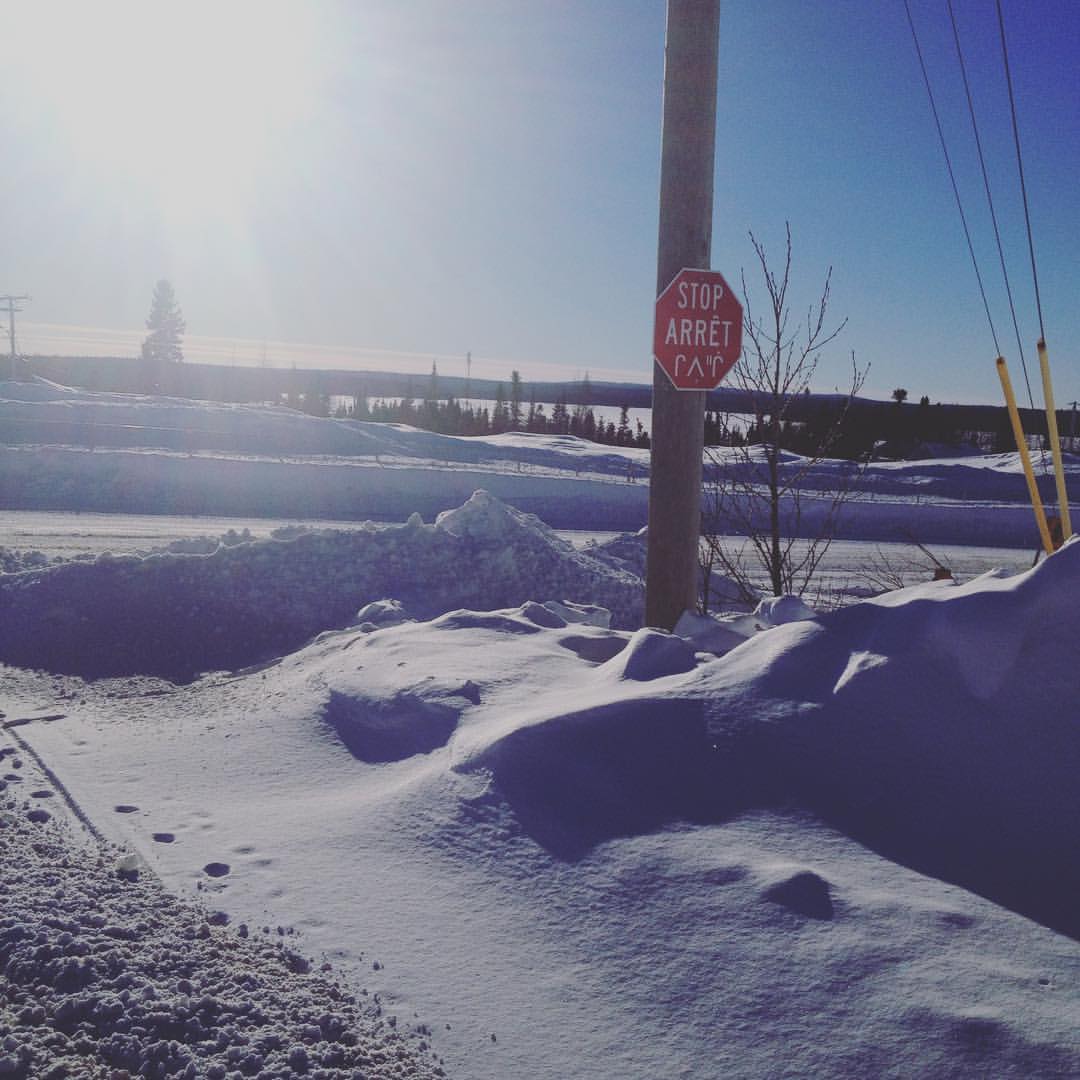
    Photo credit: Shawn Leishman (header banner)

  • Transcendence—by Francine Cunningham

    Transcendence—by Francine Cunningham

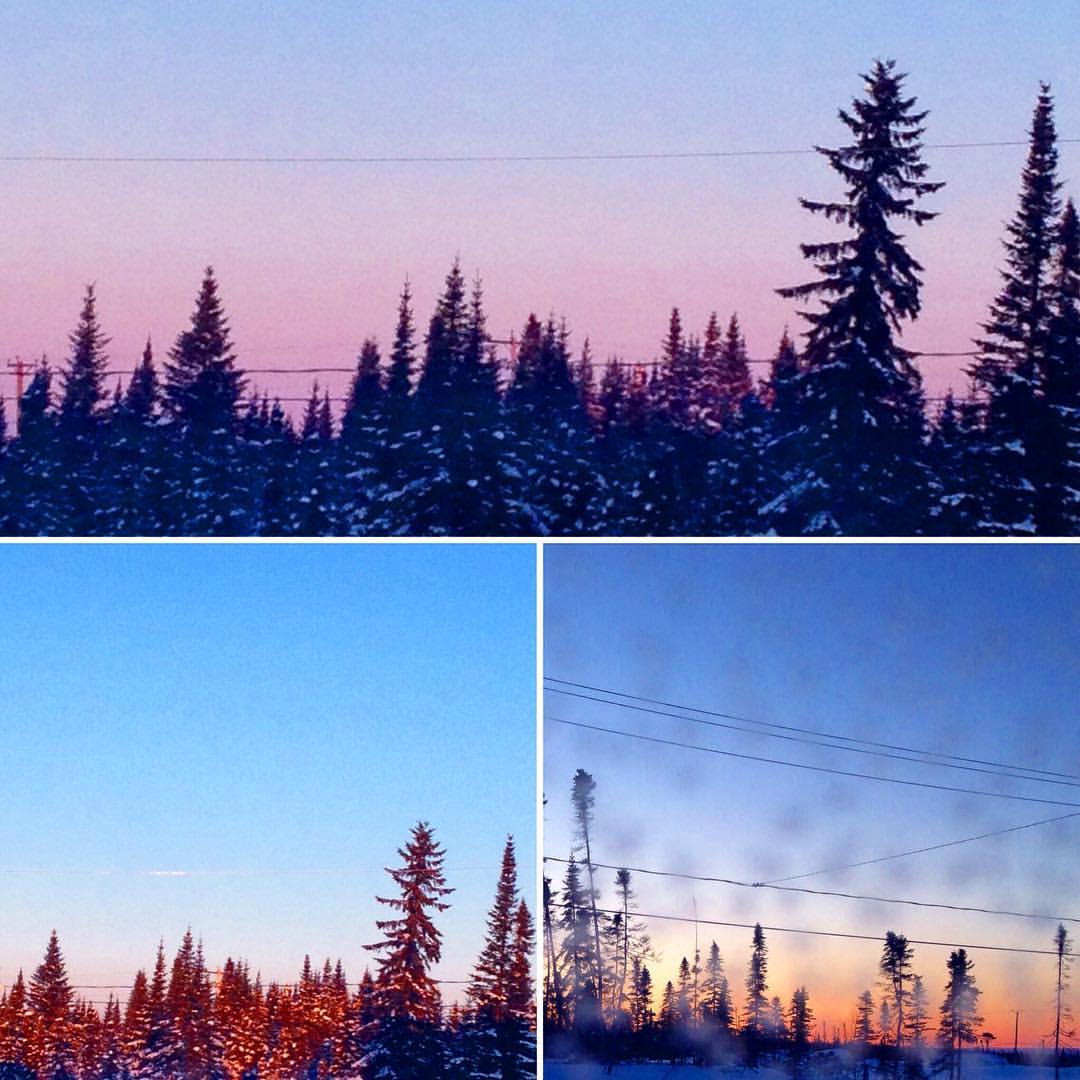
    I had the privilege of being an artist in residence in Mistissini, a community in northern Quebec, this February and March. The community was small and welcoming; the snow, on the other hand, was otherworldly. There were mountains of it piled and strung along the road to the school, like a miniature version of the Rockies I am used to. While I struggled with the overwhelming volume of the white stuff, I welcomed the natural beauty of the land, the quiet of the nights, and the stillness that comes from being outside the city. With nothing to distract me I was able to spend hours every night writing and painting. I read something like ten books and slept deeper than I have in a long time. It was a treat to turn off my email for six weeks, not take on any additional contracts, and really focus on my writing and visual art. I was teaching youth how to integrate their visual art with their writing through zines, so it was the perfect time for me to spend some time doing the same.

    16463091_10154140278245286_1071419733135569396_o

    The Mikw Chiyâm arts program was commissioned by the Quebec Cree School Board in 2015 and has just finished its second successful year. It brings together artists and students, the hope being that by creating a safe and creative space, students will be inspired to come to school more often and have a more positive experience once there.

    I am an Indigenous writer, artist, and educator, and have been working with Indigenous youth for over ten years. I have been a part of many different programs that use artistic practice as a way to intercede and help guide students onto a path that will give them confidence and knowledge so they can succeed in the world. The thing I hear most from students is how much they wish that they, as budding artists, were treated with the same level of care and given the same number of opportunities as in the sports or science concentration programs. Having an arts concentration program inside of a high school is remarkable; having one that has the level of support of Mikw Chiyâm is something I have never seen. It is literally making opportunities for young artists that they would not get otherwise.

    Often the arts can go unrecognized as a valid life path for a young person, but you just have to look to who the people are that are revitalizing our Indigenous communities and you will see artists at the forefront. When working with youth, Indigenous or not, I try to help them infuse their work, whether it’s fiction, poetry, or non-fiction, with a spark of who they are and their own unique point of view, with their own experience, tradition, and culture. Whether that takes the form of simply setting their dystopian dramas in their own community, or adding in bits of their language, or having characters that speak and act like them and their friends, these sparks are what makes their writing so unique.

    “I try to help them infuse their work, whether it’s fiction, poetry, or non-fiction, with a spark of who they are and their own unique point of view, with their own experience, tradition, and culture.”

    Growing up, I never read a story from a viewpoint that felt like my own: that of someone considered white passing, who grew up off the land, was raised in the city, yet is still Indigenous. I’ve found in my work with Indigenous youth that many are craving a varied point of view in the stories they read, something different than the stories they have thus far been presented with. There is a shame that comes with feeling like you are disconnected from your community. When you don’t know your language. When you can’t answer all the questions from non-Indigenous people. There is a shame that can infect a person when you aren’t what you see in movies, in stories—when you aren’t a real “Indian.”

    If not treated like a valid feeling, this void only serves to make youth feel more alone, more different, when in reality they have a whole network of people around them who feel the same way. Opening up space, letting discussion flow through these gut-wrenching topics, is so important. Oftentimes this can be the first time they’ve been allowed to talk about such things. I have found that once you break down those thick walls a flood of words come out. And eventually they land on the page. And they become something more than art. They transcend the writer. They help. They heal.

    “Once you break down those thick walls a flood of words come out… They transcend the writer. They help. They heal.”

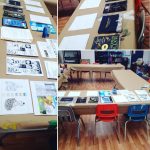
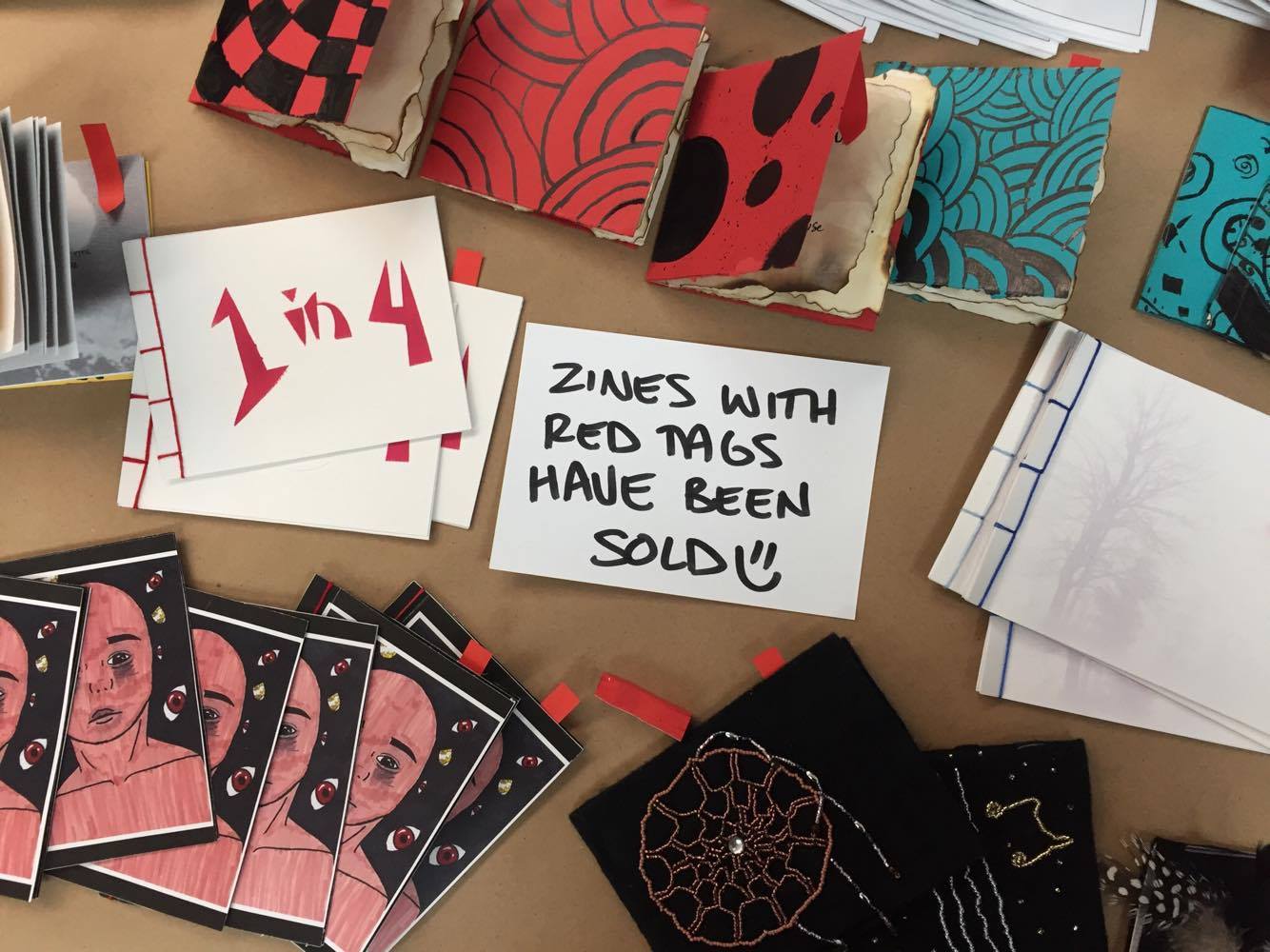
    The zines that the students created were powerful. They tackled issues like sexual abuse in the community, the stigmatization of mental illness, loneliness, and identity. These stories were told through humor, visual art, prose, and end-of-the-world disasters. At a final celebration night, we invited the community to come see the students’ work. For weeks, I had been telling them that people would buy their zines, that people other than me cared about what they were writing. The students wouldn’t believe me.

    Right before we opened the doors to let people in, they again tried to let me down easy, telling me not to get my hopes up, that no one would come and that was okay. They were trying to protect my feelings because I was so excited. But the community did come out. They read through all the zines, and by the end of the night we had sold out of everything we had created and made over five hundred dollars. The students were shocked. I was elated. I knew their words were valuable, that they were worth listening to. And now they had the proof.

    16998859_1686364578047373_2753448752955219953_n17015651_1686364321380732_2066677641393624379_o


    Headshot 2

    Francine Cunningham is a Canadian Indigenous writer, artist, and educator. Her creative non-fiction has appeared in The Malahat Review, the anthology Boobs: women explore what it means to have breasts (Caitlin Press), and more. Her fiction and poetry have appeared in The Puritan, Joyland Magazine, Echolocation Magazine, The Maynard, and more. She is a graduate of the UBC Creative Writing MFA program and a recent winner of The Hnatyshyn Foundation’s REVEAL Indigenous Art Award. You can find more about her at www.francinecunningham.ca.

    All photos in this piece are by Francine Cunningham.