Tag: memoir

  • A Memoirist’s Dilemma: Telling the Truth Without Betrayal by Karen Zey

    A Memoirist’s Dilemma: Telling the Truth Without Betrayal by Karen Zey

    In another life, I worked in schools as a special education teacher and administrator. I gathered stories for thirty-five years, and as a writer, I wanted to recapture my classroom days so that readers would land in the scene and see a flicker of universal truth. But as a teacher with a longstanding commitment to confidentiality, sharing my insider’s view was sticky.

    I was a newcomer to memoir, and I faced the usual hurdles. I had an imperfect memory and was still developing my craft. But in addition to juggling voice, scene, structure and imagery, I wrestled with divulging personal attributes. Advice from the sages of creative non-fiction – don’t add or embellish, don’t deceive – was not particularly helpful here. The discussion about naming real people usually focuses on possible fall-out from family and friends. Writers of memoir are urged towards honesty and disclosure. Yet I had a moral and legal obligation to protect the privacy of my former students and their families. How do teachers (and nurses, psychologists and social workers) write about their working life while respecting professional obligations?


    “Writers of memoir are urged towards honesty and disclosure. Yet I had a moral and legal obligation to protect the privacy of my former students and their families.”


    In my first published story about a student, I was able to get the family’s permission to use their son’s name. “Lessons from my Favourite Student” recounted my experience teaching a child with Down syndrome. Mark, now in his forties, loved having his story appear in his community newspaper. His parents, both teachers, were thrilled that their son was the subject of a teacher’s fond memories.

    But as I dug deeper and began writing about vulnerable students, difficult parents or my floundering efforts as a young teacher, the dilemma of what to divulge and what to keep hidden soon emerged. Were pseudonyms enough? Was it okay to change physical features, like hair colour or age, to hide a child’s identity? Were fictitious locales and made-up school names sometimes necessary? I wanted to remain faithful to what happened, but I was walking a tightrope between revelation and secrecy.

    Altering names was an immediate decision. What did it matter if an eight-year-old student was called Matthew or Jake? As a story developed and I imagined someone – a parent, a colleague, a former student now an adult – reading what I’d written, I realized I had to avoid causing hurt. I had a responsibility to safeguard privacy. While presenting authentic details about people and what they said, I needed to keep my characters anonymous.

    If the child is in grade one rather than two, if she’s blonde not brunette, if the family has three kids, not four – do these tiny changes undermine the truth of what happened? No. Since I taught fewer than seven students a year in my Special Ed. classes, will naming the school make identities too obvious? Sometimes. If I write about the boy with autism who hated parachute games – the flapping cloth, the descent of the dark billowing shape – and confessed he threw out his sneakers to avoid gym class, should I modify parts of the scene? No. I don’t want to obscure any precious moments of insight or connection. To ensure confidentiality, should I use the disguise of a composite character? Never. This would dishonour the individuality of the people who came into my life.

    A few months ago, I had lunch with a former colleague who thought she recognized a troubled boy in one of my stories. “I presume he was one of ours,” said Kathy. She pushed me for details, but I just smiled. As she reached for her coffee, she added, ”Well, it doesn’t really matter, does it? We knew so many students like him. Too many. And you’ve captured what it was like for us.”

    For many years, a village of special children taught me how to be a better teacher and a better human being, and I’m deeply grateful. Now I’m a writer. I don’t change facts for the sake of art. I try to write the truth while avoiding betrayal. I hope no one can say for sure who “Michael,” “Jimmy” or “Tina” are, or where they went to school. They deserve privacy. But when I write about how our paths crossed, I hope my readers will recognize every one of their souls.
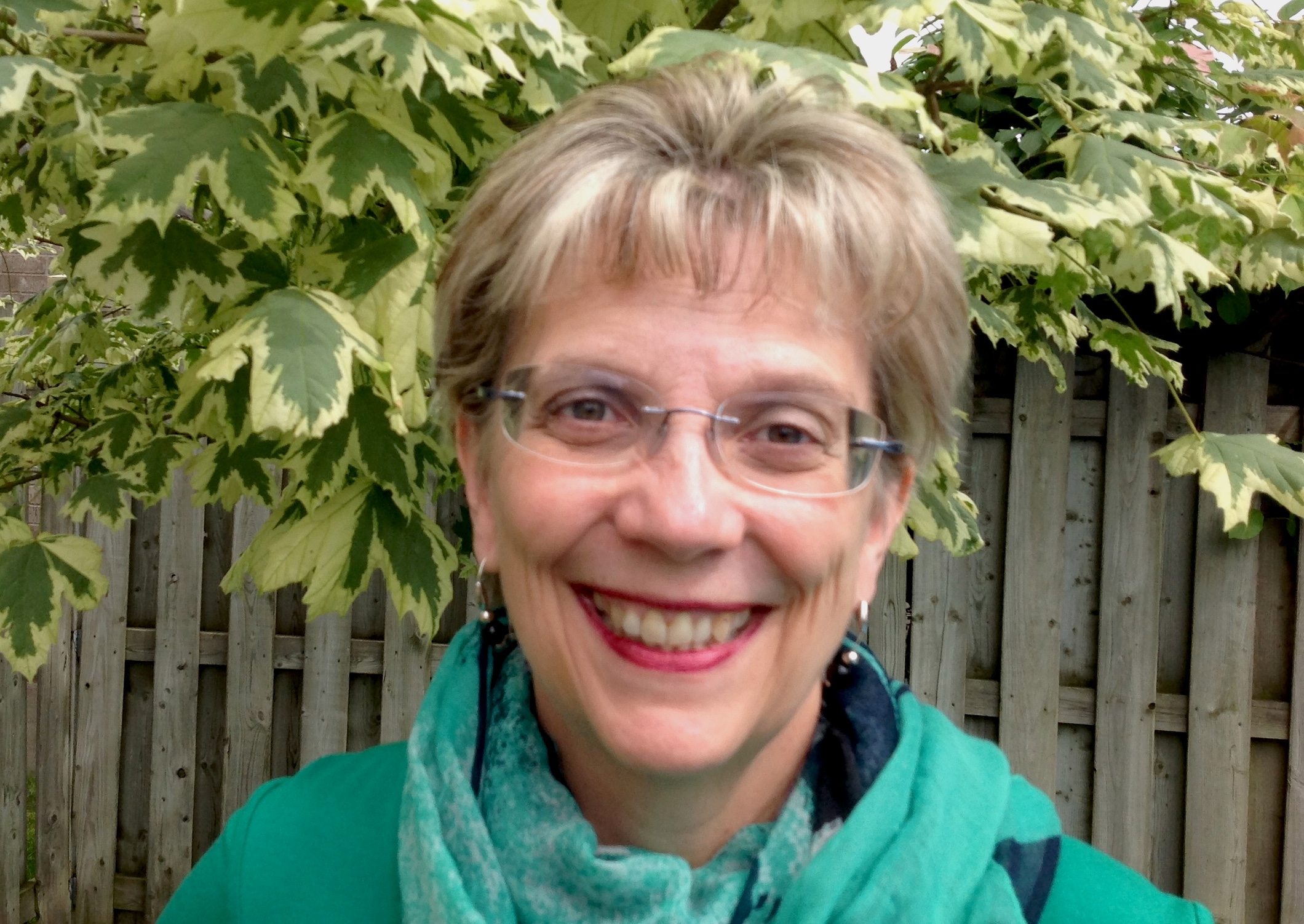

    Karen ZeyKaren Zey is a writer and full-time student of life who treasures her past career in special education. Her stories and essays have appeared in Artsforum Magazine, Gazette Vaudreuil-Soulanges, Hippocampus Magazine, Prick of the Spindle and The Globe and Mail. Karen lives in Pointe-Claire, Quebec, and is currently working on a school-based memoir.

  • What Writing Gives Me by Laurie Gough

    writing image

    When I was halfway through writing my first book many years ago, I remember reading in Anne Lamott’s Bird By Bird: Some Instructions on Writing and Life that the best part of being a writer isn’t getting your name in print. It isn’t all the excitement and accolades that accompany being a published author. The best part of being a writer, she said, is the writing itself.

    Damn, I thought. Writing is such hard work. How can that be?

    A year later, I realized she was right. The writing is the best part. The writing is what energizes and enriches me, deepens my life in more ways than I can count. Once you’ve finished writing your book and it’s in the hands of others – publishers, editors, the media, readers – you’re no longer behind the wheel, taking your characters places they need to go, deciding which verb conveys exactly the right mood, letting the phases of the moon dictate how the night sky looks. Once your book is out in the world it’s no longer yours. The publisher might even change the title on you, as my first publisher did.

    So the writing itself is what I always go back to – sometimes kicking and screaming and dragging my heels – but before long I remember why I write: it makes me feel good when I feel an inspiration start to grow, an image I can’t shake, an emotion or idea that desperately needs to be sculpted into words. Sometimes I don’t even realize I’m feeling a certain way about something until I start writing about it. Someone once wrote, “How do I know what I’m thinking if I haven’t written about it?” I get this. For the ideas to take shape, I need to write whatever I’m feeling strongly about. Writing organizes my thoughts and sets free my feelings, ideas and opinions. Even if nobody ever sees what I write, it doesn’t matter. It’s still liberating. It still invigorates. But I especially love the feeling of transforming something from my own experience and sending it out into the larger world. I love writing about something that, while personal, is hopefully also universal, about an experience that might induce others to nod in recognition and feel less alone.

    “Damn, I thought. Writing is such hard work. How can that be?”

    Writing is immensely cathartic. What was interior becomes exterior, and when it’s exterior it’s tangible, made more real. Writing lets me live parts of my life over again, even the painful parts. The second time around I can re-examine and reflect, work out why I took one particular road in life over another, attempt to recall who I was in the past, what I thought, and wonder if a part of that younger me still exists.

    Writing forces me to observe life in detail, to live in the moment. I find that my two passions, writing and travelling, feed off and enrich each other. When you’re on the road, everything around you takes on a vibrancy you may not have experienced since childhood. When you’re in a new place, you absorb fresh life around every corner; you see everything from a crooked angle. Time stretches and your senses sharpen. In other words, you’re paying attention. And paying attention is a writer’s job. If you intend to write about what you’re seeing, you’ll be even more aware of the details of the moment. You’ll look more closely, listen more clearly, taste more carefully and continually reflect on what you’re experiencing. All your senses are heightened. As a result, your writing – and your travels – will be deeper and richer.

    Writing also gives me a sense of accomplishment. I tried being a primary school teacher for a time and I don’t think I was very good at it. I’m terrible at any kind of retail job–  unless I can read a book behind the cash register. Writing, although hardly a profession that pays much these days, has in many ways saved me from being an aimless wanderer in this life. It roots me to solid ground. What I have not earned by way of money is more than compensated for by wealth of experience. Writing has shaped me as a person in a way no office job could.

    But above all, writing gives me redemption. If I write about an experience I can lift it up to another level, helping me and my readers understand more about the world. I thought about this recently when writing my latest book. It’s not a travel book, but it discusses a terrifying journey nonetheless. Writing about how my son developed Obsessive Compulsive Disorder in reaction to his grandfather’s death has forced me to consider how writing about a difficult and traumatic experience can bring out the truth of who we are. What we find out is not always pretty, but it’s real and it’s human.


    Laurie Gough is author of Kiss the Sunset Pig: An American Road Trip with Exotic Detours, and Kite Strings of the Southern Cross: A Woman’s Travel Odyssey, shortlisted for the Thomas Cook Travel Book Award in the U.K., and silver medal winner of ForeWord Magazine’s Travel Book of the Year in the U.S. Over twenty of her stories have been anthologized in literary travel books; she has been a regular contributor to The Globe and Mail, and has written for The L.A. Times, USA Today, salon.com, The National PostThe Toronto Star, Canadian Geographic, The Daily Express and Caribbean Travel + Life, among others. She lives in Wakefield, Quebec with her family, and has just finished writing her next book.

  • Writing About Ukraine by Alexandra Hawryluk

    Kyiv_at_night

    Seeing the images on my television screen, I froze in shock and anguish. People running for cover behind piles of rubber tires, a man being struck down by sniper fire. This was Maidan – Independence Square in the centre of Kiev, a place where I had talked to the book vendors, met friends, watched a busker do a routine with his two little monkeys. Those were the paving stones my feet had crossed and re-crossed and now those stones were stained with blood. In that one moment, as I watched the scene unfold from my living room couch, I understood something of how the people who had entrusted their stories to me may have felt as eyewitnesses to the destruction of their homeland under Soviet rule.

    As the Maidan revolution in Ukraine turned into an international story, I developed an almost obsessive need to know what was happening there hour by hour. It took a good dose of fatigue and a beautifully reasoned e-mail from a friend in Kiev to make me realize that it would be more useful to finish writing about my 1998 trip to Ukraine than to trade second-hand opinions about events in which I played no part. Weeks had gone by without my adding a single new page to my book.

    To take my mind back into the 1990s, the heady time of Ukraine’s newly won independence, I listened again to the interviews I’d done, re-read passages in my favourite reference books and immersed myself in Ukrainian music and contemporary literature. I remembered the impassioned, witty conversations in Lviv’s coffee houses with writers, publishers, students and community leaders. We’d talked about the function of opposition in a democracy, the ethics of responsible journalism, the role of education and religion in building a new civil society. Students, once they found out I was Canadian, wanted to know how we had achieved a peaceful pluralistic society. If I mentioned multiculturalism and inter-faith dialogue they inevitably wanted to know which group was winning. A discussion about Western wages always led to an explanation of income tax, medical insurance, mortgages, the cost of university education and personal accountability – concepts entirely foreign to the Soviet world view and social order. Political pundits at the table said that it would be more than twenty years before the prevailing mindset could change.

    Sometimes, I lost the thread of a story because people alternated freely between place names from the Austro-Hungarian Empire, the Polish Commonwealth, the Russian Empire and the USSR. (In the 18th century, Ukraine was partitioned between three political entities before being annexed by the Soviet Union in the 20th century.)

    Eventually the Ukrainians told me their side of history: World War II and the successive advance and retreat of Nazi and Soviet armies across their country, Nazi and Soviet labour camps, an atmosphere of relentless suspicion and fear. The elderly would talk about those who perished in Stalin’s deliberately planned famine of 1932-33. Many regretted that Communist war criminals had never been brought to justice. Writers complained that the only change undertaken by the newly elected deputies was to replace the hammer and sickle on their lapel pins with a trident.

    As these tales of loss, death, sorrow and anxiety poured out, my writer’s objectivity often abandoned me, and I silently grieved with the storyteller. All I understood then was that after seventy years of state-enforced silence, there was a great need to speak and to be heard. Now it is the young Ukrainians born and educated after the fall of the USSR who are speaking out. And the world is listening.


    Alexandra HawrylukAlexandra Hawryluk, an editor and translator, was a correspondent for Radio Canada International. At present, she’s writing a memoir about her time in Ukraine during the 1990s.

    Photo of Kiev, top: Anton Molodtsov/Tony Wan Kenobi [CC-BY-SA-2.0], via Wikimedia Commons

  • The Creative Power of Memory by Shelagh Plunkett

    A_picture_is_worth_a_thousand_words

    “– but there’s one great advantage in it, that one’s memory works both ways.” – the White Queen, Through the Looking-Glass

    I’m a writer of literary non-fiction and my first book is a memoir. Seems likely that memory would be important to my work. It is. But it’s of equal value to writers of all stripes – poets, or those who write short and long fiction and any of the myriad forms non-fiction takes. Memory is one of the most powerful tools any artist or creative person has in her arsenal. As in physics, so in literature: one cannot create something from nothing. Creativity is the combining of bits and pieces of memory in a unique way. The way you’ve made that character walk is because, whether you consciously remember it or not, you once saw somebody or something move that way.

    Since writing my memoir, I’ve been asked frequently how I was able to remember in such detail events that took place more than thirty years ago. It’s caused me to investigate the nature of memory: how we retain detail, how we access those details and how we can enhance our ability to remember events sharply and fully.

    On one level, there are tricks that help. To retrieve the details of a life in the tropics, I ate Guyanese food, listened to Indonesian angklung music, played the mid-1970s hits of the Mighty Sparrow. My father had shot hundreds of slides and many hours of Super 8 film when we lived overseas. I sat in a dark, hot and muggy room and played those over and over and over again. I found obscure websites where the recorded songs of birds all over the world could be played. I used Google Earth to find the homes I’d lived in and to retrace the path I took from home to school.

    But those tricks will only get you so far. They’ll help place you in a context and they will start triggering your memory, but to go further, to make the emotional connection that is needed for the best work, you’ll have to do something that is counterintuitive. You’ll have to forget to remember.

    The funny thing is, this forgetting to remember is also what we need to do when we are encountering or experiencing something that we hope to set firmly in our memory bank for future recall.

    How do you forget in order to remember? It’s a bit like what a dancer, a painter, a musician must achieve to move from good to great. You have to become so utterly familiar with the steps of the dance, with the details of the memory, that you can move into it without being aware that you are doing so. Forget what you are trying to do. Forget that you are remembering. Mesmerize yourself with the particulars of your memory and then stop paying attention to them. Wander into the blank spaces between, find yourself experiencing rather than consciously remembering events.

    That’s all about recall, but a very similar process takes place when we work hard to encode and store memory. It is much the same as what experts tell us to do in order to enhance memory, to keep a memory intact with all its unique and valuable details for future use in that story you’re starting to write: Pay attention. Focus narrowly on the details. Shut off the nitter-natter that is so often going on in all our heads at all times and just listen, smell, see the particulars of what is going on around you. If you can do that – and don’t give up; it’s hard but manageable – you will be staggered by the results.

    You’ll also have upped your store of that which makes your writing good: concrete detail.


    Shelagh Plunkett won the CBC Literary Prize for creative non-fiction in 2007. Her winning essay grew into a memoir, The Water Here is Never Blue, published by Penguin in 2013 and shortlisted for both the Mavis Gallant Prize for Non-Fiction and the Concordia University First Book Prize. Visit her blog at http://shelaghplunkett.wordpress.com

    Photo credits: Niamh Malcolm (headshot); “A picture is worth a thousand words” by HikingArtist (top). Licensed under Creative Commons Attribution-Share Alike 3.0 via Wikimedia Commons.