Tag: memory

  • Tuesday, or Was It Wednesday?—by Joshua Levy

    Tuesday, or Was It Wednesday?—by Joshua Levy

    One Tuesday—or was it Wednesday? —I visited my parents.

    Written anything lately? asked my dad, during supper.

    I had. I fetched my laptop from my car and read a short story about my brother’s recent engagement to them while we ate.

    When I was done, my dad said it was very witty, great use of metaphor, but why hadn’t I told the truth, the whole truth, and nothing but the truth, so help me God?

    My dad’s a lawyer.

    But, I said, it really happened. You were there!

    I never said those things, said my mom. And I made butternut squash lasagna that day, not hummus or feta salad.

    I felt accused. You uttered extremely similar things, I said. I can’t remember exact dialogue. But you’re right about the butternut squash lasagna. I’ll change that.

    They looked at me sadly, my parents did.

    I don’t think Menachem was wearing a fanny pack that day, added my dad.

    The point, I said, is that the major facts are all true, if not the minor ones.

    My dad stood up and went to the freezer, bent down behind the kitchen island, and resurfaced holding a tub of Neapolitan ice cream.

    None for me, Ricky, said my mom.

    Josh? asked my dad.

    Sure, I said.

    “My dad said it was very witty, great use of metaphor, but why hadn’t I told the truth, the whole truth, and nothing but the truth, so help me God?”

    He opened a cabinet next to the sink and grabbed two ceramic bowls. Each had a different colourful made-up bird painted on it. Or were they real bird species? My parents had bought them a decade earlier in Nova Scotia, while visiting my sister at university. Mind you, it could have been New Brunswick where they bought the bowls….

    I wasn’t sure. The facts felt like slippery fish in my hands.

    If you’re going to write non-fiction, offered my dad, while running a spoon under hot water, it should be 100 percent true.

    I agree, said my mom. Don’t make anything up.

    But, I said, I’m not. Memories change colours and shapes under different conditions.

    Two scoops or three? asked my dad.

    Different what? asked my mom.

    Two, I said.

    Different what? repeated my mom.

    Conditions. Like the passage of time or evolving perspectives. That stuff.

    My mom said, ah, I don’t buy it.

    A fact’s a fact, Josh, said my dad, handing me an ice cream bowl.

    One, two. I count two scoops in your bowl, declared my mom.

    My dad nodded. That’s a fact, he said.

    I sighed. I didn’t disagree with my parents. Facts are vital and I wanted them all.

    But my story had been about shining a light on unverifiable, deeper truths: family relations, love, loneliness. Whether Menachem wore his fanny pack or not on that particular day was, in my opinion, such a minor fact that researching it could stifle the creative process.

    “Memories change colours and shapes under different conditions.”

    Another Tuesday—or was it Wednesday?—I visited my parents.

    Written anything lately? asked my dad, during supper.

    I had. I fetched my laptop from my car and read a factually bullet-proof story about Visiting Day during my first summer at sleepaway camp to them while we ate:

    On Visiting Day, my parents came with my younger brother, Daniel. They brought me a bag of Archie and Spider-Man comics and some candy. My sister, Samantha, was probably also there, since she was less than a year old at the time.

    The camp director made a speech to all parents and campers. The speech was almost certainly in English, since that was the only language he spoke. I think we then went to the waterfront and paddled in a canoe, but that could be a memory from the following summer.

    I don’t remember if it was a sunny or rainy day, but I do remember the emptiness I felt when Visiting Day ended.

    That’s a terrible story, said my dad.

    Embellish a little, said my mom.


    linkedinJoshua Levy splits his time between Montreal, Canada, and Lisbon, Portugal. He is grateful to the QWF for their support over the years and has participated in eight QWF writing workshops to improve his craft. Joshua is a winner of the 2010 QWF Quebec Writing Competition and was longlisted for the 2007 competition. He has had poetry published in Carte Blanche, told stories live at Blue Metropolis for This Really Happened, and written for QWF Writes. Joshua has been published by the Oxford University Press, Véhicule Press, Maisonneuve, Vallum, The Feathertale Review, The Rumpus, and The Malahat Review. He is a regular storyteller on CBC Radio and recently received a grant from the Canada Council for the Arts to write a memoir.

    Photo credit: Seth Sawyers (top banner); Steve Gerrard (headshot)

  • Death is Why I Write by Kate Henderson

    Death is Why I Write by Kate Henderson

    When my grandfather died, it was as if his thoughts were transferred to me. All those years he said I had itchy feet, I’d thought he was criticizing the fact that I changed jobs every year or suggesting I’d had too many boyfriends. But no, he just wanted to see me settle down while he was still alive. I wrote a story about him, and found myself for the first time in a place where it didn’t feel like I was being told what to do or trying to please anyone. Death cuts through the clutter.

    From then on I had to write.

    Now both my parents have died. If it weren’t for my day job, I’d be writing all the time. I wake up early to clutch at details before they are erased by waves on sand. I recall how my mother smiled for a camera, the way my father used to swear through clenched teeth. Small gestures are all that’s left, isolated incidents, and the broad strokes of their lives.

    I used to think that writing about real people was a phase. But then it seemed frivolous to invent characters when they were sitting right in front of me, rich and fully developed. When they stopped living, well, I realized I couldn’t possibly improve upon the compelling arc of a life. My work is to distill. I gravitate to the restraint of truth.

    “If it weren’t for my day job, I’d be writing all the time. I wake up early to clutch at details before they are erased by waves on sand.”

    My mother tried to be a housewife, but she was never comfortable with domesticity. The four of us knew she loved us because she tried so hard. One year, she joined the women who formed a phone chain to keep the price of vegetables down at the local Dominion store. While she talked, she doodled on scraps of paper, creating labyrinths of shapes that eventually took on a life of their own. We all remember the time the face of Batman emerged from the page.

    My mother landed a job reading the news on television. It was how she supported us after divorcing my father. Like Neil Armstrong, Betty Friedan, and John Lennon, she taught us anything was possible. Early morning shifts and dressing for the public ate up a lot of time. It wasn’t until after we’d left home that she went back to school for the degree she’d always wanted and started writing stories and plays.

    I knew my mother would die eventually; there had even been a couple of false alarms. But when the time came, I treated it with the nonchalance I suspect children require to carry on. I have to be at a meeting, I said to her that morning. Can you wait? Yeah, I can wait, she answered, her tone shifting, sounding as if she had waited before. Surely I added I love you—it was how we said goodbye on the phone.

    “It wasn’t until after we’d left home that she went back to school for the degree she’d always wanted and started writing stories and plays.”

    The morning after she died, I woke with the sensation that I’d been left to contemplate fathers. My mother never really got over my father, even though it was she who’d left him all those years earlier. Or was it that she never got over missing her own father? I’ve learned that while adults maneuver around broken connections, children absorb the intensity of missing into their flesh.

    All those years, my mother loved my father. Even after she found out about the affair. Even after another husband. In conversations with us, she had started to refer to him as if they’d kept in touch, each knowing how the other had changed. As if he didn’t have another wife.

    When my father died, my mother’s vision, already clouded, deteriorated. It became harder and harder for her to breathe. It was as if without him in the world, an important part of her was no longer accessible. The last entry in her journal, dated a couple of weeks before her death, recorded a dream where my father had kissed her, just like in the old days. “Wow,” she had written. “I’d forgotten how good that felt.”

    The desire to capture my mother’s essence after she disappeared is more profound than anything I’ve ever felt. I write to sit with her, remember textures, and relieve the missing for a while. I write to piece together meaning. Death is her closing chapter. Writing allows me to sift through the pages of our life together, looking for clues.


    Headshot 2-2.jpgKate Henderson lives and writes in Montreal. She recently published a story about her thesis advisor, who died too soon, and is currently working on a memoir about her mother.
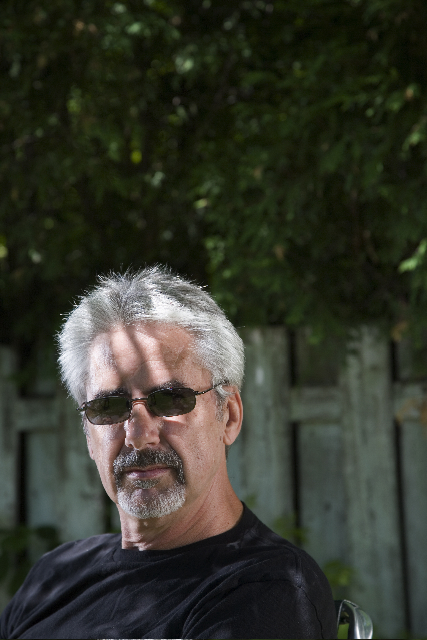
    Photo credits: Lisa Henderson (Batman doodle, drawn by Lynn Henderson); Vanessa di Gregorio (headshot)

  • Writing Tragedy by Jack Todd

    Writing Tragedy by Jack Todd

    In any life, there are events that shake us to the core. Some occur when we are very young, and they remain the reach of memory. Others persist in detail so heightened that it verges on the surreal, as if painted onto our retinas by a Salvador Dalí employing a tiny brush.

    When I was eighteen months old, I was trampled by a boar hog with tusks. He ripped my head open, left a deep dent in my skull and nearly took out my left eye. Had my father not been able to kick the five-hundred pound beast away just in time, he would have eaten me for breakfast.

    I have no recollection of the event whatsoever, except what I was told by my parents, and the occasional nightmare, in which hogs are rooting around in my bed.

    More than forty years later, I stood in the season’s first snowfall on the slopes of Mount Royal, witness to the surreal aftermath of the massacre at the École Polytechnique. As city columnist for The Gazette and one of the first journalists to arrive on the scene, it was my job to write something coherent about an event so overwhelming that even then, I understood that there was a truth about it that would lie forever beyond language.

    Those two incidents represent the poles of my writing life. One is not recalled at all, the other remembered in hallucinatory detail. One is intensely private, the other entirely public. The only thing the private near-tragedy and the public tragedy have in common is that I have found them both extraordinarily difficult to write.

    In one form or another, I have attempted to get that boar attack into satisfactory prose for decades; most recently, it appears as a chapter in a new novel called Rose & Poe. It was a pivotal event in my family because my mother never forgave my father for letting me get into that corral. She was laid up with a broken leg and he was supposed to be watching me, but he was distracted by a horse he was working, and my near-fatal injury became the focal point for her intense hostility toward the feckless man she married.


    “… it was my job to write something coherent about an event so overwhelming that even then, I understood that there was a truth about it that would lie forever beyond language.”


    This is, or should be, the stuff of fiction. On the other hand, the difficulty with my endless attempts to write the story of the Polytechnique massacre is that the tragedy is so unequivocally real. Above all, every time I try to write it, there is a sense of duty to the fourteen women who were slain that day, a need to live up to their memory – and a perpetual sense of failure in meeting that task, which carried through to my recently completed 25th anniversary piece for The Gazette.

    The writer’s role in these public tragedies is particularly important in our age of disposable grief. As public tragedies are endlessly invoked, they lose their power to shock and, eventually, their ability to arouse any genuine emotional response whatsoever. Think of the crumbling towers of the World Trade Center, and the gap between our reaction today and during those first horrible hours on September 11, 2001 when we watched it unfold on our television screens.

    As an event is trotted out again and again on television, accompanied by the sententious tones of the talking heads who tell us how to feel – and when we are expected to stop feeling, meaning as soon as the next tragic event crowds itself into the news cycle – the repetition drains it of its emotional charge. The result is a pro forma response, accompanied by the public expectation that we behave in a certain manner: buy a poppy, express again the shock, horror and outrage, take part in public displays of grief that have been hijacked as photo ops by politicians – and move on.

    Given sufficient talent, persistence and compassion, a writer ought to be able to get behind all that, or, at least, to work at a tangent to the prevailing winds in order to tap into an authentic well of emotion and to provide new insight

    “The writer’s role in these public tragedies is particularly important in our age of disposable grief.”

    That is easier said than done. We have many potential responses to catastrophic events. Silence, even for writers, is one. There is something noble about remaining silent in the face of the most deplorable events – except that when you are a professional writer, the only way to avoid writing about them entirely is to walk away from your career. If you choose to write you will have to accept that you will always fall short, that you will come up against the boundaries of talent and perception, that you will always feel some more profound truth lies just beyond your grasp.

    Our aspirations, the stories we imagine that we will write, are always greater than the result. When the story we are trying to get at is not one of great import, we can shrug and move on. After all, even the most deceptively simple narratives are fraught with pitfalls and opportunities to founder. When the occasion is one of those iconic moments that shape our age, especially when the core of the experience is profoundly tragic, the inadequacy of mere words is inevitably more painful to a writer struggling to live up to the demands of the craft.

    Ultimately, to struggle and fail when the stakes are higher imposes a greater burden – but it is one we have to accept if we are to write at all. And with each new failure, you tell yourself the same thing:

    Next time, I’ll get it right.


    Jack Todd is a native Nebraskan whose flight to Montreal during the Vietnam War is the subject of his QWF prize-winning memoir, The Taste of Metal. Todd has been a columnist for The Gazette for the past twenty-five years and has also published three novels.


  • The Creative Power of Memory by Shelagh Plunkett

    A_picture_is_worth_a_thousand_words

    “– but there’s one great advantage in it, that one’s memory works both ways.” – the White Queen, Through the Looking-Glass

    I’m a writer of literary non-fiction and my first book is a memoir. Seems likely that memory would be important to my work. It is. But it’s of equal value to writers of all stripes – poets, or those who write short and long fiction and any of the myriad forms non-fiction takes. Memory is one of the most powerful tools any artist or creative person has in her arsenal. As in physics, so in literature: one cannot create something from nothing. Creativity is the combining of bits and pieces of memory in a unique way. The way you’ve made that character walk is because, whether you consciously remember it or not, you once saw somebody or something move that way.

    Since writing my memoir, I’ve been asked frequently how I was able to remember in such detail events that took place more than thirty years ago. It’s caused me to investigate the nature of memory: how we retain detail, how we access those details and how we can enhance our ability to remember events sharply and fully.

    On one level, there are tricks that help. To retrieve the details of a life in the tropics, I ate Guyanese food, listened to Indonesian angklung music, played the mid-1970s hits of the Mighty Sparrow. My father had shot hundreds of slides and many hours of Super 8 film when we lived overseas. I sat in a dark, hot and muggy room and played those over and over and over again. I found obscure websites where the recorded songs of birds all over the world could be played. I used Google Earth to find the homes I’d lived in and to retrace the path I took from home to school.

    But those tricks will only get you so far. They’ll help place you in a context and they will start triggering your memory, but to go further, to make the emotional connection that is needed for the best work, you’ll have to do something that is counterintuitive. You’ll have to forget to remember.

    The funny thing is, this forgetting to remember is also what we need to do when we are encountering or experiencing something that we hope to set firmly in our memory bank for future recall.

    How do you forget in order to remember? It’s a bit like what a dancer, a painter, a musician must achieve to move from good to great. You have to become so utterly familiar with the steps of the dance, with the details of the memory, that you can move into it without being aware that you are doing so. Forget what you are trying to do. Forget that you are remembering. Mesmerize yourself with the particulars of your memory and then stop paying attention to them. Wander into the blank spaces between, find yourself experiencing rather than consciously remembering events.

    That’s all about recall, but a very similar process takes place when we work hard to encode and store memory. It is much the same as what experts tell us to do in order to enhance memory, to keep a memory intact with all its unique and valuable details for future use in that story you’re starting to write: Pay attention. Focus narrowly on the details. Shut off the nitter-natter that is so often going on in all our heads at all times and just listen, smell, see the particulars of what is going on around you. If you can do that – and don’t give up; it’s hard but manageable – you will be staggered by the results.

    You’ll also have upped your store of that which makes your writing good: concrete detail.


    Shelagh Plunkett won the CBC Literary Prize for creative non-fiction in 2007. Her winning essay grew into a memoir, The Water Here is Never Blue, published by Penguin in 2013 and shortlisted for both the Mavis Gallant Prize for Non-Fiction and the Concordia University First Book Prize. Visit her blog at http://shelaghplunkett.wordpress.com

    Photo credits: Niamh Malcolm (headshot); “A picture is worth a thousand words” by HikingArtist (top). Licensed under Creative Commons Attribution-Share Alike 3.0 via Wikimedia Commons.