Tag: nonfiction

  • Pushing Past the Fear of Writing Nonfiction—By Chanel M. Sutherland

    Pushing Past the Fear of Writing Nonfiction—By Chanel M. Sutherland

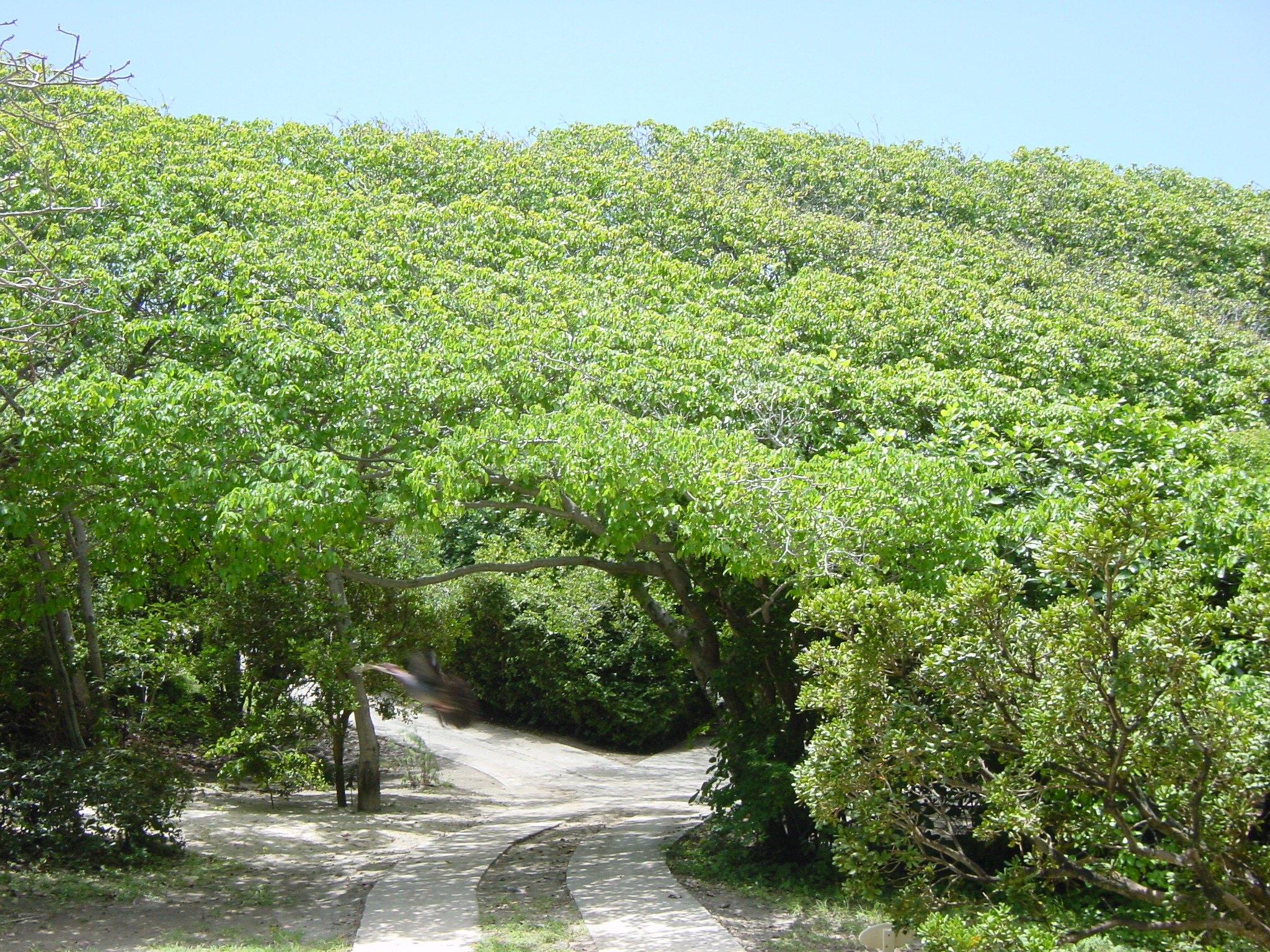
    The trees of St. Vincent and the Grenadines.


    If I’m being completely honest, writing nonfiction terrifies me. 

    But recently, I’ve felt compelled to write the truth.

    To write the stories that have shaped the trajectory of my life and—as if that wasn’t enough—have lodged themselves into my creative conscience, demanding to be told at all costs.

    It started with a single story, “Umbrella,” that I wrote out of pure exigency two years ago. 2020 was a heavy year for many reasons. The world became saturated with personal stories and confessions. Everywhere I turned—social media sites, the news, books, conversations with friends—people spoke out about their experiences with various kinds of discrimination and violence. 

    Suddenly, I found myself confronted by my own memories. They rose out of the trenches of my mind like shadows growing bolder in my darkest hours. They wanted to be written.

    Before, if you had asked anyone who knew me as a writer, they would have told you that my stories mainly deal with the unreal or unproven: futuristic robots, aliens walking around in human skin, scarecrows climbing down from their perch to seek revenge on those who impinge on their domains. This is the realm of storytelling where I feel most at home. One can argue that I write these stories to stay detached from real life.

    I had spent more than two decades circumnavigating my memories and deferring the day when I’d have to finally write about them. When they began to emerge unprompted, I knew my time had come. For the first time in a long while, I found myself turning away from speculative fiction to write something that made me uncomfortable. Nonfiction.

    “Umbrella” is the second nonfiction story I have ever written and the only piece I have shared with readers. Perhaps it is short and breathy for that reason. A panic attack on paper. When it won the 2021 CBC Nonfiction Prize, not only was I surprised, I was frantic. 

    Was I ready to expose myself in this way?

    The simple answer was no, but I’ve since learned that nothing is ever simple when it comes to writing. If it were, it would hardly be worth it.

    It became clear that nonfiction had chosen me, and I had no choice but to take the plunge and see it through. Once I decided to start curating a collection of stories based on my experience as a Black Caribbean immigrant child, I faced another difficult question.

    How much can I reveal about others in my stories?

    In this case, the “others” were primarily my family, and without their support, I knew that I would not be able to write the collection. There were no stories without them. My mother was the catalyst for many integral moments in my childhood. My grandparents the glue that fixed the pieces together in many ways—however imperfect. 

    I’ve always been a solitary writer. I prefer to be completely isolated when writing, and I usually avoid discussing any story until it is completed. With these stories, I knew there were people I needed to speak to and include from the start. 

    Not only was nonfiction changing my craft, but it was also now impeding on my process.

    Having that first conversation with my mom was one of the greatest moments we have shared. It was a warm autumn day; mom and I were meeting up for our weekly walk around the neighbourhood. I don’t recall how I broached the subject of writing the stories. Knowing myself, it would not have been direct.

    What I do remember is the excitement mom expressed in learning that I wanted to do this. She answered any questions I had, voluntarily filled in gaps in my recollection, and even offered to help with the research. Her reaction trickled down to my sisters and aunts, and before I knew it, everyone else was on board.

    I will forever cherish a messaging thread between mom, my sisters, aunts, and me. We were trying to remember the name of a tree native to St. Vincent and the Grenadines. We all knew it by a different name and had our own tales about it, but no one could figure out its one true name.

    This tree became the emblem of my nonfiction endeavor. A thing from my family’s collective past that—though still elusive—we are learning more about each day from one another. 

    As I continue to research and write these nonfiction stories, there is a certain sense of unshackling from the past. And while I begin to see who I am today refracting from each new piece, I am also illuminated by another light: that of my family. 

    So, maybe being terrified of writing nonfiction is not such a bad thing after all.


    Chanel M. Sutherland is the winner of the 2021 CBC Nonfiction Prize for her story “Umbrella” and the recipient of the 2022 Mairuth Sarsfield Mentorship, a component of the Quebec Writers’ Federation’s Fresh Pages initiative. Born in St. Vincent and the Grenadines, Chanel moved to Montreal, Quebec when she was ten years old. She holds a BA in English Literature from Concordia University, and is currently writing her first book, a collection of short stories that explore the Black Caribbean immigrant experience. csuther.com

    Photos: Lyn Gateley via flickr; Chanel M. Sutherland (headshot)
  • I Thought I Was Writing a Potboiler—By Robyn Sarah

    I Thought I Was Writing a Potboiler—By Robyn Sarah

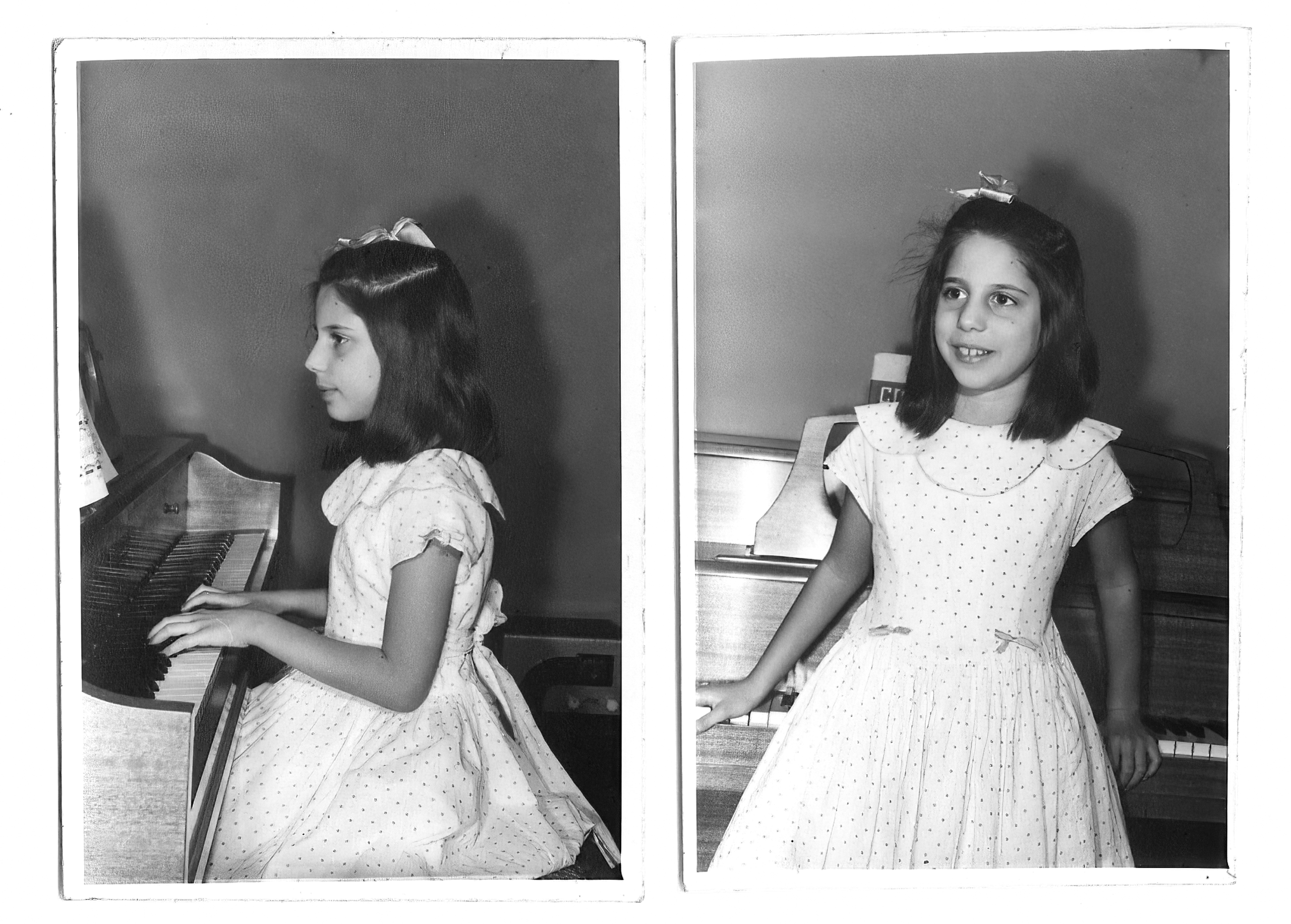
    Robyn Sarah, age eight. (Photo courtesy of author)


    I’m a literary writer to the bone: nothing I’ve written has ever paid enough to keep food on the table for long. But in 2009, during a spell when my muse for poetry and fiction seemed to have gone AWOL, I had the idea to write a short personal narrative, a book I could finish quickly and get published quickly. A potboiler, so to speak—not in the commercial sense, but to reassure myself that I was still a writer. It would be a story about returning to study piano at the age of fifty-nine, after a thirty-five-year lapse, culminating (hopefully) in a modest recital on my sixtieth birthday. A debut at sixty! I had never performed on piano as a teen or young adult. Of course, I would have to live this story before I could tell it. One year of goal-oriented piano lessons, during which I would track my progress in a journal; then a few months to turn the field notes into a book.

    Ten years later, the manuscript still wasn’t finished. And it wasn’t short.  A two-year purgatory of editing and revising had yet to begin. Music, Late and Soon was finally published in August 2021. Only vaguely does it resemble the book I thought I was going to write. What happened? How did I lose control over the best-defined, most straightforward writing project I had ever conceived? 

    The key may be in that term, “writing project.” Poetry is my primary genre, and while some poets do conceive poetry collections around a premeditated subject, I’m not one of them; my poems have always been composed individually, to be gathered later into collections. Even individual poems tend to begin without a clear subject in mind, but rather with some observation of the moment—an image, a feeling, a memory fragment, maybe just a phrase I like the sound of. My short stories begin similarly; there’s never much plot or a clear idea of where I’m going. This makes for some anxiety while writing, but it’s my natural process as a writer.

    When I contacted my old piano teacher (then in his eighties) and outlined my project, asking if he might be willing to give me some guidance, he wondered why I was fixated on the idea of performing, especially on a schedule. “Why not just start working again, and see where it leads? Playing the piano is like any art form, any creative process. It can’t be forced, it doesn’t work by deadline.”

    In retrospect, he had answered my “What happened?” question before it could need to be asked—had I really been listening. Wasn’t I listening? I thought I was. I thought he was saying something I already understood as a writer. But I didn’t think what he was saying applied to the book I had in mind. This book was going to be different. It was going to be easy—a straight line from here to there. The return to lessons, the year of preparation, the recital, The End.

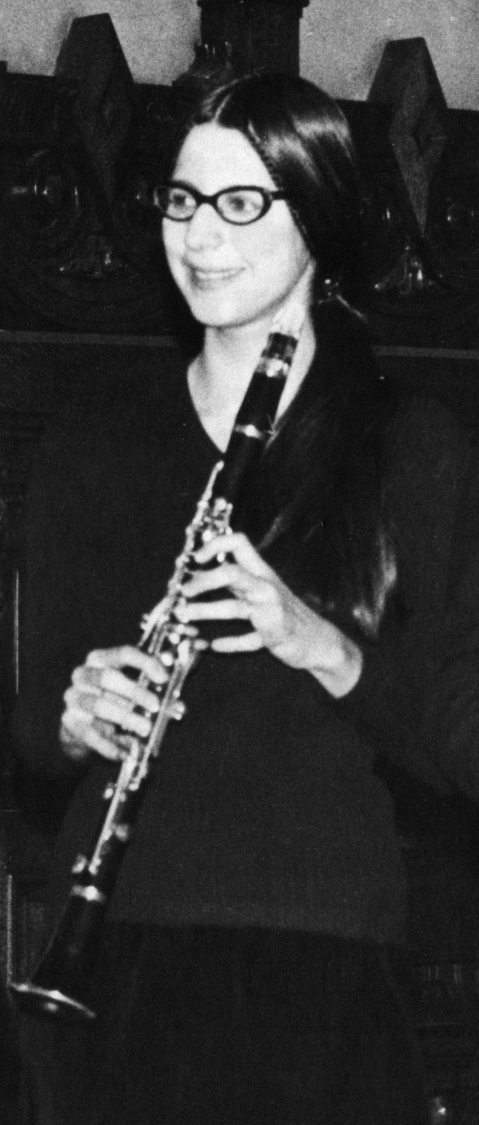
    But wait. A “return” to lessons implied a past. Why had I stopped studying piano? Why was I now fixated on the idea of performing? Moment of truth: I might need to provide a bit of backstory if I expected to interest a reader in my late-life musical venture. I did, in fact, have some experience of musical performance; the trouble was, it wasn’t on piano. For a decade I had studied clarinet in a professional music school, aspiring to a career as an orchestral musician. I had graduated, but had not pursued that path. Nor had I ever really looked back or asked myself why.

    Robyn Sarah, circa 1972.
    (Photo courtesy of author)

    Obviously this wasn’t the time or place to get into all that: it would just complicate the main story. Sticking to my plan, I began studying piano again, keeping detailed notes on the lessons. In tandem, I wrote some reminiscences of childhood: earliest memories surrounding the piano, early lessons with three different teachers before I came to study with the mentor I’d just reconnected with. I drafted a first chapter based on this material—a summary that, I thought, adequately contextualized where I was coming from. It glossed over my music school years on clarinet, allotting them a passing mention but keeping the focus on piano.

    Next moment of truth. I read the chapter aloud to a friend I’d known since high school, who had studied piano with the same teacher-mentor and was now a professional pianist and educator. After listening affably, expectantly, to the end, he was silent a moment, then blunt. “So, what’s the purpose here? I’m not getting a sense of why I should care about all this. And how could you leave out your ten years as a clarinetist?”

    “I didn’t! They’re there.” I pointed to the relevant paragraph. 

    “What, that’s it? Are you telling a story, or writing a CV? Those years were a fundamental part of your musical history! You aren’t being honest with the reader here. This isn’t you. I’m not hearing your real voice, because you’re not telling your real story.”

    My heart sank, because I recognized immediately that he was right. The bottom had just dropped out of my “project.” But once I accepted that, the book suddenly came to life. I realized I did have a story to tell—a buried one, on which the significance of the current one depended. I was going to have to delve into that unexamined past and make some sense of it, find out how it connected to my present moment. There were mysteries to explore here…

    I began asking myself questions: one led to another. I dug up and pored over surviving journals and letters from my high school and music school years. Present self and past selves collided and seemed to have things to say to each other. The pianist and the clarinetist had things to say to each other. The writer and the musician had things to say to each other. They all had questions of their own about creative process: what nurtures it, what can get in the way of it?

    A familiar anxiety swept over me as I realized that my “potboiler” was morphing from a brief narrative with a one-year time frame into a musical autobiography spanning my whole life. How was I going to weave all these strands into something coherent and beautiful that I sensed could be made of them, the way a composer weaves together multiple voice-lines in contrapuntal music? A familiar excitement tempered the anxiety, giving me the patience to spend ten years finding out.


    A Biblioasis Interview with Robyn Sarah

    Robyn Sarah reads her poem “Station”, from her Selected Poems, Wherever We Mean to Be (Biblioasis, 2017).

    “The book’s title is taken from this poem. I chose it because it expresses something that runs through all my poetry: a fascination with the way past and future, memory and intention, inhabit our present moment.”


    Spotlight on Wherever We Mean to Be by Robyn Sarah


    Photo by Stephen Brockwell

    Robyn Sarah is a Montreal poet and writer whose 2015 poetry collection, My Shoes Are Killing Me, won the Governor General’s Award for that year. Her “potboiler” was short listed for last year’s Mavis Gallant Prize for nonfiction.

  • From Tragedy to a Book—By Catherine McKenzie

    From Tragedy to a Book—By Catherine McKenzie

    I’ve always thought of writers as magpies—we’re known for thievery, and that’s often what we do. We steal little parts of life, sometimes from our own experiences, but often from other people. A conversation overheard in a restaurant. A fight observed in the street. A line of dialogue said by a friend. We’re always collecting, gathering, storing so that we can use what we’ve gathered later, at the appropriate time. Sometimes the connection in the finished work is obvious and sometimes more tenuous, but if you know where to look it’s there.

    This happened to me in a direct way a year and a half ago when my brother-in-law’s mother was suddenly diagnosed with brain cancer and given six weeks to live. The whole family was shocked and saddened, me included. We’d all spent a lot of time together over the years, and she was a vibrant woman in her late sixties who seemed to have boundless energy. How could she be gone so fast?

    As I watched this real-life tragedy play out, my writer’s brain started cataloguing things and asking myself questions. For instance: faced with the same stark deadline, would I spend time going through my things and giving them away? Or would I speed away to a beach somewhere and leave the sifting to others? Would I make a general announcement on social media or through email, or leave it as a family secret that would come as a shock to many once the inevitable happened? Would I try to investigate how this had happened to me—what had been missed, how had it progressed so quickly—or put down my questioning brain and let it all go? And most importantly, was six weeks enough time to leave the world at peace, or was that impossible?

    This is what it’s like to be a writer! Or at least, this writer. In all of these questions, an idea formed. I write suspense, so what was the suspense twist to this premise—a woman given six weeks to live? I researched glioblastoma and found that in some cases, it might be linked to exposure to certain toxins. Aha! Maybe this woman—this theoretical woman, not the sweet woman I knew—had been exposed to a toxin. And maybe this exposure had been on purpose. Maybe someone wanted to get rid of her and they’d tried to poison her? But the poisoning hadn’t worked and here she was, a year later, with an unintended consequence? Interesting, interesting. The idea was sticky—it stayed with me—but, to be honest, it scared me. Was spinning a book out of something so close to me wrong? Was it the right way to honor her? I struggled with that.

    But I also had to propose some book ideas to my new editor. I had two—another idea that I’d been thinking of for longer that was more fleshed out, and SIX WEEKS TO LIVE. I sent them off, and soon I heard back. Oddly, another one my editor’s writers had a similar idea to my “other idea” and she’d already approved that. But she was intrigued by Six Weeks. Write that one, she said. So, I started to. Nervously. I came up with the plot—a woman trying to solve her own murder before she passed away. I added suspects to her life—a soon-to-be ex-husband, her adult daughters. I made sure to make my main character as different from the real woman as possible. In fact, by the time the manuscript was done, the only similarity between them was the diagnosis. But the book was for her. Because of her. I wanted to honor that. I dedicated the book to her, and I let my brother-in-law know what the book was about. He was gracious—as he always is—but part of me still wonders if he’s truly okay with it. 

    But this is what writers do. We’re magpies. We steal things. Hopefully what we give back is enough compensation.


    Catherine McKenzie was born and raised in Montreal, Canada. A graduate of McGill in History and Law, Catherine practiced law for twenty years before leaving the practice to write full time. An avid runner, skier and tennis player, she’s the author of numerous bestsellers including Hidden, Fractured, The Good Liar, and I’ll Never Tell. Her works have been translated into multiple languages and The Good Liar, You Can’t Catch Me and I’ll Never Tell have all been optioned for development into television series.

    Visit her online at www.catherinemckenzie.com, on Facebook at http://www.facebook.com/catherinemckenzieauthor, on Instagram at @CatherineMcKenzieAuthor and on Twitter @CEMckenzie1

    Six Weeks to Live publishes April 20, 2021 in Canada. Join Catherine for the Canadian launch! Event Link: https://www.facebook.com/events/276347913828110

    Photo credit: Jyrki Salmi (header banner)

  • Writers: The Truth Can Set You Free—By Tamara Jong

    Writers: The Truth Can Set You Free—By Tamara Jong

    Ma was so many things; a Jehovah’s Witness preacher, an alcoholic with a troubled past, and an avid reader, poet, and writer. When she was sober she was engaged, a bright star in our neighborhood and religious community. But then she was also a yeller: when she kicked her sisters out of her life, she literally cut them out of any photos she had. Ma would punish me because I chatted in class, ate pumpkin seeds during Halloween, and was sent to the corner by the teacher. Lying wasn’t an option to save my own hide.

    TamaraJongreadingyouth
    A younger Tamara Jong.

    I escaped by reading fiction. Little Bear by Else Holmelund Minarik was an early favorite for me. In the first set of stories, little bear’s mum makes him clothes when he is cold and throws him a birthday party. Nine-year-old Pippi Longstocking took me on all her adventures with her monkey Mr. Nilsson on the South Seas. Although she was parentless, she seemed resilient and nothing could stop her. I related to A Wrinkle in Time’s Meg: she never seemed to fit in anywhere and was devoted to her father; my dad was my idol until Ma kicked him out for his infidelities. I moved on to the worlds of the Brontës and Austen, where I felt safe and where the ending always seemed to work out. I would write and draw pictures of my stories and plays. There was no such thing as writer’s block.

    My first attempt at writing fiction as an adult came under the guise of autobiographical fiction. I mixed up truth and fiction so no one would know that it was mostly me I was writing about. My story was about Keaton, a suicidal fourteen-year-old. Keaton’s angelic mother worked all the time, made a hell of a bunch of tea, and didn’t really know her kid or see her for who she was. Keaton wrote lousy poetry, had a bestie, and obsessively liked a boy named Josh. She ended up getting help after being hospitalized, taking anti-depressants, and undergoing extensive therapy. I wrote it after my own stint in the hospital after a suicide attempt. But there were truths missing in the story that I couldn’t write down yet. I made the father the alcoholic and the mother a loving TV mom, a cardboard cut-out of a mother. There was nothing about religion anywhere. Then I got stalled and didn’t work on it.

    Things didn’t really click for me until two year later, when I decided to try out a non-fiction writing course with Ayelet Tsabari. God, she made me fall in love with it. I wrote and wrote and wrote. I couldn’t stop. The words came easier than in fiction for me. The only things that interfered with my writing were my day job and sleep. Ayelet introduced me to her stories and so many other great diverse writers and made me realize that there were so many ways to spin a story.

    I took a second course with her, and then another. It was the first time I had written about being a Jehovah’s Witness and my parents, my siblings, and our lives. Once I had a taste for non-fiction, I didn’t want to let go. I started reading less fiction and more non-fiction. I submitted to contests and literary magazines, and revised my stories. When my creative non-fiction piece, “Father Hallowed Be Thy Name” got accepted at RicepaperMagazine, I was ecstatic. Ayelet encouraged me to write a memoir. I had only started writing non-fiction in her classes and she believed in me! Something had started shifting for me.

    In an earlier creative writing class, I had written fiction about a Catholic girl who got pregnant, a dog called Jehovah, and Medusa. Nothing was really wrong with those stories but they lacked a depth of what I really wanted to say. They were starting points that were necessary for me to get where I had to go. Testing out the waters until I could go in myself, immerse myself in the work.

    I realized I had been hiding behind fiction so no one would know about my real life and who I was. What if others judged my life choices or no one wanted to read my stories, or they thought that I had nothing original to say? I was terrified of people’s reactions. I had been so good at hiding my trauma. When I was penning fiction, I could take those risks. After all, it was imaginary. No one would ever know it really happened.

    When I shelved the idea of writing a fiction novel, non-fiction stories emerged in its place. I’ve been working with them for months now, reading them, revising them, losing and finding Ma, collecting our stories together. Non-fiction freed me to tell my real-life story on the page in a way that fiction couldn’t. When I was growing up fiction had protected me by letting me escape in stories, to live another’s narrative.


    Tamara_Jongph_Photo_Credit_Charles _MarschuetzTamara Jong is a Montreal-born mixed-race writer of Chinese and European ancestry. Her work has appeared in Ricepaper, Room, carte blanche, The New Quarterly, Invisible Publishing, and Body & Soul: Stories for Skeptics and Seekers. She is a graduate of The Writer’s Studio (Simon Fraser University) and recently had her piece “Thanks for All the Lice, Pharaoh” longlisted in The New Quarterly’s 2019 Edna Staebler Personal Essay Contest. You can find her on Twitter @bokchoygurl.

    Photo credits: Tamara Jong (header image); Charles Marschuetz (headshot)

  • The Circle of Mentorship—By Shelagh Plunkett

    The Circle of Mentorship—By Shelagh Plunkett

    Linda Kay—author, journalist and teacher—died last October. In 2006 she was assigned to mentor me by the Quebec Writers’ Federation, and in the twelve years that followed became a great friend as well as remaining a generous-hearted and gracious advisor. In the months since she died, during the hundreds of times I’ve missed being able to email or call her, I’ve thought often about what I’ve lost without her in my life and what I learned from having her in it. Perhaps most importantly, Linda showed me how essential mentorship is for a writer.

    Linda Kay
    Linda Kay

    Linda’s achievements as a writer and teacher were impressive (including no less than a Pulitzer won as part of a team early in her career), but recording them here would leave nothing more than a superficial sketch that failed to convey who she was. Similarly, outlining the empty space that her death has opened in my life would leave a hollow impression of our friendship. I’m left wanting to convey one of the most important things I learned from Linda: that mentorship is essential for a writer.

    When I moved to Montreal, I joined the QWF to meet writers. I applied to the mentorship program and was introduced to Linda. The first time we met she brought the essay I’d submitted with my application—a short piece about growing up in Guyana, in South America. “Send this in to the CBC Literary contest,” she urged me.

    I’d written it in a flurry of frustration one afternoon. It was the sort of writing I wanted to do but was unlike anything I’d ever tried, because it was not the kind of piece my freelance clients were interested in publishing. I didn’t know if the piece was good or bad, but I’d had fun writing it. Linda was adamant, so I took her advice.

    She was right; the essay won the CBC Literary Award for creative non-fiction. Linda told me my life would change, and it did. With that award to reflect on and with her encouragement, I began to think I could write more than just simple news pieces, arts profiles, or lifestyle columns. I began to think I might have the chops to string a few words together that might have a deeper purpose, that might offer something more to a reader than a few minutes of entertainment. Linda suggested I approach publishers. “They’ll pay attention to you now,” she said. She was right. Penguin signed a contract with me and my memoir of adolescence overseas—born out of the essay I’d written—was published in 2013.

    In the years that followed, Linda continued to inspire me to take the work of writing seriously, because that’s what she did. She applied all her skill, insight, and effort to everything she did, from writing to teaching to friendship; to every assignment, be it a book or a short piece for Costco Connections. Ultimately, what we try to do as writers is communicate. Linda showed me that without giving one’s full passion, focus, and commitment, communication isn’t worth the effort.

    Linda didn’t tell me she was sick until quite close to her death, but in her last months we wrote often and our conversations continued to ramble around writing, family, new and old loves, life. She remained as she’d always been, even in our last correspondence, an email sent less than a week before her death from her hospital bed. Linda wrote that she’d passed on my name and the title of my book to a Guyanese intern she’d met, encouraging the woman to seek out my writing. Right to the end, Linda remained a supporter and mentor.

    It is not an exaggeration to say I would not be a published author, and would not be writing still, if not for Linda. And now, things have circled back for me: I’ve been hired by the QWF to fill the role for someone else that Linda did for me when we first met. As I key these words, I am embarking on three months of mentoring a promising writer in our community. Though I miss Linda immensely and often, I’ve not lost the gifts she was lavish in bestowing. I will turn to my memories of Linda now and into the future, knowing that by doing so I’ll be motivated to achieve much more than I imagine myself capable of. More significantly, her memory will inspire me to pass on to my mentee what Linda gave me as a mentor.


    ShelaghPlunkett_photocredit-NiamhMalcolmShelagh Plunkett is a past winner of the CBC Literary Prize for creative non-fiction. In 2013 her memoir, The Water Here is Never Blue, an extension of her winning essay, was published by Penguin Canada. It was shortlisted for both the QWF Mavis Gallant Prize for Nonfiction and the QWF Concordia University First Book Prize. Shelagh now lives in Montreal, where she is at work on too many projects. Her past hometowns have included Georgetown, Guyana; Kupang, Timor; Vancouver, Victoria, and Toronto; Ricón-de-la-Victoria, Spain; and Salt Spring Island.
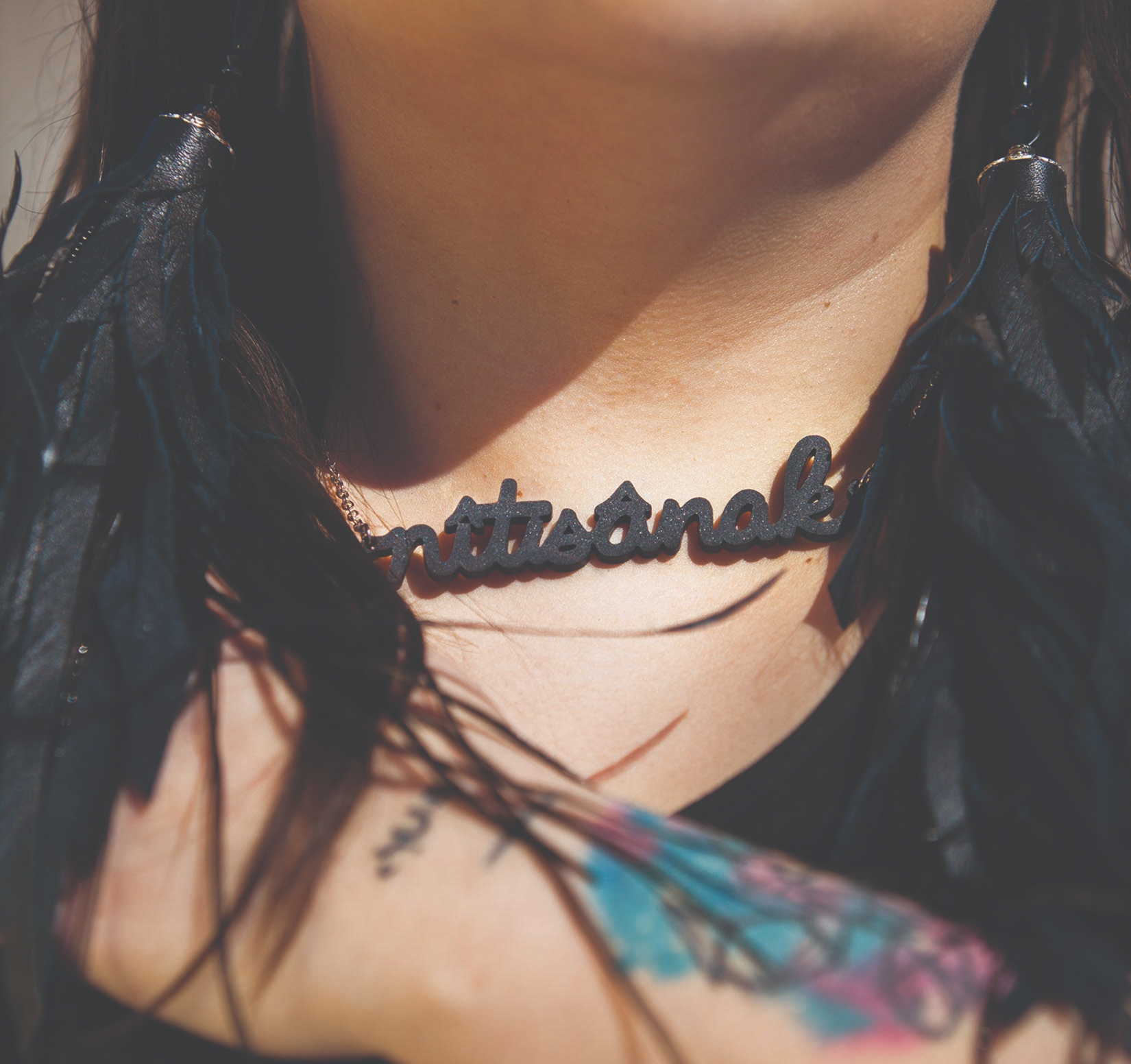
    Photo credits: Flickr (header banner), Courtesy of Emily Kay-Rivest (photo of Linda Kay), Niamh Malcolm (headshot of Shelagh Plunkett)

  • Trauma Ethics—By Lindsay Nixon

    Trauma Ethics—By Lindsay Nixon

    Recently, I was lucky enough to sit on a panel with fellow writers Erín Moure and Will Aitken. During the question period, an audience member asked: Is it ethical to write, publish, and profit off books that include accounts of personal traumas? An interesting question, indeed, and one that Indigenous writers are often pressed to answer.

    Having just published my first creative non-fiction collection, nîtisânak, through Metonymy Press, I’m no stranger to weighing the ethics of writing about myself, and my relations, embodying various forms of trauma. I’m especially conscious of the vulnerable states some of my Indigenous relations live in, a fact that remains ever in the back of my mind when I write creative non-fiction. I’m also interested in the role that audiences play in how trauma-based writing is received. I would argue, even, that the audience—the reader—has a great deal of responsibility in how Indigenous trauma is perceived.

    As a thought experiment, I will draw examples from the ethics associated with publishing personal traumas in the recently-released television series based on a Shirley Jackson novel, The Haunting of Hill House. It tells the story of the Crain children, who grew up in (spoiler alert) a haunted house, experiencing various traumas culminating in their mother’s suicide one supernatural night. Oldest son Steven has made millions selling books depicting the now infamous murder trial against his father, after his mother’s death was presumed a homicide.

    Steven does not gain consent from the family members whose trauma he depicts. He also describes trauma he has not himself experienced. Viewers learn it was actually the other siblings who saw everything that happened that night, while Steven was fast asleep. What Steven depicts, as his sister would later tell him, is wholly untrue. He takes liberties with many events that occurred, fabricating his own account based on bits of information he has gathered over the years. It is not just that he publishes experiences that are inaccurate and not his own, but that the people who experienced them are still working through their understanding of what did happen. Steven’s publication of his fabricated version of events only further exacerbates the siblings’ already fragile states.

    Yet Steven’s stories are presented as authoritative truth. Understanding “truth” in this context means understanding positionality. When Steven goes to visit a fan, she is enamoured by Steven’s celebrity. She assures him he did the right thing by publishing and asks when the next book will come out. Steven’s authority is assumed.

    The Crains’ story is supernatural fiction. But for Indigenous peoples in Canada, the embodied traumas of colonialism can be a daily experience—not unusual, just a facet of everyday life. When Indigenous narratives are described as “traumatic,” I wonder: whose truths are we centering as the consciousness of Canada’s literary canon? Whose authorities, whose “truths” are deemed true, and whose are not?

    In reply to the question, Is it ethical to publish (Indigenous) trauma, I would ask: trauma to whom? Who gauges what constitutes trauma? Now, are we talking about the ethics of writing about trauma, or the ethics of writing about Indigenous lives? Because, the lives of Indigenous peoples might seem traumatic to a largely white audience. What some might call trauma is just what we call life. So are we just not allowed to write our lives? Some of the power I feel comes through in my own writing, and that of my peers, is the biting wit we can tell our stories with despite what some might call “trauma.” As I told the audience member who asked about trauma, there are so many Indigenous narratives that haven’t been told because of the overwhelming whiteness of CanLit, as Vivek Shraya termed it.

    The literary industry and Canadian publics are constantly, and especially, denying the truths of Indigenous women. McClelland & Stewart recently garnered negative media when it was uncovered that they had censored a portion of Maria Campbell’s Half-Breed that described her account of being raped by a Mountie. The ethics of Indigenous peoples writing their own lives is constantly called into question because of a normalized culture of paternalism in publishing when dealing with Indigenous stories. A white-coded lens propagates the assumption that Indigenous peoples are not equipped to make judgments about what stories are ethical to tell, and what stories might be harmful to tell, because their lives are positioned as inherently traumatic. Colonial actors such as ethics boards, in the supposed interest of Indigenous peoples, are seen as better equipped to make authoritative judgments regarding Indigenous knowledge and knowledge production about Indigenous communities than Indigenous communities themselves. All this denies Indigenous peoples self-determined representation. Indigenous peoples internalize that their truths are not, indeed, true.

    Indigenous writing forces Canadian literary communities to confront the question of whose truth is witnessed as authoritative truth, and whose truths are not considered truth at all, because they negate a naturalized colonial and capitalist order in Canada (and Canadian publishing). Questions about the ethics of publishing trauma are seldom asked about fiction writing, though many a fiction writer has smarmed to me over cocktails, It’s all non-fiction darling, we just change the names. I remember reading Joseph Boyden’s The Orenda for the first time, taken aback at the incredibly violent, traumatic, and disturbing depictions of exploitative Indigenous trauma. But, because it was fiction, because it was in the name of literary writing, somehow it was presumed ethically above board. The Orenda is an example of the literary aesthetic of trauma written for a voyeuristic, non-Indigenous audience. It should come as no surprise, then, that it remains one of the most successful works of “Indigenous” fiction in Canada.

    I won’t say that writing about trauma is always black and white. In my book nîtisânak, I was very thoughtful about the narratives I did include. In fact, a lot of it deals with working through my relationships with my white relations. That said, it would be nice to have the kind of conversations I want to about my work, not just from the perspective of the aesthetic trauma that CanLit so loves. Because I’m not trying to write about trauma. I’m just trying to write about what it’s like to be in this body. I’m just trying to write a beacon of light for all the other poor, queer, prairie NDNs trying to survive into the Indigenous future.

    As I wrote in my book: Don’t mistake my words for trauma porn, because this is just how it went down for us. If these stories can’t be told without yt* tears being shed, that’s not my problem. No, my trauma is not a commodity, but my story doesn’t always have to be uplifting, resurgent, or revolutionary to be my truth, either.

    * “Yt” is an abbreviation for the word “white.”


    Lindsay_Nixon_headshot_new

    Lindsay Nixon is a Cree-Métis-Saulteaux curator, award-nominated editor, award-nominated writer, and McGill Art History Ph.D. student. They currently hold the position of Editor-at-Large for Canadian Art. Nixon’s first book, nîtisânak, is out now through Metonymy Press.

    Photo credits: Dayna Danger (header image); Jackson Ezra (headshot)

  • What’s the refrain you keep circling back to?—by Jess Zimmerman

    What’s the refrain you keep circling back to?—by Jess Zimmerman

    The last personal essay I wrote started out as a travel guide. I wanted to write about secret spaces in Berlin, just a list of interesting off-the-beaten-path options for tourists—the kind of thing you might find in an in-flight magazine. Instead it turned into a lyrical 3,000-word piece about love and literature. “I didn’t mean this to wind up this way,” I lamented in a writers’ chat room, “but it’s just my personality. Everything I write boils down to ‘remember that time my marriage failed?’”

    “I feel you,” said my friend Angela Chen. “Sometimes I feel like all my essays come back to the thesis ‘I was a very anxious person and now I’m less anxious.’” Amused by the idea that we could express our entire writing careers in one sentence, I put out a call on Twitter: If you’re a writer of personal work, what’s the refrain you keep circling back to?

    The exercise proved to be wildly popular; I got nearly 100 responses. (By comparison, I had a recent tweet about gun control go mini-viral, getting about 1,500 retweets; there were still fewer than half as many replies to that tweet than to this one.) The idea of an obsessive writing theme struck a nerve. Most of us, it seemed, were using our writing to send constant, repetitive signals of personal distress: “I’m grieving,” “I’m sick,” “I’ve been abused.”

    Some examples:

    • “Grief permeates every aspect of my life but somehow I’m still alive.”
    • “Parenting is difficult and tiring, but magical sometimes. My kids are funny. Also, did I mention I’m tired, demoralized, and depressed?”
    • “My brother died. My other brother and I survived by clinging to one another. Then he died too. Despite it all, I wound up okay, and loved, and in a real place. But everyone died.”
    • “I am very ill and being very ill sucks.”
    • “I’ve suffered more sexual violence than I realized, but I’ve discovered x about it and I’m still not okay.”
    • “I want to be a better person, but it’s hard.”
    • “I’m terrified.”
    • “Please like me. Please.”

    “If you’re a writer of personal work, what’s the refrain you keep circling back to?”

    Dozens of people recognized immediately that everything we wrote, if you boiled it down, was an expression of the same hole in our hearts. I imagined us as castaways, trying to signal for help in any way we could: fires on the beach, messages in bottles, Morse code cast blindly into the stratosphere, each one carrying the same SOS. I’m terrified. I’m terrified. .. / .- — / – . .-. .-. .. ..-. .. . -..

    “Most of us, it seemed, were using our writing to send constant, repetitive signals of personal distress.”

    But I also started to notice refrains that stood out from the rest: people who had thought about what their individual obsessions meant for the reader. Maybe they’d taken the assignment more seriously than I had (I hadn’t really meant it as an assignment, after all!), or maybe they were just naturally more giving writers than me, more immediately attuned to the way their work was not only a personal exercise but a vector to bring value to others. Some of the best responses:

    • “I don’t know anything and have never known anything and no one ELSE knows anything and we are all striving after meaning and truth together.”
    • “Wrestling with how the labels we put on ourselves are always inadequate, which I’ve always known cause I’m biracial.”
    • “Shaky individual kindness is all we have because there is no system that will not ultimately betray you.”
    • “If you think closely enough about something, you can begin to understand why it will inevitably one day make you sad.”
    • “I’m plagued by a congenital loneliness and it’s probably some recent ancestor’s fault. But a lot of us are connected by how disconnected we are, and that’s kinda cool.”

    I describe myself sometimes as being obsessed with generosity in writing (other people’s, but also my own). So I was a little embarrassed about how self-centered and parsimonious my refrain was, stacked against some of the ones that spoke to me. An account of my individual history—“remember the time my marriage failed”—gives almost nothing to the reader besides a little more knowledge about me (not a particularly valuable currency). Angela’s SOS call—“I used to be anxious and now I’m less anxious”—was also inward-looking, with no hint of what value it might contain for the reader. Had we both been failing to live up to the principles of generosity?

    Luckily, I’m an avid reader of Angela’s (I even suggested one of her essays as a reading for the workshop I’m teaching for QWF on March 24!), so I know that her tongue-in-cheek description doesn’t say it all. Though the form of her essays is sometimes “I was a very anxious person and now I’m less anxious,” the substance is always something like “we seek certainty because uncertainty makes us anxious, but uncertainty can also be beautiful.” In other words, while her essays are sometimes about her, they’re always really about you. That’s always my goal, too—to say something about you, by way of saying something about me. Maybe I just didn’t finish describing my refrain; maybe it’s something more like “remember that time my marriage failed? Well, it was a distillation of the messed-up messages women get about love.”

    “That’s always my goal, too—to say something about you, by way of saying something about me.”

    When I initially wrote the tweet, I’d only been trying to make a self-deprecating joke about my particular monomanias. What I discovered, instead, was a reminder to take a step back from my work and recognize not only what refrain I kept on playing, but why. Why does my writing tend to tread familiar paths—why does all our writing do this, apparently? And what value can that hold?

    It’s not really a mystery why that tweet resonated; humans in general tend to want to communicate our pain and have it heard, and we keep worrying away at the same old griefs because, frankly, communication is hard and it doesn’t always work the first time, or the first twenty. We’re isolated on our separate rocky shores, so we keep broadcasting the same distress signal over and over, trying to get someone’s attention, trying to make a connection from our desert island across the huge gulf of the sea. The challenge, I think, is to make our signal not an SOS but a lighthouse: not I’m in distress and I need someone to know it, but there’s danger here, I’ve seen it, and I’m telling you before it’s too late. Recognizing the signal you keep sending, and how you send it, may be the first step in refining that signal into something that will help prevent wreck after wreck.

    “The challenge, I think, is to make our signal not an SOS but a lighthouse.”


    Jess_headshotJess Zimmerman is the editor-in-chief of Electric Literature. @j_zimms jesszimmerman.com

    Jess Zimmerman will lead the Quebec Writers’ Federation workshop “Gazing Beyond the Navel: Personal Essay for a Global Audience” in Montreal on March 24. This workshop is NOW FULL. To be added to the waiting list, please email workshops@qwf.org.

    Photo credits: See-ming Lee (header banner), Helen Rosner (headshot)

  • Tuesday, or Was It Wednesday?—by Joshua Levy

    Tuesday, or Was It Wednesday?—by Joshua Levy

    One Tuesday—or was it Wednesday? —I visited my parents.

    Written anything lately? asked my dad, during supper.

    I had. I fetched my laptop from my car and read a short story about my brother’s recent engagement to them while we ate.

    When I was done, my dad said it was very witty, great use of metaphor, but why hadn’t I told the truth, the whole truth, and nothing but the truth, so help me God?

    My dad’s a lawyer.

    But, I said, it really happened. You were there!

    I never said those things, said my mom. And I made butternut squash lasagna that day, not hummus or feta salad.

    I felt accused. You uttered extremely similar things, I said. I can’t remember exact dialogue. But you’re right about the butternut squash lasagna. I’ll change that.

    They looked at me sadly, my parents did.

    I don’t think Menachem was wearing a fanny pack that day, added my dad.

    The point, I said, is that the major facts are all true, if not the minor ones.

    My dad stood up and went to the freezer, bent down behind the kitchen island, and resurfaced holding a tub of Neapolitan ice cream.

    None for me, Ricky, said my mom.

    Josh? asked my dad.

    Sure, I said.

    “My dad said it was very witty, great use of metaphor, but why hadn’t I told the truth, the whole truth, and nothing but the truth, so help me God?”

    He opened a cabinet next to the sink and grabbed two ceramic bowls. Each had a different colourful made-up bird painted on it. Or were they real bird species? My parents had bought them a decade earlier in Nova Scotia, while visiting my sister at university. Mind you, it could have been New Brunswick where they bought the bowls….

    I wasn’t sure. The facts felt like slippery fish in my hands.

    If you’re going to write non-fiction, offered my dad, while running a spoon under hot water, it should be 100 percent true.

    I agree, said my mom. Don’t make anything up.

    But, I said, I’m not. Memories change colours and shapes under different conditions.

    Two scoops or three? asked my dad.

    Different what? asked my mom.

    Two, I said.

    Different what? repeated my mom.

    Conditions. Like the passage of time or evolving perspectives. That stuff.

    My mom said, ah, I don’t buy it.

    A fact’s a fact, Josh, said my dad, handing me an ice cream bowl.

    One, two. I count two scoops in your bowl, declared my mom.

    My dad nodded. That’s a fact, he said.

    I sighed. I didn’t disagree with my parents. Facts are vital and I wanted them all.

    But my story had been about shining a light on unverifiable, deeper truths: family relations, love, loneliness. Whether Menachem wore his fanny pack or not on that particular day was, in my opinion, such a minor fact that researching it could stifle the creative process.

    “Memories change colours and shapes under different conditions.”

    Another Tuesday—or was it Wednesday?—I visited my parents.

    Written anything lately? asked my dad, during supper.

    I had. I fetched my laptop from my car and read a factually bullet-proof story about Visiting Day during my first summer at sleepaway camp to them while we ate:

    On Visiting Day, my parents came with my younger brother, Daniel. They brought me a bag of Archie and Spider-Man comics and some candy. My sister, Samantha, was probably also there, since she was less than a year old at the time.

    The camp director made a speech to all parents and campers. The speech was almost certainly in English, since that was the only language he spoke. I think we then went to the waterfront and paddled in a canoe, but that could be a memory from the following summer.

    I don’t remember if it was a sunny or rainy day, but I do remember the emptiness I felt when Visiting Day ended.

    That’s a terrible story, said my dad.

    Embellish a little, said my mom.


    linkedinJoshua Levy splits his time between Montreal, Canada, and Lisbon, Portugal. He is grateful to the QWF for their support over the years and has participated in eight QWF writing workshops to improve his craft. Joshua is a winner of the 2010 QWF Quebec Writing Competition and was longlisted for the 2007 competition. He has had poetry published in Carte Blanche, told stories live at Blue Metropolis for This Really Happened, and written for QWF Writes. Joshua has been published by the Oxford University Press, Véhicule Press, Maisonneuve, Vallum, The Feathertale Review, The Rumpus, and The Malahat Review. He is a regular storyteller on CBC Radio and recently received a grant from the Canada Council for the Arts to write a memoir.

    Photo credit: Seth Sawyers (top banner); Steve Gerrard (headshot)

  • Ghostwriter by Peter McFarlane

    Ghostwriter by Peter McFarlane

    Working as a ghostwriter is not something you plan for; it is something you stumble into. In my case, it began when an old friend, a political activist who had long spoken about wanting my help in putting a book together, called to say he had found a private source of funding for it. Was I interested in writing it?

    It was a subject I had some a background in so I was able to rough out an outline in a couple of weeks. We got together every couple of months for two-day work sessions and within a year we had a manuscript and a publisher. While I was wrapping up that project, another friend recommended me to someone else who had a story they wanted told, and some funding for it.

    This time the world I would be writing about was one I was unfamiliar with, but I liked the subject of the book and I decided to give it a shot. It was during this project that I began to understand what a privilege it can be to tell someone else’s story. I had written biography before, but this was a strange hybrid: a first-person biography. In a very real sense, you become the person you are writing for, internalizing their thoughts and feelings as you use all of the tools at your disposal to tell their story as if was your own.

    “I began to understand what a privilege it can be to tell someone else’s story.”

    Part of the job is also putting the subject and their life in a larger context. This means researching time and place and weaving their narrative into the world they inhabit. In this, you can allow yourself a measure of literary freedom, secure in the knowledge that the character whose life you are temporarily inhabiting will get a chance to look over your shoulder and make whatever corrections are necessary.

    In this case, the book was for someone who had a brief media fame but for the most part lived under the radar. And it was an admirable life. A man with principles and convictions and an unwavering sense of solidarity, moving through a world that was often unwelcoming and at times outright hostile. But he stood his ground and pushed forward and through the force of character made a success of things. That is how the story played out. An honest man confronting his times without compromising his principles. I was pleased that the first publisher I approached picked it up. The experience confirmed to me the truth of the cliché that everyone has a book in them—at least in the sense that all of our stories are worth telling. And for a writer, telling those stories can be as rewarding as any other literary form.

    “The experience confirmed to me the truth of the cliché that everyone has a book in them—at least in the sense that all of our stories are worth telling.”

    About ghosting in particular, I learned that even what was supposed to be a negative turned out to be a positive. I am speaking about the fact that your work goes unrecognized by the larger public. This might have mattered when I was twenty-five but now that I am over sixty it is a hidden benefit, as I discovered at the launch of my activist friend’s book. It was a relatively big event, with about 200 people packing a hall in Toronto for an on-stage interview. I sat near the back and it was one of the most pleasant literary events I ever attended. I had dinner with my friend before the event and we went out later with others to celebrate. The next day, my friend left for a long but low-budget book tour. I returned to my home in the Laurentians, realizing that I had the best of both worlds: the satisfaction of having written a decent book that was off to find its public and freedom from the obligations that accompany book publishing.

    So when the publisher of the recently completed book asked if I would like him to add my name on the cover, I unhesitatingly declined. When the work is finished, better to be free to move on to the next project while someone else has the chore of flogging it. Ghostwriting a book, I discovered, can be a bit like ghosting a party. When you have had your fill, and your fun, you can slip away without stopping for those awkward good-byes.


    Peter McFarlane has written five books of nonfiction, including two ghostwritten books, as well as more than 100 newspaper and magazine features. He has specialized in Indigenous history and politics and has worked on several CBC radio programmes as a researcher and on-air contributor. He is currently completing another ghostwritten book and a new work of non-fiction.

    Photo: Flickr

  • I Didn’t Want to Write This Book by Elise Moser

    I Didn’t Want to Write This Book by Elise Moser

    I didn’t want to write this book.

    I first heard Milly Zantow’s story in Sauk City, the small Wisconsin town where my sweetheart lives. Someone from the local historical society mentioned that the woman who invented the recycling symbol was from there.

    A woman did that!

    A woman from Sauk City!

    I figured everyone else in town must know this astounding fact. But no.

    I Googled her. I found a wonderful short video in which she explained how she kick-started plastics recycling in 1978, although the experts told her it couldn’t be done. I thought kids should know a woman did this.

    I tried to get someone else to do it.

    I ran into a Wisconsin publisher I knew and told her the story. “I don’t have an author to write it,” she said.

    I couldn’t do it. I’m a fiction writer. And I write for adults and teens, not kids.

    I talked about Milly to everyone I met, at dinners and parties and bookstores.

    Everyone agreed it was an amazing story, but no one wanted to take it on.

    Eventually I decided I’d better do it myself. I already knew the narrative; it would only take me a few months. Then I could get back to writing fiction.

    It took me three years. (That’s what happens when a fiction writer veers off into the wilds of non-fiction.)

    Milly bench med res

    I wrote a draft, but there were a few pesky details to clarify. I didn’t know if Milly was alive. I couldn’t find an obituary, but I couldn’t find contact info, either. I spent a week hunched over microfilm at the library, reading back issues of our small-town paper, the Sauk Prairie Star. I found a letter from Milly thanking the public for their support of the International Crane Foundation. There was a letter from Vietnamese boat people thanking Milly and her husband for sponsoring them so they could leave their overcrowded Arkansas refugee camp for a new life in Wisconsin. I found articles about the landfill where Milly sat one day and watched the trucks dump garbage—“plastic, plastic, every kind of plastic.” My mental picture of Milly was getting richer, but my story was also getting more confusing.

    “That’s what happens when a fiction writer veers off into the wilds of non-fiction.”

    Some articles said the landfill was full; others claimed toxins were leaching into the water table. The woman from the historical society had said that Milly invented the triangular recycling symbol, but Wikipedia said it was a guy from California. In the videotaped interview, Milly mentioned putting the numbers 1-7 inside the triangles on plastic goods, but gave no specifics. Who thought of the idea?

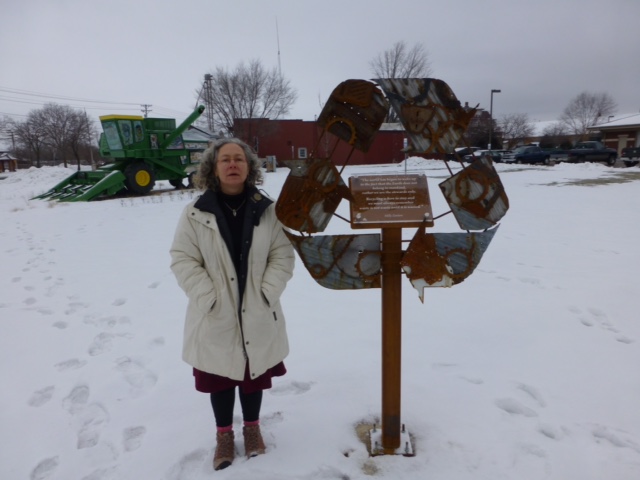
    Elise Milly Memorial
    Elise Moser

    I began to realize just how slippery facts were, and how the passage of time greased them further. People made mistakes, misunderstood things, left out the complicated parts. I’d written about this kind of thing in fiction, but it felt very different when I was trying to track down real facts and tell the real story of a real person—someone whose friends and neighbours might read it. I was used to being in control of the narrative (sort of). It’s so much easier to make stuff up!

    “I began to realize just how slippery facts were, and how the passage of time greased them further.”

    But research has its own satisfactions. I found someone who had worked with Milly thirty-five years ago, someone who knew that the landfill was leaching toxins and that it was too full. She also gave me a (totally unexpected and very useful) feminist perspective on the history of garbage and recycling.

    I knew that if Milly were alive she’d be very elderly. I couldn’t wait any longer to find her. In April 2014 I flew to Wisconsin.

    If necessary, I was prepared to cold-call all the Zantows in the phone book. But first I went to the local nursing home to visit a friend who was recuperating from a serious accident. Walking the corridor, I happened to glance over, and there I saw it: Mildred Zantow. I knocked, and she graciously invited me in to talk, even though she had just been given the news that her brain cancer had gotten worse.

    I asked her my questions, but as she answered, I began to realize that the things that were important to her about her experiences were not necessarily the things I thought I needed to know for my account. Her story was not the same as my narrative.

    “I knocked, and she graciously invited me in to talk, even though she had just been given the news that her brain cancer had gotten worse.”

    The following year I had the privilege of interviewing two of Milly’s sons. I mentioned that I’d met her in the nursing home, and they asked me when. I told them, and there on the screened porch in Sauk, Jim and Todd looked at each other.

    “That was probably her last lucid day,” Jim said.

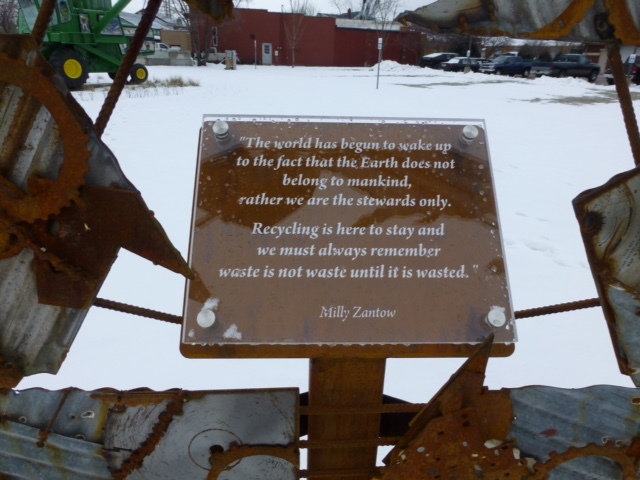
    Milly plaque

    Since I started this book, things I’d confirmed have changed. In three years, technologies for recycling or replacing plastics have advanced. The environmental impact of plastic pollution has intensified, as has research on the subject. The information available on the history of recycling has improved; more than once during the process of editing I had to change wording or go back and re-research to be sure that what the book said was as true as we could know it to be.

    Now that the book is printed, I’ve been telling people about it. The sporting goods manager at the local hardware store/agricultural machinery dealership, where there is a little book display next to the hunting supplies, remembers Milly. “Thank you for doing this,” he said.

    Ironically, it’s easier to write fiction that is true, and that will always be true, than it is to write non-fiction. Fiction only has to express a truth; it can do that by any means, whereas non-fiction is expected to tell the literal, verifiable truth about the material world, and as we all know, there is nothing constant in the material world but change.

    Another thing that’s changed: I’m so glad I wrote this book!


    Author Photo 1

    Elise Moser is the happy author of What Milly Did: The Remarkable Pioneer of Plastics Recycling (2016), Lily and Taylor (2013), both from Groundwood Books, and Because I Have Loved and Hidden It (2009), published by Cormorant Books. She has published short stories, edited anthologies, and led short story workshops and mentored for the QWF. She serves on the board of PEN Canada and is an associate editor with Linda Leith Publishing.

    Photo credits: Fred Lauing (headshot; photo of Elise Moser next to the Milly memorial), Elise Moser (the other two)