Tag: performance

  • Writing to Perform, and Performing to Write—By Deb Vanslet

    Writing to Perform, and Performing to Write—By Deb Vanslet

    I always go back and forth between telling and writing when I create a story. Below is an audio file and a transcript of that process.


    I write a story by telling a story. I started to call myself a writer when I was around fifty. But in the late 1980s and 1990s, I was a video artist, performing stories for the camera. I discovered a Video 8 camera in a university art class. It was small, easy to handle, tape was afforable, but mostly, I was kind of amazed that the teacher thought that it was a great idea for me to just talk into the camera, confessional-style—it was a genre.

    So I go for it: telling unrehearsed stories about dead pigeons, barking dogs, late night TV, bus trips across the country, and the insanity of Botox, pet hotels, and plastic surgery. Nothing is ever resolved, there’s not much reflection, and I don’t really know what I’m doing.  But that’s part of the magic: it’s a first, and it’s fun, and so unselfconscious. I’m telling stories like hardly anyone is listening, or watching. The finished video, Sick World, is a modest hit at film festivals. I’m still surprised. I make more videos, but now I know that people are watching.

    The last time I told a story on video was in 1996. Sick World 3: the baby. It’s about my girlfriend and me having a baby with a gay sperm donor friend. It’s an unusual story, and it’s even more unusual to talk about it, even though lesbians became very hip in the mid-nineties—the cover of Newsweek, the Ellen show! We got a lot of publicity for being so out about having a child this way. My story practically wrote itself. Practically.

    In 2012, an incredible story unfolds in my life. My aunt Christine dies in the hospital of blood poisoning, a few days after cutting herself on a beer bottle in her small apartment. I’d been close to her as a kid, but she’d been gone most of my adult life, struggling with mental health and addictions.

    When she finally reappeared she’d kicked heroin, but she was never able to really function again.

    Christine’s final year was brutal. She fell three times in her apartment breaking her wrist, her hip, and finally her ankle. Six days after my aunt dies, I get a message from a man looking for a Christine Vanslet. I don’t even have to think about this. I knew right away. This was the son that she had give up for adoption.

    I tell everyone the story. The synchronicity is incredible. 

    People are rapt. 

    “Write it down! You have to share it.”

    I know it’s a special story, especially the ending. But so what? Lots of people have incredible stories. And, I’m not really a writer. I just have a beginning, and an ending. What do I put in between? Stories, as I learned over the years, don’t really write themselves.

    I spot a storytelling workshop with Taylor Tower at the QWF, and she introduces me to Confabulation, Monreal’s monthly live storytelling event. This changes everything.

    I start writing to perform, and performing to write. Working between the two genres is an excercise in finding my voice. My middle-aged voice, maybe I should say my mature voice, even if that’s cliché. I didn’t learn much about putting a story together in the early performance videos; I learned about getting comfortable, becoming acquainted even, with my face, my body, the sound of my voice, and then, of being able to separate myself from that person on the screen. 

    Writing for performance is different than writing for page but it also really informs how I write for the page. My voice is stronger, the writing is looser, playful, more conversational. More me. I can’t get to me just by writing it down. I have to perform it first. 


    Deb Vanslet is a media artist, videographer, and writer. Her independent videos, including Sick WorldWeather Permitting, and Rules of the Road, explore storytelling, performance, and dance. For sixteen years Deb produced and hosted Dykes on Mykes, at CKUT 90.3 FM. Deb is a producer at Confabulation, Montreal’s live storytelling show. She also produces and hosts the Confabulation podcast. She won the 2015 3Macs carte blanche QWF prize for her short story Self-Serve, and published Ghost Station in the Queer Perspectives edition of The Malahat Review. Deb is the production coordinator at Ada-X, a feminist artist-run centre.

    Photo credit: Liz Miller (headshot)
  • The Art of Embarrassing Oneself at Public Readings—By Renée Cohen

    The Art of Embarrassing Oneself at Public Readings—By Renée Cohen

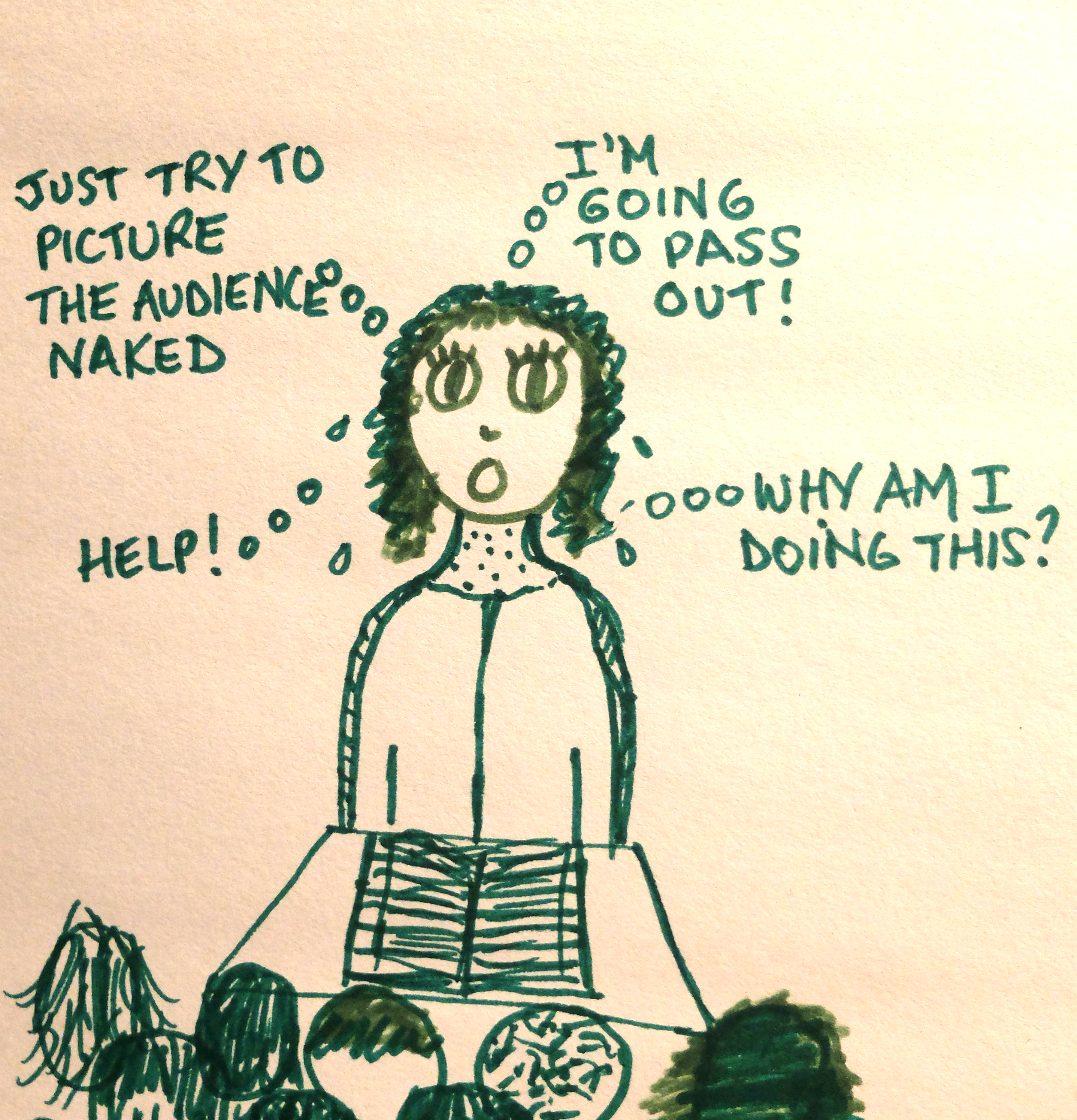
    Giving public readings is crucial to establishing oneself as an emerging writer. After attending a diverse array of Quebec Writers’ Federation (QWF) workshops—from food and travel writing to literary fiction—it became clear that regardless of the writing genre, workshop leaders often proffered those same words of advice. For years, I avoided ‘open mic’ nights. I slid under the table when called upon to read. In my defense, I am not alone in the belief that any form of public speaking is nightmare-inducing—regardless of the circumstances. Introverted, I’d always hoped that becoming a writer would require less speaking and more silent solitude.

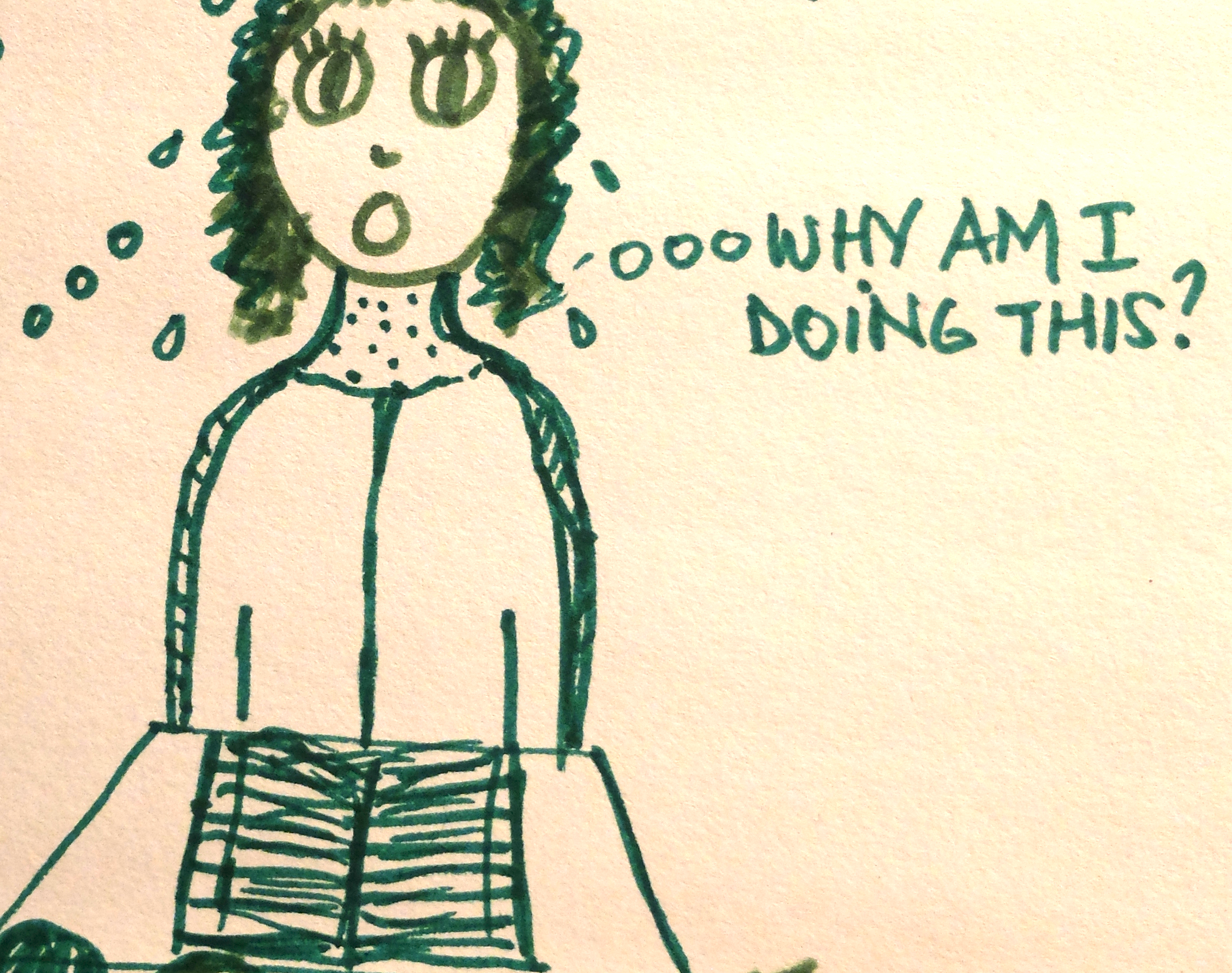
    *Embarrassment and Bloating Cartoon R. CohenUnlike the act of writing, which allows for the deletion of words before they’re read, speaking before a live audience isn’t as forgiving. There’s no delete button one can press to make oneself disappear.

    So, uncharacteristically, when one of my flash fiction pieces was recently published in the My Island, My City chapbook, I accepted the invitation to read it at a gala. Since proceeds from the event would benefit the QWF’s Writers in the Community program, I reasoned that service to the cause was far more important than my own aversion to public speaking.

    As I was about to leave the house on the night of the gala, my face suddenly bloated like a pufferfish, my neck erupted in itchy hives, and my nose bled. Apparently, my anxiety about the reading was manifesting itself physically.

    “How can you be nervous? It’s a flash fiction story that will take you forty-eight seconds to read!” my partner said after I’d gently dissuaded him from joining me. Why was I so nervous? I was honored to be involved in the charitable event!

    Then, when a roadblock prevented my cab driver from turning on de Maisonneuve Boulevard, he stopped the car. “Walk from here!” he firmly suggested. Too anxiety-ridden to protest, I passively agreed. The moment I exited the vehicle, a freak snowstorm hit. Within seconds, my freshly-coiffed hair was drenched.

    Along the closed street, massive pieces of concrete lay strewn about. People loitered, examining the detritus.

    Inspired by the scene, I compiled mental notes for a future work of fiction.

    I then realized that my imagination was partially to blame for my current state of anxiety—If not for my vivid imagination, I wouldn’t be compelled to write. If I didn’t write, I wouldn’t have to worry about giving public readings.

    After wiping a snowflake from my eye, I discovered that my black mascara and eyeliner were not as waterproof as advertised.

    Looking like a wet raccoon, I cut through Westmount Park, which was eerily desolate save for a lone teenaged boy smoking under a snow-covered gazebo.

    I paused briefly to scratch my hives.

    I reflected upon traumatic incidents from my past that contributed to my fear of appearing before an audience: during a figure skating competition in my teens, someone clapped after I completed a movement that was undeserving of applause. I scanned the audience, only to discover the culprit was my father. Distracted by his misplaced burst of applause, I fell. (Needless to say, I didn’t win that competition). From then on, I dissuaded (nay, banned) family members from attending any competitions or events that required me to appear in front of an audience. That longstanding ban has carried over to include my partner and friends.

    When a recipe of mine was included in a cookbook, I was invited to prepare it on live TV during a pledge drive to benefit public television. Nervous during the shoot, I momentarily lost my ability to speak and instead, flapped my arms in a futile attempt to generate words.

    Finally, I arrived at the gala venue. Soaking wet, freezing, hive-covered, my makeup smeared, my face bloated, and blood caking in my nose. While attempting to compose myself in the foyer of the church hall, I was shocked to see one of my friends enter the building. “Surprise!” she squealed upon seeing me. Moments later, another good friend showed up unexpectedly. Both explained that upon seeing my name in the ad, they’d reserved tickets to support me (and the cause)!

    Chatting with them, I gradually felt my fear dissipate. Believing that friends and family were stress-inducing distractions had been a mistake. The opposite was true! Their supportive presence was comforting.

    After my reading, I returned to sit with my friends in the audience, relieved that I hadn’t thoroughly embarrassed myself. Courtesy of the resulting adrenalin rush, I contemplated the advice of my writing mentors. I decided I would bravely endeavor to give public readings in the hopes of becoming an emerging writer.

    My thoughts were interrupted when one of my friends gently tugged on my sleeve.

    “Did you know that your sweater is on inside out?” she giggled.


    Pic. Cohen_Y. PelletierRenée Cohen is a freelance writer for numerous international charitable organizations. Her personal essays, prose, and flash fiction have appeared in Accenti MagazinePrairie Fire, Litro UK, The Globe and Mail, the Montreal Gazette, Reader’s DigestZvona i Nari’s ZiN Daily, Croatia, and in numerous volumes of the Canadian Authors Association anthologies, in the My Island, My City chapbook, and elsewhere. Her artwork has been exhibited in group and solo shows and featured in Montreal Writes Literary Magazine, Headlight 22, 3Elements Review, Spadina Literary Review, Flash Frontier New Zealand, and Sonic Boom Journal (India). She recently won The Fieldstone Review’s Banner Art Competition.
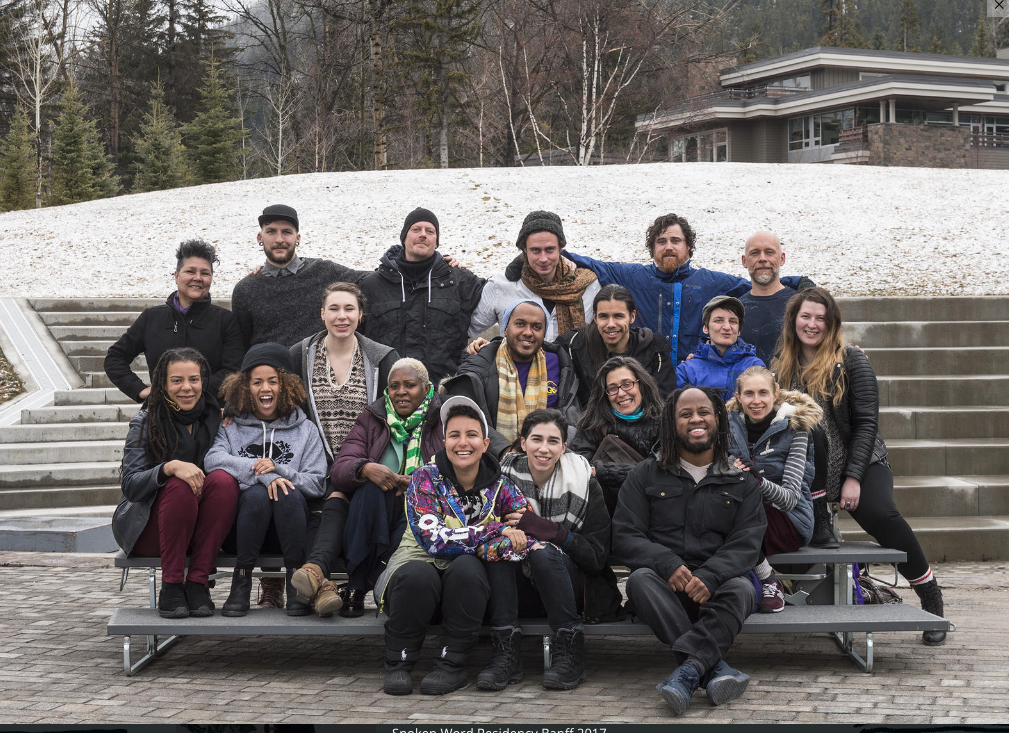
    Photo credits: Renée Cohen (header image); Y. Pelletier (headshot)

  • Writing by Numbers—by B.A. Markus

    Writing by Numbers—by B.A. Markus

    1. Show Up

    A link to the Spoken Word residency at the Banff Centre shows up in my feed. I didn’t get a teaching contract with the English Montreal School Board in the fall so I’m not feeling too enthusiastic about spending the $65 non-refundable application fee. I’ve applied to the Banff Centre residencies at least six times and never gotten in. And I’m not convinced that what I’m working on, a collection of dramatic monologues based on interviews with mothers called “What Mommy Needs,” is even a spoken word piece. Most of all, I’m not ready for another rejection. In the end I justify spending the money because it counts as “Doing something about my writing.”

    2. Pay Attention to What Has Heart and Meaning

    In January, I get offered a contract at the school board that’s going to last until the end of June. The application for Banff is out there but I know my chances of getting into the residency are even less than my chances of getting a permanent teaching gig in Montreal. It’s amazing I got the contract for six months. Money is important to me. I’m two kids beyond not worrying about heat, secure housing, and groceries. But I haven’t given up on “What Mommy Needs.” I’m doing interviews when I can. And I’ve started to tell stories at Confabulation and Yarn in Montreal. It’s great to be performing again. I start to think about how I could use storytelling in the mommy monologues. Maybe my project is spoken word after all.

    3. Tell Your Truth as You Understand It

    A month into my teaching contract I get the acceptance letter from Banff with an offer of financial aid. In ten seconds I go from delight to despair. I can’t go to Banff. I just signed a contract. Two days later it occurs to me that I could ask the principal if there is any way I could leave my job for two weeks to do the residency. But I have my doubts. He’s young and ambitious. He likes to follow the rules. And there are fifty teachers who would gladly grab my contract if I left. I practice my speech, aiming for the sweet spot. Somewhere between grovelling employee and self-assured writer. He cuts me off mid-grovel. He says I can go.

    banff residencycohort
    My cohort: participants and faculty of the 2017 spoken word residency at the Banff Centre (I am in the second row from the bottom, second from the right). The photo above this essay shows me performing at Confabulation, a storytelling series in Montreal.

    4. Remain Open to Outcomes

    Waiting for the plane to Calgary, I download the schedule for the residency. I’d assumed that my time at Banff would be two weeks of uninterrupted writing time. Now I see that most of my days at the residency will be filled with workshops led by the faculty. Attendance is compulsory. I vow that I will spend all my unscheduled time either working on “What Mommy Needs” or getting regular exercise in the pool at the Banff Centre.

    At the end of the first day, one of the faculty members asks if anyone plays the piano and I put up my hand. He’s doing a poem at the faculty show in a couple of nights and he wants some simple piano in the background. In Montreal, I live surrounded by professional musicians. Now I feel like an amateur. I practice for the show on a Steinway grand because that’s the kind of piano you get to play at the Banff Centre. The show goes well. Afterwards, one of the other residents asks me if I’d like to collaborate with her and play piano while she performs her poem. She wants to record us in the studio.

    Despite my promise to devote my unscheduled time to “What Mommy Needs,” I spend many hours in my hut playing piano and singing Jewish prayers, Christian spirituals, and French cabaret songs.

    My plans for daily swims are also squashed, by the appearance of a giant sty that swells my right eye shut.

    We are going to do a show at the end of the residency. I intended to perform an excerpt from “What Mommy Needs,” but instead I write a story about identity that includes three sung sections. I’ve never sung while telling a story. I start to think about how I could integrate music into “What Mommy Needs,” which is now definitely a spoken word project.

    “This writing project has transformed me. And all I had to do was follow the numbers.”

    On the last day of the residency, I meet with one of the faculty members, a historian and dub poet whose work weaves together poetry, performance, and primary research. When I start describing my ideas for enhancing the performance experience in “What Mommy Needs,” she starts shaking her wise head. “No, no,” she says. “‘What Mommy Needs’ is a book.”

    I come back to Montreal with a musical story about identity, a professional recording of me playing piano behind someone else’s poetry, and the possibility that I’m actually writing a book. This writing project has transformed me. And all I had to do was follow the numbers.

    The four “rules” I followed are by Angeles Arrien.

    You can watch an example of my spoken word performance below:

    [vimeo 108630079 w=640 h=360]


    bamarkusphotoB.A. Markus is a writer, teacher, and performer living in Montreal. She is an award-winning creative nonfiction writer, a Grammy- and Juno-nominated songwriter, and her reviews, essays, and stories can be found in anthologies and publications such as Carte Blanche, Queen’s Quarterly, and The Montreal Review of Books. She tells stories live at the Confabulation and The Yarn storytelling events and is currently writing a series of monologues, entitled “What Mommy Needs,” about what mothers do to survive the realities of motherhood. BAMarkus.com

    Photo credit: Jean-Sébastien Dénommé (header banner)