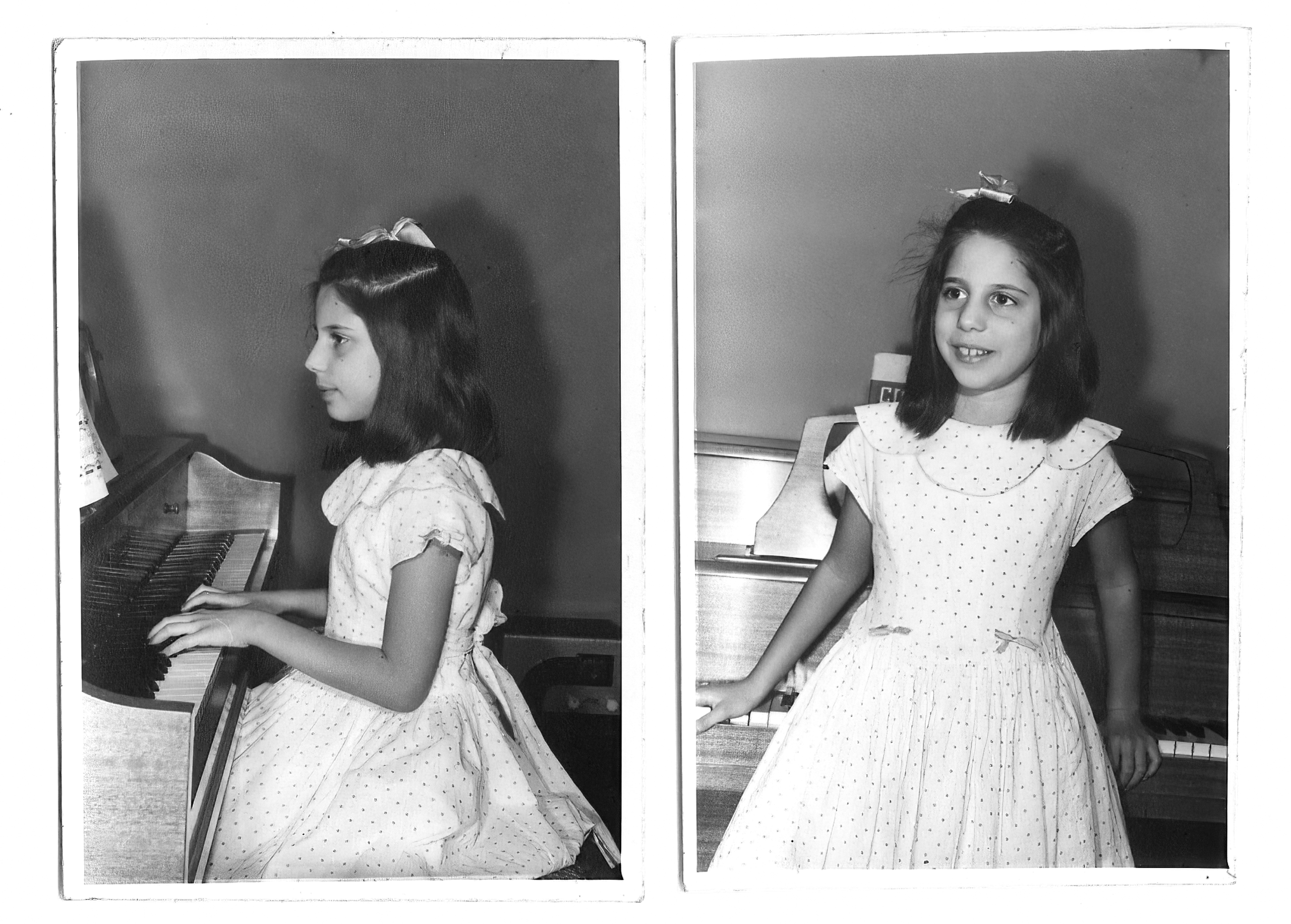
Robyn Sarah, age eight. (Photo courtesy of author)
I’m a literary writer to the bone: nothing I’ve written has ever paid enough to keep food on the table for long. But in 2009, during a spell when my muse for poetry and fiction seemed to have gone AWOL, I had the idea to write a short personal narrative, a book I could finish quickly and get published quickly. A potboiler, so to speak—not in the commercial sense, but to reassure myself that I was still a writer. It would be a story about returning to study piano at the age of fifty-nine, after a thirty-five-year lapse, culminating (hopefully) in a modest recital on my sixtieth birthday. A debut at sixty! I had never performed on piano as a teen or young adult. Of course, I would have to live this story before I could tell it. One year of goal-oriented piano lessons, during which I would track my progress in a journal; then a few months to turn the field notes into a book.
Ten years later, the manuscript still wasn’t finished. And it wasn’t short. A two-year purgatory of editing and revising had yet to begin. Music, Late and Soon was finally published in August 2021. Only vaguely does it resemble the book I thought I was going to write. What happened? How did I lose control over the best-defined, most straightforward writing project I had ever conceived?
The key may be in that term, “writing project.” Poetry is my primary genre, and while some poets do conceive poetry collections around a premeditated subject, I’m not one of them; my poems have always been composed individually, to be gathered later into collections. Even individual poems tend to begin without a clear subject in mind, but rather with some observation of the moment—an image, a feeling, a memory fragment, maybe just a phrase I like the sound of. My short stories begin similarly; there’s never much plot or a clear idea of where I’m going. This makes for some anxiety while writing, but it’s my natural process as a writer.
When I contacted my old piano teacher (then in his eighties) and outlined my project, asking if he might be willing to give me some guidance, he wondered why I was fixated on the idea of performing, especially on a schedule. “Why not just start working again, and see where it leads? Playing the piano is like any art form, any creative process. It can’t be forced, it doesn’t work by deadline.”
In retrospect, he had answered my “What happened?” question before it could need to be asked—had I really been listening. Wasn’t I listening? I thought I was. I thought he was saying something I already understood as a writer. But I didn’t think what he was saying applied to the book I had in mind. This book was going to be different. It was going to be easy—a straight line from here to there. The return to lessons, the year of preparation, the recital, The End.
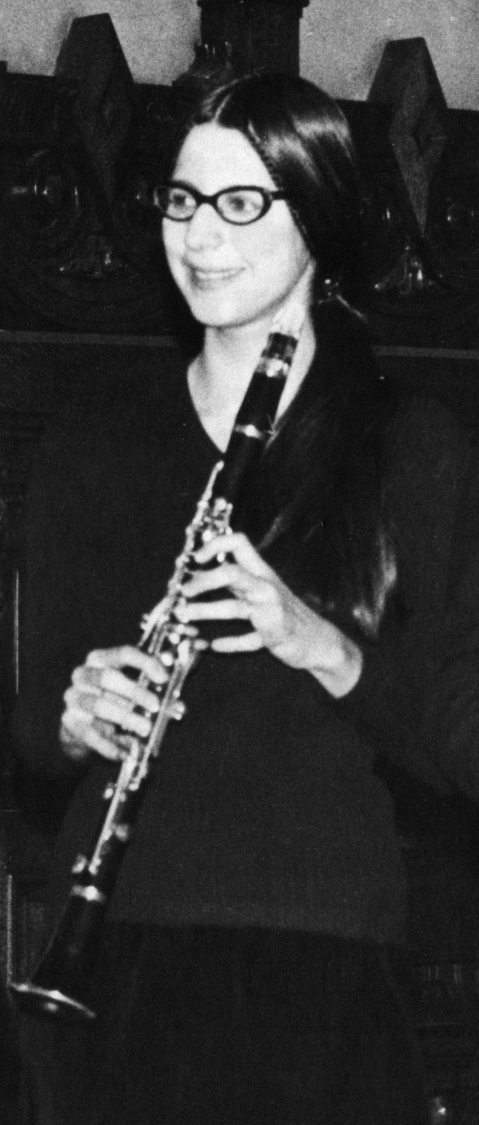
But wait. A “return” to lessons implied a past. Why had I stopped studying piano? Why was I now fixated on the idea of performing? Moment of truth: I might need to provide a bit of backstory if I expected to interest a reader in my late-life musical venture. I did, in fact, have some experience of musical performance; the trouble was, it wasn’t on piano. For a decade I had studied clarinet in a professional music school, aspiring to a career as an orchestral musician. I had graduated, but had not pursued that path. Nor had I ever really looked back or asked myself why.
(Photo courtesy of author)
Obviously this wasn’t the time or place to get into all that: it would just complicate the main story. Sticking to my plan, I began studying piano again, keeping detailed notes on the lessons. In tandem, I wrote some reminiscences of childhood: earliest memories surrounding the piano, early lessons with three different teachers before I came to study with the mentor I’d just reconnected with. I drafted a first chapter based on this material—a summary that, I thought, adequately contextualized where I was coming from. It glossed over my music school years on clarinet, allotting them a passing mention but keeping the focus on piano.
Next moment of truth. I read the chapter aloud to a friend I’d known since high school, who had studied piano with the same teacher-mentor and was now a professional pianist and educator. After listening affably, expectantly, to the end, he was silent a moment, then blunt. “So, what’s the purpose here? I’m not getting a sense of why I should care about all this. And how could you leave out your ten years as a clarinetist?”
“I didn’t! They’re there.” I pointed to the relevant paragraph.
“What, that’s it? Are you telling a story, or writing a CV? Those years were a fundamental part of your musical history! You aren’t being honest with the reader here. This isn’t you. I’m not hearing your real voice, because you’re not telling your real story.”
My heart sank, because I recognized immediately that he was right. The bottom had just dropped out of my “project.” But once I accepted that, the book suddenly came to life. I realized I did have a story to tell—a buried one, on which the significance of the current one depended. I was going to have to delve into that unexamined past and make some sense of it, find out how it connected to my present moment. There were mysteries to explore here…
I began asking myself questions: one led to another. I dug up and pored over surviving journals and letters from my high school and music school years. Present self and past selves collided and seemed to have things to say to each other. The pianist and the clarinetist had things to say to each other. The writer and the musician had things to say to each other. They all had questions of their own about creative process: what nurtures it, what can get in the way of it?
A familiar anxiety swept over me as I realized that my “potboiler” was morphing from a brief narrative with a one-year time frame into a musical autobiography spanning my whole life. How was I going to weave all these strands into something coherent and beautiful that I sensed could be made of them, the way a composer weaves together multiple voice-lines in contrapuntal music? A familiar excitement tempered the anxiety, giving me the patience to spend ten years finding out.
A Biblioasis Interview with Robyn Sarah
Robyn Sarah reads her poem “Station”, from her Selected Poems, Wherever We Mean to Be (Biblioasis, 2017).
“The book’s title is taken from this poem. I chose it because it expresses something that runs through all my poetry: a fascination with the way past and future, memory and intention, inhabit our present moment.”
Spotlight on Wherever We Mean to Be by Robyn Sarah
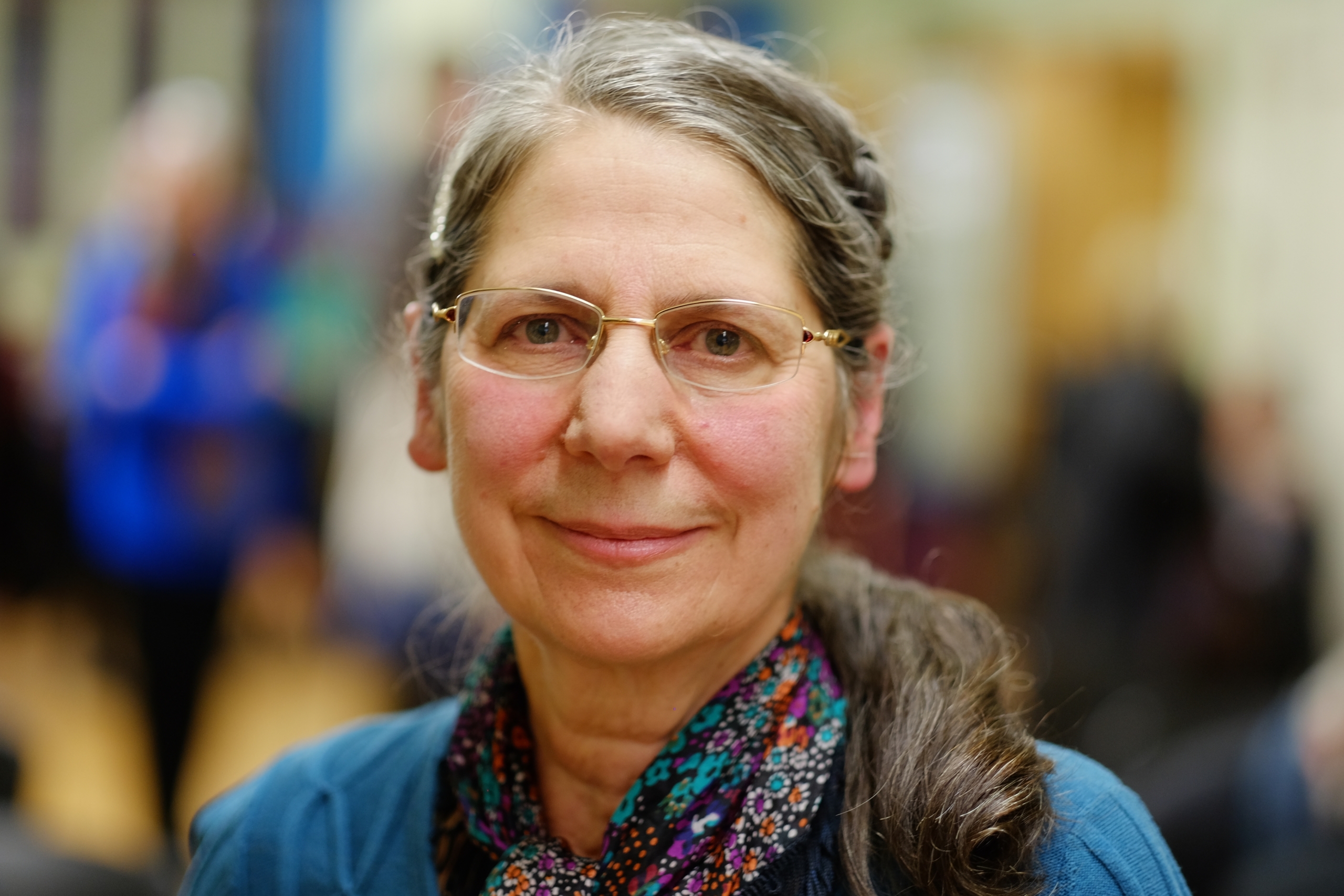
Robyn Sarah is a Montreal poet and writer whose 2015 poetry collection, My Shoes Are Killing Me, won the Governor General’s Award for that year. Her “potboiler” was short listed for last year’s Mavis Gallant Prize for nonfiction.

 Carly Rosalie Vandergriendt is a Montreal-based writer and translator whose work has appeared in Prairie Fire, Matrix, The Malahat Review, The Fiddlehead, Room, PRISM International,and elsewhere. Her story “Resurfacing” was recently shortlisted for the Carter V. Cooper Short Fiction Prize. Carly is a recent graduate of the University of British Columbia’s Optional-Residency Master of Fine Arts in Creative Writing program, and is currently working on a short story collection titled Playing the Man. Visit her at