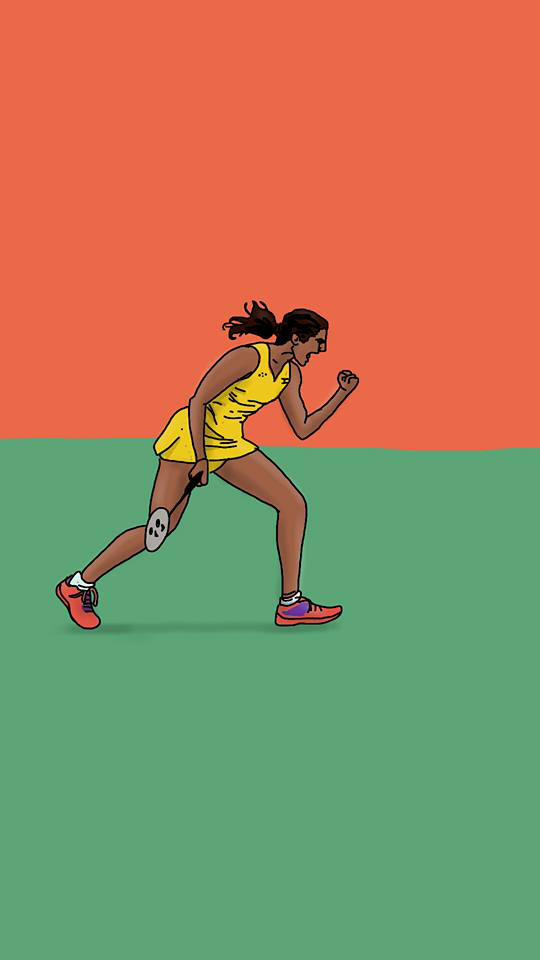
“Don’t rush your serve,” I called to an enthusiastic senior student during our badminton match.
“But Miss, I can catch people off guard this way.”
“Don’t rush your serve,” I insisted.
“But Miss, I’m ready!”
“No, you’re not. Your feet are still moving. You’re off balance. Your shot is off. You’re not focused.”
A glare. An audible sigh.
I could tell she wanted to tell me to mind my own business and go back to the library where I belonged, but I stood my ground.
Most of the high school students I see on a daily basis don’t think of me as anything more than their librarian. I totally get that, since I used to be a teen. When I impulsively asked the coach if I could join the kids at practice, I didn’t know if my body would be up to the challenge, but I allayed my fears by telling myself that even if I couldn’t perform at the level of my youth, I could at least share some of the dusty bits of knowledge stored in my brain. Even though I had not played badminton seriously in at least twenty years, I still remembered how to hit a proper serve.
“Don’t rush your serve,” I repeated again and again throughout our match.
What my opponent didn’t know was that I needed the reminder as much as she did. In the heat of the moment it’s easy to get carried away, to want to speed things along. Although badminton is a fast sport, it’s not about rushing. It’s about being in control—of yourself, not your opponent. If you can control yourself, you can dictate the pace, the direction, the energy, the flow, and eventually the outcome. And it all starts with your serve.
That night, as I checked my alarm clock, I was tempted to set it for later than usual to give my aching muscles a couple of hours of extra rest. But that meant I would have to skip my morning rituals. As I pondered the pros and cons, I realized that my writing life also needs a solid foundation. It can’t get off to a good start if I don’t first make sure everything I need is in place. For me, this means starting my day at 5:15 so I can do my morning pages à la Julia Cameron. I use this moment to cleanse my mind as I write down everything that enters my head, from the most mundane (I need to stop by the post office after work), to the most brilliant flashes of genius (I could write an essay about badminton). No matter where my thoughts begin, they inevitably point me to how I can best use my writing time later on.
As I scribble away, I underline important thoughts and ideas so I can easily find them again when I review my musings. Three full pages later and I feel like a brand new me, ready to face the day and with my mind open to any guidance I might receive from my muse or fellow earthly beings.
When my three pages are done, I move on to my workout. In a way, it’s the physical equivalent of my morning pages. It helps me stay grounded and strong so that I have the energy I need to write in the evenings.
Once these two things are taken care of, I can start my day fully in control. I know what I wish to achieve and the path I will take to get there, while feeling confident that I will have the stamina to see it through. Just as preparing for the serve lays the foundation in badminton, my morning rituals stop me from blindly rushing into the day. They help me stay on course so my writing doesn’t get permanently buried under the day’s demands and distractions, but can resurface when the time finally comes for me to grab my writing tools and let the words fly.
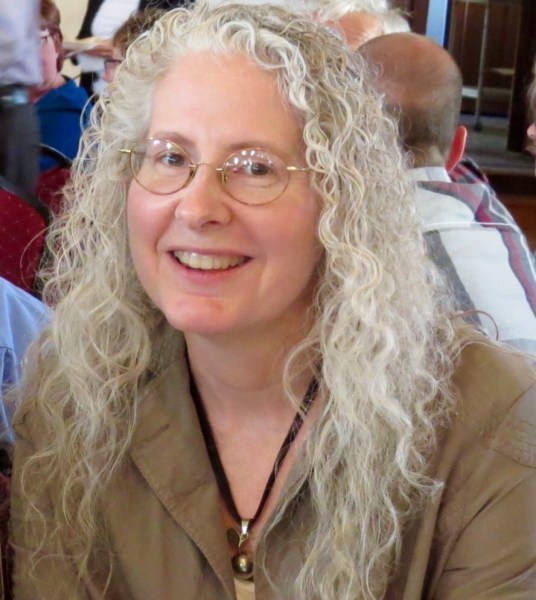
Pascale Duguay is a freelance writer, high school librarian, and translator (French/English). She resides in the lively bilingual community of Quebec’s Eastern Townships. Pop in for a visit at pascaleduguay.com, where you can sign up for her sporadic but fantastic newsletter on the writing life.
Photo credits:
“Olympics 2016 Sindhu”by chaitanyak is licensed under CC BY-NC-SA 3.0


(header image); Jennifer Brown (headshot)

 Nicola Sibthorpe is a Montreal-born, Creative Writing MA student at Concordia University. She is interested in folktale and mythology, and the subversions that accompany them. She was the inaugural winner of the QWF’s Literary Prize for Young Writers in 2017. Beyond spending her days writing, she is also a teacher, and she enjoys spending time with her cat and a good cup of tea. You can find her on Twitter