Tag: Quebec

  • Writing Through Grief—By Louise Penny

    Writing Through Grief—By Louise Penny

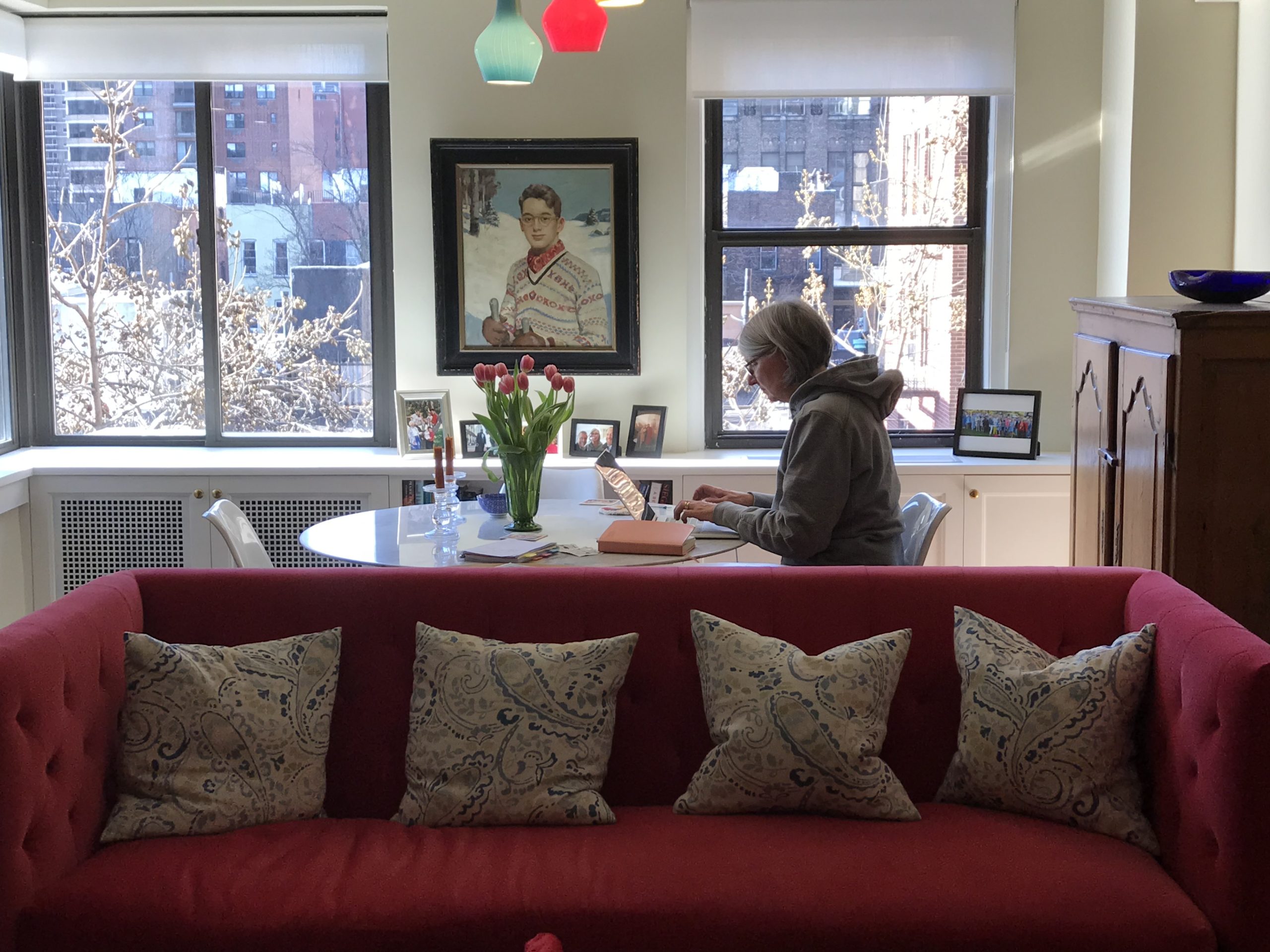
    Louise Penny writes at her dining table. (Photo by Lise Page)


    A funny thing happened on my way to not writing a book.

    I started writing.

    The truth is, I’ve known since I began writing that if my husband Michael died, I couldn’t continue with the Chief Inspector Gamache mystery series. Not simply because he was the inspiration for Armand Gamache, and it would be too painful, but because he’s imbued every aspect of the books. The writing, the promotion, the conferences, the travel, the tours. He was the first to read a new book, and the last to criticize. Always telling me it was great, even when the first draft was quite clearly merde.

    When Michael died peacefully at home in September 2016, I was pretty well spent. Physically, emotionally, and creatively. In French the saying is, tu me manques. Which means ‘I miss you’, but actually, literally, translates into ‘You are missing from me.’ That’s how it felt. Michael was missing from me.

    How could I go on when half of me was missing? I could barely get out of bed.

    I just could not face writing another book. And if I forced myself, the result would be a betrayal of all the previous books, the characters, the world of Three Pines. Of me. It would be a sad way to ruin what I’d created. I’d be writing because I had to, not because I wanted to.

    Now, sometimes, it’s true, a writer just has to sit down, and do it. That’s often the case with me. Some days I’d much rather eat gummy bears and watch The Crown than write. But this would have been different. This would have been going through the motions. Forcing the characters, chocking out some lame plot. My readers deserved better.

    So I spoke to my wonderful agent, and broke the news that I just didn’t think I could write a book. I just didn’t have it in me. I was too tired. Too broken. I’d mend, I knew that. But right then? No. She was wonderful, completely understanding and supportive. And then she had to tell the publishers. She did. And they were fabulous. They agreed that they’d rather have no Gamache book than a crappy one.

    And so, that was the plan.

    I was going to take a year off, to regroup and catch my breath after Michael died. That might have been a lie. In my heart I knew I could never write Gamache again. (And, sadly, would have to give back the next advance.)

    But then, something happened. A few months later, I found myself sitting at the dining table, where I always write. My golden retriever Bishop lying beside me, fireplace on, café au lait in my Vive Gamache mug… opening the laptop.

    I began having ideas—not the usual sort of thoughts of food and vacation, but actual book ideas. Armand began stirring. They all did. I could see them again. Hear them again.

    And I wanted to be with them again.

    I think my desire for distance was not just about exhaustion, but also because Armand was, and always will be, so associated with Michael. I just needed quiet time, to come to terms.

    And then, there he was again.

    I wish I could describe for you the joy I felt. And feel.

    So I quietly, without telling anyone, began writing again. A little at first. Then more, and more. 

    I wrote two words: Armand Gamache

    Then the next day I wrote: slowed his car to a crawl

    And the next day: then stopped on the snow-covered secondary road.

    But I didn’t dare tell anyone. In case I stopped writing. Or the book took a very, very long time to write. The publishers had no idea I was writing. It wasn’t until six months later that I told them. But even then, I warned them the book might not be ready in time. My agent was magnificent. Telling me not to worry. To take whatever time I needed. Stop writing, if I needed.

    And that was all I needed, to keep going.

    I really gave myself permission to just let go and explore.

    I discovered, again, how much I love to write. And, again, what a harbour it is. What would I do with my days otherwise? There are, after all, only so many episodes of Outlander.

    And so Kingdom of the Blind was born. It is the child that was never going to be. But happened. My love child.

    I began the book not with sadness. Not because I had to, but with joy. Because I wanted to. My heart was light. Even as I wrote about some very dark themes, it was with gladness. With relief. That I got to keep doing this.

    Far from leaving Michael behind, he became even more infused in the books. All the things we had together came together. Love, companionship, friendship. His integrity. His courage. Laughter.

    I realized, too, that the books are far more than Michael. Far more than Gamache. They’re the common yearning for community. For belonging. They’re about kindness, acceptance. Gratitude. They’re not so much about death, as life. And the consequences of the choices we make.


    Photo by Mikaël Theimer

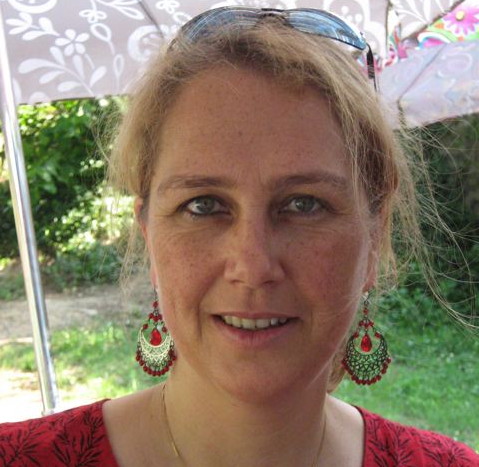
    Louise Penny is an international award winning and bestselling author whose books have hit #1 on the New York TimesUSA TODAY, and Globe and Mail (Toronto) lists. Her Chief Inspector Armand Gamache novels, published by Minotaur Books, an imprint of the St. Martin’s Publishing Group, have been translated into thirty-one languages. In 2017, she received the Order of Canada for her contributions to Canadian culture. Louise Penny lives in Knowlton, Quebec. www.louisepenny.com

  • Creating Community with Disabled Writers—By seeley quest

    Creating Community with Disabled Writers—By seeley quest

    Now is a time to gather disabled writers and our allies in direct community together. Writing practice shared in company among disabled people expands our consideration of how embodied variations inform our writing perspectives, and how our writing helps us understand embodiment. Whether virtually through videoconferencing or in person, I am keen to encourage events specifically centering disabled writers.

    Bodies and minds are linked; psychological and other cognitive differences manifest through a brain’s interactions with its bodily systems, so all of our experiences are fundamentally embodied. Our unique body-minds are what our writing comes through; let’s celebrate how the written word can share our particularities with the world.

    Writing practices that occur when we’re solitary can be powerful and necessary lifelines. Many people, disabled or not, get satisfaction and relief from journaling, “morning pages,” and other forms of writing for themselves; sometimes there’s no need to connect output to a larger community.

    Yet, sharing creative writing via virtual platforms can be particularly important to people who have less access to public spaces physically or cognitively. Familiar with social isolation, linking ourselves through correspondence helps sustain us. When health conditions permit them, more in-person gatherings are also valuable to grow the collective body of our writing work.

    Part of my agenda is to uplift disabled writers who are sharing work in public events and productions. The essay “My Arrival at Crip” makes excellent observations on becoming attentive to the presence and impact of disabled, chronically ill, and Deaf writers assembling in civic spaces. For writers with a newer relationship to disability, it’s especially profound to learn how poets who are “out” as disabled can change the political possibilities for everyone. Public notions of “ableness” are shifting, as living conditions shift during the pandemic, challenging our mental and physical health. The legacies of fierce “out” writers can offer guidance.

    Language is fundamental to how we conceptualize disability. Word choices undermine or reinforce associations that valorize hyper-ability, and have consequences. We have the option of using more neutral vocabulary instead of terms freighted by stigma like “handicapped” or “deficient.” “Atypical” is one option, and “atypique” in French is emerging as a descriptor chosen by the disabled community in Quebec. For more on how to shift from oppressive choices, there are great resources like this one: https://www.autistichoya.com/p/ableist-words-and-terms-to-avoid.html.

    Our work may get special attention in the frame of “disability arts” or “disability aesthetics,” a category for funding support. However, defining such writing as separate from and more worthy of recognition than art therapy, stream-of-consciousness writing, or fan fiction by disabled authors doesn’t serve the whole. Our future lies away from capitalist divisions. We must embrace arts practices associated with therapy. The need for therapeutic pursuits and for accessible arts engagement will grow. In workshopping and community spaces, I invite those with different experience levels of writing. Whether we are neurodiverse, are experiencing new or episodic disabilities, or are a language and sensory minority like the Deaf: all our work has value. People who aren’t sure of applying the term “disability” to their experiences are welcome comrades too!

    When we don’t shy away, there’s so much to explore of what our body-minds might know in common: those considered able and typical, those that vary and diverge, writing both from individual experiences and in relationship to each other. Let our texts layer into expanding knowledge to enrich the entire writers’ community.


    Photo credit: Coral Feigin

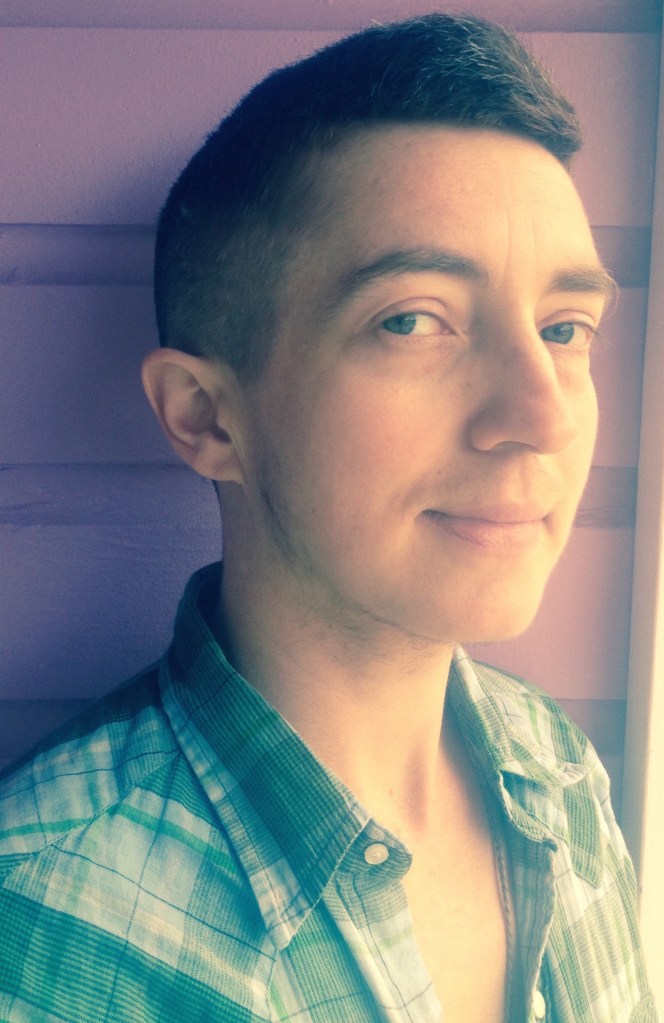
    seeley quest is a trans disabled writer, organizer, and environmentalist, in Montreal since 2017. Sie has made literary and body-based performance since 2001, and presented in Vancouver, Toronto, Ottawa, and many U.S. cities. Sie has poems in the book Disability Culture and Community Performance: Find a Strange and Twisted Shape, and in Fiction International. Hir playscript Crooked will be published in September in At the Intersection of Disability and Drama: A Critical Anthology of New Plays. Recent appearances include reading at le Salon du livre de Montréal and leading workshops with QPIRG-McGill, articule, and Head and Hands. Not on social media, sie email connects with comrades: find more at https://questletters.substack.com.

    Look for an announcement soon about new plans in 2021 for seeley’s QWF workshop; visit https://qwf.org/activity/poetry-and-prose-writing-from-the-body-mind.

  • Transcendence—by Francine Cunningham

    Transcendence—by Francine Cunningham

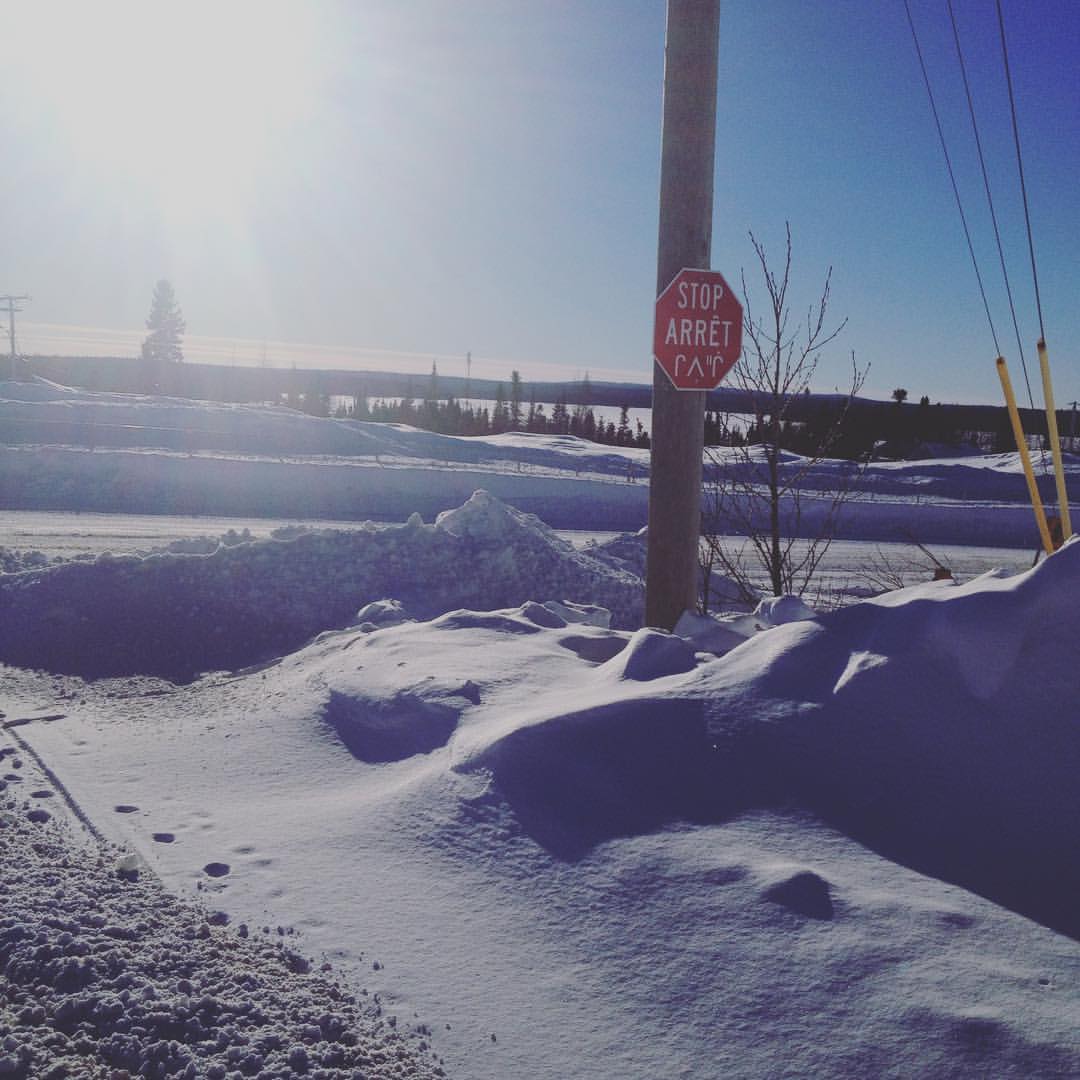
    I had the privilege of being an artist in residence in Mistissini, a community in northern Quebec, this February and March. The community was small and welcoming; the snow, on the other hand, was otherworldly. There were mountains of it piled and strung along the road to the school, like a miniature version of the Rockies I am used to. While I struggled with the overwhelming volume of the white stuff, I welcomed the natural beauty of the land, the quiet of the nights, and the stillness that comes from being outside the city. With nothing to distract me I was able to spend hours every night writing and painting. I read something like ten books and slept deeper than I have in a long time. It was a treat to turn off my email for six weeks, not take on any additional contracts, and really focus on my writing and visual art. I was teaching youth how to integrate their visual art with their writing through zines, so it was the perfect time for me to spend some time doing the same.

    16463091_10154140278245286_1071419733135569396_o

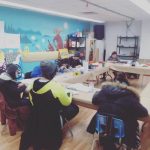
    The Mikw Chiyâm arts program was commissioned by the Quebec Cree School Board in 2015 and has just finished its second successful year. It brings together artists and students, the hope being that by creating a safe and creative space, students will be inspired to come to school more often and have a more positive experience once there.

    I am an Indigenous writer, artist, and educator, and have been working with Indigenous youth for over ten years. I have been a part of many different programs that use artistic practice as a way to intercede and help guide students onto a path that will give them confidence and knowledge so they can succeed in the world. The thing I hear most from students is how much they wish that they, as budding artists, were treated with the same level of care and given the same number of opportunities as in the sports or science concentration programs. Having an arts concentration program inside of a high school is remarkable; having one that has the level of support of Mikw Chiyâm is something I have never seen. It is literally making opportunities for young artists that they would not get otherwise.

    Often the arts can go unrecognized as a valid life path for a young person, but you just have to look to who the people are that are revitalizing our Indigenous communities and you will see artists at the forefront. When working with youth, Indigenous or not, I try to help them infuse their work, whether it’s fiction, poetry, or non-fiction, with a spark of who they are and their own unique point of view, with their own experience, tradition, and culture. Whether that takes the form of simply setting their dystopian dramas in their own community, or adding in bits of their language, or having characters that speak and act like them and their friends, these sparks are what makes their writing so unique.

    “I try to help them infuse their work, whether it’s fiction, poetry, or non-fiction, with a spark of who they are and their own unique point of view, with their own experience, tradition, and culture.”

    Growing up, I never read a story from a viewpoint that felt like my own: that of someone considered white passing, who grew up off the land, was raised in the city, yet is still Indigenous. I’ve found in my work with Indigenous youth that many are craving a varied point of view in the stories they read, something different than the stories they have thus far been presented with. There is a shame that comes with feeling like you are disconnected from your community. When you don’t know your language. When you can’t answer all the questions from non-Indigenous people. There is a shame that can infect a person when you aren’t what you see in movies, in stories—when you aren’t a real “Indian.”

    If not treated like a valid feeling, this void only serves to make youth feel more alone, more different, when in reality they have a whole network of people around them who feel the same way. Opening up space, letting discussion flow through these gut-wrenching topics, is so important. Oftentimes this can be the first time they’ve been allowed to talk about such things. I have found that once you break down those thick walls a flood of words come out. And eventually they land on the page. And they become something more than art. They transcend the writer. They help. They heal.

    “Once you break down those thick walls a flood of words come out… They transcend the writer. They help. They heal.”

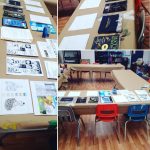
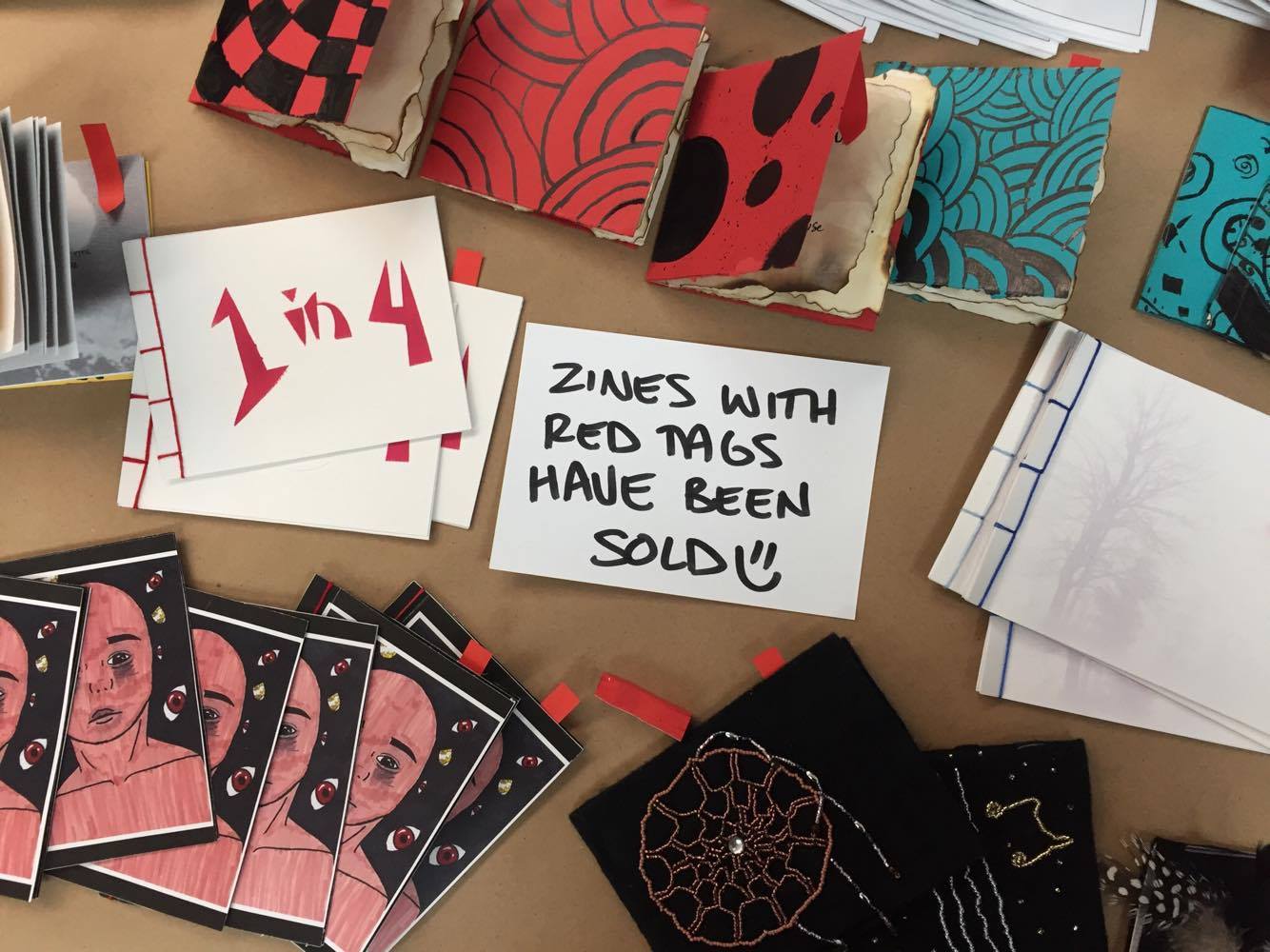
    The zines that the students created were powerful. They tackled issues like sexual abuse in the community, the stigmatization of mental illness, loneliness, and identity. These stories were told through humor, visual art, prose, and end-of-the-world disasters. At a final celebration night, we invited the community to come see the students’ work. For weeks, I had been telling them that people would buy their zines, that people other than me cared about what they were writing. The students wouldn’t believe me.

    Right before we opened the doors to let people in, they again tried to let me down easy, telling me not to get my hopes up, that no one would come and that was okay. They were trying to protect my feelings because I was so excited. But the community did come out. They read through all the zines, and by the end of the night we had sold out of everything we had created and made over five hundred dollars. The students were shocked. I was elated. I knew their words were valuable, that they were worth listening to. And now they had the proof.

    16998859_1686364578047373_2753448752955219953_n17015651_1686364321380732_2066677641393624379_o


    Headshot 2

    Francine Cunningham is a Canadian Indigenous writer, artist, and educator. Her creative non-fiction has appeared in The Malahat Review, the anthology Boobs: women explore what it means to have breasts (Caitlin Press), and more. Her fiction and poetry have appeared in The Puritan, Joyland Magazine, Echolocation Magazine, The Maynard, and more. She is a graduate of the UBC Creative Writing MFA program and a recent winner of The Hnatyshyn Foundation’s REVEAL Indigenous Art Award. You can find more about her at www.francinecunningham.ca.

    All photos in this piece are by Francine Cunningham.

  • Why I Loved Editing a Small Canadian Online Magazine, and Why I’m Leaving—by Laurence Miall

    Why I Loved Editing a Small Canadian Online Magazine, and Why I’m Leaving—by Laurence Miall

    Before I ever joined a magazine, or published a novel, for that matter, here’s how I imagined people who had responsibility over publishing texts. They were working in fancy university offices or in stylishly decorated apartments in artsier parts of town than my own, smoking cigarettes and drinking wine, sporadically casting a disdainful eye toward the “slush pile” (in my mind’s eye, the slush pile was either physically manifested, or online, it didn’t make a difference insofar as the disdain goes). And here’s what would happen if ever they came across my submission. They’d read a line, chortle to themselves, and say, “This poor, desperate bastard. Why does he waste our time?” Then all the editors would say in unison, “Let’s publish one of our friends, instead!”

    That’s how I imagined it.

    Maybe some literary journals are nepotism-only zones, I don’t know. I’ve only ever worked for carte blanche. I joined as fiction editor in 2014 and the first issue I worked on was Issue 20. Our most recent issue is #29, so that’s ten issues in total. As of Issue 23, I took on more responsibility for the magazine, taking over from our illustrious founder, Maria Turner, first in partnership with Ben Spencer, then with Gregory McCormick.

    Though the years, I have come to enjoy my vexed relationship with the slush pile. Every time I sit down to read, I want to love the next piece I’m going to discover. One of the very first stories I ever picked was Matthew di Paoli’s “Other Forms of Life,” and I found it so funny and quirky that I immediately started reading it aloud to Monika, my partner. I invited Matthew to read his story at a carte blanche event we were doing at the Blue Metropolis Literary Festival in Montreal, and he couldn’t come, so I read out parts of his story in his place. I loved the texture of someone else’s sentences coming from my lips, and the rhythm—almost like a form of breathing that was not my own.

    So yeah, the slush pile wasn’t like I’d imagined it, not at all. It was sometimes a source of some frustration, but also of great excitement and pleasure.

    Over the years, the comradeship of the entire carte blanche crew, and the support of the Quebec Writers’ Federation, was constant, making me realize that one of the biggest benefits of the literary life is not the writing itself but the community of other writers, editors, publishers, curators, and do-it-all’ers who keep culture humming along and livening up lives that would otherwise be lived in dank, solitary darkness.

    “I loved the texture of someone else’s sentences coming from my lips, and the rhythm—almost like a form of breathing that was not my own.”

    Chalsley Taylor, above all, has made the magazine the beautiful online presence it is today, and so it’s to her I would like to express my biggest THANK YOU. We started this journey at pretty much the same time. It’s no overstatement to say that this magazine would not be in the fine shape it is without her. With Cason Sharp now on the team, I believe carte blanche is going to keep on kicking ass in its cool, classy way. How can it not, with Nicola, Georgia, Bronwyn and the two Gregs bringing their brilliance to each and every issue?

    I am shortly going to be leaving the team in my official capacity as editor. I do so with mixed feelings. Once upon a time, I honestly felt I could tackle any amount of work that was thrown at me. The days seemed elastic. I could stretch them at either end, conjuring up just enough minutes or hours to always get things done. But I don’t feel that way anymore. I am trying to figure out how big each relative part of me is, and how to accommodate all those parts within a finite body. What’s the size of the editor in me, compared to the writer? And more importantly, the loving husband? The communications director? The friend? The son? The cooker and eater of meals, and the drinker of ales, and the sporadic watcher of Liverpool FC, and everything else?

    A few weeks ago, my second oldest friend disappeared from social media. In recent years, we hadn’t established any other form of communication except for Twitter and in-person visits. I had no phone number or email address for him. I started to wonder, nervously, if he was still alive. In 2016, I lost a dear friend to suicide. Another of my friends has struggled with brain cancer. These experiences and many others made me think dark and fearful thoughts.

    Day after day, my friend didn’t reappear. There was an envelope icon lit up in Twitter, indicating a message from him, but the message was an old one, and because his account was deactivated, the message itself had ghosted away. I tried to figure out what was the best course of action. Should I just show up at his house to check on him? No, I told myself. It wasn’t time for that. He’s not dead, I said to myself. He’s just taking a break from Twitter. Who can blame him? Donald Trump is president.

    My friend eventually reappeared, thank God. He found my email address and wrote to me. I was relieved, and felt a little foolish for my quiet panic.

    “I am trying to figure out how big each relative part of me is, and how to accommodate all those parts within a finite body. What’s the size of the editor in me, compared to the writer? And more importantly, the loving husband?”

    Realizing just how agitated I had become gave me yet another confirmation that I need to reappear—to myself. Working sixty- to seventy-hour weeks means you’re obliged to run on adrenaline and anxiety half the time. I get bent out of shape easily. I sometimes get inordinately fearful about small things. It’s time to slow down a little. Time won’t be warped and woven into shapes that better accommodate me. I must accommodate to time.

    Whatever happens, I am going to remain a friend to the carte blanche crew. I became an editor at approximately the same time as I had my first novel accepted for publication, so the two experiences effectively took me from zero to one as a literary person, according to my own weird binary measurement. I am enormously grateful to have had such opportunities.

    I still send stories to magazines sometimes, and I get my share of rejections, but I don’t get resentful about them. I am pretty sure that the people at the magazines are just that: people. Maybe some of them have similar traits to me. Maybe they’re a bit fucked up. Maybe they’re anxious, maybe overworked, maybe worrying about a loved one—like us all.


    miall-authorphoto-1Laurence Miall is a Montreal-based writer and communications expert. His first novel, Blind Spot, was published by NeWest Press in 2014.
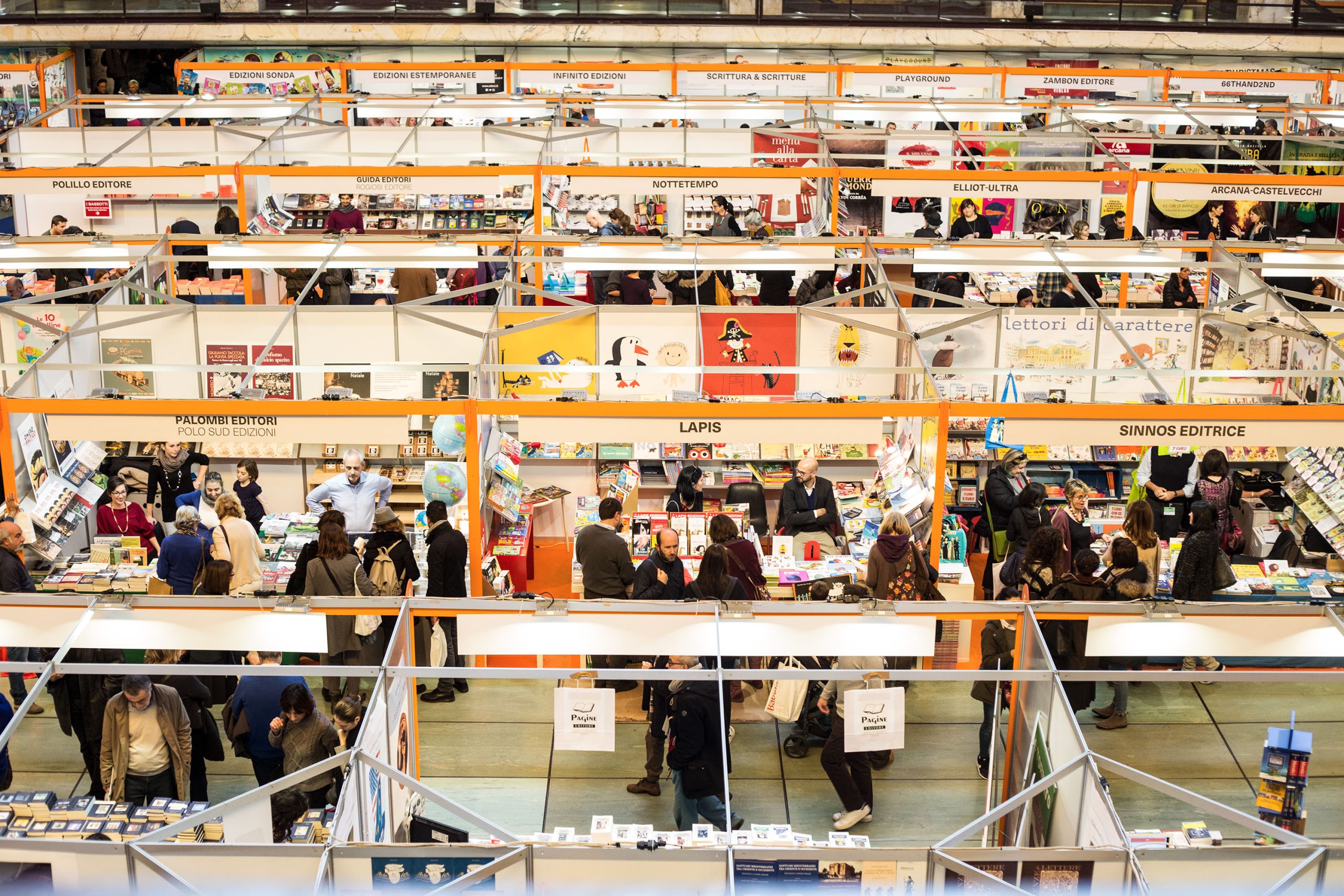
    Photo credits: Ben Brooksbrank; Owen Egan (author headshot)

    Apply to be carte blanche’s new editor.

  • A Book Fair to Emulate by Connie Guzzo McParland

    A Book Fair to Emulate by Connie Guzzo McParland

    Più libri più liberi: more books, more freedom. Unlike Frankfurt, London, or Torino, Rome’s book fair has been designed for small- and medium-sized publishers. Big fairs like Frankfurt can be overwhelming for a small publisher. You do meet a lot more people there, but by the end of it, it’s all a haze. As the publisher of Guernica Editions, I participated last December in the Rome fair’s Fellowship Program, an opportunity for foreign publishers to strike deals with Italian publishers.

    What did I learn? Bigger isn’t necessarily more productive.

    In the outskirts of Rome, Più libri più liberi’s 400-plus exhibitors were packed in a maze-like configuration in the Palazzo dei Congressi—an imposing marble building on the aptly-named Viale Della Letteratura. What makes this fair unique may be the smaller, more manageable scale that renders it less intimidating and more accessible to small independent publishers, but public attendance is huge and so are book sales. Più libri più liberi, which has been organized by the Association of Italian Publishers since 2002, has become an important event in Italy and Europe, and it receives a lot of press and attention. Held every year just before the Christmas shopping spree, it attracts 50,000 attendees over five days. Besides the book exhibits, this year there were over 1,000 participants in various events, some televised, all well-attended: readings, launches, and discussions with Italian and foreign authors, including Quebec’s Dany Laferrière, who was a featured author. As in Canada, children’s books are of great interest, as well as crime fiction and graphic novels, but the full range of literary genres is represented in Rome.

    “Bigger isn’t necessarily more productive.”

    I was one of sixteen foreign participants in the fellowship program. Others came from the USA, UK, Israel, Portugal, Turkey, Latvia, Poland, and Greece. Because we were put up in the same hotel in the centre of Rome, we shuttled back and forth and lunched together. It was easy to connect and network with each other, and meetings with Italian publishers were also pre-arranged by the organizers.

    As stated, the aim of the program is to promote internationalization of the Italian publishing industry, but there are opportunities for Canadian publishers to promote their own authors. Many Canadian publishers may not know that Italians read a lot more foreign authors in translation than we do in North America.

    In the past, while browsing in Italian bookstores, I had noticed the proliferation of translated foreign authors, both classic and contemporary. As I visited the various book kiosks at the Rome fair, I also noticed the many publishers who specialize in translations of work from particular niche regions: the Slavic countries, Chile, etc., with Canada seemingly underrepresented. For sure, bestselling Canadian authors are pitched in the more prestigious fairs like Torino and Bologna, but I believe that there are as-yet untapped opportunities for interesting exchanges between smaller publishers.

    At Più libri più liberi, there are big players represented by medium-sized publishers, but giant houses like Feltrinelli, Mondadori or Rizzoli aren’t here to overshadow independent publishers. The exhibitors are all given the same space and importance. No one dominates the scene.

    I don’t believe there’s anything like it here in Canada, apart from the Salon du Livre de Montréal, which caters to French-language publications. Just consider what happened to the Inspire Book Fair experiment in Toronto. When the first edition closed and the big conglomerates failed to renew their participation for the following year, the organizers were forced to cancel.

    “I don’t believe there’s anything like it here in Canada.”

    So what event looks after the interest of independent English-language publishers in Canada?

    The Rome Book Fair is not Frankfurt, but it serves independent publishers well. It puts them and their authors at the forefront during the busiest book buying season of the year, and gives them an opportunity to interact with their foreign counterparts. Canadian publishers’ organizations should take notice. This fair is one to emulate.


    connieguzzomcparlandheadshotConnie Guzzo McParland has a BA in Italian Literature and a Master’s degree in Creative Writing from Concordia University. Her first novel, The Girls of Piazza d’Amore, published in 2013 by Linda Leith Publishing, was shortlisted for the Concordia First Novel Award by the Quebec Writers’ Federation. The sequel, The Women of Saturn, will be published by Inanna Publications in April 2017. Since 2010, she has been co-director and president of Guernica Editions. She lives in Montreal. www.conniemcparland.com

    Photo credits: Sara Cervelli (top banner); Anthony Branco (author’s headshot)

  • QWF Writes featured on WordPress Discover

    QWF Writes featured on WordPress Discover

    QWF Writes is featured in WordPress’s Discover blog.

    WordPress selected their favourite articles from the QWF Writes archive to share with readers.

    They also took the time to ask QWF Writes editor Crystal Chan a few questions about writing and reading in Quebec.

    Do you want to learn more about the QWF Writes essay series? Read the piece here.


    Screen Shot 2016-07-11 at 2.52.54 PM

  • Gadfly at the Festival by Peter Richardson

    Gadfly at the Festival by Peter Richardson

    In the hospitality room at the Hôtel Gouverneurs in Trois-Rivières, you are greeted by two perky volunteers whose first question after introductions is: “Will you three be reading the French translations of your poems yourselves, or will you be requiring the services of a French reader?” Oh, my, you think. What translations? The hotel carpet begins to yaw under your chair. What was I thinking coming to a poetry festival in a city whose population is 97 percent French—without translations?

    Ahhh,” your hand goes up, feigning nonchalance, “I don’t have any translations with me.” The two other English-language poets and the volunteers swivel their heads in your direction as if you had just morphed into a large red crustacean whose claws and antennae waved merrily in their direction. “Can I give a short explanation of my poems in fluent French and then read them in English?” One of the cordial volunteers laces her fingers together and lowers her voice: “You see, people reserve restaurant tables months ahead to hear our guests read in French. It would be unfair, don’t you think, to subject them to English, when most people here rarely speak it?”

    How could you have not foreseen this eventuality? For the next twenty-four hours, you huddle with a hotel dictionary, churning out translations and cross-checking these with your translator sweetheart via long distance telephone. You thank fate that years before, you earned a university certificate in French-English translation. Although that hardly qualifies you as an ace in Gallic syntax, it limits the number of world-class howlers you’re likely to churn out. You are going to have to revise up to the wire. And once a reading is finished, there will be no stopping off for sparkling conversation with fellow scribes in downtown Trois-Rivières. It’ll be back to your room to crank out more translations. There are four readings a day in restaurants, bars, parks, and libraries; you’ll have to furnish two poems, four times a day.

    Accordingly, you show up for each venue as if this were a lark, your fraudulent grin assuring audiences that you’re dishing up the real thing, the slaved-over equivalents they’ve come to expect. The rest of the time you are a mole, looking up words like “dip” or “wobble” in a battered Robert-Collins. At readings, you unfold two sheets of spiral notebook paper and smile at your hash-marked, arrow-filled texts as if it were normal to achieve verbal legerdemain with the French versions overnight.

    You can’t point to the Russian poet, Evgeny Tchigrinne, huddling by the hotel elevator in a rumpled hockey team manager’s parka, and say to his interpreter companion: “It’s not fair. He should have to read his stuff in French too.” You can’t complain that Andrés Morales—one of the leading poetic lights in Chile, a man who also speaks Croatian and English—should be prevailed upon to read his translator’s French versions. His credentials precede him, and plus, with his dark suits, Brylcreemed hair, and killer smile, he is a serious candidate for the festival’s Mr. Cordiality Award.

    “At readings, you unfold two sheets of spiral notebook paper and smile at your hash-marked, arrow-filled texts as if it were normal to achieve verbal legerdemain with the French versions overnight.”

    The other English-language poets seem like consummate professionals. The Canadian geneticist-poet, Jan Conn, for instance, looks you straight in the face and says: “Months ago, I commissioned someone to translate twenty of my poems. I knew I’d have to have this stuff ready. I practiced it for weeks.” When she says this, you feel as though you’ve been transported back to that fourth-grade field trip to the Hayden Planetarium in New York City, where, standing in the cafeteria’s lunch line, you reached into your pants pocket for change and pulled out pebbles. Earlier in the day, while waiting for your mother to drive you to school, fearing you would miss the bus from school to the planetarium, you found yourself scooping up pebbles and chucking them by the handful, and some of these found their way into your pockets. But so what if you’ve spent a lifetime picking nickels out of the pebbles in your pockets?

    Does it stop you from making interesting acquaintances? No. And your readings manage to clear those imaginary telephone wires at the opposite end of an airfield that is a reader’s five minutes at the microphone. Your cloth-and-wire craft ascends. It swoops up to a reasonable height in the short runway’s space over the tilted beer glasses and stilled bar chatter and its undercarriage avoids calamity. But without good conversational French, without a chameleon-like ability to don an entertainer’s alter ego at brasserie readings, without a knack for chuckling your way through introductions which contain a reference to the dog-eared papers you clutch, you shudder to think how this forty-eight-hour period might have transpired, and how close you came to earning the title: Worst Anglo Festival Invitee Ever.


    IMG_1483Peter Richardson is the author of four collections of poetry: A Tinkers’ Picnic (1999), finalist for the Gerald Lampert Award; An ABC of Belly Work (2003), short-listed for the Acorn-Plantos Award; Sympathy for the Couriers (2007), winner of the QWF’s 2008 A. M. Klein Award; and Bit Parts for Fools (2013), which was short-listed for the Archibald Lampman Award. A retired airline worker, he lives in Gatineau, Quebec.

    Photo: Via Flickr; no changes made (top); Martine Chapdelaine (headshot)

    Peter Richardson, Jan Conn, and a small group of other authors will be reading on April 11, 2016 at the launch party of Vallum Magazine‘s Issue 13:3. The Brass Door Pub (2171 Crescent Street, Montreal), 7:30 p.m.

  • Hadassah Arms and Other Quandaries: Translating Cultures by Anna Leventhal

    Hadassah Arms and Other Quandaries: Translating Cultures by Anna Leventhal

    douce-sweet

    In early 2015, I stood in front of a window at Renaud-Bray, looking at a poster that was taller than I was. The poster had my name on it – it was the cover of the French translation of my first book. More than amazement, more than excitement, I felt bemused. This isn’t my book, I thought. Is this my book? Ceci n’est pas mon livre.

    Translation seems to be on everyone’s langue these days, with Kim Thuy’s translated Ru winning Canada Reads, several new translations of Nelly Arcan hot off the presses, and a renewed curiosity about cultural hybridity in the air. The ethical and aesthetic considerations of moving between languages seem like fertile ground for conversations we ought to be having, especially in Quebec.
     

    “Translation seems to be on everyone’s langue these days””


    When I found out that there would be a French translation of my newly published book, I was thrilled; as a transplanted Winnipegger, I felt it implied a level of acceptance in a city where I’m still considered “an outside eye” after fifteen years. I was excited to think that my stories, most of which are set in Montreal, would be accessible to the roughly two-thirds of the city’s population that read in French. But the work of translation isn’t just about making stories accessible. It’s about making them legible: creating a context so that they don’t just exist in another language, they live in it.

    In Neil Smith’s funny and pointed column on this blog from February 2013, he writes about the dangers of translating English Montreal into France-French, where, as he says, a dépanneur becomes chez l’Arabe and câlisse becomes putain de merde. The result: a work that’s as absurd as Duddy Kravitz sipping Earl Grey and exclaiming “jolly good, old fellow!” There was no danger of this for my book, as its translator, Daniel Grenier, is a Québécois writer. Any fears I had were laid to rest when I saw he had titled one story “Un hostie de câlisse de gâteau” (“A Goddamn Fucking Cake”). It’s a richly Québécois translation, a translation full of pis and vinegar. Grenier gamely took on an exhausting number of puns, cultural references, word-plays, and dumb inside jokes, and made them legible to a Franco-Québec audience.

    Some of the equations were simple, he told me. One of my friends wondered how the translator would handle a sign held by an environmental protestor that read ASBESTOS? ASWORSTOS! Easy, Grenier responded: AMIANTE? ENNEMIANTE! He turned a porn star named Iona Dildo into Jaymon Dildo and some misread graffiti from AUNT to FLOTTE. He may have been having almost too much fun.

    But there were complications. At one point, Grenier wrote me to ask about the expression “Hadassah arms.” How to go about making it legible for a Québécois audience?

    Now, even among Jews, “Hadassah arms” isn’t especially well-known. It’s a mean and fairly misogynistic way of naming that particular upper-arm sag/jiggle – so called because Hadassah, a Zionist women’s organization, mainly consists of older women. But it’s not a Jewish term that’s been popularized, like chutzpah or schlemiel. I know it because my friend’s dad used to tell us to lay off the Doritos or we’d end up with Hadassah arms. It may have been specific to her family; I’ve never heard it since. But I stole it for a family I was writing about, because I liked the specificity of it, the suggestion of a family joke or family mythology. Grenier could either do some creative idioming and write “bras style-Hadassah” or something like that, or find a new way of saying it that would make the image clear, but lose the Jewishness of the phrase.

    So what to do? Keep the image, lose the Jewish? Or the other way around?

    How important is it to make your work accessible to an audience unfamiliar with your culture, whether it be ethnic, geographic or social? Do you want your readers to immerse themselves in a warm bath or a cold lake? In a sense this is what writers are always doing: walking the line between over-explaining your characters’ world, and letting the world speak for itself.


    “How important is it to make your work accessible to an audience unfamiliar with your culture, whether it be ethnic, geographic or social?”

     
    In the end, I told Grenier that, in this case, the image was more important. I didn’t want readers to trip over an unfamiliar word and fall out of the story’s world; there would be other opportunities for them to be seduced by unfamiliar expressions and identities.

    The solution? Les gras de bingo. Equally mean, and equally evocative, but of a slightly different family than the one I wrote. In a small way, my characters lost a bit of their identity, and were given a new one, as though they had passed through the Ellis Island of literature. This, I’ve decided, is what I love about translation. My book; not my book. My city; not my city. A beautifully imperfect balance.


    Anna LeventhalAnna Leventhal‘s short story collection Sweet Affliction was published in 2014 (Invisible Publishing). It won the 2014 Quebec Writers’ Federation Concordia University First Book Award, and the French translation (Douce détresse) came out in 2015 with Marchand de feuilles. She lives in Montréal.

  • Three-Legged History: Paul Almond on Researching Historical Fiction

    By Paul Almond

    With an introduction by Barbara Burgess and David Stansfield

    Paul Almond

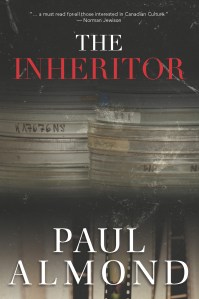
    On April 8, Paul Almond’s last book, The Inheritor, an autobiographical novel, was published by Red Deer Press. Almond, a member of the Quebec Writers’ Federation, intended to meet many of his fans and fellow writers this spring and summer, but he passed away on April 9.

    Almond spent the last twenty-five years of his life researching and writing The Alford Saga, the eight-volume series of adventure novels which culminated in The Inheritor. The series depicts the lives and loves of his Gaspesian ancestors. Even in his eighties, Almond crisscrossed North America, talking about his books on radio and TV. He did over 100 book launches in the last five years of his life, often donating half the proceeds to charity. But what about all the months and years of research that precedes the writing?

    Almond consulted Canadian historians, linguists and scholars; combed through Library and Archives Canada; pored over Canadian soldiers’ diaries and his ancestors’ letters; read archived newspaper columns and essays; and even referred to daily weather reports recorded by historians. For the autobiographical The Inheritor (book eight), Almond also returned to his own letters to his mother.

    On October 30, 2013, Almond drafted the following piece for QWF Writes, sharing his vision and experience of historical research in writing The Alford Saga. Barbara Burgess, Almond’s publicist, recently found the piece among her letters from Almond. She and David Stansfield, one of Almond’s main literary consultants, prepared this piece for publication. Paul Almond:

    “I have been asked how I do my research. This Saga, written over the last dozen years, has indeed taken a lot of research, mostly arduous and thorough. I liken it to looking through binoculars based upon a tripod of three legs: Oral Tradition, Documents, and Intuition.

    Oral tradition

    In rural communities all across Canada, the oral tradition is strong: grandparents love to tell stories of their own grandparents. In cities, such a thing may not be possible, but in tiny Shigawake, Quebec, we have many such stories.

    About fifty years ago, an aged cousin told me shortly before he died that the first Almond climbed through a porthole of a British battleship in Port Daniel Harbour. That intrigued me. I did more research. (The story of the porthole is in the beginning of The Deserter – book one.)

    The Inheritor - Paul AlmondDocuments

    Now, as anyone might imagine, almost no English documents from 1800 exist on that largely unexplored coast off modern-day eastern Quebec. Archival material tells only of prime ministers, treaties and so on. Nothing explains exactly how a farmer drank water when clearing land. (Answer: a Piggin). But in New Carlisle, the county seat, an old box in a basement under a hat rack produced a paper from 1816, which revealed that a terrible famine had affected the Coast, caused by a volcanic explosion on Mount Tambora. A schooner had come from Quebec City to relieve the starving inhabitants; in order to get your barrel of flour to survive, you had to say who you were, how many were in your family, and so on. The paper noted that one Thomas Manning, aka James Almond,* had fought on the battleship Bellerophon, and had settled in East Nouvelle, as Shigawake was then known.

    Intuition

    In due course I discovered that behind Port Daniel, true wilderness then, a Mi’kmaq settlement thrived. If you deserted the British Navy in the early 1800s, your punishment was death. So the Marines would have chased deserter Thomas Manning. And where would he have gone? Back into the interior. What was there? The Mi’kmaqs. Bingo. There’s the story.

    This third leg of the tripod involves not just your own intuition and common sense, but advice from others. No Mi’kmaqs on this side of the Bay really knew anything about the 1800s. However, in New Brunswick, I found an Elder whose grandfather, and the grandfather before him, had been shamans. And there was an ethnologist at the Gaspe Museum, an Iroquois who had studied the Mi’kmaq all his life. And so gradually, my first book, The Deserter, grew out of their oral traditions, documents I found, and from what I intuited.

    And so I went, looking through my binoculars on their tripod. I looked into the 1850s, when my grandfather trekked on snowshoes six hundred miles to Montreal (described in The Pioneer). Then to 1900 when my uncle went to the Boer War (in The Chaplain), and from there on to 1914, when my father fought in WWI (described in The Gunner), and on…”

    * James Almond was Paul Almond’s great-grandfather. He settled in Shigawake in 1810 or thereabouts, founding the oldest homestead there.


    Paul AlmondIn addition to the eight volumes of the Alford Saga and several other books, Paul Almond produced, directed and in many cases wrote over 120 television dramas for the CBC, BBC, Granada (where he created the documentary Seven Up!) and various networks in the U.S., plus a number of feature films. www.paulalmond.com

    Photo (top) of Paul Almond © 2012 Northernstars.ca

    Photo (headshot) of Paul Almond © Joan Almond


    David StansfieldDavid Stansfield, a close friend of Paul, wrote 400 television scripts for TV Ontario in Canada, the Public Broadcasting Service in the U.S., the Discovery Channel, NHK, Encyclopedia Britannica and Time-Life, plus half-a-dozen feature film screenplays and nine books, seven of them novels. www.davidstansfield.com


    Author Barbara Burgess worked with Paul Almond for the past two and a half years, helping him arrange book launches, copy-editing and handling some of his literature-related correspondence. www.thecacounacaves.com