Tag: reading

  • The Art of Embarrassing Oneself at Public Readings—By Renée Cohen

    The Art of Embarrassing Oneself at Public Readings—By Renée Cohen

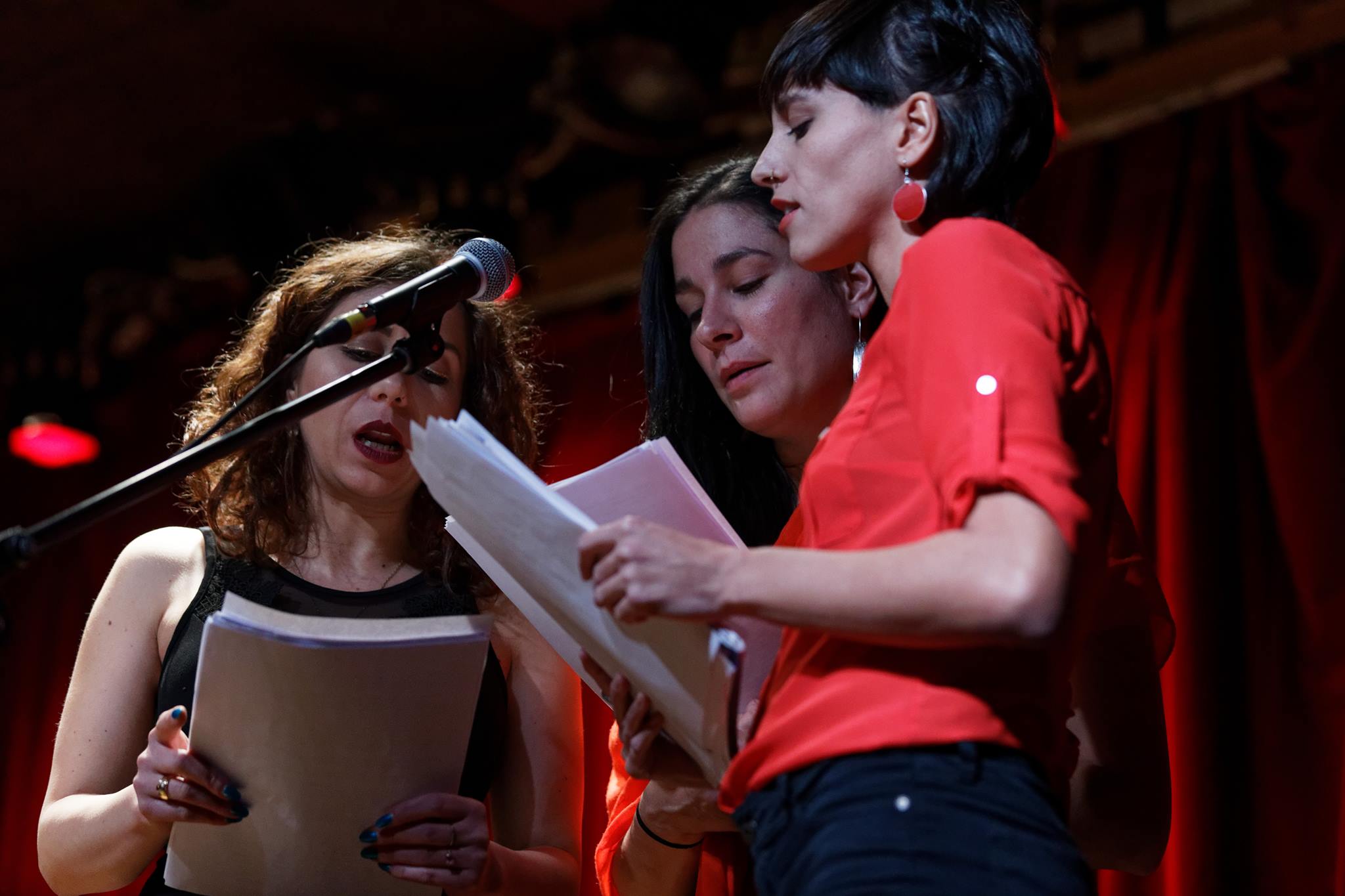
    Giving public readings is crucial to establishing oneself as an emerging writer. After attending a diverse array of Quebec Writers’ Federation (QWF) workshops—from food and travel writing to literary fiction—it became clear that regardless of the writing genre, workshop leaders often proffered those same words of advice. For years, I avoided ‘open mic’ nights. I slid under the table when called upon to read. In my defense, I am not alone in the belief that any form of public speaking is nightmare-inducing—regardless of the circumstances. Introverted, I’d always hoped that becoming a writer would require less speaking and more silent solitude.
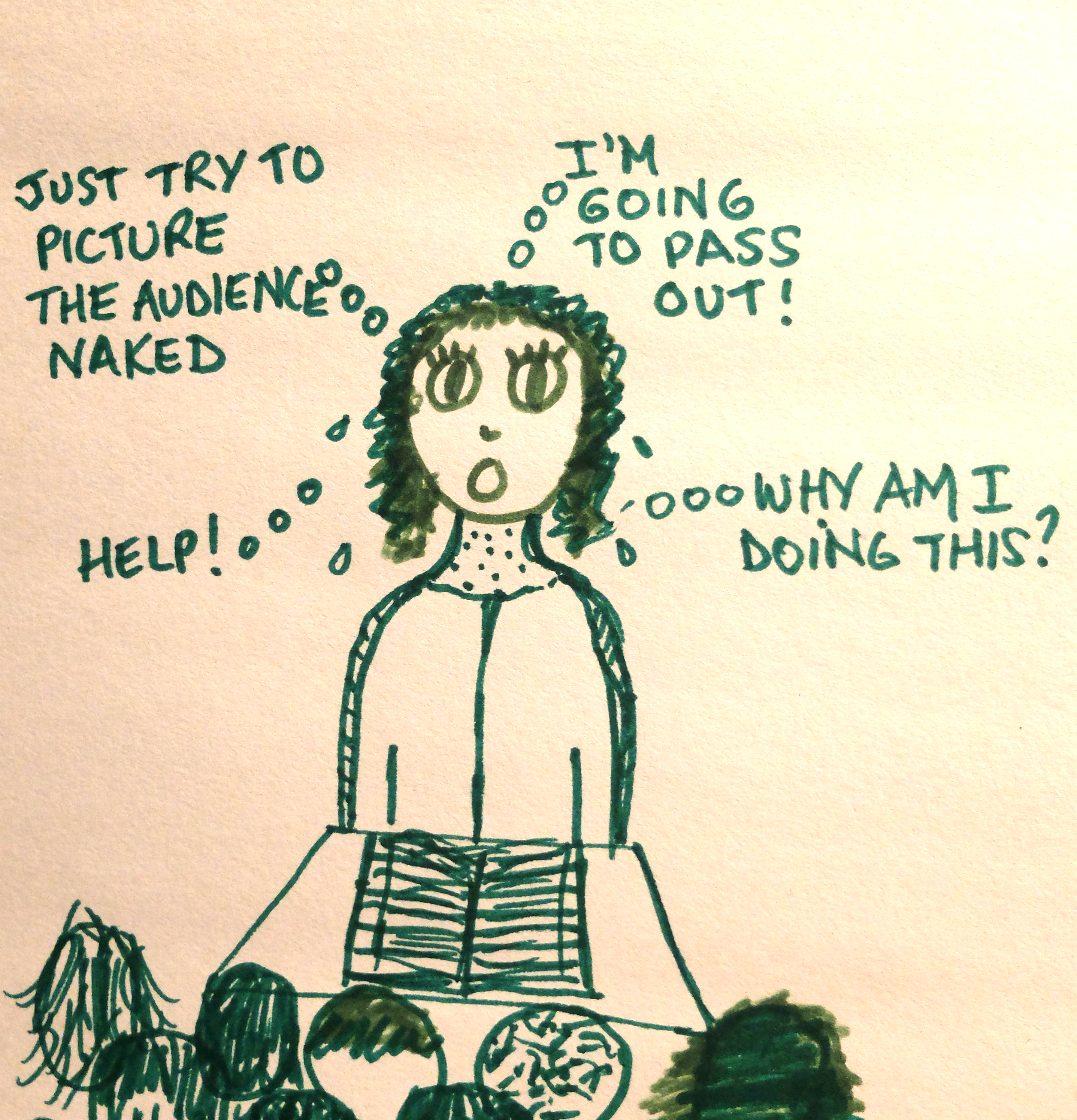
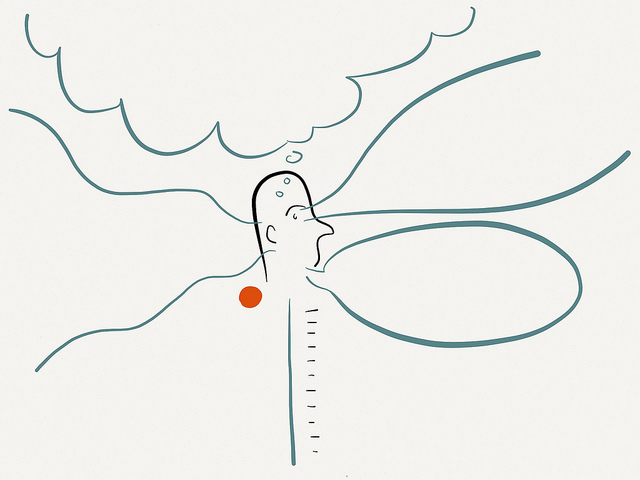
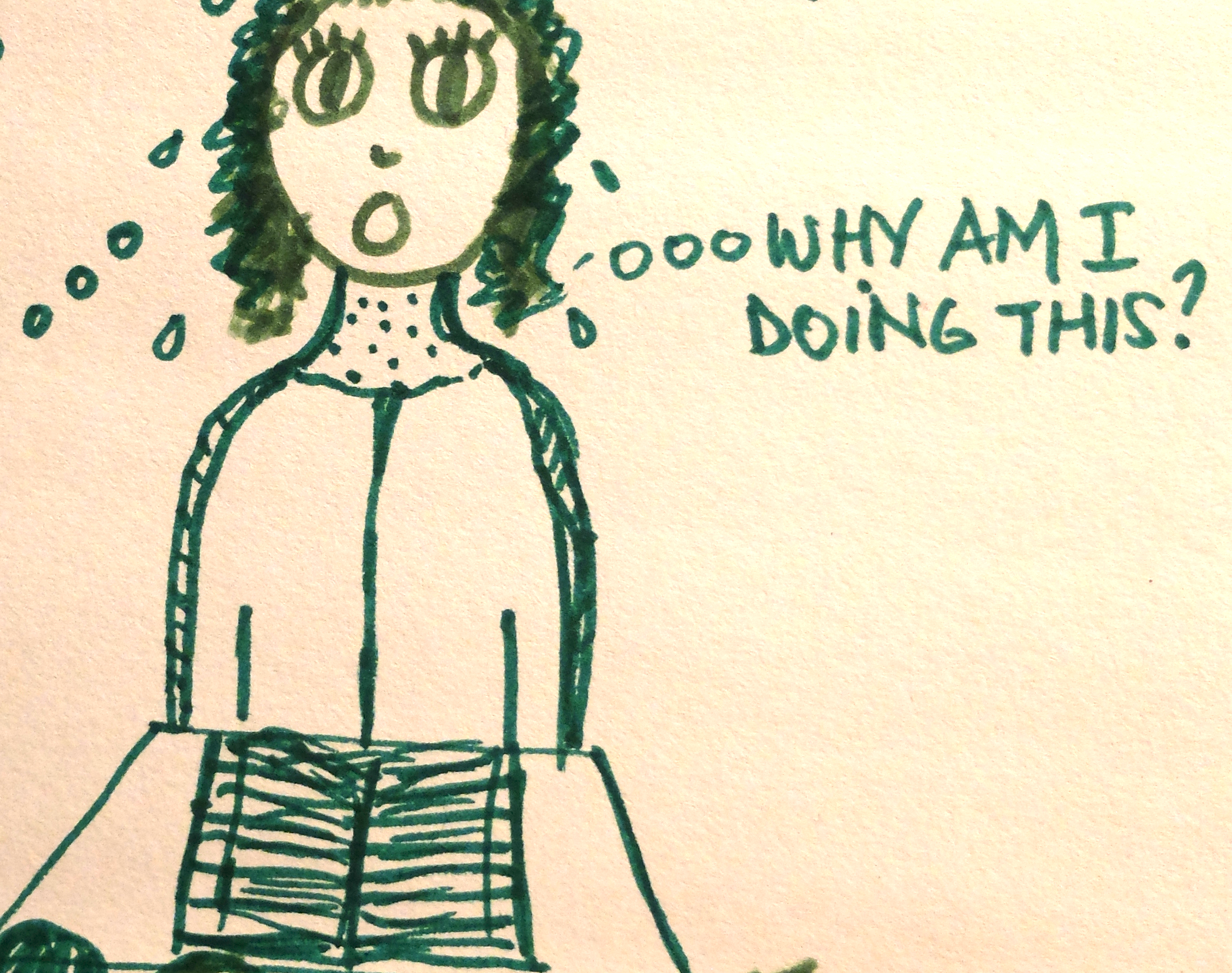
    *Embarrassment and Bloating Cartoon R. CohenUnlike the act of writing, which allows for the deletion of words before they’re read, speaking before a live audience isn’t as forgiving. There’s no delete button one can press to make oneself disappear.

    So, uncharacteristically, when one of my flash fiction pieces was recently published in the My Island, My City chapbook, I accepted the invitation to read it at a gala. Since proceeds from the event would benefit the QWF’s Writers in the Community program, I reasoned that service to the cause was far more important than my own aversion to public speaking.

    As I was about to leave the house on the night of the gala, my face suddenly bloated like a pufferfish, my neck erupted in itchy hives, and my nose bled. Apparently, my anxiety about the reading was manifesting itself physically.

    “How can you be nervous? It’s a flash fiction story that will take you forty-eight seconds to read!” my partner said after I’d gently dissuaded him from joining me. Why was I so nervous? I was honored to be involved in the charitable event!

    Then, when a roadblock prevented my cab driver from turning on de Maisonneuve Boulevard, he stopped the car. “Walk from here!” he firmly suggested. Too anxiety-ridden to protest, I passively agreed. The moment I exited the vehicle, a freak snowstorm hit. Within seconds, my freshly-coiffed hair was drenched.

    Along the closed street, massive pieces of concrete lay strewn about. People loitered, examining the detritus.

    Inspired by the scene, I compiled mental notes for a future work of fiction.

    I then realized that my imagination was partially to blame for my current state of anxiety—If not for my vivid imagination, I wouldn’t be compelled to write. If I didn’t write, I wouldn’t have to worry about giving public readings.

    After wiping a snowflake from my eye, I discovered that my black mascara and eyeliner were not as waterproof as advertised.

    Looking like a wet raccoon, I cut through Westmount Park, which was eerily desolate save for a lone teenaged boy smoking under a snow-covered gazebo.

    I paused briefly to scratch my hives.

    I reflected upon traumatic incidents from my past that contributed to my fear of appearing before an audience: during a figure skating competition in my teens, someone clapped after I completed a movement that was undeserving of applause. I scanned the audience, only to discover the culprit was my father. Distracted by his misplaced burst of applause, I fell. (Needless to say, I didn’t win that competition). From then on, I dissuaded (nay, banned) family members from attending any competitions or events that required me to appear in front of an audience. That longstanding ban has carried over to include my partner and friends.

    When a recipe of mine was included in a cookbook, I was invited to prepare it on live TV during a pledge drive to benefit public television. Nervous during the shoot, I momentarily lost my ability to speak and instead, flapped my arms in a futile attempt to generate words.

    Finally, I arrived at the gala venue. Soaking wet, freezing, hive-covered, my makeup smeared, my face bloated, and blood caking in my nose. While attempting to compose myself in the foyer of the church hall, I was shocked to see one of my friends enter the building. “Surprise!” she squealed upon seeing me. Moments later, another good friend showed up unexpectedly. Both explained that upon seeing my name in the ad, they’d reserved tickets to support me (and the cause)!

    Chatting with them, I gradually felt my fear dissipate. Believing that friends and family were stress-inducing distractions had been a mistake. The opposite was true! Their supportive presence was comforting.

    After my reading, I returned to sit with my friends in the audience, relieved that I hadn’t thoroughly embarrassed myself. Courtesy of the resulting adrenalin rush, I contemplated the advice of my writing mentors. I decided I would bravely endeavor to give public readings in the hopes of becoming an emerging writer.

    My thoughts were interrupted when one of my friends gently tugged on my sleeve.

    “Did you know that your sweater is on inside out?” she giggled.


    Pic. Cohen_Y. PelletierRenée Cohen is a freelance writer for numerous international charitable organizations. Her personal essays, prose, and flash fiction have appeared in Accenti MagazinePrairie Fire, Litro UK, The Globe and Mail, the Montreal Gazette, Reader’s DigestZvona i Nari’s ZiN Daily, Croatia, and in numerous volumes of the Canadian Authors Association anthologies, in the My Island, My City chapbook, and elsewhere. Her artwork has been exhibited in group and solo shows and featured in Montreal Writes Literary Magazine, Headlight 22, 3Elements Review, Spadina Literary Review, Flash Frontier New Zealand, and Sonic Boom Journal (India). She recently won The Fieldstone Review’s Banner Art Competition.

    Photo credits: Renée Cohen (header image); Y. Pelletier (headshot)
  • All Languages / Languages All—By Rachel McCrum

    All Languages / Languages All—By Rachel McCrum

    “Les langues sont toutes les mêmes lorsqu’elles tournent ensemble.”

    —Danny Plourde

    “All languages are the same when they’re in tune.”

    —translated by Antonio D’Alfonso

    “Languages all come together when they’re dancing.”

    —same line, translated by Martha Tremblay-Vilao

    LesNuitsAmerindiennes
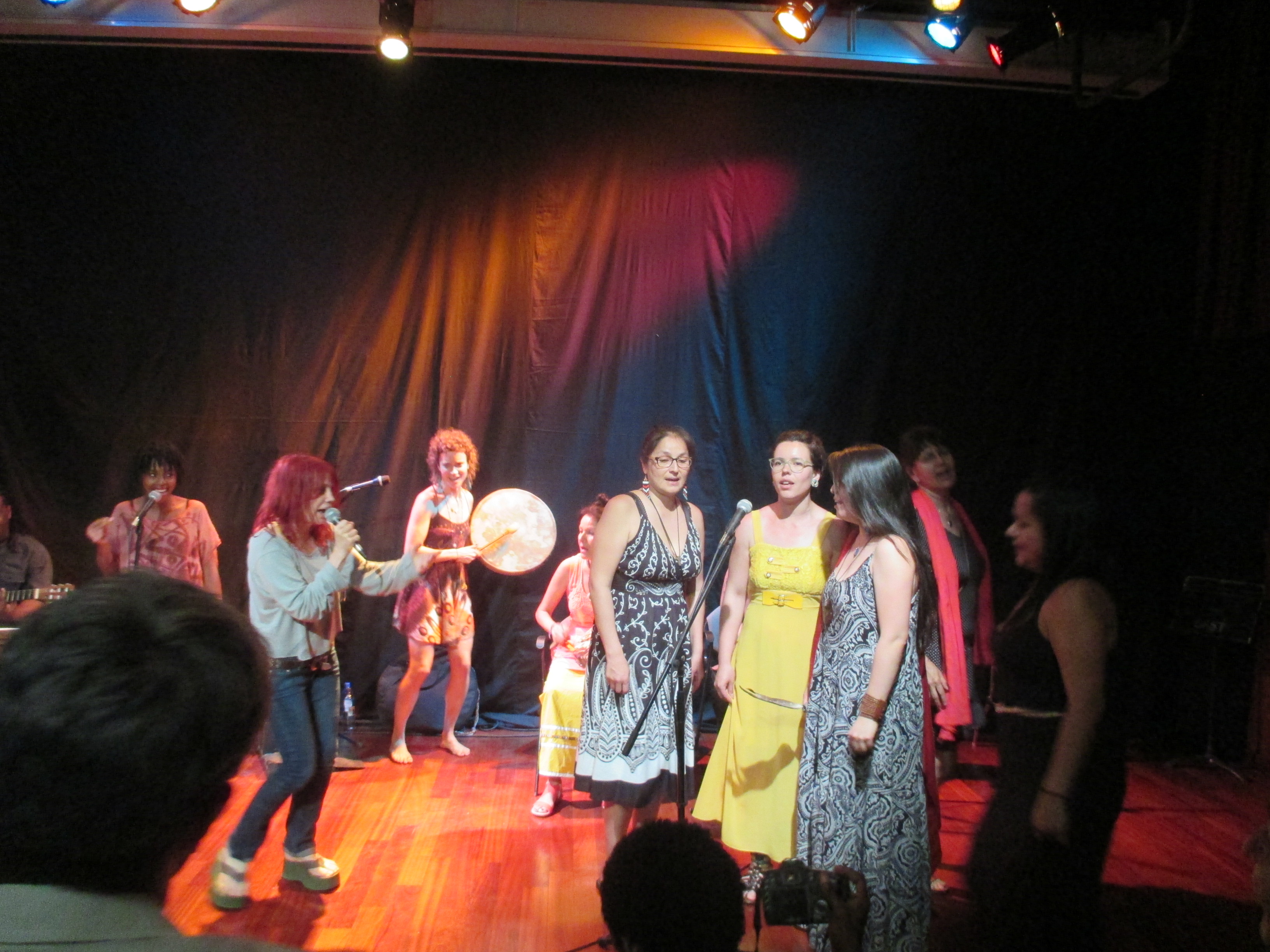
    Les nuits amérindiennes, Port-au-Prince Haiti, May 2015. Performers include: Chloé Sainte-Marie, Moe Clark, Marie-Andrée Gill, Rita Mestokosho, Natasha Kanapé Fontaine, Naomi Fontaine.

    What’s the point of going to see a poetry show if you can’t understand the text? And yet—there it is. That galvanizing, pure communication of the concerns, the beauty, the specificity of another language. The most joyful expression of it that I’ve seen so far was at an unforgettable night with the inzync Poetry sessions in Stellenbosch, South Africa. At least five of South Africa’s eleven official languages were represented onstage, with whispered translations offered by audience members to their neighbours, and whoops of recognition along the way.

    I wanted more.

    Port-au-Prince, May 2015

    I’m nearly the sole Anglophone, and definitely the only Northern Irish, at Les nuits amérindiennes, a festival of First Nations poets and artists in Port-au-Prince, Haiti, curated by the inimitable Rodney Saint-Éloi of Montreal-based publishing house Mémoire d’encrier. The Indigenous poets from Quebec include Joséphine Bacon, Guy Siou Durand, Tomson Highway, Virginia Pésémapéo Bordeleau, Louis-Karl Picard, Natasha Kanapé Fontaine, Moe Clark, Marie-Andrée Gill, and Naomi Fontaine. I’ve been sent by the Edinburgh International Book Festival to meet with Joséphine, Natasha, and Naomi for a collaborative project. This is my introduction to Canadian, to québécois, to Indigenous literature. I have no idea what’s going on, and I can barely understand anyone (my Belfast schoolgirl French being wholly inadequate in the circumstances). But at the shows, I’m electrified by the performance and the politics, the unself-consciousness, the self-awareness, the clear-eyed passion, the trickster craftiness—and well-honed craft—of the various artists.

    Nobody really understands why I’m there either, although it’s not that important—this isn’t about me. But I’m not that good at sitting on the sidelines and I’m desperate to communicate, somehow. At the second late-night session at Café Yanvalou, I sidle up to Rodney and ask, haltingly, if I can take a turn at the microphone. The words will be in English, but it’s the only thing I can think of to do. I sweat through a couple of poems, with halting introductions in French. I talk about my mother, and the sea. It works. I cannot speak, but I can extend words. The connection is made. These will become lifelong friends (and in one case, the love of my life, and the beginning of my journey to Montreal).

    Edinburgh, December 2016

    I am finishing up six years in Edinburgh, Scotland, which has mostly been consumed and absorbed with poetry, performance, promoting events, teaching workshops. It’s been a fantastic life. I have been incredibly lucky, starting from the gritty basics of open mic nights and running shows, and ending up being able to make a living, a good living, from all this. I love my community, I love my work, I love, more than anything, what happens when people get on a stage with their words, and speak them to an audience. And I’m leaving it.

    Even I’m not entirely sure why, except that there is love on the other side of the Atlantic. And there is a chance, a real chance to follow this thread of poetry and of performance, and try to understand how, if one cannot follow the sense of the words in an art form that bases its craft on the finer points of language, one can still be so affected by multilingual performances. In Quebec, my native language—which I have spent the last few years learning how to wield as a poet—becomes one among many.

    Montreal, November 2018

    I’m at Langues liées // Linked Tongues in La Sala Rossa, Boulevard Saint Laurent, Montreal. It’s the opening event of the Mile End Poets’ Festival, and there are ten poets on stage. There are ten languages on the stage. Aside from French and English, there is Arabic, Creole, Korean, Innu-aimun, Italian, Occitan, Persian, Portuguese, Spanish, and Wolof. These are mother tongues, and father tongues; languages of politics, of home, of love.

    Languages talk of their own concerns, at once specific and universal. Martha Tremblay-Vilão sings saudade, the Portuguese longing for a past or a home that no longer exists. Hossein Sharang talks of Iran, of democracy, of the impossibility of a country of eighty-two million terrorists. David Bouchet asks—in Wolof, with the aid of cue cards (and his fellow poets): “Where are you, who are you, how are you?” Marcela Huerta performs the stiltedness, then fluidity, of learning English as the daughter of Chilean refugees.

    The audience doesn’t understand everything that is being said, but there are ripples of comprehension when a new language is presented. There is a table of Arabic speakers, another of Portuguese. Maëlle Dupon’s mother is in the audience to hear her perform in Occitan; another supporter, a Haitian friend of Maëlle’s, is blown away when his ears catch the Creole of Chloé Savoie-Bernard.

    In La Sala Rossa, the last impressions are of joy. Of something ventured and something gained. Of respect. Everyone on that stage can do something that no one else can. They’ve worked for this show, they’ve risked, they’ve listened to one another, translated, called out and responded. And we’re here, and we will listen.


    RachelMcCrum_headshot

    Rachel McCrum is a poet, performer, and promoter—and also the Membership & Communications Co-ordinator of the Quebec Writers’ Federation.* She is originally from Northern Ireland, and has performed and taught poetry in Greece, South Africa, Haiti, Canada, and around the UK. She lived in Edinburgh, Scotland, from 2010 to 2016, where she was the inaugural BBC Scotland Poet-in-Residence, a recipient of an RLS Fellowship, and the co-host of cult spoken word cabaret Rally & Broad. Her first book, The First Blast To Awaken Women Degenerate, was published in 2017. She has lived in Montreal since January 2017, where she co-directs (with Ian Ferrier) the Mile End Poets’ Festival and curates the bilingual poetry performance series, Les Cabarets Bâtards.

    *As an employee of the QWF, Rachel has waived the fee for this article.

    Photo credits: Michael Kovacs (header image, showing Maëlle Dupon, Uasheshkun Bacon, and Martha Tremblay-Vilão reading in Occitan, Innu-aimun, and Portuguese at Langues liées // Linked Tongues); Rachel McCrum (top image); Ryan McGoverne (headshot)

  • Us Impostors—By Caroline Vu

    Us Impostors—By Caroline Vu

    Header image: Letters sent to Caroline Vu by her Vietnamese friends in the 1970s.

    By some incredible stroke of good luck, I was invited last spring to Étonnants Voyageurs, France’s prestigious international literary festival. On top of a speaker fee, I would be reimbursed for my hotel, food and transportation.  To my surprise, I was to appear on the same panel as the famous Dany Laferrière. I wondered if some FrenchLit assistant organizer hadn’t mistaken me for Kim Thuy.

    “Dany Laferrière of l’Académie française fame! What will I say next to him? I’ll look like a dummy. Maybe I shouldn’t go…” I told my friend Lisa.

    “Nahhh, go,” Lisa said.

    “But… I’ll sound so stupid in my half-baked French! I hate public speaking,” I protested.

    “Yeah, you’ll appear simplistic next to the pros. So what? Nobody will remember your mumbling the next day. But Facebook photos of you with Dany? That’s gold. They’ll live forever on the internet. Smoke and mirrors, that’s what counts…”

    “You’re clever,” I said.

    “I didn’t do an MBA for nothing,” Lisa replied.

    I took my friend’s advice, said ‘yes’ to the invitation and went home to practice my French. Immediately I felt like a professional impostor.

    dany laferriere - paris salon du livre
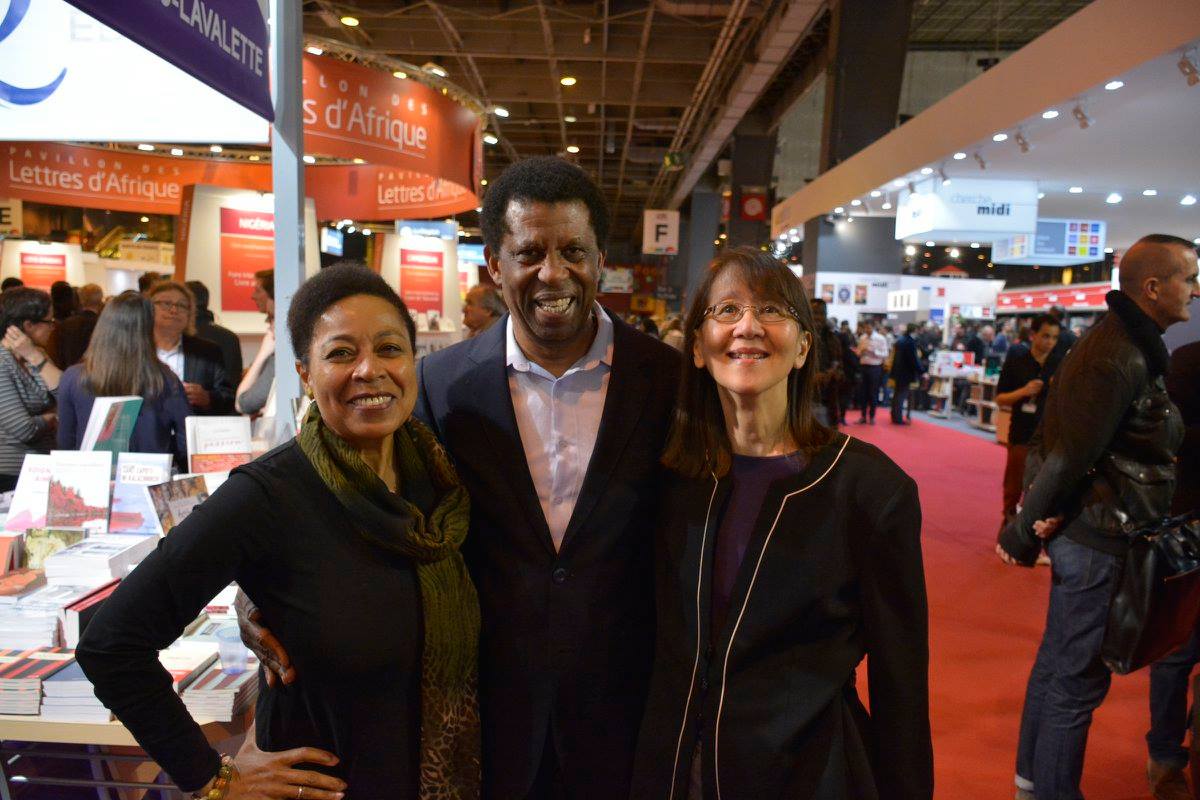
    Alecia McKenzie, Dany Laferrière, and Caroline Vu at the 2017 Livre Paris, a year before the festival in Saint-Malo.

    Étonnants Voyageurs, held each spring in the beautiful seaside town of Saint-Malo, is a festival to behold. Book lovers come from all over France and French-speaking countries to hear their favourite authors. In town, I had a large room overlooking the Atlantic. I was invited to champagne lunches. I met interesting writers from Canada and France. The sun shone throughout our stay. Yet I was restless—couldn’t sleep at night, was nervous during the day. I dreaded public speaking so much, I even thought about skipping the panels. “Sore throat, lost my voice… laryngitis. Can’t come, sorry…” I could use that as an excuse. Being a doctor, I could even give myself a medical note.

    Of course I didn’t give myself a fake medical note. I did show up for the panels. Dany was accommodating both on stage and behind the scenes. To put me at ease, he made a friendly joke about shy authors. It was one of those rare moments when I actually laughed on stage.

    I don’t remember much of what was asked of me on those panels or how I answered.  Only one question stayed with me. It was a question I have been asked in the past: How did I start writing fiction?

    To this question, some of my co-panellists mentioned being influenced by their father’s extensive library. Or a teacher’s encouragement. Numerous classical authors were named as sources of inspiration. Then the host turned to me: “How did you start writing? Which authors inspired you, Caroline?” Many authors had, but in my nervous state I couldn’t name anyone. I gulped, then decided to stick to the same narrative I’ve told friends.

    I was eleven when I left my native country of Vietnam. It was during the height of the war. Overnight we went from chaotic, war-torn Saigon to a quiet Connecticut town. I should’ve been grateful for the change, but somehow I wasn’t. Not speaking a word of English, knowing nothing of American culture, I was lost. I was at an age when the sense of belonging seemed more important than the dangers of war. And in that small Connecticut school, I simply didn’t belong. So I hung on to the memory of old friendships. Daily I longed for the bond I once had with childhood friends still living in a ravaged Vietnam. My weekly letters to them eventually became exercises in obfuscation. Not wanting to burden them with my laments of loneliness, I made up stories of trading barrettes with popular girls, of throwing Frisbees to blond boys, of excelling in team sports. In reality, I’d spent my free time watching others play. In reality, I’d only heard “Boo!” in gym class since I could never grasp the strange rules of baseball.

    Those letters to old friends were pure fantasy, I said. An eleven-year-old impostor, that was me. That was how I started writing fiction, I told the host. Some members of the audience nodded in sympathy while others smiled. I guess I didn’t do too badly.

    That narrative about writing make-believe letters home is mostly true. I know I exaggerated some parts, but now I’ve forgotten which ones. With time I’ve come to believe wholly in my tale. A little varnish on the truth can’t hurt a good story—I’ve succeeded in convincing myself.

    “Once an impostor, always an impostor,” I told Lisa with shame upon my return home from Saint-Malo.

    “But aren’t all novelists impostors? Always concocting fake stories to lure readers? Always trying to milk some tears or laughter? Don’t worry!” Lisa exclaims.

    “Hmmm…”

    “Great Facebook photos with Dany, by the way! I’ve already shared them on Twitter…”

    Ahhh, MBA-ers, what would we impostors do without them?


    CarolineVu-headshot

    Caroline Vu was born in Vietnam and left her native country at the age of eleven. She moved to Canada after spending two years in the US. Caroline’s first novel, Palawan Story (Deux Voiliers Publishing) won the Canadian Author Association’s Fred Kerner prize in 2016. That novel was also a finalist for the Quebec Writers’ Federation’s Concordia University First Book Prize. Palawan Story was translated into French (Éditions de la Pleine Lune) in 2017 and was a finalist for the 2018 Blue Metropolis Diversity Prize. Her second novel, That Summer in Provincetown (Guernica Editions) has also been translated into French (Éditions de la Pleine Lune). Caroline currently works as a family physician in a community health clinic in Montreal.

    Photo credits: Caroline Vu (header image); Courtesy of Éditions de la Pleine Lune (at Paris Livre); Marc-Antoine Zouéki (headshot)

  • Empathy by the Book: How Fiction Affects Behavior by Susan Pinker

    Empathy by the Book: How Fiction Affects Behavior by Susan Pinker

    When I want to escape I pick up a good novel. But does this habit provide more than a quick getaway?

    We’ve long known about the collateral benefits of habitual reading—a richer vocabulary, for example. But that’s only part of the picture. Mounting evidence over the past decade suggests that the mental calisthenics required to live inside a fictional character’s skin foster empathy for the people you meet day-to-day.

    In 2006, a study led by University of Toronto psychologists Keith Oatley and Raymond Mar connected fiction-reading with increased sensitivity to others. To measure how much text the readers had seen in their lifetimes, they took an author-recognition test—a typical measure for this type of study. “The more fiction people read, the better they empathized,” was how Dr. Oatley summarized the findings. The effect didn’t hold for nonfiction.

    Still, no one knew whether reading fiction fostered empathy or empathy fostered an interest in fiction. Other factors could have been at play too, like personality.

    So, in 2009, part of the Oatley-Mar team involved in the 2006 study reproduced it with a sample of 252 adults—this time controlling for age, gender, IQ, English fluency, stress, loneliness and personality type. The researchers also assessed participants’ “tendency to be transported by a narrative”—the sense that you’re experiencing a story from within, not watching it as an outsider.

    Finally, participants took an objective test of empathy, called the Reading the Mind in the Eyes Test. The aim of all of this was to see how long-term exposure to fiction influenced their ability to intuit the emotions and intentions of people in the real world.

    The results? Once competing variables were statistically stripped away, fiction reading predicted higher levels of empathy. Such readers also lived large in the flesh-and-blood social sphere, with richer networks of people to provide entertainment and support than people who read less fiction. This finding put to rest the stereotype of bookworms as social misfits who use fictional characters as avatars for real friends and romantic partners.

    Later studies confirmed that reading fiction does cause a spike in the ability to detect and understand other people’s emotions—at least in the short term. In a series of experiments published in 2013 in Science, social psychologist Emanuele Castano and David Comer Kidd of the New School for Social Research tried to figure out whether the type of fiction mattered.

    “This finding put to rest the stereotype of bookworms as social misfits who use fictional characters as avatars for real friends and romantic partners.”

    The researchers handed subjects—in groups ranging in size from 69 to 356—different types of genre fiction, literary fiction or nonfiction, or nothing to read at all. They then assessed participants on several measures of empathy. Nonfiction—along with horror, sci-fi or romance novels—had little effect on the capacity to detect others’ feelings and thoughts. Only literary fiction, which requires readers to work at guessing characters’ motivations from subtle cues, fostered empathy.

    In these studies, the reading of nonfiction not only failed to spur empathy but also predicted loneliness and social isolation, especially among men. Of course, nonfiction reading has its virtues. Other research suggests that various kinds of nonfiction can prompt empathetic feelings—as long as the narrative is moving and transformative.

    In recent studies, neuroscientist Paul Zak at Claremont Graduate University and colleagues showed participants heartfelt stories, such as a video narrated by a father of a toddler with brain cancer. The video induced a spike in observers’ levels of oxytocin—a hormone that promotes trust, nurturing and empathy—and larger donations to charity. Watching a straightforward travelogue-type video of the same father and son visiting the zoo didn’t have that effect.

    Apparently, what matters is not whether a story is true. Instead, as Dr. Oatley says, “If you’re enclosed in the bubble of your own life, can you imagine the lives of others?”


    susanpinker-by-susie-loweSusan Pinker is a Montreal-based psychologist, writer and columnist for the Wall Street Journal. Her most recent book is The Village Effectwww.susanpinker.com

    This piece was originally published in The Wall Street Journal.

    Photo Credits: Zak Greant (top); Susie Lowe (headshot)

  • Healing, One Story at a Time by Licia Canton

    Healing, One Story at a Time by Licia Canton

    In 2012, a driver pulled up behind me while I was putting a box in the trunk of my car. He crushed my legs between the two bumpers. I was bedridden for four months, and then I started physiotherapy. Within a year I was able to do 95 percent of the activities I had done before the accident. People would ask me how my legs were doing and I would smile and tell them I was doing well. I was, physically—but I didn’t tell them that I wasn’t able to write.

    I wasn’t able to write for clients, organize events or attend networking functions. I didn’t think any of it was worth it. I had lost my drive. In fact, I had lost my desire to do anything at all. A few weeks after the accident, I had looked at the positive side of things: I had decided to finish my second book of stories; I was going to write on my laptop while in bed. But that never happened.

    My insurance agent suggested that I see a therapist. I would only be able to move forward by dealing with the trauma. I decided to try it, and I discovered that writing itself was what would cure my writing block. It’s called narrative therapy, and it changed my perspective on life.

    Vera, my therapist, asked me to do exercises in automatic writing. I had to just put words on the page without thinking about what I was writing. Then she said that I had to write about the accident in order to regain my confidence. At first, this seemed like an impossible task. If I could write, why would I be there? I could talk about the accident during therapy, but I couldn’t write about it. I didn’t want to write about it.

    Eventually, I wrote a story about a writer who was unable to write about a traumatic experience. It took me many months to be able to do that. I could not sit for longer than five minutes at a time. I worked at it early in the morning when everyone was still asleep, when I was least likely to be interrupted—and when no one would see me crying.

    As part of the therapy, I was obliged to read that first story “Because of Leonard Cohen” at every therapy session until I could read it without crying. That accomplishment was priceless. Then, the therapist asked me to read the story at a public venue as I would have done with any of my other stories. But I couldn’t fathom the thought of sharing my very personal writing in public. I come from a background where broken bones get fixed and as for the rest, we simply move on. Everyone knew that I had been in an accident. Very few people knew about the ensuing depression. It was not a topic of discussion.

    “I could not sit for longer than five minutes at a time. I worked at it early in the morning when everyone was still asleep, when I was least likely to be interrupted—and when no one would see me crying.”

    I first read “Because of Leonard Cohen” abroad, at a short story conference where very few people knew me. The story was later published in the international short story anthology Unbraiding the Short Story, edited by Maurice A. Lee. Then, I wrote more, and more. I wrote and published other pieces inspired by my accident, “In Front of the Bell Centre” and “The Woman in the Red Coat.” And I still haven’t finished writing all of the stories that I need to, and want to, write. I have a Table of Contents with the titles of all the stories that I am working on, all part of my narrative therapy. With the completion of each new story, the process is the same. I ask for feedback from several writer friends. I read it repeatedly in private until I feel completely comfortable with it. I read it to my husband and children. Then, I read it in public either before or after it is published. Now, I preface the readings by saying that the story came out of narrative therapy.

    Vera told me about Raymond Queneau’s Exercices de style (1947), a collection of ninety-nine retellings of the same story, each in a different style. Although I am no longer in therapy, I continue working on my own version of Queneau’s book: multiple literary variations of my accident and its aftermath. Just as I was not thrilled about physiotherapy and osteopathy, I am not exactly fond of this literary project—mostly because I have had to postpone other writing projects. On a positive note, however, narrative therapy has encouraged me to go beyond my comfort zone by doing other activities connected to writing that I would not have done a few years ago: guest blogging, giving workshops, mentoring other writers, writing/speaking about depression and narrative therapy, and actively seeking venues to read the writing that has come out of narrative therapy.

    I still cry every time I tackle a new story, but I always feel a great satisfaction when I share it in public. It is part of the process that moves me towards complete healing, as is this piece that you’re reading right now. In fact, I prepared my pitch for this column two years ago. I just wasn’t ready to share my experience then.


    headshotLicia Canton is the author of the short story collection Almond Wine and Fertility (2008), published in Italy as Vino alla mandorla e fertilità (2015). She is also a literary translator and founding editor-in-chief of Accenti Magazine. She has published personal and critical essays and edited nine books. She mentors emerging writers, journalists, and editors. She holds a Ph.D. from Université de Montréal and a Master’s from McGill University. See her profile in LinkedIn or the Hire A Writer directory.
    Photos: Flickr (top); Ohayon (headshot)

  • Gadfly at the Festival by Peter Richardson

    Gadfly at the Festival by Peter Richardson

    In the hospitality room at the Hôtel Gouverneurs in Trois-Rivières, you are greeted by two perky volunteers whose first question after introductions is: “Will you three be reading the French translations of your poems yourselves, or will you be requiring the services of a French reader?” Oh, my, you think. What translations? The hotel carpet begins to yaw under your chair. What was I thinking coming to a poetry festival in a city whose population is 97 percent French—without translations?

    Ahhh,” your hand goes up, feigning nonchalance, “I don’t have any translations with me.” The two other English-language poets and the volunteers swivel their heads in your direction as if you had just morphed into a large red crustacean whose claws and antennae waved merrily in their direction. “Can I give a short explanation of my poems in fluent French and then read them in English?” One of the cordial volunteers laces her fingers together and lowers her voice: “You see, people reserve restaurant tables months ahead to hear our guests read in French. It would be unfair, don’t you think, to subject them to English, when most people here rarely speak it?”

    How could you have not foreseen this eventuality? For the next twenty-four hours, you huddle with a hotel dictionary, churning out translations and cross-checking these with your translator sweetheart via long distance telephone. You thank fate that years before, you earned a university certificate in French-English translation. Although that hardly qualifies you as an ace in Gallic syntax, it limits the number of world-class howlers you’re likely to churn out. You are going to have to revise up to the wire. And once a reading is finished, there will be no stopping off for sparkling conversation with fellow scribes in downtown Trois-Rivières. It’ll be back to your room to crank out more translations. There are four readings a day in restaurants, bars, parks, and libraries; you’ll have to furnish two poems, four times a day.

    Accordingly, you show up for each venue as if this were a lark, your fraudulent grin assuring audiences that you’re dishing up the real thing, the slaved-over equivalents they’ve come to expect. The rest of the time you are a mole, looking up words like “dip” or “wobble” in a battered Robert-Collins. At readings, you unfold two sheets of spiral notebook paper and smile at your hash-marked, arrow-filled texts as if it were normal to achieve verbal legerdemain with the French versions overnight.

    You can’t point to the Russian poet, Evgeny Tchigrinne, huddling by the hotel elevator in a rumpled hockey team manager’s parka, and say to his interpreter companion: “It’s not fair. He should have to read his stuff in French too.” You can’t complain that Andrés Morales—one of the leading poetic lights in Chile, a man who also speaks Croatian and English—should be prevailed upon to read his translator’s French versions. His credentials precede him, and plus, with his dark suits, Brylcreemed hair, and killer smile, he is a serious candidate for the festival’s Mr. Cordiality Award.

    “At readings, you unfold two sheets of spiral notebook paper and smile at your hash-marked, arrow-filled texts as if it were normal to achieve verbal legerdemain with the French versions overnight.”

    The other English-language poets seem like consummate professionals. The Canadian geneticist-poet, Jan Conn, for instance, looks you straight in the face and says: “Months ago, I commissioned someone to translate twenty of my poems. I knew I’d have to have this stuff ready. I practiced it for weeks.” When she says this, you feel as though you’ve been transported back to that fourth-grade field trip to the Hayden Planetarium in New York City, where, standing in the cafeteria’s lunch line, you reached into your pants pocket for change and pulled out pebbles. Earlier in the day, while waiting for your mother to drive you to school, fearing you would miss the bus from school to the planetarium, you found yourself scooping up pebbles and chucking them by the handful, and some of these found their way into your pockets. But so what if you’ve spent a lifetime picking nickels out of the pebbles in your pockets?

    Does it stop you from making interesting acquaintances? No. And your readings manage to clear those imaginary telephone wires at the opposite end of an airfield that is a reader’s five minutes at the microphone. Your cloth-and-wire craft ascends. It swoops up to a reasonable height in the short runway’s space over the tilted beer glasses and stilled bar chatter and its undercarriage avoids calamity. But without good conversational French, without a chameleon-like ability to don an entertainer’s alter ego at brasserie readings, without a knack for chuckling your way through introductions which contain a reference to the dog-eared papers you clutch, you shudder to think how this forty-eight-hour period might have transpired, and how close you came to earning the title: Worst Anglo Festival Invitee Ever.


    IMG_1483Peter Richardson is the author of four collections of poetry: A Tinkers’ Picnic (1999), finalist for the Gerald Lampert Award; An ABC of Belly Work (2003), short-listed for the Acorn-Plantos Award; Sympathy for the Couriers (2007), winner of the QWF’s 2008 A. M. Klein Award; and Bit Parts for Fools (2013), which was short-listed for the Archibald Lampman Award. A retired airline worker, he lives in Gatineau, Quebec.

    Photo: Via Flickr; no changes made (top); Martine Chapdelaine (headshot)

    Peter Richardson, Jan Conn, and a small group of other authors will be reading on April 11, 2016 at the launch party of Vallum Magazine‘s Issue 13:3. The Brass Door Pub (2171 Crescent Street, Montreal), 7:30 p.m.

  • Hello Baby, Bye Bye Books by Mike Steeves

    Hello Baby, Bye Bye Books by Mike Steeves

    Man holds baby while reading a book

    My daughter was born on August 25, 2014, and during the interminable lead-up to her birth I was, like all new parents, subject to a deluge of unsolicited advice, warnings and thinly-veiled threats from family, friends and complete strangers about what I could expect as a new parent. One of the warnings I heard most often was that the time I had for reading was going to be severely curtailed.

    Maybe my friends didn’t appreciate how dedicated I was to my routine, because I soon discovered that it was actually pretty easy to carve out the three hours I needed in order to stay on top of the steady stream of books that I had begun purchasing early on in my wife’s pregnancy as a way of offsetting my anxiety over not reading enough.

    For starters, I used to bike to work. But once I realized that I could eke out at least forty minutes of reading on my daily commute, I started taking the metro to work, thereby forgoing the last form of physical activity I practiced with any sort of regularity.

    Another threat to my reading habit was the immense amount of time required to help my daughter sleep. Newborns spend a lot of time sleeping, but they are notoriously bad at it and require assistance (referred to as ‘soothing’). This basically amounts to walking the streets of your neighbourhood with your baby stuffed into one of those obnoxiously priced “carriers.” Once I was over the new-dad jitters and was no longer trying to impress passersby with the baby I had strapped to my chest, I got into the habit of doing laps around the pond at Parc Outremont while reading from a book that I held in front of me. I made my way through Michael Hamburger’s translations of Paul Celan this way, and while I typically have little memory for poetry, many lines from this work are now frozen in place, triggered every time I pass a fountain or leafless tree. And one of the most memorable reading experiences of the last few years is the time I spent on a cold bench at Parc Saint-Viateur with my daughter sleeping in the carrier as I read the final pages of Peter Handke’s A Sorrow Beyond Dreams while kids dressed up as penises made their way to Halloween parties.

    Happy Halloween

    ” …the time I spent on a cold bench at Parc Saint-Viateur with my daughter sleeping in the carrier as I read the final pages of Peter Handke’s A Sorrow Beyond Dreams while kids dressed up as penises made their way to Halloween parties.”


    My aforementioned friends, the ones who warned that I would have to sacrifice my love of reading to my role as a new dad, were also an enormous tax on the time I had for reading. By refusing dinner invitations, birthday party invites, brunch for babies, etc., typically blaming my absence on my daughter, I was not only able to keep up my reading schedule, but, after I had refused enough of these kind invitations, they no longer came in with any regularity, which also spared me the enormous time-suck of responding in a considerate manner something to the effect that “I would love to! But…”

    While it turns out that my friends were wrong about finding the time to read, there is one aspect of parenthood they were right about, but that I’d never taken very seriously: I may still manage to find a comparable quantity of time, but the quality of that time has been seriously degraded. I can sit for hours with Knut Hamsun’s Pan in front of my face, but I regularly find myself rereading the same line over and over again. Or an hour passes and I don’t even make it to the bottom of the page I started on. I’ve managed to read an impressive number of excellent and difficult works, but I’ve hardly retained anything. Within a week or so of finishing a book, I even struggle to remember what I had just read (except for the Celan). So while I have plenty of time to read, I can’t maintain the level of focus and attention I had in my pre-paternal reading sessions.

    Which brings me to the final obstacle to my reading habit – writing. Before my daughter was born I used to try to write at least a few lines every night, but even this small commitment now seems to take an inordinate amount of time away from doing the thing that I really enjoy (it would be quite a stretch to say that I enjoy writing). On account of the soul-wearying exhaustion I feel at the end of every day, I find it pretty easy to excuse myself from writing for the night and to settle into a good book. And by “settle into a good book” I mean “read the same line over and over again until I eventually pass out on the couch.” My friends say that it’s perfectly natural to neglect my writing for the next year or so, and that eventually I will find the time and energy to start up again. I hope they’re right. Goodnight moon.


    Bookjacket_M Steeves

    Mike Steeves lives with his wife and child in Montreal, and works at Concordia University. Giving Up is his first full-length book of fiction. Connect with Steeves on Twitter @SteevesMike.

    Photos: Via Flickr; no changes made (top); Mike Steeves (Halloween); Nikki Tummon (headshot)

  • Why I Teach Brand-New CanLit by Natalee Caple


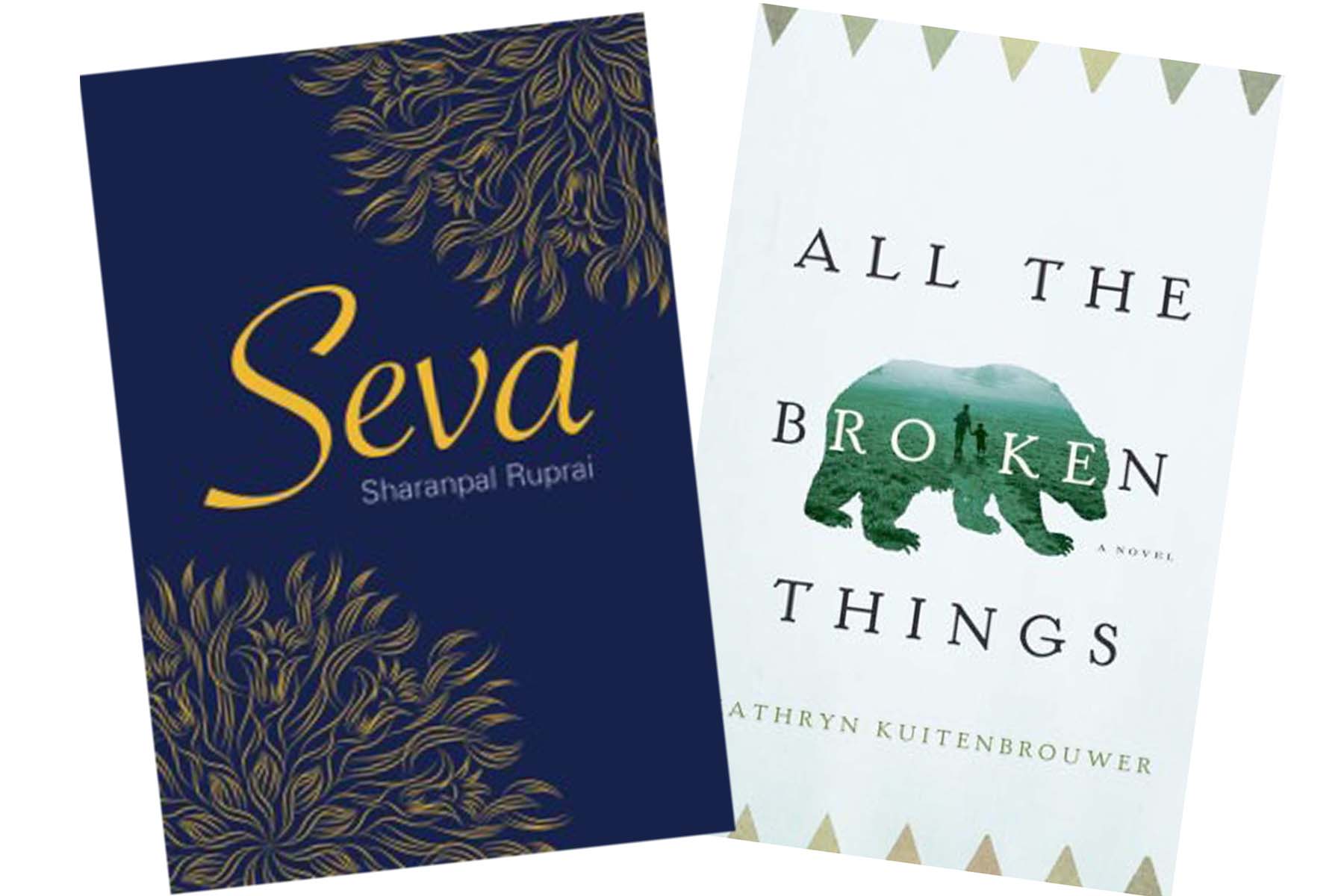
    This year, Natalee will teach Sharanpal Ruprai’s “Seva” and Kathryn Kuitenbrouwer’s “All The Broken Things.”

    I have my dream job. I write, review and teach Canadian literature and creative writing. When I think about why I am so happy teaching new CanLit I recall when, a few years back, my friend, writer Andrew Pyper, asked me in an interview what had changed for me as I evolved from an aspiring writer to an established author.

    The truth is everything has changed. In the beginning my desire to write was about me. It was about trying to see who I could be, what I might be good at and where I might find a community to belong to. Now, being a writer, being a parent and being a professor are all part of participating fully in the culture that sustains me. I feel that there is no better way to demonstrate how varied and valuable I think Canadian culture is than to devote my life to producing, promoting and teaching CanLit.

    Now, being a writer, being a parent and being a professor are all part of participating fully in the culture that sustains me.

    Because it is so important to me that students see the books they read as part of something familiar and real, something that they are already impacting and being impacted by, I often use brand new books. I also teach some of the canon: Atwood, Ondaatje, Munro. After all, these are writers who have helped to raise awareness of Canada as a significant site for cultural production (teaching Alice Munro the week she won the Nobel Prize was incredibly moving). But I also teach books that are literally printed days before classes begin.

    …teaching Alice Munro the week she won the Nobel Prize was incredibly moving.

    Designing my syllabus a few weeks ago, I realized that there are only two major drawbacks to this style of teaching. The first is that I am constantly redesigning my courses, which means new lectures, new assignments and research on what is coming out. The second is that I feel a lot of anxiety about the books arriving on time. But in spite of the extra work and anxiety, there are so many benefits to teaching contemporary literature within the context of the now. Here is a list of some of them.

    • The books are never out of print.
    • Pre-ordering books helps to let the publisher and the bookstore know that the titles are desired.
    • The material is often quite relevant to students’ daily lives. This allows students to identify better with the settings, characters and scenarios.
    • Authors are accessible, alive and often available to Skype into the classroom so that students can ask them questions directly.
    • Student presentations are much better. Instead of Googling a biography and retyping a handful of academic quotes they have to read the whole book (they do complain about this).
    • Student essays are much better. Their close reading skills really improve because that is all they have to rely on.
    • Student confidence in their own readings improves. Because they don’t have to compete with the scholarly opinions of experts they learn that it is okay to rely on and develop faith in their own readings. This causes them to engage more deeply and so…
    • Students get better marks. When they see this they start to appreciate the work they did.
    • Students become more willing to take risks in thinking.
    • Plagiarism is greatly reduced. In fact, because a brand new book is so unlikely to have essays on it in circulation, to plagiarize really means paying someone to create an essay. Far fewer students are willing to take this extra step as it requires more planning and seems somehow more actively dishonest.
    • Canadian culture is reinforced as real and ongoing, lively, diverse and present.
    • Book sales show up in a timely fashion for authors. Titles get circulating at a time when it is most beneficial. We all know that numbers have become incredibly important to the sale of future books and that there is some self-fulfilling prophesy there.
    • I get to stay engaged with my peers in the writing community. I am giving them my support and staying on top of my field.
    • I get to read all the books I wanted to anyway and call it work! Did I say that it is my dream job?

    For the teachers out there: why do you – or don’t you – teach new CanLit?


    Natalee Caple’s latest novel, In Calamity’s Wake, was published by HarperCollins in Canada and by Bloomsbury in the US. She is a professor of English, teaching Canadian literature and Creative Writing at Brock University. www.nataleecaple.com

  • Liberating the Book by Bryan Demchinsky

    Get ready for it – the next big thing in the digital revolution is nearly upon us. It’s called social reading and it will change the way books are produced and consumed.

    So says digital publishing guru Bob Stein, someone with the cred to know what he’s talking about. Stein played a role in creating the e-book, and he is the founder of The Institute for the Future of the Book, a think tank described on the website ifbookthen.com as “exploring and influencing the evolution of new forms of intellectual expression.”

    An American based in New York, Stein was at the Atwater Library recently talking to a handful of publishers, editors and writers about his vision. Essentially, SocialBook, as he calls it, will be a website that allows publishers, readers and writers to upload books, new and old, so they can be read and discussed interactively. The book will appear on one side of the screen with a commentary panel on the other side. The uploads will be subject to copyright restrictions and the site will be curated in order to maintain quality. You might think of it as a giant book club, with potential for all kinds of adjunct activities. For example, Stein sees the possibility of a dating component – what better way to meet a like-minded companion than by sharing a book?

    Some who listened to Stein’s pitch were skeptical. Aren’t there already enough time-sucks on the internet? Isn’t reading a desirably solitary activity? And where’s the money in this? The guru seemed mildly irritated by his listeners’ lack of vision, especially the money part. It is his job, he said more or less, to throw off sparks and let others figure out how to stoke the fire. Fair enough. If you had heard about Twitter in its development stage you might rightly have expressed doubts about connecting to the world in 140-character bursts. And it still doesn’t make money.

    There is a bigger issue at play. I call it the liberation of the book. Digital technology has unshackled literature from the printed page where it has mainly reposed since the Chinese began putting it there in the 11th century. We lament the decline of books, bookstores and libraries as we have known them. But put the requiem aside for a moment to celebrate what has been gained – choice.

    Personally, I don’t care for e-readers, so I don’t read e-books. But I’ve taken to audio books downloaded from the internet in a big way. They are much more portable than books on paper – or e-readers. I listen to them in the gym, on long car trips, while out for a walk or even just running errands. The performance of the reader can enhance an appreciation of the text – think of hearing Dickens or Ian Rankin with each character endowed with an appropriate accent.

    I still buy books on paper, but hardly ever from mega bookstores like Chapters/Indigo. I buy online, but I don’t care for Amazon, the Walmart of digital technology. I prefer to buy from sites like AbeBooks, which aggregates booksellers from across the English-speaking world and sells their books, used and often new. (And I still love buying and trading books at The Word.)

    You get the picture. You can tailor your reading habits according to your needs and desires. The same holds true these days for music and video (let’s not say TV or movies anymore). In this new digital world, not so much is lost – heck, even vinyl has made a comeback and radio is still with us – but much is gained. The proliferation of choice has created a richer environment, even if it hasn’t yet made writers and performers richer.  Not every new thing will survive. But I’m glad Bob Stein is offering me social reading, whether I take to it or not.


    Bryan Demchinsky is a Montreal editor and writer. He is the author or co-author of four books and was formerly a senior editor at the Montreal Gazette.

    Photo credits: Bryan Demchinsky (top); Gabor Szilasi (headshot)