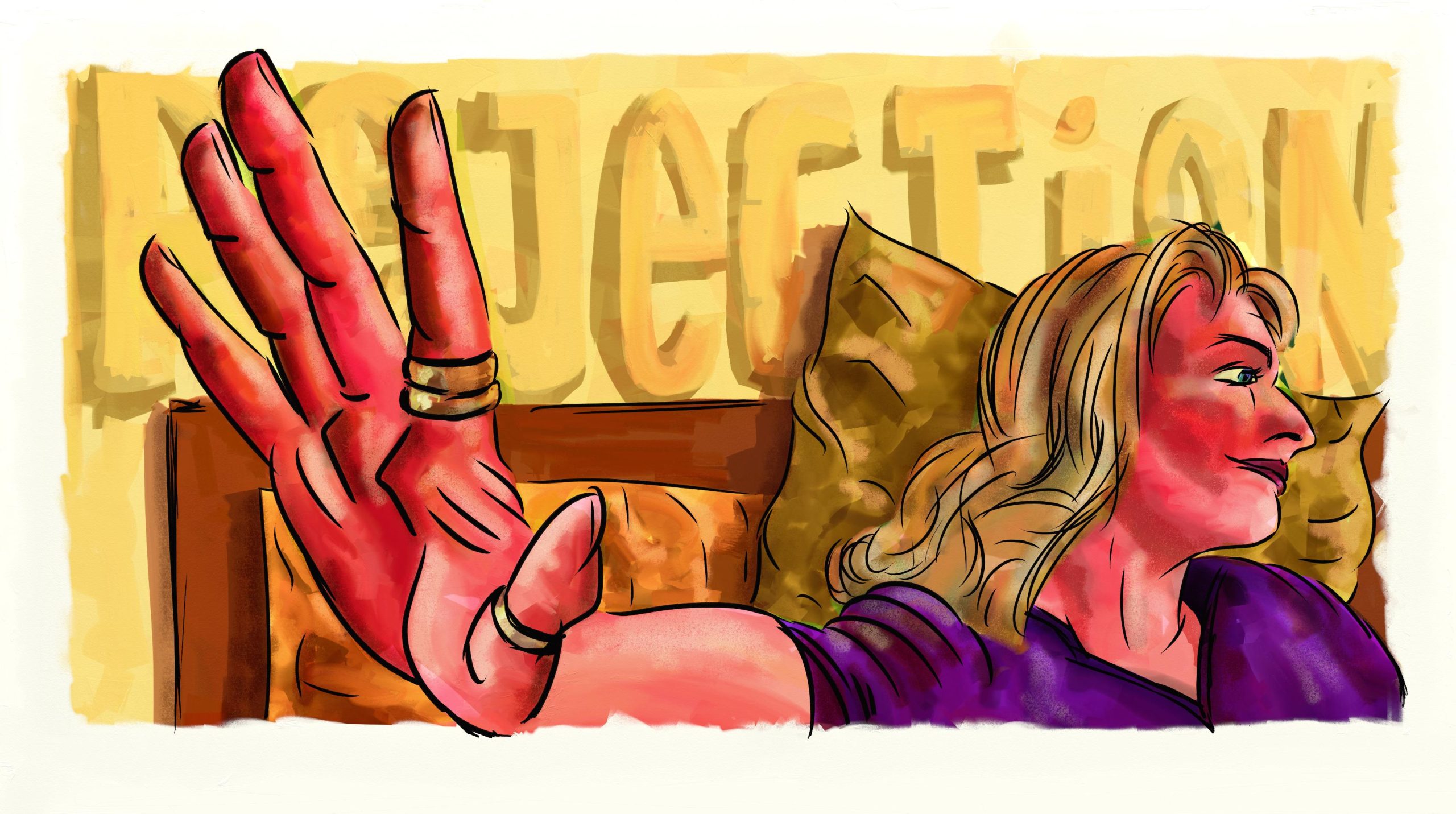
Tag: Rejection

  • Changing the Scenery to Refresh Your Writing—By Kate Hammer

    Changing the Scenery to Refresh Your Writing—By Kate Hammer


    There’s a bit of writing advice that I receive a lot: treat writing like your full-time job, sit down at the same time and place everyday, train your brain to be creative. I’ve heard it again and again, because it works. 

    For others, I’m assuming. 

    I’ve never been able to hold down a routine. Consistency makes my skin crawl, so I’ve had to find another way to inspire creativity and meet deadlines. By changing where you write, you change the way you write: it becomes varied, rooted in distinct experiences, and tonally original. And when was the last time you complained about writing too dynamically?

    Being in a different place can help our stories feel easier, inspire us to notice more, and make returning to our writing place a whole new experience. It can be as small as changing the direction of your desk, or as big as a weekend away without a whisper of internet connection. Or, you can uproot your entire life and move across an ocean.

    At the end of 2020, I moved to Scotland for a writing Master’s. I’d lived in Montreal for a few years, the longest I’d settled down anywhere for a decade, and was starting to get the itch. I was aware moving in the middle of a pandemic wouldn’t be easy, but I also knew it was the challenge I needed. Not only did I instantly become an outsider, but all the habits I’d labeled as normal in myself became something to scrutinize, something of interest.

    Without meaning to, we put our surroundings into everything we write. Maybe the sun is shining, you’ve just had an argument, or you’ve been given an eclectic mug that you know the protagonist of your story would also have; we are sponges that ooze plot. Now, I’m not trying to convince anyone to move halfway across the world like I did, but I am trying to inspire you to get out of your comfort zone. 

    Perhaps it is sitting outside, acting like a tourist in your own city, or treating yourself to a cafe that you’d normally walk past. It can be directly useful, such as visiting the same city as your character, or discovering a hobby by chance that you never thought they’d be into. 

    As soon as I landed in the UK, I knew my brain was aware in a whole new way, and I have the journal entries to prove it. From the roads never being wide enough for two cars, to the public walking paths taking you through fields of sheep who think you have food and charge towards you with impressive speed. I was learning again how I react under pressure; meeting new types of people with traits that could easily be given to characters; feeling the familiar stress of not immediately belonging.

    Putting ourselves in different environments makes us think differently about our stories, and our characters. As much as you know them on paper, knowing what they’d notice in an all-night pharmacy at 1 a.m., or who else would be there, is another matter entirely. You’re reconnecting with your world, and observing the behaviours of strangers as they unknowingly walk through your homework. Those real character actions aren’t something you can buy with money, only with your time. 

    It can take a lot of energy, to suddenly be aware of what’s around you again, or to take on new places, but alongside a healthy relationship with discomfort comes a balanced connection with rejection. As writers with a list of submission dates, we need to practice resilience against the vulnerability and fear of the job.

    The best part of switching up your space, however, is coming back home. Whenever I return to Canada, to my family farm, to my writing desk, I see everything all over again. Not as if for the first time, but I notice different things, items I’ve forgotten to look for. It’s that nostalgia of returning somewhere that makes you comfortable. I guarantee you’d describe your living room in a whole new way if you went a few days without seeing its walls, its stained carpet, how the afternoon sunshine has faded the couch.

    Changing your writing space may not always go well, but this is part of the magic: we’re rarely lost for words when complaining. Every experience feeds into your writing and characters in unexpected ways. 

    Remember that writing isn’t always putting words on paper. Even if you don’t get a lot of work done, changing the scenery can be an excuse for a vacation, a walk, or a redecoration. It’s how we turn ourselves into our own best editors, looking at things in a whole new way, as a slightly different person. And if you need to move to the UK to do that, I’ll be here to support you. 

    Kate Hammer is a writer, producer, and performer born in Canada, and living in Scotland. An award-winning playwright, director, and published writer, Kate constantly strives to create community representation in order to tell the stories that need to be heard. They now work in television development and are publishing a non-fiction book later this year called, Bruce Willis is My Dad. They are a queer, neurodivergent creator who never forgets their goat farming heritage. katethehammer.com

    Photos: Monstera via Pexels; Jeremy Cabrera (headshot)

  • Why You Should Apply for a Canada Council Grant Every Year until You Die.—By Sherwin Tjia

    Why You Should Apply for a Canada Council Grant Every Year until You Die.—By Sherwin Tjia

    It is a truth universally acknowledged, that a writer in possession of a good idea, must be in want of a grant. Last year I was on a Canada Council granting jury, and it not only enlightened me as to how the whole process works, it also renewed my faith in the Canada Council in general, and in the granting process in particular.

    Over the years some of my writer friends had gotten the distinct impression that the Canada Council was this edifice of insiders. Those who got grants kept getting them, and those on the juries awarded grants to their writer friends. And this bitter conviction stopped many of them from applying. “I’m not going to win anyway, so why try?” It doesn’t help that by default, a writer’s life is an incessant litany of rejection.

    But after having been on the jury, I’m now convinced we all should apply annually. The truth is that just by applying you help all writers because the Council takes those numbers and brings them to the government to ask for more funding for future years. Even if unsuccessful, those applications demonstrate a clear need.

    Though I’ve applied and been rejected in the past, the biggest eye-opener for me was seeing just how high my chances of getting a grant had always been. Out of the 150 applications my jury read (including fiction, poetry, graphic novels, short stories, literary non-fiction, YA and kid’s books), fully forty writers, give or take, got grants. That’s a win rate of around twenty-six percent, or one in four. No lottery has ever been so generous.

    And that’s the thing. It is a lottery. You can’t control who’s on the jury. If their tastes don’t align with your proposal one year, you’ll just have to apply again the next. I’ve now seen firsthand how jurors agonize over their decisions. We champion the diamonds that are rough, hopeful that grant-sponsored time can polish a great idea. We eloquently counterpoint prevailing opinions. Various members bring unique insight from their respective specialties. And though we were all quite diverse (in terms of geography, language, gender, race, sexual orientation, and writing genres), more often than not I was surprised to discover how much we concurred on our final assessments.

    So take it from a fellow writer who is deeply skeptical and always expecting rejection: the Canada Council has your best interests at heart, and every year runs a lottery that you are uniquely qualified to enter. So enter!

    To help you, I have some advice to offer:

    DO START EARLY. The application is almost its own writing genre. It needs time to simmer. Go through at least several drafts. A friend should read it over. Any initial questions they have should be answered, because it’s likely the jury will harbour those same questions. Similarly, anything confusing should be re-written to be clear.

    DO BE STARTLINGLY ORIGINAL. Easier said than done, of course, but it pays to go far afield with your concept. If you have the misfortune to be the fourth applicant with a post-apocalyptic road trip underpinning your plot, the jury may be inclined to favour the best of the bunch.

    DON’T GET TUNNEL VISION ABOUT PITCHING JUST YOUR STORY. Discuss the larger impact of it on you and on the society it will go on to live in. Why does it matter to you? Is it personal? Will it matter to other people? Are there themes that will resonate in the larger world?

    If rejected, DO CALL THE CANADA COUNCIL. The program officer takes notes during the jury discussion of your project, and they’ll relay these to you. But only if you call them for feedback.

    If rejected, DO RE-APPLY the very next year. You may want to tweak the same application, or apply with a whole new project. But don’t not apply.

    If successful (yay!), APPLY THE VERY NEXT YEAR WITH ANOTHER PROJECT. Now, in the past, if you got a grant, you were prevented from applying again until your final report for that grant was submitted. But in the current system, you can apply every single year, even if you already got a grant and are currently working on something, as long as it’s for a new project, and there’s no overlap in the project dates you’re proposing.

    DO ALWAYS INCLUDE A SAMPLE FROM YOUR PROPOSED PROJECT. Even if you have a more refined short story that you think will show off your writing chops from a couple years back, take the time to also write up a small sample of the actual thing you’re pitching. It helps the jury see it. Juries are unkind to sample-less applications.

    And that’s it! Vow to apply every year. Think of it like voting, but you’re the candidate. It’s your civic duty to your art! The world needs all the odd and diverse projects it can get! Be the strange you want to see in the world.


    SherwinTjia_PLZdontcrop

    Sherwin Tjia is a Montreal-based writer and illustrator. Their latest book PLUMMET is a graphic novel about a woman who wakes up one day to find herself in freefall forever. It was named one of CBC Book’s 20 Best Graphic Novels of 2019. Their Choose-Your-Own-Adventure style book from the POV of a housecat, You Are a Cat!, published in 2011, was the winner of that year’s Expozine Award for best English Book, and has never been out of print. Their collection of 1,300 haikus, The World Is a Heartbreaker, was a finalist for the 2006 A.M. Klein Poetry Award. And their first graphic novel, The Hipless Boy, was a finalist for the Doug Wright Award for Best Emerging Talent, and also nominated for four Ignatz Awards.

    Photo credits: Sherwin Tija (header image & headshot)

  • Dreadlines: Conquering the Fear of Submission—by Nicola Sibthorpe

    Dreadlines: Conquering the Fear of Submission—by Nicola Sibthorpe

    I am bad at submitting my work. Too often I build up rejection in my mind to be a personal commentary on my writing and on my future as a writer. Yet rejection, as any writer can tell you, is anything but final.

    First there is the self-rejection. I find it difficult to tell when a piece of work is done. I nitpick and fuss over it during the editing process until I resent the work. All I see are its faults. When I feel like I can still improve upon it, I don’t want to submit a piece to an editor or contest judge.

    Setting aside a piece is sometimes the most effective way of continuing to love a piece. I can return to it weeks, or months, or even years, later to rediscover the bits that worked and fix the parts that didn’t. I find editing difficult to do until I’ve put distance between myself and the work. Confidence is important in publishing, and it’s easier to be confident in my abilities as a writer when I can read the work as an outsider.

    “I nitpick and fuss over it during the editing process until I resent the work.”

    Then there’s the fear of outside rejection. The faceless and powerful jury intimidates me. I wrote the poem, “Artemisia Absinthium,” in the first year of my undergrad, and the editing I did for it was minimal. I remember the poem developed naturally from its source material. It poured out in one sitting. I was excited and passionate about it, and I remained so when I submitted it the first time to Headlights, a journal published by graduate students in the English Department of Concordia University.

    This was my second time submitting to a publication, and I saw it as a low-risk way to practice the process. Having it accepted gave me the boost in confidence I needed to begin considering larger competitions and publications.

    Less than a year later, I submitted the now-published poem to the QWF Literary Prize for Young Writers. It felt like the next step. I had submitted my piece to a journal that was unpaid and circulated almost exclusively within Concordia, and now I could submit it to a competition that was professionally judged and would potentially reach a wider audience.

    Submitting it was hard, but waiting for a response was easy. I had been working on making rejection a thing to look forward to, saving each email and using them as a mark of pride. The best ones included a note of encouragement or advice that I could proudly print off to remind myself that I was learning and growing as a writer.

    “I had been working on making rejection a thing to look forward to, saving each email and using them as a mark of pride.”

    Submitting to the QWF prize was the culmination of several important lessons and writing practices. When I heard the positive news—I’d won!—what was even more exciting than receiving the award was receiving the jury’s comments. I am a staunch believer in the work no longer belonging to the author once it has been released into the world. One of the most rewarding parts is learning what other people thought of a piece without your input or thought process. Having the opportunity to share my work with a larger community, and to meet so many wonderful Quebec and Canadian authors at the QWF Awards Gala, is an experience I will cherish fondly for the rest of my life.

    NicolaSibthorpeLindaMorra
    Nicola Sibthorpe receives the inaugural QWF Literary Prize for Young Writers for a published short story, poem or work of non-fiction by writers age 16 to 24. You can read Nicola’s winning piece, “Artemisia Absinthium,” in Carte Blanche.


    NSibthrope_headshotNicola Sibthorpe is a Montreal-born, Creative Writing MA student at Concordia University. She is interested in folktale and mythology, and the subversions that accompany them. She was the inaugural winner of the QWF’s Literary Prize for Young Writers in 2017. Beyond spending her days writing, she is also a teacher, and she enjoys spending time with her cat and a good cup of tea. You can find her on Twitter @NicolaSibthorpe.

    Photo Credits: Roy Blumenthal (header banner); John Fredericks (Nicola Sibthorpe receives prize); Michael Araujo (headshot)

  • Nature’s Way of Getting Books Written by Raquel Rivera

     A couple of years ago I was cycling around the ex-garbage dump that is the St-Michel Environmental Complex in Montreal North, collecting details for a scene in my novel.

    I pedaled across the street from the Complex’s Cirque du Soleil headquarters, and peered through the windows of the National Circus School. Inside was a highly padded gym-like space, full of pulleys and ropes – and some very fit teenagers. Not wanting to be taken for a peeping-creep, I dashed around to the front reception and asked if they offered tours.

    I attended the school’s open house the following week, hoping to gather useful tidbits to feather my scene’s nest. As it happens, I was also stepping into my next crazy-making topic of all-consuming passion: a creative non-fiction book for children, featuring the lives of students at the National Circus School. My next Great Idea.

    I surprised myself as I blustered my way into the institution through emails, meetings and follow-up proposals. They had a responsibility to share their story with the world, I insisted. The guilt-trip finally seemed to convince the school’s extremely busy (and intimidating) directors. They were swayed by my conviction: this was a Great Idea.

    Everyone will want to read about these young superheroes, facing down risk and their own limits every day. They’ll be charmed by the gaspésien who left home to pursue juggling. They’ll be impressed by that skinny little twelve-year-old who boards at the school, so he can train twenty hours a week in addition to his full academic schedule. Readers will gasp as the eighth-grader makes her first tightwire jump; they’ll wince as the cruel wire tries to bisect her feet. Ultimately, just like me, readers will be fascinated by an inside peek at the tremendous efforts these young people make so that their performances can look easy to the rest of us.

    Topsy-turvy
    Topsy-turvy: You don’t need to turn yourself inside-out trying to sell a beloved manuscript – it just feels that way sometimes.

    As I began my visits and interviews, “Why not?” seemed to be the motto of the school. It’s what they tell one another in response to every new and impossible notion. (Stand on your partner’s shoulders, jump into a back flip and land back on – why not? Now do it en pointe, in ballet toe-shoes – why not?)

    “Why not?” It’s what the aerial instructor said when I asked if someone like me (old and untrained) might learn rope. I signed up for aerial classes at my local community centre and, week after demoralizing week, was the sole student unable to pull herself off the ground. Yet somehow, when it was finally over, I signed up with a private trainer at a circus studio and carried on. If nothing else, my acrobatics training would make me better equipped to relay The Great Idea to a waiting world. Publishers would scramble for my original material, appreciating its historic value and the uplifting message that we may achieve the impossible, whatever that means to each of us. This Great Idea was a winner – a shoo-in.

    Now I’m thinking, passionate belief like this is just nature’s way of getting books written. I wish it got them published, too.

    But that’s the other part of the writing life: when I gain new perspective on The Great Idea. Over lunch, one editor speculated on the cost of producing my full-colour, fully illustrated Idea. Responses came in from more editors: “The circus school certainly seems like an interesting place,” (but no thanks). “I loved your proposal, but that wasn’t enough to convince the powers that be.” Passion died, and determination stepped up, struggling against quaking doubt. Would anyone want my Great Idea? Would it receive the blessings of timing and dumb luck that brought past manuscripts to print? Or had my portion of blessings run out?

    At this stage, keeping faith is huge: you have to believe that one day all this thinking and writing will be a real book. This requires that my ears and my mind stay open – and that I conserve effort, to avoid burnout. I listen to feedback; I try to be flexible because The Great Idea deserves to be among readers. But there’s any number of great ideas floating around out there, looking for a publisher. (Which is actually a comfort, when I’m feeling more mature.)

    throw2catchduotissu
    Julie gives Natalia a hand during warm-ups for RESET, the latest show by acrobatic troupe THROW2CATCH

    Maybe this pause in progress (I won’t call it a halt) is a necessary stage in the forging process. Maybe it will shape up my Idea and make it stronger. I remind myself of the reason these circus kids inspire me so – they push their limits, they never give up.

    After the latest rejection, I transformed disappointment, frustration and the urge to throw a hissy fit into a new series of emails. I sought publishing leads, editors’ names, introductions to agents – anything to get The Idea some notice. And it worked. I still don’t have a book contract, but I have more leads to pursue, and the support and interest of fellow writers. It’s enough; for now, it’s everything.


    raquelrivera_smRaquel Rivera is the author of three books for children, and the aspiring author of four more. Her author website is at www.imho-reviews.com/raquel. Photo credits: Raquel Rivera