Tag: research

  • Writer’s Block in the Time of Corona—By Carolyn Marie Souaid

    Writer’s Block in the Time of Corona—By Carolyn Marie Souaid

    In April 2020, we invited writers in Quebec to submit a story of a single day during the strange, uneasy time of coronavirus and pandemic, of social distancing and self isolation, of lockdown and quarantine.

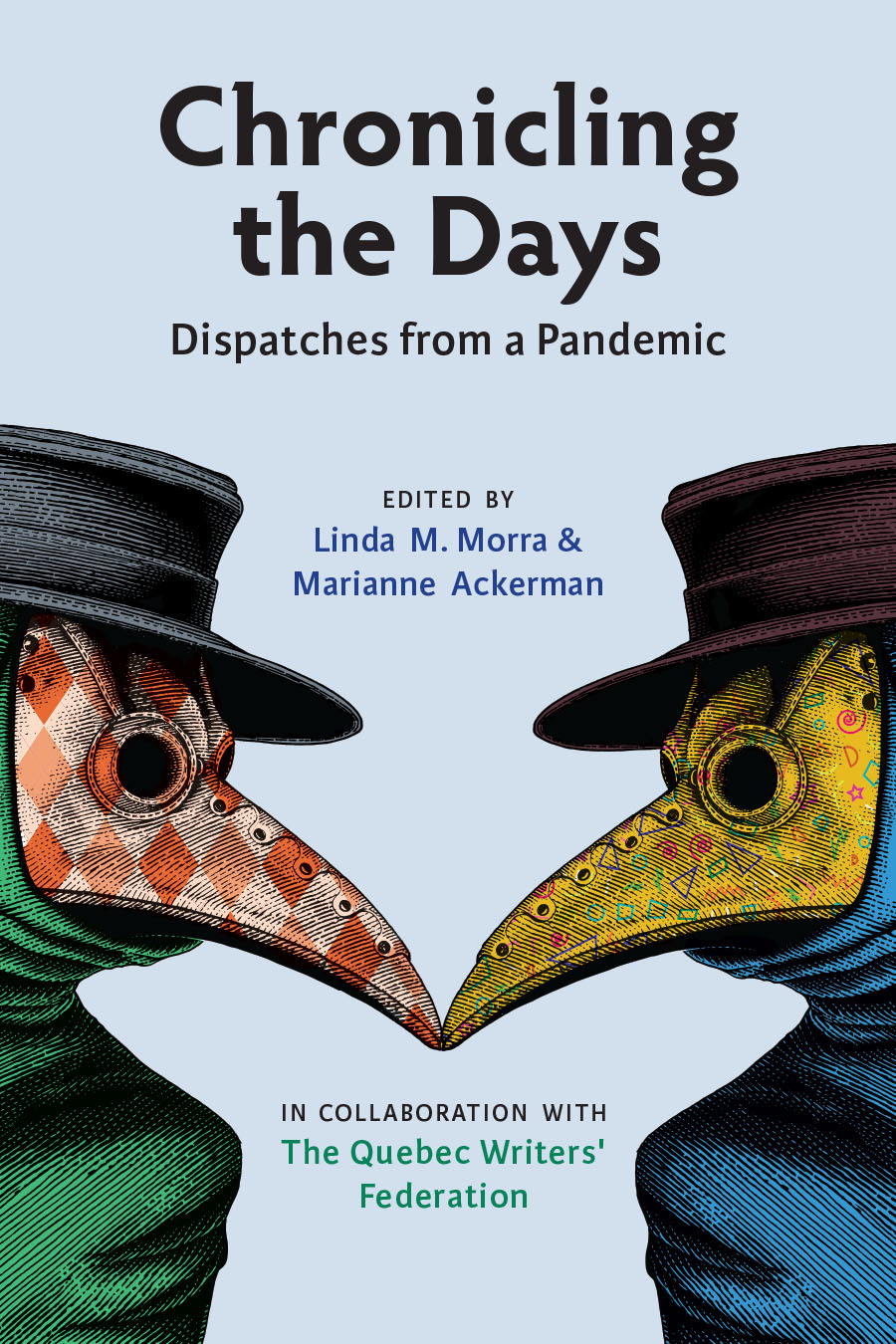
    We’re thrilled to announce that these stories have been gathered in Chronicling the Days: Dispatches from a Pandemic (Guernica Press). To learn more and buy the book, please visit https://www.guernicaeditions.com/title/9781771836579.

    Please also join us on the QWF FB Community page, and let the authors know if their words resonated.

    In mid-March, COVID-19 was getting out of hand, according to Premier Legault. There was too much handholding, not enough handwashing. I was sent home on a paid, two-week hiatus while they rejigged my job to allow me to work from the confines of my condo.

    Wait, what?

    To read the rest of the story, please support our community and check out Chronicling the Days: Dispatches from a Pandemic

  • How Do I Research and Write About My Subject When There’s No Archive?—by Linda M. Morra

    How Do I Research and Write About My Subject When There’s No Archive?—by Linda M. Morra

    When perusing the scrapbook of a Canadian female writer and artist, I find a twig of cedar clipped to its pages. Later, I read her handwritten letters, which reveal that the twig was exchanged as a token of affection between correspondents. I have been researching this writer for over a decade, and her archives have undergirded three of my books—a real gift, when I know that women’s archives are often scarce, if they exist at all.

    “But how do I research and write about my subject when there’s no archive?” This is a question I’m often asked because of the frequent lack of material about women’s lives. The answer is layered, multidirectional.

    I.

    Perhaps there is an archive—just not one in an official, state-sanctioned place, such as a university, museum, or library. There are materials; you just haven’t found them yet. You have to go beyond formal institutions and ask surviving family members of the subject in question—sometimes more than a few times. And you have to consult with documents in out-of-the-way places. The latter sometimes means borrowing someone’s truck—or hopping into a stranger’s—and carrying a pocket knife along with your laptop, just to be sure you’re going to be okay.

    “Perhaps there is an archive—just not one in an official, state-sanctioned place, such as a university, museum, or library.”

    II.

    How do I research and write about my subject when there’s no archive? Sometimes you don’t yet have access to the archive, so you have to know how to ask. You have to be there at the right time and the right place and the right day and ask the right person. (Surely, not that guy? Yup, that guy.) Sometimes it means drinking a Guinness for breakfast because that was what was offered to you, and you don’t want to be rude, and you were never one to back down from a challenge. Then it means waiting until you’re headed towards being more than just a bit tipsy, even after the whole omelette you ate for good measure, and then it means asking right then for permission to access files. Who knows if you slurred your words when you asked? That’s not on record anywhere. Sometimes that’s what it takes to gain confidence, and not just your confidence to ask for permission, but also his: he needs to know you’re a worthy candidate for permission. Drinking a whole Guinness at 9 a.m. apparently qualifies you.

    III.

    How do I research and write about my subject when there’s no archive? At other times, the archive is stashed away in a basement, hidden from prying eyes, waiting for daylight—or perhaps, you tell yourself optimistically, waiting for you. And accessing it takes earning trust, but not by drinking beer this time. No, this time it means taking all kinds of precautions: reading documents, preparing documents, writing documents, rewriting those documents, and rewriting them again. It means signing contracts, and trying to do all manner of intellectual calisthenics to be sure you’re in top form to handle this one just right. Oh, you’ll still get it wrong—or, at least, your copy editor will—but it won’t matter. It seems you were doomed not to get this one right. When you work with an archive that no one even knew existed, a misstep can happen in spite of your best efforts.

    “It seems you were doomed not to get this one right. When you work with an archive that no one even knew existed, a misstep can happen in spite of your best efforts.”

    IV.

    How do I research and write about my subject when there’s no archive? Maybe the archive isn’t a tangible thing, such as a document or photograph. My dear colleague and friend, TL Cowan, researches cabaret. A performance is an elusive thing, but someone’s memories about one night can help you reconstruct it; recollections about the scene tell you something about what a performer might have been trying to accomplish. Many witnesses recounted how a Kahnawake poetess at the turn of the century wore a stereotypical “Indian dress”—a short little buckskin number—before an audience of white men. Titillating, you might think, until you read the fiery tone of her lyrics and understand that where and how she performed her work added value and meaning to it. Then you realize she was giving these men unmitigated shit for their assumptions of superiority, and for the violence wrought upon Indigenous nations.

    V.

    How do I research and write about my subject when there’s no archive? Consider archival deposits that may not seem to have anything to do with your subject—at least, not at first. The Royal Canadian Mounted Police files offer one example. Maybe you’re not interested in the RCMP. Perhaps they’re not exactly your cup of military tea. (I personally prefer espresso, if it can be had.) But sometimes you may want to drink that tea because of what you might learn. The RCMP, as it turns out, spied relentlessly on women activists in the 1970s. They have files upon files on feminist associations and meetings. You don’t have to like RCMP tactics, but reading their records will reveal a lot to you about these women activists. And, later on, you can still drink your espresso.

    VI.

    How do I research and write about my subject when there’s no archive? Have you considered different searches on the internet? Ah, the digital world, that mysterious place that consistently reminds me of the ocean, which washes up a wealth of material one day and is a seemingly flat, calm, and inscrutable surface the next. What lies underneath that surface? If you just bait the right hook, what will you draw up? Sometimes the hook dangles there, brings in nothing much—an old shoe, candy wrappers, and some algae. You suppose it’s possible you can reconstruct something from the old shoe. Then, at other times, you find a whale, and you have no idea how to fish for whales. Befriend it, perhaps? Yes, that’s better, and don’t turn your back on it while it frolics in the harbour. How did that whale get there? You download everything you find that day, because tomorrow it may swim away back into the ocean, and only surface again with a whole new set of research terms, whatever those might be.

    “Ah, the digital world, that mysterious place that consistently reminds me of the ocean, which washes up a wealth of material one day and is a seemingly flat, calm, and inscrutable surface the next. What lies underneath that surface?”

    By now, you’ve tried everything you know. What do you have left? You may have found material completely unrelated to your current subject. A postmark, say, that proclaims “God Bless America” or “Help Retarded Children.” You wonder: has anyone written about these postal slogans? Your imagination begins to suggest a future project.

    UBC Archives Feb 22 2016 402_blurred

    Gather these materials. Delight in the wealth of all that’s left behind—from twigs to postmarks to letters. Leave your own trail, to form in effect a new archive—a gift for another generation of researchers. Finally, remember to call upon your own imagination. That has a peculiar and unaccountable wealth of its own. Don’t forget to visit that archive, ever.


    Linda-Morra-e3f6691b87ef626a8515ff84fa924af0Linda M. Morra is a professor of Canadian literature and Canadian Studies at Bishop’s University. Her book, Unarrested Archives (UTP 2014), was shortlisted for the 2015 Gabrielle Roy Prize in English; her edited edition of Jane Rule’s Taking My Life (2011) was a finalist for the LAMBDA prize (2012). She is the current president of the Quebec Writers’ Federation.

    Photo credits: The National Archives (UK) [CC BY 3.0], via Wikimedia Commons (top banner); Linda M. Morra (postmarked envelope)

  • Empathy by the Book: How Fiction Affects Behavior by Susan Pinker

    Empathy by the Book: How Fiction Affects Behavior by Susan Pinker

    When I want to escape I pick up a good novel. But does this habit provide more than a quick getaway?

    We’ve long known about the collateral benefits of habitual reading—a richer vocabulary, for example. But that’s only part of the picture. Mounting evidence over the past decade suggests that the mental calisthenics required to live inside a fictional character’s skin foster empathy for the people you meet day-to-day.

    In 2006, a study led by University of Toronto psychologists Keith Oatley and Raymond Mar connected fiction-reading with increased sensitivity to others. To measure how much text the readers had seen in their lifetimes, they took an author-recognition test—a typical measure for this type of study. “The more fiction people read, the better they empathized,” was how Dr. Oatley summarized the findings. The effect didn’t hold for nonfiction.

    Still, no one knew whether reading fiction fostered empathy or empathy fostered an interest in fiction. Other factors could have been at play too, like personality.

    So, in 2009, part of the Oatley-Mar team involved in the 2006 study reproduced it with a sample of 252 adults—this time controlling for age, gender, IQ, English fluency, stress, loneliness and personality type. The researchers also assessed participants’ “tendency to be transported by a narrative”—the sense that you’re experiencing a story from within, not watching it as an outsider.

    Finally, participants took an objective test of empathy, called the Reading the Mind in the Eyes Test. The aim of all of this was to see how long-term exposure to fiction influenced their ability to intuit the emotions and intentions of people in the real world.

    The results? Once competing variables were statistically stripped away, fiction reading predicted higher levels of empathy. Such readers also lived large in the flesh-and-blood social sphere, with richer networks of people to provide entertainment and support than people who read less fiction. This finding put to rest the stereotype of bookworms as social misfits who use fictional characters as avatars for real friends and romantic partners.

    Later studies confirmed that reading fiction does cause a spike in the ability to detect and understand other people’s emotions—at least in the short term. In a series of experiments published in 2013 in Science, social psychologist Emanuele Castano and David Comer Kidd of the New School for Social Research tried to figure out whether the type of fiction mattered.

    “This finding put to rest the stereotype of bookworms as social misfits who use fictional characters as avatars for real friends and romantic partners.”

    The researchers handed subjects—in groups ranging in size from 69 to 356—different types of genre fiction, literary fiction or nonfiction, or nothing to read at all. They then assessed participants on several measures of empathy. Nonfiction—along with horror, sci-fi or romance novels—had little effect on the capacity to detect others’ feelings and thoughts. Only literary fiction, which requires readers to work at guessing characters’ motivations from subtle cues, fostered empathy.

    In these studies, the reading of nonfiction not only failed to spur empathy but also predicted loneliness and social isolation, especially among men. Of course, nonfiction reading has its virtues. Other research suggests that various kinds of nonfiction can prompt empathetic feelings—as long as the narrative is moving and transformative.

    In recent studies, neuroscientist Paul Zak at Claremont Graduate University and colleagues showed participants heartfelt stories, such as a video narrated by a father of a toddler with brain cancer. The video induced a spike in observers’ levels of oxytocin—a hormone that promotes trust, nurturing and empathy—and larger donations to charity. Watching a straightforward travelogue-type video of the same father and son visiting the zoo didn’t have that effect.

    Apparently, what matters is not whether a story is true. Instead, as Dr. Oatley says, “If you’re enclosed in the bubble of your own life, can you imagine the lives of others?”


    susanpinker-by-susie-loweSusan Pinker is a Montreal-based psychologist, writer and columnist for the Wall Street Journal. Her most recent book is The Village Effectwww.susanpinker.com

    This piece was originally published in The Wall Street Journal.

    Photo Credits: Zak Greant (top); Susie Lowe (headshot)

  • I Didn’t Want to Write This Book by Elise Moser

    I Didn’t Want to Write This Book by Elise Moser

    I didn’t want to write this book.

    I first heard Milly Zantow’s story in Sauk City, the small Wisconsin town where my sweetheart lives. Someone from the local historical society mentioned that the woman who invented the recycling symbol was from there.

    A woman did that!

    A woman from Sauk City!

    I figured everyone else in town must know this astounding fact. But no.

    I Googled her. I found a wonderful short video in which she explained how she kick-started plastics recycling in 1978, although the experts told her it couldn’t be done. I thought kids should know a woman did this.

    I tried to get someone else to do it.

    I ran into a Wisconsin publisher I knew and told her the story. “I don’t have an author to write it,” she said.

    I couldn’t do it. I’m a fiction writer. And I write for adults and teens, not kids.

    I talked about Milly to everyone I met, at dinners and parties and bookstores.

    Everyone agreed it was an amazing story, but no one wanted to take it on.

    Eventually I decided I’d better do it myself. I already knew the narrative; it would only take me a few months. Then I could get back to writing fiction.

    It took me three years. (That’s what happens when a fiction writer veers off into the wilds of non-fiction.)

    Milly bench med res

    I wrote a draft, but there were a few pesky details to clarify. I didn’t know if Milly was alive. I couldn’t find an obituary, but I couldn’t find contact info, either. I spent a week hunched over microfilm at the library, reading back issues of our small-town paper, the Sauk Prairie Star. I found a letter from Milly thanking the public for their support of the International Crane Foundation. There was a letter from Vietnamese boat people thanking Milly and her husband for sponsoring them so they could leave their overcrowded Arkansas refugee camp for a new life in Wisconsin. I found articles about the landfill where Milly sat one day and watched the trucks dump garbage—“plastic, plastic, every kind of plastic.” My mental picture of Milly was getting richer, but my story was also getting more confusing.

    “That’s what happens when a fiction writer veers off into the wilds of non-fiction.”

    Some articles said the landfill was full; others claimed toxins were leaching into the water table. The woman from the historical society had said that Milly invented the triangular recycling symbol, but Wikipedia said it was a guy from California. In the videotaped interview, Milly mentioned putting the numbers 1-7 inside the triangles on plastic goods, but gave no specifics. Who thought of the idea?

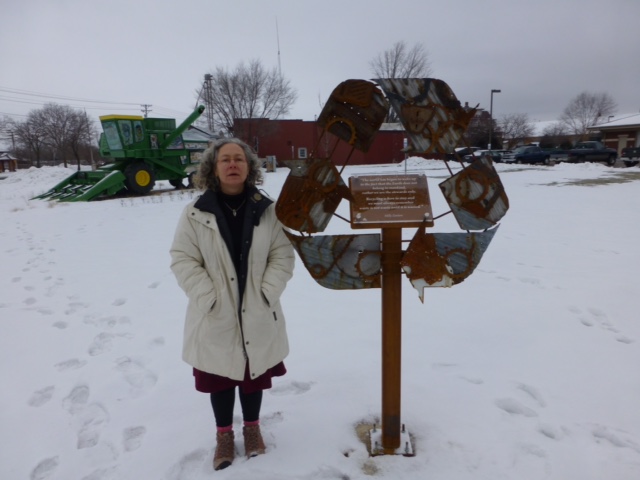
    Elise Milly Memorial
    Elise Moser

    I began to realize just how slippery facts were, and how the passage of time greased them further. People made mistakes, misunderstood things, left out the complicated parts. I’d written about this kind of thing in fiction, but it felt very different when I was trying to track down real facts and tell the real story of a real person—someone whose friends and neighbours might read it. I was used to being in control of the narrative (sort of). It’s so much easier to make stuff up!

    “I began to realize just how slippery facts were, and how the passage of time greased them further.”

    But research has its own satisfactions. I found someone who had worked with Milly thirty-five years ago, someone who knew that the landfill was leaching toxins and that it was too full. She also gave me a (totally unexpected and very useful) feminist perspective on the history of garbage and recycling.

    I knew that if Milly were alive she’d be very elderly. I couldn’t wait any longer to find her. In April 2014 I flew to Wisconsin.

    If necessary, I was prepared to cold-call all the Zantows in the phone book. But first I went to the local nursing home to visit a friend who was recuperating from a serious accident. Walking the corridor, I happened to glance over, and there I saw it: Mildred Zantow. I knocked, and she graciously invited me in to talk, even though she had just been given the news that her brain cancer had gotten worse.

    I asked her my questions, but as she answered, I began to realize that the things that were important to her about her experiences were not necessarily the things I thought I needed to know for my account. Her story was not the same as my narrative.

    “I knocked, and she graciously invited me in to talk, even though she had just been given the news that her brain cancer had gotten worse.”

    The following year I had the privilege of interviewing two of Milly’s sons. I mentioned that I’d met her in the nursing home, and they asked me when. I told them, and there on the screened porch in Sauk, Jim and Todd looked at each other.

    “That was probably her last lucid day,” Jim said.

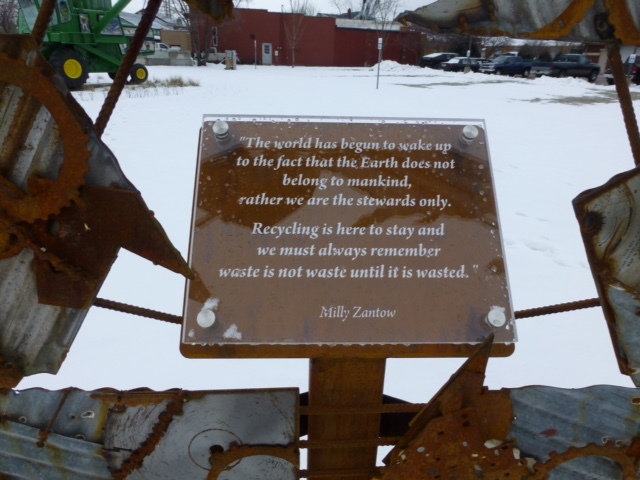
    Milly plaque

    Since I started this book, things I’d confirmed have changed. In three years, technologies for recycling or replacing plastics have advanced. The environmental impact of plastic pollution has intensified, as has research on the subject. The information available on the history of recycling has improved; more than once during the process of editing I had to change wording or go back and re-research to be sure that what the book said was as true as we could know it to be.

    Now that the book is printed, I’ve been telling people about it. The sporting goods manager at the local hardware store/agricultural machinery dealership, where there is a little book display next to the hunting supplies, remembers Milly. “Thank you for doing this,” he said.

    Ironically, it’s easier to write fiction that is true, and that will always be true, than it is to write non-fiction. Fiction only has to express a truth; it can do that by any means, whereas non-fiction is expected to tell the literal, verifiable truth about the material world, and as we all know, there is nothing constant in the material world but change.

    Another thing that’s changed: I’m so glad I wrote this book!


    Author Photo 1

    Elise Moser is the happy author of What Milly Did: The Remarkable Pioneer of Plastics Recycling (2016), Lily and Taylor (2013), both from Groundwood Books, and Because I Have Loved and Hidden It (2009), published by Cormorant Books. She has published short stories, edited anthologies, and led short story workshops and mentored for the QWF. She serves on the board of PEN Canada and is an associate editor with Linda Leith Publishing.

    Photo credits: Fred Lauing (headshot; photo of Elise Moser next to the Milly memorial), Elise Moser (the other two)

  • Three-Legged History: Paul Almond on Researching Historical Fiction

    By Paul Almond

    With an introduction by Barbara Burgess and David Stansfield

    Paul Almond

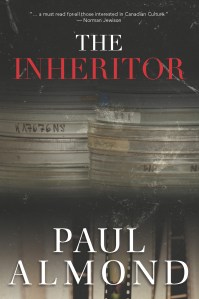
    On April 8, Paul Almond’s last book, The Inheritor, an autobiographical novel, was published by Red Deer Press. Almond, a member of the Quebec Writers’ Federation, intended to meet many of his fans and fellow writers this spring and summer, but he passed away on April 9.

    Almond spent the last twenty-five years of his life researching and writing The Alford Saga, the eight-volume series of adventure novels which culminated in The Inheritor. The series depicts the lives and loves of his Gaspesian ancestors. Even in his eighties, Almond crisscrossed North America, talking about his books on radio and TV. He did over 100 book launches in the last five years of his life, often donating half the proceeds to charity. But what about all the months and years of research that precedes the writing?

    Almond consulted Canadian historians, linguists and scholars; combed through Library and Archives Canada; pored over Canadian soldiers’ diaries and his ancestors’ letters; read archived newspaper columns and essays; and even referred to daily weather reports recorded by historians. For the autobiographical The Inheritor (book eight), Almond also returned to his own letters to his mother.

    On October 30, 2013, Almond drafted the following piece for QWF Writes, sharing his vision and experience of historical research in writing The Alford Saga. Barbara Burgess, Almond’s publicist, recently found the piece among her letters from Almond. She and David Stansfield, one of Almond’s main literary consultants, prepared this piece for publication. Paul Almond:

    “I have been asked how I do my research. This Saga, written over the last dozen years, has indeed taken a lot of research, mostly arduous and thorough. I liken it to looking through binoculars based upon a tripod of three legs: Oral Tradition, Documents, and Intuition.

    Oral tradition

    In rural communities all across Canada, the oral tradition is strong: grandparents love to tell stories of their own grandparents. In cities, such a thing may not be possible, but in tiny Shigawake, Quebec, we have many such stories.

    About fifty years ago, an aged cousin told me shortly before he died that the first Almond climbed through a porthole of a British battleship in Port Daniel Harbour. That intrigued me. I did more research. (The story of the porthole is in the beginning of The Deserter – book one.)
    The Inheritor - Paul AlmondDocuments

    Now, as anyone might imagine, almost no English documents from 1800 exist on that largely unexplored coast off modern-day eastern Quebec. Archival material tells only of prime ministers, treaties and so on. Nothing explains exactly how a farmer drank water when clearing land. (Answer: a Piggin). But in New Carlisle, the county seat, an old box in a basement under a hat rack produced a paper from 1816, which revealed that a terrible famine had affected the Coast, caused by a volcanic explosion on Mount Tambora. A schooner had come from Quebec City to relieve the starving inhabitants; in order to get your barrel of flour to survive, you had to say who you were, how many were in your family, and so on. The paper noted that one Thomas Manning, aka James Almond,* had fought on the battleship Bellerophon, and had settled in East Nouvelle, as Shigawake was then known.

    Intuition

    In due course I discovered that behind Port Daniel, true wilderness then, a Mi’kmaq settlement thrived. If you deserted the British Navy in the early 1800s, your punishment was death. So the Marines would have chased deserter Thomas Manning. And where would he have gone? Back into the interior. What was there? The Mi’kmaqs. Bingo. There’s the story.

    This third leg of the tripod involves not just your own intuition and common sense, but advice from others. No Mi’kmaqs on this side of the Bay really knew anything about the 1800s. However, in New Brunswick, I found an Elder whose grandfather, and the grandfather before him, had been shamans. And there was an ethnologist at the Gaspe Museum, an Iroquois who had studied the Mi’kmaq all his life. And so gradually, my first book, The Deserter, grew out of their oral traditions, documents I found, and from what I intuited.

    And so I went, looking through my binoculars on their tripod. I looked into the 1850s, when my grandfather trekked on snowshoes six hundred miles to Montreal (described in The Pioneer). Then to 1900 when my uncle went to the Boer War (in The Chaplain), and from there on to 1914, when my father fought in WWI (described in The Gunner), and on…”

    * James Almond was Paul Almond’s great-grandfather. He settled in Shigawake in 1810 or thereabouts, founding the oldest homestead there.
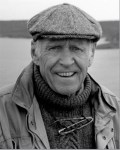

    Paul AlmondIn addition to the eight volumes of the Alford Saga and several other books, Paul Almond produced, directed and in many cases wrote over 120 television dramas for the CBC, BBC, Granada (where he created the documentary Seven Up!) and various networks in the U.S., plus a number of feature films. www.paulalmond.com

    Photo (top) of Paul Almond © 2012 Northernstars.ca

    Photo (headshot) of Paul Almond © Joan Almond


    David StansfieldDavid Stansfield, a close friend of Paul, wrote 400 television scripts for TV Ontario in Canada, the Public Broadcasting Service in the U.S., the Discovery Channel, NHK, Encyclopedia Britannica and Time-Life, plus half-a-dozen feature film screenplays and nine books, seven of them novels. www.davidstansfield.com


    Author Barbara Burgess worked with Paul Almond for the past two and a half years, helping him arrange book launches, copy-editing and handling some of his literature-related correspondence. www.thecacounacaves.com

  • Why I Teach Brand-New CanLit by Natalee Caple


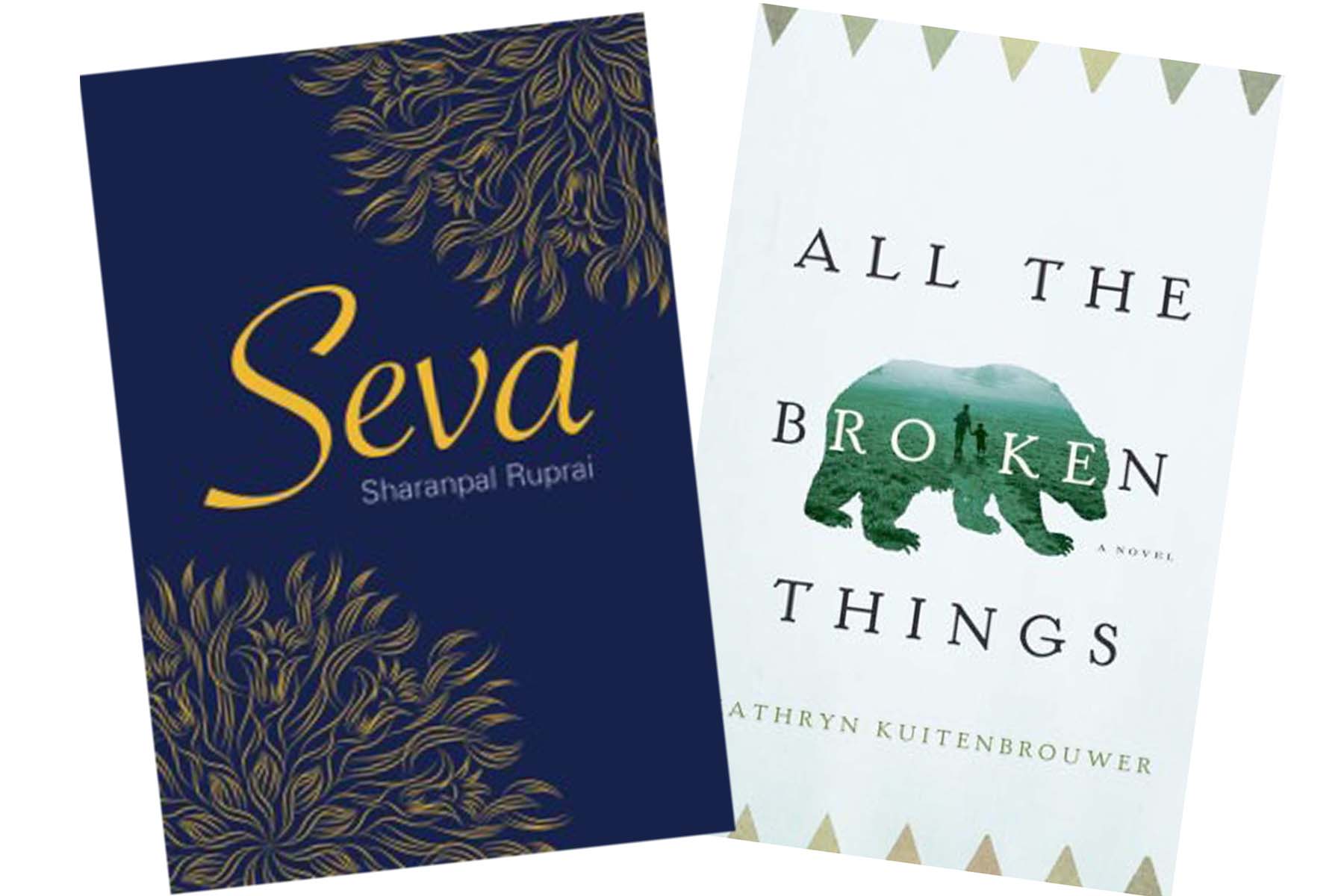
    This year, Natalee will teach Sharanpal Ruprai’s “Seva” and Kathryn Kuitenbrouwer’s “All The Broken Things.”

    I have my dream job. I write, review and teach Canadian literature and creative writing. When I think about why I am so happy teaching new CanLit I recall when, a few years back, my friend, writer Andrew Pyper, asked me in an interview what had changed for me as I evolved from an aspiring writer to an established author.

    The truth is everything has changed. In the beginning my desire to write was about me. It was about trying to see who I could be, what I might be good at and where I might find a community to belong to. Now, being a writer, being a parent and being a professor are all part of participating fully in the culture that sustains me. I feel that there is no better way to demonstrate how varied and valuable I think Canadian culture is than to devote my life to producing, promoting and teaching CanLit.

    Now, being a writer, being a parent and being a professor are all part of participating fully in the culture that sustains me.

    Because it is so important to me that students see the books they read as part of something familiar and real, something that they are already impacting and being impacted by, I often use brand new books. I also teach some of the canon: Atwood, Ondaatje, Munro. After all, these are writers who have helped to raise awareness of Canada as a significant site for cultural production (teaching Alice Munro the week she won the Nobel Prize was incredibly moving). But I also teach books that are literally printed days before classes begin.

    …teaching Alice Munro the week she won the Nobel Prize was incredibly moving.

    Designing my syllabus a few weeks ago, I realized that there are only two major drawbacks to this style of teaching. The first is that I am constantly redesigning my courses, which means new lectures, new assignments and research on what is coming out. The second is that I feel a lot of anxiety about the books arriving on time. But in spite of the extra work and anxiety, there are so many benefits to teaching contemporary literature within the context of the now. Here is a list of some of them.

    • The books are never out of print.
    • Pre-ordering books helps to let the publisher and the bookstore know that the titles are desired.
    • The material is often quite relevant to students’ daily lives. This allows students to identify better with the settings, characters and scenarios.
    • Authors are accessible, alive and often available to Skype into the classroom so that students can ask them questions directly.
    • Student presentations are much better. Instead of Googling a biography and retyping a handful of academic quotes they have to read the whole book (they do complain about this).
    • Student essays are much better. Their close reading skills really improve because that is all they have to rely on.
    • Student confidence in their own readings improves. Because they don’t have to compete with the scholarly opinions of experts they learn that it is okay to rely on and develop faith in their own readings. This causes them to engage more deeply and so…
    • Students get better marks. When they see this they start to appreciate the work they did.
    • Students become more willing to take risks in thinking.
    • Plagiarism is greatly reduced. In fact, because a brand new book is so unlikely to have essays on it in circulation, to plagiarize really means paying someone to create an essay. Far fewer students are willing to take this extra step as it requires more planning and seems somehow more actively dishonest.
    • Canadian culture is reinforced as real and ongoing, lively, diverse and present.
    • Book sales show up in a timely fashion for authors. Titles get circulating at a time when it is most beneficial. We all know that numbers have become incredibly important to the sale of future books and that there is some self-fulfilling prophesy there.
    • I get to stay engaged with my peers in the writing community. I am giving them my support and staying on top of my field.
    • I get to read all the books I wanted to anyway and call it work! Did I say that it is my dream job?

    For the teachers out there: why do you – or don’t you – teach new CanLit?


    Natalee Caple’s latest novel, In Calamity’s Wake, was published by HarperCollins in Canada and by Bloomsbury in the US. She is a professor of English, teaching Canadian literature and Creative Writing at Brock University. www.nataleecaple.com