In April 2020, we invited writers in Quebec to submit a story of a single day during the strange, uneasy time of coronavirus and pandemic, of social distancing and self isolation, of lockdown and quarantine.
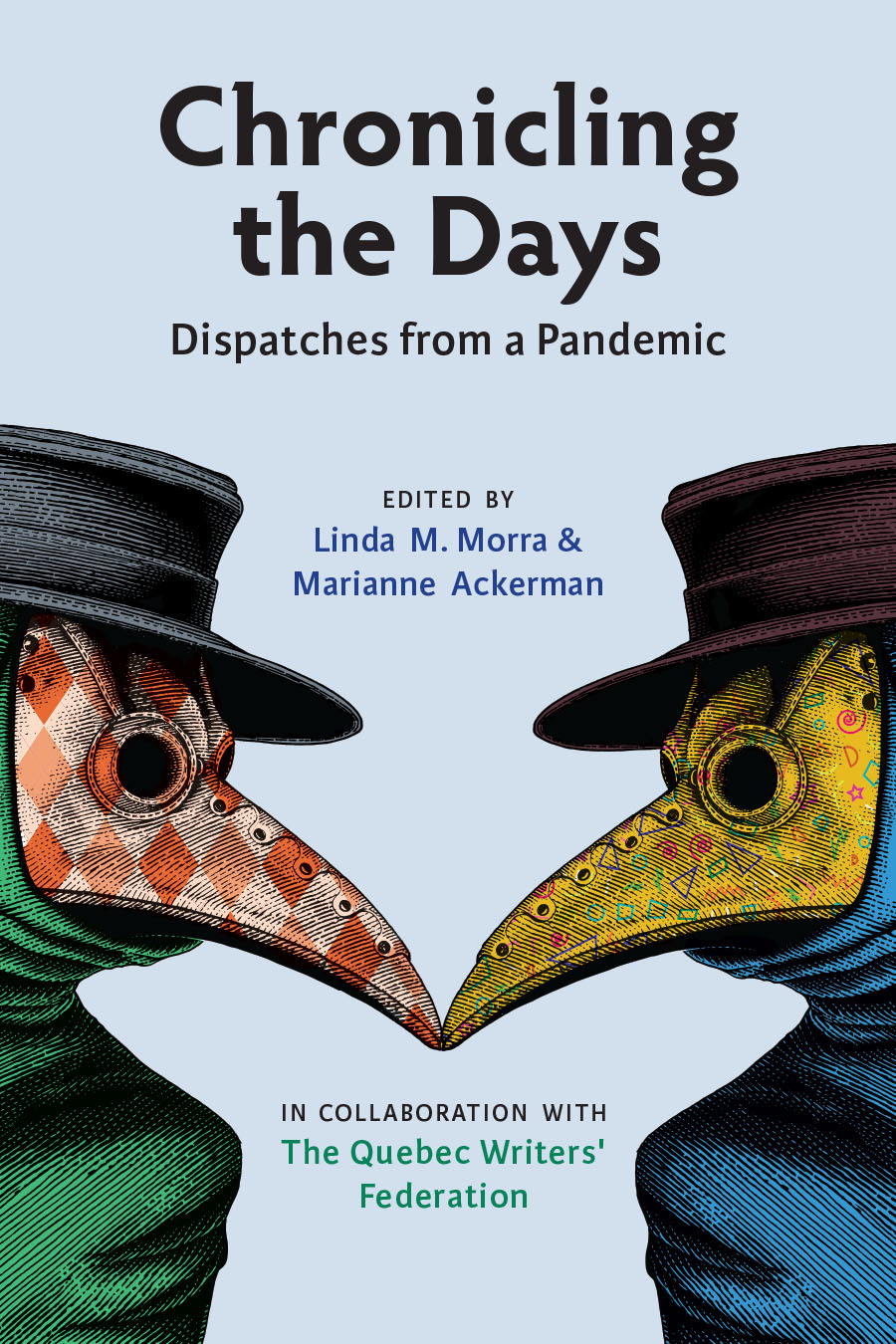
We’re thrilled to announce that these stories have been gathered in Chronicling the Days: Dispatches from a Pandemic (Guernica Press). To learn more and buy the book, please visit https://www.guernicaeditions.com/title/9781771836579.
Please also join us on the QWF FB Community page, and let the authors know if their words resonated.
In mid-March, COVID-19 was getting out of hand, according to Premier Legault. There was too much handholding, not enough handwashing. I was sent home on a paid, two-week hiatus while they rejigged my job to allow me to work from the confines of my condo.
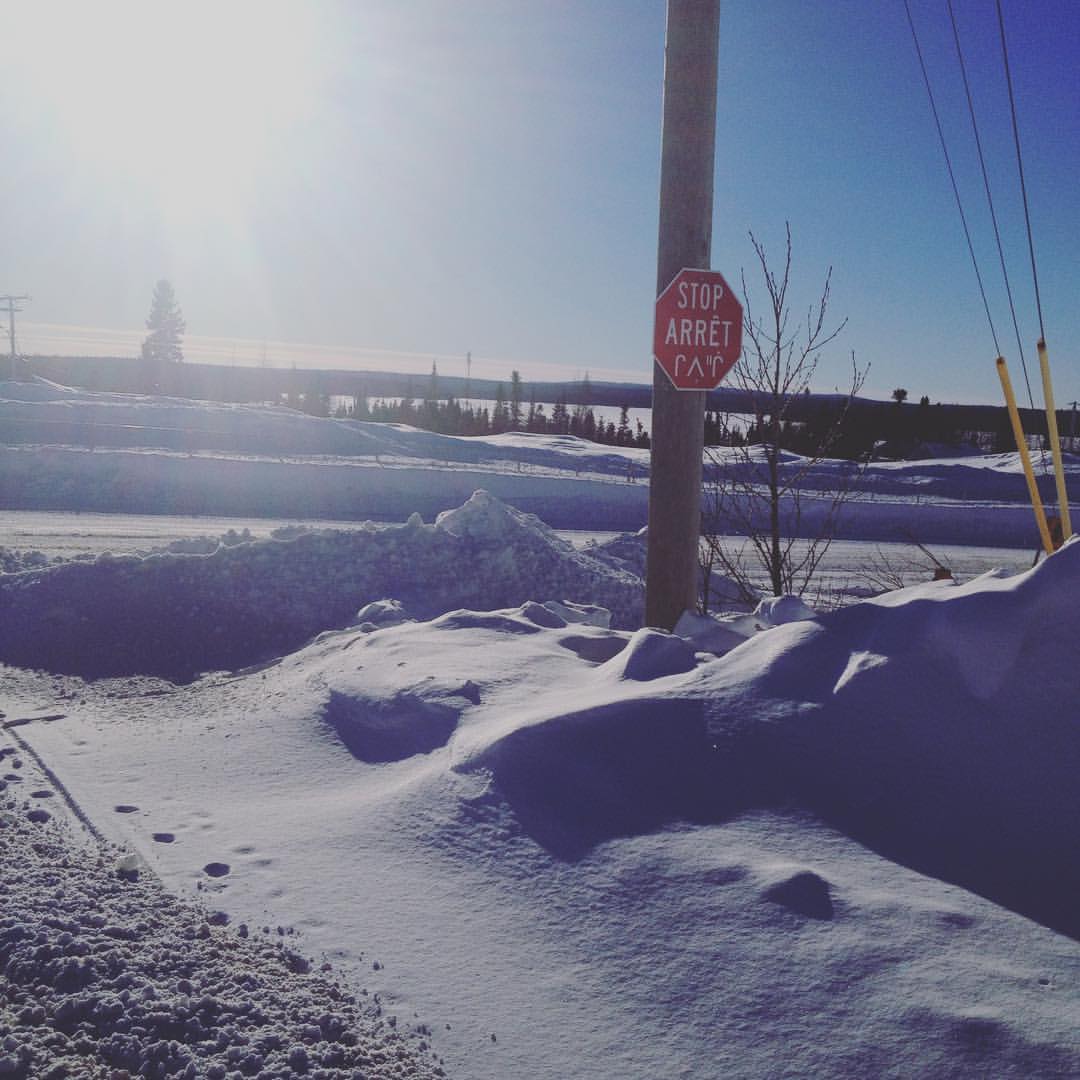
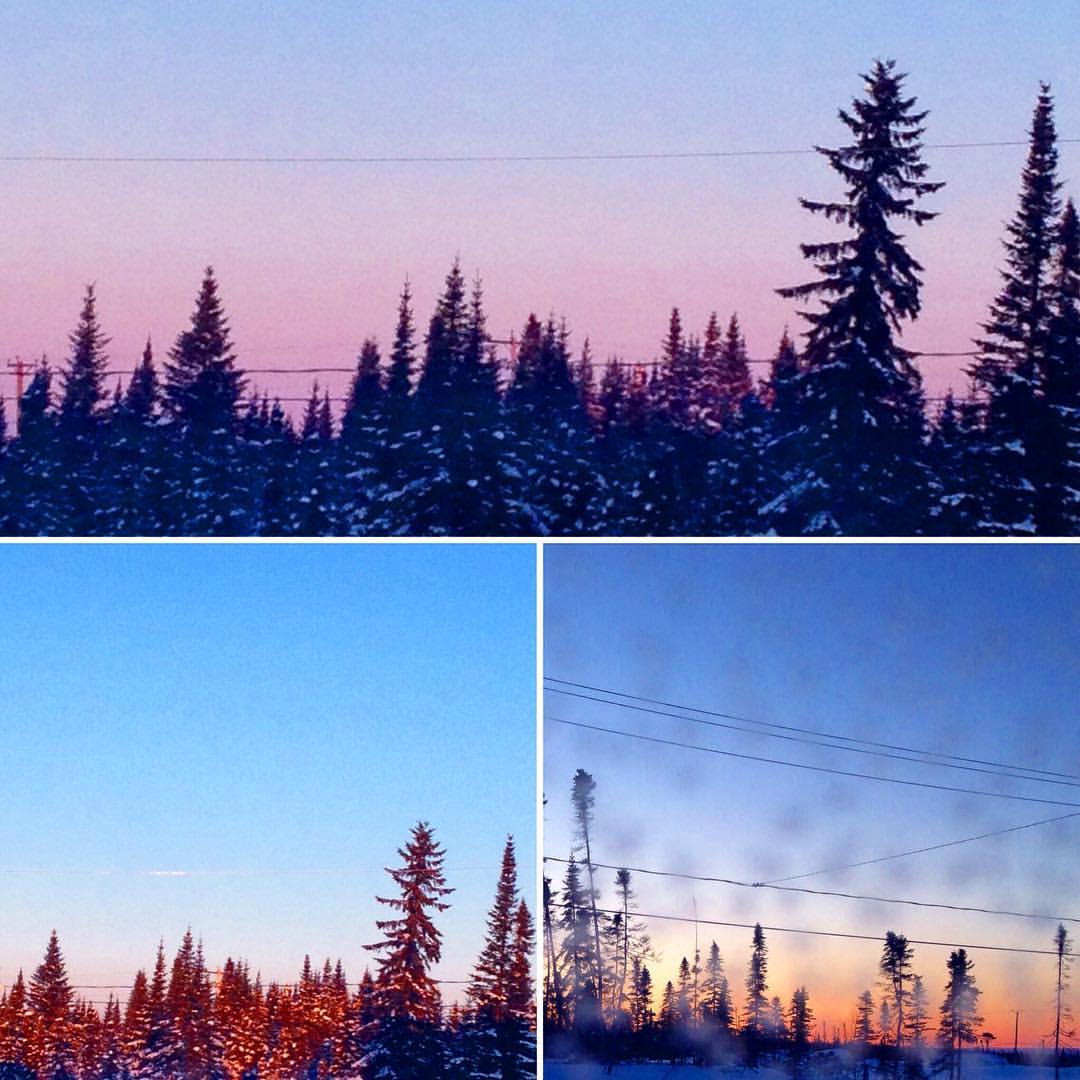
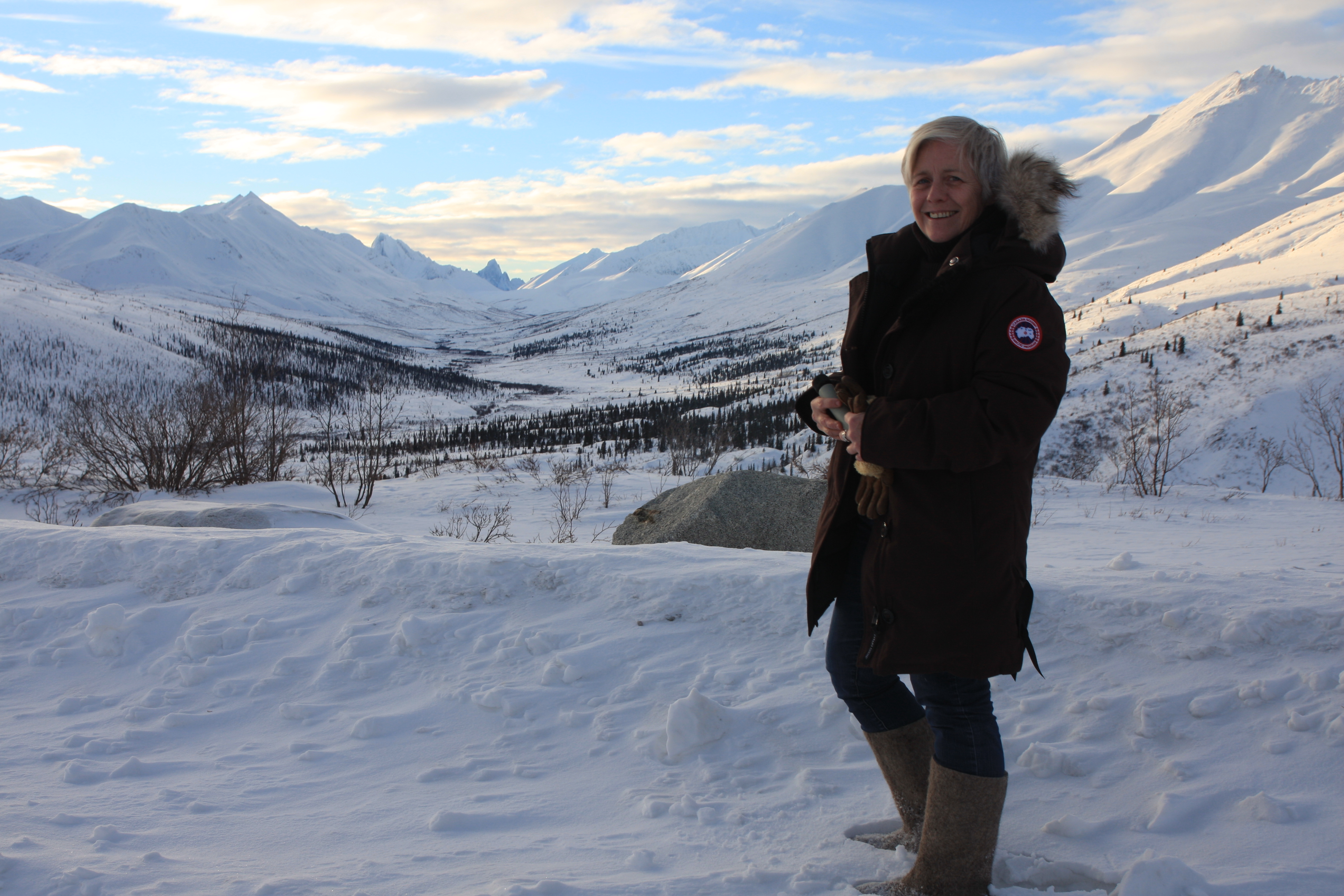
I had the privilege of being an artist in residence in Mistissini, a community in northern Quebec, this February and March. The community was small and welcoming; the snow, on the other hand, was otherworldly. There were mountains of it piled and strung along the road to the school, like a miniature version of the Rockies I am used to. While I struggled with the overwhelming volume of the white stuff, I welcomed the natural beauty of the land, the quiet of the nights, and the stillness that comes from being outside the city. With nothing to distract me I was able to spend hours every night writing and painting. I read something like ten books and slept deeper than I have in a long time. It was a treat to turn off my email for six weeks, not take on any additional contracts, and really focus on my writing and visual art. I was teaching youth how to integrate their visual art with their writing through zines, so it was the perfect time for me to spend some time doing the same.
The Mikw Chiyâm arts program was commissioned by the Quebec Cree School Board in 2015 and has just finished its second successful year. It brings together artists and students, the hope being that by creating a safe and creative space, students will be inspired to come to school more often and have a more positive experience once there.
I am an Indigenous writer, artist, and educator, and have been working with Indigenous youth for over ten years. I have been a part of many different programs that use artistic practice as a way to intercede and help guide students onto a path that will give them confidence and knowledge so they can succeed in the world. The thing I hear most from students is how much they wish that they, as budding artists, were treated with the same level of care and given the same number of opportunities as in the sports or science concentration programs. Having an arts concentration program inside of a high school is remarkable; having one that has the level of support of Mikw Chiyâm is something I have never seen. It is literally making opportunities for young artists that they would not get otherwise.
Often the arts can go unrecognized as a valid life path for a young person, but you just have to look to who the people are that are revitalizing our Indigenous communities and you will see artists at the forefront. When working with youth, Indigenous or not, I try to help them infuse their work, whether it’s fiction, poetry, or non-fiction, with a spark of who they are and their own unique point of view, with their own experience, tradition, and culture. Whether that takes the form of simply setting their dystopian dramas in their own community, or adding in bits of their language, or having characters that speak and act like them and their friends, these sparks are what makes their writing so unique.
“I try to help them infuse their work, whether it’s fiction, poetry, or non-fiction, with a spark of who they are and their own unique point of view, with their own experience, tradition, and culture.”
Growing up, I never read a story from a viewpoint that felt like my own: that of someone considered white passing, who grew up off the land, was raised in the city, yet is still Indigenous. I’ve found in my work with Indigenous youth that many are craving a varied point of view in the stories they read, something different than the stories they have thus far been presented with. There is a shame that comes with feeling like you are disconnected from your community. When you don’t know your language. When you can’t answer all the questions from non-Indigenous people. There is a shame that can infect a person when you aren’t what you see in movies, in stories—when you aren’t a real “Indian.”
If not treated like a valid feeling, this void only serves to make youth feel more alone, more different, when in reality they have a whole network of people around them who feel the same way. Opening up space, letting discussion flow through these gut-wrenching topics, is so important. Oftentimes this can be the first time they’ve been allowed to talk about such things. I have found that once you break down those thick walls a flood of words come out. And eventually they land on the page. And they become something more than art. They transcend the writer. They help. They heal.
“Once you break down those thick walls a flood of words come out… They transcend the writer. They help. They heal.”
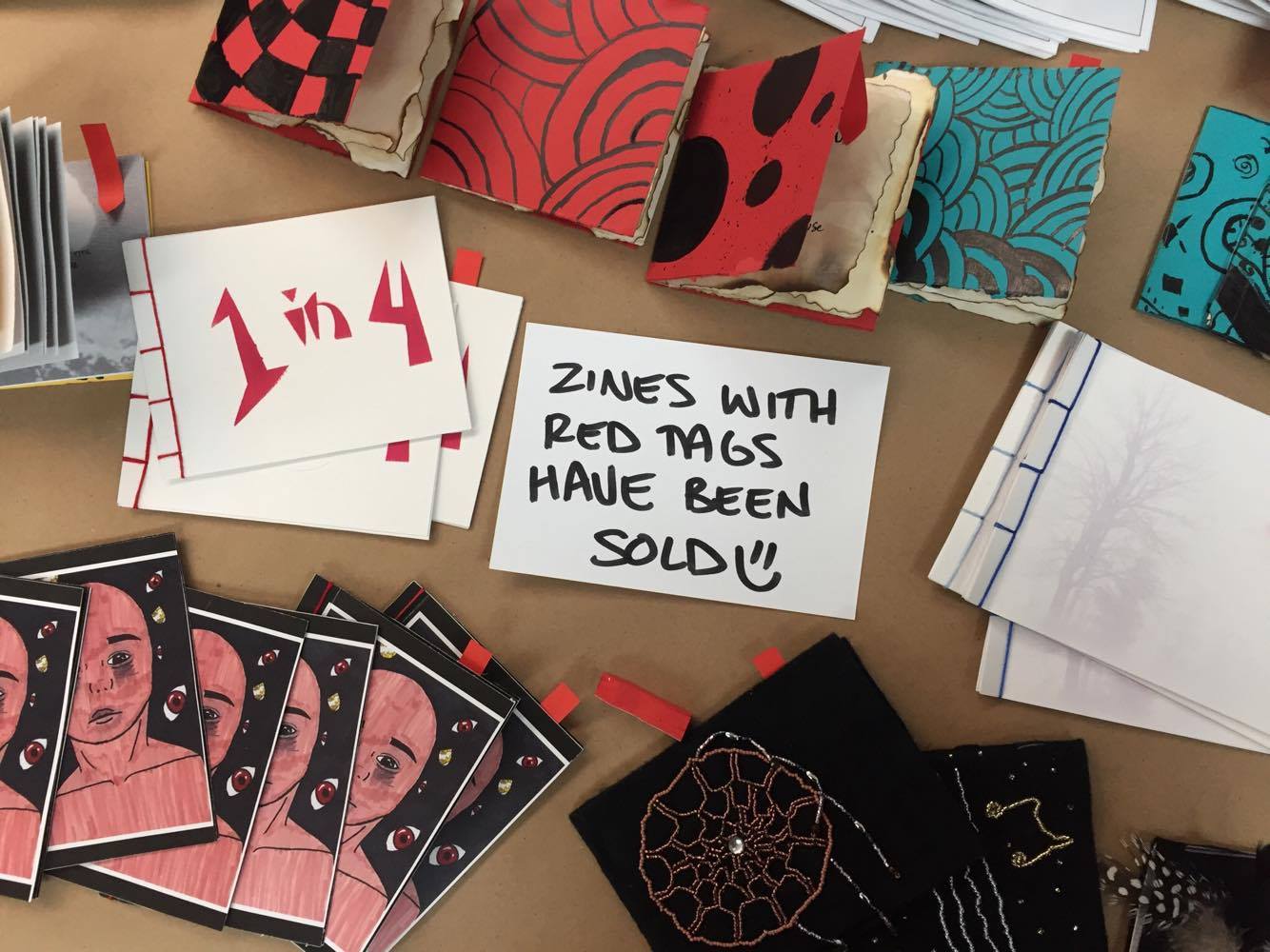
The zines that the students created were powerful. They tackled issues like sexual abuse in the community, the stigmatization of mental illness, loneliness, and identity. These stories were told through humor, visual art, prose, and end-of-the-world disasters. At a final celebration night, we invited the community to come see the students’ work. For weeks, I had been telling them that people would buy their zines, that people other than me cared about what they were writing. The students wouldn’t believe me.
Right before we opened the doors to let people in, they again tried to let me down easy, telling me not to get my hopes up, that no one would come and that was okay. They were trying to protect my feelings because I was so excited. But the community did come out. They read through all the zines, and by the end of the night we had sold out of everything we had created and made over five hundred dollars. The students were shocked. I was elated. I knew their words were valuable, that they were worth listening to. And now they had the proof.
Francine Cunningham is a Canadian Indigenous writer, artist, and educator. Her creative non-fiction has appeared in The Malahat Review, the anthology Boobs: women explore what it means to have breasts (Caitlin Press), and more. Her fiction and poetry have appeared in The Puritan, Joyland Magazine, Echolocation Magazine, The Maynard, and more. She is a graduate of the UBC Creative Writing MFA program and a recent winner of The Hnatyshyn Foundation’s REVEAL Indigenous Art Award. You can find more about her at www.francinecunningham.ca.
All photos in this piece are by Francine Cunningham.
On the wall above my desk in Montreal is a photograph taken in February at the Arctic Circle. The print is four feet wide by almost three feet high and foreground takes up most of that space. The horizon line is high on the print and marked by the Richardson mountains: white and treeless. It was -34C that day and my eyelashes froze together while I focussed the camera. In the foreground are the faint stains of a recent caribou kill, one hoof hidden amongst highbush cranberry and yellow grass poking out of the hard snow.
The perspective is deceiving. Trails of Black Spruce bisect the wide flat plain in middle distance and lead toward the base of the distant rounded mountains. Those peaks look close enough to touch, but they are many kilometres away.
It is an image that encapsulates much of what I learned during my three-month residency at Berton House in Dawson City, Yukon.
Berton House is owned and operated by the Writers’ Trust of Canada and each year four authors, supported by Canada Council grants, are chosen to spend three-month stints at the house. Residents do not have to teach or lecture, offer manuscript evaluation or coach emerging writers. In fact, they don’t even have to write while staying at the house. CanLit icon Pierre Berton, when gifting his house as a retreat, made that stipulation. He said, “the main purpose is not to let them write, but simply to give them time off from writing if they want it, or time off to think about writing or about the place they’re living in.” In the house are two binders of letters each resident has left for the next. Over the winter I spent a few hours reading what Lawrence Hill, Charlotte Gray, Joan Thomas, and the rest of the residents who’d come before me had to say. Some got a fair bit of work done. Others shut down Dawson’s bars nightly. Everyone left with something new: a stronger sense of their writing, the seed of a manuscript, suitcases of notes and ideas, friendships.
“The main purpose is not to let them write, but simply to give them time off from writing if they want it, or time off to think about writing or about the place they’re living in.”
I landed in Dawson on December 23. When I stepped off the plane at 10:30 a.m. it was still too dark to see the tiny terminal building fifty feet away. My eyelashes froze—yeah, that happened a lot—and I immediately lost sight of my seatmate, a woman in a velour tracksuit who’d come to Dawson to “experience the Yukon winter.” Betty and Dan Davidson, part of the Berton House team, eventually found me in the crush of people inside the terminal. I was taken on a quick tour of town: “Here’s the curling rink. Do you curl?” I don’t. “Here’s the Anglican Church. Here’s the Baptist Church. Here’s the Catholic Church. Here’s the nondenominational worship house. Are you a churchgoer?” I am not.
When they dropped me off at the house it was 12:30 p.m. and still too dark to see across the road. I watched the cloud of vapour left by their car’s tailpipe dissipate and sighed as the house settled around me, pipes banging as the heating system fired up. I was the seventy-fourth Berton House writer-in-residence, and I had the place all to myself. I didn’t know anyone living in that remote town. It would be dark for most of my stay (or so I was led to believe) and bitterly cold (or so it had been in the past). Alone in the cold and the dark, I would write reams.
“I had the place all to myself. I didn’t know anyone living in that remote town.”
The phone rang. I was invited to a Christmas Eve party and then to a Christmas potluck and then to a Boxing Day gathering and a New Year’s dinner. Did I know about the twice-weekly film festival screenings? Would I like to snowshoe up the Dome? Was I coming to the gallery opening and lecture next week?
For a town of about 900 winter residents, Dawson was hard to keep up with.
Initially the invitations arrived with an accompanying “don’t feel obliged, we know you’re here to write.” Initially, I agonized over the daily choices: write or hike, write or read, write or … and ground myself to a standstill over words that weren’t piling up. In my self-inflicted wracking I lost sight of why I write and nearly turned my prized three-month residency into the demise of my writing.
“I agonized over the daily choices: write or hike, write or read, write or …”
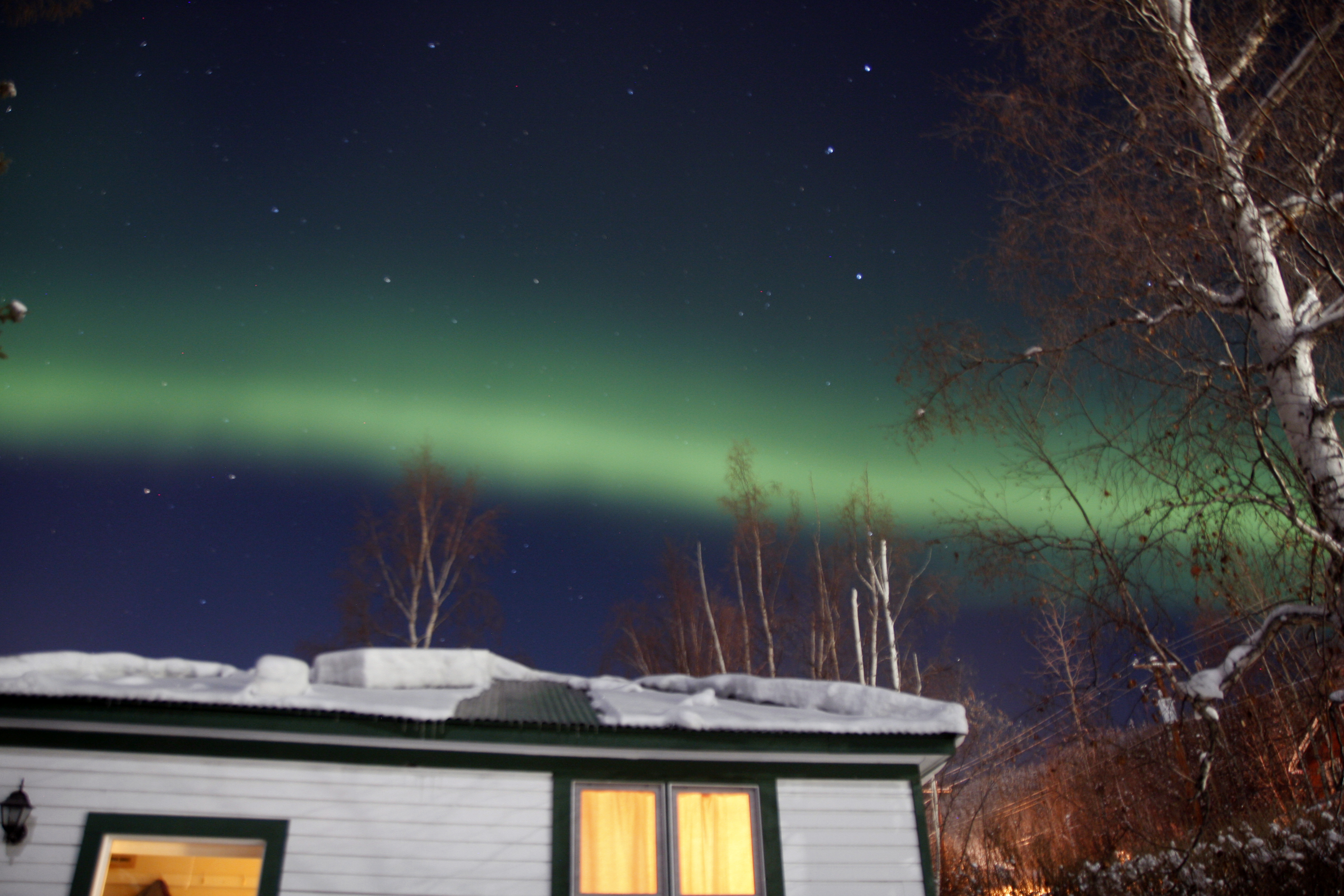
But, at some point, I came to my senses and relearned something important. Perhaps it was the night I spent lying on my back on the frozen Yukon River hypnotized by the Northern Lights or while I was listening to Tr’ondëk Hwëch’in storytellers speak on the cultural importance of “story” or maybe when I stepped over the Arctic Circle. At some point I remembered that sometimes that thing which seems so close can’t be reached until one moves away from it.
Sometimes to write good stories we have to stop trying to write.
When I left Dawson the airport terminal was again packed, but this time I knew everyone. I came home with new friendships, more than one thousand photographs, and twenty-two thousand words towards a new book.
Shelagh Plunkett is an award-winning writer and journalist living in Montreal. Her work has been published in various Canadian and American journals including The Walrus, enRoute Magazine, Geist, The Vancouver Sun and The Globe and Mail. In 2007 she won the CBC Literary Award for creative non-fiction and her memoir of growing up in Guyana and on Timor, Indonesia, The Water Here is Never Blue, was short listed for the Mavis Gallant Prize for Non-Fiction and the Concordia University First Book Prize. She has just returned south after three months in Dawson City, Yukon as the Writers’ Trust Berton House writer-in-residence and is now in the thick of a new manuscript tentatively titled Caught By All That’s Come Before. Follow Shelagh on Twitter and Instagram @shelaghplunkett. shelaghplunkett.wordpress.com
About a year ago, I was invited to give a talk to some graduate students at Queen’s University about what was billed as “work-life balance.” Sure, I said. Why not? That should be easy.
There was only one small problem. For me, “work-life balance” is an unattainable mirage. I am the farthest thing from an expert on the topic.
The truth is, most of my days pass in a blur of immediate “to-dos.” And the hours that I so carefully set aside for creative work often go instead to the unanticipated trip to the doctor, the emergency phone call from the school or the rush-rush project for the paid job.
I used to spend a lot of time feeling resentful, inadequate and guilty about that. Because other people seemed to combine their creative work with the rest of their lives successfully. Other people seemed to have some magical ability that allowed them to flourish in the face of constant interruptions and distractions.
Except, when I questioned them, these paragons of multi-tasking all felt exactly the same as I did: weary, overwhelmed and vaguely at fault for failing to maintain their inner equilibrium in the face of multiple competing demands.
“Other people seemed to have some magical ability that allowed them to flourish in the face of constant interruptions and distractions.”
Those of us who don’t blame ourselves for this state of affairs sometimes blame the pace of contemporary life. After all, we’re all juggling numerous roles, and we’re all subject to the relentless beeps, pings and dings of our various devices. No wonder we feel beleaguered.
But what if the problem is less about us, less about the world and more about our basic expectations? What if the language we use contributes to our sense of failure? What if the problem is the metaphor itself?
What does “work-life balance” even mean?
Imagine a seal, spinning a ball on its nose. Stop that insane momentum and the whole thing comes crashing down over its head.
Is that how we want to construct ourselves – as performing circus animals? Is that how we want to conduct our writing lives?
Consider other images of “balance” – say the scales of justice… or a teeter-totter. Load up one side and the other comes crashing to the ground. The whole apparatus seems so precarious! No wonder we feel so inadequate. No wonder we fear the possibility that something might shift.
Yet shift it must. Change it must. For “balance” implies stasis – and stasis is antithetical to the creative life.
What if, rather than “balance,” we spoke instead in terms of dynamic harmony, or cycles, or an ebb and flow? That way, we might not feel so guilty or inadequate whenever we had to give one role or another precedence in our lives for a period of time. Say the first few years of our son’s life, or the first few months of a new paid job, or the last few months of work on a novel, when nothing and nobody in the world matters so much as those characters, and we can barely pull ourselves away from our created world to face the real one.
Thinking in terms of ebb and flow rather than “balance” has made it a little easier for me to give myself fully to whatever role is demanding most of me that moment – whether that be partner, wage-earner, teacher, parent, friend, writer.
Outside the Cardinal Studio, one of the Leighton Studios at Banff Centre for the Arts.
It has also helped me recognize the enormous value of writing retreats. I’ve been privileged to participate in several formal residencies, at places like the Banff Centre for the Arts, the Vermont Studio Center, Wintergreen Studios in Ontario and Sage Hill and Stegner House in Saskatchewan. Each of these provides a different kind of experience, but every one offers uninterrupted time and quiet – two of the most precious and hard-to-source ingredients for the creative stew.
Of course, it’s fun to travel, exciting to stare out at different views and blissful to let somebody else do the shopping and cooking and cleaning for a change. But retreats don’t have to be formal or lengthy or costly to be valuable. In fact, some of my most memorable or useful retreats were short, cheap and close to home. Like the weekend I spent in an absent friend’s house powering through the final edits on an important manuscript. Or the day the rest of my family went to Toronto and left me digging in our back garden. In the process, I uncovered the seed of the next book.
Alas, I never did manage to tell those Queen’s students anything helpful about “work-life balance.” Instead, I read them some poetry that I wrote while crouched on one side of the work-life teeter-totter. And dared to suggest that if we’re lucky, there’s no real dichotomy, and “balance” is beside the point. Work is part of life, not separate from life, and life means growth – and change.
Susan Olding is the author of Pathologies: A Life in Essays, winner of the Creative Nonfiction Collective’s Readers’ Choice Award for 2010, and selected by 49th Shelf and Amazon.ca as one of 100 Canadian books to read in a lifetime. Her writing has won a National Magazine Award, two Edna Awards and many other honours. A graduate of UBC’s MFA program, she lives with her family in Kingston, Ontario. In the spring of 2016, she’ll facilitate a one-day workshop for the QWF called “Telling It Slant,” where she’ll share some strategies for adding depth and originality to your memoirs, personal essays and short fiction. You can find her at www.susanolding.com.
Photo (top): Inside the Cardinal Studio, one of the Leighton Studios at Banff Centre for the Arts.