Tag: short stories

  • Writing about Not Writing—By Sivan Slapak

    Writing about Not Writing—By Sivan Slapak

    Is a writer who isn’t writing still a writer? And if so, for how long a stretch? These are the questions I’ve been asking myself—actually, tormenting myself with—for the last year or two.

    Even at my most active I’ve never had a writing routine. I wish I could say I’ve always woken up to meet my muse at 9 a.m. each morning. Nevertheless, I’ve somehow managed to amass material over the past few years, with a collection of interwoven short stories as the intended goal.

    When I began crafting some stories about five years ago, I didn’t call myself a writer. The verb was okay: “Writing a bit,” but not the noun. I’ve kept journals since childhood, met in writing groups since my teens. Then came academic papers, grant writing gigs, and so on. So, I’ve been engaged in the act in various ways throughout my life. But “writer”? It seemed pretentious, or premature at best. Like the difference between having an artistic spirit, and creating art.

    Despite some early successes—getting published, shortlisted, even awarded (!)—I found it challenging to accept, and introduce, myself as a writer. (“I just write a bit!”) But with time, I allowed myself to settle into the identity. In some ways this has calmed other questions about my place in the world, when I, like so many of us, feel I’ve made a life of living on the seams. For a writer, that’s not a bad spot to be.

    But what does a writer who hasn’t been writing call herself? (“Lost,” when she’s panicking.) I know we’re supposed to believe that lulls and blocks are part of the creative process (I’ve read The Artist’s Way, too) and that resting and inputting—reading, seeing art, living life without notating it—is an incubation period. And I suppose I do essentially think that. Yet at some point this ‘incubation’ begins to feel more like stagnation, and the idea of ‘writer experiencing a lull’ is harder to buy than ‘not a writer anymore.’ Especially when the pause becomes longer than the writing that preceded it.

    Of course, there are lots of reasons for a writing hiatus. The simple ones are limits of time and energy. For me, I’ll say work: over the years it’s mainly been in the community and arts sectors (to my joy), often as a coordinator or editor. I love these roles and they offer flexibility, but I’ve noticed I easily choose working on others’ projects over my own, even when I don’t have to. Before I had a job, my blocks were caused by the paralyzing anxiety of NOT having enough work, or not having work I like. So, there’s always something. And there’s always the hauling undertow of social media to compound the issue. In any case, like many writers I know, I struggle to prioritize writing time, and the obvious excuses are less complicated than facing other, less conscious motives. Whatever the reasons, the longer I go without writing, the more miserable I feel.

    What about my short story collection? What about being a writer?

    In recent years I’ve hung on, by my fingertips, to the fragile thread of a notion that I’m still a writer. An unproductive one, but still.

    Thankfully, I seem to be slowly emerging from my dry spell, and I’ve been looking back on what’s kept me holding on: I have to credit the writing group I’ve been part of for several years. I haven’t submitted in ages, but I’ve stayed in as a reader and tried to be an active presence in our little community. Their support has buoyed me.

    I also took two QWF workshops. I didn’t produce new work, but it gave me a chance to revisit some pieces and say, “Hey, this isn’t horrible!” (And have peers say similarly encouraging things.)

    This year I began writing daily morning pages, which put a pen back in my hand and is as close to a routine as I get. In the winter, riled up about a political issue, I wrote an op ed, which was published. Soon after, so was an old story I’d dusted off. I attended a ‘Shut Up and Write’ session in a QWF writer’s house. And just recently I met the criteria to have my “Literary Writer” profile approved by the Canada Council for the Arts. Bureaucratic recognition though it is, I felt grateful to receive it.

    So, there have been steps, some small and some more significant, in the realm of writerly activity. Not (yet) my completed short story collection. Or even another short story. But something, maybe more than I thought. Enough movement to feel reassured that while I’ve been fretting over stagnation versus incubation, my writer-self has kept busy.


    profile 2017 leslie schachter

    Sivan Slapak is a writer working in the arts and culture sector of Montreal. Her short stories have won and been shortlisted for fiction awards, and appeared in publications such as The New Quarterly, Montréal SeraiJONAHmagazine, and in an anthology published by Véhicule Press. Sivan lived abroad for many years and is fascinated by the encounters that take place when distinct communities meet, a theme she enjoys exploring in her writing, and in her life—and in the short story collection she hopes to complete soon.

    Photo credits: Sivan Slapak (header image); Leslie Schachter (headshot)

  • The Art of Mentorship: An Interview with Robert Edison Sandiford

    The Art of Mentorship: An Interview with Robert Edison Sandiford

    Every couple of weeks, Robert Edison Sandiford calls me from Barbados. Robert is one of this year’s QWF fiction mentors, and I am his protégé. We’ve made arrangements to speak at 5 p.m. via Skype so this interview would feel more face-to-face. At 5:10, we still have no audio so he switches from his desktop to his laptop. At 5:25 the recording app on my phone stops working. At 5:37 we decide we’ll have to hobble back and forth between the computers, a phone, and another phone app to somehow make it work. Afterwards, when it’s all sorted, he says: “Well, there’s a lesson about tenacity.”

    Robert was born in Montreal to Barbadian parents. He is the author of nine books that range in form from short and long fiction to memoir, graphic novels, and erotica. Over a period of four months, he’s worked with me on my own collection of stories and we’ve talked about many things: process and voice, the German writer Jenny Erpenbeck, and how baking helps to reduce stress. Robert answers my questions below.

    —Pamela Hensley

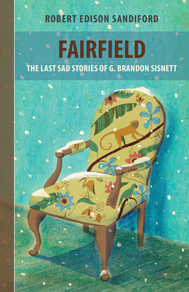
    Fairfield Cover

    PAMELA HENSLEY

    Let’s start with a quote from Fairfield, your most recent collection of short stories. In reference to engaging fiction, you say: “All that matters… is the individual and the moment.” Can you expand on that?

    ROBERT EDISON SANDIFORD

    In the context of the collection, it had to do with making the most of art. It had to do with knowing when something is ready or when an artist has what it takes. It comes from a quote by Matthew Arnold [“For the creation of a masterwork… two powers must concur, the power of the man and the power of the moment, and the man is not enough without the moment”]. How do you know when you’ve got what it takes? All we are is who we are and the talent that we have. My contention is that most people are a little better than they think they are. They can do better than they’ve done.

    HENSLEY

    Besides being a mentor, you’re an editor and teacher. How does one turn a good manuscript into a great one? Or a good writer into a great writer?

    SANDIFORD

    There has to be that spark within the work itself, or within the writer. There has to be something inside that person already that lends itself to greatness. And it may depend on how we define greatness. There are a lot of artists, not just writers, people who never enjoyed recognition while they were alive or young enough to enjoy it. So there’s that question again, of the individual and the moment and the individual and talent. There are certain things you can teach people to make them better writers but that sort of greatness, that may also depend on them.

    HENSLEY

    In Fairfield, a fictional editor writes that the character G. Brandon Sisnett borrowed from other authors, including one from Montreal who wrote Caribbean fiction on the themes of “familial loss and managing the pain of living.” Which are themes that recur in your work. Would you like to talk about theme?

    SANDIFORD

    I’m curious about theme. Both of us are writing from a particular place. Germany finds its way into your stories, as well as Canada. For me, it’s Barbados and Canada. Theme is distinct from subject matter but they inform each other. I write out of where I am but also where I come from. I do believe that all writing is regional, in a sense. People talk about things being universal but I think it goes to honesty. If you write in a way that is honest, the regional will get you to the universal. Someone will pick up the story halfway around the world and say, “I relate.”


    “There are certain things you can teach people to make them better writers but that sort of greatness, that may also depend on them.”


    HENSLEY

    Is place a detail?

    SANDIFORD

    Place is a necessary detail: your characters have got to be somewhere. But it’s more than that. It’s a space in which you invite the reader to share an experience. It’s about learning, actually. If I write about a particular place, I want you to feel that place. I want you to experience it as if you were actually there. Unless having a non-descript setting is important to telling the story, then why have this non-descript thing? I get the answer, “But I want it to be universal.” I just say, “Stop. What you may be doing is taking out the necessary edges that people need to relate to the story even more.”


    “I do believe that all writing is regional, in a sense. People talk about things being universal but I think it goes to honesty. If you write in a way that is honest, the regional will get you to the universal.”


    HENSLEY

    What’s the difference between style and voice?

    SANDIFORD

    Style and voice tend to be synonymous. But to make a differentiation, when writers are starting out I like to talk about approach. I used to talk about style but I think writers get confused. They say, “But the way I put it down is a style. I like to use all these ellipses when I write, that’s my style.” And I say, “No, that’s more of an approach and it may even be a bad approach.” Style is something that you develop over time. Voice is all those things combined. It’s reading a work and recognizing who it is. Ultimately, it’s telling a story in a particular way. It can’t be told by anybody else.

    HENSLEY

    You published your first story collection more than 20 years ago. Does it get any easier?

    SANDIFORD

    Hell, no! Publishing is more difficult now than it was before. Coming up with a story, I don’t know that that gets any easier. What gets easier, maybe, is knowing what works and what doesn’t. But I wake up every morning doing what I do and I have no regrets. Ever. That’s a hell of a thing to be able to say.


    On June 4, the 2017 QWF mentors and mentees will present new writing at the annual public reading in Montreal. Click here for more information.

    Rob Profile, ACA Painting BackgroundRobert Edison Sandiford is the author of nine books, most recently Fairfield: The Last Sad Stories of G. Brandon Sisnett. He is the founder, with the poet Linda M. Deane, of the cultural forum ArtsEtc Inc. A recipient of Barbados’ Governor General’s Award for his fiction and the Harold Hoyte Award for newspaper editing, he has also worked as a teacher and video producer.


    Pamela Hensley is new to Montreal, having relocated once again after returning from Germany to Ontario. She was selected to participate in the 2017 QWF Mentorship program and is currently attending her first QWF workshop. You can read her stories in Canadian journals, including The Dalhousie Review and EVENT magazine, and are invited to hear her read with other QWF mentees at The Comedy Nest, Montreal Forum on Sunday, June 4 at 2 pm.


    Photo credits: Pamela Hensley (top banner); Aeryn Sandiford (Sandiford headshot); Gordon Hensley (Hensley headshot)

  • Don’t Blink by Marianne Ackerman

    Don’t Blink by Marianne Ackerman

    Choosing a book title and cover is a lot like naming a baby. Quite a few people tend to weigh in, so the process can be a serious source of anxiety. Yet somehow, once you settle, the choice seems obvious.

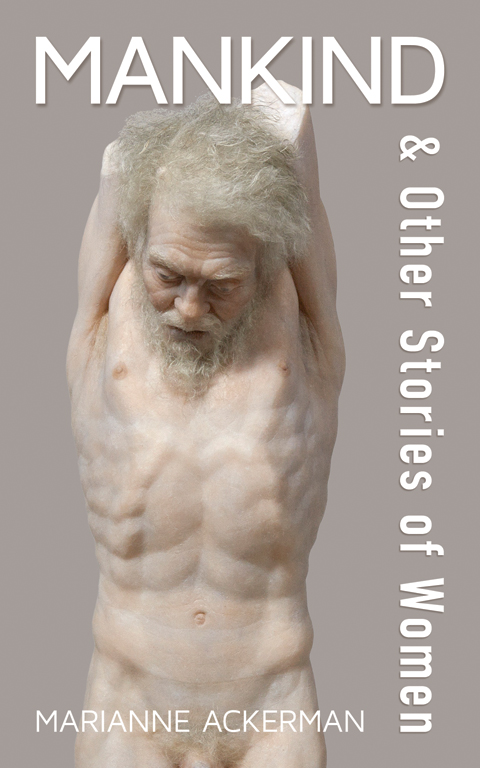
    In the case of my new short story collection, Mankind and Other Stories of Women, the title was spontaneous. The title story, “Mankind,” first saw the light of day last Christmas as a monologue directed by Harry Standjofski, performed by the wonderful Leni Parker at Centaur Theatre’s annual Urban Tales event. For Leni’s character, a lonely woman enduring Christmas Eve with her box of wine and chocolate, the word mankind is a euphemism for the scent of a man. It’s very much a woman’s story. So are the other nine, hence the title. I made a conscious effort to focus on women this time after my last collection, Holy Fools + 2 Stories (Guernica 2014), was full of male characters—puzzling, since I thought I’d won the struggle over the animus-domination of my imagination ages ago.

    The cover was not obvious. On a brief trip to Calgary in April, I discovered an amazing sculptor at the Trépanier Baer Gallery. Walking through the door, I was hit by the super elongated shape of a very thin, nearly naked corpse behind glass: Evan Penny’s Homage to Holbein, an eerie rendering in silicone and real hair of a Christ-like figure, almost fourteen feet long and chillingly life-like. My first thought was, this work belongs at the entrance to a church. It’s a religious experience.

    Days later, the images were still strong. Perusing the gallery website, I settled on Marsyas (Model), a twenty-four-inch high sculpture of a male torso, inspired by a Greek statue, which was part of the exhibition. Covers are traditionally the publisher’s domain, with input from the author. But I’ve known my publisher Mike Mirolla for a long time. I know he’s a dark soul. He loved the image immediately. Thus began the dance by which a raw visual idea and text become one.

    I could not explain why that image worked with my stories, which tend to be airy, urban, sometimes playful, and, some people say, funny. Maybe the figure’s vulnerability, resistance or air of fatalism speak to the tragic thread found in all comedy. As I revised the manuscript for publication, I found myself working him into the first story, “Mina,” which is about a friendship of rivalry and complicity between two women, their creative struggle, and one crazy night.

    mankind-final-cover

    “As I revised the manuscript for publication, I found myself working him into the first story…”

    After the normal back and forth, designer David Moratto’s concept was finalized. I slapped the cover up on Facebook, eagerly announcing my forthcoming fall book. It was mid-winter. The response was pretty well total negativity. Some of my dearest friends, smart people, said it was awful, scary, repellent. Nobody would touch this book!

    I was not prepared. I threw myself on the bed, lamenting once again my weakness for getting over-involved in practically everything. Now I’d have to face Mike and David with bad news, not to mention the gallerist, Yves Trépanier, and the artist, whose work I love.

    Mike did not share my panic attack, but held back. Yves did not. “Don’t listen to them! It’s a strong cover,” he barked via email. “You were right the first time. Don’t blink.”

    “The response was pretty well total negativity. Some of my dearest friends, smart people, said it was awful, scary, repellent. Nobody would touch this book!”

    Next to my control freakishness, impulsiveness is probably my greatest flaw. Here was somebody I respected telling me to trust my impulse. I looked at the cover again. At the other options I was trying to like. I asked Yves what his wife thought. He assured me she loved it. So I decided to take his advice, remain faithful to my first impulse. Well, except for a last-minute tussle over (ahem) how much “cleavage” should appear below my name. I did not want readers to be distracted by a dangling sack of flesh.

    Now that a stack of books is sitting on the dining room table, I can’t imagine a better cover than Evan Penny’s classy, classical all-too-human torso. I have no idea what readers will think, how it will affect their desire to pick up this book. But the baby isn’t mine any more. It is thoroughly herself.


    Mankind and Other Stories of Women will be launched along with three other local titles from Guernica Editions at Montreal’s Atwater Library (1200 Atwater Ave.) on Thursday, September 29, 6 p.m. The event is co-sponsored by the QWF. Click here for more information on the launch.

    ma-for-qwf-piece-sept-7

    Marianne Ackerman writes plays and novels. marianneackerman.com

    Photo credits: Photo of Evan Penny’s Marsyas Model (2016) courtesy of Evan Penny, and Kevin Baer – TrépanierBaer Gallery; Lesley McCubbin (headshot)

  • Literary Influences: E. L. Doctorow’s Lives of the Poets by John Goldbach

    Literary Influences: E. L. Doctorow’s Lives of the Poets by John Goldbach

    The first time I read E. L. Doctorow’s wonderful Lives of the Poets: A Novella and Six Stories (1984) was in early 2001, after picking up a used hardcover copy at City Lights Bookshop in London, Ontario, at 356 Richmond St. Not City Lights Bookstore, the famed bookstore in San Francisco, California, at 261 Columbus Ave—City Lights Bookshop (the one in London ON) is one of my favourite used bookstores ever, a small but dense and rich oasis of books and comics and records, etc.

    A few years later, after reading Slavoj Žižek’s Iraq: The Borrowed Kettle (2004), I reread Lives of the Poets. Much to my surprise, Žižek references Doctorow’s collection in his second book about 9/11 and its aftermath (namely, the illogic of the Bush administration’s reasons for invading Iraq). I was surprised to learn Žižek uses Doctorow’s collection as a sort of model. Žižek writes,

    The hidden literary model for this book is what I consider E. L. Doctorow’s masterpiece, the supreme exercise in literary post-modernism, far superior to his bestselling Ragtime, or Billy Bathgate: his Lives of the Poets: Six Stories and a Novella—six totally heterogeneous short stories (a son is set to the task of concealing his father’s death; a drowned child is callously handled by rescuers; a lonely schoolteacher is shot by a hunter; a boy witnesses his mother’s act of infidelity; a car explosion kills a foreign schoolgirl) accompanied by a novella which conveys the confused impressions of the day-to-day life of a writer in contemporary New York who, as we soon guess, is the author of the six stories. The charm of the book is that we can reconstruct the process of the artistic working-through of the raw material of this day-to-day life.

    As soon as I’d finished Iraq: The Borrowed Kettle, I reread Lives of the Poets, my engagement with the book deepening.

    I’ve read the Doctorow collection twice since then. About a decade later, in 2015, I used it as an oblique model for organizing a book of my own fiction, It Is an Honest Ghost, which consists of six stories and a novella (Hic et Ubique). There was something about how Doctorow’s stories stood alone—were “totally heterogeneous,” in Žižek’s words—but nevertheless informed one another, that I found haunting.

    My new collection was originally made up of eight stories and a novella but for myriad reasons I cut two stories, not the least of those reasons being for the sake of uniformity, a loose strange symmetry—a uniformity and symmetry impressed upon my mind by Doctorow.

    And then I read Lives of the Poets for a fourth time in July 2016, while working on this short appreciation. Lives of the Poets remains politically perspicacious, deeply insightful, and contemporary.

    Here’s Doctorow on US immigration, and mass migrations in general. The writer, the narrator of the novella, emerges from the NYC subway, and observes the new waves of immigrants to the city. He writes,

    Dear God, let them migrate, let my country be the last best hope. But let us make some distinctions here: The Irish, the Italians, the Jews of Eastern Europe, came here because they wanted a new life. They worked for the money to bring over their families. They said good riddance to the old country and were glad to be gone. They did not come here because of something we had done to them. The new immigrants are here because we have made their lands unlivable. They have come here to save themselves from us.

    Lives of the Poets continues to shed light on the present for me. Out of Doctorow’s impressive and celebrated oeuvre, it’s often overlooked. But it remains an insightful and inspiring collection, chock-a-block with strange echoes and resonances.


    KateHutchinson19webJohn Goldbach is the author of The Devil and the Detective (Coach Books, 2013), a novel, which was an Amazon Best Book of 2013; Selected Blackouts (Insomniac Press, 2009), a story collection; and, most recently, It Is an Honest Ghost (Coach House Books, 2016), a collection of six short stories and a novella (Hic et Ubique).

    Works Cited: Žižek, Slavoj. Iraq: the Borrowed Kettle. New York: Verso, 2004, p. 7.

    Photo: Kate Hutchinson (headshot)

  • Healing, One Story at a Time by Licia Canton

    Healing, One Story at a Time by Licia Canton

    In 2012, a driver pulled up behind me while I was putting a box in the trunk of my car. He crushed my legs between the two bumpers. I was bedridden for four months, and then I started physiotherapy. Within a year I was able to do 95 percent of the activities I had done before the accident. People would ask me how my legs were doing and I would smile and tell them I was doing well. I was, physically—but I didn’t tell them that I wasn’t able to write.

    I wasn’t able to write for clients, organize events or attend networking functions. I didn’t think any of it was worth it. I had lost my drive. In fact, I had lost my desire to do anything at all. A few weeks after the accident, I had looked at the positive side of things: I had decided to finish my second book of stories; I was going to write on my laptop while in bed. But that never happened.

    My insurance agent suggested that I see a therapist. I would only be able to move forward by dealing with the trauma. I decided to try it, and I discovered that writing itself was what would cure my writing block. It’s called narrative therapy, and it changed my perspective on life.

    Vera, my therapist, asked me to do exercises in automatic writing. I had to just put words on the page without thinking about what I was writing. Then she said that I had to write about the accident in order to regain my confidence. At first, this seemed like an impossible task. If I could write, why would I be there? I could talk about the accident during therapy, but I couldn’t write about it. I didn’t want to write about it.

    Eventually, I wrote a story about a writer who was unable to write about a traumatic experience. It took me many months to be able to do that. I could not sit for longer than five minutes at a time. I worked at it early in the morning when everyone was still asleep, when I was least likely to be interrupted—and when no one would see me crying.

    As part of the therapy, I was obliged to read that first story “Because of Leonard Cohen” at every therapy session until I could read it without crying. That accomplishment was priceless. Then, the therapist asked me to read the story at a public venue as I would have done with any of my other stories. But I couldn’t fathom the thought of sharing my very personal writing in public. I come from a background where broken bones get fixed and as for the rest, we simply move on. Everyone knew that I had been in an accident. Very few people knew about the ensuing depression. It was not a topic of discussion.

    “I could not sit for longer than five minutes at a time. I worked at it early in the morning when everyone was still asleep, when I was least likely to be interrupted—and when no one would see me crying.”

    I first read “Because of Leonard Cohen” abroad, at a short story conference where very few people knew me. The story was later published in the international short story anthology Unbraiding the Short Story, edited by Maurice A. Lee. Then, I wrote more, and more. I wrote and published other pieces inspired by my accident, “In Front of the Bell Centre” and “The Woman in the Red Coat.” And I still haven’t finished writing all of the stories that I need to, and want to, write. I have a Table of Contents with the titles of all the stories that I am working on, all part of my narrative therapy. With the completion of each new story, the process is the same. I ask for feedback from several writer friends. I read it repeatedly in private until I feel completely comfortable with it. I read it to my husband and children. Then, I read it in public either before or after it is published. Now, I preface the readings by saying that the story came out of narrative therapy.

    Vera told me about Raymond Queneau’s Exercices de style (1947), a collection of ninety-nine retellings of the same story, each in a different style. Although I am no longer in therapy, I continue working on my own version of Queneau’s book: multiple literary variations of my accident and its aftermath. Just as I was not thrilled about physiotherapy and osteopathy, I am not exactly fond of this literary project—mostly because I have had to postpone other writing projects. On a positive note, however, narrative therapy has encouraged me to go beyond my comfort zone by doing other activities connected to writing that I would not have done a few years ago: guest blogging, giving workshops, mentoring other writers, writing/speaking about depression and narrative therapy, and actively seeking venues to read the writing that has come out of narrative therapy.

    I still cry every time I tackle a new story, but I always feel a great satisfaction when I share it in public. It is part of the process that moves me towards complete healing, as is this piece that you’re reading right now. In fact, I prepared my pitch for this column two years ago. I just wasn’t ready to share my experience then.


    headshotLicia Canton is the author of the short story collection Almond Wine and Fertility (2008), published in Italy as Vino alla mandorla e fertilità (2015). She is also a literary translator and founding editor-in-chief of Accenti Magazine. She has published personal and critical essays and edited nine books. She mentors emerging writers, journalists, and editors. She holds a Ph.D. from Université de Montréal and a Master’s from McGill University. See her profile in LinkedIn or the Hire A Writer directory.

    Photos: Flickr (top); Ohayon (headshot)