Tag: solitude

  • How Podcasting Took Over My Life—By Catherine Austen

    How Podcasting Took Over My Life—By Catherine Austen

    If a podcast airs in a forest but there’s no one there to hear it, did it really make a sound?

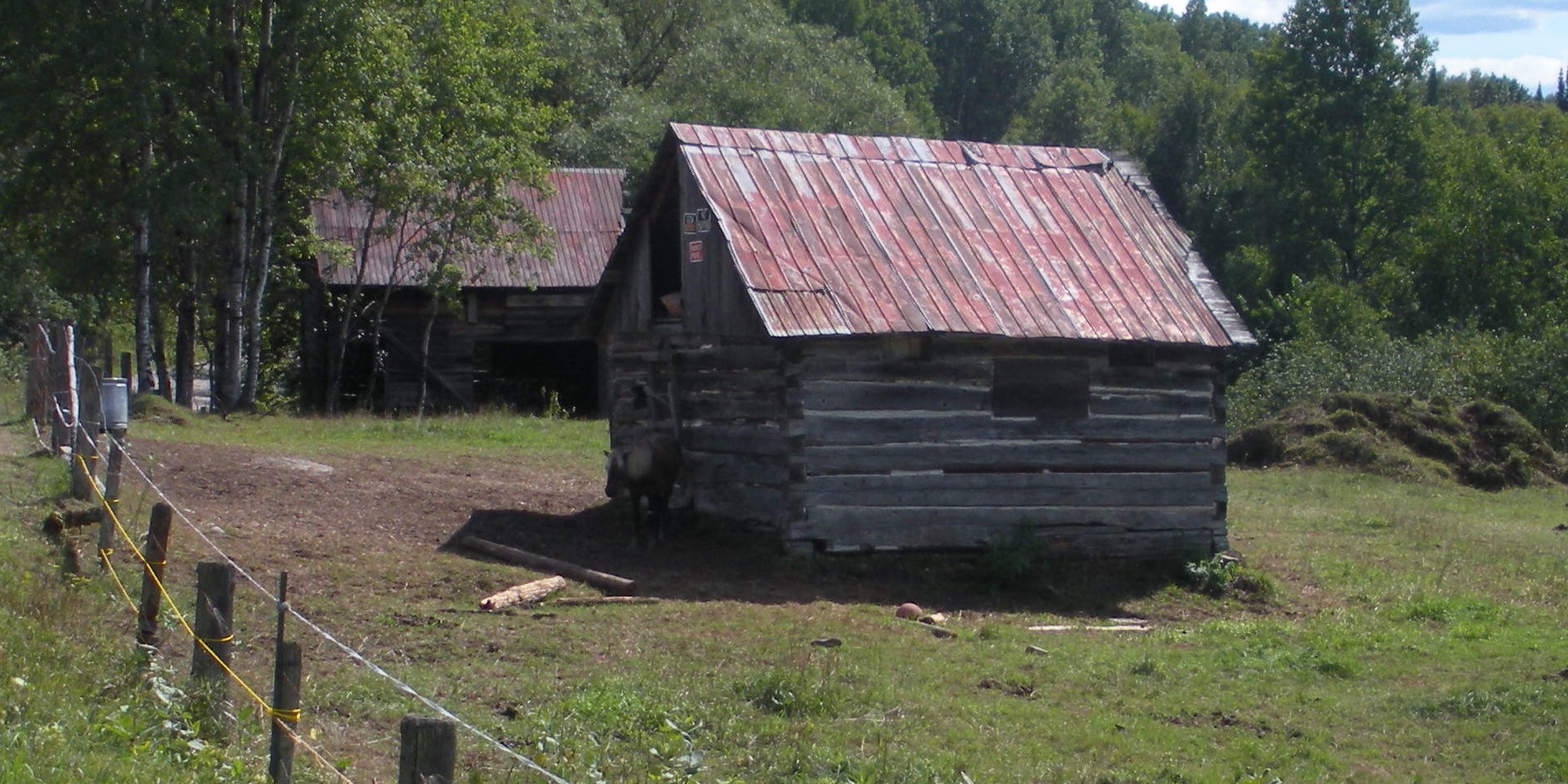
    I started a creative-writing podcast in August to take the place of school visits during COVID-19. I write for children and teens, and I do a lot of writing workshops in normal years. During the pandemic, I’m offering teachers a podcast instead: “Cabin Tales: Spooky Stories for Young Writers.” Each episode tackles one creative writing topic (setting, point of view, etc.) and features stories, writing exercises, interviews, and prompts to help listeners write their own tales. It’s fun, it’s informative, it’s consuming my life.

    I fall asleep muttering my next intro. I walk my dog composing commentary. I blurt, “I forgot to normalize the volume!” in the middle of dinner. And on Sunday nights, I sit at my desk and edit “um”s from interviews instead of writing fiction. My family has never seen me so devoted to a pastime. If only she’d work that hard on a new book, they think.
    I’m disciplined about getting episodes planned and podcasted—far more than I am about finishing books. In part, that’s because of the weekly deadline and public face. (If I don’t revise a work-in-progress, no one cares because no one knows. If I don’t upload a promised episode, my subscribers will call me on it.) But mostly, I’m working so hard on the podcast because it’s fun. Creative fun. Challenging fun. The same sort of fun that writing fiction can be.

    Have you ever had a story in a literary journal that you’re pretty sure no one read except the editor? But you didn’t care because you knew it was a good story? My podcast is like that. There may be only two classes tuning in, but I don’t care because it’s a pleasure to make, and my listeners like it.

    “You should put your podcast on YouTube to get more listens,” my son says. Like I’m not already spending Saturday mornings making audiograms for guest authors. There is only one Saturday morning in the week. I used to spend it housecleaning. Someone else had better change the cat box because I’m doing a podcast now.

    Recording interviews; editing audio; fixing voice-to-text transcription—those tedious chores take far more time than coming up with content. But should the time-consuming nature of podcasts stop you from starting your own? No. If you have something to say, say it loud. (But normalize the volume before you upload.)

    There is something deeply satisfying about having one week to create something and never having to recreate it. A podcast isn’t like the short story you revise each time it gets rejected, or the novel you repeatedly edit, or the poetry collection you add to for years. You plan; you create; you upload; and then you move on. It’s like being a kid again.

    So I encourage you to join the podverse. There are 1,000,000 podcasts already out there—but that shouldn’t stop you from starting a new one, any more than 100,000,000 books stop you from writing. Just know that, like any creative endeavour, it will take more time than you expect. And your few hundred downloads might feel like boxes of self-published books in your garage. But there’s a pandemic of loneliness in the world right now, so grab a mic. Even if you only find a few ears.

    My podcast has allowed me to reach the teachers whose classes I can’t visit this year, and help them help their students write. It has brought two dozen YA and children’s literature authors together virtually.

    The best thing, though, is that writing fiction is now a reward instead of a chore. I spent half of Thursday on the podcast, so Friday I had time to write. Hurrah! Before “Cabin Tales” consumed my time, I felt burdened by the to-do: “Write.” I’ve rediscovered writing for the fun of it. My podcast taught me that.


    Catherine Austen writes short stories for adults, novels for children and teens, and reports for corporate clients. Her stories have appeared in The Fiddlehead and The New Quarterly. Her books have won the CLA Young Adult Book Award and the QWF Prize for Children’s and YA Literature. Listen to her podcast, Cabin Tales: Spooky Stories for Young Writers, at CabinTales.ca. 

    Photo credits: Catherine Austen

    If you’re interested in podcasting, check out a 2-part QWF workshop this November: https://qwf.org/activity/the-essentials-of-starting-your-own-podcast

  • Creating Community with Disabled Writers—By seeley quest

    Creating Community with Disabled Writers—By seeley quest

    Now is a time to gather disabled writers and our allies in direct community together. Writing practice shared in company among disabled people expands our consideration of how embodied variations inform our writing perspectives, and how our writing helps us understand embodiment. Whether virtually through videoconferencing or in person, I am keen to encourage events specifically centering disabled writers.

    Bodies and minds are linked; psychological and other cognitive differences manifest through a brain’s interactions with its bodily systems, so all of our experiences are fundamentally embodied. Our unique body-minds are what our writing comes through; let’s celebrate how the written word can share our particularities with the world.

    Writing practices that occur when we’re solitary can be powerful and necessary lifelines. Many people, disabled or not, get satisfaction and relief from journaling, “morning pages,” and other forms of writing for themselves; sometimes there’s no need to connect output to a larger community.

    Yet, sharing creative writing via virtual platforms can be particularly important to people who have less access to public spaces physically or cognitively. Familiar with social isolation, linking ourselves through correspondence helps sustain us. When health conditions permit them, more in-person gatherings are also valuable to grow the collective body of our writing work.

    Part of my agenda is to uplift disabled writers who are sharing work in public events and productions. The essay “My Arrival at Crip” makes excellent observations on becoming attentive to the presence and impact of disabled, chronically ill, and Deaf writers assembling in civic spaces. For writers with a newer relationship to disability, it’s especially profound to learn how poets who are “out” as disabled can change the political possibilities for everyone. Public notions of “ableness” are shifting, as living conditions shift during the pandemic, challenging our mental and physical health. The legacies of fierce “out” writers can offer guidance.

    Language is fundamental to how we conceptualize disability. Word choices undermine or reinforce associations that valorize hyper-ability, and have consequences. We have the option of using more neutral vocabulary instead of terms freighted by stigma like “handicapped” or “deficient.” “Atypical” is one option, and “atypique” in French is emerging as a descriptor chosen by the disabled community in Quebec. For more on how to shift from oppressive choices, there are great resources like this one: https://www.autistichoya.com/p/ableist-words-and-terms-to-avoid.html.

    Our work may get special attention in the frame of “disability arts” or “disability aesthetics,” a category for funding support. However, defining such writing as separate from and more worthy of recognition than art therapy, stream-of-consciousness writing, or fan fiction by disabled authors doesn’t serve the whole. Our future lies away from capitalist divisions. We must embrace arts practices associated with therapy. The need for therapeutic pursuits and for accessible arts engagement will grow. In workshopping and community spaces, I invite those with different experience levels of writing. Whether we are neurodiverse, are experiencing new or episodic disabilities, or are a language and sensory minority like the Deaf: all our work has value. People who aren’t sure of applying the term “disability” to their experiences are welcome comrades too!

    When we don’t shy away, there’s so much to explore of what our body-minds might know in common: those considered able and typical, those that vary and diverge, writing both from individual experiences and in relationship to each other. Let our texts layer into expanding knowledge to enrich the entire writers’ community.


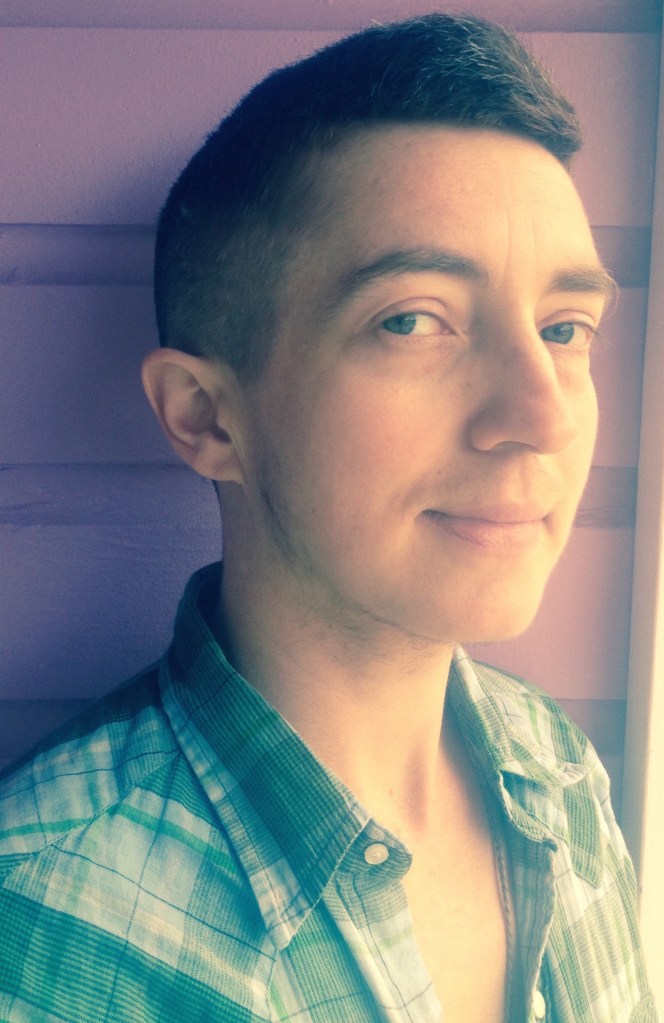
    Photo credit: Coral Feigin

    seeley quest is a trans disabled writer, organizer, and environmentalist, in Montreal since 2017. Sie has made literary and body-based performance since 2001, and presented in Vancouver, Toronto, Ottawa, and many U.S. cities. Sie has poems in the book Disability Culture and Community Performance: Find a Strange and Twisted Shape, and in Fiction International. Hir playscript Crooked will be published in September in At the Intersection of Disability and Drama: A Critical Anthology of New Plays. Recent appearances include reading at le Salon du livre de Montréal and leading workshops with QPIRG-McGill, articule, and Head and Hands. Not on social media, sie email connects with comrades: find more at https://questletters.substack.com.

    Look for an announcement soon about new plans in 2021 for seeley’s QWF workshop; visit https://qwf.org/activity/poetry-and-prose-writing-from-the-body-mind.

  • The Art of Connecting—By Joel Yanofsky

    The Art of Connecting—By Joel Yanofsky

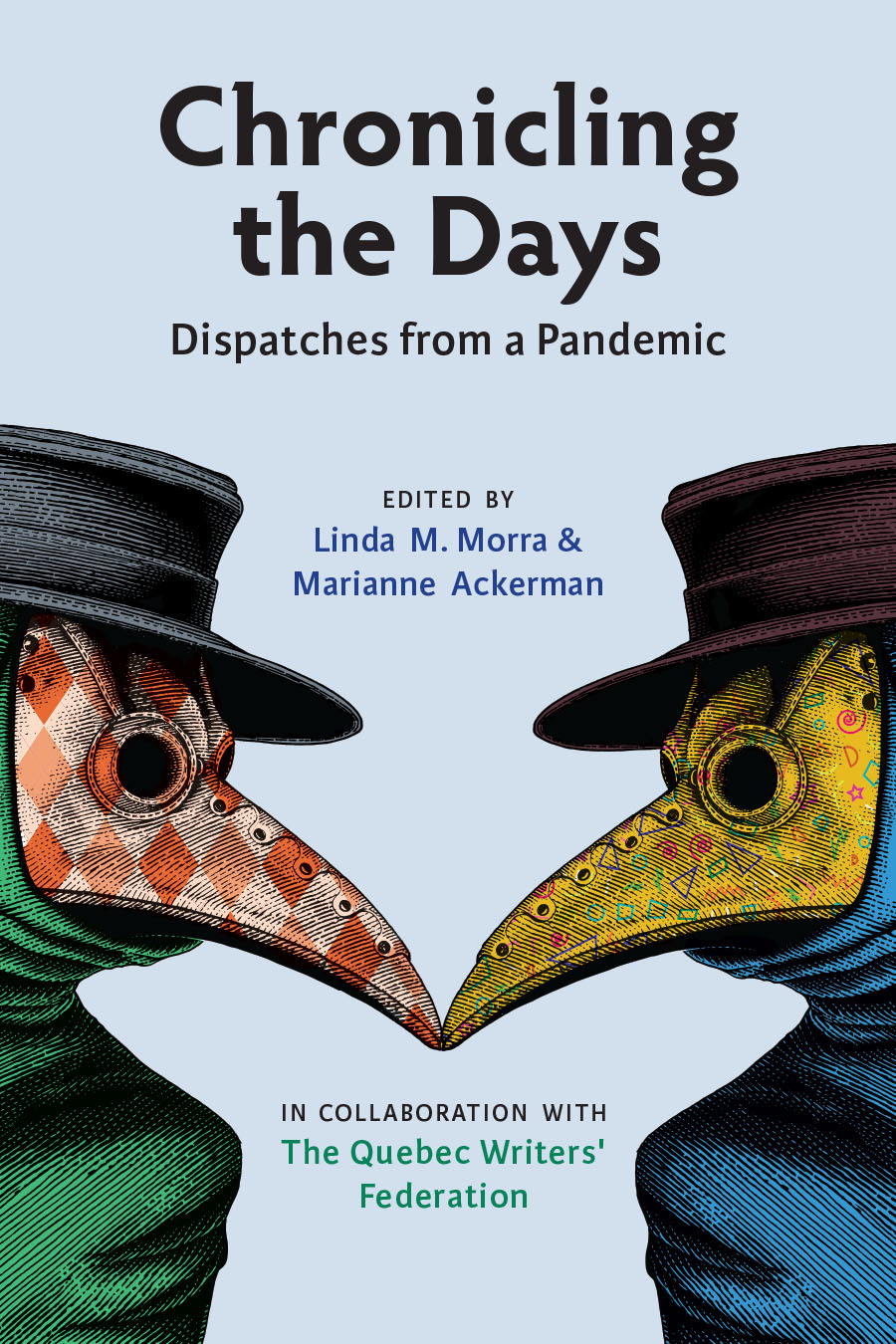
    In April 2020, we invited writers in Quebec to submit a story of a single day during the strange, uneasy time of coronavirus and pandemic, of social distancing and self isolation, of lockdown and quarantine.

    We’re thrilled to announce that these stories have been gathered in Chronicling the Days: Dispatches from a Pandemic (Guernica Press). To learn more and buy the book, please visit https://www.guernicaeditions.com/title/9781771836579.

    Please also join us on the QWF FB Community page, and let the authors know if their words resonated.

    This self-isolation business is playing right into my hands. From the time I started thinking of myself as a writer, some forty years ago now, I knew my main talent for the job lay in my ability to cut myself off from other people. In fact, it seemed to be the whole point of the endeavour.

    To read the rest of the story, please support our community and check out Chronicling the Days: Dispatches from a Pandemic

  • We Can All Be Writers—By Nisha Coleman

    We Can All Be Writers—By Nisha Coleman

    In April 2020, we invited writers in Quebec to submit a story of a single day during the strange, uneasy time of coronavirus and pandemic, of social distancing and self isolation, of lockdown and quarantine.

    We’re thrilled to announce that these stories have been gathered in Chronicling the Days: Dispatches from a Pandemic (Guernica Press). To learn more and buy the book, please visit https://www.guernicaeditions.com/title/9781771836579.

    Please also join us on the QWF FB Community page, and let the authors know if their words resonated.

    I’m a writer but I don’t have much to say right now. I’m a storyteller but I don’t have many stories to tell either. There is an explosion of online content, but I do not feel compelled to contribute. Instead I am watching, listening, noticing.

    Week one of the self-isolation measures, amongst the multitude of COVID-19 memes about toilet paper, face touching, and the quarantining-with-kids-chaos, one in particular caught my attention:

    To read the rest of the story, please support our community and check out Chronicling the Days: Dispatches from a Pandemic