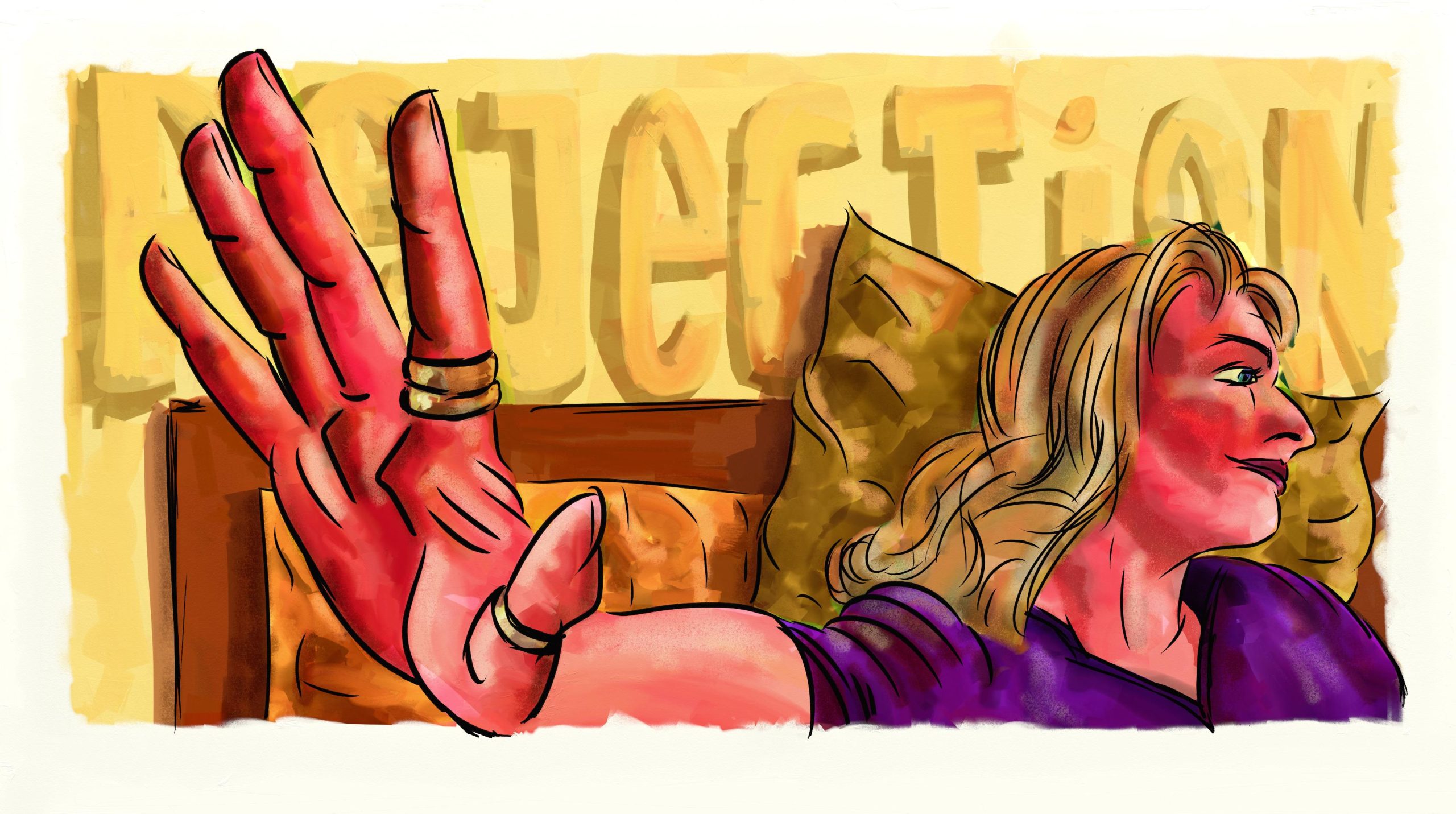
I am bad at submitting my work. Too often I build up rejection in my mind to be a personal commentary on my writing and on my future as a writer. Yet rejection, as any writer can tell you, is anything but final.
First there is the self-rejection. I find it difficult to tell when a piece of work is done. I nitpick and fuss over it during the editing process until I resent the work. All I see are its faults. When I feel like I can still improve upon it, I don’t want to submit a piece to an editor or contest judge.
Setting aside a piece is sometimes the most effective way of continuing to love a piece. I can return to it weeks, or months, or even years, later to rediscover the bits that worked and fix the parts that didn’t. I find editing difficult to do until I’ve put distance between myself and the work. Confidence is important in publishing, and it’s easier to be confident in my abilities as a writer when I can read the work as an outsider.
“I nitpick and fuss over it during the editing process until I resent the work.”
Then there’s the fear of outside rejection. The faceless and powerful jury intimidates me. I wrote the poem, “Artemisia Absinthium,” in the first year of my undergrad, and the editing I did for it was minimal. I remember the poem developed naturally from its source material. It poured out in one sitting. I was excited and passionate about it, and I remained so when I submitted it the first time to Headlights, a journal published by graduate students in the English Department of Concordia University.
This was my second time submitting to a publication, and I saw it as a low-risk way to practice the process. Having it accepted gave me the boost in confidence I needed to begin considering larger competitions and publications.
Less than a year later, I submitted the now-published poem to the QWF Literary Prize for Young Writers. It felt like the next step. I had submitted my piece to a journal that was unpaid and circulated almost exclusively within Concordia, and now I could submit it to a competition that was professionally judged and would potentially reach a wider audience.
Submitting it was hard, but waiting for a response was easy. I had been working on making rejection a thing to look forward to, saving each email and using them as a mark of pride. The best ones included a note of encouragement or advice that I could proudly print off to remind myself that I was learning and growing as a writer.
“I had been working on making rejection a thing to look forward to, saving each email and using them as a mark of pride.”
Submitting to the QWF prize was the culmination of several important lessons and writing practices. When I heard the positive news—I’d won!—what was even more exciting than receiving the award was receiving the jury’s comments. I am a staunch believer in the work no longer belonging to the author once it has been released into the world. One of the most rewarding parts is learning what other people thought of a piece without your input or thought process. Having the opportunity to share my work with a larger community, and to meet so many wonderful Quebec and Canadian authors at the QWF Awards Gala, is an experience I will cherish fondly for the rest of my life.

 Nicola Sibthorpe is a Montreal-born, Creative Writing MA student at Concordia University. She is interested in folktale and mythology, and the subversions that accompany them. She was the inaugural winner of the QWF’s Literary Prize for Young Writers in 2017. Beyond spending her days writing, she is also a teacher, and she enjoys spending time with her cat and a good cup of tea. You can find her on Twitter @NicolaSibthorpe.
Photo Credits: Roy Blumenthal (header banner); John Fredericks (Nicola Sibthorpe receives prize); Michael Araujo (headshot)
 Rachel Thompson’s book of poetry, Galaxy (Anvil Press, 2011), won the SFU First Book Competition. Contest judge Gregory Scofield said her poems had “Wonderful and clear imagery as well as a ‘real’ and ‘true’ sense of place, love, longing, family, and the constant struggle and re-negotiation of self and experience.” She’s a current editorial collective member and former Managing Editor at Room. Rachel helps writers level-up their writing lives with practical advice and kind support at