The last personal essay I wrote started out as a travel guide. I wanted to write about secret spaces in Berlin, just a list of interesting off-the-beaten-path options for tourists—the kind of thing you might find in an in-flight magazine. Instead it turned into a lyrical 3,000-word piece about love and literature. “I didn’t mean this to wind up this way,” I lamented in a writers’ chat room, “but it’s just my personality. Everything I write boils down to ‘remember that time my marriage failed?’”
“I feel you,” said my friend Angela Chen. “Sometimes I feel like all my essays come back to the thesis ‘I was a very anxious person and now I’m less anxious.’” Amused by the idea that we could express our entire writing careers in one sentence, I put out a call on Twitter: If you’re a writer of personal work, what’s the refrain you keep circling back to?
The exercise proved to be wildly popular; I got nearly 100 responses. (By comparison, I had a recent tweet about gun control go mini-viral, getting about 1,500 retweets; there were still fewer than half as many replies to that tweet than to this one.) The idea of an obsessive writing theme struck a nerve. Most of us, it seemed, were using our writing to send constant, repetitive signals of personal distress: “I’m grieving,” “I’m sick,” “I’ve been abused.”
Some examples:
- “Grief permeates every aspect of my life but somehow I’m still alive.”
- “Parenting is difficult and tiring, but magical sometimes. My kids are funny. Also, did I mention I’m tired, demoralized, and depressed?”
- “My brother died. My other brother and I survived by clinging to one another. Then he died too. Despite it all, I wound up okay, and loved, and in a real place. But everyone died.”
- “I am very ill and being very ill sucks.”
- “I’ve suffered more sexual violence than I realized, but I’ve discovered x about it and I’m still not okay.”
- “I want to be a better person, but it’s hard.”
- “I’m terrified.”
- “Please like me. Please.”
“If you’re a writer of personal work, what’s the refrain you keep circling back to?”
Dozens of people recognized immediately that everything we wrote, if you boiled it down, was an expression of the same hole in our hearts. I imagined us as castaways, trying to signal for help in any way we could: fires on the beach, messages in bottles, Morse code cast blindly into the stratosphere, each one carrying the same SOS. I’m terrified. I’m terrified. .. / .- — / – . .-. .-. .. ..-. .. . -..
“Most of us, it seemed, were using our writing to send constant, repetitive signals of personal distress.”
But I also started to notice refrains that stood out from the rest: people who had thought about what their individual obsessions meant for the reader. Maybe they’d taken the assignment more seriously than I had (I hadn’t really meant it as an assignment, after all!), or maybe they were just naturally more giving writers than me, more immediately attuned to the way their work was not only a personal exercise but a vector to bring value to others. Some of the best responses:
- “I don’t know anything and have never known anything and no one ELSE knows anything and we are all striving after meaning and truth together.”
- “Wrestling with how the labels we put on ourselves are always inadequate, which I’ve always known cause I’m biracial.”
- “Shaky individual kindness is all we have because there is no system that will not ultimately betray you.”
- “If you think closely enough about something, you can begin to understand why it will inevitably one day make you sad.”
- “I’m plagued by a congenital loneliness and it’s probably some recent ancestor’s fault. But a lot of us are connected by how disconnected we are, and that’s kinda cool.”
I describe myself sometimes as being obsessed with generosity in writing (other people’s, but also my own). So I was a little embarrassed about how self-centered and parsimonious my refrain was, stacked against some of the ones that spoke to me. An account of my individual history—“remember the time my marriage failed”—gives almost nothing to the reader besides a little more knowledge about me (not a particularly valuable currency). Angela’s SOS call—“I used to be anxious and now I’m less anxious”—was also inward-looking, with no hint of what value it might contain for the reader. Had we both been failing to live up to the principles of generosity?
Luckily, I’m an avid reader of Angela’s (I even suggested one of her essays as a reading for the workshop I’m teaching for QWF on March 24!), so I know that her tongue-in-cheek description doesn’t say it all. Though the form of her essays is sometimes “I was a very anxious person and now I’m less anxious,” the substance is always something like “we seek certainty because uncertainty makes us anxious, but uncertainty can also be beautiful.” In other words, while her essays are sometimes about her, they’re always really about you. That’s always my goal, too—to say something about you, by way of saying something about me. Maybe I just didn’t finish describing my refrain; maybe it’s something more like “remember that time my marriage failed? Well, it was a distillation of the messed-up messages women get about love.”
“That’s always my goal, too—to say something about you, by way of saying something about me.”
When I initially wrote the tweet, I’d only been trying to make a self-deprecating joke about my particular monomanias. What I discovered, instead, was a reminder to take a step back from my work and recognize not only what refrain I kept on playing, but why. Why does my writing tend to tread familiar paths—why does all our writing do this, apparently? And what value can that hold?
It’s not really a mystery why that tweet resonated; humans in general tend to want to communicate our pain and have it heard, and we keep worrying away at the same old griefs because, frankly, communication is hard and it doesn’t always work the first time, or the first twenty. We’re isolated on our separate rocky shores, so we keep broadcasting the same distress signal over and over, trying to get someone’s attention, trying to make a connection from our desert island across the huge gulf of the sea. The challenge, I think, is to make our signal not an SOS but a lighthouse: not I’m in distress and I need someone to know it, but there’s danger here, I’ve seen it, and I’m telling you before it’s too late. Recognizing the signal you keep sending, and how you send it, may be the first step in refining that signal into something that will help prevent wreck after wreck.
“The challenge, I think, is to make our signal not an SOS but a lighthouse.”
 Jess Zimmerman is the editor-in-chief of Electric Literature. @j_zimms jesszimmerman.com
Jess Zimmerman will lead the Quebec Writers’ Federation workshop “Gazing Beyond the Navel: Personal Essay for a Global Audience” in Montreal on March 24. This workshop is NOW FULL. To be added to the waiting list, please email workshops@qwf.org.
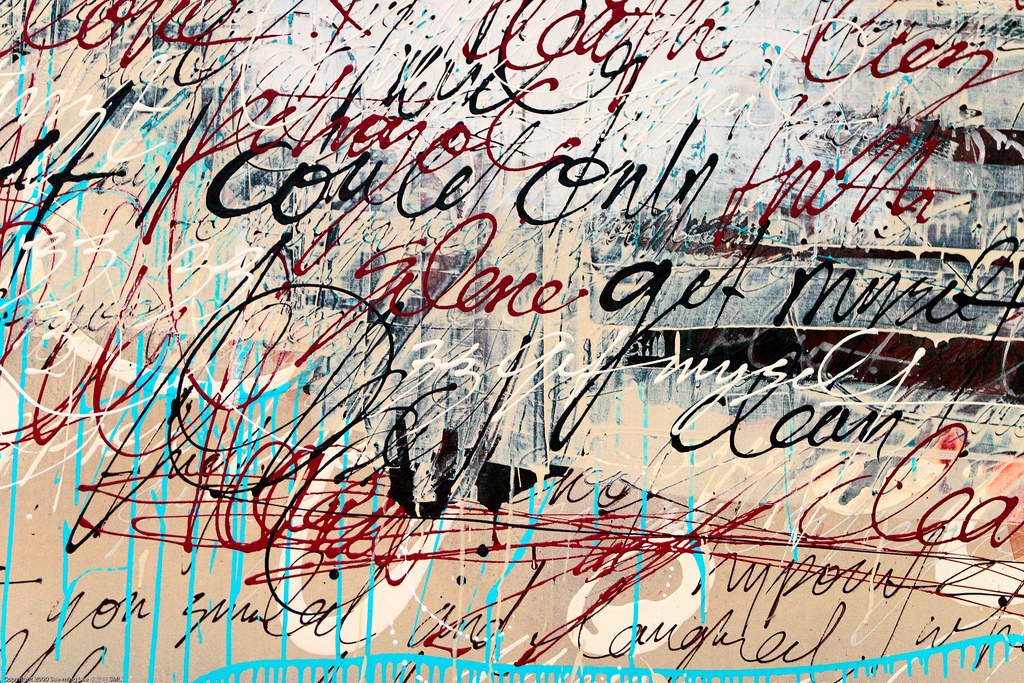
Photo credits: See-ming Lee (header banner), Helen Rosner (headshot)

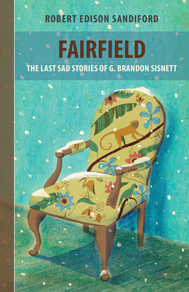
 Robert Edison Sandiford is the author of nine books, most recently Fairfield: The Last Sad Stories of G. Brandon Sisnett. He is the founder, with the poet Linda M. Deane, of the cultural forum