Tag: therapy

  • Creating Community with Disabled Writers—By seeley quest

    Creating Community with Disabled Writers—By seeley quest

    Now is a time to gather disabled writers and our allies in direct community together. Writing practice shared in company among disabled people expands our consideration of how embodied variations inform our writing perspectives, and how our writing helps us understand embodiment. Whether virtually through videoconferencing or in person, I am keen to encourage events specifically centering disabled writers.

    Bodies and minds are linked; psychological and other cognitive differences manifest through a brain’s interactions with its bodily systems, so all of our experiences are fundamentally embodied. Our unique body-minds are what our writing comes through; let’s celebrate how the written word can share our particularities with the world.

    Writing practices that occur when we’re solitary can be powerful and necessary lifelines. Many people, disabled or not, get satisfaction and relief from journaling, “morning pages,” and other forms of writing for themselves; sometimes there’s no need to connect output to a larger community.

    Yet, sharing creative writing via virtual platforms can be particularly important to people who have less access to public spaces physically or cognitively. Familiar with social isolation, linking ourselves through correspondence helps sustain us. When health conditions permit them, more in-person gatherings are also valuable to grow the collective body of our writing work.

    Part of my agenda is to uplift disabled writers who are sharing work in public events and productions. The essay “My Arrival at Crip” makes excellent observations on becoming attentive to the presence and impact of disabled, chronically ill, and Deaf writers assembling in civic spaces. For writers with a newer relationship to disability, it’s especially profound to learn how poets who are “out” as disabled can change the political possibilities for everyone. Public notions of “ableness” are shifting, as living conditions shift during the pandemic, challenging our mental and physical health. The legacies of fierce “out” writers can offer guidance.

    Language is fundamental to how we conceptualize disability. Word choices undermine or reinforce associations that valorize hyper-ability, and have consequences. We have the option of using more neutral vocabulary instead of terms freighted by stigma like “handicapped” or “deficient.” “Atypical” is one option, and “atypique” in French is emerging as a descriptor chosen by the disabled community in Quebec. For more on how to shift from oppressive choices, there are great resources like this one: https://www.autistichoya.com/p/ableist-words-and-terms-to-avoid.html.

    Our work may get special attention in the frame of “disability arts” or “disability aesthetics,” a category for funding support. However, defining such writing as separate from and more worthy of recognition than art therapy, stream-of-consciousness writing, or fan fiction by disabled authors doesn’t serve the whole. Our future lies away from capitalist divisions. We must embrace arts practices associated with therapy. The need for therapeutic pursuits and for accessible arts engagement will grow. In workshopping and community spaces, I invite those with different experience levels of writing. Whether we are neurodiverse, are experiencing new or episodic disabilities, or are a language and sensory minority like the Deaf: all our work has value. People who aren’t sure of applying the term “disability” to their experiences are welcome comrades too!

    When we don’t shy away, there’s so much to explore of what our body-minds might know in common: those considered able and typical, those that vary and diverge, writing both from individual experiences and in relationship to each other. Let our texts layer into expanding knowledge to enrich the entire writers’ community.
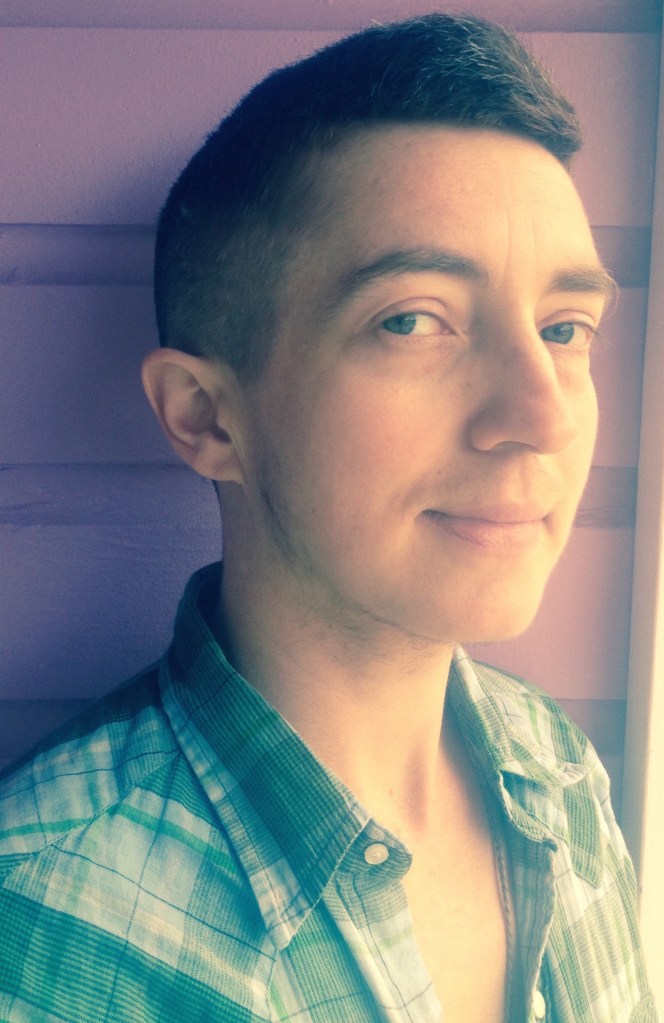

    Photo credit: Coral Feigin

    seeley quest is a trans disabled writer, organizer, and environmentalist, in Montreal since 2017. Sie has made literary and body-based performance since 2001, and presented in Vancouver, Toronto, Ottawa, and many U.S. cities. Sie has poems in the book Disability Culture and Community Performance: Find a Strange and Twisted Shape, and in Fiction International. Hir playscript Crooked will be published in September in At the Intersection of Disability and Drama: A Critical Anthology of New Plays. Recent appearances include reading at le Salon du livre de Montréal and leading workshops with QPIRG-McGill, articule, and Head and Hands. Not on social media, sie email connects with comrades: find more at https://questletters.substack.com.

    Look for an announcement soon about new plans in 2021 for seeley’s QWF workshop; visit https://qwf.org/activity/poetry-and-prose-writing-from-the-body-mind.

  • ‘Been good, time to be bad’ by Richard Andrews

    ‘Been good, time to be bad’ by Richard Andrews

    Divorce, surviving a mass shooting, discovery of cancer at 24, and a walk on the wild side in California. Students enrolled in my Magazine Writing course often want to learn more than catchy leads, pitching stories, dealing with grumpy editors, and the Inverted Pyramid. They’re turning to writing as a form of therapy, closure, or a way to chart a life transition.

    Many participants are going through divorce, coming out, bored with their jobs, looking for purpose, or seeking validation of unconventional choices. Passive voice does not come up as a writing issue in these cases.

    One of our warm-up exercises is a version of that job-interview chestnut: Describe a difficult situation. How did you respond? What did you learn? However, the answers are rarely what you’d expect in an interview.

    When I first tried that exercise, I thought a failed recipe or a forgotten anniversary would be the limit of a student’s openness to a room full of strangers. But it turns out that the process of writing somehow gives people the license to share their most intimate feelings and personal experiences.

    “They’re turning to writing as a form of therapy, closure, or a way to chart a life transition.”

    In her piece, Camille* wrote the most moving opening line I’ve ever read: “Mom, I have fucking cancer. I’m a jobless, degreeless, broke 24-year-old that’s going nowhere in life.”

    Camille developed that lede into an article published by the Huffington Post, along with some of her unusual tips to other cancer survivors. Her responses to falling ill included throwing dishes,exploiting her boyfriend’s pity to get a Prince Charles Spaniel, and showing her scar to a club doorman to get in for free. “Go shopping, rock it with a Hermes scarf for your hair loss,” she advised. “And stay true to your emotions. Don’t cover them up.”

    Camille emailed me recently with the latest chapter of her life. Four years on she has things under control and is living happily with her boyfriend, a new baby, and the dog. Less happy was Ingrid, a survivor of the 2011 massacre by a right-wing extremist that left 77 Norwegians dead, including dozens of teenagers at a summer camp. Ingrid escaped death by hiding behind a boulder but left Norway for Canada to put distance between herself and the tragedy. Her writing revealed a young woman trying to deal with the apparent meaninglessness of life, after a horrific experience and the loss of friends.

    When she joined the class she wrote she was at Stage Five of Grieving (acceptance). However, I’m not sure how much meaning she finds in reports that the convicted shooter recently won a human rights case against the Norwegian government about his prison conditions. (He had previously complained that his PlayStation was outdated.)

    Nicole, on the other hand, had no illusions about the meaning of life: it was to blast her husband, who’d left for a younger woman. Despite gentle suggestions that other topics were worth writing about, Nicole shared reports each class about the weight gain and balding of her ex, plus the styling challenges of his mistress.

    Other class writings have included an account by one student who woke up at the minority end of a complex threesome after a wild party. Another wrote of baking hash brownies, forgetting them on the kitchen table, and coming home to find her peckish parents “stoned out of their tree.”

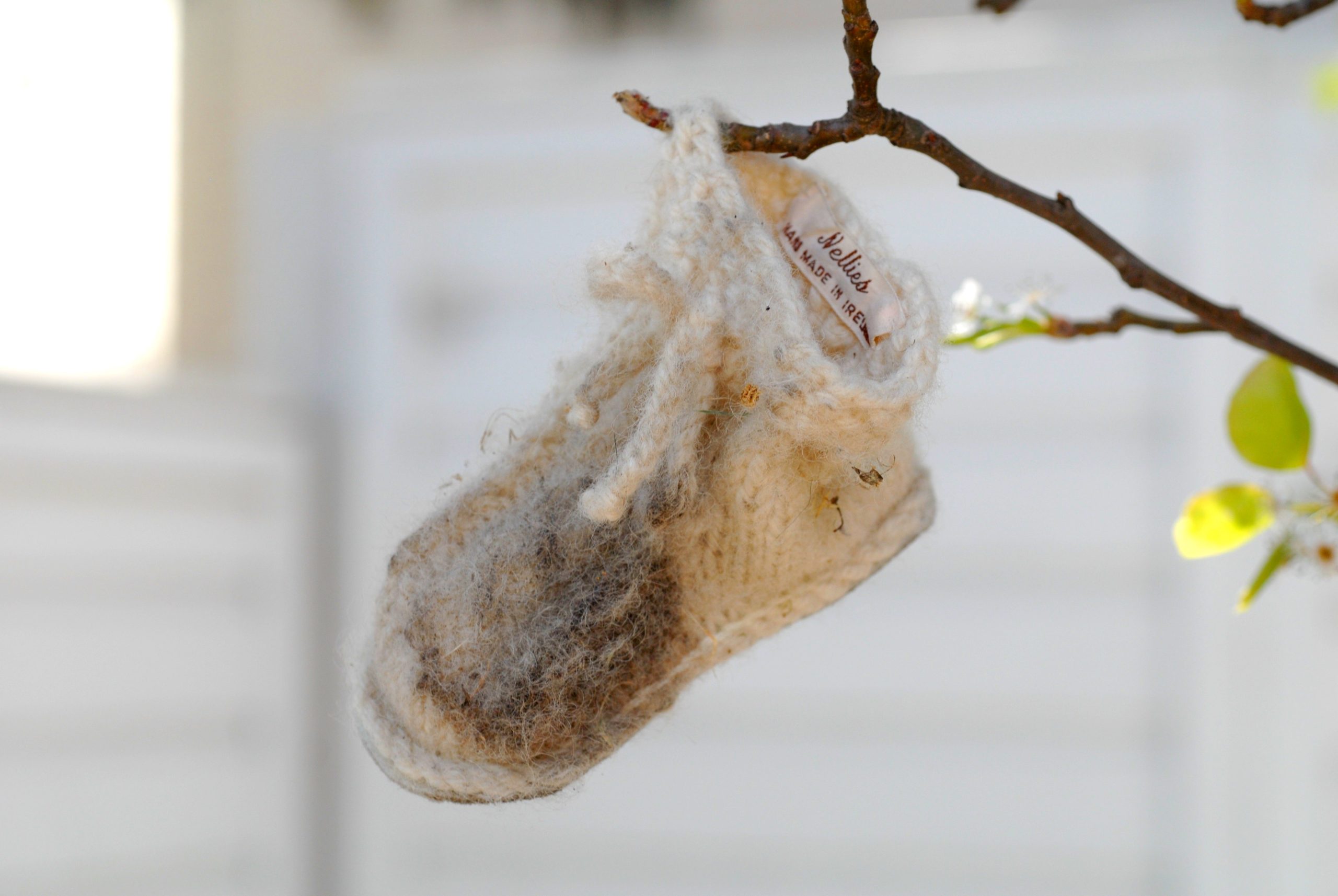
    Sometimes a class exercise changes lives, and here I credit Hemingway’s creation of the Six-Word Story. His ‘saddest short story in the world’ (For sale: baby shoes, never worn) reputedly won him a bar bet and spawned dozens of websites devoted to flash fiction.

    “For sale: baby shoes, never worn.”

    I use the Six-Word Autobiography as a variation on the original concept for an exercise on writing headings. It can produce some telling results when people try to summarize the main theme of their life into a bumper sticker.

    There’s regret (Found true love, married someone else), contentment (Painful nerd kid, happy nerd adult), the search for meaning (Tried it all, but still looking), or resignation (Turning into Mom without being one).

    Some months after the end of one course I received an email from Pamela saying the six-word exercise had made her sit down for the first time in years to think about what she was doing and where she was going.

    “When I saw what came out on the page, I decided to leave my life in Montreal and move to California,” she wrote, leaving most details to my imagination.

    Pamela, if you’re reading this, I hope you’re still writing. Please send me your latest chapter and let me know what happens when your story is:

    Been good, time to be bad.


    richard-seville

    Richard Andrews is a freelance journalist who teaches Magazine Writing at McGill Universityric_andrews@hotmail.com

    *All names have been changed

    Photo credit: FlickR

  • Healing, One Story at a Time by Licia Canton

    Healing, One Story at a Time by Licia Canton

    In 2012, a driver pulled up behind me while I was putting a box in the trunk of my car. He crushed my legs between the two bumpers. I was bedridden for four months, and then I started physiotherapy. Within a year I was able to do 95 percent of the activities I had done before the accident. People would ask me how my legs were doing and I would smile and tell them I was doing well. I was, physically—but I didn’t tell them that I wasn’t able to write.

    I wasn’t able to write for clients, organize events or attend networking functions. I didn’t think any of it was worth it. I had lost my drive. In fact, I had lost my desire to do anything at all. A few weeks after the accident, I had looked at the positive side of things: I had decided to finish my second book of stories; I was going to write on my laptop while in bed. But that never happened.

    My insurance agent suggested that I see a therapist. I would only be able to move forward by dealing with the trauma. I decided to try it, and I discovered that writing itself was what would cure my writing block. It’s called narrative therapy, and it changed my perspective on life.

    Vera, my therapist, asked me to do exercises in automatic writing. I had to just put words on the page without thinking about what I was writing. Then she said that I had to write about the accident in order to regain my confidence. At first, this seemed like an impossible task. If I could write, why would I be there? I could talk about the accident during therapy, but I couldn’t write about it. I didn’t want to write about it.

    Eventually, I wrote a story about a writer who was unable to write about a traumatic experience. It took me many months to be able to do that. I could not sit for longer than five minutes at a time. I worked at it early in the morning when everyone was still asleep, when I was least likely to be interrupted—and when no one would see me crying.

    As part of the therapy, I was obliged to read that first story “Because of Leonard Cohen” at every therapy session until I could read it without crying. That accomplishment was priceless. Then, the therapist asked me to read the story at a public venue as I would have done with any of my other stories. But I couldn’t fathom the thought of sharing my very personal writing in public. I come from a background where broken bones get fixed and as for the rest, we simply move on. Everyone knew that I had been in an accident. Very few people knew about the ensuing depression. It was not a topic of discussion.

    “I could not sit for longer than five minutes at a time. I worked at it early in the morning when everyone was still asleep, when I was least likely to be interrupted—and when no one would see me crying.”

    I first read “Because of Leonard Cohen” abroad, at a short story conference where very few people knew me. The story was later published in the international short story anthology Unbraiding the Short Story, edited by Maurice A. Lee. Then, I wrote more, and more. I wrote and published other pieces inspired by my accident, “In Front of the Bell Centre” and “The Woman in the Red Coat.” And I still haven’t finished writing all of the stories that I need to, and want to, write. I have a Table of Contents with the titles of all the stories that I am working on, all part of my narrative therapy. With the completion of each new story, the process is the same. I ask for feedback from several writer friends. I read it repeatedly in private until I feel completely comfortable with it. I read it to my husband and children. Then, I read it in public either before or after it is published. Now, I preface the readings by saying that the story came out of narrative therapy.

    Vera told me about Raymond Queneau’s Exercices de style (1947), a collection of ninety-nine retellings of the same story, each in a different style. Although I am no longer in therapy, I continue working on my own version of Queneau’s book: multiple literary variations of my accident and its aftermath. Just as I was not thrilled about physiotherapy and osteopathy, I am not exactly fond of this literary project—mostly because I have had to postpone other writing projects. On a positive note, however, narrative therapy has encouraged me to go beyond my comfort zone by doing other activities connected to writing that I would not have done a few years ago: guest blogging, giving workshops, mentoring other writers, writing/speaking about depression and narrative therapy, and actively seeking venues to read the writing that has come out of narrative therapy.

    I still cry every time I tackle a new story, but I always feel a great satisfaction when I share it in public. It is part of the process that moves me towards complete healing, as is this piece that you’re reading right now. In fact, I prepared my pitch for this column two years ago. I just wasn’t ready to share my experience then.


    headshotLicia Canton is the author of the short story collection Almond Wine and Fertility (2008), published in Italy as Vino alla mandorla e fertilità (2015). She is also a literary translator and founding editor-in-chief of Accenti Magazine. She has published personal and critical essays and edited nine books. She mentors emerging writers, journalists, and editors. She holds a Ph.D. from Université de Montréal and a Master’s from McGill University. See her profile in LinkedIn or the Hire A Writer directory.

    Photos: Flickr (top); Ohayon (headshot)