Tag: tragedy

  • From Tragedy to a Book—By Catherine McKenzie

    From Tragedy to a Book—By Catherine McKenzie

    I’ve always thought of writers as magpies—we’re known for thievery, and that’s often what we do. We steal little parts of life, sometimes from our own experiences, but often from other people. A conversation overheard in a restaurant. A fight observed in the street. A line of dialogue said by a friend. We’re always collecting, gathering, storing so that we can use what we’ve gathered later, at the appropriate time. Sometimes the connection in the finished work is obvious and sometimes more tenuous, but if you know where to look it’s there.

    This happened to me in a direct way a year and a half ago when my brother-in-law’s mother was suddenly diagnosed with brain cancer and given six weeks to live. The whole family was shocked and saddened, me included. We’d all spent a lot of time together over the years, and she was a vibrant woman in her late sixties who seemed to have boundless energy. How could she be gone so fast?

    As I watched this real-life tragedy play out, my writer’s brain started cataloguing things and asking myself questions. For instance: faced with the same stark deadline, would I spend time going through my things and giving them away? Or would I speed away to a beach somewhere and leave the sifting to others? Would I make a general announcement on social media or through email, or leave it as a family secret that would come as a shock to many once the inevitable happened? Would I try to investigate how this had happened to me—what had been missed, how had it progressed so quickly—or put down my questioning brain and let it all go? And most importantly, was six weeks enough time to leave the world at peace, or was that impossible?

    This is what it’s like to be a writer! Or at least, this writer. In all of these questions, an idea formed. I write suspense, so what was the suspense twist to this premise—a woman given six weeks to live? I researched glioblastoma and found that in some cases, it might be linked to exposure to certain toxins. Aha! Maybe this woman—this theoretical woman, not the sweet woman I knew—had been exposed to a toxin. And maybe this exposure had been on purpose. Maybe someone wanted to get rid of her and they’d tried to poison her? But the poisoning hadn’t worked and here she was, a year later, with an unintended consequence? Interesting, interesting. The idea was sticky—it stayed with me—but, to be honest, it scared me. Was spinning a book out of something so close to me wrong? Was it the right way to honor her? I struggled with that.

    But I also had to propose some book ideas to my new editor. I had two—another idea that I’d been thinking of for longer that was more fleshed out, and SIX WEEKS TO LIVE. I sent them off, and soon I heard back. Oddly, another one my editor’s writers had a similar idea to my “other idea” and she’d already approved that. But she was intrigued by Six Weeks. Write that one, she said. So, I started to. Nervously. I came up with the plot—a woman trying to solve her own murder before she passed away. I added suspects to her life—a soon-to-be ex-husband, her adult daughters. I made sure to make my main character as different from the real woman as possible. In fact, by the time the manuscript was done, the only similarity between them was the diagnosis. But the book was for her. Because of her. I wanted to honor that. I dedicated the book to her, and I let my brother-in-law know what the book was about. He was gracious—as he always is—but part of me still wonders if he’s truly okay with it. 

    But this is what writers do. We’re magpies. We steal things. Hopefully what we give back is enough compensation.


    Catherine McKenzie was born and raised in Montreal, Canada. A graduate of McGill in History and Law, Catherine practiced law for twenty years before leaving the practice to write full time. An avid runner, skier and tennis player, she’s the author of numerous bestsellers including Hidden, Fractured, The Good Liar, and I’ll Never Tell. Her works have been translated into multiple languages and The Good Liar, You Can’t Catch Me and I’ll Never Tell have all been optioned for development into television series.

    Visit her online at www.catherinemckenzie.com, on Facebook at http://www.facebook.com/catherinemckenzieauthor, on Instagram at @CatherineMcKenzieAuthor and on Twitter @CEMckenzie1

    Six Weeks to Live publishes April 20, 2021 in Canada. Join Catherine for the Canadian launch! Event Link: https://www.facebook.com/events/276347913828110

    Photo credit: Jyrki Salmi (header banner)

  • Writing Tragedy by Jack Todd

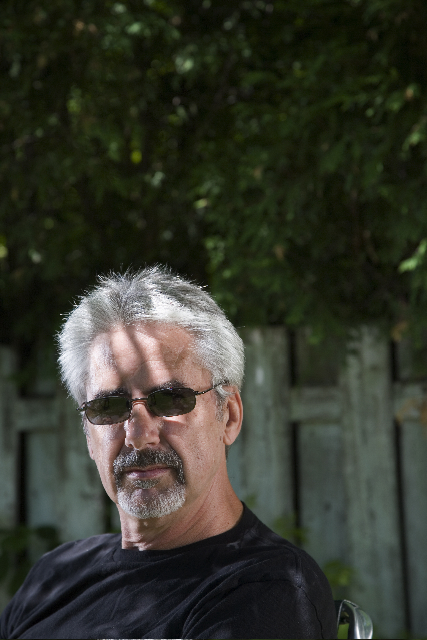
    Writing Tragedy by Jack Todd

    In any life, there are events that shake us to the core. Some occur when we are very young, and they remain the reach of memory. Others persist in detail so heightened that it verges on the surreal, as if painted onto our retinas by a Salvador Dalí employing a tiny brush.

    When I was eighteen months old, I was trampled by a boar hog with tusks. He ripped my head open, left a deep dent in my skull and nearly took out my left eye. Had my father not been able to kick the five-hundred pound beast away just in time, he would have eaten me for breakfast.

    I have no recollection of the event whatsoever, except what I was told by my parents, and the occasional nightmare, in which hogs are rooting around in my bed.

    More than forty years later, I stood in the season’s first snowfall on the slopes of Mount Royal, witness to the surreal aftermath of the massacre at the École Polytechnique. As city columnist for The Gazette and one of the first journalists to arrive on the scene, it was my job to write something coherent about an event so overwhelming that even then, I understood that there was a truth about it that would lie forever beyond language.

    Those two incidents represent the poles of my writing life. One is not recalled at all, the other remembered in hallucinatory detail. One is intensely private, the other entirely public. The only thing the private near-tragedy and the public tragedy have in common is that I have found them both extraordinarily difficult to write.

    In one form or another, I have attempted to get that boar attack into satisfactory prose for decades; most recently, it appears as a chapter in a new novel called Rose & Poe. It was a pivotal event in my family because my mother never forgave my father for letting me get into that corral. She was laid up with a broken leg and he was supposed to be watching me, but he was distracted by a horse he was working, and my near-fatal injury became the focal point for her intense hostility toward the feckless man she married.


    “… it was my job to write something coherent about an event so overwhelming that even then, I understood that there was a truth about it that would lie forever beyond language.”


    This is, or should be, the stuff of fiction. On the other hand, the difficulty with my endless attempts to write the story of the Polytechnique massacre is that the tragedy is so unequivocally real. Above all, every time I try to write it, there is a sense of duty to the fourteen women who were slain that day, a need to live up to their memory – and a perpetual sense of failure in meeting that task, which carried through to my recently completed 25th anniversary piece for The Gazette.

    The writer’s role in these public tragedies is particularly important in our age of disposable grief. As public tragedies are endlessly invoked, they lose their power to shock and, eventually, their ability to arouse any genuine emotional response whatsoever. Think of the crumbling towers of the World Trade Center, and the gap between our reaction today and during those first horrible hours on September 11, 2001 when we watched it unfold on our television screens.

    As an event is trotted out again and again on television, accompanied by the sententious tones of the talking heads who tell us how to feel – and when we are expected to stop feeling, meaning as soon as the next tragic event crowds itself into the news cycle – the repetition drains it of its emotional charge. The result is a pro forma response, accompanied by the public expectation that we behave in a certain manner: buy a poppy, express again the shock, horror and outrage, take part in public displays of grief that have been hijacked as photo ops by politicians – and move on.

    Given sufficient talent, persistence and compassion, a writer ought to be able to get behind all that, or, at least, to work at a tangent to the prevailing winds in order to tap into an authentic well of emotion and to provide new insight

    “The writer’s role in these public tragedies is particularly important in our age of disposable grief.”

    That is easier said than done. We have many potential responses to catastrophic events. Silence, even for writers, is one. There is something noble about remaining silent in the face of the most deplorable events – except that when you are a professional writer, the only way to avoid writing about them entirely is to walk away from your career. If you choose to write you will have to accept that you will always fall short, that you will come up against the boundaries of talent and perception, that you will always feel some more profound truth lies just beyond your grasp.

    Our aspirations, the stories we imagine that we will write, are always greater than the result. When the story we are trying to get at is not one of great import, we can shrug and move on. After all, even the most deceptively simple narratives are fraught with pitfalls and opportunities to founder. When the occasion is one of those iconic moments that shape our age, especially when the core of the experience is profoundly tragic, the inadequacy of mere words is inevitably more painful to a writer struggling to live up to the demands of the craft.

    Ultimately, to struggle and fail when the stakes are higher imposes a greater burden – but it is one we have to accept if we are to write at all. And with each new failure, you tell yourself the same thing:

    Next time, I’ll get it right.


    Jack Todd is a native Nebraskan whose flight to Montreal during the Vietnam War is the subject of his QWF prize-winning memoir, The Taste of Metal. Todd has been a columnist for The Gazette for the past twenty-five years and has also published three novels.