Tag: truth

  • Pushing Past the Fear of Writing Nonfiction—By Chanel M. Sutherland

    Pushing Past the Fear of Writing Nonfiction—By Chanel M. Sutherland

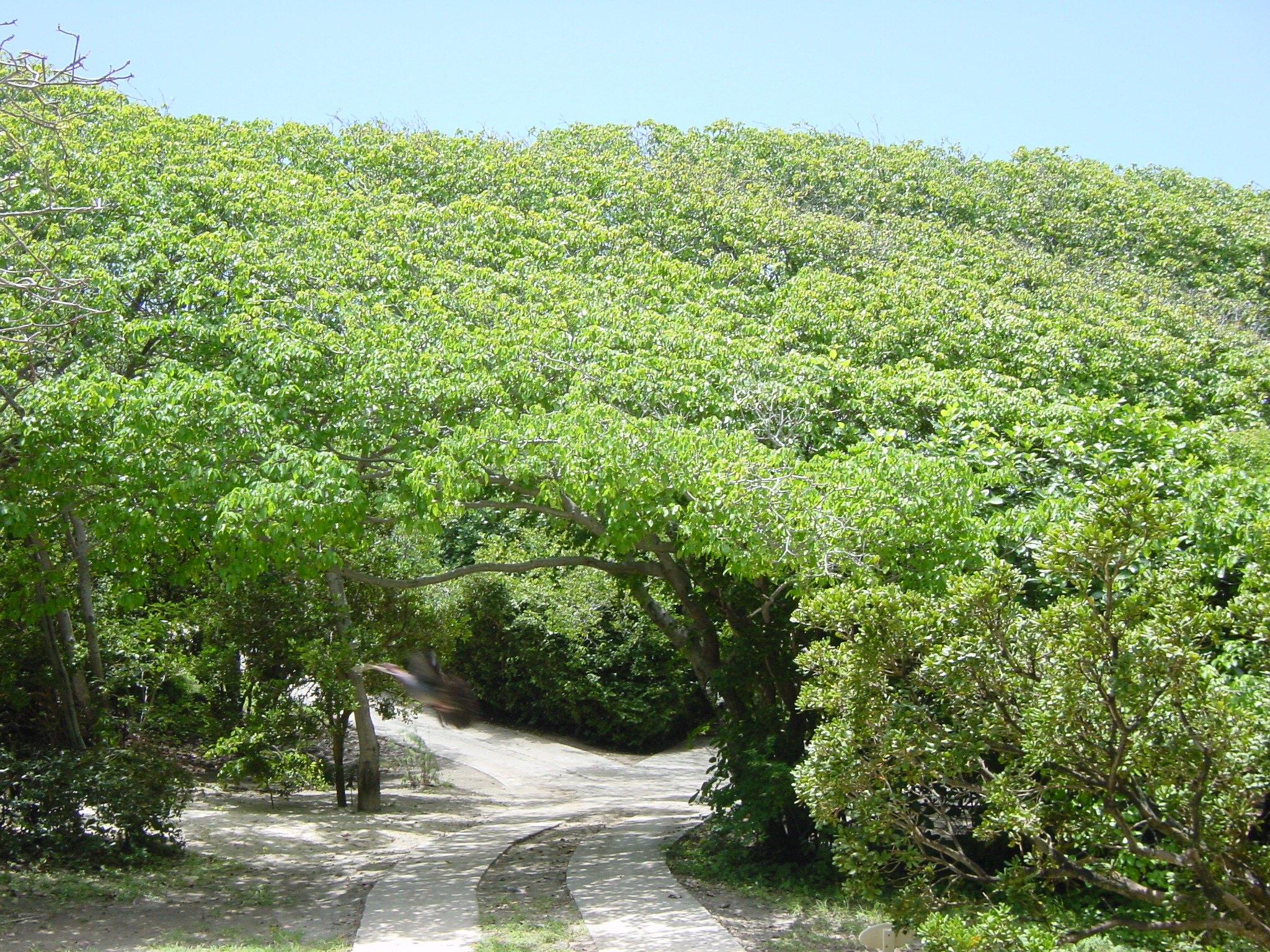
    The trees of St. Vincent and the Grenadines.


    If I’m being completely honest, writing nonfiction terrifies me. 

    But recently, I’ve felt compelled to write the truth.

    To write the stories that have shaped the trajectory of my life and—as if that wasn’t enough—have lodged themselves into my creative conscience, demanding to be told at all costs.

    It started with a single story, “Umbrella,” that I wrote out of pure exigency two years ago. 2020 was a heavy year for many reasons. The world became saturated with personal stories and confessions. Everywhere I turned—social media sites, the news, books, conversations with friends—people spoke out about their experiences with various kinds of discrimination and violence. 

    Suddenly, I found myself confronted by my own memories. They rose out of the trenches of my mind like shadows growing bolder in my darkest hours. They wanted to be written.

    Before, if you had asked anyone who knew me as a writer, they would have told you that my stories mainly deal with the unreal or unproven: futuristic robots, aliens walking around in human skin, scarecrows climbing down from their perch to seek revenge on those who impinge on their domains. This is the realm of storytelling where I feel most at home. One can argue that I write these stories to stay detached from real life.

    I had spent more than two decades circumnavigating my memories and deferring the day when I’d have to finally write about them. When they began to emerge unprompted, I knew my time had come. For the first time in a long while, I found myself turning away from speculative fiction to write something that made me uncomfortable. Nonfiction.

    “Umbrella” is the second nonfiction story I have ever written and the only piece I have shared with readers. Perhaps it is short and breathy for that reason. A panic attack on paper. When it won the 2021 CBC Nonfiction Prize, not only was I surprised, I was frantic. 

    Was I ready to expose myself in this way?

    The simple answer was no, but I’ve since learned that nothing is ever simple when it comes to writing. If it were, it would hardly be worth it.

    It became clear that nonfiction had chosen me, and I had no choice but to take the plunge and see it through. Once I decided to start curating a collection of stories based on my experience as a Black Caribbean immigrant child, I faced another difficult question.

    How much can I reveal about others in my stories?

    In this case, the “others” were primarily my family, and without their support, I knew that I would not be able to write the collection. There were no stories without them. My mother was the catalyst for many integral moments in my childhood. My grandparents the glue that fixed the pieces together in many ways—however imperfect. 

    I’ve always been a solitary writer. I prefer to be completely isolated when writing, and I usually avoid discussing any story until it is completed. With these stories, I knew there were people I needed to speak to and include from the start. 

    Not only was nonfiction changing my craft, but it was also now impeding on my process.

    Having that first conversation with my mom was one of the greatest moments we have shared. It was a warm autumn day; mom and I were meeting up for our weekly walk around the neighbourhood. I don’t recall how I broached the subject of writing the stories. Knowing myself, it would not have been direct.

    What I do remember is the excitement mom expressed in learning that I wanted to do this. She answered any questions I had, voluntarily filled in gaps in my recollection, and even offered to help with the research. Her reaction trickled down to my sisters and aunts, and before I knew it, everyone else was on board.

    I will forever cherish a messaging thread between mom, my sisters, aunts, and me. We were trying to remember the name of a tree native to St. Vincent and the Grenadines. We all knew it by a different name and had our own tales about it, but no one could figure out its one true name.

    This tree became the emblem of my nonfiction endeavor. A thing from my family’s collective past that—though still elusive—we are learning more about each day from one another. 

    As I continue to research and write these nonfiction stories, there is a certain sense of unshackling from the past. And while I begin to see who I am today refracting from each new piece, I am also illuminated by another light: that of my family. 

    So, maybe being terrified of writing nonfiction is not such a bad thing after all.


    Chanel M. Sutherland is the winner of the 2021 CBC Nonfiction Prize for her story “Umbrella” and the recipient of the 2022 Mairuth Sarsfield Mentorship, a component of the Quebec Writers’ Federation’s Fresh Pages initiative. Born in St. Vincent and the Grenadines, Chanel moved to Montreal, Quebec when she was ten years old. She holds a BA in English Literature from Concordia University, and is currently writing her first book, a collection of short stories that explore the Black Caribbean immigrant experience. csuther.com

    Photos: Lyn Gateley via flickr; Chanel M. Sutherland (headshot)

  • Tuesday, or Was It Wednesday?—by Joshua Levy

    Tuesday, or Was It Wednesday?—by Joshua Levy

    One Tuesday—or was it Wednesday? —I visited my parents.

    Written anything lately? asked my dad, during supper.

    I had. I fetched my laptop from my car and read a short story about my brother’s recent engagement to them while we ate.

    When I was done, my dad said it was very witty, great use of metaphor, but why hadn’t I told the truth, the whole truth, and nothing but the truth, so help me God?

    My dad’s a lawyer.

    But, I said, it really happened. You were there!

    I never said those things, said my mom. And I made butternut squash lasagna that day, not hummus or feta salad.

    I felt accused. You uttered extremely similar things, I said. I can’t remember exact dialogue. But you’re right about the butternut squash lasagna. I’ll change that.

    They looked at me sadly, my parents did.

    I don’t think Menachem was wearing a fanny pack that day, added my dad.

    The point, I said, is that the major facts are all true, if not the minor ones.

    My dad stood up and went to the freezer, bent down behind the kitchen island, and resurfaced holding a tub of Neapolitan ice cream.

    None for me, Ricky, said my mom.

    Josh? asked my dad.

    Sure, I said.

    “My dad said it was very witty, great use of metaphor, but why hadn’t I told the truth, the whole truth, and nothing but the truth, so help me God?”

    He opened a cabinet next to the sink and grabbed two ceramic bowls. Each had a different colourful made-up bird painted on it. Or were they real bird species? My parents had bought them a decade earlier in Nova Scotia, while visiting my sister at university. Mind you, it could have been New Brunswick where they bought the bowls….

    I wasn’t sure. The facts felt like slippery fish in my hands.

    If you’re going to write non-fiction, offered my dad, while running a spoon under hot water, it should be 100 percent true.

    I agree, said my mom. Don’t make anything up.

    But, I said, I’m not. Memories change colours and shapes under different conditions.

    Two scoops or three? asked my dad.

    Different what? asked my mom.

    Two, I said.

    Different what? repeated my mom.

    Conditions. Like the passage of time or evolving perspectives. That stuff.

    My mom said, ah, I don’t buy it.

    A fact’s a fact, Josh, said my dad, handing me an ice cream bowl.

    One, two. I count two scoops in your bowl, declared my mom.

    My dad nodded. That’s a fact, he said.

    I sighed. I didn’t disagree with my parents. Facts are vital and I wanted them all.

    But my story had been about shining a light on unverifiable, deeper truths: family relations, love, loneliness. Whether Menachem wore his fanny pack or not on that particular day was, in my opinion, such a minor fact that researching it could stifle the creative process.

    “Memories change colours and shapes under different conditions.”

    Another Tuesday—or was it Wednesday?—I visited my parents.

    Written anything lately? asked my dad, during supper.

    I had. I fetched my laptop from my car and read a factually bullet-proof story about Visiting Day during my first summer at sleepaway camp to them while we ate:

    On Visiting Day, my parents came with my younger brother, Daniel. They brought me a bag of Archie and Spider-Man comics and some candy. My sister, Samantha, was probably also there, since she was less than a year old at the time.

    The camp director made a speech to all parents and campers. The speech was almost certainly in English, since that was the only language he spoke. I think we then went to the waterfront and paddled in a canoe, but that could be a memory from the following summer.

    I don’t remember if it was a sunny or rainy day, but I do remember the emptiness I felt when Visiting Day ended.

    That’s a terrible story, said my dad.

    Embellish a little, said my mom.


    linkedinJoshua Levy splits his time between Montreal, Canada, and Lisbon, Portugal. He is grateful to the QWF for their support over the years and has participated in eight QWF writing workshops to improve his craft. Joshua is a winner of the 2010 QWF Quebec Writing Competition and was longlisted for the 2007 competition. He has had poetry published in Carte Blanche, told stories live at Blue Metropolis for This Really Happened, and written for QWF Writes. Joshua has been published by the Oxford University Press, Véhicule Press, Maisonneuve, Vallum, The Feathertale Review, The Rumpus, and The Malahat Review. He is a regular storyteller on CBC Radio and recently received a grant from the Canada Council for the Arts to write a memoir.
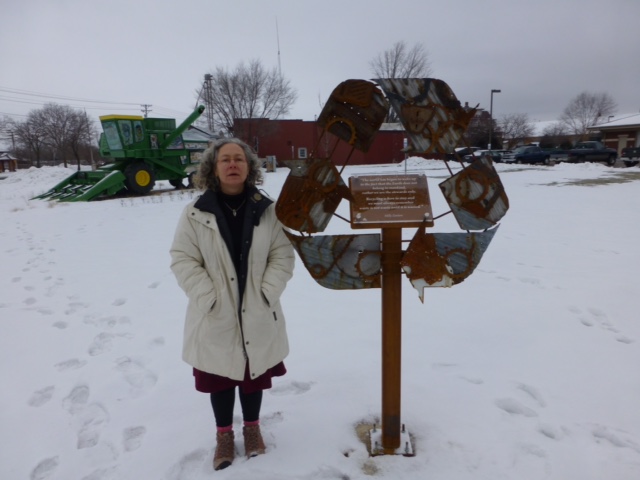
    Photo credit: Seth Sawyers (top banner); Steve Gerrard (headshot)

  • I Didn’t Want to Write This Book by Elise Moser

    I Didn’t Want to Write This Book by Elise Moser

    I didn’t want to write this book.

    I first heard Milly Zantow’s story in Sauk City, the small Wisconsin town where my sweetheart lives. Someone from the local historical society mentioned that the woman who invented the recycling symbol was from there.

    A woman did that!

    A woman from Sauk City!

    I figured everyone else in town must know this astounding fact. But no.

    I Googled her. I found a wonderful short video in which she explained how she kick-started plastics recycling in 1978, although the experts told her it couldn’t be done. I thought kids should know a woman did this.

    I tried to get someone else to do it.

    I ran into a Wisconsin publisher I knew and told her the story. “I don’t have an author to write it,” she said.

    I couldn’t do it. I’m a fiction writer. And I write for adults and teens, not kids.

    I talked about Milly to everyone I met, at dinners and parties and bookstores.

    Everyone agreed it was an amazing story, but no one wanted to take it on.

    Eventually I decided I’d better do it myself. I already knew the narrative; it would only take me a few months. Then I could get back to writing fiction.

    It took me three years. (That’s what happens when a fiction writer veers off into the wilds of non-fiction.)

    Milly bench med res

    I wrote a draft, but there were a few pesky details to clarify. I didn’t know if Milly was alive. I couldn’t find an obituary, but I couldn’t find contact info, either. I spent a week hunched over microfilm at the library, reading back issues of our small-town paper, the Sauk Prairie Star. I found a letter from Milly thanking the public for their support of the International Crane Foundation. There was a letter from Vietnamese boat people thanking Milly and her husband for sponsoring them so they could leave their overcrowded Arkansas refugee camp for a new life in Wisconsin. I found articles about the landfill where Milly sat one day and watched the trucks dump garbage—“plastic, plastic, every kind of plastic.” My mental picture of Milly was getting richer, but my story was also getting more confusing.

    “That’s what happens when a fiction writer veers off into the wilds of non-fiction.”

    Some articles said the landfill was full; others claimed toxins were leaching into the water table. The woman from the historical society had said that Milly invented the triangular recycling symbol, but Wikipedia said it was a guy from California. In the videotaped interview, Milly mentioned putting the numbers 1-7 inside the triangles on plastic goods, but gave no specifics. Who thought of the idea?

    Elise Milly Memorial
    Elise Moser

    I began to realize just how slippery facts were, and how the passage of time greased them further. People made mistakes, misunderstood things, left out the complicated parts. I’d written about this kind of thing in fiction, but it felt very different when I was trying to track down real facts and tell the real story of a real person—someone whose friends and neighbours might read it. I was used to being in control of the narrative (sort of). It’s so much easier to make stuff up!

    “I began to realize just how slippery facts were, and how the passage of time greased them further.”

    But research has its own satisfactions. I found someone who had worked with Milly thirty-five years ago, someone who knew that the landfill was leaching toxins and that it was too full. She also gave me a (totally unexpected and very useful) feminist perspective on the history of garbage and recycling.

    I knew that if Milly were alive she’d be very elderly. I couldn’t wait any longer to find her. In April 2014 I flew to Wisconsin.

    If necessary, I was prepared to cold-call all the Zantows in the phone book. But first I went to the local nursing home to visit a friend who was recuperating from a serious accident. Walking the corridor, I happened to glance over, and there I saw it: Mildred Zantow. I knocked, and she graciously invited me in to talk, even though she had just been given the news that her brain cancer had gotten worse.

    I asked her my questions, but as she answered, I began to realize that the things that were important to her about her experiences were not necessarily the things I thought I needed to know for my account. Her story was not the same as my narrative.

    “I knocked, and she graciously invited me in to talk, even though she had just been given the news that her brain cancer had gotten worse.”

    The following year I had the privilege of interviewing two of Milly’s sons. I mentioned that I’d met her in the nursing home, and they asked me when. I told them, and there on the screened porch in Sauk, Jim and Todd looked at each other.

    “That was probably her last lucid day,” Jim said.

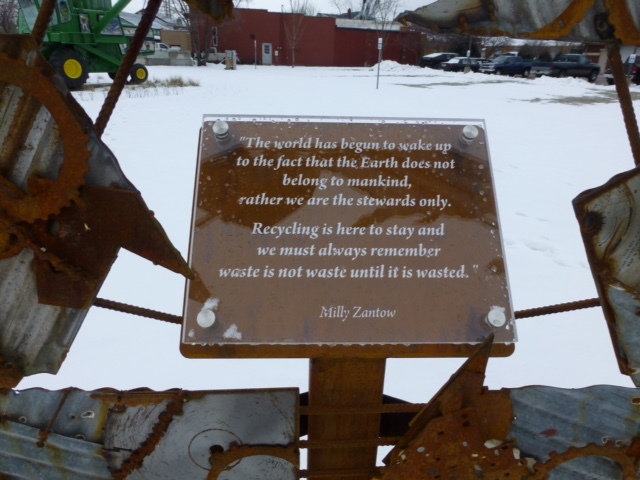
    Milly plaque

    Since I started this book, things I’d confirmed have changed. In three years, technologies for recycling or replacing plastics have advanced. The environmental impact of plastic pollution has intensified, as has research on the subject. The information available on the history of recycling has improved; more than once during the process of editing I had to change wording or go back and re-research to be sure that what the book said was as true as we could know it to be.

    Now that the book is printed, I’ve been telling people about it. The sporting goods manager at the local hardware store/agricultural machinery dealership, where there is a little book display next to the hunting supplies, remembers Milly. “Thank you for doing this,” he said.

    Ironically, it’s easier to write fiction that is true, and that will always be true, than it is to write non-fiction. Fiction only has to express a truth; it can do that by any means, whereas non-fiction is expected to tell the literal, verifiable truth about the material world, and as we all know, there is nothing constant in the material world but change.

    Another thing that’s changed: I’m so glad I wrote this book!


    Author Photo 1

    Elise Moser is the happy author of What Milly Did: The Remarkable Pioneer of Plastics Recycling (2016), Lily and Taylor (2013), both from Groundwood Books, and Because I Have Loved and Hidden It (2009), published by Cormorant Books. She has published short stories, edited anthologies, and led short story workshops and mentored for the QWF. She serves on the board of PEN Canada and is an associate editor with Linda Leith Publishing.

    Photo credits: Fred Lauing (headshot; photo of Elise Moser next to the Milly memorial), Elise Moser (the other two)