Tag: work-life balance

  • The Importance of Being Silent—By John Arthur Sweet

    The Importance of Being Silent—By John Arthur Sweet

    A DIALOGUE. Persons: John Arthur and Pal.

    Scene: A deck in Hochelaga-Maisonneuve, one summer day.

    JOHN ARTHUR: Would you like some more kombucha? No? … Hey, I’ve got a little story for you. A while ago, I submitted one of my monologues to a theatre festival where I was hoping to perform it. The comment I got back from the Artistic Director was that the show had too few words in it, relative to the show’s length. He estimated, based on the word count, that the show should take thirty-five minutes, but I’d indicated that it takes sixty minutes in performance, and he said that twenty-five minutes of non-verbal action is too much. Can you believe that?

    PAL: Well, yeah. I mean, people are busy these days. If you give them silence, they’ll just start checking their phones. How many words was it, anyway?

    JOHN ARTHUR: According to the appropriately named Word, it was 4,522.

    PAL: So, that’s a lot of words. Get them out, and let your audience get on their way. Don’t be precious! Everyone has their story to tell, opinions to deliver. But you don’t need to milk it. Get your message across, and then make room for others.

    JOHN ARTHUR: But … First of all, I’m not delivering opinions. It’s a piece of theatre.

    PAL: That’s fine, but there’s a point to it, I imagine. You just need to make your point without dragging things out.

    JOHN ARTHUR: Why does everyone assume that everything has to have a point?

    PAL: You’re a writer, yeah? So when you sit down to write, you must have some point you want to get across.

    JOHN ARTHUR: I have something to communicate, yes. But it’s not necessarily a “point,” as you call it. I’m not a journalist.

    PAL: Okay, let’s say you have an imaginative notion—how’s that?—an imaginative notion to transmit. So, in the monologue you were just telling me about, you had—what was it?—4,522 words by which to transmit that notion. That’s a lot of words! There’s no need to then drag it out—

    JOHN ARTHUR: If you say “drag it out” one more time! Anyway, all this “dragging out,” as you call it, is what is otherwise known as Life.

    PAL: Oh no, please, don’t get all metaphysical on me, it’s ten o’clock in the morning. What I’m saying is, words have meanings. You’re a writer, so express your meaning in words and then leave it at that, don’t dr—

    JOHN ARTHUR: Oh no, stop! Words, words, words!! It’s not all about the words. There’s another way of looking at this. Look, if that artistic director is right, and my monologue features twenty-five minutes where I’m not speaking, then that means a group of people who mostly don’t know one another are sitting in a darkened room together in quasi-silence for twenty-five minutes. When else does that ever happen?

    [Silence.]

    PAL: Look, I’m sorry that guy didn’t want your show. But I don’t really understand what point you’re making here.

    JOHN ARTHUR: The point I’m making, since you’re so fond of “points,” is that we’re drowning in words. As a society, we are gasping for air, desperately thrashing around for a glimpse of the sun as we go under, dragged down beneath a tidal wave of words. Listen, back in about 1999, an editor I worked with raised tired eyes from her computer screen one afternoon and said to me wryly, “I’ve just been dealing with my e-mails. God help us, there is not a thought these days that is allowed to go unexpressed!” That was twenty years ago she said that, and all we were dealing with then was e-mail. Now it’s social media, smartphones, apps, and they’re all talking to us all the time, in words. We have words coming out of our mouths and entering our ears, we’ve got earbuds stuck in our ears to replace some words with other words, we’re writing like mad in the virtual world, tweets, posts, blogs, vlogs. Everybody’s a writer! We’ve got words seeping out of our—

    PAL: Don’t be vulgar.

    JOHN ARTHUR: No, but honestly, how many more words do we need?

    PAL: Right! So don’t do your show at all. That’s 4,522 fewer words in the world.

    JOHN ARTHUR: But I’m a writer-performer! And also an editor. I live by words.

    PAL: Sweetie, you’re getting all worked up and not making any sense. So you’re a writer and you want to make words. But, you insist, there are too many words in the world. So what can I do to help you? You seem to be at an impasse. Would you like some lemonade?

    JOHN ARTHUR: I guess what I’m asking is, are we simply aiming to cram as many words into our lives—into the available time, be it sixty minutes or sixty years—as possible? Or does silence (or, at the very least, word-free time) have a place? I just think that maybe, in 2020, one should have an opinion about this—especially if one is a writer. As writers, maybe we have a responsibility to write less and better, and even to think sometimes about what maybe doesn’t need to be expressed in words. What opinion or thought or observation can we just let sit, without formulating it in prose and then putting it out there? Do people really need to know that I thought Call Me By Your Name was a shitty film? Centuries ago, Saint John of the Cross wrote to a correspondent: “It was not from want of will that I have refrained from writing to you, for truly do I wish you all good; but because it seemed to me that enough has been said already to effect all that is needful, and that what is wanting is not writing or speaking—whereof ordinarily there is more than enough—but silence and work.”

    [Silence.]

    PAL: Um … did you just deliver a fairly lengthy quote from Saint John of the Cross?

    JOHN ARTHUR: I did.

    PAL: Do people even do that in real life?

    JOHN ARTHUR: No, but in literature they do.

    PAL: Okay … So, we’ll just sit with that, then, shall we?

    JOHN ARTHUR: Why not?

    [Silence, broken only by the bells of the church of Très-Saint-Nom-de-Jésus.]

    NOTE: This dialogue was inspired by the form used by Oscar Wilde in “The Critic as Artist.” It may or may not have actually taken place.
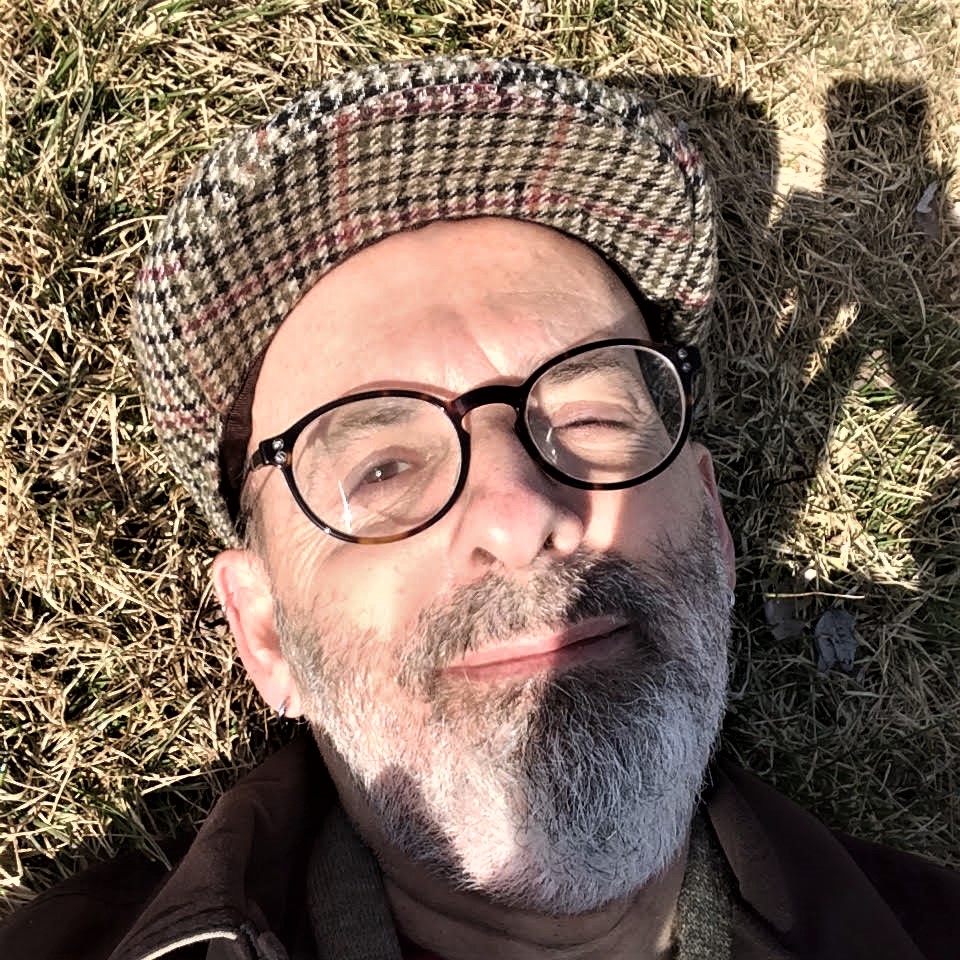

    John Arthur Sweet usually writes words that he expects to speak, as opposed to words he hopes others will read. In other words, he is a monologist and occasional spoken word poet. If we were living normal lives, he would currently be in England, performing at three theatre festivals. As it is, his last full-length show (Running to Saint Sebastian) was last year, at the Montreal Fringe, and before that, at the Prague Fringe (where he has performed four shows). He is a regular invited artist at Words and Music, most recently for a live-streaming edition in May. www.johnarthursweet.online

    Photo credits: John Arthur Sweet
  • A Body Divided—By Joe Bongiorno

    A Body Divided—By Joe Bongiorno

    In April 2020, we invited writers in Quebec to submit a story of a single day during the strange, uneasy time of coronavirus and pandemic, of social distancing and self isolation, of lockdown and quarantine.

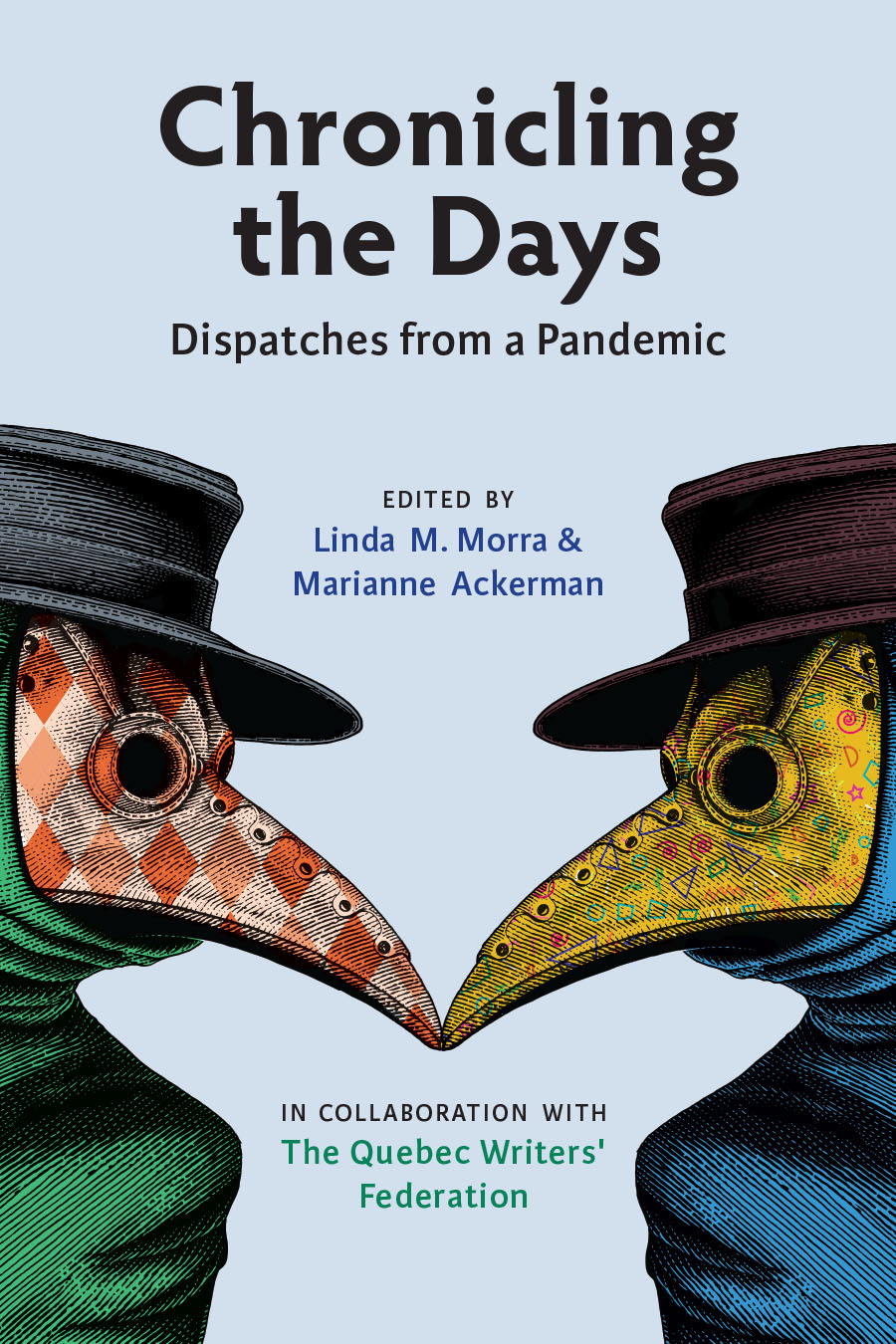
    We’re thrilled to announce that these stories have been gathered in Chronicling the Days: Dispatches from a Pandemic (Guernica Press). To learn more and buy the book, please visit https://www.guernicaeditions.com/title/9781771836579.

    Please also join us on the QWF FB Community page, and let the authors know if their words resonated.

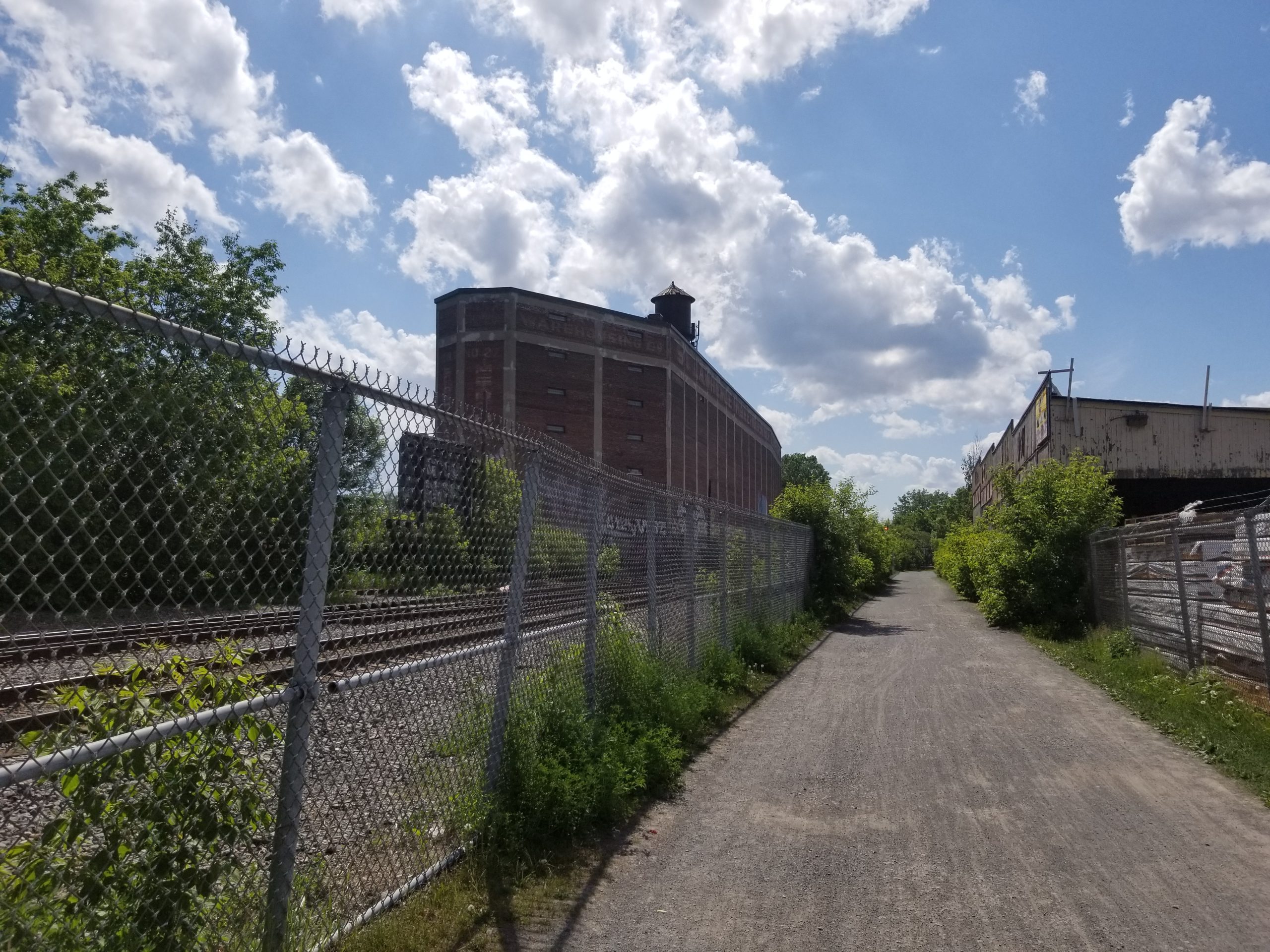
    I jog on the gravel path along the train tracks. I readjust my surgical mask and stray off into the grass to maintain a two-metre distance from a cyclist. My butt throbs. Pain gives way to numbness. Hamstring nerve pinched. I’m out of breath. My lungs open up to the cool air, fortunate to be left breathless by exercise and not COVID-19.

    To read the rest of the story, please support our community and check out Chronicling the Days: Dispatches from a Pandemic

  • Homeschooling in a Pandemic—By Greg Santos

    Homeschooling in a Pandemic—By Greg Santos

    In April 2020, we invited writers in Quebec to submit a story of a single day during the strange, uneasy time of coronavirus and pandemic, of social distancing and self isolation, of lockdown and quarantine.

    We’re thrilled to announce that these stories have been gathered in Chronicling the Days: Dispatches from a Pandemic (Guernica Press). To learn more and buy the book, please visit https://www.guernicaeditions.com/title/9781771836579.

    Please also join us on the QWF FB Community page, and let the authors know if their words resonated.

    “You’re used to homeschooling your kids. What’s your advice to other parents who are now in your shoes?”

    In a Zoom meeting recently, I was asked this question by an acquaintance. Taken aback, I found myself struggling for a good answer. I rambled something incoherent about how it’s different now during the global COVID-19 pandemic, but I couldn’t properly articulate my thoughts, which left me terribly frustrated. As I write this, I am still struggling to make sense of all of this.

    To read the rest of the story, please support our community and check out Chronicling the Days: Dispatches from a Pandemic

  • Busting the Myth of Work-Life Balance by Susan Olding

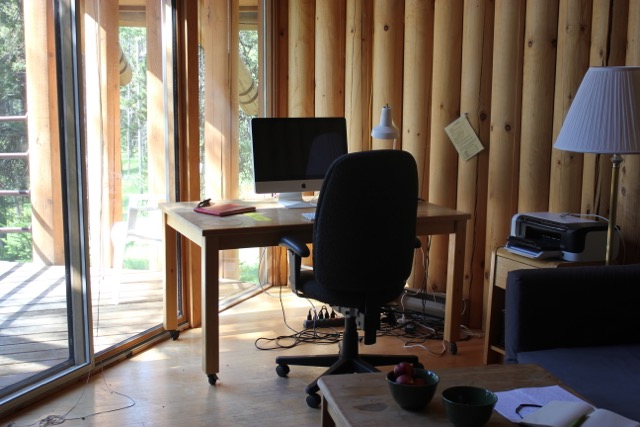
    Inside the Cardinal Studio, one of the Leighton Studios at Banff Centre for the Arts.

    About a year ago, I was invited to give a talk to some graduate students at Queen’s University about what was billed as “work-life balance.” Sure, I said. Why not? That should be easy.

    There was only one small problem. For me, “work-life balance” is an unattainable mirage. I am the farthest thing from an expert on the topic.

    The truth is, most of my days pass in a blur of immediate “to-dos.” And the hours that I so carefully set aside for creative work often go instead to the unanticipated trip to the doctor, the emergency phone call from the school or the rush-rush project for the paid job.

    I used to spend a lot of time feeling resentful, inadequate and guilty about that. Because other people seemed to combine their creative work with the rest of their lives successfully. Other people seemed to have some magical ability that allowed them to flourish in the face of constant interruptions and distractions.

    Except, when I questioned them, these paragons of multi-tasking all felt exactly the same as I did: weary, overwhelmed and vaguely at fault for failing to maintain their inner equilibrium in the face of multiple competing demands.

    “Other people seemed to have some magical ability that allowed them to flourish in the face of constant interruptions and distractions.”

    Those of us who don’t blame ourselves for this state of affairs sometimes blame the pace of contemporary life. After all, we’re all juggling numerous roles, and we’re all subject to the relentless beeps, pings and dings of our various devices. No wonder we feel beleaguered.

    But what if the problem is less about us, less about the world and more about our basic expectations? What if the language we use contributes to our sense of failure? What if the problem is the metaphor itself?

    What does “work-life balance” even mean?

    Imagine a seal, spinning a ball on its nose. Stop that insane momentum and the whole thing comes crashing down over its head.

    Is that how we want to construct ourselves – as performing circus animals? Is that how we want to conduct our writing lives?

    Consider other images of “balance” – say the scales of justice… or a teeter-totter. Load up one side and the other comes crashing to the ground. The whole apparatus seems so precarious! No wonder we feel so inadequate. No wonder we fear the possibility that something might shift.

    Yet shift it must. Change it must. For “balance” implies stasis – and stasis is antithetical to the creative life.

    What if, rather than “balance,” we spoke instead in terms of dynamic harmony, or cycles, or an ebb and flow? That way, we might not feel so guilty or inadequate whenever we had to give one role or another precedence in our lives for a period of time. Say the first few years of our son’s life, or the first few months of a new paid job, or the last few months of work on a novel, when nothing and nobody in the world matters so much as those characters, and we can barely pull ourselves away from our created world to face the real one.

    Thinking in terms of ebb and flow rather than “balance” has made it a little easier for me to give myself fully to whatever role is demanding most of me that moment – whether that be partner, wage-earner, teacher, parent, friend, writer.

    Outside the Cardinal Studio, one of the Leighton Studios at Banff Centre for the Arts.
    Outside the Cardinal Studio, one of the Leighton Studios at Banff Centre for the Arts.

    It has also helped me recognize the enormous value of writing retreats. I’ve been privileged to participate in several formal residencies, at places like the Banff Centre for the Arts, the Vermont Studio Center, Wintergreen Studios in Ontario and Sage Hill and Stegner House in Saskatchewan. Each of these provides a different kind of experience, but every one offers uninterrupted time and quiet – two of the most precious and hard-to-source ingredients for the creative stew.

    Of course, it’s fun to travel, exciting to stare out at different views and blissful to let somebody else do the shopping and cooking and cleaning for a change. But retreats don’t have to be formal or lengthy or costly to be valuable. In fact, some of my most memorable or useful retreats were short, cheap and close to home. Like the weekend I spent in an absent friend’s house powering through the final edits on an important manuscript. Or the day the rest of my family went to Toronto and left me digging in our back garden. In the process, I uncovered the seed of the next book.

    Alas, I never did manage to tell those Queen’s students anything helpful about “work-life balance.” Instead, I read them some poetry that I wrote while crouched on one side of the work-life teeter-totter. And dared to suggest that if we’re lucky, there’s no real dichotomy, and “balance” is beside the point. Work is part of life, not separate from life, and life means growth – and change.


    Susan Olding

    Susan Olding is the author of Pathologies: A Life in Essays, winner of the Creative Nonfiction Collective’s Readers’ Choice Award for 2010, and selected by 49th Shelf and Amazon.ca as one of 100 Canadian books to read in a lifetime. Her writing has won a National Magazine Award, two Edna Awards and many other honours. A graduate of UBC’s MFA program, she lives with her family in Kingston, Ontario. In the spring of 2016, she’ll facilitate a one-day workshop for the QWF called “Telling It Slant,” where she’ll share some strategies for adding depth and originality to your memoirs, personal essays and short fiction. You can find her at www.susanolding.com.

    Photo (top): Inside the Cardinal Studio, one of the Leighton Studios at Banff Centre for the Arts.