Tag: writing tips

  • What If Your Computer Listened to You?—By Mariam S. Pal

    What If Your Computer Listened to You?—By Mariam S. Pal

    “New line numeral one period space cap that the quick brown fox jumped over the lazy dog bold lazy dog exclamation mark.” My telephone rings. “Go to sleep,” I say to my computer, and the cute little green mic on its screen turns blue and shuts off. I answer my phone: “Hello?”

    It’s a typical day in my sunny second-floor home office. Headset on, I look like a faraway call-centre worker whose thankless task is to explain why your suitcase is in Montevideo. But I’m not calming cranky customers; I’m writing by dictation. I turned off my mic before answering the phone because otherwise, my conversation would have ended up as text on my screen.

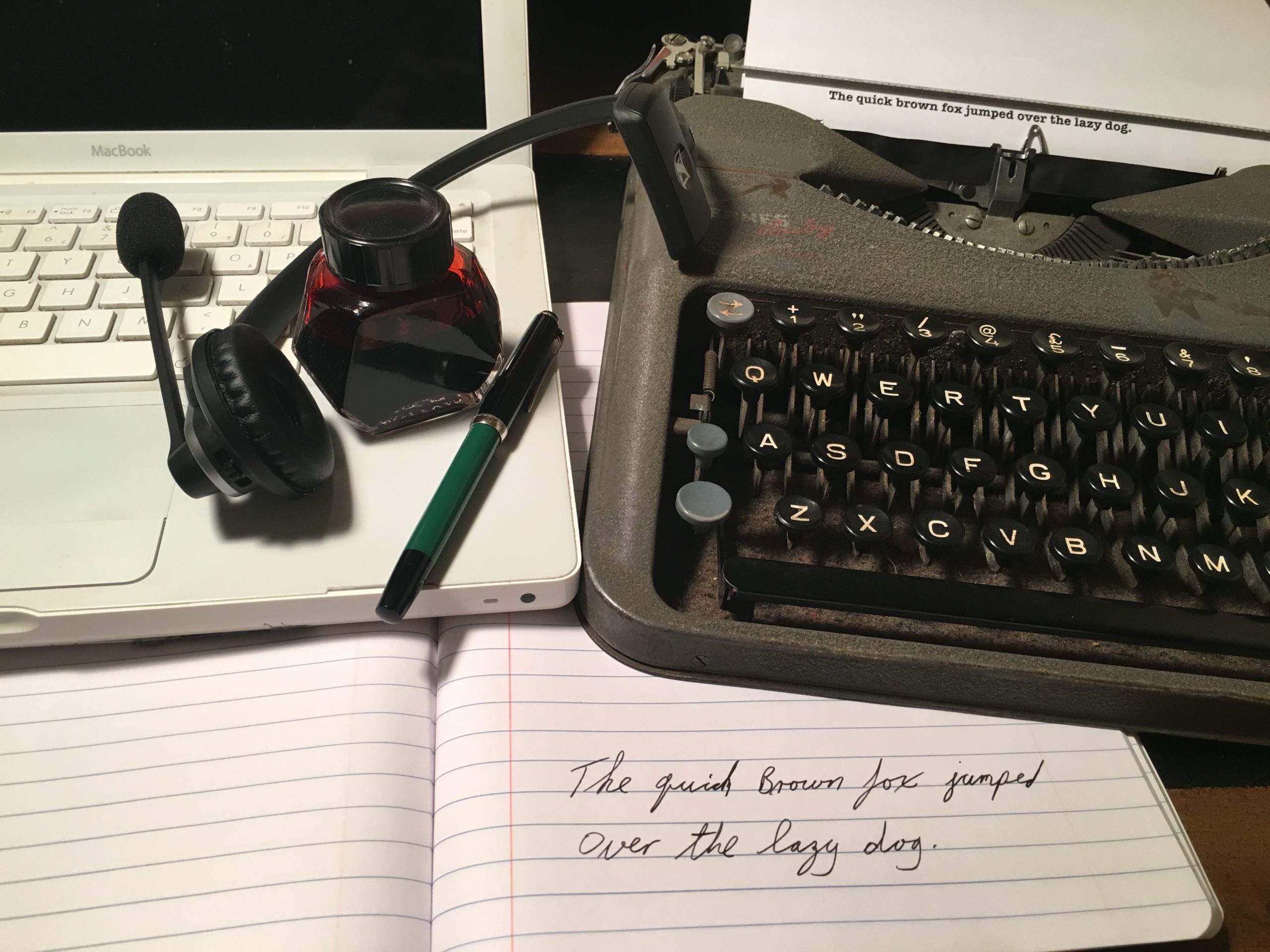
    When I write, I don’t scrawl with a pen or pencil, hunt and peck on a keyboard, or even bang away on a typewriter. I slide on a headset, say “Wake up,” and start yakking at my computer. My voice recognition software converts speech to email messages, text in Word, and more. Line by line, paragraph by paragraph, my writing silently scrolls onto the screen every few seconds. I’ve been working like this for about fifteen years; chronic repetitive movement injuries forced me to look into alternatives to typing.

    I use Dragon Naturally Speaking, one of several voice recognition programs available to writers. It costs about the same as a couple of trips to the physiotherapist. If prescribed by a physician, voice recognition software is a tax-deductible medical expense. Google Docs, Windows 10, and Apple have similar features for free. All are based on the same technology.

    Leaning back in my swivel chair, feet up on my desk, I feel like Don Draper in Mad Men, dictating a letter. Unlike Don Draper, I don’t have a secretary, so I need to tell my computer where to add commas and what to capitalize. The first sentence of this essay, in “dictate-speak,” is what I would need to say in order to have the following text appear on my screen:

    1. The quick brown fox jumped over the lazy dog!

    Verbal commands allow me to switch the mic off or on, add punctuation, capitalize or underline. Don’t like the last sentence? Say, “Scratch that!” It’s erased. Want to change a word? Say, “Correct that!” then select one of several numbered options or type in your change.

    When trained for the user’s voice, my dictation software is 95 percent accurate. It’s important to use a good quality headset and to enunciate clearly. This makes it easier for the program to understand you.

    All this technology is great but it can drive you nuts. Despite repeatedly adding “Amritsar,” a city in India, to the dictation vocabulary, I still find “Emirates are” merrily spelled out on my screen. Argh! In my experience, homonyms are handled better: “four” and “fore” are rarely confused.

    Dictating changed my writing process. Once I got used to talking to my computer, I realized that I wrote for longer stretches of time. I was physically comfortable and relaxed. Writing was definitely easier and faster. Liberating my hands freed my mind to think more creatively. Like most of us, I speak faster than I type or write by hand. The words poured out of my mouth onto the screen. It was thrilling. I could finally get the ideas, descriptions, and dialogues swirling in my head onto the page and Dragon kept up with me. Once my words were on the screen I rewrote and refined them.

    At first, some of my dictated text sounded like emails or text messages. I used too many contractions and my sentences were either too long or too short. Colons, semicolons, and other punctuation from written English were noticeably absent. Eventually, I got better at verbalizing in a written style. I’ve developed a habit of working from an outline composed of key words or points. This keeps my dictation focused.

    If typing is painful, then it might be time to look into voice recognition. I caution that dictation is not the solution for everybody. If you write mainly in cafés or libraries, you probably don’t want the world to hear your masterpiece. Also, your microphone will pick up other voices, which will end up as gibberish on the page. Bilingual writers should know that voice recognition programs can only distinguish one language at a time. If you’re writing about going to a “5 à 7” or a dépanneur, you’ll have to enter these words manually.

    I love writing by dictation but sometimes low-tech is best. Simple corrections to dictated text are easiest typed in manually. And when I send a personal note or write the occasional cheque, I go no-tech and enjoy the tactile pleasure of writing: with a fountain pen, filled with ink from a glass bottle.


    fullsizerender 2

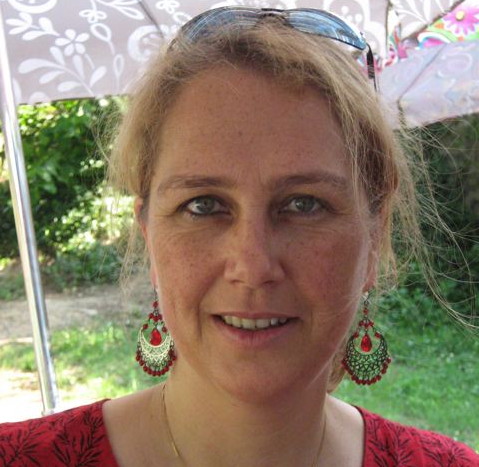
    Mariam S. Pal’s essays have been published in the Montreal Gazette, the Ottawa Citizen, The Globe and Mail, Le DevoirThe Times of India and The Hindu. She is completing a memoir about being Pakistani-Canadian. A recently published excerpt is available at http://south85journal.com/issues/spring-summer-2018/non-fiction/behind-the-walls. Mariam has an M.A. in Economics and B.C.L./LL.B. degrees in law, both from McGill University. She is semi-retired. Mariam and her headset live in NDG.

    Photo credits: Mariam S. Pal (header banner); Eli Krantzberg (headshot)

  • Three-Legged History: Paul Almond on Researching Historical Fiction

    By Paul Almond

    With an introduction by Barbara Burgess and David Stansfield

    Paul Almond

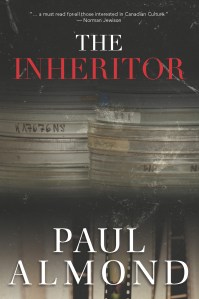
    On April 8, Paul Almond’s last book, The Inheritor, an autobiographical novel, was published by Red Deer Press. Almond, a member of the Quebec Writers’ Federation, intended to meet many of his fans and fellow writers this spring and summer, but he passed away on April 9.

    Almond spent the last twenty-five years of his life researching and writing The Alford Saga, the eight-volume series of adventure novels which culminated in The Inheritor. The series depicts the lives and loves of his Gaspesian ancestors. Even in his eighties, Almond crisscrossed North America, talking about his books on radio and TV. He did over 100 book launches in the last five years of his life, often donating half the proceeds to charity. But what about all the months and years of research that precedes the writing?

    Almond consulted Canadian historians, linguists and scholars; combed through Library and Archives Canada; pored over Canadian soldiers’ diaries and his ancestors’ letters; read archived newspaper columns and essays; and even referred to daily weather reports recorded by historians. For the autobiographical The Inheritor (book eight), Almond also returned to his own letters to his mother.

    On October 30, 2013, Almond drafted the following piece for QWF Writes, sharing his vision and experience of historical research in writing The Alford Saga. Barbara Burgess, Almond’s publicist, recently found the piece among her letters from Almond. She and David Stansfield, one of Almond’s main literary consultants, prepared this piece for publication. Paul Almond:

    “I have been asked how I do my research. This Saga, written over the last dozen years, has indeed taken a lot of research, mostly arduous and thorough. I liken it to looking through binoculars based upon a tripod of three legs: Oral Tradition, Documents, and Intuition.

    Oral tradition

    In rural communities all across Canada, the oral tradition is strong: grandparents love to tell stories of their own grandparents. In cities, such a thing may not be possible, but in tiny Shigawake, Quebec, we have many such stories.

    About fifty years ago, an aged cousin told me shortly before he died that the first Almond climbed through a porthole of a British battleship in Port Daniel Harbour. That intrigued me. I did more research. (The story of the porthole is in the beginning of The Deserter – book one.)

    The Inheritor - Paul AlmondDocuments

    Now, as anyone might imagine, almost no English documents from 1800 exist on that largely unexplored coast off modern-day eastern Quebec. Archival material tells only of prime ministers, treaties and so on. Nothing explains exactly how a farmer drank water when clearing land. (Answer: a Piggin). But in New Carlisle, the county seat, an old box in a basement under a hat rack produced a paper from 1816, which revealed that a terrible famine had affected the Coast, caused by a volcanic explosion on Mount Tambora. A schooner had come from Quebec City to relieve the starving inhabitants; in order to get your barrel of flour to survive, you had to say who you were, how many were in your family, and so on. The paper noted that one Thomas Manning, aka James Almond,* had fought on the battleship Bellerophon, and had settled in East Nouvelle, as Shigawake was then known.

    Intuition

    In due course I discovered that behind Port Daniel, true wilderness then, a Mi’kmaq settlement thrived. If you deserted the British Navy in the early 1800s, your punishment was death. So the Marines would have chased deserter Thomas Manning. And where would he have gone? Back into the interior. What was there? The Mi’kmaqs. Bingo. There’s the story.

    This third leg of the tripod involves not just your own intuition and common sense, but advice from others. No Mi’kmaqs on this side of the Bay really knew anything about the 1800s. However, in New Brunswick, I found an Elder whose grandfather, and the grandfather before him, had been shamans. And there was an ethnologist at the Gaspe Museum, an Iroquois who had studied the Mi’kmaq all his life. And so gradually, my first book, The Deserter, grew out of their oral traditions, documents I found, and from what I intuited.

    And so I went, looking through my binoculars on their tripod. I looked into the 1850s, when my grandfather trekked on snowshoes six hundred miles to Montreal (described in The Pioneer). Then to 1900 when my uncle went to the Boer War (in The Chaplain), and from there on to 1914, when my father fought in WWI (described in The Gunner), and on…”

    * James Almond was Paul Almond’s great-grandfather. He settled in Shigawake in 1810 or thereabouts, founding the oldest homestead there.


    Paul AlmondIn addition to the eight volumes of the Alford Saga and several other books, Paul Almond produced, directed and in many cases wrote over 120 television dramas for the CBC, BBC, Granada (where he created the documentary Seven Up!) and various networks in the U.S., plus a number of feature films. www.paulalmond.com

    Photo (top) of Paul Almond © 2012 Northernstars.ca

    Photo (headshot) of Paul Almond © Joan Almond


    David StansfieldDavid Stansfield, a close friend of Paul, wrote 400 television scripts for TV Ontario in Canada, the Public Broadcasting Service in the U.S., the Discovery Channel, NHK, Encyclopedia Britannica and Time-Life, plus half-a-dozen feature film screenplays and nine books, seven of them novels. www.davidstansfield.com


    Author Barbara Burgess worked with Paul Almond for the past two and a half years, helping him arrange book launches, copy-editing and handling some of his literature-related correspondence. www.thecacounacaves.com