Author: john@qwf.org

  • Tuesday, or Was It Wednesday?—by Joshua Levy

    Tuesday, or Was It Wednesday?—by Joshua Levy

    One Tuesday—or was it Wednesday? —I visited my parents.

    Written anything lately? asked my dad, during supper.

    I had. I fetched my laptop from my car and read a short story about my brother’s recent engagement to them while we ate.

    When I was done, my dad said it was very witty, great use of metaphor, but why hadn’t I told the truth, the whole truth, and nothing but the truth, so help me God?

    My dad’s a lawyer.

    But, I said, it really happened. You were there!

    I never said those things, said my mom. And I made butternut squash lasagna that day, not hummus or feta salad.

    I felt accused. You uttered extremely similar things, I said. I can’t remember exact dialogue. But you’re right about the butternut squash lasagna. I’ll change that.

    They looked at me sadly, my parents did.

    I don’t think Menachem was wearing a fanny pack that day, added my dad.

    The point, I said, is that the major facts are all true, if not the minor ones.

    My dad stood up and went to the freezer, bent down behind the kitchen island, and resurfaced holding a tub of Neapolitan ice cream.

    None for me, Ricky, said my mom.

    Josh? asked my dad.

    Sure, I said.

    “My dad said it was very witty, great use of metaphor, but why hadn’t I told the truth, the whole truth, and nothing but the truth, so help me God?”

    He opened a cabinet next to the sink and grabbed two ceramic bowls. Each had a different colourful made-up bird painted on it. Or were they real bird species? My parents had bought them a decade earlier in Nova Scotia, while visiting my sister at university. Mind you, it could have been New Brunswick where they bought the bowls….

    I wasn’t sure. The facts felt like slippery fish in my hands.

    If you’re going to write non-fiction, offered my dad, while running a spoon under hot water, it should be 100 percent true.

    I agree, said my mom. Don’t make anything up.

    But, I said, I’m not. Memories change colours and shapes under different conditions.

    Two scoops or three? asked my dad.

    Different what? asked my mom.

    Two, I said.

    Different what? repeated my mom.

    Conditions. Like the passage of time or evolving perspectives. That stuff.

    My mom said, ah, I don’t buy it.

    A fact’s a fact, Josh, said my dad, handing me an ice cream bowl.

    One, two. I count two scoops in your bowl, declared my mom.

    My dad nodded. That’s a fact, he said.

    I sighed. I didn’t disagree with my parents. Facts are vital and I wanted them all.

    But my story had been about shining a light on unverifiable, deeper truths: family relations, love, loneliness. Whether Menachem wore his fanny pack or not on that particular day was, in my opinion, such a minor fact that researching it could stifle the creative process.

    “Memories change colours and shapes under different conditions.”

    Another Tuesday—or was it Wednesday?—I visited my parents.

    Written anything lately? asked my dad, during supper.

    I had. I fetched my laptop from my car and read a factually bullet-proof story about Visiting Day during my first summer at sleepaway camp to them while we ate:

    On Visiting Day, my parents came with my younger brother, Daniel. They brought me a bag of Archie and Spider-Man comics and some candy. My sister, Samantha, was probably also there, since she was less than a year old at the time.

    The camp director made a speech to all parents and campers. The speech was almost certainly in English, since that was the only language he spoke. I think we then went to the waterfront and paddled in a canoe, but that could be a memory from the following summer.

    I don’t remember if it was a sunny or rainy day, but I do remember the emptiness I felt when Visiting Day ended.

    That’s a terrible story, said my dad.

    Embellish a little, said my mom.

    linkedinJoshua Levy splits his time between Montreal, Canada, and Lisbon, Portugal. He is grateful to the QWF for their support over the years and has participated in eight QWF writing workshops to improve his craft. Joshua is a winner of the 2010 QWF Quebec Writing Competition and was longlisted for the 2007 competition. He has had poetry published in Carte Blanche, told stories live at Blue Metropolis for This Really Happened, and written for QWF Writes. Joshua has been published by the Oxford University Press, Véhicule Press, Maisonneuve, Vallum, The Feathertale Review, The Rumpus, and The Malahat Review. He is a regular storyteller on CBC Radio and recently received a grant from the Canada Council for the Arts to write a memoir.

    Photo credit: Seth Sawyers (top banner); Steve Gerrard (headshot)

  • Why I Loved Editing a Small Canadian Online Magazine, and Why I’m Leaving—by Laurence Miall

    Why I Loved Editing a Small Canadian Online Magazine, and Why I’m Leaving—by Laurence Miall

    Before I ever joined a magazine, or published a novel, for that matter, here’s how I imagined people who had responsibility over publishing texts. They were working in fancy university offices or in stylishly decorated apartments in artsier parts of town than my own, smoking cigarettes and drinking wine, sporadically casting a disdainful eye toward the “slush pile” (in my mind’s eye, the slush pile was either physically manifested, or online, it didn’t make a difference insofar as the disdain goes). And here’s what would happen if ever they came across my submission. They’d read a line, chortle to themselves, and say, “This poor, desperate bastard. Why does he waste our time?” Then all the editors would say in unison, “Let’s publish one of our friends, instead!”

    That’s how I imagined it.

    Maybe some literary journals are nepotism-only zones, I don’t know. I’ve only ever worked for carte blanche. I joined as fiction editor in 2014 and the first issue I worked on was Issue 20. Our most recent issue is #29, so that’s ten issues in total. As of Issue 23, I took on more responsibility for the magazine, taking over from our illustrious founder, Maria Turner, first in partnership with Ben Spencer, then with Gregory McCormick.

    Though the years, I have come to enjoy my vexed relationship with the slush pile. Every time I sit down to read, I want to love the next piece I’m going to discover. One of the very first stories I ever picked was Matthew di Paoli’s “Other Forms of Life,” and I found it so funny and quirky that I immediately started reading it aloud to Monika, my partner. I invited Matthew to read his story at a carte blanche event we were doing at the Blue Metropolis Literary Festival in Montreal, and he couldn’t come, so I read out parts of his story in his place. I loved the texture of someone else’s sentences coming from my lips, and the rhythm—almost like a form of breathing that was not my own.

    So yeah, the slush pile wasn’t like I’d imagined it, not at all. It was sometimes a source of some frustration, but also of great excitement and pleasure.

    Over the years, the comradeship of the entire carte blanche crew, and the support of the Quebec Writers’ Federation, was constant, making me realize that one of the biggest benefits of the literary life is not the writing itself but the community of other writers, editors, publishers, curators, and do-it-all’ers who keep culture humming along and livening up lives that would otherwise be lived in dank, solitary darkness.

    “I loved the texture of someone else’s sentences coming from my lips, and the rhythm—almost like a form of breathing that was not my own.”

    Chalsley Taylor, above all, has made the magazine the beautiful online presence it is today, and so it’s to her I would like to express my biggest THANK YOU. We started this journey at pretty much the same time. It’s no overstatement to say that this magazine would not be in the fine shape it is without her. With Cason Sharp now on the team, I believe carte blanche is going to keep on kicking ass in its cool, classy way. How can it not, with Nicola, Georgia, Bronwyn and the two Gregs bringing their brilliance to each and every issue?

    I am shortly going to be leaving the team in my official capacity as editor. I do so with mixed feelings. Once upon a time, I honestly felt I could tackle any amount of work that was thrown at me. The days seemed elastic. I could stretch them at either end, conjuring up just enough minutes or hours to always get things done. But I don’t feel that way anymore. I am trying to figure out how big each relative part of me is, and how to accommodate all those parts within a finite body. What’s the size of the editor in me, compared to the writer? And more importantly, the loving husband? The communications director? The friend? The son? The cooker and eater of meals, and the drinker of ales, and the sporadic watcher of Liverpool FC, and everything else?

    A few weeks ago, my second oldest friend disappeared from social media. In recent years, we hadn’t established any other form of communication except for Twitter and in-person visits. I had no phone number or email address for him. I started to wonder, nervously, if he was still alive. In 2016, I lost a dear friend to suicide. Another of my friends has struggled with brain cancer. These experiences and many others made me think dark and fearful thoughts.

    Day after day, my friend didn’t reappear. There was an envelope icon lit up in Twitter, indicating a message from him, but the message was an old one, and because his account was deactivated, the message itself had ghosted away. I tried to figure out what was the best course of action. Should I just show up at his house to check on him? No, I told myself. It wasn’t time for that. He’s not dead, I said to myself. He’s just taking a break from Twitter. Who can blame him? Donald Trump is president.

    My friend eventually reappeared, thank God. He found my email address and wrote to me. I was relieved, and felt a little foolish for my quiet panic.

    “I am trying to figure out how big each relative part of me is, and how to accommodate all those parts within a finite body. What’s the size of the editor in me, compared to the writer? And more importantly, the loving husband?”

    Realizing just how agitated I had become gave me yet another confirmation that I need to reappear—to myself. Working sixty- to seventy-hour weeks means you’re obliged to run on adrenaline and anxiety half the time. I get bent out of shape easily. I sometimes get inordinately fearful about small things. It’s time to slow down a little. Time won’t be warped and woven into shapes that better accommodate me. I must accommodate to time.

    Whatever happens, I am going to remain a friend to the carte blanche crew. I became an editor at approximately the same time as I had my first novel accepted for publication, so the two experiences effectively took me from zero to one as a literary person, according to my own weird binary measurement. I am enormously grateful to have had such opportunities.

    I still send stories to magazines sometimes, and I get my share of rejections, but I don’t get resentful about them. I am pretty sure that the people at the magazines are just that: people. Maybe some of them have similar traits to me. Maybe they’re a bit fucked up. Maybe they’re anxious, maybe overworked, maybe worrying about a loved one—like us all.


    miall-authorphoto-1Laurence Miall is a Montreal-based writer and communications expert. His first novel, Blind Spot, was published by NeWest Press in 2014.
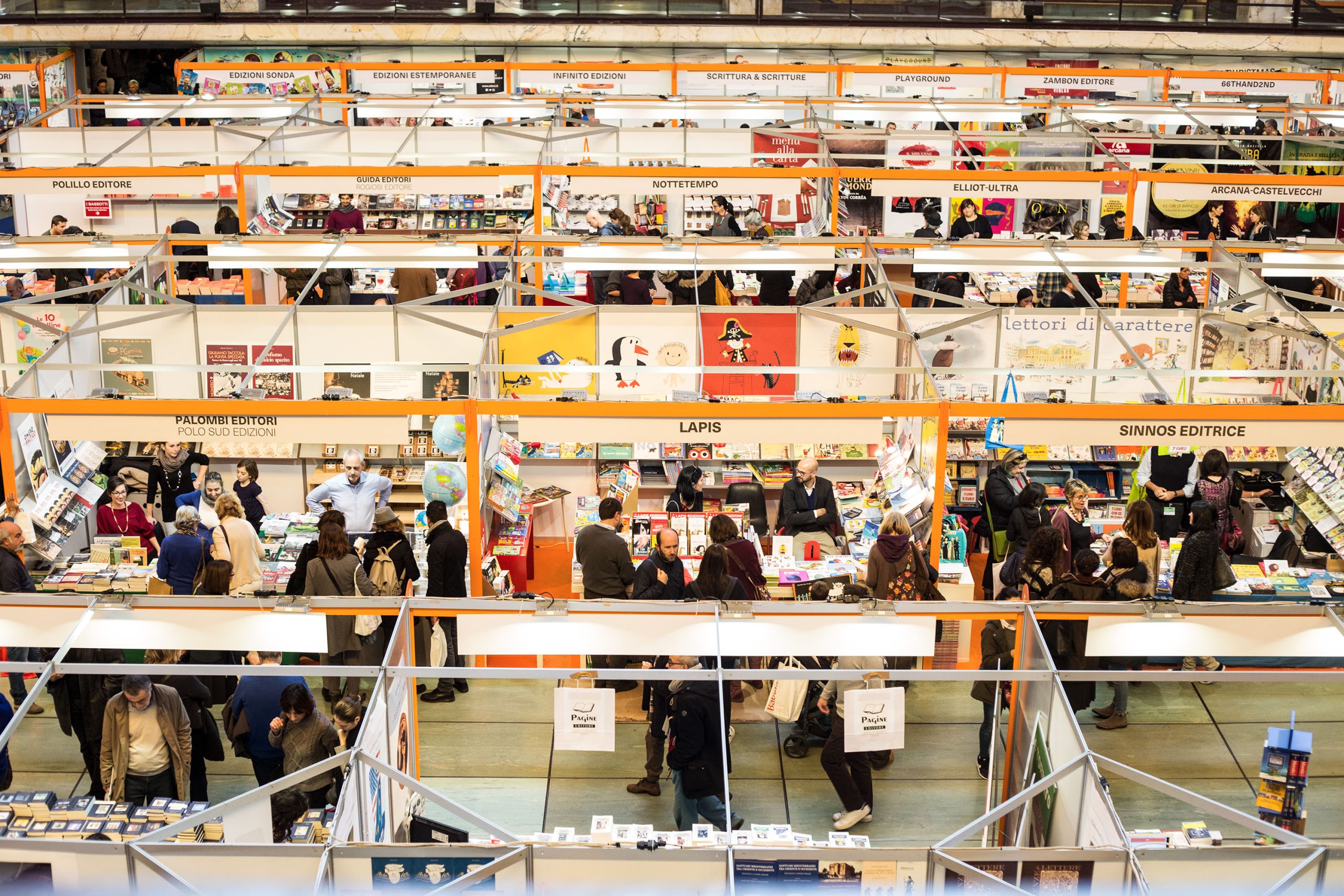
    Photo credits: Ben Brooksbrank; Owen Egan (author headshot)

    Apply to be carte blanche’s new editor.

  • A Book Fair to Emulate by Connie Guzzo McParland

    A Book Fair to Emulate by Connie Guzzo McParland

    Più libri più liberi: more books, more freedom. Unlike Frankfurt, London, or Torino, Rome’s book fair has been designed for small- and medium-sized publishers. Big fairs like Frankfurt can be overwhelming for a small publisher. You do meet a lot more people there, but by the end of it, it’s all a haze. As the publisher of Guernica Editions, I participated last December in the Rome fair’s Fellowship Program, an opportunity for foreign publishers to strike deals with Italian publishers.

    What did I learn? Bigger isn’t necessarily more productive.

    In the outskirts of Rome, Più libri più liberi’s 400-plus exhibitors were packed in a maze-like configuration in the Palazzo dei Congressi—an imposing marble building on the aptly-named Viale Della Letteratura. What makes this fair unique may be the smaller, more manageable scale that renders it less intimidating and more accessible to small independent publishers, but public attendance is huge and so are book sales. Più libri più liberi, which has been organized by the Association of Italian Publishers since 2002, has become an important event in Italy and Europe, and it receives a lot of press and attention. Held every year just before the Christmas shopping spree, it attracts 50,000 attendees over five days. Besides the book exhibits, this year there were over 1,000 participants in various events, some televised, all well-attended: readings, launches, and discussions with Italian and foreign authors, including Quebec’s Dany Laferrière, who was a featured author. As in Canada, children’s books are of great interest, as well as crime fiction and graphic novels, but the full range of literary genres is represented in Rome.

    “Bigger isn’t necessarily more productive.”

    I was one of sixteen foreign participants in the fellowship program. Others came from the USA, UK, Israel, Portugal, Turkey, Latvia, Poland, and Greece. Because we were put up in the same hotel in the centre of Rome, we shuttled back and forth and lunched together. It was easy to connect and network with each other, and meetings with Italian publishers were also pre-arranged by the organizers.

    As stated, the aim of the program is to promote internationalization of the Italian publishing industry, but there are opportunities for Canadian publishers to promote their own authors. Many Canadian publishers may not know that Italians read a lot more foreign authors in translation than we do in North America.

    In the past, while browsing in Italian bookstores, I had noticed the proliferation of translated foreign authors, both classic and contemporary. As I visited the various book kiosks at the Rome fair, I also noticed the many publishers who specialize in translations of work from particular niche regions: the Slavic countries, Chile, etc., with Canada seemingly underrepresented. For sure, bestselling Canadian authors are pitched in the more prestigious fairs like Torino and Bologna, but I believe that there are as-yet untapped opportunities for interesting exchanges between smaller publishers.

    At Più libri più liberi, there are big players represented by medium-sized publishers, but giant houses like Feltrinelli, Mondadori or Rizzoli aren’t here to overshadow independent publishers. The exhibitors are all given the same space and importance. No one dominates the scene.

    I don’t believe there’s anything like it here in Canada, apart from the Salon du Livre de Montréal, which caters to French-language publications. Just consider what happened to the Inspire Book Fair experiment in Toronto. When the first edition closed and the big conglomerates failed to renew their participation for the following year, the organizers were forced to cancel.

    “I don’t believe there’s anything like it here in Canada.”

    So what event looks after the interest of independent English-language publishers in Canada?

    The Rome Book Fair is not Frankfurt, but it serves independent publishers well. It puts them and their authors at the forefront during the busiest book buying season of the year, and gives them an opportunity to interact with their foreign counterparts. Canadian publishers’ organizations should take notice. This fair is one to emulate.


    connieguzzomcparlandheadshotConnie Guzzo McParland has a BA in Italian Literature and a Master’s degree in Creative Writing from Concordia University. Her first novel, The Girls of Piazza d’Amore, published in 2013 by Linda Leith Publishing, was shortlisted for the Concordia First Novel Award by the Quebec Writers’ Federation. The sequel, The Women of Saturn, will be published by Inanna Publications in April 2017. Since 2010, she has been co-director and president of Guernica Editions. She lives in Montreal. www.conniemcparland.com
    Photo credits: Sara Cervelli (top banner); Anthony Branco (author’s headshot)

  • Empathy by the Book: How Fiction Affects Behavior by Susan Pinker

    Empathy by the Book: How Fiction Affects Behavior by Susan Pinker

    When I want to escape I pick up a good novel. But does this habit provide more than a quick getaway?

    We’ve long known about the collateral benefits of habitual reading—a richer vocabulary, for example. But that’s only part of the picture. Mounting evidence over the past decade suggests that the mental calisthenics required to live inside a fictional character’s skin foster empathy for the people you meet day-to-day.

    In 2006, a study led by University of Toronto psychologists Keith Oatley and Raymond Mar connected fiction-reading with increased sensitivity to others. To measure how much text the readers had seen in their lifetimes, they took an author-recognition test—a typical measure for this type of study. “The more fiction people read, the better they empathized,” was how Dr. Oatley summarized the findings. The effect didn’t hold for nonfiction.

    Still, no one knew whether reading fiction fostered empathy or empathy fostered an interest in fiction. Other factors could have been at play too, like personality.

    So, in 2009, part of the Oatley-Mar team involved in the 2006 study reproduced it with a sample of 252 adults—this time controlling for age, gender, IQ, English fluency, stress, loneliness and personality type. The researchers also assessed participants’ “tendency to be transported by a narrative”—the sense that you’re experiencing a story from within, not watching it as an outsider.

    Finally, participants took an objective test of empathy, called the Reading the Mind in the Eyes Test. The aim of all of this was to see how long-term exposure to fiction influenced their ability to intuit the emotions and intentions of people in the real world.

    The results? Once competing variables were statistically stripped away, fiction reading predicted higher levels of empathy. Such readers also lived large in the flesh-and-blood social sphere, with richer networks of people to provide entertainment and support than people who read less fiction. This finding put to rest the stereotype of bookworms as social misfits who use fictional characters as avatars for real friends and romantic partners.

    Later studies confirmed that reading fiction does cause a spike in the ability to detect and understand other people’s emotions—at least in the short term. In a series of experiments published in 2013 in Science, social psychologist Emanuele Castano and David Comer Kidd of the New School for Social Research tried to figure out whether the type of fiction mattered.

    “This finding put to rest the stereotype of bookworms as social misfits who use fictional characters as avatars for real friends and romantic partners.”

    The researchers handed subjects—in groups ranging in size from 69 to 356—different types of genre fiction, literary fiction or nonfiction, or nothing to read at all. They then assessed participants on several measures of empathy. Nonfiction—along with horror, sci-fi or romance novels—had little effect on the capacity to detect others’ feelings and thoughts. Only literary fiction, which requires readers to work at guessing characters’ motivations from subtle cues, fostered empathy.

    In these studies, the reading of nonfiction not only failed to spur empathy but also predicted loneliness and social isolation, especially among men. Of course, nonfiction reading has its virtues. Other research suggests that various kinds of nonfiction can prompt empathetic feelings—as long as the narrative is moving and transformative.

    In recent studies, neuroscientist Paul Zak at Claremont Graduate University and colleagues showed participants heartfelt stories, such as a video narrated by a father of a toddler with brain cancer. The video induced a spike in observers’ levels of oxytocin—a hormone that promotes trust, nurturing and empathy—and larger donations to charity. Watching a straightforward travelogue-type video of the same father and son visiting the zoo didn’t have that effect.

    Apparently, what matters is not whether a story is true. Instead, as Dr. Oatley says, “If you’re enclosed in the bubble of your own life, can you imagine the lives of others?”


    susanpinker-by-susie-loweSusan Pinker is a Montreal-based psychologist, writer and columnist for the Wall Street Journal. Her most recent book is The Village Effectwww.susanpinker.com

    This piece was originally published in The Wall Street Journal.

    Photo Credits: Zak Greant (top); Susie Lowe (headshot)

  • ‘Been good, time to be bad’ by Richard Andrews

    ‘Been good, time to be bad’ by Richard Andrews

    Divorce, surviving a mass shooting, discovery of cancer at 24, and a walk on the wild side in California. Students enrolled in my Magazine Writing course often want to learn more than catchy leads, pitching stories, dealing with grumpy editors, and the Inverted Pyramid. They’re turning to writing as a form of therapy, closure, or a way to chart a life transition.

    Many participants are going through divorce, coming out, bored with their jobs, looking for purpose, or seeking validation of unconventional choices. Passive voice does not come up as a writing issue in these cases.

    One of our warm-up exercises is a version of that job-interview chestnut: Describe a difficult situation. How did you respond? What did you learn? However, the answers are rarely what you’d expect in an interview.

    When I first tried that exercise, I thought a failed recipe or a forgotten anniversary would be the limit of a student’s openness to a room full of strangers. But it turns out that the process of writing somehow gives people the license to share their most intimate feelings and personal experiences.

    “They’re turning to writing as a form of therapy, closure, or a way to chart a life transition.”

    In her piece, Camille* wrote the most moving opening line I’ve ever read: “Mom, I have fucking cancer. I’m a jobless, degreeless, broke 24-year-old that’s going nowhere in life.”

    Camille developed that lede into an article published by the Huffington Post, along with some of her unusual tips to other cancer survivors. Her responses to falling ill included throwing dishes,exploiting her boyfriend’s pity to get a Prince Charles Spaniel, and showing her scar to a club doorman to get in for free. “Go shopping, rock it with a Hermes scarf for your hair loss,” she advised. “And stay true to your emotions. Don’t cover them up.”

    Camille emailed me recently with the latest chapter of her life. Four years on she has things under control and is living happily with her boyfriend, a new baby, and the dog. Less happy was Ingrid, a survivor of the 2011 massacre by a right-wing extremist that left 77 Norwegians dead, including dozens of teenagers at a summer camp. Ingrid escaped death by hiding behind a boulder but left Norway for Canada to put distance between herself and the tragedy. Her writing revealed a young woman trying to deal with the apparent meaninglessness of life, after a horrific experience and the loss of friends.

    When she joined the class she wrote she was at Stage Five of Grieving (acceptance). However, I’m not sure how much meaning she finds in reports that the convicted shooter recently won a human rights case against the Norwegian government about his prison conditions. (He had previously complained that his PlayStation was outdated.)

    Nicole, on the other hand, had no illusions about the meaning of life: it was to blast her husband, who’d left for a younger woman. Despite gentle suggestions that other topics were worth writing about, Nicole shared reports each class about the weight gain and balding of her ex, plus the styling challenges of his mistress.

    Other class writings have included an account by one student who woke up at the minority end of a complex threesome after a wild party. Another wrote of baking hash brownies, forgetting them on the kitchen table, and coming home to find her peckish parents “stoned out of their tree.”

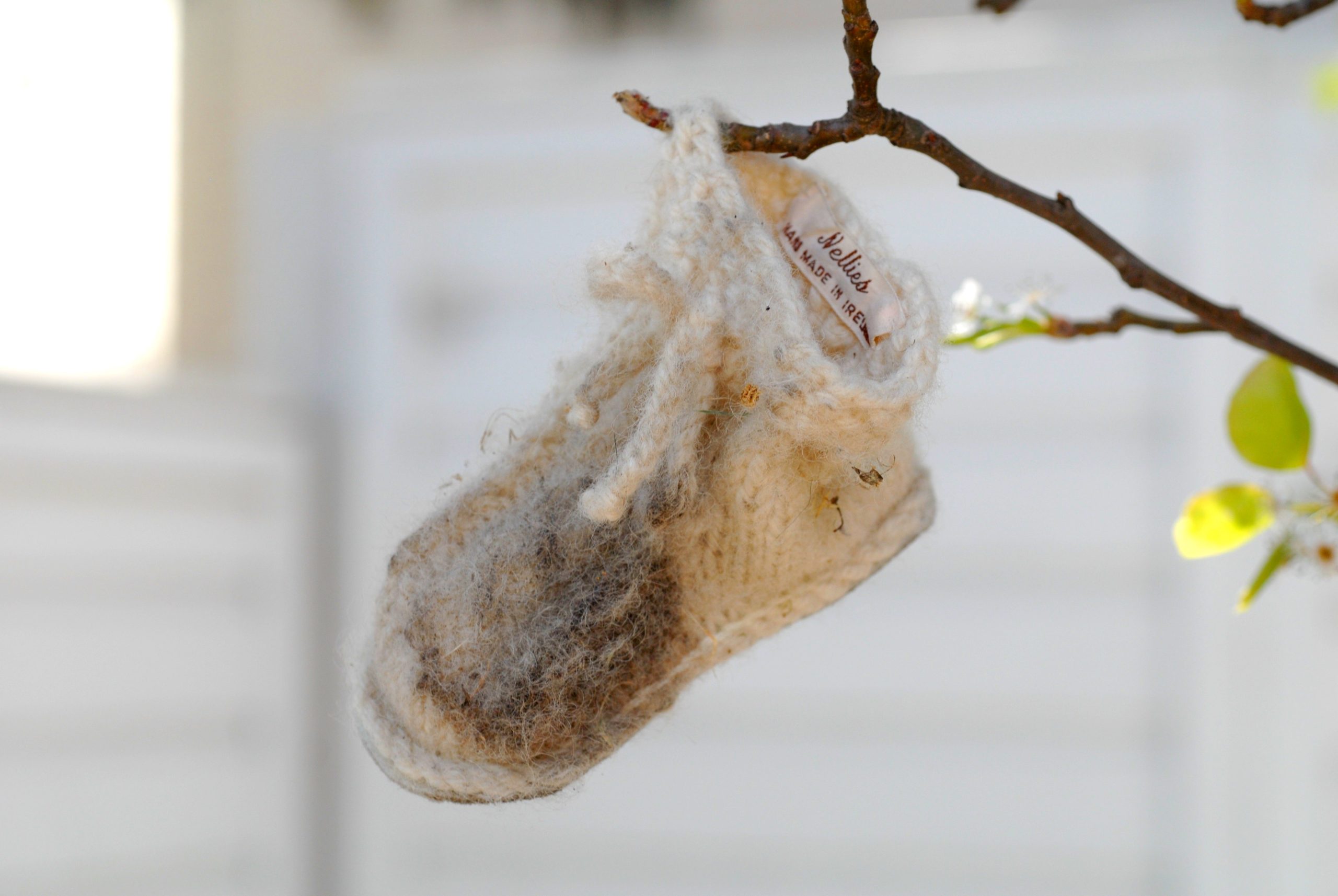
    Sometimes a class exercise changes lives, and here I credit Hemingway’s creation of the Six-Word Story. His ‘saddest short story in the world’ (For sale: baby shoes, never worn) reputedly won him a bar bet and spawned dozens of websites devoted to flash fiction.

    “For sale: baby shoes, never worn.”

    I use the Six-Word Autobiography as a variation on the original concept for an exercise on writing headings. It can produce some telling results when people try to summarize the main theme of their life into a bumper sticker.

    There’s regret (Found true love, married someone else), contentment (Painful nerd kid, happy nerd adult), the search for meaning (Tried it all, but still looking), or resignation (Turning into Mom without being one).

    Some months after the end of one course I received an email from Pamela saying the six-word exercise had made her sit down for the first time in years to think about what she was doing and where she was going.

    “When I saw what came out on the page, I decided to leave my life in Montreal and move to California,” she wrote, leaving most details to my imagination.

    Pamela, if you’re reading this, I hope you’re still writing. Please send me your latest chapter and let me know what happens when your story is:

    Been good, time to be bad.


    richard-seville

    Richard Andrews is a freelance journalist who teaches Magazine Writing at McGill Universityric_andrews@hotmail.com

    *All names have been changed

    Photo credit: FlickR

  • Death is Why I Write by Kate Henderson

    Death is Why I Write by Kate Henderson

    When my grandfather died, it was as if his thoughts were transferred to me. All those years he said I had itchy feet, I’d thought he was criticizing the fact that I changed jobs every year or suggesting I’d had too many boyfriends. But no, he just wanted to see me settle down while he was still alive. I wrote a story about him, and found myself for the first time in a place where it didn’t feel like I was being told what to do or trying to please anyone. Death cuts through the clutter.

    From then on I had to write.

    Now both my parents have died. If it weren’t for my day job, I’d be writing all the time. I wake up early to clutch at details before they are erased by waves on sand. I recall how my mother smiled for a camera, the way my father used to swear through clenched teeth. Small gestures are all that’s left, isolated incidents, and the broad strokes of their lives.

    I used to think that writing about real people was a phase. But then it seemed frivolous to invent characters when they were sitting right in front of me, rich and fully developed. When they stopped living, well, I realized I couldn’t possibly improve upon the compelling arc of a life. My work is to distill. I gravitate to the restraint of truth.

    “If it weren’t for my day job, I’d be writing all the time. I wake up early to clutch at details before they are erased by waves on sand.”

    My mother tried to be a housewife, but she was never comfortable with domesticity. The four of us knew she loved us because she tried so hard. One year, she joined the women who formed a phone chain to keep the price of vegetables down at the local Dominion store. While she talked, she doodled on scraps of paper, creating labyrinths of shapes that eventually took on a life of their own. We all remember the time the face of Batman emerged from the page.

    My mother landed a job reading the news on television. It was how she supported us after divorcing my father. Like Neil Armstrong, Betty Friedan, and John Lennon, she taught us anything was possible. Early morning shifts and dressing for the public ate up a lot of time. It wasn’t until after we’d left home that she went back to school for the degree she’d always wanted and started writing stories and plays.

    I knew my mother would die eventually; there had even been a couple of false alarms. But when the time came, I treated it with the nonchalance I suspect children require to carry on. I have to be at a meeting, I said to her that morning. Can you wait? Yeah, I can wait, she answered, her tone shifting, sounding as if she had waited before. Surely I added I love you—it was how we said goodbye on the phone.

    “It wasn’t until after we’d left home that she went back to school for the degree she’d always wanted and started writing stories and plays.”

    The morning after she died, I woke with the sensation that I’d been left to contemplate fathers. My mother never really got over my father, even though it was she who’d left him all those years earlier. Or was it that she never got over missing her own father? I’ve learned that while adults maneuver around broken connections, children absorb the intensity of missing into their flesh.

    All those years, my mother loved my father. Even after she found out about the affair. Even after another husband. In conversations with us, she had started to refer to him as if they’d kept in touch, each knowing how the other had changed. As if he didn’t have another wife.

    When my father died, my mother’s vision, already clouded, deteriorated. It became harder and harder for her to breathe. It was as if without him in the world, an important part of her was no longer accessible. The last entry in her journal, dated a couple of weeks before her death, recorded a dream where my father had kissed her, just like in the old days. “Wow,” she had written. “I’d forgotten how good that felt.”

    The desire to capture my mother’s essence after she disappeared is more profound than anything I’ve ever felt. I write to sit with her, remember textures, and relieve the missing for a while. I write to piece together meaning. Death is her closing chapter. Writing allows me to sift through the pages of our life together, looking for clues.


    Headshot 2-2.jpgKate Henderson lives and writes in Montreal. She recently published a story about her thesis advisor, who died too soon, and is currently working on a memoir about her mother.

    Photo credits: Lisa Henderson (Batman doodle, drawn by Lynn Henderson); Vanessa di Gregorio (headshot)

  • Ghostwriter by Peter McFarlane

    Ghostwriter by Peter McFarlane

    Working as a ghostwriter is not something you plan for; it is something you stumble into. In my case, it began when an old friend, a political activist who had long spoken about wanting my help in putting a book together, called to say he had found a private source of funding for it. Was I interested in writing it?

    It was a subject I had some a background in so I was able to rough out an outline in a couple of weeks. We got together every couple of months for two-day work sessions and within a year we had a manuscript and a publisher. While I was wrapping up that project, another friend recommended me to someone else who had a story they wanted told, and some funding for it.

    This time the world I would be writing about was one I was unfamiliar with, but I liked the subject of the book and I decided to give it a shot. It was during this project that I began to understand what a privilege it can be to tell someone else’s story. I had written biography before, but this was a strange hybrid: a first-person biography. In a very real sense, you become the person you are writing for, internalizing their thoughts and feelings as you use all of the tools at your disposal to tell their story as if was your own.

    “I began to understand what a privilege it can be to tell someone else’s story.”

    Part of the job is also putting the subject and their life in a larger context. This means researching time and place and weaving their narrative into the world they inhabit. In this, you can allow yourself a measure of literary freedom, secure in the knowledge that the character whose life you are temporarily inhabiting will get a chance to look over your shoulder and make whatever corrections are necessary.

    In this case, the book was for someone who had a brief media fame but for the most part lived under the radar. And it was an admirable life. A man with principles and convictions and an unwavering sense of solidarity, moving through a world that was often unwelcoming and at times outright hostile. But he stood his ground and pushed forward and through the force of character made a success of things. That is how the story played out. An honest man confronting his times without compromising his principles. I was pleased that the first publisher I approached picked it up. The experience confirmed to me the truth of the cliché that everyone has a book in them—at least in the sense that all of our stories are worth telling. And for a writer, telling those stories can be as rewarding as any other literary form.

    “The experience confirmed to me the truth of the cliché that everyone has a book in them—at least in the sense that all of our stories are worth telling.”

    About ghosting in particular, I learned that even what was supposed to be a negative turned out to be a positive. I am speaking about the fact that your work goes unrecognized by the larger public. This might have mattered when I was twenty-five but now that I am over sixty it is a hidden benefit, as I discovered at the launch of my activist friend’s book. It was a relatively big event, with about 200 people packing a hall in Toronto for an on-stage interview. I sat near the back and it was one of the most pleasant literary events I ever attended. I had dinner with my friend before the event and we went out later with others to celebrate. The next day, my friend left for a long but low-budget book tour. I returned to my home in the Laurentians, realizing that I had the best of both worlds: the satisfaction of having written a decent book that was off to find its public and freedom from the obligations that accompany book publishing.

    So when the publisher of the recently completed book asked if I would like him to add my name on the cover, I unhesitatingly declined. When the work is finished, better to be free to move on to the next project while someone else has the chore of flogging it. Ghostwriting a book, I discovered, can be a bit like ghosting a party. When you have had your fill, and your fun, you can slip away without stopping for those awkward good-byes.


    Peter McFarlane has written five books of nonfiction, including two ghostwritten books, as well as more than 100 newspaper and magazine features. He has specialized in Indigenous history and politics and has worked on several CBC radio programmes as a researcher and on-air contributor. He is currently completing another ghostwritten book and a new work of non-fiction.

    Photo: Flickr

  • Monique Polak Reflects Back on Being the Inaugural CBC/QWF Writer in Residence

    Monique Polak Reflects Back on Being the Inaugural CBC/QWF Writer in Residence

    Deadline to apply for the 2017 position is Thursday, October 13

    MoniquePolak_credit-Studio Iris

    I don’t know about you, but when I’m in a rough spot or running out of steam, looking back at a joyful moment helps.

    For me, one of those moments happened last November, when I learned I’d been selected to be the CBC/QWF’s first writer-in-residence. I still grin when I remember jumping up from my chair when my name was called during the QWF Literary Awards Gala.

    In a time when freelance journalism opportunities have been drying up, it was great to have a home for my stories. I was delighted to have the chance to write five columns that were featured on CBC Montreal’s website. I also enjoyed working closely with CBC’s editorial team. They helped me fine-tune my ideas for the columns, as well as the columns themselves. At the same time, CBC encouraged me to follow my own instincts. In every column I wrote, I started with a personal story, but then moved on to interview other Montrealers about subjects that moved me—the role of objects in our lives, finding love later in life, juggling two careers, telling lies, and the stories we tell ourselves.

    For me, stories are a way of making sense of our lives, and connecting with others. I connected with the Montrealers I interviewed by listening to their stories, and by sharing those stories through CBC Montreal, I like to think that I connected with readers across the province.

    If you’re thinking about applying for the 2017 CBC/QWF writer-in-residence gig, go for it! I look forward to seeing where the next writer-in-residence takes the column.

    All applications for the 2017 CBC/QWF Writer-in-Residence program must be submitted by 11:59 p.m. on October 13, 2016.

    For more information, and to submit your application, visit the QWF Submittable page.

    Photo credit: Studio Iris

  • Don’t Blink by Marianne Ackerman

    Don’t Blink by Marianne Ackerman

    Choosing a book title and cover is a lot like naming a baby. Quite a few people tend to weigh in, so the process can be a serious source of anxiety. Yet somehow, once you settle, the choice seems obvious.

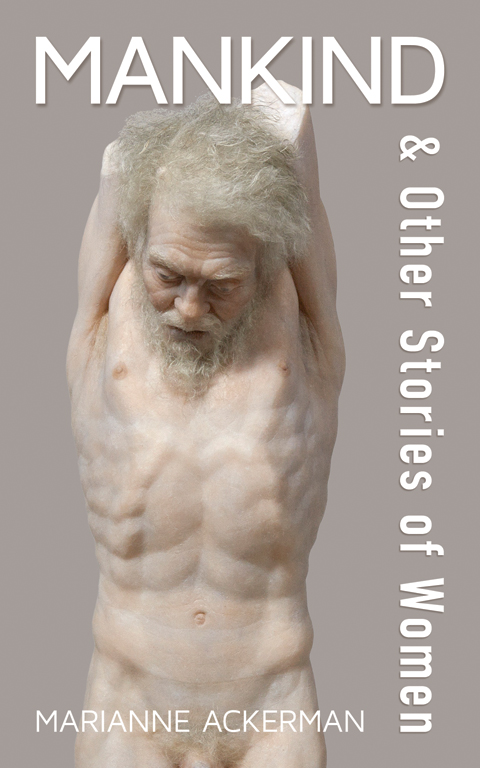
    In the case of my new short story collection, Mankind and Other Stories of Women, the title was spontaneous. The title story, “Mankind,” first saw the light of day last Christmas as a monologue directed by Harry Standjofski, performed by the wonderful Leni Parker at Centaur Theatre’s annual Urban Tales event. For Leni’s character, a lonely woman enduring Christmas Eve with her box of wine and chocolate, the word mankind is a euphemism for the scent of a man. It’s very much a woman’s story. So are the other nine, hence the title. I made a conscious effort to focus on women this time after my last collection, Holy Fools + 2 Stories (Guernica 2014), was full of male characters—puzzling, since I thought I’d won the struggle over the animus-domination of my imagination ages ago.

    The cover was not obvious. On a brief trip to Calgary in April, I discovered an amazing sculptor at the Trépanier Baer Gallery. Walking through the door, I was hit by the super elongated shape of a very thin, nearly naked corpse behind glass: Evan Penny’s Homage to Holbein, an eerie rendering in silicone and real hair of a Christ-like figure, almost fourteen feet long and chillingly life-like. My first thought was, this work belongs at the entrance to a church. It’s a religious experience.

    Days later, the images were still strong. Perusing the gallery website, I settled on Marsyas (Model), a twenty-four-inch high sculpture of a male torso, inspired by a Greek statue, which was part of the exhibition. Covers are traditionally the publisher’s domain, with input from the author. But I’ve known my publisher Mike Mirolla for a long time. I know he’s a dark soul. He loved the image immediately. Thus began the dance by which a raw visual idea and text become one.

    I could not explain why that image worked with my stories, which tend to be airy, urban, sometimes playful, and, some people say, funny. Maybe the figure’s vulnerability, resistance or air of fatalism speak to the tragic thread found in all comedy. As I revised the manuscript for publication, I found myself working him into the first story, “Mina,” which is about a friendship of rivalry and complicity between two women, their creative struggle, and one crazy night.

    mankind-final-cover

    “As I revised the manuscript for publication, I found myself working him into the first story…”

    After the normal back and forth, designer David Moratto’s concept was finalized. I slapped the cover up on Facebook, eagerly announcing my forthcoming fall book. It was mid-winter. The response was pretty well total negativity. Some of my dearest friends, smart people, said it was awful, scary, repellent. Nobody would touch this book!

    I was not prepared. I threw myself on the bed, lamenting once again my weakness for getting over-involved in practically everything. Now I’d have to face Mike and David with bad news, not to mention the gallerist, Yves Trépanier, and the artist, whose work I love.

    Mike did not share my panic attack, but held back. Yves did not. “Don’t listen to them! It’s a strong cover,” he barked via email. “You were right the first time. Don’t blink.”

    “The response was pretty well total negativity. Some of my dearest friends, smart people, said it was awful, scary, repellent. Nobody would touch this book!”

    Next to my control freakishness, impulsiveness is probably my greatest flaw. Here was somebody I respected telling me to trust my impulse. I looked at the cover again. At the other options I was trying to like. I asked Yves what his wife thought. He assured me she loved it. So I decided to take his advice, remain faithful to my first impulse. Well, except for a last-minute tussle over (ahem) how much “cleavage” should appear below my name. I did not want readers to be distracted by a dangling sack of flesh.

    Now that a stack of books is sitting on the dining room table, I can’t imagine a better cover than Evan Penny’s classy, classical all-too-human torso. I have no idea what readers will think, how it will affect their desire to pick up this book. But the baby isn’t mine any more. It is thoroughly herself.


    Mankind and Other Stories of Women will be launched along with three other local titles from Guernica Editions at Montreal’s Atwater Library (1200 Atwater Ave.) on Thursday, September 29, 6 p.m. The event is co-sponsored by the QWF. Click here for more information on the launch.

    ma-for-qwf-piece-sept-7

    Marianne Ackerman writes plays and novels. marianneackerman.com

    Photo credits: Photo of Evan Penny’s Marsyas Model (2016) courtesy of Evan Penny, and Kevin Baer – TrépanierBaer Gallery; Lesley McCubbin (headshot)

  • Literary Influences: E. L. Doctorow’s Lives of the Poets by John Goldbach

    Literary Influences: E. L. Doctorow’s Lives of the Poets by John Goldbach

    The first time I read E. L. Doctorow’s wonderful Lives of the Poets: A Novella and Six Stories (1984) was in early 2001, after picking up a used hardcover copy at City Lights Bookshop in London, Ontario, at 356 Richmond St. Not City Lights Bookstore, the famed bookstore in San Francisco, California, at 261 Columbus Ave—City Lights Bookshop (the one in London ON) is one of my favourite used bookstores ever, a small but dense and rich oasis of books and comics and records, etc.

    A few years later, after reading Slavoj Žižek’s Iraq: The Borrowed Kettle (2004), I reread Lives of the Poets. Much to my surprise, Žižek references Doctorow’s collection in his second book about 9/11 and its aftermath (namely, the illogic of the Bush administration’s reasons for invading Iraq). I was surprised to learn Žižek uses Doctorow’s collection as a sort of model. Žižek writes,

    The hidden literary model for this book is what I consider E. L. Doctorow’s masterpiece, the supreme exercise in literary post-modernism, far superior to his bestselling Ragtime, or Billy Bathgate: his Lives of the Poets: Six Stories and a Novella—six totally heterogeneous short stories (a son is set to the task of concealing his father’s death; a drowned child is callously handled by rescuers; a lonely schoolteacher is shot by a hunter; a boy witnesses his mother’s act of infidelity; a car explosion kills a foreign schoolgirl) accompanied by a novella which conveys the confused impressions of the day-to-day life of a writer in contemporary New York who, as we soon guess, is the author of the six stories. The charm of the book is that we can reconstruct the process of the artistic working-through of the raw material of this day-to-day life.

    As soon as I’d finished Iraq: The Borrowed Kettle, I reread Lives of the Poets, my engagement with the book deepening.

    I’ve read the Doctorow collection twice since then. About a decade later, in 2015, I used it as an oblique model for organizing a book of my own fiction, It Is an Honest Ghost, which consists of six stories and a novella (Hic et Ubique). There was something about how Doctorow’s stories stood alone—were “totally heterogeneous,” in Žižek’s words—but nevertheless informed one another, that I found haunting.

    My new collection was originally made up of eight stories and a novella but for myriad reasons I cut two stories, not the least of those reasons being for the sake of uniformity, a loose strange symmetry—a uniformity and symmetry impressed upon my mind by Doctorow.

    And then I read Lives of the Poets for a fourth time in July 2016, while working on this short appreciation. Lives of the Poets remains politically perspicacious, deeply insightful, and contemporary.

    Here’s Doctorow on US immigration, and mass migrations in general. The writer, the narrator of the novella, emerges from the NYC subway, and observes the new waves of immigrants to the city. He writes,

    Dear God, let them migrate, let my country be the last best hope. But let us make some distinctions here: The Irish, the Italians, the Jews of Eastern Europe, came here because they wanted a new life. They worked for the money to bring over their families. They said good riddance to the old country and were glad to be gone. They did not come here because of something we had done to them. The new immigrants are here because we have made their lands unlivable. They have come here to save themselves from us.

    Lives of the Poets continues to shed light on the present for me. Out of Doctorow’s impressive and celebrated oeuvre, it’s often overlooked. But it remains an insightful and inspiring collection, chock-a-block with strange echoes and resonances.


    KateHutchinson19webJohn Goldbach is the author of The Devil and the Detective (Coach Books, 2013), a novel, which was an Amazon Best Book of 2013; Selected Blackouts (Insomniac Press, 2009), a story collection; and, most recently, It Is an Honest Ghost (Coach House Books, 2016), a collection of six short stories and a novella (Hic et Ubique).

    Works Cited: Žižek, Slavoj. Iraq: the Borrowed Kettle. New York: Verso, 2004, p. 7.

    Photo: Kate Hutchinson (headshot)