Category: Uncategorized

  • Three-Legged History: Paul Almond on Researching Historical Fiction

    By Paul Almond

    With an introduction by Barbara Burgess and David Stansfield

    Paul Almond

    On April 8, Paul Almond’s last book, The Inheritor, an autobiographical novel, was published by Red Deer Press. Almond, a member of the Quebec Writers’ Federation, intended to meet many of his fans and fellow writers this spring and summer, but he passed away on April 9.

    Almond spent the last twenty-five years of his life researching and writing The Alford Saga, the eight-volume series of adventure novels which culminated in The Inheritor. The series depicts the lives and loves of his Gaspesian ancestors. Even in his eighties, Almond crisscrossed North America, talking about his books on radio and TV. He did over 100 book launches in the last five years of his life, often donating half the proceeds to charity. But what about all the months and years of research that precedes the writing?

    Almond consulted Canadian historians, linguists and scholars; combed through Library and Archives Canada; pored over Canadian soldiers’ diaries and his ancestors’ letters; read archived newspaper columns and essays; and even referred to daily weather reports recorded by historians. For the autobiographical The Inheritor (book eight), Almond also returned to his own letters to his mother.

    On October 30, 2013, Almond drafted the following piece for QWF Writes, sharing his vision and experience of historical research in writing The Alford Saga. Barbara Burgess, Almond’s publicist, recently found the piece among her letters from Almond. She and David Stansfield, one of Almond’s main literary consultants, prepared this piece for publication. Paul Almond:

    “I have been asked how I do my research. This Saga, written over the last dozen years, has indeed taken a lot of research, mostly arduous and thorough. I liken it to looking through binoculars based upon a tripod of three legs: Oral Tradition, Documents, and Intuition.

    Oral tradition

    In rural communities all across Canada, the oral tradition is strong: grandparents love to tell stories of their own grandparents. In cities, such a thing may not be possible, but in tiny Shigawake, Quebec, we have many such stories.

    About fifty years ago, an aged cousin told me shortly before he died that the first Almond climbed through a porthole of a British battleship in Port Daniel Harbour. That intrigued me. I did more research. (The story of the porthole is in the beginning of The Deserter – book one.)
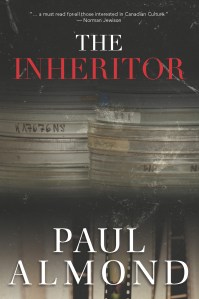
    The Inheritor - Paul AlmondDocuments

    Now, as anyone might imagine, almost no English documents from 1800 exist on that largely unexplored coast off modern-day eastern Quebec. Archival material tells only of prime ministers, treaties and so on. Nothing explains exactly how a farmer drank water when clearing land. (Answer: a Piggin). But in New Carlisle, the county seat, an old box in a basement under a hat rack produced a paper from 1816, which revealed that a terrible famine had affected the Coast, caused by a volcanic explosion on Mount Tambora. A schooner had come from Quebec City to relieve the starving inhabitants; in order to get your barrel of flour to survive, you had to say who you were, how many were in your family, and so on. The paper noted that one Thomas Manning, aka James Almond,* had fought on the battleship Bellerophon, and had settled in East Nouvelle, as Shigawake was then known.

    Intuition

    In due course I discovered that behind Port Daniel, true wilderness then, a Mi’kmaq settlement thrived. If you deserted the British Navy in the early 1800s, your punishment was death. So the Marines would have chased deserter Thomas Manning. And where would he have gone? Back into the interior. What was there? The Mi’kmaqs. Bingo. There’s the story.

    This third leg of the tripod involves not just your own intuition and common sense, but advice from others. No Mi’kmaqs on this side of the Bay really knew anything about the 1800s. However, in New Brunswick, I found an Elder whose grandfather, and the grandfather before him, had been shamans. And there was an ethnologist at the Gaspe Museum, an Iroquois who had studied the Mi’kmaq all his life. And so gradually, my first book, The Deserter, grew out of their oral traditions, documents I found, and from what I intuited.

    And so I went, looking through my binoculars on their tripod. I looked into the 1850s, when my grandfather trekked on snowshoes six hundred miles to Montreal (described in The Pioneer). Then to 1900 when my uncle went to the Boer War (in The Chaplain), and from there on to 1914, when my father fought in WWI (described in The Gunner), and on…”

    * James Almond was Paul Almond’s great-grandfather. He settled in Shigawake in 1810 or thereabouts, founding the oldest homestead there.


    Paul AlmondIn addition to the eight volumes of the Alford Saga and several other books, Paul Almond produced, directed and in many cases wrote over 120 television dramas for the CBC, BBC, Granada (where he created the documentary Seven Up!) and various networks in the U.S., plus a number of feature films. www.paulalmond.com

    Photo (top) of Paul Almond © 2012 Northernstars.ca

    Photo (headshot) of Paul Almond © Joan Almond


    David StansfieldDavid Stansfield, a close friend of Paul, wrote 400 television scripts for TV Ontario in Canada, the Public Broadcasting Service in the U.S., the Discovery Channel, NHK, Encyclopedia Britannica and Time-Life, plus half-a-dozen feature film screenplays and nine books, seven of them novels. www.davidstansfield.com
     

    Author Barbara Burgess worked with Paul Almond for the past two and a half years, helping him arrange book launches, copy-editing and handling some of his literature-related correspondence. www.thecacounacaves.com
  • Running a Small Press in 2015 by Guillaume Morissette

    Running a Small Press in 2015 by Guillaume Morissette

    Located in Montreal, Canada, Metatron is a small, independent press that publishes contemporary literature and works by new and rising authors. Almost all of its authors are under thirty years old, and their works reflect concerns such as love and relationships in the age of social media, existential angst, reconciling the spiritual with the digital and MySpace-era nostalgia, among others. Along with Ashley Opheim, who founded the press, I currently serve as co-editor of Metatron. We’re both writers with good intentions but limited time, and we have no concrete experience running a business. Metatron Press started with no safety net, investors or carefully thought-out business plan. Yet so far, everything is going great. When I joined Metatron in 2014, the press had already published six titles and received positive media coverage.

    I met Ashley in 2011, through Concordia University’s Creative Writing program. Our literary tastes overlapped, so we became friends and began working together on countless projects. We organized several well-attended readings in Montreal, a little miracle as we had virtually no budget. Later, in the fall of 2013, Ashley applied for a small grant from Emploi Québec’s Jeunes Volontaires program. At the time, I was living in Toronto, so I could only follow her progress through the grant application system from a distance. Though I knew she might receive money in the end, it didn’t feel like a game show, where you spin a wheel and win thousands of dollars and maybe a cruise, but more like something procedural and mysterious, as if she was defending herself in a court of law, trying to argue that she deserved retribution.

    The grant wasn’t an overwhelming amount of money, but it was enough for Ashley to start experimenting with different ideas. She made good use of this initial flexibility. It helped Metatron exit the grant stage and become a self-funded, independent entity. When I moved back to Montreal in 2014, it seemed perfectly natural for me to start helping Ashley with Metatron

    A few lessons from Metatron’s journey so far:

    1) Leverage pre-existing chemistry. My friendship with Ashley (pictured below) is a huge asset for Metatron, I feel, as we can pitch ideas to each other quickly, delegate tasks knowing the other will get things done and generally feel good when working together on projects. The sub-text of mutual respect and trust in our communications can only be earned through years of working together, and sometimes failing together. And countless other friends (and friends of friends) have helped Metatron. Ridiculously talented (and busy) local graphic designers Freyja & Zamudio, for example, took the time to create two high-quality book covers for the press. Metatron has also received a lot of support from Montreal artists like Claire Milbrath, Rachel Shaw and Rebecca Storm, and bookstores like Drawn & Quarterly. These contributions, big or small, are all invaluable. I am often surprised by how eager our friends are to pitch in.

    Ashley Opheim

    2) Work fast. One advantage of running a small indie press is that we’re usually able to fast-track the typical production cycle of a book. Instead of a book coming out a year or more after the initial publishing agreement is signed, it can come out a few months after work begins. This can give the final product an increased sense of urgency, though it also means there will be less time to let the work “rest” and to return to it later with fresh eyes.

    3) Build your community. Metatron doesn’t present itself as a literary press that takes itself very seriously, but rather as something artistic powered by positive energy and good intentions. It doesn’t only publish books and booklets – it also promotes the work of local writers, artists and musicians on its blog, fostering good vibes and a sense of community. This, I feel, gives the press a distinct flavour. In addition to being thought-provoking, literature can be entertaining, welcoming and serve as the basis for a strong community.

    Metatron pin

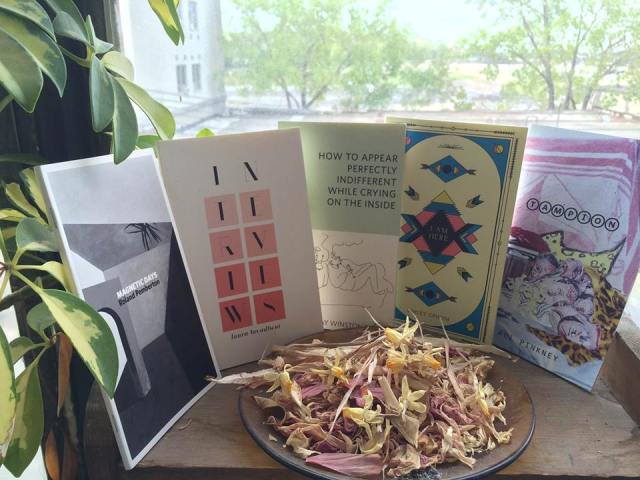
    4) Keep things small. Metatron’s finances often feel like an aquarium to me, like a delicate ecosystem. All profits made by the press are pumped right back into reprinting current titles or publishing future ones. To keep costs down, it’s been helpful to focus on smaller print runs, and to keep distribution entirely in-house. Moreover, some of Metatron’s titles are booklets rather than books. The booklets are a little bigger than your average chapbook, but more compact than a full-length, perfect-bound book. I really like this format, as it allows us to work with a lot of new and rising authors who haven’t been published in print before. Since booklets are also cheaper to produce and ship, they can also be sold for less.

    5) Have no idea what you’re doing. And finally: it’s okay to try new things, or figure them out as you go. In Spring 2015, Metatron will publish the full-length, perfect-bound debut of Toronto-based writer Sophia Katz, a big release for us. If we have to change our methods to produce and ship more copies, we’re confident that we’ll be able to figure out a way to adapt. Metatron has also announced the inaugural 2015 Metatron Prize for contemporary writers. The winner will receive $150, a publication deal with Metatron and a selection of past Metatron titles. Before announcing the contest, it seemed impossible for us to estimate how many submissions we would be receiving for something like this, so we simply decided to go for it and see what happened. In the end, we were blown away by the quality, quantity and diversity of manuscripts that we received, and we are now hoping to do the prize on a yearly basis. 

    Though not all of Metatron’s experiments will pay off, they should all prove valuable in some way, and it seems likely that this willingness to be playful and try out new ideas will remain an important part of the press’s identity.

    Metatron Books


    Guillaume MorissetteGuillaume Morissette is the author of New Tab (Vehicule Press, 2014), which was shortlisted for the Paragraphe Hugh MacLennan Prize for Fiction. You can find him on Twitter at @anxietyissue
  • Why I Teach Brand-New CanLit by Natalee Caple


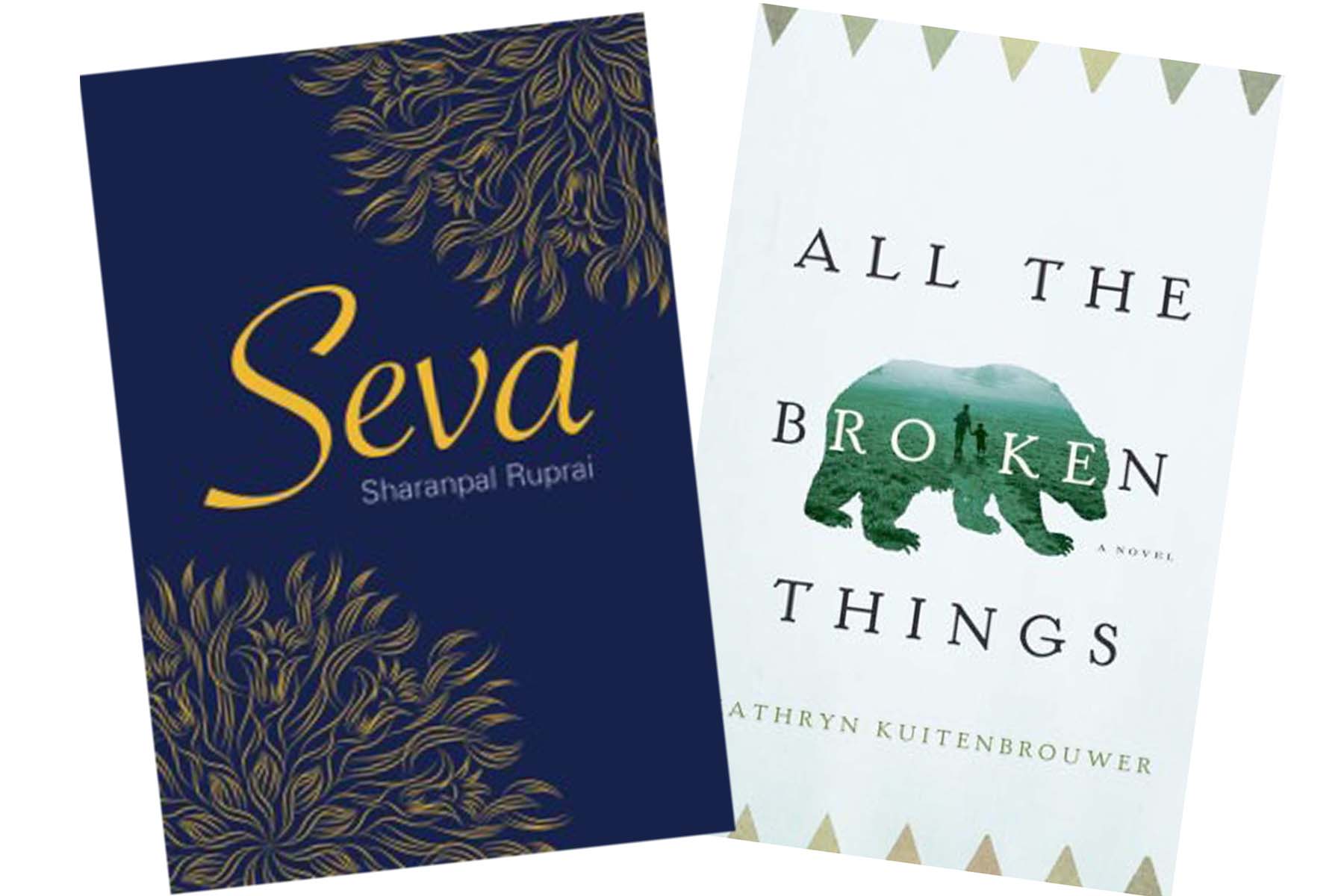
    This year, Natalee will teach Sharanpal Ruprai’s “Seva” and Kathryn Kuitenbrouwer’s “All The Broken Things.”

    I have my dream job. I write, review and teach Canadian literature and creative writing. When I think about why I am so happy teaching new CanLit I recall when, a few years back, my friend, writer Andrew Pyper, asked me in an interview what had changed for me as I evolved from an aspiring writer to an established author.

    The truth is everything has changed. In the beginning my desire to write was about me. It was about trying to see who I could be, what I might be good at and where I might find a community to belong to. Now, being a writer, being a parent and being a professor are all part of participating fully in the culture that sustains me. I feel that there is no better way to demonstrate how varied and valuable I think Canadian culture is than to devote my life to producing, promoting and teaching CanLit.

    Now, being a writer, being a parent and being a professor are all part of participating fully in the culture that sustains me.

    Because it is so important to me that students see the books they read as part of something familiar and real, something that they are already impacting and being impacted by, I often use brand new books. I also teach some of the canon: Atwood, Ondaatje, Munro. After all, these are writers who have helped to raise awareness of Canada as a significant site for cultural production (teaching Alice Munro the week she won the Nobel Prize was incredibly moving). But I also teach books that are literally printed days before classes begin.

    …teaching Alice Munro the week she won the Nobel Prize was incredibly moving.

    Designing my syllabus a few weeks ago, I realized that there are only two major drawbacks to this style of teaching. The first is that I am constantly redesigning my courses, which means new lectures, new assignments and research on what is coming out. The second is that I feel a lot of anxiety about the books arriving on time. But in spite of the extra work and anxiety, there are so many benefits to teaching contemporary literature within the context of the now. Here is a list of some of them.

    • The books are never out of print.
    • Pre-ordering books helps to let the publisher and the bookstore know that the titles are desired.
    • The material is often quite relevant to students’ daily lives. This allows students to identify better with the settings, characters and scenarios.
    • Authors are accessible, alive and often available to Skype into the classroom so that students can ask them questions directly.
    • Student presentations are much better. Instead of Googling a biography and retyping a handful of academic quotes they have to read the whole book (they do complain about this).
    • Student essays are much better. Their close reading skills really improve because that is all they have to rely on.
    • Student confidence in their own readings improves. Because they don’t have to compete with the scholarly opinions of experts they learn that it is okay to rely on and develop faith in their own readings. This causes them to engage more deeply and so…
    • Students get better marks. When they see this they start to appreciate the work they did.
    • Students become more willing to take risks in thinking.
    • Plagiarism is greatly reduced. In fact, because a brand new book is so unlikely to have essays on it in circulation, to plagiarize really means paying someone to create an essay. Far fewer students are willing to take this extra step as it requires more planning and seems somehow more actively dishonest.
    • Canadian culture is reinforced as real and ongoing, lively, diverse and present.
    • Book sales show up in a timely fashion for authors. Titles get circulating at a time when it is most beneficial. We all know that numbers have become incredibly important to the sale of future books and that there is some self-fulfilling prophesy there.
    • I get to stay engaged with my peers in the writing community. I am giving them my support and staying on top of my field.
    • I get to read all the books I wanted to anyway and call it work! Did I say that it is my dream job?

    For the teachers out there: why do you – or don’t you – teach new CanLit?


    Natalee Caple’s latest novel, In Calamity’s Wake, was published by HarperCollins in Canada and by Bloomsbury in the US. She is a professor of English, teaching Canadian literature and Creative Writing at Brock University. www.nataleecaple.com

  • Writing About Ukraine by Alexandra Hawryluk

    Kyiv_at_night

    Seeing the images on my television screen, I froze in shock and anguish. People running for cover behind piles of rubber tires, a man being struck down by sniper fire. This was Maidan – Independence Square in the centre of Kiev, a place where I had talked to the book vendors, met friends, watched a busker do a routine with his two little monkeys. Those were the paving stones my feet had crossed and re-crossed and now those stones were stained with blood. In that one moment, as I watched the scene unfold from my living room couch, I understood something of how the people who had entrusted their stories to me may have felt as eyewitnesses to the destruction of their homeland under Soviet rule.

    As the Maidan revolution in Ukraine turned into an international story, I developed an almost obsessive need to know what was happening there hour by hour. It took a good dose of fatigue and a beautifully reasoned e-mail from a friend in Kiev to make me realize that it would be more useful to finish writing about my 1998 trip to Ukraine than to trade second-hand opinions about events in which I played no part. Weeks had gone by without my adding a single new page to my book.

    To take my mind back into the 1990s, the heady time of Ukraine’s newly won independence, I listened again to the interviews I’d done, re-read passages in my favourite reference books and immersed myself in Ukrainian music and contemporary literature. I remembered the impassioned, witty conversations in Lviv’s coffee houses with writers, publishers, students and community leaders. We’d talked about the function of opposition in a democracy, the ethics of responsible journalism, the role of education and religion in building a new civil society. Students, once they found out I was Canadian, wanted to know how we had achieved a peaceful pluralistic society. If I mentioned multiculturalism and inter-faith dialogue they inevitably wanted to know which group was winning. A discussion about Western wages always led to an explanation of income tax, medical insurance, mortgages, the cost of university education and personal accountability – concepts entirely foreign to the Soviet world view and social order. Political pundits at the table said that it would be more than twenty years before the prevailing mindset could change.

    Sometimes, I lost the thread of a story because people alternated freely between place names from the Austro-Hungarian Empire, the Polish Commonwealth, the Russian Empire and the USSR. (In the 18th century, Ukraine was partitioned between three political entities before being annexed by the Soviet Union in the 20th century.)

    Eventually the Ukrainians told me their side of history: World War II and the successive advance and retreat of Nazi and Soviet armies across their country, Nazi and Soviet labour camps, an atmosphere of relentless suspicion and fear. The elderly would talk about those who perished in Stalin’s deliberately planned famine of 1932-33. Many regretted that Communist war criminals had never been brought to justice. Writers complained that the only change undertaken by the newly elected deputies was to replace the hammer and sickle on their lapel pins with a trident.

    As these tales of loss, death, sorrow and anxiety poured out, my writer’s objectivity often abandoned me, and I silently grieved with the storyteller. All I understood then was that after seventy years of state-enforced silence, there was a great need to speak and to be heard. Now it is the young Ukrainians born and educated after the fall of the USSR who are speaking out. And the world is listening.


    Alexandra HawrylukAlexandra Hawryluk, an editor and translator, was a correspondent for Radio Canada International. At present, she’s writing a memoir about her time in Ukraine during the 1990s.

    Photo of Kiev, top: Anton Molodtsov/Tony Wan Kenobi [CC-BY-SA-2.0], via Wikimedia Commons

  • The Creative Power of Memory by Shelagh Plunkett

    A_picture_is_worth_a_thousand_words

    “– but there’s one great advantage in it, that one’s memory works both ways.” – the White Queen, Through the Looking-Glass

    I’m a writer of literary non-fiction and my first book is a memoir. Seems likely that memory would be important to my work. It is. But it’s of equal value to writers of all stripes – poets, or those who write short and long fiction and any of the myriad forms non-fiction takes. Memory is one of the most powerful tools any artist or creative person has in her arsenal. As in physics, so in literature: one cannot create something from nothing. Creativity is the combining of bits and pieces of memory in a unique way. The way you’ve made that character walk is because, whether you consciously remember it or not, you once saw somebody or something move that way.

    Since writing my memoir, I’ve been asked frequently how I was able to remember in such detail events that took place more than thirty years ago. It’s caused me to investigate the nature of memory: how we retain detail, how we access those details and how we can enhance our ability to remember events sharply and fully.

    On one level, there are tricks that help. To retrieve the details of a life in the tropics, I ate Guyanese food, listened to Indonesian angklung music, played the mid-1970s hits of the Mighty Sparrow. My father had shot hundreds of slides and many hours of Super 8 film when we lived overseas. I sat in a dark, hot and muggy room and played those over and over and over again. I found obscure websites where the recorded songs of birds all over the world could be played. I used Google Earth to find the homes I’d lived in and to retrace the path I took from home to school.

    But those tricks will only get you so far. They’ll help place you in a context and they will start triggering your memory, but to go further, to make the emotional connection that is needed for the best work, you’ll have to do something that is counterintuitive. You’ll have to forget to remember.

    The funny thing is, this forgetting to remember is also what we need to do when we are encountering or experiencing something that we hope to set firmly in our memory bank for future recall.

    How do you forget in order to remember? It’s a bit like what a dancer, a painter, a musician must achieve to move from good to great. You have to become so utterly familiar with the steps of the dance, with the details of the memory, that you can move into it without being aware that you are doing so. Forget what you are trying to do. Forget that you are remembering. Mesmerize yourself with the particulars of your memory and then stop paying attention to them. Wander into the blank spaces between, find yourself experiencing rather than consciously remembering events.

    That’s all about recall, but a very similar process takes place when we work hard to encode and store memory. It is much the same as what experts tell us to do in order to enhance memory, to keep a memory intact with all its unique and valuable details for future use in that story you’re starting to write: Pay attention. Focus narrowly on the details. Shut off the nitter-natter that is so often going on in all our heads at all times and just listen, smell, see the particulars of what is going on around you. If you can do that – and don’t give up; it’s hard but manageable – you will be staggered by the results.

    You’ll also have upped your store of that which makes your writing good: concrete detail.


    Shelagh Plunkett won the CBC Literary Prize for creative non-fiction in 2007. Her winning essay grew into a memoir, The Water Here is Never Blue, published by Penguin in 2013 and shortlisted for both the Mavis Gallant Prize for Non-Fiction and the Concordia University First Book Prize. Visit her blog at http://shelaghplunkett.wordpress.com

    Photo credits: Niamh Malcolm (headshot); “A picture is worth a thousand words” by HikingArtist (top). Licensed under Creative Commons Attribution-Share Alike 3.0 via Wikimedia Commons.

  • Liberating the Book by Bryan Demchinsky

    Get ready for it – the next big thing in the digital revolution is nearly upon us. It’s called social reading and it will change the way books are produced and consumed.

    So says digital publishing guru Bob Stein, someone with the cred to know what he’s talking about. Stein played a role in creating the e-book, and he is the founder of The Institute for the Future of the Book, a think tank described on the website ifbookthen.com as “exploring and influencing the evolution of new forms of intellectual expression.”

    An American based in New York, Stein was at the Atwater Library recently talking to a handful of publishers, editors and writers about his vision. Essentially, SocialBook, as he calls it, will be a website that allows publishers, readers and writers to upload books, new and old, so they can be read and discussed interactively. The book will appear on one side of the screen with a commentary panel on the other side. The uploads will be subject to copyright restrictions and the site will be curated in order to maintain quality. You might think of it as a giant book club, with potential for all kinds of adjunct activities. For example, Stein sees the possibility of a dating component – what better way to meet a like-minded companion than by sharing a book?

    Some who listened to Stein’s pitch were skeptical. Aren’t there already enough time-sucks on the internet? Isn’t reading a desirably solitary activity? And where’s the money in this? The guru seemed mildly irritated by his listeners’ lack of vision, especially the money part. It is his job, he said more or less, to throw off sparks and let others figure out how to stoke the fire. Fair enough. If you had heard about Twitter in its development stage you might rightly have expressed doubts about connecting to the world in 140-character bursts. And it still doesn’t make money.

    There is a bigger issue at play. I call it the liberation of the book. Digital technology has unshackled literature from the printed page where it has mainly reposed since the Chinese began putting it there in the 11th century. We lament the decline of books, bookstores and libraries as we have known them. But put the requiem aside for a moment to celebrate what has been gained – choice.

    Personally, I don’t care for e-readers, so I don’t read e-books. But I’ve taken to audio books downloaded from the internet in a big way. They are much more portable than books on paper – or e-readers. I listen to them in the gym, on long car trips, while out for a walk or even just running errands. The performance of the reader can enhance an appreciation of the text – think of hearing Dickens or Ian Rankin with each character endowed with an appropriate accent.

    I still buy books on paper, but hardly ever from mega bookstores like Chapters/Indigo. I buy online, but I don’t care for Amazon, the Walmart of digital technology. I prefer to buy from sites like AbeBooks, which aggregates booksellers from across the English-speaking world and sells their books, used and often new. (And I still love buying and trading books at The Word.)

    You get the picture. You can tailor your reading habits according to your needs and desires. The same holds true these days for music and video (let’s not say TV or movies anymore). In this new digital world, not so much is lost – heck, even vinyl has made a comeback and radio is still with us – but much is gained. The proliferation of choice has created a richer environment, even if it hasn’t yet made writers and performers richer.  Not every new thing will survive. But I’m glad Bob Stein is offering me social reading, whether I take to it or not.


    Bryan Demchinsky is a Montreal editor and writer. He is the author or co-author of four books and was formerly a senior editor at the Montreal Gazette.

    Photo credits: Bryan Demchinsky (top); Gabor Szilasi (headshot)

  • Trading Places with Yourself by Sean Michaels

    Trading Places with Yourself by Sean Michaels

    For as long as I can remember I’ve been telling musicians, “I’m a fiction writer.” And for just as many years I’ve been telling other writers, “I’m a music critic.” As a writer, it’s not unusual to cultivate a handful of different identities but it feels strange when these identities begin to reorganize themselves. I know far more people in the music industry than I do in publishing. Yet I aspire to be a novelist, a taleteller, and with the publication of my first novel, Us Conductors, this label automatically and unexpectedly seems privileged above the other.

    Music’s where I come from. Or at least it’s where I accidentally come from. I started reviewing albums while studying English at McGill. Soon I had launched a blog called Said the Gramophone which opened doors at publications like The Believer and The National Post. Throughout it all I was still writing fiction – short stories about whispering objects, magical animals, melancholy gods. But the 22-year-old who idolized Salman Rushdie and F. Scott Fitzgerald was soon covering Montreal loft concerts for magazines that wouldn’t give his fables a second look.

    Ten years later, the music-writing life has become second nature. I know the protocol of set times and guest lists, the cycles of new bands and old bands and labels and tours. I know how to coil a guitar cord. I never learned much about Montreal’s poets or Canada’s independent presses, but I’ve helped at music festivals and battles of the bands.

    Yet I adore fiction. For all my album reviews and band bios, my heart remains faithful to stories. I love the way a novel is a rollicking yarn and also a parade of images. I love the way these convoluted lies can feel so true, can feel truer than the truth. I could spend whole lifetimes in the prose of Michael Ondaatje or Tim O’Brien, where similes move like sunsets on the horizon.

    Us Conductors, in its way, is at the intersection of both these loves: music journalism and fiction. It’s a story, but it’s a story full of music. And Montreal’s vibrant music scene was the ecosystem that fostered the book’s creation. When I consider its artistic influences my mind veers to Arcade Fire’s album Funeral and Wolf Parade’s Apologies for the Queen Mary before the works of any writers.

    The strange thing is now that I’ve published a novel, one identity seems to trump the others. I’m a novelist, before I’m a music journalist. By publishing Us Conductors, I seem to have switched clans. It’s a choice – a proud, deliberate choice! – and I feel lucky to be joining the family of authors. But I’m also still learning the secret passwords of the fiction-writing world, still figuring out the way power flows and the way it doesn’t.

    I’ll admit my relief, last week, when I slipped into the back of Casa del Popolo for a music gig by some friends. I recognized everyone in the room; I knew when to applaud, and how loud. I felt like the old, familiar version of myself. It’s a version that’s nearly worn through, one I’m ready to slough off – almost, in a few moments, just a few moments more, soon.


    Sean Michaels is the author of the novel Us Conductors. His music journalism has appeared in The Guardian, The Globe and Mail, The Believer, Rolling Stone, McSweeney’s and Pitchfork. He is the recipient of two national magazine awards and founded the peculiar music blog Said the Gramophone in 2003.

    Graphic (top) by Crystal Chan.

  • A Tale of Two Meetings by Lori Schubert

    Two hundred and fifty buzzing literati from across Canada – writers, storytellers, translators, booksellers, publishers, and directors of literary organizations – settled in at tables of ten in an underground conference room at the McGill New Residence. Around the perimeter were the impresarios of this unprecedented two-day extravaganza: the team from the Canada Council for the Arts. The ambitious goal of the gathering, dubbed the National Forum on the Literary Arts, was to establish a manageable handful of priorities for addressing the challenges facing the literary ecosystem. This seemed a worthy goal, but it quickly became apparent that the single greatest challenge was getting people to see themselves as members of a group with common interests rather than lobbyists for the segments of the community they represented. At the end of two days, we had a list of what must have been over a hundred “priorities,” so, as one fellow at my table put it, no priorities at all.

    A few weeks later, I headed off to Banff for another two-day conference, the National Summit of Writers’ Associations. This one brought together a more cohesive group, the directors of Canada’s provincial writers’ organizations, the Writers’ Union of Canada and the Writers’ Trust of Canada, who organized the event. The schmoozing was great, as it had been in Montreal. But more than that, we gloried in finding one another. Most of us had been working in silos, with no peers or mentors. Imagine the thrill of finding ourselves among “our peeps” for the first time, with hours and hours for in-depth discussion of what we do and how we do it. Imagine the relief of finally getting answers to those pesky questions we’d carried around for years; the pleasure of providing helpful suggestions to our less experienced colleagues. Every item on the agenda was apt. Every contact made promised concrete mutual benefits.

    And the payoffs have already begun to roll in: since returning to my desk, I’ve sent QWF’s “literary dinners” documentation to my new colleague in Saskatchewan, who is interested in setting up a similar fundraising initiative; I’ve answered an SOS from my New Brunswick counterpart, putting him in touch with a YA literature juror from Montreal when one of the people he’d lined up pulled out at the last minute; we’ve begun to talk about a 2016 national writers’ “super-conference” that would include other groups like the Canadian Society of Children’s Authors, Illustrators and Performers; the League of Canadian Poets; and the Professional Writers Association of Canada. We’ve also set up a calendar to share information about when our writers are traveling to each other’s provinces, a practice I hope will lead to more variety in QWF’s one-day workshop offerings as well as more out-of-town opportunities for our members to lead workshops and promote their new books.

    So what to make of the difference between these two conferences, both admirable in intention, but – to my mind, at least – miles apart in impact? My take-away is this: even in a group of people with similar values, it’s hard to let go of your own point of view and see yourself as a single cell of something larger. In Banff, we didn’t have to sacrifice anything to see anyone else’s point of view because it was our point of view. Each one of us immediately understood the mutual benefit of collaboration and everyone glowed with enthusiasm for building on what we’d started. But most of the time when we work in groups, we need to work hard to find the core of what unites us.

    Only then can we agree on priorities and begin to put them into action.

    In Banff for the National Summit of Writers’ Associations. Lori is in the back row, third from the right.


    A straggler who didn't want to take part in our ice-breaking activities in Banff
    A straggler who didn’t want to take part in our ice-breaking activities in Banff.


    Dawn in Banff.
    Dawn in Banff.


    The Professional Development Centre in Banff, where the delegates stayed and worked.
    The Professional Development Centre in Banff, where the delegates stayed and worked.


    What do you think should be the priorities when addressing the challenges facing the literary ecosystem today?

    Do you think “the literati” aren’t as good in business meetings because they often work alone?

    How can a group of people with different goals work together productively?


    Lori Schubert is the Executive Director of the Quebec Writers’ Federation.