Category: Uncategorized

  • Realists of a Larger Reality (Or Why I Read and Write Science Fiction)—By J. DeLeskie

    Realists of a Larger Reality (Or Why I Read and Write Science Fiction)—By J. DeLeskie

    I started reading science fiction young, before realizing it wasn’t suitable material for a girl with aspirations of fitting in with her fourth-grade contemporaries. It was the genre my dad and older brother favoured, and the surfaces of my childhood home were littered with paperbacks with lurid covers: a dinosaur riding an ichthyosaur across the desert (Jack Chalker’s Midnight at the Well of Souls); or a humanoid cat glowering over a worried-looking, two-headed tripod (Larry Niven’s Ringworld). Who could resist opening these books to see what tales lay inside? Not I.

    I soon discovered that the sex scenes in these books were way more interesting than the chaste kissing and petting the kids at Sweet Valley High were up to (albeit in a Dürer’s Rhinoceros sort of way; in retrospect, many of these old-school SF authors did not appear to possess firsthand knowledge of female anatomy or— you know—the actual mechanics of sex). Soon I was hooked, and not just for the salacious content. When the reality of being an introverted, slightly awkward kid attending Catholic school in rural Ontario became unbearable, I’d escape to Arrakis and lose myself in the messianic journey of Maud’Dib, or follow the adventures of a resurrected Richard Burton (the explorer, not the actor) as he searched for the source of the great river on Riverworld.

    By my teens, I contained within me an archive of worlds, characters, concepts, and stories that enriched my life immeasurably. The trade-off—a sense of not quite existing on the same planet as many of my peers—was worth it, even if it didn’t always feel that way. Not only did science fiction provide escape, it was an antidote for religious indoctrination, challenging the conservative, Catholic vision of the world I had been raised to accept as my own. My allegiance was to a universe far bigger and weirder than anything Christian dogma could encompass.  

    At some point in my early twenties, however, I stopped reading science fiction. I lost patience with the flat characters, clunky prose, and outright misogyny that typifies so much of the genre. My reading began to veer toward realism and non-fiction. In retrospect, I think I was trying to accept the world as it was, to put away childish things. I went to law school, got married, had kids, and embarked on a career as a corporate lawyer. I felt I no longer had the luxury of questioning the world as it was; my job as an adult was to succeed according to its metrics.

    Yet gradually, as my kids grew older and began asking the thorny questions that kids ask, I started to wonder if my acceptance of things had gone, perhaps, too far. It took a few years, but I managed to find my way out of the corporate cul de sac. And slowly, I found science fiction again. I rekindled a childhood love for Ursula K. Le Guin and was dazzled by her ability to imagine less destructive ways of organizing society. I read Octavia Butler for the first time and was astonished by her depiction of society collapsing into a racialized dystopia— and then being rebuilt, one community at a time. These authors and others—Marge Piercy, Kim Stanley Robinson, Corey Doctorow, Karel Čapek, etc.—eroded the shell of cynicism I’d formed over my conscience by insisting that there was nothing inevitable about environmental degradation, white supremacy, capitalism or misogyny.

    Thus, when I decided to try my hand at writing, it was science fiction that called to me. I’m now in final revisions of my first novel, Everclear, a coming-of-age story set in the near future in northern Quebec. The act of imagining this future feels laden with responsibility, and I’m attempting to construct this story with great care. I believe firmly that our words bring potential worlds into being.

    In her brilliant and fearless acceptance speech at the 2014 National Book Awards, Ursula K. Le Guin put out a call to “realists of a larger reality” who “see alternatives to how we live now and can see through our fear-stricken society […] to other ways of being, and even imagine some real grounds for hope.” The call is increasingly being answered by Indigenous, Black, and LGBTQIA writers of science fiction such as jaye simpson, Cherie Dimaline, Nnedi Okorafor, and N.K. Jemison— writers who, because of their lived experiences, assemble the pieces of our shared reality in unexpected ways. To me, this is the opposite of escapism; it’s an invitation to see the world with new eyes and answer the moral imperative this vision affords us. This is why I read science fiction, and why I write it: not to escape this world, but to re-imagine it.

    And, of course, for the cringy sex scenes.

    Suggested Reading List

    Love After the End: An Anthology of Two-Spirit & Indigiqueer Speculative Fiction, edited by Joshua Whitehead, 2020

    The Dispossessed: An Ambiguious Utopia, by Ursula K. Le Guin, 1974

    Woman on the Edge of Time, by Marge Piercy, 1976

    The Parable of the Sower, by Octavia Butler, 1993

    Ministry for the Future, by Kim Stanley Robinson, 2020
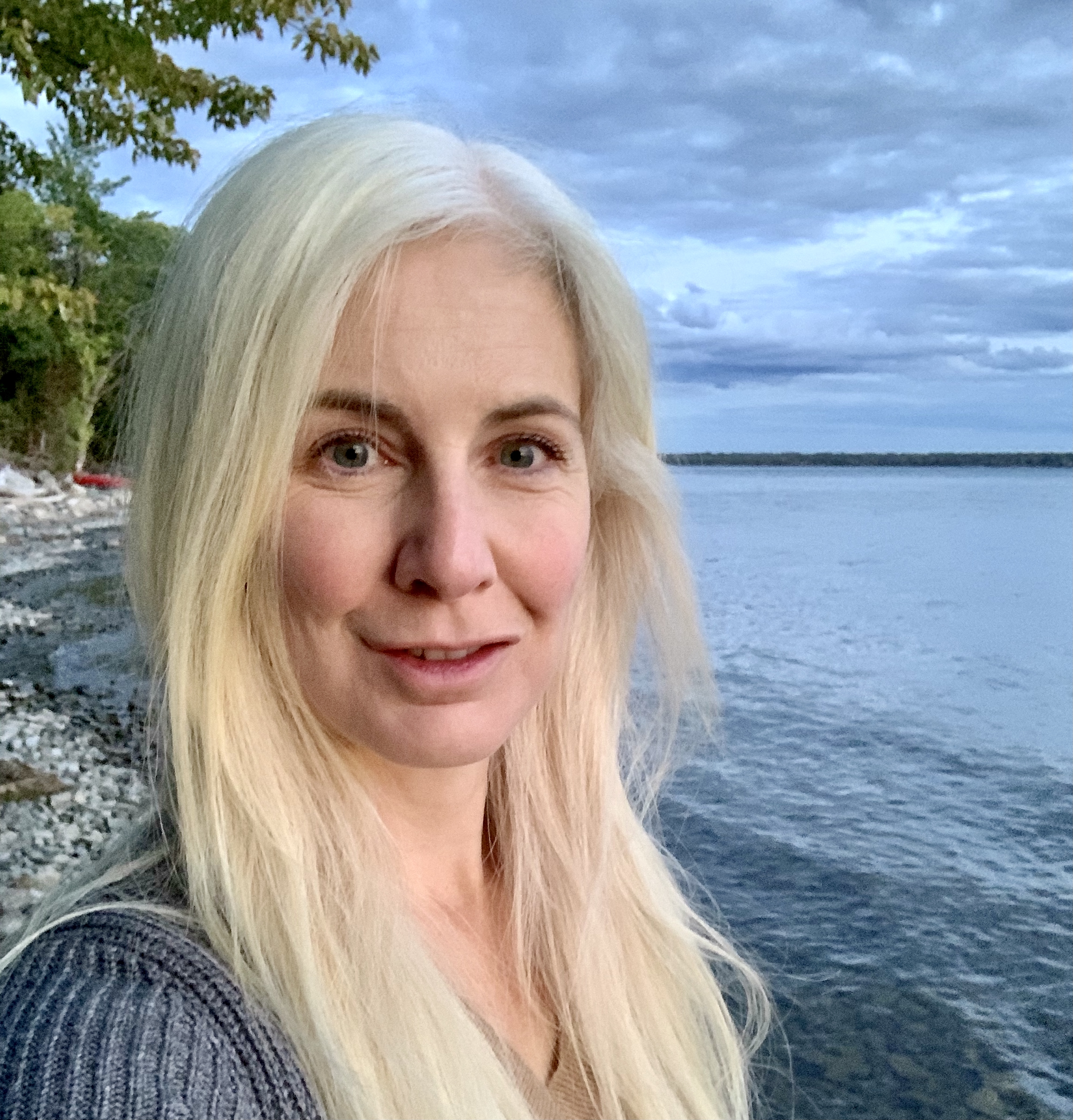

    Jennifer DeLeskie is a former lawyer and new writer, currently revising a draft of her first novel. Her non-fiction piece, “April 2, 2020,” will appear in Chronicling the Days (Guernica Editions), forthcoming in Spring 2021. Jennifer volunteers on the board of the Quebec Writers’ Federation.

    Photo credits: Header banner is licensed under CC BY-SA 2.0; Annabel Simons (headshot)
  • How Do I Research and Write About My Subject When There’s No Archive?—by Linda M. Morra

    How Do I Research and Write About My Subject When There’s No Archive?—by Linda M. Morra

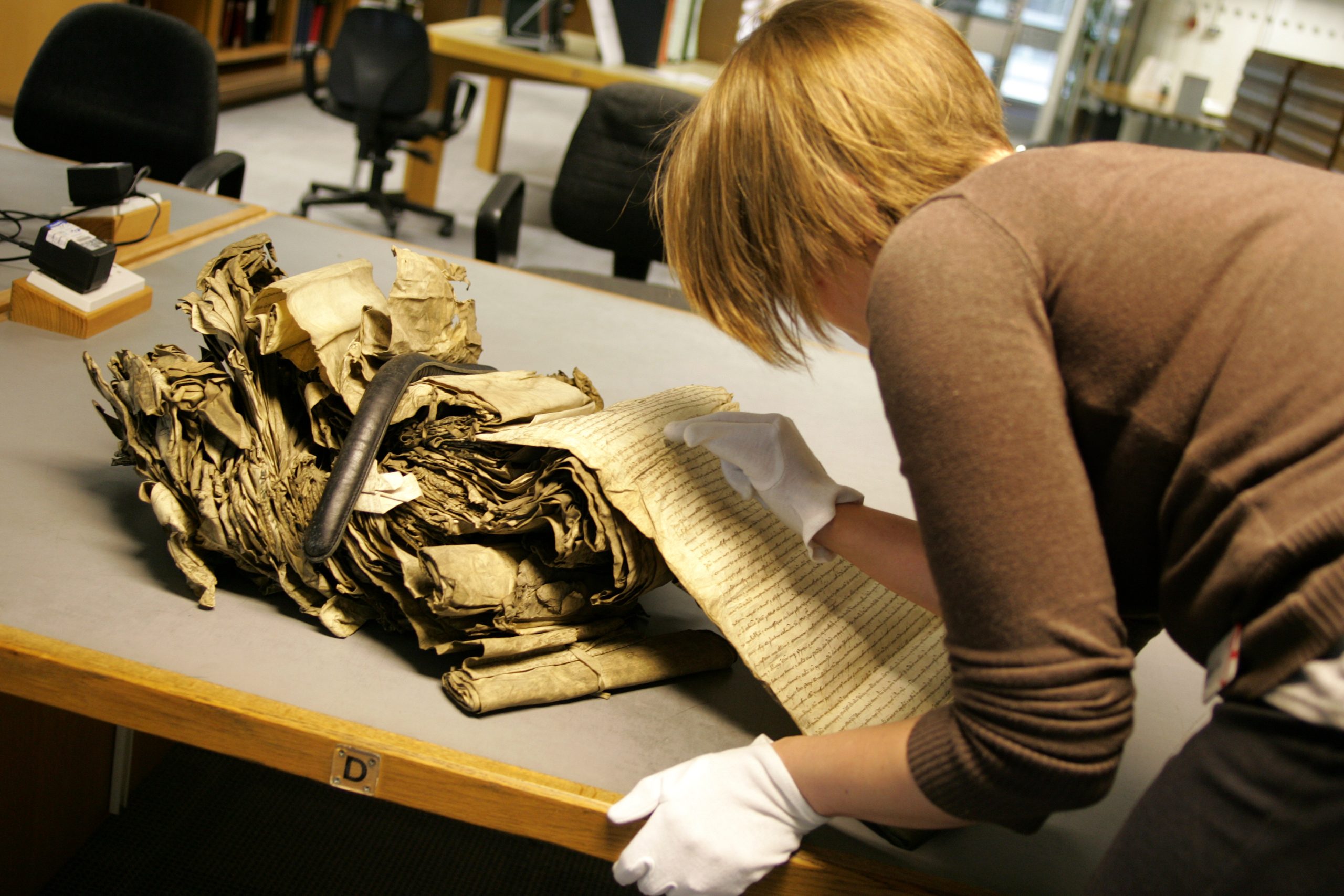
    When perusing the scrapbook of a Canadian female writer and artist, I find a twig of cedar clipped to its pages. Later, I read her handwritten letters, which reveal that the twig was exchanged as a token of affection between correspondents. I have been researching this writer for over a decade, and her archives have undergirded three of my books—a real gift, when I know that women’s archives are often scarce, if they exist at all.

    “But how do I research and write about my subject when there’s no archive?” This is a question I’m often asked because of the frequent lack of material about women’s lives. The answer is layered, multidirectional.

    I.

    Perhaps there is an archive—just not one in an official, state-sanctioned place, such as a university, museum, or library. There are materials; you just haven’t found them yet. You have to go beyond formal institutions and ask surviving family members of the subject in question—sometimes more than a few times. And you have to consult with documents in out-of-the-way places. The latter sometimes means borrowing someone’s truck—or hopping into a stranger’s—and carrying a pocket knife along with your laptop, just to be sure you’re going to be okay.

    “Perhaps there is an archive—just not one in an official, state-sanctioned place, such as a university, museum, or library.”

    II.

    How do I research and write about my subject when there’s no archive? Sometimes you don’t yet have access to the archive, so you have to know how to ask. You have to be there at the right time and the right place and the right day and ask the right person. (Surely, not that guy? Yup, that guy.) Sometimes it means drinking a Guinness for breakfast because that was what was offered to you, and you don’t want to be rude, and you were never one to back down from a challenge. Then it means waiting until you’re headed towards being more than just a bit tipsy, even after the whole omelette you ate for good measure, and then it means asking right then for permission to access files. Who knows if you slurred your words when you asked? That’s not on record anywhere. Sometimes that’s what it takes to gain confidence, and not just your confidence to ask for permission, but also his: he needs to know you’re a worthy candidate for permission. Drinking a whole Guinness at 9 a.m. apparently qualifies you.

    III.

    How do I research and write about my subject when there’s no archive? At other times, the archive is stashed away in a basement, hidden from prying eyes, waiting for daylight—or perhaps, you tell yourself optimistically, waiting for you. And accessing it takes earning trust, but not by drinking beer this time. No, this time it means taking all kinds of precautions: reading documents, preparing documents, writing documents, rewriting those documents, and rewriting them again. It means signing contracts, and trying to do all manner of intellectual calisthenics to be sure you’re in top form to handle this one just right. Oh, you’ll still get it wrong—or, at least, your copy editor will—but it won’t matter. It seems you were doomed not to get this one right. When you work with an archive that no one even knew existed, a misstep can happen in spite of your best efforts.

    “It seems you were doomed not to get this one right. When you work with an archive that no one even knew existed, a misstep can happen in spite of your best efforts.”

    IV.

    How do I research and write about my subject when there’s no archive? Maybe the archive isn’t a tangible thing, such as a document or photograph. My dear colleague and friend, TL Cowan, researches cabaret. A performance is an elusive thing, but someone’s memories about one night can help you reconstruct it; recollections about the scene tell you something about what a performer might have been trying to accomplish. Many witnesses recounted how a Kahnawake poetess at the turn of the century wore a stereotypical “Indian dress”—a short little buckskin number—before an audience of white men. Titillating, you might think, until you read the fiery tone of her lyrics and understand that where and how she performed her work added value and meaning to it. Then you realize she was giving these men unmitigated shit for their assumptions of superiority, and for the violence wrought upon Indigenous nations.

    V.

    How do I research and write about my subject when there’s no archive? Consider archival deposits that may not seem to have anything to do with your subject—at least, not at first. The Royal Canadian Mounted Police files offer one example. Maybe you’re not interested in the RCMP. Perhaps they’re not exactly your cup of military tea. (I personally prefer espresso, if it can be had.) But sometimes you may want to drink that tea because of what you might learn. The RCMP, as it turns out, spied relentlessly on women activists in the 1970s. They have files upon files on feminist associations and meetings. You don’t have to like RCMP tactics, but reading their records will reveal a lot to you about these women activists. And, later on, you can still drink your espresso.

    VI.

    How do I research and write about my subject when there’s no archive? Have you considered different searches on the internet? Ah, the digital world, that mysterious place that consistently reminds me of the ocean, which washes up a wealth of material one day and is a seemingly flat, calm, and inscrutable surface the next. What lies underneath that surface? If you just bait the right hook, what will you draw up? Sometimes the hook dangles there, brings in nothing much—an old shoe, candy wrappers, and some algae. You suppose it’s possible you can reconstruct something from the old shoe. Then, at other times, you find a whale, and you have no idea how to fish for whales. Befriend it, perhaps? Yes, that’s better, and don’t turn your back on it while it frolics in the harbour. How did that whale get there? You download everything you find that day, because tomorrow it may swim away back into the ocean, and only surface again with a whole new set of research terms, whatever those might be.

    “Ah, the digital world, that mysterious place that consistently reminds me of the ocean, which washes up a wealth of material one day and is a seemingly flat, calm, and inscrutable surface the next. What lies underneath that surface?”

    By now, you’ve tried everything you know. What do you have left? You may have found material completely unrelated to your current subject. A postmark, say, that proclaims “God Bless America” or “Help Retarded Children.” You wonder: has anyone written about these postal slogans? Your imagination begins to suggest a future project.

    UBC Archives Feb 22 2016 402_blurred

    Gather these materials. Delight in the wealth of all that’s left behind—from twigs to postmarks to letters. Leave your own trail, to form in effect a new archive—a gift for another generation of researchers. Finally, remember to call upon your own imagination. That has a peculiar and unaccountable wealth of its own. Don’t forget to visit that archive, ever.


    Linda-Morra-e3f6691b87ef626a8515ff84fa924af0Linda M. Morra is a professor of Canadian literature and Canadian Studies at Bishop’s University. Her book, Unarrested Archives (UTP 2014), was shortlisted for the 2015 Gabrielle Roy Prize in English; her edited edition of Jane Rule’s Taking My Life (2011) was a finalist for the LAMBDA prize (2012). She is the current president of the Quebec Writers’ Federation.
    Photo credits: The National Archives (UK) [CC BY 3.0], via Wikimedia Commons (top banner); Linda M. Morra (postmarked envelope)

  • Literary Influences: E. L. Doctorow’s Lives of the Poets by John Goldbach

    Literary Influences: E. L. Doctorow’s Lives of the Poets by John Goldbach

    The first time I read E. L. Doctorow’s wonderful Lives of the Poets: A Novella and Six Stories (1984) was in early 2001, after picking up a used hardcover copy at City Lights Bookshop in London, Ontario, at 356 Richmond St. Not City Lights Bookstore, the famed bookstore in San Francisco, California, at 261 Columbus Ave—City Lights Bookshop (the one in London ON) is one of my favourite used bookstores ever, a small but dense and rich oasis of books and comics and records, etc.

    A few years later, after reading Slavoj Žižek’s Iraq: The Borrowed Kettle (2004), I reread Lives of the Poets. Much to my surprise, Žižek references Doctorow’s collection in his second book about 9/11 and its aftermath (namely, the illogic of the Bush administration’s reasons for invading Iraq). I was surprised to learn Žižek uses Doctorow’s collection as a sort of model. Žižek writes,

    The hidden literary model for this book is what I consider E. L. Doctorow’s masterpiece, the supreme exercise in literary post-modernism, far superior to his bestselling Ragtime, or Billy Bathgate: his Lives of the Poets: Six Stories and a Novella—six totally heterogeneous short stories (a son is set to the task of concealing his father’s death; a drowned child is callously handled by rescuers; a lonely schoolteacher is shot by a hunter; a boy witnesses his mother’s act of infidelity; a car explosion kills a foreign schoolgirl) accompanied by a novella which conveys the confused impressions of the day-to-day life of a writer in contemporary New York who, as we soon guess, is the author of the six stories. The charm of the book is that we can reconstruct the process of the artistic working-through of the raw material of this day-to-day life.

    As soon as I’d finished Iraq: The Borrowed Kettle, I reread Lives of the Poets, my engagement with the book deepening.

    I’ve read the Doctorow collection twice since then. About a decade later, in 2015, I used it as an oblique model for organizing a book of my own fiction, It Is an Honest Ghost, which consists of six stories and a novella (Hic et Ubique). There was something about how Doctorow’s stories stood alone—were “totally heterogeneous,” in Žižek’s words—but nevertheless informed one another, that I found haunting.

    My new collection was originally made up of eight stories and a novella but for myriad reasons I cut two stories, not the least of those reasons being for the sake of uniformity, a loose strange symmetry—a uniformity and symmetry impressed upon my mind by Doctorow.

    And then I read Lives of the Poets for a fourth time in July 2016, while working on this short appreciation. Lives of the Poets remains politically perspicacious, deeply insightful, and contemporary.

    Here’s Doctorow on US immigration, and mass migrations in general. The writer, the narrator of the novella, emerges from the NYC subway, and observes the new waves of immigrants to the city. He writes,

    Dear God, let them migrate, let my country be the last best hope. But let us make some distinctions here: The Irish, the Italians, the Jews of Eastern Europe, came here because they wanted a new life. They worked for the money to bring over their families. They said good riddance to the old country and were glad to be gone. They did not come here because of something we had done to them. The new immigrants are here because we have made their lands unlivable. They have come here to save themselves from us.

    Lives of the Poets continues to shed light on the present for me. Out of Doctorow’s impressive and celebrated oeuvre, it’s often overlooked. But it remains an insightful and inspiring collection, chock-a-block with strange echoes and resonances.


    KateHutchinson19webJohn Goldbach is the author of The Devil and the Detective (Coach Books, 2013), a novel, which was an Amazon Best Book of 2013; Selected Blackouts (Insomniac Press, 2009), a story collection; and, most recently, It Is an Honest Ghost (Coach House Books, 2016), a collection of six short stories and a novella (Hic et Ubique).

    Works Cited: Žižek, Slavoj. Iraq: the Borrowed Kettle. New York: Verso, 2004, p. 7.

    Photo: Kate Hutchinson (headshot)

  • Healing, One Story at a Time by Licia Canton

    Healing, One Story at a Time by Licia Canton

    In 2012, a driver pulled up behind me while I was putting a box in the trunk of my car. He crushed my legs between the two bumpers. I was bedridden for four months, and then I started physiotherapy. Within a year I was able to do 95 percent of the activities I had done before the accident. People would ask me how my legs were doing and I would smile and tell them I was doing well. I was, physically—but I didn’t tell them that I wasn’t able to write.

    I wasn’t able to write for clients, organize events or attend networking functions. I didn’t think any of it was worth it. I had lost my drive. In fact, I had lost my desire to do anything at all. A few weeks after the accident, I had looked at the positive side of things: I had decided to finish my second book of stories; I was going to write on my laptop while in bed. But that never happened.

    My insurance agent suggested that I see a therapist. I would only be able to move forward by dealing with the trauma. I decided to try it, and I discovered that writing itself was what would cure my writing block. It’s called narrative therapy, and it changed my perspective on life.

    Vera, my therapist, asked me to do exercises in automatic writing. I had to just put words on the page without thinking about what I was writing. Then she said that I had to write about the accident in order to regain my confidence. At first, this seemed like an impossible task. If I could write, why would I be there? I could talk about the accident during therapy, but I couldn’t write about it. I didn’t want to write about it.

    Eventually, I wrote a story about a writer who was unable to write about a traumatic experience. It took me many months to be able to do that. I could not sit for longer than five minutes at a time. I worked at it early in the morning when everyone was still asleep, when I was least likely to be interrupted—and when no one would see me crying.

    As part of the therapy, I was obliged to read that first story “Because of Leonard Cohen” at every therapy session until I could read it without crying. That accomplishment was priceless. Then, the therapist asked me to read the story at a public venue as I would have done with any of my other stories. But I couldn’t fathom the thought of sharing my very personal writing in public. I come from a background where broken bones get fixed and as for the rest, we simply move on. Everyone knew that I had been in an accident. Very few people knew about the ensuing depression. It was not a topic of discussion.

    “I could not sit for longer than five minutes at a time. I worked at it early in the morning when everyone was still asleep, when I was least likely to be interrupted—and when no one would see me crying.”

    I first read “Because of Leonard Cohen” abroad, at a short story conference where very few people knew me. The story was later published in the international short story anthology Unbraiding the Short Story, edited by Maurice A. Lee. Then, I wrote more, and more. I wrote and published other pieces inspired by my accident, “In Front of the Bell Centre” and “The Woman in the Red Coat.” And I still haven’t finished writing all of the stories that I need to, and want to, write. I have a Table of Contents with the titles of all the stories that I am working on, all part of my narrative therapy. With the completion of each new story, the process is the same. I ask for feedback from several writer friends. I read it repeatedly in private until I feel completely comfortable with it. I read it to my husband and children. Then, I read it in public either before or after it is published. Now, I preface the readings by saying that the story came out of narrative therapy.

    Vera told me about Raymond Queneau’s Exercices de style (1947), a collection of ninety-nine retellings of the same story, each in a different style. Although I am no longer in therapy, I continue working on my own version of Queneau’s book: multiple literary variations of my accident and its aftermath. Just as I was not thrilled about physiotherapy and osteopathy, I am not exactly fond of this literary project—mostly because I have had to postpone other writing projects. On a positive note, however, narrative therapy has encouraged me to go beyond my comfort zone by doing other activities connected to writing that I would not have done a few years ago: guest blogging, giving workshops, mentoring other writers, writing/speaking about depression and narrative therapy, and actively seeking venues to read the writing that has come out of narrative therapy.

    I still cry every time I tackle a new story, but I always feel a great satisfaction when I share it in public. It is part of the process that moves me towards complete healing, as is this piece that you’re reading right now. In fact, I prepared my pitch for this column two years ago. I just wasn’t ready to share my experience then.


    headshotLicia Canton is the author of the short story collection Almond Wine and Fertility (2008), published in Italy as Vino alla mandorla e fertilità (2015). She is also a literary translator and founding editor-in-chief of Accenti Magazine. She has published personal and critical essays and edited nine books. She mentors emerging writers, journalists, and editors. She holds a Ph.D. from Université de Montréal and a Master’s from McGill University. See her profile in LinkedIn or the Hire A Writer directory.

    Photos: Flickr (top); Ohayon (headshot)

  • Hello Baby, Bye Bye Books by Mike Steeves

    Hello Baby, Bye Bye Books by Mike Steeves

    Man holds baby while reading a book

    My daughter was born on August 25, 2014, and during the interminable lead-up to her birth I was, like all new parents, subject to a deluge of unsolicited advice, warnings and thinly-veiled threats from family, friends and complete strangers about what I could expect as a new parent. One of the warnings I heard most often was that the time I had for reading was going to be severely curtailed.

    Maybe my friends didn’t appreciate how dedicated I was to my routine, because I soon discovered that it was actually pretty easy to carve out the three hours I needed in order to stay on top of the steady stream of books that I had begun purchasing early on in my wife’s pregnancy as a way of offsetting my anxiety over not reading enough.

    For starters, I used to bike to work. But once I realized that I could eke out at least forty minutes of reading on my daily commute, I started taking the metro to work, thereby forgoing the last form of physical activity I practiced with any sort of regularity.

    Another threat to my reading habit was the immense amount of time required to help my daughter sleep. Newborns spend a lot of time sleeping, but they are notoriously bad at it and require assistance (referred to as ‘soothing’). This basically amounts to walking the streets of your neighbourhood with your baby stuffed into one of those obnoxiously priced “carriers.” Once I was over the new-dad jitters and was no longer trying to impress passersby with the baby I had strapped to my chest, I got into the habit of doing laps around the pond at Parc Outremont while reading from a book that I held in front of me. I made my way through Michael Hamburger’s translations of Paul Celan this way, and while I typically have little memory for poetry, many lines from this work are now frozen in place, triggered every time I pass a fountain or leafless tree. And one of the most memorable reading experiences of the last few years is the time I spent on a cold bench at Parc Saint-Viateur with my daughter sleeping in the carrier as I read the final pages of Peter Handke’s A Sorrow Beyond Dreams while kids dressed up as penises made their way to Halloween parties.

    Happy Halloween

    ” …the time I spent on a cold bench at Parc Saint-Viateur with my daughter sleeping in the carrier as I read the final pages of Peter Handke’s A Sorrow Beyond Dreams while kids dressed up as penises made their way to Halloween parties.”


    My aforementioned friends, the ones who warned that I would have to sacrifice my love of reading to my role as a new dad, were also an enormous tax on the time I had for reading. By refusing dinner invitations, birthday party invites, brunch for babies, etc., typically blaming my absence on my daughter, I was not only able to keep up my reading schedule, but, after I had refused enough of these kind invitations, they no longer came in with any regularity, which also spared me the enormous time-suck of responding in a considerate manner something to the effect that “I would love to! But…”

    While it turns out that my friends were wrong about finding the time to read, there is one aspect of parenthood they were right about, but that I’d never taken very seriously: I may still manage to find a comparable quantity of time, but the quality of that time has been seriously degraded. I can sit for hours with Knut Hamsun’s Pan in front of my face, but I regularly find myself rereading the same line over and over again. Or an hour passes and I don’t even make it to the bottom of the page I started on. I’ve managed to read an impressive number of excellent and difficult works, but I’ve hardly retained anything. Within a week or so of finishing a book, I even struggle to remember what I had just read (except for the Celan). So while I have plenty of time to read, I can’t maintain the level of focus and attention I had in my pre-paternal reading sessions.

    Which brings me to the final obstacle to my reading habit – writing. Before my daughter was born I used to try to write at least a few lines every night, but even this small commitment now seems to take an inordinate amount of time away from doing the thing that I really enjoy (it would be quite a stretch to say that I enjoy writing). On account of the soul-wearying exhaustion I feel at the end of every day, I find it pretty easy to excuse myself from writing for the night and to settle into a good book. And by “settle into a good book” I mean “read the same line over and over again until I eventually pass out on the couch.” My friends say that it’s perfectly natural to neglect my writing for the next year or so, and that eventually I will find the time and energy to start up again. I hope they’re right. Goodnight moon.


    Bookjacket_M Steeves

    Mike Steeves lives with his wife and child in Montreal, and works at Concordia University. Giving Up is his first full-length book of fiction. Connect with Steeves on Twitter @SteevesMike.

    Photos: Via Flickr; no changes made (top); Mike Steeves (Halloween); Nikki Tummon (headshot)

  • Bye Bye Darlings: The Editing Gauntlet by Alice Zorn

    Bye Bye Darlings: The Editing Gauntlet by Alice Zorn

    Farine Five Roses
    Alice Zorn’s new novel, Five Roses, is named after the FARINE FIVE ROSES sign that marks the southwest horizon of Montreal and Pointe St-Charles, where the novel is set. Photo: Alice Zorn


    You’ve finished your novel manuscript and you even – finally! – get a publisher. It took ten years. You have Neanderthal muscles across your brow from frowning at the computer screen. But now you’re home-free. Bingo!

    Then you get the first slew of comments from your editor. She’s the objective eye who sees what the book can be, but isn’t yet. Does it begin in the best possible place? Is there too much exposition? Does it have structural integrity? What about the ending? She tells you all the darlings you cherished while you were writing don’t belong unless they serve the book. The clever turns of phrase, the crisp dialogue, the research that shows off your erudition, the quirky events that really happened. Your clean manuscript pages are tattooed with strokes and question marks. Some editors slash with red pen. I’m so glad mine used pencil.

    With my first novel, Arrhythmia, I was advised to lop two main characters, cut ninety pages and replace them with new writing. I couldn’t believe it. Hadn’t the publisher already accepted the book? My editor was firm. I had to learn how to rethink developments in the novel as narrative choices. I reminded myself that my editor, like me, only wanted what was best for the book. After all, she brought the manuscript to the acquisitions table, arguing that – out of all the other manuscripts being vetted – mine should be published.

    I rewrote those ninety pages because I realized the change was structurally necessary to the novel. And I rewrote them, yes. My editor didn’t tell me what to write, only that the direction I’d originally taken wasn’t the best option. However, I did not lop those two characters. I made them stronger and more integral to the novel. Writing the novel was hard, but editing it might well have been the more profound learning-about-writing experience.

    “Writing the novel was hard, but editing it might well have been the more profound learning-about-writing experience.”

    My second novel, Five Roses, will be published by Dundurn Press in 2016. I’m at the copy editing stage now. This is the finicky time when syntax, word choice and punctuation come into question. I open the document and scroll through 320 pages with red commas added, words underlined and lassoed to dialogue bubbles. Individual words are highlighted in yellow. A character is cycling along a city street, alert to the nervous rush hour traffic, as she thinks about the police sending out an alert to catch a criminal. I swear at myself for not having noticed. I must have read this page twenty times already! But my brain was in a groove. And as I’ve repeatedly witnessed, my brain is willful in its fondness for repetitions, internal rhymes and alliteration.Now, too, is when I discover that grammatical niceties aren’t as ingrained as I assumed they should be after five decades as a voracious reader. Shouldn’t I simply know all these distinctions by now? Seems not.

    And so I learn that there’s a difference between hanged and hung when it refers to a human body that is being put to death. I hung a picture on the wall. The executioner hanged a man. However, a human body that was already dead hung from a hook. I need to know that for this novel, since a character was hanged.

    6777082592_d2ba71334d

    I had to teach myself the farther/further dance after having worked with a copy editor who changed all my farthers to furthers. He thought further sounded more posh. Fine, I thought. He’s the copy editor. Maybe it’s one of those UK vs US things. For a couple of years I banned all farthers from my writing. Then I had a story returned from a copy editor who had changed some of my furthers to farthers. That was more curious. I finally pulled a tome of grammar off the shelf and discovered there’s a rule. Farther is for physical distance. Further is the abstract concept. You might think that I would already have known this, but I didn’t. And I’m not the only one. I continue to see farther and further misused in books published by reputable houses. (If you want a trick to remember which to use when, think far > farther. Thank you to Carol Weber for this tip.)

    You aren’t the best judge of your work, because you’re too close to the writing.You need an editor. Not your partner nor your best friend, who won’t want to hurt your feelings, but an experienced and discerning professional who will help you realize the full potential of the book.

    I’m now at the last read-through before Five Roses goes to the design people. I’ve rewritten the manuscript three times since I thought it was finished in 2013. Cutting, puzzling, moving pages around. Lots of darlings sent marching to the recycling bin. At each stage of editing, the book becomes more of an entity that lives separate from me. Which is what it will have to be when it’s sent off into the world.


    for QWFAlice Zorn’s book of short fiction, Ruins & Relics, was a finalist for the 2009 Quebec Writers’ Federation McAuslan First Book Prize. In 2011 she published a novel, Arrhythmia, with NeWest Press. She has twice placed first in Prairie Fire’s Fiction Contest. Her second novel, Five Roses, will be published with Dundurn Press in July, 2016. She lives in Montreal and can be found at http://alicezorn.blogspot.ca
  • My Invincible Summer: Rebooting My Writing Purpose by Susan Doherty Hannaford

    My Invincible Summer: Rebooting My Writing Purpose by Susan Doherty Hannaford

    In the midst of winter, I found there was, within me, an invincible summer.
    Albert Camus, Return to Tipasa

    In May 2014, I learned that the publication of my debut novel, A Secret Music, would be delayed by twelve months. It was heartbreaking news, but not unusual coming from a small Canadian publisher who grooms first-time authors.

    During the interim, I began what would become my second book, The Ghost Garden – a deep-in-the-trenches, creative non-fiction work about one woman’s forty-year struggle with schizophrenia. I spent my days researching. I even worked in the field: I volunteered at group homes, in the Douglas Hospital and at Nazareth House, a shelter for homeless men. I worked with those suffering from extreme psychosis, and many people shared the heart-breaking stories of their volcanic lives with me.

    Then, finally, my box of books arrived this May. It was one of the most gratifying moments of my fledgling career as a writer. But as Claire Holden Rothman told me, “This is just the beginning, not the end.” Days later, I had my Montreal book launch, quickly followed by a Toronto launch and several library readings, book talks, radio interviews. Somehow the euphoria of my launch allowed me to cartwheel over a dire condition that was progressing in the most virulent way. My adrenaline overshadowed the symptoms that persisted all of May and June and July.

    “Somehow the euphoria of my launch allowed me to cartwheel over a dire condition that was progressing in the most virulent way.”

    I had migraines, fevers, night sweats and swollen lymph nodes. The radiologist who examined the CT scan pointed out a possible lymphoma that would need to be confirmed by neck biopsy. (Take that off your bucket list.) The results of the biopsy came back inconclusive. The lymph nodes were necrotic, meaning that all cells were dead. I was back to waiting and wondering what was wrong.

    On August 1, my condition became acute and I was hospitalized for what turned out to be a month at the Jewish General Hospital. My fevers were raging around the clock, reaching over 40.5 degrees. I had biopsies, MRI and PET Scans, and a lumbar puncture. The good news was that I was cancer-free, but the diagnosis – a rare illness called adult-onset HLH – seemed just as ominous.

    HLH is an autoimmune disease where the immune system goes psychotic. It never turns off. It hunts your body for tumors and bacteria and viruses, and when it finds nothing, it destroys your blood cells. (Think of a John Deere mower in your beautifully groomed garden, without a driver, operating in tenth gear.) The treatment protocol is aggressive. Chemotherapy. Corticosteroids. Antibiotics. Neupogen. I needed twenty-two blood transfusions before beginning chemo.

    I began chemo on August 6 at 7 p.m. At 9 p.m. HLH launched its final spear. For seven hours I had convulsive chills, fevers, profuse sweating… but also, visions. I saw the cells that were dying. I saw the macrophages leaving the bone marrow. I saw my deceased father agonizing over me. When the fever finally ended, the gratitude I felt was overwhelming. I felt the weight of a thousand hands lift me back up.

    “For seven hours I had convulsive chills, fevers, profuse sweating… but also, visions.”

    As sick as I was, I saw my purpose as a writer. I’d written A Secret Music to heal a part of myself, but in The Ghost Garden, I saw an opportunity to enlighten a society where the everyday violence of movie theatre shootings and Greyhound bus beheadings had stigmatized the mentally unwell more than ever. I wanted to be a voice for those who had none. The Ghost Garden needed to be written. My ambition as a writer would be re-focused on a higher purpose. From that exact moment, I began my recovery with positivity and the certainty that my health would return.

    I consider myself lucky. The diagnosis for HLH is most often missed until it’s too late. I was diagnosed within the two-month fatal cut-off. Writing is a passion, and faith is a grace note. Blissfully, all my passions are still intact.


    Susan Doherty HannafordSusan Doherty Hannaford is a Montreal writer. Her debut novel, A Secret Music was published by Cormorant Books in May, 2015

    Photo (headshot): Kathy Slamen

  • A Café of One’s Own by Deborah Murray

    I love to write in the mornings. With breakfast finished and my son off to school, I look forward to playing with words, a turn of phrase, an unfolding story. Distraction, though, can thwart my best intentions.

    When I am about to sit down and write, I’ll do the dishes, the laundry or any other household task begging for my attention. Once I do sit down, the wobble of my chair or the pitter-patter echo of the toddler downstairs seeps deep into my consciousness. Distraction can be insidious. When settling in proves a dismal failure, I know to pack my bag and venture out to find inspiration at a local café.

    “Distraction can be insidious. When settling in proves a dismal failure, I know to pack my bag and venture out to find inspiration at a local café.”

    In my neighborhood, there are many cafés that fit the bill. There are independently run cafés for the “shop local” crowd, and fair-trade cafés for the environmentally conscious. Parisian-style cafés have their lure, and fast-food dark roasts vie with hip whipped lattes to quench any caffeine craving. One greasy spoon will let you while away a few hours with free refills if you order something to eat. There’s the cash-only café, another that refuses to offer Wi-Fi and a tiny patisserie that charges you 20% extra to sit in.

    I have days when I pass up more than one before walking in. I can even get inside and decide: no, not here, not today. Sometimes it’s the coffee: too bitter, too weak. Sometimes it’s the atmosphere, too trendy, too quiet, too empty, too full. But eventually, the pressure of time to get something, anything, written will suck me into the nearest door.

    To write in, I like a cafe with wooden floors, high ceilings and tables with ample space. Once committed, I make the place my own. I give myself over to a familiar wafting aroma. I order an Americano, no milk, no sugar please. I arrange my piping hot coffee and writing accoutrements on my “desk,” and then I take in the sounds around me. An espresso maker sputters and whirs to an undercurrent of percussion-driven electronic beats and the indiscernible vocalizations of a female singer. Voices murmur, mostly in French, some in English and a spattering of other languages, about travel plans, relationships in crisis, business.

    Distractions, yes, but I am not compelled to do anything about them. They become a backdrop, an entryway into an ongoing narrative. I listen to the tap-tapping sounds around me of others engaged in their own interior monologues and I, finally, begin mine.


    Deborah MurrayDeborah Murray is an editor and playwright’s assistant. Finding the time and means to write is her ongoing occupation.

  • A Memoirist’s Dilemma: Telling the Truth Without Betrayal by Karen Zey

    A Memoirist’s Dilemma: Telling the Truth Without Betrayal by Karen Zey

    In another life, I worked in schools as a special education teacher and administrator. I gathered stories for thirty-five years, and as a writer, I wanted to recapture my classroom days so that readers would land in the scene and see a flicker of universal truth. But as a teacher with a longstanding commitment to confidentiality, sharing my insider’s view was sticky.

    I was a newcomer to memoir, and I faced the usual hurdles. I had an imperfect memory and was still developing my craft. But in addition to juggling voice, scene, structure and imagery, I wrestled with divulging personal attributes. Advice from the sages of creative non-fiction – don’t add or embellish, don’t deceive – was not particularly helpful here. The discussion about naming real people usually focuses on possible fall-out from family and friends. Writers of memoir are urged towards honesty and disclosure. Yet I had a moral and legal obligation to protect the privacy of my former students and their families. How do teachers (and nurses, psychologists and social workers) write about their working life while respecting professional obligations?


    “Writers of memoir are urged towards honesty and disclosure. Yet I had a moral and legal obligation to protect the privacy of my former students and their families.”


    In my first published story about a student, I was able to get the family’s permission to use their son’s name. “Lessons from my Favourite Student” recounted my experience teaching a child with Down syndrome. Mark, now in his forties, loved having his story appear in his community newspaper. His parents, both teachers, were thrilled that their son was the subject of a teacher’s fond memories.

    But as I dug deeper and began writing about vulnerable students, difficult parents or my floundering efforts as a young teacher, the dilemma of what to divulge and what to keep hidden soon emerged. Were pseudonyms enough? Was it okay to change physical features, like hair colour or age, to hide a child’s identity? Were fictitious locales and made-up school names sometimes necessary? I wanted to remain faithful to what happened, but I was walking a tightrope between revelation and secrecy.

    Altering names was an immediate decision. What did it matter if an eight-year-old student was called Matthew or Jake? As a story developed and I imagined someone – a parent, a colleague, a former student now an adult – reading what I’d written, I realized I had to avoid causing hurt. I had a responsibility to safeguard privacy. While presenting authentic details about people and what they said, I needed to keep my characters anonymous.

    If the child is in grade one rather than two, if she’s blonde not brunette, if the family has three kids, not four – do these tiny changes undermine the truth of what happened? No. Since I taught fewer than seven students a year in my Special Ed. classes, will naming the school make identities too obvious? Sometimes. If I write about the boy with autism who hated parachute games – the flapping cloth, the descent of the dark billowing shape – and confessed he threw out his sneakers to avoid gym class, should I modify parts of the scene? No. I don’t want to obscure any precious moments of insight or connection. To ensure confidentiality, should I use the disguise of a composite character? Never. This would dishonour the individuality of the people who came into my life.

    A few months ago, I had lunch with a former colleague who thought she recognized a troubled boy in one of my stories. “I presume he was one of ours,” said Kathy. She pushed me for details, but I just smiled. As she reached for her coffee, she added, ”Well, it doesn’t really matter, does it? We knew so many students like him. Too many. And you’ve captured what it was like for us.”

    For many years, a village of special children taught me how to be a better teacher and a better human being, and I’m deeply grateful. Now I’m a writer. I don’t change facts for the sake of art. I try to write the truth while avoiding betrayal. I hope no one can say for sure who “Michael,” “Jimmy” or “Tina” are, or where they went to school. They deserve privacy. But when I write about how our paths crossed, I hope my readers will recognize every one of their souls.


    Karen ZeyKaren Zey is a writer and full-time student of life who treasures her past career in special education. Her stories and essays have appeared in Artsforum Magazine, Gazette Vaudreuil-Soulanges, Hippocampus Magazine, Prick of the Spindle and The Globe and Mail. Karen lives in Pointe-Claire, Quebec, and is currently working on a school-based memoir.
  • Hadassah Arms and Other Quandaries: Translating Cultures by Anna Leventhal

    Hadassah Arms and Other Quandaries: Translating Cultures by Anna Leventhal

    douce-sweet

    In early 2015, I stood in front of a window at Renaud-Bray, looking at a poster that was taller than I was. The poster had my name on it – it was the cover of the French translation of my first book. More than amazement, more than excitement, I felt bemused. This isn’t my book, I thought. Is this my book? Ceci n’est pas mon livre.

    Translation seems to be on everyone’s langue these days, with Kim Thuy’s translated Ru winning Canada Reads, several new translations of Nelly Arcan hot off the presses, and a renewed curiosity about cultural hybridity in the air. The ethical and aesthetic considerations of moving between languages seem like fertile ground for conversations we ought to be having, especially in Quebec.
     

    “Translation seems to be on everyone’s langue these days””


    When I found out that there would be a French translation of my newly published book, I was thrilled; as a transplanted Winnipegger, I felt it implied a level of acceptance in a city where I’m still considered “an outside eye” after fifteen years. I was excited to think that my stories, most of which are set in Montreal, would be accessible to the roughly two-thirds of the city’s population that read in French. But the work of translation isn’t just about making stories accessible. It’s about making them legible: creating a context so that they don’t just exist in another language, they live in it.

    In Neil Smith’s funny and pointed column on this blog from February 2013, he writes about the dangers of translating English Montreal into France-French, where, as he says, a dépanneur becomes chez l’Arabe and câlisse becomes putain de merde. The result: a work that’s as absurd as Duddy Kravitz sipping Earl Grey and exclaiming “jolly good, old fellow!” There was no danger of this for my book, as its translator, Daniel Grenier, is a Québécois writer. Any fears I had were laid to rest when I saw he had titled one story “Un hostie de câlisse de gâteau” (“A Goddamn Fucking Cake”). It’s a richly Québécois translation, a translation full of pis and vinegar. Grenier gamely took on an exhausting number of puns, cultural references, word-plays, and dumb inside jokes, and made them legible to a Franco-Québec audience.

    Some of the equations were simple, he told me. One of my friends wondered how the translator would handle a sign held by an environmental protestor that read ASBESTOS? ASWORSTOS! Easy, Grenier responded: AMIANTE? ENNEMIANTE! He turned a porn star named Iona Dildo into Jaymon Dildo and some misread graffiti from AUNT to FLOTTE. He may have been having almost too much fun.

    But there were complications. At one point, Grenier wrote me to ask about the expression “Hadassah arms.” How to go about making it legible for a Québécois audience?

    Now, even among Jews, “Hadassah arms” isn’t especially well-known. It’s a mean and fairly misogynistic way of naming that particular upper-arm sag/jiggle – so called because Hadassah, a Zionist women’s organization, mainly consists of older women. But it’s not a Jewish term that’s been popularized, like chutzpah or schlemiel. I know it because my friend’s dad used to tell us to lay off the Doritos or we’d end up with Hadassah arms. It may have been specific to her family; I’ve never heard it since. But I stole it for a family I was writing about, because I liked the specificity of it, the suggestion of a family joke or family mythology. Grenier could either do some creative idioming and write “bras style-Hadassah” or something like that, or find a new way of saying it that would make the image clear, but lose the Jewishness of the phrase.

    So what to do? Keep the image, lose the Jewish? Or the other way around?

    How important is it to make your work accessible to an audience unfamiliar with your culture, whether it be ethnic, geographic or social? Do you want your readers to immerse themselves in a warm bath or a cold lake? In a sense this is what writers are always doing: walking the line between over-explaining your characters’ world, and letting the world speak for itself.


    “How important is it to make your work accessible to an audience unfamiliar with your culture, whether it be ethnic, geographic or social?”

     
    In the end, I told Grenier that, in this case, the image was more important. I didn’t want readers to trip over an unfamiliar word and fall out of the story’s world; there would be other opportunities for them to be seduced by unfamiliar expressions and identities.

    The solution? Les gras de bingo. Equally mean, and equally evocative, but of a slightly different family than the one I wrote. In a small way, my characters lost a bit of their identity, and were given a new one, as though they had passed through the Ellis Island of literature. This, I’ve decided, is what I love about translation. My book; not my book. My city; not my city. A beautifully imperfect balance.


    Anna LeventhalAnna Leventhal‘s short story collection Sweet Affliction was published in 2014 (Invisible Publishing). It won the 2014 Quebec Writers’ Federation Concordia University First Book Award, and the French translation (Douce détresse) came out in 2015 with Marchand de feuilles. She lives in Montréal.