Tag: editing

  • Writer vs. Editor: The Showdown Within—By Malcolm Fraser

    Writer vs. Editor: The Showdown Within—By Malcolm Fraser

    The relationship between writer and editor is complicated, fraught, an emotional and ethical minefield ready to detonate and splatter the room with shattered egos at any moment.  I would know—I witness this brutal conflict from both sides on a regular basis. (And right now, my editor side is telling my writer side to chill the hell out with the over-the-top imagery.)

    I’ve been a writer since I could speak; I started making up stories, and unlike most kids I just never stopped. My dad is a writer, and his father was too—I guess it’s the family business. And since high school, when there were yearbooks and school newspapers that needed staff, I’ve also been an editor. If I’m being honest, I think my attraction to editing is probably a manifestation of OCD, or just uptightness—I just really don’t like mistakes, and I always feel a compulsion to fix them. Everything else is just finessing details.

    The first time I worked as a professional writer was in 1999. Conrad Black had founded the National Post and was raining money on an old-fashioned newspaper war with The Globe and Mail. One of his projects was rebooting the moribund Saturday Night magazine as a weekly insert in the Post. Adam Sternbergh, today a novelist based in New York City, was hired to edit the front section, which he envisioned as a collection of eccentric tidbits. He approached me to contribute after a mutual friend showed him one of my zines. I would pitch him ideas, and he would always pick the weirdest ones, like a found poem made of notes I’d seen inside a parking lot attendant’s booth. The pay was good—without getting into numbers, let’s just say that a single-line gag (about how Toronto’s Anarchist Free School was not, in fact, free of anarchists) paid me more than twice what I’m getting for this entire article. As I write this, nearly every sentence reads like a snapshot of a bygone era; at the time, I figured my career would just grow from there—little did I know!

    (Right now, my inner editor is asking whether all this detail is important; my inner writer insists that it adds context and colour to the story.)

    Just as the era was, in retrospect, impossibly freewheeling and prosperous by the standards of our current Darwinian capitalist dystopia, Adam was the kind of editor you’d dream of having, but rarely actually end up with. His notes would always lead with praise, then get into constructive, actually helpful suggestions for how I could flesh out my ideas to make them better. I try to follow his example, though I don’t always succeed.

    As an editor, I want to respect the writer’s voice, but sometimes you have to do some heavier lifting. You might be surprised at the state of the raw copy that comes in from some professional writers, even some you might have heard of. As much as I like to encourage good technique, the truth is that if you have a strong voice and a solid area of expertise, that can be much more valuable in a career than writing chops per se—as long as you are okay with trusting your editor to clean up your mess.

    Some editors will just change your copy without asking. Needless to say, as a writer that always bugs me, except on the odd occasion when I can’t deny that it has improved on the original. For example, when I first moved to Montreal, I did some writing for a fashion magazine that was essentially just the vanity project of some rich douchebros. My editor, frustrated with his publishers’ demands for low-quality content, had assigned me a piece about how TV is really great, or something (the details are a little fuzzy in retrospect). He ended up rewriting it to the point where it was much more his piece than mine, but secretly I had to admit that what he wrote was funnier.

    A few years later, I was working as an editor at the alt-weekly Montreal Mirror. A writer submitted her review very close to the deadline, and I rewrote some of her copy at the last minute. She was not happy and went over my head to complain to the editor-in-chief (pro tip: this is a risky move), who gently advised me to take it easy with my on-the-fly rewrites. I was extremely irritated and bitched about it to a few close people. When I told my dad, after a pause he said, “Yeah, I used to spend as much time writing angry letters to my editor as I did writing the article.” It was only then that I began to perceive that I might have been in the wrong. I regret my actions now, but I console myself that if my most heinous editorial sin was a misguided rewrite of a Jim Carrey comedy review for a now-shuttered paper, it could be worse.

    So I always try to look at things from both sides, the writer’s perspective as well as the editor’s. I have to, because I never know which side I might end up on. Last year, I found myself assigning and editing an article by my former editor at the long-gone fashion magazine. And one of the writers I hired at the Mirror is editing this very piece that you’re reading right now. I hope she’s not too hard on me. It’ll be in on time (pretty much) and at the right word count (more or less). After all, I am a writer: a neurotic ball of insecurity, sensitivity, and need. Just the kind of writer my inner editor can’t stand, really. But that is a story for another time (specifically, the next time I can afford therapy).


    Credit: Daniel Lafleche

    Malcolm Fraser is a writer, musician, and filmmaker based in Montreal. His book Wooden Stars: Innocent Gears was published by Invisible Publishing in 2013. Malcolm is currently Associate Editor with Montreal Review of Books.


  • The Honeymoon Phase—By Ann Cavlovic

    The Honeymoon Phase—By Ann Cavlovic

    Someone with two decades of experience getting critiques of their writing shouldn’t curl into a ball after an editor’s comments, right?

    Then why, after receiving a developmental edit on my first attempt at a novel, did I find myself in such a pit of despair? (Yes, that pit, that ball; I was every cliché imaginable.)

    The simplest explanation involves basic math: a novel is about twenty times the length of a short story, so you have twenty times the problems to fix. On top of this, the stakes for me were especially high: I’d taken a year off work to complete the draft on a small grant, and circumstances left me a single mother, all of which necessitated a weekly budget of $330. Just my son’s weekly piano lessons cost $50.

    After taking this big leap and working so hard, I wanted accolades. Instead, the editor posed neutral questions that my anxious mind could easily un-neutralize: ‘What governed your decision to include character X?’ became ‘Why did you even write this useless asshole?’ She didn’t trust the perceptions of the character whose purpose was to explore the nature of human perception, which sent me into an epistemological head explosion about my own perceptions. Sure, many of us ignore positive feedback and focus on the negative (and I hold a PhD in Catastrophizing). This cognitive distortion comes readily when the things working well are described in one page, and the things that aren’t take up fifteen.

    It wasn’t so much like I felt this editor had seen me naked. It was as if she’d seen me naked upon return from a ten-day backwoods camping trip and offered logical and helpful observations like: ‘Have you considered taking a shower?’ and ‘But first perhaps another go with some toilet paper?

    Naturally, my first inclination was to troll the editor on the internet to find evidence of her incompetence. Instead, I rediscovered her facility for insight, nuance, and skilful prose. Dammit.

    Yet as I followed the advice of friends and allowed myself a break, ideas started popping up in my mind. How to fix this. How I really could cut that. Yes of course that part was misleading. And I really have no idea how to deal with that subplot but perhaps it will become clear after I fix fifty other problems. These were the kind of blind spots my critique circle might have pointed out on a short story too. Maybe, after such a long period of isolation, I was out of the feedback-receiving habit?

    Now my draft manuscript sits on my desk in a neat pile, with dozens of paperclips—all red, I have my standards!—holding together scenes that have literally been cut and collated over months of arduous writing, reworking, and organizing. The day I got back to work, I glanced at my manuscript, and realized the little bubble of joy I’d cradled in my bosom during the brief honeymoon between completion and feedback had popped.

    But it probably had to. When I initiated my de-catastrophization protocol and mulled over places to begin, I saw how the editor’s interventions saved me from spending more energy in fruitless directions. I need that energy, because there is a lot, a whole lot, of work still to be done. Instead of resentment or embarrassment, I’m starting to feel appreciation and even something close to affection for this woman I’ve never even met in person. A stranger who’s seen my work, by necessity, at an earlier stage than I’d ever shared work before. There’s a strange intimacy to this.

    Speaking of intimacy, I met a wonderful man when finalizing the draft (which is, by the way, not ideal timing for a wannabe novelist, but I’ll take it). Months in, we are still in our honeymoon phase and I am enjoying it fully. Surprisingly, I see that phase more positively than ever, whether it’s for a manuscript or a partner. You need it. You need to build up a reserve of good feelings to get you through the work to come.

    Looking at my manuscript now, I realize maybe it was okay how stupidly in love I was. Maybe my delusional vision that my first draft would turn out like a fifth draft wasn’t all bad. Maybe, in part, I needed my delusion to get me through.

    Some relationships break down. Some manuscripts never get published. Don’t even try to tell me it’s the journey, not the destination; to deny the cost of failure is to deny the courage involved in trying. But with both my manuscript and my new relationship, deep down I have a strong sense of potential. So I will again pour my heart into both, with all the attendant hard work and brutal vulnerability.


    Headshot1 - AnnCavlovic - Irvine2017-crop all black

    Ann Cavlovic’s fiction and creative non-fiction have appeared in EventThe FiddleheadThe Globe and Mail, Little Bird Stories, PRISM international, Room, SubTerrain, the anthology This Place a Stranger (Caitlin Press), and elsewhere. She wrote Emissions: A Climate Comedy, which won “Best in Fest” at the 2013 Ottawa Fringe theatre festival. If the heart-pouring works, her novel Count on Me will one day see the light of day. Find her in the Gatineau Hills and at: anncavlovic.com.

    Photo credits: Ann Cavlovic (header image); David Irvine (headshot)

  • Amazing Grace: A Literary Friendship—By S. Nadja Zajdman

    Amazing Grace: A Literary Friendship—By S. Nadja Zajdman

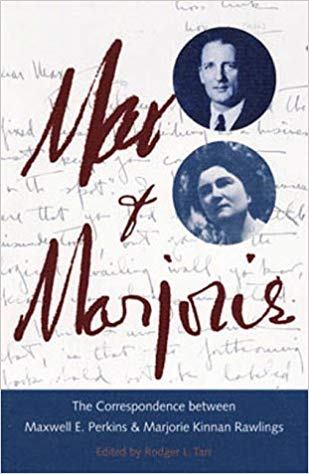
    I was sitting by the gas-lit fireplace in my local library when a book on the table caught my eye. It was the collected correspondence of the novelist Marjorie Rawlings and her editor, Maxwell Perkins. As I read their letters I could hear their long-stilled voices speaking to each other, and to me, across the expanse of decades. I tried to check out the book, but was told it was a reject from a book sale, and if I wanted it I would have to buy it. So I did.

    At home, I looked up Maxwell Perkins on the Internet. A link led me to Perkins’ granddaughter, the novelist Ruth King Porter, who lived in rural Vermont. Ruth was giving away her novels, asking nothing in return but that readers post reviews on her website. I sent for Ruth’s books, and a correspondence began. Soon, we wanted to meet in person. I scheduled a visit to Ruth in spring, then her mother’s dying began. I rescheduled to autumn, then my mother’s dying began.

    Instantly I cancelled travel plans and let go of my already-purchased bus ticket, but a friend with a car offered to take me on a shorter day trip to Vermont. Encouraged by my mother, I accepted.

    “We are two middle-aged women, both wearing glasses.” I wrote to Ruth. “My friend is a blonde with dark roots. I still think of myself as brunette, but there is more salt than pepper in my hair, now.” Ruth wrote that she would be waiting for me under the clock tower of Montpelier’s City Hall. I knew what Ruth looked like from the photographs on her website.

    PerkinsRawlingsBookCoverWe rode into Montpelier on a gloriously warm day at high noon. I saw Ruth sitting on a bench under the clock tower, scribbling in a notebook. Main Street was packed with tourists, and we couldn’t stop the car in front of City Hall. We found a parking space down the street. My friend waited in the car, while I ran down the block. “Ruth?” The woman on the bench looked up, and then leapt up.
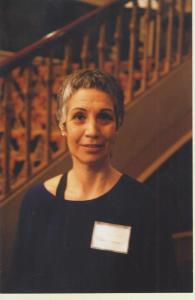
    Ruth was a pre-hippie Back-to-the-Lander, in her early seventies when I first met her. At our first encounter, she wore a white work shirt, faded blue jeans, and a black money belt slung over her shoulder. She walked like someone who rode horses.

    “Where’s your friend?” Ruth called through the crowd of tourists blocking the sidewalk.

    “She’s waiting in the car!” I called back. I led Ruth to the car and the friend in it. Ruth led us both on a tour of the golden-domed state capital building. “I hope we don’t run into my son.” Ruth twinkled. “He’d be embarrassed by the way I’m dressed. My son Louis works as an aide to the governor.” When the tour was over Ruth led the way in her battered old car out of Montpelier and higher into the Green Mountains, where another world awaited.

    Ruth’s husband Bill and a second son, Robbie, rode their tractors out of the woods to greet us on the porch of a rambling farmhouse. Nearby, three large dogs stiffened in alert: Ellie and Flora danced in attendance to the top dog, Chief. Ruth’s daughter Molly, an artist who lived, Thoreau-like, in a cabin she built with her hands, bounded up a hill to join us. The open and friendly faces of Ruth’s family smiled at me kindly. I’m sure they were aware of my situation, though no one referred to it. Taut, lean, Alabama-born Bill wiped the grime off his hands and stepped forward to shake mine. I felt as though I’d stepped into an illustration by Norman Rockwell.

    As an early darkness fell my companion and I crossed back over the border, returning to Montreal and my mother’s apartment. “Hello sweetheart.” My dying mother smiled tenderly. “How did it go with the lady in Vermont?”

    What could I say? I felt guilty at having left her, even for a few hours. I didn’t feel like relaying the details of an excursion to Vermont.

    Six months later I returned to Montpelier by bus, alone. Once more, Ruth met me under the clock tower. For a few days I curled under Ruth’s wing, sunning on her roof, sleeping in Max Perkins’ bed, waking to birdsong and skimming the staggering array of autographed out-of-print books dedicated by grateful authors to their engaged and caring editor. “Grieving is hard work,” Ruth would say in greeting when, after a nap, I descended a steep staircase into her dark country kitchen. As we stood side by side in the verdant meadow which was her front yard, Ruth added, as much in amazement as in sadness, “A year ago this time, both our mothers were alive.”

    Ruth King Porter is an American blueblood whose antecedents hark back to a woman who held a door open for George Washington. I am the Canadian-born daughter of refugees. My mother, a woman who survived three invasions and the Warsaw Ghetto, later in life became prominent in Holocaust education. Many people find my mother’s story repellent and turn away from any mention of it, whereas Ruth and her husband Bill were fascinated. Ruth did for me what I had done for my mother; she listened. And she encouraged me to tell my mother’s story.

    Six months after that, I was back on the farm. Ruth and Bill acknowledged what would have been my mother’s birthday by lighting large candles in a spectacularly tangled chandelier made entirely of logs. Through the wall-sized picture window we watched the cold autumn rain and wind lash the last leaves off a forest full of trees. As we ate hot squash and a pot full of peas grown in Ruth’s garden, the lit log chandelier shone, the tree-bark-shaded lamps glowed, and the wood stove burned.

    I have been back to Ruth and Bill’s farm several times since. In between visits Ruth does for me what her grandfather did for Ernest Hemingway, F. Scott Fitzgerald, Thomas Wolfe, and Marjorie Rawlings: she writes to me and elicits writing from me, reads and critiques my material, encourages, cajoles, indicates where and when she believes I have veered off-track, and gently nudges me back. Clutching the psychic lifeline tossed to me by the descendant of a legendary literary editor, I live and work alone and in growing peace in my suburban Montreal apartment, producing a memoir of my mother. My mother knew that my writing would sustain me after she was gone. Ruth Porter’s mentorship sustained me during the darkest days of my life.


    S Nadja Zajdman_HeadshotS. Nadja Zajdman is a Canadian author. Her short stories and non-fiction pieces have been featured in newspapers, magazines, literary journals and anthologies across North America, in the U.K., Australia, and New Zealand. In 2012 Zajdman published the related short story collection Bent Branches, which spans four continents and seventy years in the life of a family. Recently Zajdman completed a second short story collection, as well as the above-mentioned memoir of her mother, the noted Holocaust activist and educator Renata Skotnicka-Zajdman, who passed away at the end of 2013.
    Photo credit: MaxPixel (header banner)

  • Saying Yes by Monique Polak

    Saying Yes by Monique Polak

    I am bad at saying no. As part of a better-late-in-life-than-never self-improvement exercise, I try to turn down extra work—especially the non-paying variety. (more…)

  • Bye Bye Darlings: The Editing Gauntlet by Alice Zorn

    Bye Bye Darlings: The Editing Gauntlet by Alice Zorn

    Farine Five Roses
    Alice Zorn’s new novel, Five Roses, is named after the FARINE FIVE ROSES sign that marks the southwest horizon of Montreal and Pointe St-Charles, where the novel is set. Photo: Alice Zorn


    You’ve finished your novel manuscript and you even – finally! – get a publisher. It took ten years. You have Neanderthal muscles across your brow from frowning at the computer screen. But now you’re home-free. Bingo!

    Then you get the first slew of comments from your editor. She’s the objective eye who sees what the book can be, but isn’t yet. Does it begin in the best possible place? Is there too much exposition? Does it have structural integrity? What about the ending? She tells you all the darlings you cherished while you were writing don’t belong unless they serve the book. The clever turns of phrase, the crisp dialogue, the research that shows off your erudition, the quirky events that really happened. Your clean manuscript pages are tattooed with strokes and question marks. Some editors slash with red pen. I’m so glad mine used pencil.

    With my first novel, Arrhythmia, I was advised to lop two main characters, cut ninety pages and replace them with new writing. I couldn’t believe it. Hadn’t the publisher already accepted the book? My editor was firm. I had to learn how to rethink developments in the novel as narrative choices. I reminded myself that my editor, like me, only wanted what was best for the book. After all, she brought the manuscript to the acquisitions table, arguing that – out of all the other manuscripts being vetted – mine should be published.

    I rewrote those ninety pages because I realized the change was structurally necessary to the novel. And I rewrote them, yes. My editor didn’t tell me what to write, only that the direction I’d originally taken wasn’t the best option. However, I did not lop those two characters. I made them stronger and more integral to the novel. Writing the novel was hard, but editing it might well have been the more profound learning-about-writing experience.

    “Writing the novel was hard, but editing it might well have been the more profound learning-about-writing experience.”

    My second novel, Five Roses, will be published by Dundurn Press in 2016. I’m at the copy editing stage now. This is the finicky time when syntax, word choice and punctuation come into question. I open the document and scroll through 320 pages with red commas added, words underlined and lassoed to dialogue bubbles. Individual words are highlighted in yellow. A character is cycling along a city street, alert to the nervous rush hour traffic, as she thinks about the police sending out an alert to catch a criminal. I swear at myself for not having noticed. I must have read this page twenty times already! But my brain was in a groove. And as I’ve repeatedly witnessed, my brain is willful in its fondness for repetitions, internal rhymes and alliteration.Now, too, is when I discover that grammatical niceties aren’t as ingrained as I assumed they should be after five decades as a voracious reader. Shouldn’t I simply know all these distinctions by now? Seems not.

    And so I learn that there’s a difference between hanged and hung when it refers to a human body that is being put to death. I hung a picture on the wall. The executioner hanged a man. However, a human body that was already dead hung from a hook. I need to know that for this novel, since a character was hanged.

    6777082592_d2ba71334d

    I had to teach myself the farther/further dance after having worked with a copy editor who changed all my farthers to furthers. He thought further sounded more posh. Fine, I thought. He’s the copy editor. Maybe it’s one of those UK vs US things. For a couple of years I banned all farthers from my writing. Then I had a story returned from a copy editor who had changed some of my furthers to farthers. That was more curious. I finally pulled a tome of grammar off the shelf and discovered there’s a rule. Farther is for physical distance. Further is the abstract concept. You might think that I would already have known this, but I didn’t. And I’m not the only one. I continue to see farther and further misused in books published by reputable houses. (If you want a trick to remember which to use when, think far > farther. Thank you to Carol Weber for this tip.)

    You aren’t the best judge of your work, because you’re too close to the writing.You need an editor. Not your partner nor your best friend, who won’t want to hurt your feelings, but an experienced and discerning professional who will help you realize the full potential of the book.

    I’m now at the last read-through before Five Roses goes to the design people. I’ve rewritten the manuscript three times since I thought it was finished in 2013. Cutting, puzzling, moving pages around. Lots of darlings sent marching to the recycling bin. At each stage of editing, the book becomes more of an entity that lives separate from me. Which is what it will have to be when it’s sent off into the world.


    for QWFAlice Zorn’s book of short fiction, Ruins & Relics, was a finalist for the 2009 Quebec Writers’ Federation McAuslan First Book Prize. In 2011 she published a novel, Arrhythmia, with NeWest Press. She has twice placed first in Prairie Fire’s Fiction Contest. Her second novel, Five Roses, will be published with Dundurn Press in July, 2016. She lives in Montreal and can be found at http://alicezorn.blogspot.ca

  • Busting the Myth of Work-Life Balance by Susan Olding

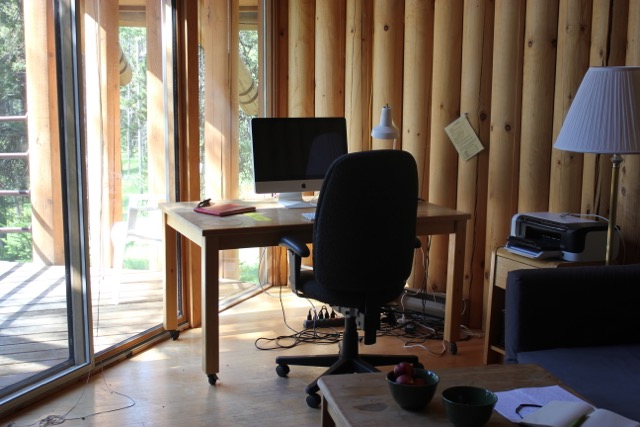
    Inside the Cardinal Studio, one of the Leighton Studios at Banff Centre for the Arts.

    About a year ago, I was invited to give a talk to some graduate students at Queen’s University about what was billed as “work-life balance.” Sure, I said. Why not? That should be easy.

    There was only one small problem. For me, “work-life balance” is an unattainable mirage. I am the farthest thing from an expert on the topic.

    The truth is, most of my days pass in a blur of immediate “to-dos.” And the hours that I so carefully set aside for creative work often go instead to the unanticipated trip to the doctor, the emergency phone call from the school or the rush-rush project for the paid job.

    I used to spend a lot of time feeling resentful, inadequate and guilty about that. Because other people seemed to combine their creative work with the rest of their lives successfully. Other people seemed to have some magical ability that allowed them to flourish in the face of constant interruptions and distractions.

    Except, when I questioned them, these paragons of multi-tasking all felt exactly the same as I did: weary, overwhelmed and vaguely at fault for failing to maintain their inner equilibrium in the face of multiple competing demands.

    “Other people seemed to have some magical ability that allowed them to flourish in the face of constant interruptions and distractions.”

    Those of us who don’t blame ourselves for this state of affairs sometimes blame the pace of contemporary life. After all, we’re all juggling numerous roles, and we’re all subject to the relentless beeps, pings and dings of our various devices. No wonder we feel beleaguered.

    But what if the problem is less about us, less about the world and more about our basic expectations? What if the language we use contributes to our sense of failure? What if the problem is the metaphor itself?

    What does “work-life balance” even mean?

    Imagine a seal, spinning a ball on its nose. Stop that insane momentum and the whole thing comes crashing down over its head.

    Is that how we want to construct ourselves – as performing circus animals? Is that how we want to conduct our writing lives?

    Consider other images of “balance” – say the scales of justice… or a teeter-totter. Load up one side and the other comes crashing to the ground. The whole apparatus seems so precarious! No wonder we feel so inadequate. No wonder we fear the possibility that something might shift.

    Yet shift it must. Change it must. For “balance” implies stasis – and stasis is antithetical to the creative life.

    What if, rather than “balance,” we spoke instead in terms of dynamic harmony, or cycles, or an ebb and flow? That way, we might not feel so guilty or inadequate whenever we had to give one role or another precedence in our lives for a period of time. Say the first few years of our son’s life, or the first few months of a new paid job, or the last few months of work on a novel, when nothing and nobody in the world matters so much as those characters, and we can barely pull ourselves away from our created world to face the real one.

    Thinking in terms of ebb and flow rather than “balance” has made it a little easier for me to give myself fully to whatever role is demanding most of me that moment – whether that be partner, wage-earner, teacher, parent, friend, writer.

    Outside the Cardinal Studio, one of the Leighton Studios at Banff Centre for the Arts.
    Outside the Cardinal Studio, one of the Leighton Studios at Banff Centre for the Arts.

    It has also helped me recognize the enormous value of writing retreats. I’ve been privileged to participate in several formal residencies, at places like the Banff Centre for the Arts, the Vermont Studio Center, Wintergreen Studios in Ontario and Sage Hill and Stegner House in Saskatchewan. Each of these provides a different kind of experience, but every one offers uninterrupted time and quiet – two of the most precious and hard-to-source ingredients for the creative stew.

    Of course, it’s fun to travel, exciting to stare out at different views and blissful to let somebody else do the shopping and cooking and cleaning for a change. But retreats don’t have to be formal or lengthy or costly to be valuable. In fact, some of my most memorable or useful retreats were short, cheap and close to home. Like the weekend I spent in an absent friend’s house powering through the final edits on an important manuscript. Or the day the rest of my family went to Toronto and left me digging in our back garden. In the process, I uncovered the seed of the next book.

    Alas, I never did manage to tell those Queen’s students anything helpful about “work-life balance.” Instead, I read them some poetry that I wrote while crouched on one side of the work-life teeter-totter. And dared to suggest that if we’re lucky, there’s no real dichotomy, and “balance” is beside the point. Work is part of life, not separate from life, and life means growth – and change.


    Susan Olding

    Susan Olding is the author of Pathologies: A Life in Essays, winner of the Creative Nonfiction Collective’s Readers’ Choice Award for 2010, and selected by 49th Shelf and Amazon.ca as one of 100 Canadian books to read in a lifetime. Her writing has won a National Magazine Award, two Edna Awards and many other honours. A graduate of UBC’s MFA program, she lives with her family in Kingston, Ontario. In the spring of 2016, she’ll facilitate a one-day workshop for the QWF called “Telling It Slant,” where she’ll share some strategies for adding depth and originality to your memoirs, personal essays and short fiction. You can find her at www.susanolding.com.

    Photo (top): Inside the Cardinal Studio, one of the Leighton Studios at Banff Centre for the Arts.

  • Slow Writing by Chris Galvin

    Like bread dough, my writing seems to require time to rise in a warm, draft-free place. The long proofing period is necessary; turn up the heat to hurry the rising, or don’t leave it long enough, and I get a stodgy, dense loaf.

    Under ideal conditions – solitude, free time and excitement about what I’m writing – the words pour forth quickly. It’s exhilarating. But normally, I write when I can. I like to have control over an essay or story as it forms, and I edit as I write, considering each sentence as I put it to paper – does it say what I want it to say, or does it imply something else? I read what I’ve written aloud – does it have the right rhythm?Is my translation of Vietnamese dialogue as true to the original as possible? Does it sound natural?

    The second proofing of the dough is as important as the first. Even when the writing happens quickly, I know from experience that it’s best to put it away overnight before taking another look at it, and then to put it aside again for at least a few days, or better yet, weeks. Sometimes it takes years. My essay Floating Life began as a food and travel vignette about visiting a family in the Mekong Delta. It worked, but it was bland. The recipe was missing something.

    Chris bakes muffins too

    I kept looking for directions in which the essay might develop. I didn’t find the core of the piece, the defining ingredient, until a few years later when a friend read it and asked me how flooding in the delta affected the farmers. Coincidentally, I was reading about how the delta is one of the areas most adversely affected by sea level change in the world. I realized that this was what I wanted to write about. The words flowed and the essay doubled in length. The anthology that was to publish it, Foreign and Far Away, limited submissions to 1,200 words, but time had given me the distance to recognize that some of my words added nothing and stole space from important details. Rereading my essay with fresh eyes, I was able to see what needed to be added or culled.

    Sometimes, the needed words, the mots justes, can be stubborn. They elude me; they won’t be forced out. I need almost as much time away from a piece, not writing it, as I need for writing it. As with a crossword puzzle, I put it away for a while, think of something entirely different, walk by the lake or try out a new recipe, and suddenly, the words come to mind.

    When I’m struggling with a piece, wondering if it will ever be ready, I remind myself that the long proofing time that frustrates me so much is often just what my essays need to rise properly, to develop their best texture and to emerge from the oven tempting and toothsome.


    Chris Galvin divides her time between Quebec and Việt Nam. She writes mostly about food, travel and nature, and sometimes pens short fiction. Her writing and photography have appeared in various anthologies and literary journals, including DescantPRISM InternationalAsian ChaThe Winnipeg Review, and others. She has written in Vietnamese and English for several Vietnamese publications. Chris is currently working on a collection of essays about living in Việt Nam.