Tag: inspiration

  • Writing Fiction in the Age of Artificial Intelligence—By Duncan Hart Cameron

    Writing Fiction in the Age of Artificial Intelligence—By Duncan Hart Cameron

    Has it all been for nothing? 

    All of the hours that I have spent in front of my computer, rising at dawn to be at my station, pounding out stories, working through the fear of not being good enough, of not being able to put something great on the page, something that is part of me, that is me. The scrawls in my notebook, the daydreaming when I walk. The small steps and incremental gains. The steady getting there.

    All for naught.

    Because ChatGPT or something like it—an artificial intelligence—will one day write a poem or a short story or even a novel that is as compelling as one of my own. Somewhere, a bunch of programmers are laughing at me: “You think what you do is special? I can make an app for that.” And they have.

    So why should I bother to write at all?

    Because it is not just about the result or the finished product. Not even close. I’m sitting here, holding one of my books in my hand, an anthology of short stories that I helped edit and to which I contributed. I admire the cover that took so many hours to format and the font that we debated for far too long. I flip to my piece, about falling in love in Paris while on exchange, and I remember when I wrote it. The feeling of gliding across the keyboard because I was on a roll. The delight I took in capturing a tender, painful moment in my life in words. Giving it existence and conveying it to others.

    The process I went through to publish the story imbued the entire project with meaning, like looking down a trail that you have hiked and taking pride in the work that it required to get there. That sweaty, joyful glow. The trail is just a trail, a path in the woods, until you have walked every foot of its length. Then it becomes something more. Something that is part of you. Imagine being plunked down at the end and looking back. Would you feel the same pride? Of course not. The trail would be meaningless, and your only relationship would be with the shortcut. (Which, in the case of AI, is very short indeed!) Likewise, a book is not just the words on the page. It is the physical manifestation of our grit and our pain and our faith. It is a symbol of our effort to impose meaning on our lives. Because that is what writing does. It gives us purpose. I know where I will be tomorrow morning and the morning after. I organize my social life, my diet, my sleep, and my family time around this central goal. There is clarity and comfort in that, not to mention satisfaction. I don’t think us writers can imagine living any other way.

    And what about the reader? Reading is about the writer, not just about the book. We read to be entertained, sure, but we also read to have a kind of communion with the author. We want to hear their voice in our minds and to know what they know. We want to taste their insight and their imagination and their courage. A bot could theoretically write a book like One Day in the Life of Ivan Denisovich or The Gulag Archipelago. But would those bot-made pieces really have the same meaning as Aleksandr Solzhenitsyn’s work, published after having spent eight years in a Russian prison? Of course not.

    Incidentally, ChatGPT can “write” in the style of Solzhenitsyn, or Ernest Hemingway, or Jane Austen, because their books already exist. It is essentially a massive synthesizer of existing data, improved by constant refinement of its answers to prompts, and it predicts what is likely to be the next sentence based on billions of previously written texts. Without authors (without us!) producing real work, Chat GPT, and other AI models like it, have nothing to say.

    And that’s the core of it, isn’t it? You can’t untether art from the world. Art is inextricably linked to human experience and to human will. Otherwise, what the heck is it? Writing is not plagiarizing thoughts and feelings, it is confronting our own inadequacy, our fears, our yearnings and spilling it on the page in a way that resonates with others. The catalyst is empathy, which links the reader and the writer together. Bots do not know what it is like to lose a loved one or to suffer rejection or to yearn for revenge. Only humans do. And it is that knowledge that readers seek when they open a book. 

    In the end, bots will produce cool stuff, even great stuff, things we could never have imagined before (check out DALL-E); but writers will continue to write, and readers will continue to read human work, because the process itself makes the act and the result meaningful. If anything, we will start to see more novels that explore the ways that AI intersects with and changes art, rather than rendering that art extinct.

    As that unfolds, you know where I’ll be. In front of my computer toiling away, or daydreaming on a walk.
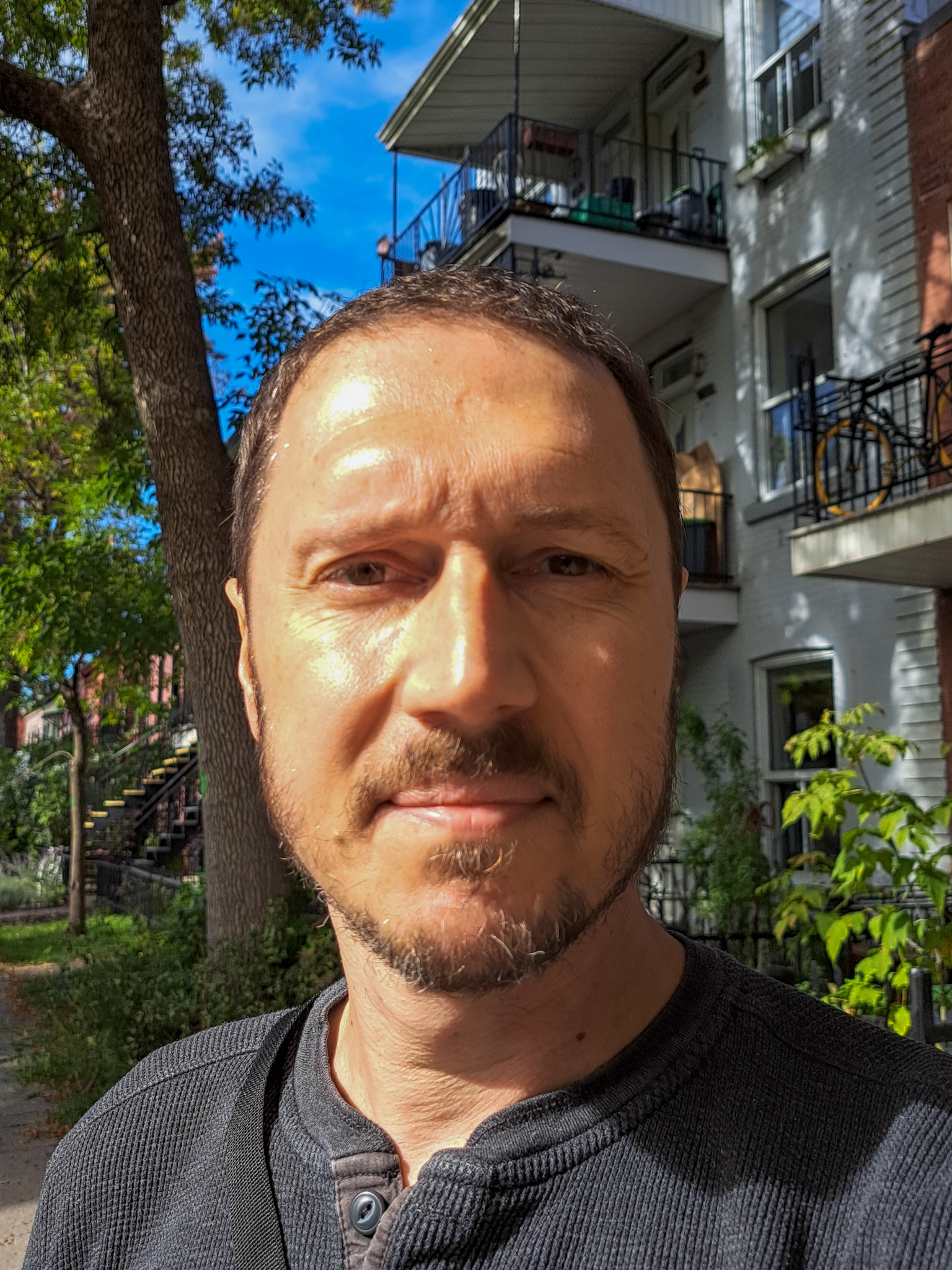

    Duncan Hart Cameron has taught college-level philosophy in Quebec for over twelve years. Born in Ontario, he lived in BC before moving to Montreal in 2001 to pursue a Master’s in Philosophy. A passionate writer and editor, he recently helped found Les éditions comme au vingtièmea bilingual literary review and independent publisher focused on supporting emerging writers, poets, and screenwriters living in Montreal and the Laurentians. His first novella, Eclipsed, is set to appear in the Fall of 2023 and explores the hold that our past can have on our present, especially in our most intimate relationships.

    Photos: Loz Pycock via Flickr (header banner); Duncan Hart Cameron (headshot)

  • Changing the Scenery to Refresh Your Writing—By Kate Hammer

    Changing the Scenery to Refresh Your Writing—By Kate Hammer


    There’s a bit of writing advice that I receive a lot: treat writing like your full-time job, sit down at the same time and place everyday, train your brain to be creative. I’ve heard it again and again, because it works. 

    For others, I’m assuming. 

    I’ve never been able to hold down a routine. Consistency makes my skin crawl, so I’ve had to find another way to inspire creativity and meet deadlines. By changing where you write, you change the way you write: it becomes varied, rooted in distinct experiences, and tonally original. And when was the last time you complained about writing too dynamically?

    Being in a different place can help our stories feel easier, inspire us to notice more, and make returning to our writing place a whole new experience. It can be as small as changing the direction of your desk, or as big as a weekend away without a whisper of internet connection. Or, you can uproot your entire life and move across an ocean.

    At the end of 2020, I moved to Scotland for a writing Master’s. I’d lived in Montreal for a few years, the longest I’d settled down anywhere for a decade, and was starting to get the itch. I was aware moving in the middle of a pandemic wouldn’t be easy, but I also knew it was the challenge I needed. Not only did I instantly become an outsider, but all the habits I’d labeled as normal in myself became something to scrutinize, something of interest.

    Without meaning to, we put our surroundings into everything we write. Maybe the sun is shining, you’ve just had an argument, or you’ve been given an eclectic mug that you know the protagonist of your story would also have; we are sponges that ooze plot. Now, I’m not trying to convince anyone to move halfway across the world like I did, but I am trying to inspire you to get out of your comfort zone. 

    Perhaps it is sitting outside, acting like a tourist in your own city, or treating yourself to a cafe that you’d normally walk past. It can be directly useful, such as visiting the same city as your character, or discovering a hobby by chance that you never thought they’d be into. 

    As soon as I landed in the UK, I knew my brain was aware in a whole new way, and I have the journal entries to prove it. From the roads never being wide enough for two cars, to the public walking paths taking you through fields of sheep who think you have food and charge towards you with impressive speed. I was learning again how I react under pressure; meeting new types of people with traits that could easily be given to characters; feeling the familiar stress of not immediately belonging.

    Putting ourselves in different environments makes us think differently about our stories, and our characters. As much as you know them on paper, knowing what they’d notice in an all-night pharmacy at 1 a.m., or who else would be there, is another matter entirely. You’re reconnecting with your world, and observing the behaviours of strangers as they unknowingly walk through your homework. Those real character actions aren’t something you can buy with money, only with your time. 

    It can take a lot of energy, to suddenly be aware of what’s around you again, or to take on new places, but alongside a healthy relationship with discomfort comes a balanced connection with rejection. As writers with a list of submission dates, we need to practice resilience against the vulnerability and fear of the job.

    The best part of switching up your space, however, is coming back home. Whenever I return to Canada, to my family farm, to my writing desk, I see everything all over again. Not as if for the first time, but I notice different things, items I’ve forgotten to look for. It’s that nostalgia of returning somewhere that makes you comfortable. I guarantee you’d describe your living room in a whole new way if you went a few days without seeing its walls, its stained carpet, how the afternoon sunshine has faded the couch.

    Changing your writing space may not always go well, but this is part of the magic: we’re rarely lost for words when complaining. Every experience feeds into your writing and characters in unexpected ways. 

    Remember that writing isn’t always putting words on paper. Even if you don’t get a lot of work done, changing the scenery can be an excuse for a vacation, a walk, or a redecoration. It’s how we turn ourselves into our own best editors, looking at things in a whole new way, as a slightly different person. And if you need to move to the UK to do that, I’ll be here to support you. 


    Kate Hammer is a writer, producer, and performer born in Canada, and living in Scotland. An award-winning playwright, director, and published writer, Kate constantly strives to create community representation in order to tell the stories that need to be heard. They now work in television development and are publishing a non-fiction book later this year called, Bruce Willis is My Dad. They are a queer, neurodivergent creator who never forgets their goat farming heritage. katethehammer.com

    Photos: Monstera via Pexels; Jeremy Cabrera (headshot)

  • Pushing Past the Fear of Writing Nonfiction—By Chanel M. Sutherland

    Pushing Past the Fear of Writing Nonfiction—By Chanel M. Sutherland

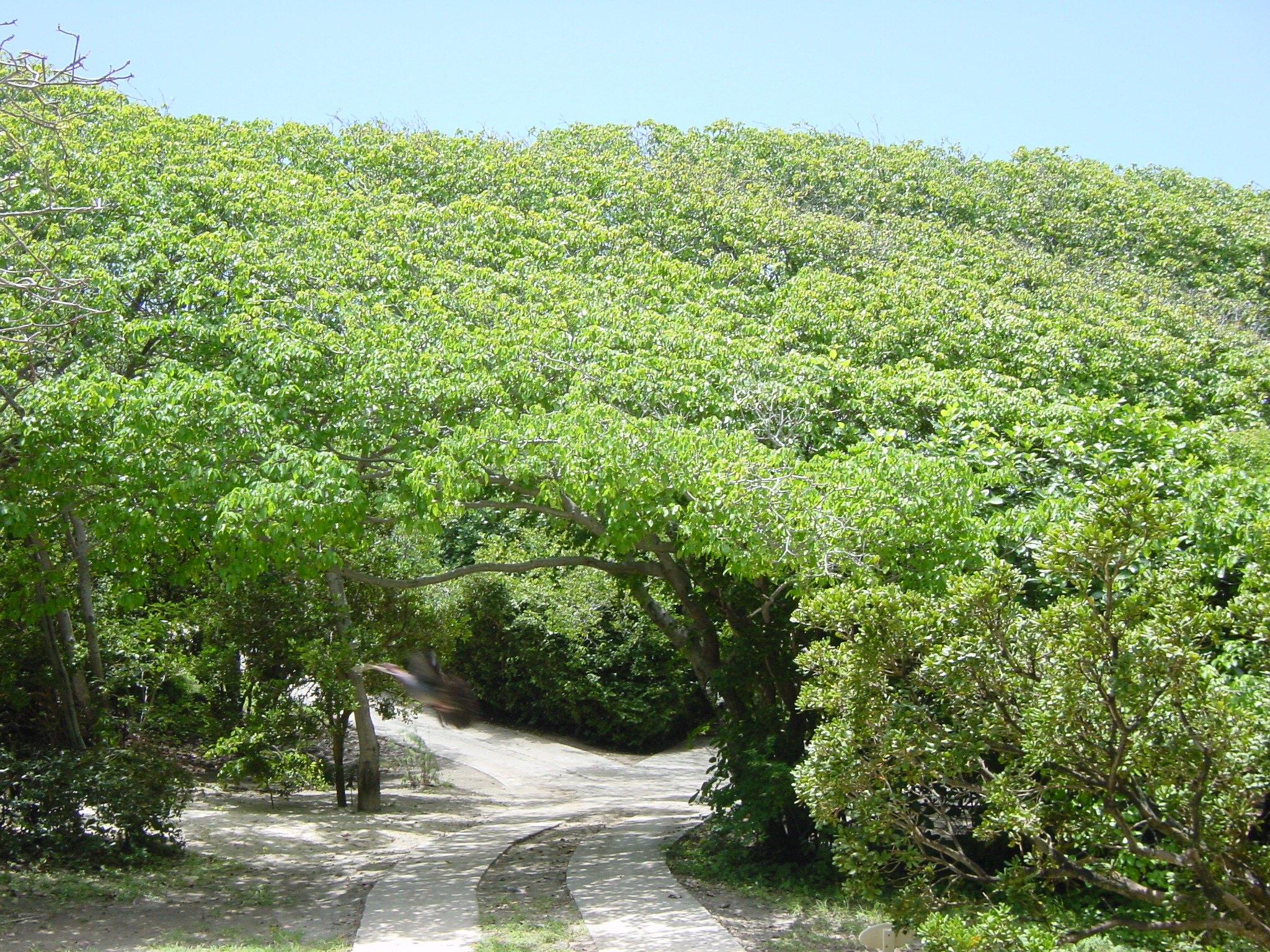
    The trees of St. Vincent and the Grenadines.


    If I’m being completely honest, writing nonfiction terrifies me. 

    But recently, I’ve felt compelled to write the truth.

    To write the stories that have shaped the trajectory of my life and—as if that wasn’t enough—have lodged themselves into my creative conscience, demanding to be told at all costs.

    It started with a single story, “Umbrella,” that I wrote out of pure exigency two years ago. 2020 was a heavy year for many reasons. The world became saturated with personal stories and confessions. Everywhere I turned—social media sites, the news, books, conversations with friends—people spoke out about their experiences with various kinds of discrimination and violence. 

    Suddenly, I found myself confronted by my own memories. They rose out of the trenches of my mind like shadows growing bolder in my darkest hours. They wanted to be written.

    Before, if you had asked anyone who knew me as a writer, they would have told you that my stories mainly deal with the unreal or unproven: futuristic robots, aliens walking around in human skin, scarecrows climbing down from their perch to seek revenge on those who impinge on their domains. This is the realm of storytelling where I feel most at home. One can argue that I write these stories to stay detached from real life.

    I had spent more than two decades circumnavigating my memories and deferring the day when I’d have to finally write about them. When they began to emerge unprompted, I knew my time had come. For the first time in a long while, I found myself turning away from speculative fiction to write something that made me uncomfortable. Nonfiction.

    “Umbrella” is the second nonfiction story I have ever written and the only piece I have shared with readers. Perhaps it is short and breathy for that reason. A panic attack on paper. When it won the 2021 CBC Nonfiction Prize, not only was I surprised, I was frantic. 

    Was I ready to expose myself in this way?

    The simple answer was no, but I’ve since learned that nothing is ever simple when it comes to writing. If it were, it would hardly be worth it.

    It became clear that nonfiction had chosen me, and I had no choice but to take the plunge and see it through. Once I decided to start curating a collection of stories based on my experience as a Black Caribbean immigrant child, I faced another difficult question.

    How much can I reveal about others in my stories?

    In this case, the “others” were primarily my family, and without their support, I knew that I would not be able to write the collection. There were no stories without them. My mother was the catalyst for many integral moments in my childhood. My grandparents the glue that fixed the pieces together in many ways—however imperfect. 

    I’ve always been a solitary writer. I prefer to be completely isolated when writing, and I usually avoid discussing any story until it is completed. With these stories, I knew there were people I needed to speak to and include from the start. 

    Not only was nonfiction changing my craft, but it was also now impeding on my process.

    Having that first conversation with my mom was one of the greatest moments we have shared. It was a warm autumn day; mom and I were meeting up for our weekly walk around the neighbourhood. I don’t recall how I broached the subject of writing the stories. Knowing myself, it would not have been direct.

    What I do remember is the excitement mom expressed in learning that I wanted to do this. She answered any questions I had, voluntarily filled in gaps in my recollection, and even offered to help with the research. Her reaction trickled down to my sisters and aunts, and before I knew it, everyone else was on board.

    I will forever cherish a messaging thread between mom, my sisters, aunts, and me. We were trying to remember the name of a tree native to St. Vincent and the Grenadines. We all knew it by a different name and had our own tales about it, but no one could figure out its one true name.

    This tree became the emblem of my nonfiction endeavor. A thing from my family’s collective past that—though still elusive—we are learning more about each day from one another. 

    As I continue to research and write these nonfiction stories, there is a certain sense of unshackling from the past. And while I begin to see who I am today refracting from each new piece, I am also illuminated by another light: that of my family. 

    So, maybe being terrified of writing nonfiction is not such a bad thing after all.


    Chanel M. Sutherland is the winner of the 2021 CBC Nonfiction Prize for her story “Umbrella” and the recipient of the 2022 Mairuth Sarsfield Mentorship, a component of the Quebec Writers’ Federation’s Fresh Pages initiative. Born in St. Vincent and the Grenadines, Chanel moved to Montreal, Quebec when she was ten years old. She holds a BA in English Literature from Concordia University, and is currently writing her first book, a collection of short stories that explore the Black Caribbean immigrant experience. csuther.com

    Photos: Lyn Gateley via flickr; Chanel M. Sutherland (headshot)

  • I Thought I Was Writing a Potboiler—By Robyn Sarah

    I Thought I Was Writing a Potboiler—By Robyn Sarah

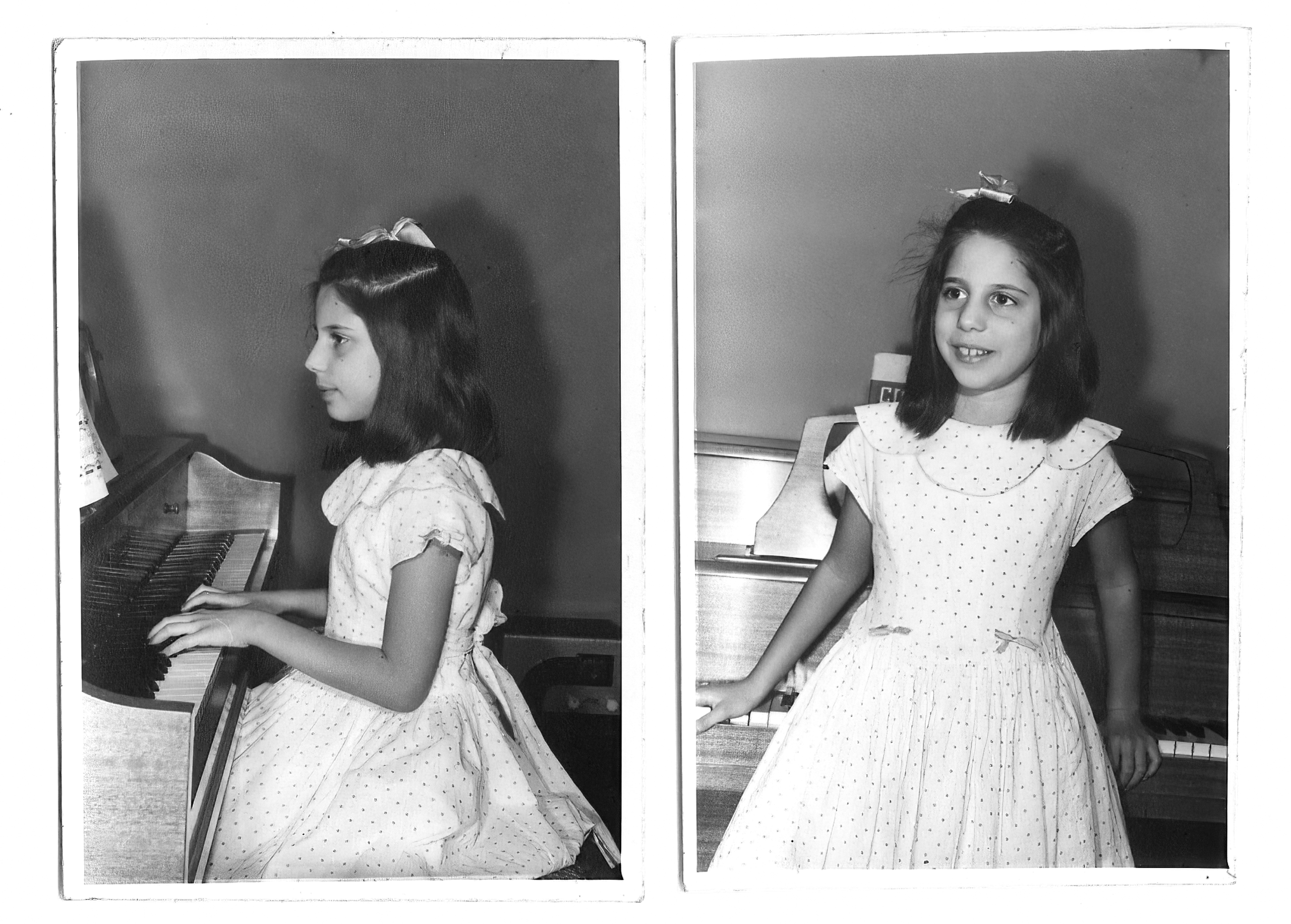
    Robyn Sarah, age eight. (Photo courtesy of author)


    I’m a literary writer to the bone: nothing I’ve written has ever paid enough to keep food on the table for long. But in 2009, during a spell when my muse for poetry and fiction seemed to have gone AWOL, I had the idea to write a short personal narrative, a book I could finish quickly and get published quickly. A potboiler, so to speak—not in the commercial sense, but to reassure myself that I was still a writer. It would be a story about returning to study piano at the age of fifty-nine, after a thirty-five-year lapse, culminating (hopefully) in a modest recital on my sixtieth birthday. A debut at sixty! I had never performed on piano as a teen or young adult. Of course, I would have to live this story before I could tell it. One year of goal-oriented piano lessons, during which I would track my progress in a journal; then a few months to turn the field notes into a book.

    Ten years later, the manuscript still wasn’t finished. And it wasn’t short.  A two-year purgatory of editing and revising had yet to begin. Music, Late and Soon was finally published in August 2021. Only vaguely does it resemble the book I thought I was going to write. What happened? How did I lose control over the best-defined, most straightforward writing project I had ever conceived? 

    The key may be in that term, “writing project.” Poetry is my primary genre, and while some poets do conceive poetry collections around a premeditated subject, I’m not one of them; my poems have always been composed individually, to be gathered later into collections. Even individual poems tend to begin without a clear subject in mind, but rather with some observation of the moment—an image, a feeling, a memory fragment, maybe just a phrase I like the sound of. My short stories begin similarly; there’s never much plot or a clear idea of where I’m going. This makes for some anxiety while writing, but it’s my natural process as a writer.

    When I contacted my old piano teacher (then in his eighties) and outlined my project, asking if he might be willing to give me some guidance, he wondered why I was fixated on the idea of performing, especially on a schedule. “Why not just start working again, and see where it leads? Playing the piano is like any art form, any creative process. It can’t be forced, it doesn’t work by deadline.”

    In retrospect, he had answered my “What happened?” question before it could need to be asked—had I really been listening. Wasn’t I listening? I thought I was. I thought he was saying something I already understood as a writer. But I didn’t think what he was saying applied to the book I had in mind. This book was going to be different. It was going to be easy—a straight line from here to there. The return to lessons, the year of preparation, the recital, The End.

    But wait. A “return” to lessons implied a past. Why had I stopped studying piano? Why was I now fixated on the idea of performing? Moment of truth: I might need to provide a bit of backstory if I expected to interest a reader in my late-life musical venture. I did, in fact, have some experience of musical performance; the trouble was, it wasn’t on piano. For a decade I had studied clarinet in a professional music school, aspiring to a career as an orchestral musician. I had graduated, but had not pursued that path. Nor had I ever really looked back or asked myself why.

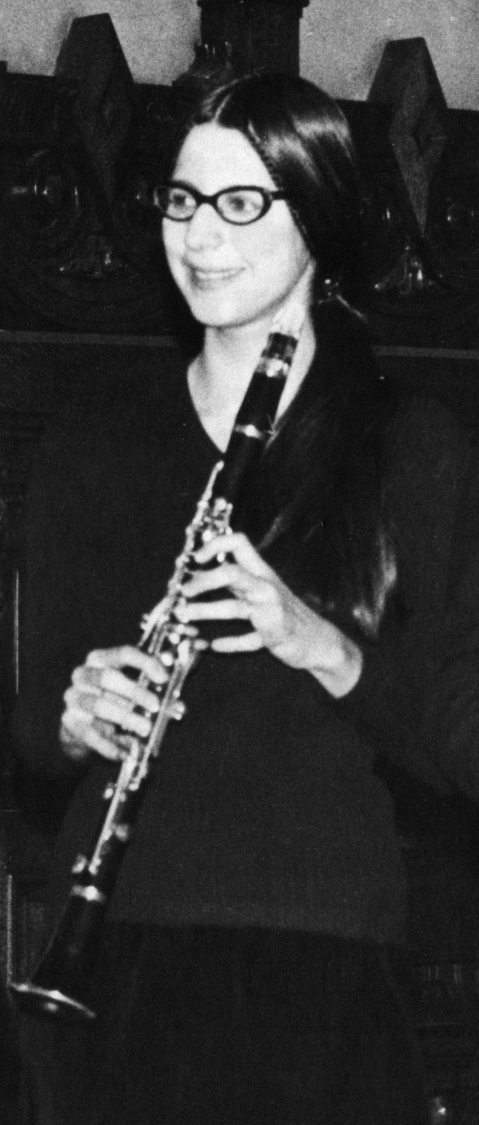
    Robyn Sarah, circa 1972.
    (Photo courtesy of author)

    Obviously this wasn’t the time or place to get into all that: it would just complicate the main story. Sticking to my plan, I began studying piano again, keeping detailed notes on the lessons. In tandem, I wrote some reminiscences of childhood: earliest memories surrounding the piano, early lessons with three different teachers before I came to study with the mentor I’d just reconnected with. I drafted a first chapter based on this material—a summary that, I thought, adequately contextualized where I was coming from. It glossed over my music school years on clarinet, allotting them a passing mention but keeping the focus on piano.

    Next moment of truth. I read the chapter aloud to a friend I’d known since high school, who had studied piano with the same teacher-mentor and was now a professional pianist and educator. After listening affably, expectantly, to the end, he was silent a moment, then blunt. “So, what’s the purpose here? I’m not getting a sense of why I should care about all this. And how could you leave out your ten years as a clarinetist?”

    “I didn’t! They’re there.” I pointed to the relevant paragraph. 

    “What, that’s it? Are you telling a story, or writing a CV? Those years were a fundamental part of your musical history! You aren’t being honest with the reader here. This isn’t you. I’m not hearing your real voice, because you’re not telling your real story.”

    My heart sank, because I recognized immediately that he was right. The bottom had just dropped out of my “project.” But once I accepted that, the book suddenly came to life. I realized I did have a story to tell—a buried one, on which the significance of the current one depended. I was going to have to delve into that unexamined past and make some sense of it, find out how it connected to my present moment. There were mysteries to explore here…

    I began asking myself questions: one led to another. I dug up and pored over surviving journals and letters from my high school and music school years. Present self and past selves collided and seemed to have things to say to each other. The pianist and the clarinetist had things to say to each other. The writer and the musician had things to say to each other. They all had questions of their own about creative process: what nurtures it, what can get in the way of it?

    A familiar anxiety swept over me as I realized that my “potboiler” was morphing from a brief narrative with a one-year time frame into a musical autobiography spanning my whole life. How was I going to weave all these strands into something coherent and beautiful that I sensed could be made of them, the way a composer weaves together multiple voice-lines in contrapuntal music? A familiar excitement tempered the anxiety, giving me the patience to spend ten years finding out.


    A Biblioasis Interview with Robyn Sarah

    Robyn Sarah reads her poem “Station”, from her Selected Poems, Wherever We Mean to Be (Biblioasis, 2017).

    “The book’s title is taken from this poem. I chose it because it expresses something that runs through all my poetry: a fascination with the way past and future, memory and intention, inhabit our present moment.”


    Spotlight on Wherever We Mean to Be by Robyn Sarah


    Photo by Stephen Brockwell

    Robyn Sarah is a Montreal poet and writer whose 2015 poetry collection, My Shoes Are Killing Me, won the Governor General’s Award for that year. Her “potboiler” was short listed for last year’s Mavis Gallant Prize for nonfiction.

  • Writing Through Grief—By Louise Penny

    Writing Through Grief—By Louise Penny

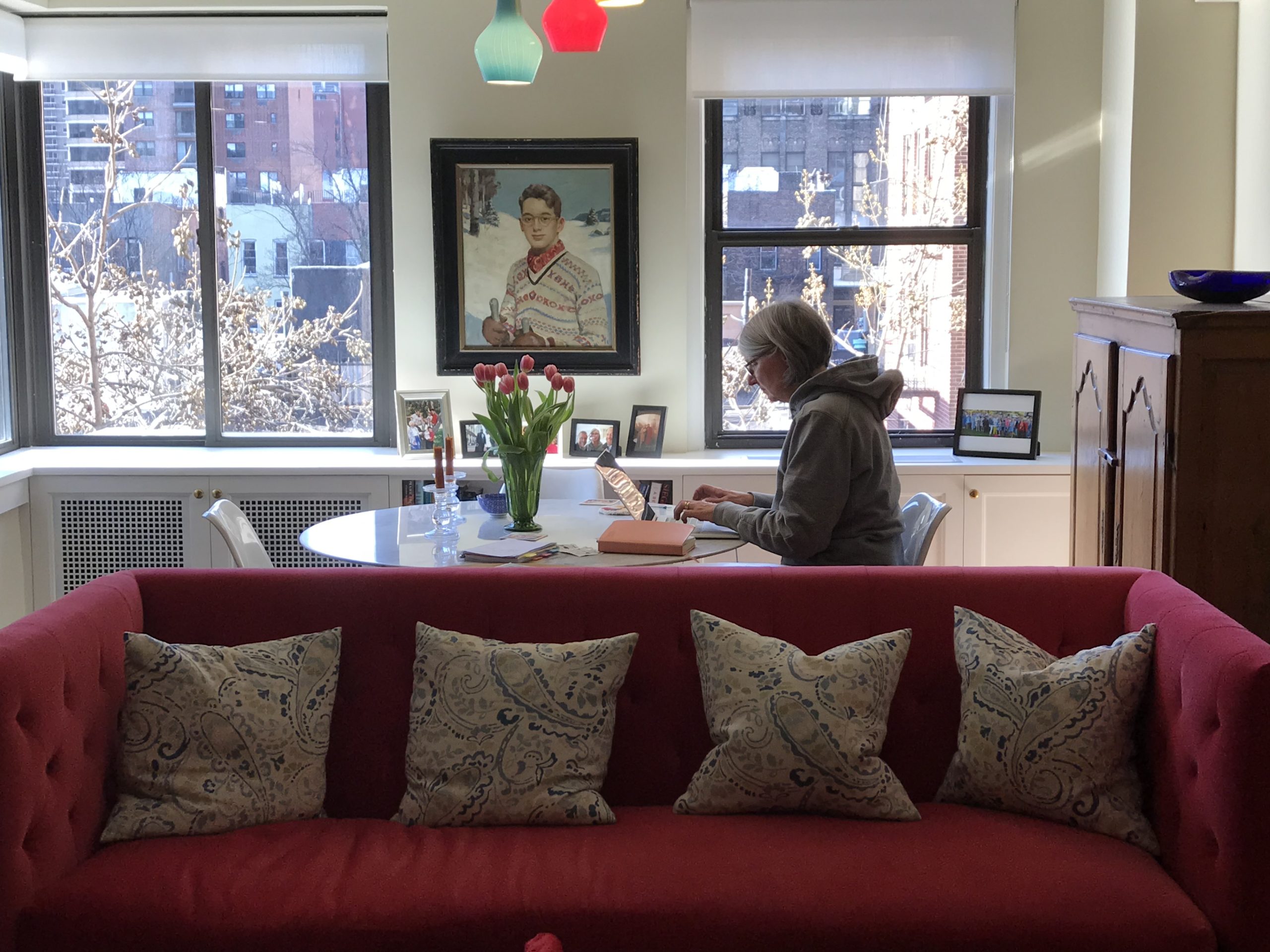
    Louise Penny writes at her dining table. (Photo by Lise Page)


    A funny thing happened on my way to not writing a book.

    I started writing.

    The truth is, I’ve known since I began writing that if my husband Michael died, I couldn’t continue with the Chief Inspector Gamache mystery series. Not simply because he was the inspiration for Armand Gamache, and it would be too painful, but because he’s imbued every aspect of the books. The writing, the promotion, the conferences, the travel, the tours. He was the first to read a new book, and the last to criticize. Always telling me it was great, even when the first draft was quite clearly merde.

    When Michael died peacefully at home in September 2016, I was pretty well spent. Physically, emotionally, and creatively. In French the saying is, tu me manques. Which means ‘I miss you’, but actually, literally, translates into ‘You are missing from me.’ That’s how it felt. Michael was missing from me.

    How could I go on when half of me was missing? I could barely get out of bed.

    I just could not face writing another book. And if I forced myself, the result would be a betrayal of all the previous books, the characters, the world of Three Pines. Of me. It would be a sad way to ruin what I’d created. I’d be writing because I had to, not because I wanted to.

    Now, sometimes, it’s true, a writer just has to sit down, and do it. That’s often the case with me. Some days I’d much rather eat gummy bears and watch The Crown than write. But this would have been different. This would have been going through the motions. Forcing the characters, chocking out some lame plot. My readers deserved better.

    So I spoke to my wonderful agent, and broke the news that I just didn’t think I could write a book. I just didn’t have it in me. I was too tired. Too broken. I’d mend, I knew that. But right then? No. She was wonderful, completely understanding and supportive. And then she had to tell the publishers. She did. And they were fabulous. They agreed that they’d rather have no Gamache book than a crappy one.

    And so, that was the plan.

    I was going to take a year off, to regroup and catch my breath after Michael died. That might have been a lie. In my heart I knew I could never write Gamache again. (And, sadly, would have to give back the next advance.)

    But then, something happened. A few months later, I found myself sitting at the dining table, where I always write. My golden retriever Bishop lying beside me, fireplace on, café au lait in my Vive Gamache mug… opening the laptop.

    I began having ideas—not the usual sort of thoughts of food and vacation, but actual book ideas. Armand began stirring. They all did. I could see them again. Hear them again.

    And I wanted to be with them again.

    I think my desire for distance was not just about exhaustion, but also because Armand was, and always will be, so associated with Michael. I just needed quiet time, to come to terms.

    And then, there he was again.

    I wish I could describe for you the joy I felt. And feel.

    So I quietly, without telling anyone, began writing again. A little at first. Then more, and more. 

    I wrote two words: Armand Gamache

    Then the next day I wrote: slowed his car to a crawl

    And the next day: then stopped on the snow-covered secondary road.

    But I didn’t dare tell anyone. In case I stopped writing. Or the book took a very, very long time to write. The publishers had no idea I was writing. It wasn’t until six months later that I told them. But even then, I warned them the book might not be ready in time. My agent was magnificent. Telling me not to worry. To take whatever time I needed. Stop writing, if I needed.

    And that was all I needed, to keep going.

    I really gave myself permission to just let go and explore.

    I discovered, again, how much I love to write. And, again, what a harbour it is. What would I do with my days otherwise? There are, after all, only so many episodes of Outlander.

    And so Kingdom of the Blind was born. It is the child that was never going to be. But happened. My love child.

    I began the book not with sadness. Not because I had to, but with joy. Because I wanted to. My heart was light. Even as I wrote about some very dark themes, it was with gladness. With relief. That I got to keep doing this.

    Far from leaving Michael behind, he became even more infused in the books. All the things we had together came together. Love, companionship, friendship. His integrity. His courage. Laughter.

    I realized, too, that the books are far more than Michael. Far more than Gamache. They’re the common yearning for community. For belonging. They’re about kindness, acceptance. Gratitude. They’re not so much about death, as life. And the consequences of the choices we make.


    Photo by Mikaël Theimer

    Louise Penny is an international award winning and bestselling author whose books have hit #1 on the New York TimesUSA TODAY, and Globe and Mail (Toronto) lists. Her Chief Inspector Armand Gamache novels, published by Minotaur Books, an imprint of the St. Martin’s Publishing Group, have been translated into thirty-one languages. In 2017, she received the Order of Canada for her contributions to Canadian culture. Louise Penny lives in Knowlton, Quebec. www.louisepenny.com

  • Writing, Mothering, and the Wild In-Between—By Gillian Sze

    Writing, Mothering, and the Wild In-Between—By Gillian Sze

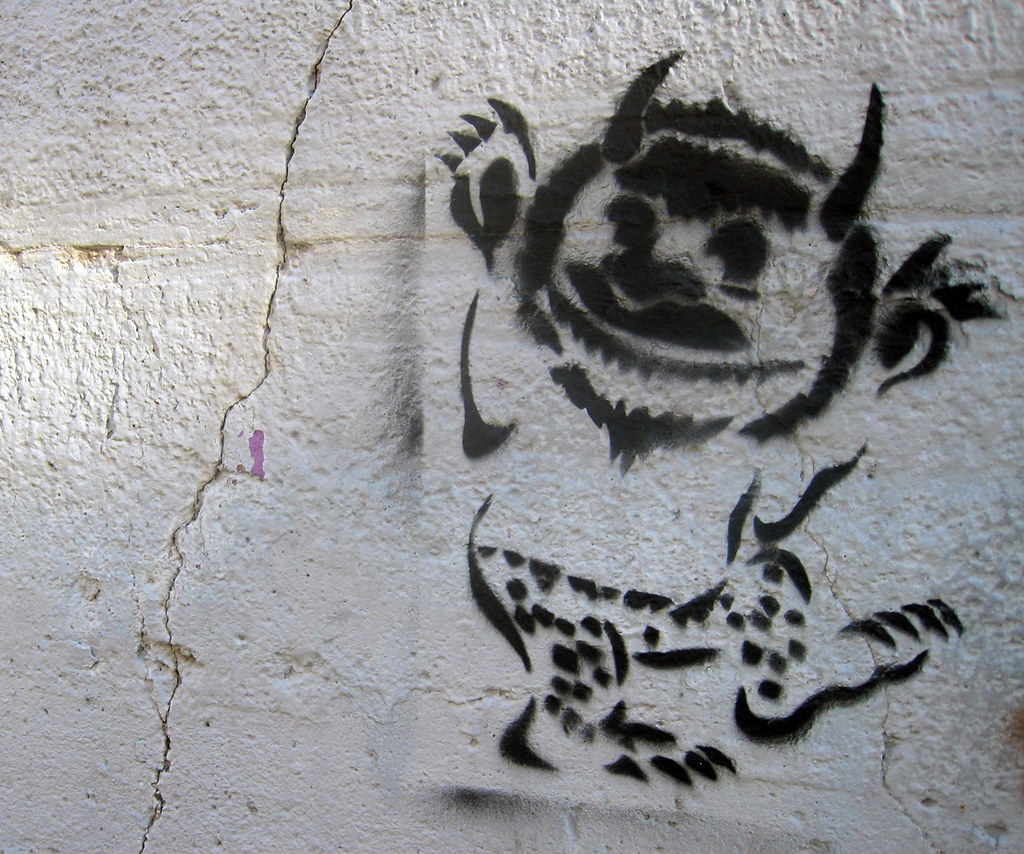
    My first reading of Maurice Sendak’s Where the Wild Things Are was as a parent. Growing up, I somehow managed to miss this childhood classic, which I now recognize as surprising given its widespread popularity. I was given the book as a gift when I was pregnant with my son, and even then I didn’t read it until after he was born. I kept it safe, waiting on a bookshelf along with the other picture books we received.  

    After my son was born, we were advised that it was never too early to start reading to him. We filled those tiny periods when he was awake with reading. I reacquainted myself with books I hadn’t picked up in years: Mercer Mayer, Robert Munsch, Margaret Wise Brown, Eric Carle. My husband, who took the advice to heart, started with Beezus and Ramona, Charlotte’s Web, and The Hobbit. (It took weeks but we eventually completed them in small increments.) Included in our stack was, of course, Where the Wild Things Are. 

    I was struck by the sparsity of the opening pages of text, words just hanging on their own like Sapphic fragments, sentences spilling across pages. With each page turn, the white frames of the illustrations shrink, the images fill up each page until we follow Max into his dream. When Max announces the commencement of the wild rumpus, what follows is three illustrated spreads of the boy reigning over the beasts. Time passes on those pages, without a single word in sight. 

    *

    When I entered motherhood, I simultaneously found myself entering a period of wild wordlessness. Bleary eyed, I was keenly aware of time and sleep. I saw time racing along as my son filled out his onesies. I saw time cherished as much as it was squandered as I lay beneath my sleeping son, not daring to move lest he wake up again for the thousandth time. I saw time slipping away as more (if not all) of it became devoted to caring for him. I oscillated between too little time (his naps were either short or nonexistent) and too much (nursing in the dark, exhausted and impatient as each passing minute stole from what was left of my own slumber). Moreover, I struggled with how to use my time as both a writer and a mother—the former of which I had identified with for much, much longer. I didn’t know how to fill—or not fill—that time with words as I once had. 

    Sendak’s illustrative spreads in the middle of Where the Wild Things Are remind me of what Anne Carson says about the middle section of To the Lighthouse. Carson describes Woolf’s book as “a novel that falls asleep for twenty-five pages in the middle” (22). Set at night, Part II of To the Lighthouse is entitled “Time Passes,” and describes the changes that affect the characters, their lives, and the house. As the characters in both Sendak’s and Woolf’s works go through their necessary transformations, I realized how possible it was to hold these books and sense Time passing both in words, as Woolf had written, and wordlessness, as Sendak had drawn.  

    In truth, I didn’t know how to “read” those illustrations when I flipped to them with my son. At first I felt compelled to fill the silence with my own commentary, and so I did. “Howling at the moon! (page flip) Swinging! (page flip) Marching!” Eventually, I learned just to observe my son take in the pages, looking at the images without my input.

    However which way Time moved (Mr. Ramsey stumbling in grief along a passage, or little Max riding triumphantly on a wild thing, or my son letting go of the table edge for his first steps), it just did. My anxiety about never writing again lived along with me through those day naps and night feedings. I accepted that becoming a mother meant having to lose myself as a writer. This primal and sleepy period of adjusting to a new person was tinged with mourning. My husband, supportive if exasperated, would remark on my melodrama. But at the time it felt true. It’s only now as my son is approaching six and his toddler-sister is starting to sleep through the night, that I recognize this tumultuous era as something transformative for me as a writer. I think of Carson’s wise assertion of the chapter “Time Passes”: “Virginia Woolf offers us, through sleep, a glimpse of a kind of emptiness that interests her. It is the emptiness of things before we make use of them, a glimpse of reality prior to its efficacy” (23). 

    Words, much like Max voyaging towards wakefulness, eventually “sailed back over a year and in and out of weeks and through a day.” It may have taken a little longer, but we arrived together… changed, relieved, and a little sleepier. 

    Works Cited 

    Carson, Anne. Decreation. Vintage Canada, 2005. 

    Sendak, Maurice. Where the Wild Things Are. Fiftieth Anniversary ed., Harper Collins, 2013.


    Gillian Sze is the author of multiple poetry books, including Peeling RambutanRedrafting Winter, and Panicle, which were finalists for the QWF’s A.M. Klein Prize for Poetry. Her forthcoming prosimetrical collection, Quiet Night Think, explores the early shaping of a writer, the creative process, and motherhood, and will be published next spring with ECW Press. Since becoming a mother, Gillian has started writing picture books and has two books forthcoming with Philomel Books (Penguin Random House USA). Her first picture book, The Night Is Deep and Wide, was recently released in March. www.gilliansze.com

    Photo credit: “Where the Wild Things Are” by Skinned Mink is licensed under CC BY-SA 2.0 (header banner); Nadia Zheng (headshot)

  • From Tragedy to a Book—By Catherine McKenzie

    From Tragedy to a Book—By Catherine McKenzie

    I’ve always thought of writers as magpies—we’re known for thievery, and that’s often what we do. We steal little parts of life, sometimes from our own experiences, but often from other people. A conversation overheard in a restaurant. A fight observed in the street. A line of dialogue said by a friend. We’re always collecting, gathering, storing so that we can use what we’ve gathered later, at the appropriate time. Sometimes the connection in the finished work is obvious and sometimes more tenuous, but if you know where to look it’s there.

    This happened to me in a direct way a year and a half ago when my brother-in-law’s mother was suddenly diagnosed with brain cancer and given six weeks to live. The whole family was shocked and saddened, me included. We’d all spent a lot of time together over the years, and she was a vibrant woman in her late sixties who seemed to have boundless energy. How could she be gone so fast?

    As I watched this real-life tragedy play out, my writer’s brain started cataloguing things and asking myself questions. For instance: faced with the same stark deadline, would I spend time going through my things and giving them away? Or would I speed away to a beach somewhere and leave the sifting to others? Would I make a general announcement on social media or through email, or leave it as a family secret that would come as a shock to many once the inevitable happened? Would I try to investigate how this had happened to me—what had been missed, how had it progressed so quickly—or put down my questioning brain and let it all go? And most importantly, was six weeks enough time to leave the world at peace, or was that impossible?

    This is what it’s like to be a writer! Or at least, this writer. In all of these questions, an idea formed. I write suspense, so what was the suspense twist to this premise—a woman given six weeks to live? I researched glioblastoma and found that in some cases, it might be linked to exposure to certain toxins. Aha! Maybe this woman—this theoretical woman, not the sweet woman I knew—had been exposed to a toxin. And maybe this exposure had been on purpose. Maybe someone wanted to get rid of her and they’d tried to poison her? But the poisoning hadn’t worked and here she was, a year later, with an unintended consequence? Interesting, interesting. The idea was sticky—it stayed with me—but, to be honest, it scared me. Was spinning a book out of something so close to me wrong? Was it the right way to honor her? I struggled with that.

    But I also had to propose some book ideas to my new editor. I had two—another idea that I’d been thinking of for longer that was more fleshed out, and SIX WEEKS TO LIVE. I sent them off, and soon I heard back. Oddly, another one my editor’s writers had a similar idea to my “other idea” and she’d already approved that. But she was intrigued by Six Weeks. Write that one, she said. So, I started to. Nervously. I came up with the plot—a woman trying to solve her own murder before she passed away. I added suspects to her life—a soon-to-be ex-husband, her adult daughters. I made sure to make my main character as different from the real woman as possible. In fact, by the time the manuscript was done, the only similarity between them was the diagnosis. But the book was for her. Because of her. I wanted to honor that. I dedicated the book to her, and I let my brother-in-law know what the book was about. He was gracious—as he always is—but part of me still wonders if he’s truly okay with it. 

    But this is what writers do. We’re magpies. We steal things. Hopefully what we give back is enough compensation.


    Catherine McKenzie was born and raised in Montreal, Canada. A graduate of McGill in History and Law, Catherine practiced law for twenty years before leaving the practice to write full time. An avid runner, skier and tennis player, she’s the author of numerous bestsellers including Hidden, Fractured, The Good Liar, and I’ll Never Tell. Her works have been translated into multiple languages and The Good Liar, You Can’t Catch Me and I’ll Never Tell have all been optioned for development into television series.

    Visit her online at www.catherinemckenzie.com, on Facebook at http://www.facebook.com/catherinemckenzieauthor, on Instagram at @CatherineMcKenzieAuthor and on Twitter @CEMckenzie1

    Six Weeks to Live publishes April 20, 2021 in Canada. Join Catherine for the Canadian launch! Event Link: https://www.facebook.com/events/276347913828110

    Photo credit: Jyrki Salmi (header banner)

  • Writing about Not Writing—By Sivan Slapak

    Writing about Not Writing—By Sivan Slapak

    Is a writer who isn’t writing still a writer? And if so, for how long a stretch? These are the questions I’ve been asking myself—actually, tormenting myself with—for the last year or two.

    Even at my most active I’ve never had a writing routine. I wish I could say I’ve always woken up to meet my muse at 9 a.m. each morning. Nevertheless, I’ve somehow managed to amass material over the past few years, with a collection of interwoven short stories as the intended goal.

    When I began crafting some stories about five years ago, I didn’t call myself a writer. The verb was okay: “Writing a bit,” but not the noun. I’ve kept journals since childhood, met in writing groups since my teens. Then came academic papers, grant writing gigs, and so on. So, I’ve been engaged in the act in various ways throughout my life. But “writer”? It seemed pretentious, or premature at best. Like the difference between having an artistic spirit, and creating art.

    Despite some early successes—getting published, shortlisted, even awarded (!)—I found it challenging to accept, and introduce, myself as a writer. (“I just write a bit!”) But with time, I allowed myself to settle into the identity. In some ways this has calmed other questions about my place in the world, when I, like so many of us, feel I’ve made a life of living on the seams. For a writer, that’s not a bad spot to be.

    But what does a writer who hasn’t been writing call herself? (“Lost,” when she’s panicking.) I know we’re supposed to believe that lulls and blocks are part of the creative process (I’ve read The Artist’s Way, too) and that resting and inputting—reading, seeing art, living life without notating it—is an incubation period. And I suppose I do essentially think that. Yet at some point this ‘incubation’ begins to feel more like stagnation, and the idea of ‘writer experiencing a lull’ is harder to buy than ‘not a writer anymore.’ Especially when the pause becomes longer than the writing that preceded it.

    Of course, there are lots of reasons for a writing hiatus. The simple ones are limits of time and energy. For me, I’ll say work: over the years it’s mainly been in the community and arts sectors (to my joy), often as a coordinator or editor. I love these roles and they offer flexibility, but I’ve noticed I easily choose working on others’ projects over my own, even when I don’t have to. Before I had a job, my blocks were caused by the paralyzing anxiety of NOT having enough work, or not having work I like. So, there’s always something. And there’s always the hauling undertow of social media to compound the issue. In any case, like many writers I know, I struggle to prioritize writing time, and the obvious excuses are less complicated than facing other, less conscious motives. Whatever the reasons, the longer I go without writing, the more miserable I feel.

    What about my short story collection? What about being a writer?

    In recent years I’ve hung on, by my fingertips, to the fragile thread of a notion that I’m still a writer. An unproductive one, but still.

    Thankfully, I seem to be slowly emerging from my dry spell, and I’ve been looking back on what’s kept me holding on: I have to credit the writing group I’ve been part of for several years. I haven’t submitted in ages, but I’ve stayed in as a reader and tried to be an active presence in our little community. Their support has buoyed me.

    I also took two QWF workshops. I didn’t produce new work, but it gave me a chance to revisit some pieces and say, “Hey, this isn’t horrible!” (And have peers say similarly encouraging things.)

    This year I began writing daily morning pages, which put a pen back in my hand and is as close to a routine as I get. In the winter, riled up about a political issue, I wrote an op ed, which was published. Soon after, so was an old story I’d dusted off. I attended a ‘Shut Up and Write’ session in a QWF writer’s house. And just recently I met the criteria to have my “Literary Writer” profile approved by the Canada Council for the Arts. Bureaucratic recognition though it is, I felt grateful to receive it.

    So, there have been steps, some small and some more significant, in the realm of writerly activity. Not (yet) my completed short story collection. Or even another short story. But something, maybe more than I thought. Enough movement to feel reassured that while I’ve been fretting over stagnation versus incubation, my writer-self has kept busy.


    profile 2017 leslie schachter

    Sivan Slapak is a writer working in the arts and culture sector of Montreal. Her short stories have won and been shortlisted for fiction awards, and appeared in publications such as The New Quarterly, Montréal SeraiJONAHmagazine, and in an anthology published by Véhicule Press. Sivan lived abroad for many years and is fascinated by the encounters that take place when distinct communities meet, a theme she enjoys exploring in her writing, and in her life—and in the short story collection she hopes to complete soon.

    Photo credits: Sivan Slapak (header image); Leslie Schachter (headshot)

  • Don’t Blink by Marianne Ackerman

    Don’t Blink by Marianne Ackerman

    Choosing a book title and cover is a lot like naming a baby. Quite a few people tend to weigh in, so the process can be a serious source of anxiety. Yet somehow, once you settle, the choice seems obvious.

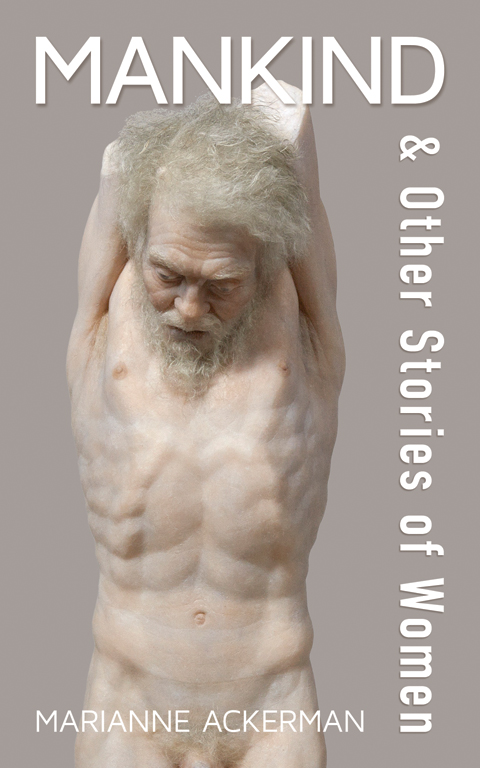
    In the case of my new short story collection, Mankind and Other Stories of Women, the title was spontaneous. The title story, “Mankind,” first saw the light of day last Christmas as a monologue directed by Harry Standjofski, performed by the wonderful Leni Parker at Centaur Theatre’s annual Urban Tales event. For Leni’s character, a lonely woman enduring Christmas Eve with her box of wine and chocolate, the word mankind is a euphemism for the scent of a man. It’s very much a woman’s story. So are the other nine, hence the title. I made a conscious effort to focus on women this time after my last collection, Holy Fools + 2 Stories (Guernica 2014), was full of male characters—puzzling, since I thought I’d won the struggle over the animus-domination of my imagination ages ago.

    The cover was not obvious. On a brief trip to Calgary in April, I discovered an amazing sculptor at the Trépanier Baer Gallery. Walking through the door, I was hit by the super elongated shape of a very thin, nearly naked corpse behind glass: Evan Penny’s Homage to Holbein, an eerie rendering in silicone and real hair of a Christ-like figure, almost fourteen feet long and chillingly life-like. My first thought was, this work belongs at the entrance to a church. It’s a religious experience.

    Days later, the images were still strong. Perusing the gallery website, I settled on Marsyas (Model), a twenty-four-inch high sculpture of a male torso, inspired by a Greek statue, which was part of the exhibition. Covers are traditionally the publisher’s domain, with input from the author. But I’ve known my publisher Mike Mirolla for a long time. I know he’s a dark soul. He loved the image immediately. Thus began the dance by which a raw visual idea and text become one.

    I could not explain why that image worked with my stories, which tend to be airy, urban, sometimes playful, and, some people say, funny. Maybe the figure’s vulnerability, resistance or air of fatalism speak to the tragic thread found in all comedy. As I revised the manuscript for publication, I found myself working him into the first story, “Mina,” which is about a friendship of rivalry and complicity between two women, their creative struggle, and one crazy night.

    mankind-final-cover

    “As I revised the manuscript for publication, I found myself working him into the first story…”

    After the normal back and forth, designer David Moratto’s concept was finalized. I slapped the cover up on Facebook, eagerly announcing my forthcoming fall book. It was mid-winter. The response was pretty well total negativity. Some of my dearest friends, smart people, said it was awful, scary, repellent. Nobody would touch this book!

    I was not prepared. I threw myself on the bed, lamenting once again my weakness for getting over-involved in practically everything. Now I’d have to face Mike and David with bad news, not to mention the gallerist, Yves Trépanier, and the artist, whose work I love.

    Mike did not share my panic attack, but held back. Yves did not. “Don’t listen to them! It’s a strong cover,” he barked via email. “You were right the first time. Don’t blink.”

    “The response was pretty well total negativity. Some of my dearest friends, smart people, said it was awful, scary, repellent. Nobody would touch this book!”

    Next to my control freakishness, impulsiveness is probably my greatest flaw. Here was somebody I respected telling me to trust my impulse. I looked at the cover again. At the other options I was trying to like. I asked Yves what his wife thought. He assured me she loved it. So I decided to take his advice, remain faithful to my first impulse. Well, except for a last-minute tussle over (ahem) how much “cleavage” should appear below my name. I did not want readers to be distracted by a dangling sack of flesh.

    Now that a stack of books is sitting on the dining room table, I can’t imagine a better cover than Evan Penny’s classy, classical all-too-human torso. I have no idea what readers will think, how it will affect their desire to pick up this book. But the baby isn’t mine any more. It is thoroughly herself.


    Mankind and Other Stories of Women will be launched along with three other local titles from Guernica Editions at Montreal’s Atwater Library (1200 Atwater Ave.) on Thursday, September 29, 6 p.m. The event is co-sponsored by the QWF. Click here for more information on the launch.

    ma-for-qwf-piece-sept-7

    Marianne Ackerman writes plays and novels. marianneackerman.com

    Photo credits: Photo of Evan Penny’s Marsyas Model (2016) courtesy of Evan Penny, and Kevin Baer – TrépanierBaer Gallery; Lesley McCubbin (headshot)

  • Literary Influences: E. L. Doctorow’s Lives of the Poets by John Goldbach

    Literary Influences: E. L. Doctorow’s Lives of the Poets by John Goldbach

    The first time I read E. L. Doctorow’s wonderful Lives of the Poets: A Novella and Six Stories (1984) was in early 2001, after picking up a used hardcover copy at City Lights Bookshop in London, Ontario, at 356 Richmond St. Not City Lights Bookstore, the famed bookstore in San Francisco, California, at 261 Columbus Ave—City Lights Bookshop (the one in London ON) is one of my favourite used bookstores ever, a small but dense and rich oasis of books and comics and records, etc.

    A few years later, after reading Slavoj Žižek’s Iraq: The Borrowed Kettle (2004), I reread Lives of the Poets. Much to my surprise, Žižek references Doctorow’s collection in his second book about 9/11 and its aftermath (namely, the illogic of the Bush administration’s reasons for invading Iraq). I was surprised to learn Žižek uses Doctorow’s collection as a sort of model. Žižek writes,

    The hidden literary model for this book is what I consider E. L. Doctorow’s masterpiece, the supreme exercise in literary post-modernism, far superior to his bestselling Ragtime, or Billy Bathgate: his Lives of the Poets: Six Stories and a Novella—six totally heterogeneous short stories (a son is set to the task of concealing his father’s death; a drowned child is callously handled by rescuers; a lonely schoolteacher is shot by a hunter; a boy witnesses his mother’s act of infidelity; a car explosion kills a foreign schoolgirl) accompanied by a novella which conveys the confused impressions of the day-to-day life of a writer in contemporary New York who, as we soon guess, is the author of the six stories. The charm of the book is that we can reconstruct the process of the artistic working-through of the raw material of this day-to-day life.

    As soon as I’d finished Iraq: The Borrowed Kettle, I reread Lives of the Poets, my engagement with the book deepening.

    I’ve read the Doctorow collection twice since then. About a decade later, in 2015, I used it as an oblique model for organizing a book of my own fiction, It Is an Honest Ghost, which consists of six stories and a novella (Hic et Ubique). There was something about how Doctorow’s stories stood alone—were “totally heterogeneous,” in Žižek’s words—but nevertheless informed one another, that I found haunting.

    My new collection was originally made up of eight stories and a novella but for myriad reasons I cut two stories, not the least of those reasons being for the sake of uniformity, a loose strange symmetry—a uniformity and symmetry impressed upon my mind by Doctorow.

    And then I read Lives of the Poets for a fourth time in July 2016, while working on this short appreciation. Lives of the Poets remains politically perspicacious, deeply insightful, and contemporary.

    Here’s Doctorow on US immigration, and mass migrations in general. The writer, the narrator of the novella, emerges from the NYC subway, and observes the new waves of immigrants to the city. He writes,

    Dear God, let them migrate, let my country be the last best hope. But let us make some distinctions here: The Irish, the Italians, the Jews of Eastern Europe, came here because they wanted a new life. They worked for the money to bring over their families. They said good riddance to the old country and were glad to be gone. They did not come here because of something we had done to them. The new immigrants are here because we have made their lands unlivable. They have come here to save themselves from us.

    Lives of the Poets continues to shed light on the present for me. Out of Doctorow’s impressive and celebrated oeuvre, it’s often overlooked. But it remains an insightful and inspiring collection, chock-a-block with strange echoes and resonances.


    KateHutchinson19webJohn Goldbach is the author of The Devil and the Detective (Coach Books, 2013), a novel, which was an Amazon Best Book of 2013; Selected Blackouts (Insomniac Press, 2009), a story collection; and, most recently, It Is an Honest Ghost (Coach House Books, 2016), a collection of six short stories and a novella (Hic et Ubique).

    Works Cited: Žižek, Slavoj. Iraq: the Borrowed Kettle. New York: Verso, 2004, p. 7.

    Photo: Kate Hutchinson (headshot)