Tag: lessons

  • The Art of Embarrassing Oneself at Public Readings—By Renée Cohen

    The Art of Embarrassing Oneself at Public Readings—By Renée Cohen

    Giving public readings is crucial to establishing oneself as an emerging writer. After attending a diverse array of Quebec Writers’ Federation (QWF) workshops—from food and travel writing to literary fiction—it became clear that regardless of the writing genre, workshop leaders often proffered those same words of advice. For years, I avoided ‘open mic’ nights. I slid under the table when called upon to read. In my defense, I am not alone in the belief that any form of public speaking is nightmare-inducing—regardless of the circumstances. Introverted, I’d always hoped that becoming a writer would require less speaking and more silent solitude.
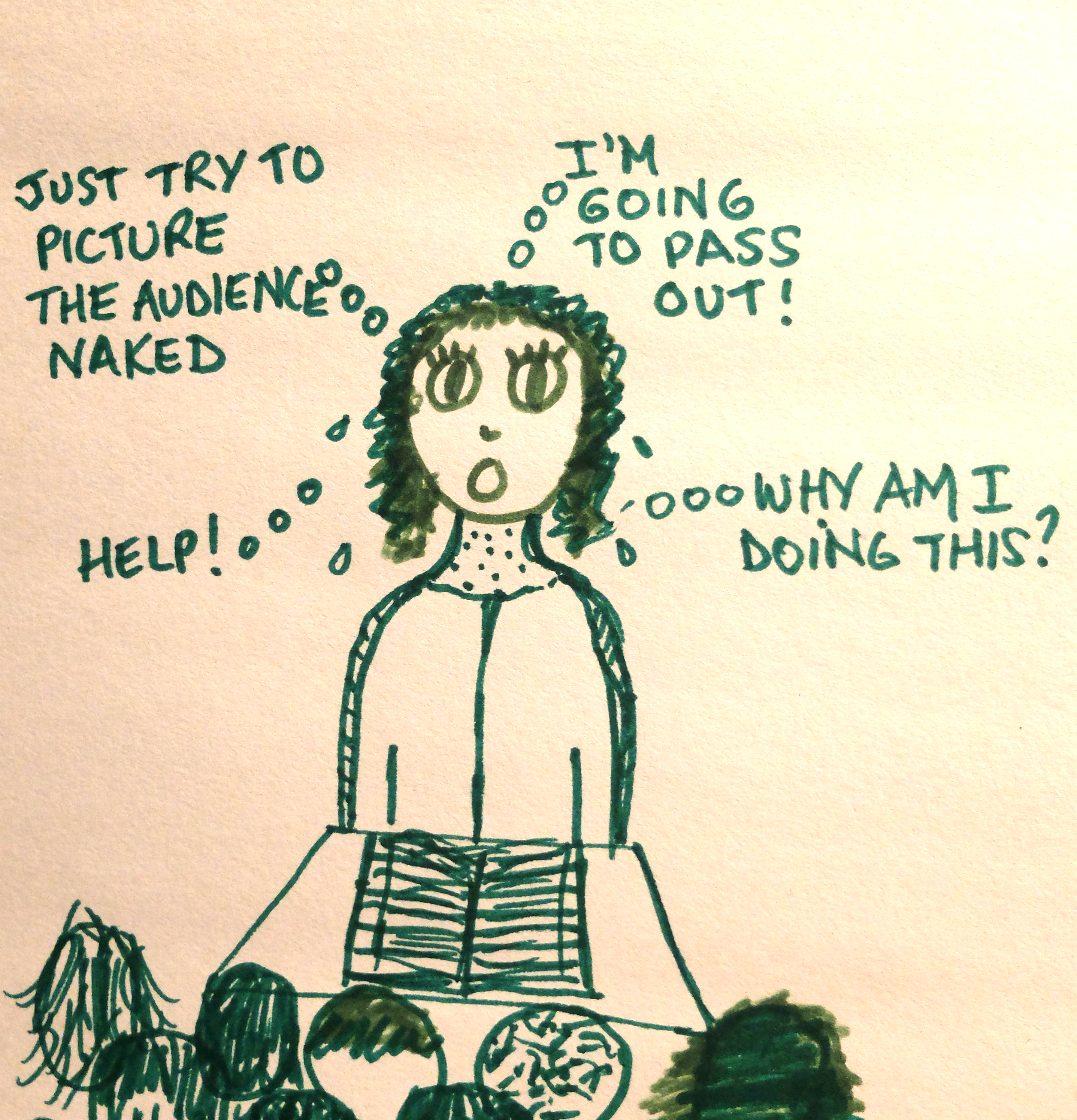
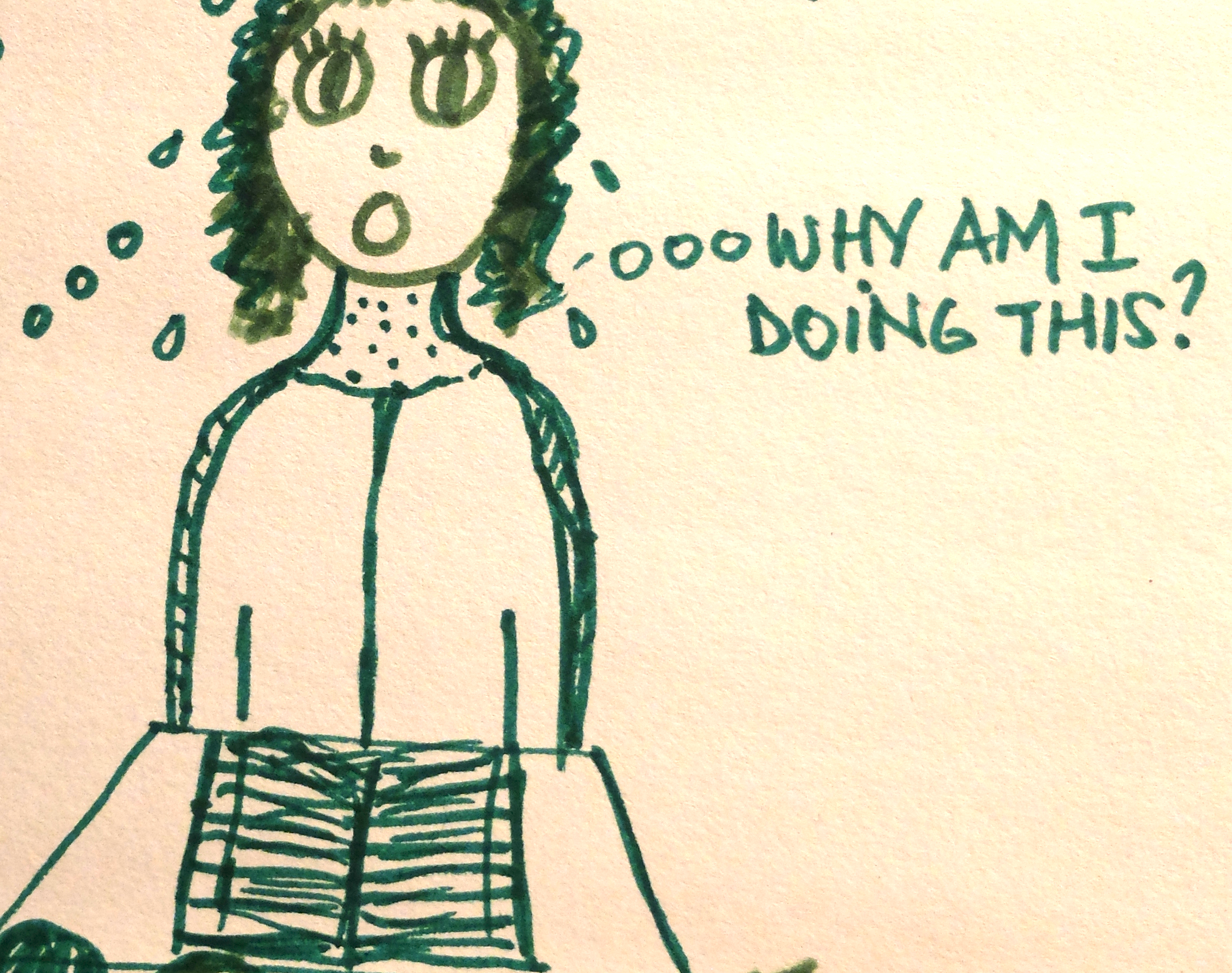
    *Embarrassment and Bloating Cartoon R. CohenUnlike the act of writing, which allows for the deletion of words before they’re read, speaking before a live audience isn’t as forgiving. There’s no delete button one can press to make oneself disappear.

    So, uncharacteristically, when one of my flash fiction pieces was recently published in the My Island, My City chapbook, I accepted the invitation to read it at a gala. Since proceeds from the event would benefit the QWF’s Writers in the Community program, I reasoned that service to the cause was far more important than my own aversion to public speaking.

    As I was about to leave the house on the night of the gala, my face suddenly bloated like a pufferfish, my neck erupted in itchy hives, and my nose bled. Apparently, my anxiety about the reading was manifesting itself physically.

    “How can you be nervous? It’s a flash fiction story that will take you forty-eight seconds to read!” my partner said after I’d gently dissuaded him from joining me. Why was I so nervous? I was honored to be involved in the charitable event!

    Then, when a roadblock prevented my cab driver from turning on de Maisonneuve Boulevard, he stopped the car. “Walk from here!” he firmly suggested. Too anxiety-ridden to protest, I passively agreed. The moment I exited the vehicle, a freak snowstorm hit. Within seconds, my freshly-coiffed hair was drenched.

    Along the closed street, massive pieces of concrete lay strewn about. People loitered, examining the detritus.

    Inspired by the scene, I compiled mental notes for a future work of fiction.

    I then realized that my imagination was partially to blame for my current state of anxiety—If not for my vivid imagination, I wouldn’t be compelled to write. If I didn’t write, I wouldn’t have to worry about giving public readings.

    After wiping a snowflake from my eye, I discovered that my black mascara and eyeliner were not as waterproof as advertised.

    Looking like a wet raccoon, I cut through Westmount Park, which was eerily desolate save for a lone teenaged boy smoking under a snow-covered gazebo.

    I paused briefly to scratch my hives.

    I reflected upon traumatic incidents from my past that contributed to my fear of appearing before an audience: during a figure skating competition in my teens, someone clapped after I completed a movement that was undeserving of applause. I scanned the audience, only to discover the culprit was my father. Distracted by his misplaced burst of applause, I fell. (Needless to say, I didn’t win that competition). From then on, I dissuaded (nay, banned) family members from attending any competitions or events that required me to appear in front of an audience. That longstanding ban has carried over to include my partner and friends.

    When a recipe of mine was included in a cookbook, I was invited to prepare it on live TV during a pledge drive to benefit public television. Nervous during the shoot, I momentarily lost my ability to speak and instead, flapped my arms in a futile attempt to generate words.

    Finally, I arrived at the gala venue. Soaking wet, freezing, hive-covered, my makeup smeared, my face bloated, and blood caking in my nose. While attempting to compose myself in the foyer of the church hall, I was shocked to see one of my friends enter the building. “Surprise!” she squealed upon seeing me. Moments later, another good friend showed up unexpectedly. Both explained that upon seeing my name in the ad, they’d reserved tickets to support me (and the cause)!

    Chatting with them, I gradually felt my fear dissipate. Believing that friends and family were stress-inducing distractions had been a mistake. The opposite was true! Their supportive presence was comforting.

    After my reading, I returned to sit with my friends in the audience, relieved that I hadn’t thoroughly embarrassed myself. Courtesy of the resulting adrenalin rush, I contemplated the advice of my writing mentors. I decided I would bravely endeavor to give public readings in the hopes of becoming an emerging writer.

    My thoughts were interrupted when one of my friends gently tugged on my sleeve.

    “Did you know that your sweater is on inside out?” she giggled.


    Pic. Cohen_Y. PelletierRenée Cohen is a freelance writer for numerous international charitable organizations. Her personal essays, prose, and flash fiction have appeared in Accenti MagazinePrairie Fire, Litro UK, The Globe and Mail, the Montreal Gazette, Reader’s DigestZvona i Nari’s ZiN Daily, Croatia, and in numerous volumes of the Canadian Authors Association anthologies, in the My Island, My City chapbook, and elsewhere. Her artwork has been exhibited in group and solo shows and featured in Montreal Writes Literary Magazine, Headlight 22, 3Elements Review, Spadina Literary Review, Flash Frontier New Zealand, and Sonic Boom Journal (India). She recently won The Fieldstone Review’s Banner Art Competition.

    Photo credits: Renée Cohen (header image); Y. Pelletier (headshot)
  • What If Your Computer Listened to You?—By Mariam S. Pal

    What If Your Computer Listened to You?—By Mariam S. Pal

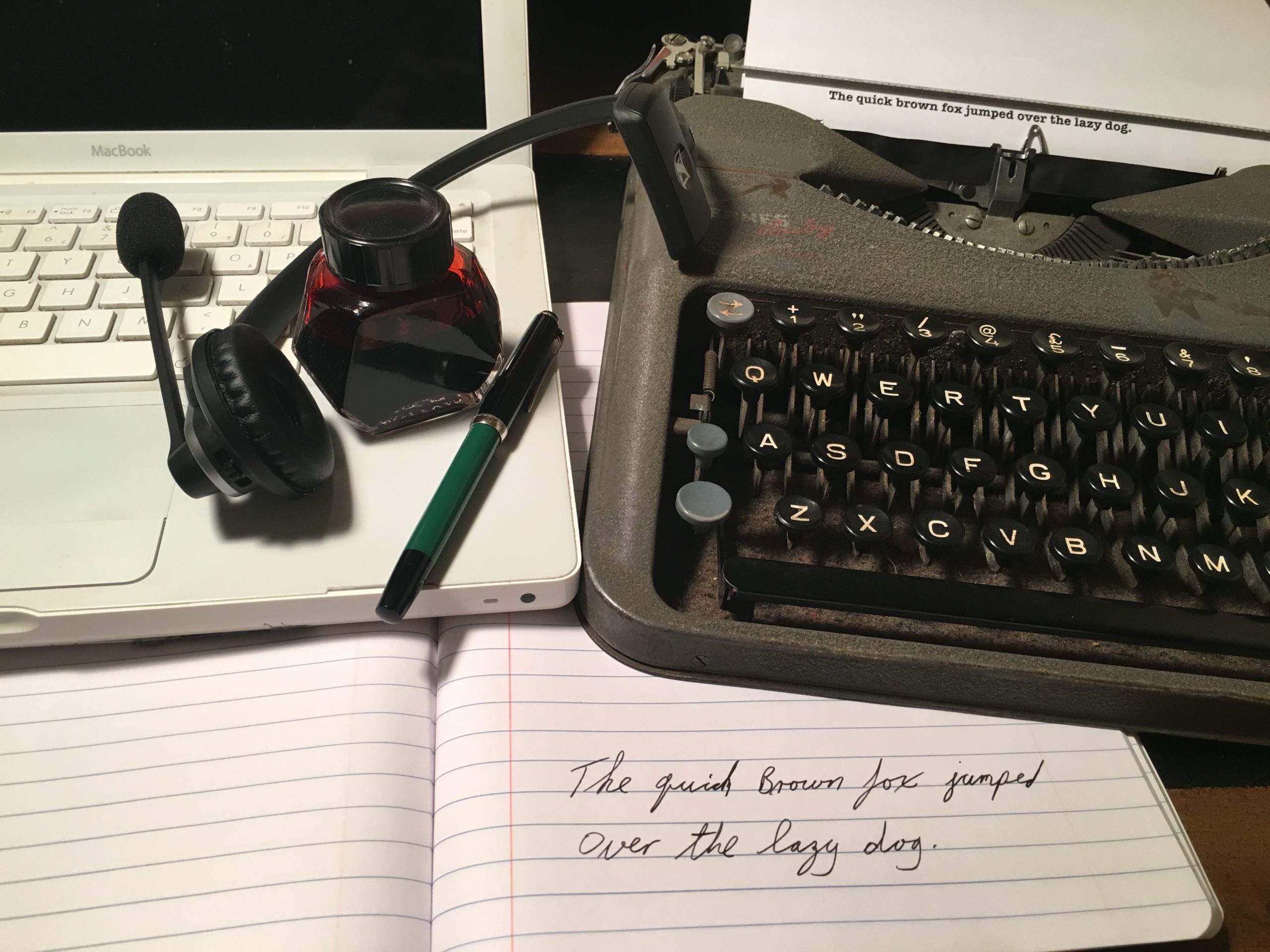
    “New line numeral one period space cap that the quick brown fox jumped over the lazy dog bold lazy dog exclamation mark.” My telephone rings. “Go to sleep,” I say to my computer, and the cute little green mic on its screen turns blue and shuts off. I answer my phone: “Hello?”

    It’s a typical day in my sunny second-floor home office. Headset on, I look like a faraway call-centre worker whose thankless task is to explain why your suitcase is in Montevideo. But I’m not calming cranky customers; I’m writing by dictation. I turned off my mic before answering the phone because otherwise, my conversation would have ended up as text on my screen.

    When I write, I don’t scrawl with a pen or pencil, hunt and peck on a keyboard, or even bang away on a typewriter. I slide on a headset, say “Wake up,” and start yakking at my computer. My voice recognition software converts speech to email messages, text in Word, and more. Line by line, paragraph by paragraph, my writing silently scrolls onto the screen every few seconds. I’ve been working like this for about fifteen years; chronic repetitive movement injuries forced me to look into alternatives to typing.

    I use Dragon Naturally Speaking, one of several voice recognition programs available to writers. It costs about the same as a couple of trips to the physiotherapist. If prescribed by a physician, voice recognition software is a tax-deductible medical expense. Google Docs, Windows 10, and Apple have similar features for free. All are based on the same technology.

    Leaning back in my swivel chair, feet up on my desk, I feel like Don Draper in Mad Men, dictating a letter. Unlike Don Draper, I don’t have a secretary, so I need to tell my computer where to add commas and what to capitalize. The first sentence of this essay, in “dictate-speak,” is what I would need to say in order to have the following text appear on my screen:

    1. The quick brown fox jumped over the lazy dog!

    Verbal commands allow me to switch the mic off or on, add punctuation, capitalize or underline. Don’t like the last sentence? Say, “Scratch that!” It’s erased. Want to change a word? Say, “Correct that!” then select one of several numbered options or type in your change.

    When trained for the user’s voice, my dictation software is 95 percent accurate. It’s important to use a good quality headset and to enunciate clearly. This makes it easier for the program to understand you.

    All this technology is great but it can drive you nuts. Despite repeatedly adding “Amritsar,” a city in India, to the dictation vocabulary, I still find “Emirates are” merrily spelled out on my screen. Argh! In my experience, homonyms are handled better: “four” and “fore” are rarely confused.

    Dictating changed my writing process. Once I got used to talking to my computer, I realized that I wrote for longer stretches of time. I was physically comfortable and relaxed. Writing was definitely easier and faster. Liberating my hands freed my mind to think more creatively. Like most of us, I speak faster than I type or write by hand. The words poured out of my mouth onto the screen. It was thrilling. I could finally get the ideas, descriptions, and dialogues swirling in my head onto the page and Dragon kept up with me. Once my words were on the screen I rewrote and refined them.

    At first, some of my dictated text sounded like emails or text messages. I used too many contractions and my sentences were either too long or too short. Colons, semicolons, and other punctuation from written English were noticeably absent. Eventually, I got better at verbalizing in a written style. I’ve developed a habit of working from an outline composed of key words or points. This keeps my dictation focused.

    If typing is painful, then it might be time to look into voice recognition. I caution that dictation is not the solution for everybody. If you write mainly in cafés or libraries, you probably don’t want the world to hear your masterpiece. Also, your microphone will pick up other voices, which will end up as gibberish on the page. Bilingual writers should know that voice recognition programs can only distinguish one language at a time. If you’re writing about going to a “5 à 7” or a dépanneur, you’ll have to enter these words manually.

    I love writing by dictation but sometimes low-tech is best. Simple corrections to dictated text are easiest typed in manually. And when I send a personal note or write the occasional cheque, I go no-tech and enjoy the tactile pleasure of writing: with a fountain pen, filled with ink from a glass bottle.


    fullsizerender 2

    Mariam S. Pal’s essays have been published in the Montreal Gazette, the Ottawa Citizen, The Globe and Mail, Le DevoirThe Times of India and The Hindu. She is completing a memoir about being Pakistani-Canadian. A recently published excerpt is available at http://south85journal.com/issues/spring-summer-2018/non-fiction/behind-the-walls. Mariam has an M.A. in Economics and B.C.L./LL.B. degrees in law, both from McGill University. She is semi-retired. Mariam and her headset live in NDG.

    Photo credits: Mariam S. Pal (header banner); Eli Krantzberg (headshot)

  • What Playing Piano Taught Me About Writing-by Carly Rosalie Vandergriendt

    What Playing Piano Taught Me About Writing-by Carly Rosalie Vandergriendt

    The movers cost about as much as the piano. When they pulled up in front of our house on a muggy day last August, I understood why. Cars darted around the delivery truck as two men coaxed the swaddled instrument down a ramp and onto a dolly. They worked swiftly. Soon, the piano was being ushered up the walkway to our home. I stepped out of the way.

    “Who plays?” asked the first mover, in a thick eastern European accent. “You or him?” He nodded at my partner, who was standing on our front porch with a mystified look on his face.

    “Both of us,” I said. It was both true and untrue. My partner, a musician, could play the piano. You wouldn’t find him fleshing out a riff on one, though, as he often did on guitar. As for me, I’d played as a child and into my late teens. But the only keys I’d graced as of late were the ones on my MacBook.

    The movers hoisted the piano up our front steps. I hovered while they deliberated removing our front door. My partner hurried away to procure the necessary tools. Then the men decided they wouldn’t remove the door. When my partner reappeared, the piano was crossing the threshold.

    “You play Bach?” the first mover called to me as he disappeared inside the house.

    “Ten years ago I did,” I said. Piano still felt like a first love, cast off with the arrival of adulthood. During my time at university, the digital piano I’d optimistically bought and shuffled from one apartment to another had all but gathered dust. Eventually, I had resigned myself to reality and sold it off.

    Now, I was keenly aware of the privilege of owning a piano, especially in the city, where space, soundproofing, and noise-tolerant neighbours are limited. My partner and I had just moved into an apartment that felt like a real homeanother privilege. Fortuitously, that home also happened to be on the ground floor.

    With the piano stationed in our living room, the movers left as quickly as they’d arrived. I stared at the instrument with both awe and unease. It had been my partner’s idea: something for both of us. Privately, I had reservations. Where would I find the time? Could I even still play? Would this piano, like its abandoned digital cousin, become a symbol of the person I wanted to be, instead of the person I actually was?

    “Would this piano, like its abandoned digital cousin, become a symbol of the person I wanted to be, instead of the person I actually was?”

    I spend a lot of time thinking about the person I want to be. I may call myself a writer, but without a published book, I don’t always feel like one. I may have a string of small-time successes, but those publications are also reminders of the frustrating slowness of the writing process. Patience is a virtue when it takes years to go from an idea to a polished manuscript to a published story.

    “I spend a lot of time thinking about the person I want to be. I may call myself a writer, but without a published book, I don’t always feel like one.”

    The piano arrived during a transition period. The move meant more financial responsibility, and as a freelancer, I quelled my anxiety by taking on a full-time contract in addition to my regular workload. Suddenly, I was juggling clients and rising at an unspeakable hour, hoping to squeeze in some writing. Most of the time, I was barely managing my inbox. I thought constantly about my stalled manuscript, and envisioned its completion date slipping farther and farther into the future.

    Playing music, I soon remembered, was exhilarating. My fingers settled back into the waltzes and études I hadn’t played in years. I had never been a technically oriented player; now, the mistakes I made mattered little, if at all. There was nothing to prove and no one to prove it to. The joy of playing was enough.

    As busy as I was, piano felt like a reprieve instead of an obligation. Sometimes, just seeing the piano—the fact that it took up a quarter of our living room made it hard to miss—was enough to make me stop whatever I was doing, sit down, and play. Why, I wondered, couldn’t writing be that easy?

    “Sometimes, just seeing the piano… was enough to make me stop whatever I was doing, sit down, and play. Why, I wondered, couldn’t writing be that easy?”

    As summer turned into fall and fall into winter, I kept juggling work commitments. Yet, I knew it wouldn’t be like this forever. A few months of industriousness meant I was in a position to be more selective in the months to come.

    Meanwhile, I’d learned a new song on the piano. I hadn’t told myself I would learn anything; I’d simply made a habit of sitting down on the bench. My new musical practice served as a reminder that it is the act itself, not the end result, that counts. As the year wound down, I kept thinking about my manuscript but I stopped agonizing over when it might be finished. All I can do is keep writing when I can. That is enough.


    CRV_HeadshotCarly Rosalie Vandergriendt is a Montreal-based writer and translator whose work has appeared in Prairie Fire, Matrix, The Malahat Review, The Fiddlehead, RoomPRISM International,and elsewhere. Her story “Resurfacing” was recently shortlisted for the Carter V. Cooper Short Fiction Prize. Carly is a recent graduate of the University of British Columbia’s Optional-Residency Master of Fine Arts in Creative Writing program, and is currently working on a short story collection titled Playing the Man. Visit her at carlyrosalie.com or follow her @carlyrosalie.
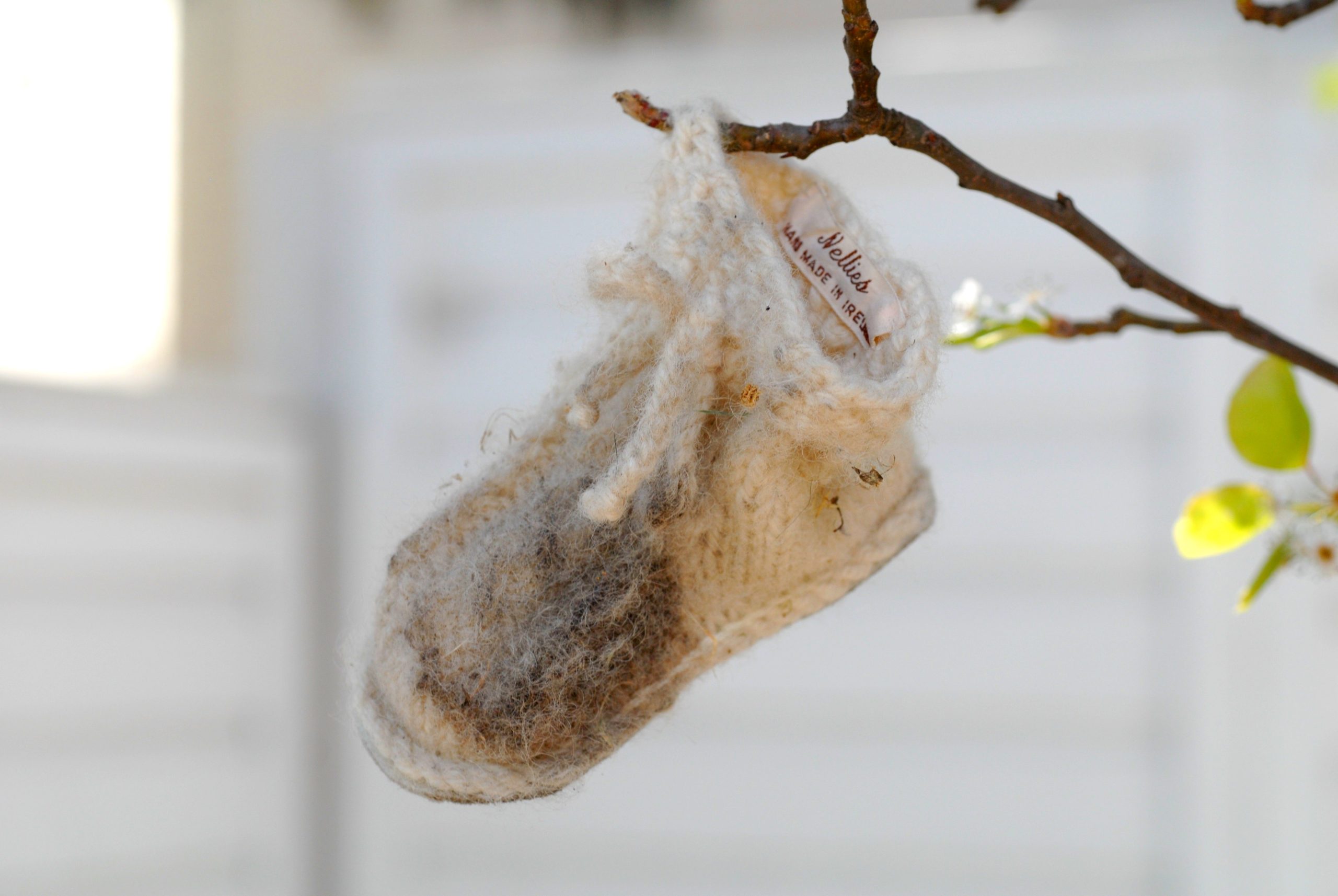
    Photo credits: Simon-Pierre Lacasse

  • ‘Been good, time to be bad’ by Richard Andrews

    ‘Been good, time to be bad’ by Richard Andrews

    Divorce, surviving a mass shooting, discovery of cancer at 24, and a walk on the wild side in California. Students enrolled in my Magazine Writing course often want to learn more than catchy leads, pitching stories, dealing with grumpy editors, and the Inverted Pyramid. They’re turning to writing as a form of therapy, closure, or a way to chart a life transition.

    Many participants are going through divorce, coming out, bored with their jobs, looking for purpose, or seeking validation of unconventional choices. Passive voice does not come up as a writing issue in these cases.

    One of our warm-up exercises is a version of that job-interview chestnut: Describe a difficult situation. How did you respond? What did you learn? However, the answers are rarely what you’d expect in an interview.

    When I first tried that exercise, I thought a failed recipe or a forgotten anniversary would be the limit of a student’s openness to a room full of strangers. But it turns out that the process of writing somehow gives people the license to share their most intimate feelings and personal experiences.

    “They’re turning to writing as a form of therapy, closure, or a way to chart a life transition.”

    In her piece, Camille* wrote the most moving opening line I’ve ever read: “Mom, I have fucking cancer. I’m a jobless, degreeless, broke 24-year-old that’s going nowhere in life.”

    Camille developed that lede into an article published by the Huffington Post, along with some of her unusual tips to other cancer survivors. Her responses to falling ill included throwing dishes,exploiting her boyfriend’s pity to get a Prince Charles Spaniel, and showing her scar to a club doorman to get in for free. “Go shopping, rock it with a Hermes scarf for your hair loss,” she advised. “And stay true to your emotions. Don’t cover them up.”

    Camille emailed me recently with the latest chapter of her life. Four years on she has things under control and is living happily with her boyfriend, a new baby, and the dog. Less happy was Ingrid, a survivor of the 2011 massacre by a right-wing extremist that left 77 Norwegians dead, including dozens of teenagers at a summer camp. Ingrid escaped death by hiding behind a boulder but left Norway for Canada to put distance between herself and the tragedy. Her writing revealed a young woman trying to deal with the apparent meaninglessness of life, after a horrific experience and the loss of friends.

    When she joined the class she wrote she was at Stage Five of Grieving (acceptance). However, I’m not sure how much meaning she finds in reports that the convicted shooter recently won a human rights case against the Norwegian government about his prison conditions. (He had previously complained that his PlayStation was outdated.)

    Nicole, on the other hand, had no illusions about the meaning of life: it was to blast her husband, who’d left for a younger woman. Despite gentle suggestions that other topics were worth writing about, Nicole shared reports each class about the weight gain and balding of her ex, plus the styling challenges of his mistress.

    Other class writings have included an account by one student who woke up at the minority end of a complex threesome after a wild party. Another wrote of baking hash brownies, forgetting them on the kitchen table, and coming home to find her peckish parents “stoned out of their tree.”

    Sometimes a class exercise changes lives, and here I credit Hemingway’s creation of the Six-Word Story. His ‘saddest short story in the world’ (For sale: baby shoes, never worn) reputedly won him a bar bet and spawned dozens of websites devoted to flash fiction.

    “For sale: baby shoes, never worn.”

    I use the Six-Word Autobiography as a variation on the original concept for an exercise on writing headings. It can produce some telling results when people try to summarize the main theme of their life into a bumper sticker.

    There’s regret (Found true love, married someone else), contentment (Painful nerd kid, happy nerd adult), the search for meaning (Tried it all, but still looking), or resignation (Turning into Mom without being one).

    Some months after the end of one course I received an email from Pamela saying the six-word exercise had made her sit down for the first time in years to think about what she was doing and where she was going.

    “When I saw what came out on the page, I decided to leave my life in Montreal and move to California,” she wrote, leaving most details to my imagination.

    Pamela, if you’re reading this, I hope you’re still writing. Please send me your latest chapter and let me know what happens when your story is:

    Been good, time to be bad.


    richard-seville

    Richard Andrews is a freelance journalist who teaches Magazine Writing at McGill Universityric_andrews@hotmail.com

    *All names have been changed

    Photo credit: FlickR

  • Bye Bye Darlings: The Editing Gauntlet by Alice Zorn

    Bye Bye Darlings: The Editing Gauntlet by Alice Zorn

    Farine Five Roses
    Alice Zorn’s new novel, Five Roses, is named after the FARINE FIVE ROSES sign that marks the southwest horizon of Montreal and Pointe St-Charles, where the novel is set. Photo: Alice Zorn


    You’ve finished your novel manuscript and you even – finally! – get a publisher. It took ten years. You have Neanderthal muscles across your brow from frowning at the computer screen. But now you’re home-free. Bingo!

    Then you get the first slew of comments from your editor. She’s the objective eye who sees what the book can be, but isn’t yet. Does it begin in the best possible place? Is there too much exposition? Does it have structural integrity? What about the ending? She tells you all the darlings you cherished while you were writing don’t belong unless they serve the book. The clever turns of phrase, the crisp dialogue, the research that shows off your erudition, the quirky events that really happened. Your clean manuscript pages are tattooed with strokes and question marks. Some editors slash with red pen. I’m so glad mine used pencil.

    With my first novel, Arrhythmia, I was advised to lop two main characters, cut ninety pages and replace them with new writing. I couldn’t believe it. Hadn’t the publisher already accepted the book? My editor was firm. I had to learn how to rethink developments in the novel as narrative choices. I reminded myself that my editor, like me, only wanted what was best for the book. After all, she brought the manuscript to the acquisitions table, arguing that – out of all the other manuscripts being vetted – mine should be published.

    I rewrote those ninety pages because I realized the change was structurally necessary to the novel. And I rewrote them, yes. My editor didn’t tell me what to write, only that the direction I’d originally taken wasn’t the best option. However, I did not lop those two characters. I made them stronger and more integral to the novel. Writing the novel was hard, but editing it might well have been the more profound learning-about-writing experience.

    “Writing the novel was hard, but editing it might well have been the more profound learning-about-writing experience.”

    My second novel, Five Roses, will be published by Dundurn Press in 2016. I’m at the copy editing stage now. This is the finicky time when syntax, word choice and punctuation come into question. I open the document and scroll through 320 pages with red commas added, words underlined and lassoed to dialogue bubbles. Individual words are highlighted in yellow. A character is cycling along a city street, alert to the nervous rush hour traffic, as she thinks about the police sending out an alert to catch a criminal. I swear at myself for not having noticed. I must have read this page twenty times already! But my brain was in a groove. And as I’ve repeatedly witnessed, my brain is willful in its fondness for repetitions, internal rhymes and alliteration.Now, too, is when I discover that grammatical niceties aren’t as ingrained as I assumed they should be after five decades as a voracious reader. Shouldn’t I simply know all these distinctions by now? Seems not.

    And so I learn that there’s a difference between hanged and hung when it refers to a human body that is being put to death. I hung a picture on the wall. The executioner hanged a man. However, a human body that was already dead hung from a hook. I need to know that for this novel, since a character was hanged.

    6777082592_d2ba71334d

    I had to teach myself the farther/further dance after having worked with a copy editor who changed all my farthers to furthers. He thought further sounded more posh. Fine, I thought. He’s the copy editor. Maybe it’s one of those UK vs US things. For a couple of years I banned all farthers from my writing. Then I had a story returned from a copy editor who had changed some of my furthers to farthers. That was more curious. I finally pulled a tome of grammar off the shelf and discovered there’s a rule. Farther is for physical distance. Further is the abstract concept. You might think that I would already have known this, but I didn’t. And I’m not the only one. I continue to see farther and further misused in books published by reputable houses. (If you want a trick to remember which to use when, think far > farther. Thank you to Carol Weber for this tip.)

    You aren’t the best judge of your work, because you’re too close to the writing.You need an editor. Not your partner nor your best friend, who won’t want to hurt your feelings, but an experienced and discerning professional who will help you realize the full potential of the book.

    I’m now at the last read-through before Five Roses goes to the design people. I’ve rewritten the manuscript three times since I thought it was finished in 2013. Cutting, puzzling, moving pages around. Lots of darlings sent marching to the recycling bin. At each stage of editing, the book becomes more of an entity that lives separate from me. Which is what it will have to be when it’s sent off into the world.


    for QWFAlice Zorn’s book of short fiction, Ruins & Relics, was a finalist for the 2009 Quebec Writers’ Federation McAuslan First Book Prize. In 2011 she published a novel, Arrhythmia, with NeWest Press. She has twice placed first in Prairie Fire’s Fiction Contest. Her second novel, Five Roses, will be published with Dundurn Press in July, 2016. She lives in Montreal and can be found at http://alicezorn.blogspot.ca