Tag: literature

  • Why I Loved Editing a Small Canadian Online Magazine, and Why I’m Leaving—by Laurence Miall

    Why I Loved Editing a Small Canadian Online Magazine, and Why I’m Leaving—by Laurence Miall

    Before I ever joined a magazine, or published a novel, for that matter, here’s how I imagined people who had responsibility over publishing texts. They were working in fancy university offices or in stylishly decorated apartments in artsier parts of town than my own, smoking cigarettes and drinking wine, sporadically casting a disdainful eye toward the “slush pile” (in my mind’s eye, the slush pile was either physically manifested, or online, it didn’t make a difference insofar as the disdain goes). And here’s what would happen if ever they came across my submission. They’d read a line, chortle to themselves, and say, “This poor, desperate bastard. Why does he waste our time?” Then all the editors would say in unison, “Let’s publish one of our friends, instead!”

    That’s how I imagined it.

    Maybe some literary journals are nepotism-only zones, I don’t know. I’ve only ever worked for carte blanche. I joined as fiction editor in 2014 and the first issue I worked on was Issue 20. Our most recent issue is #29, so that’s ten issues in total. As of Issue 23, I took on more responsibility for the magazine, taking over from our illustrious founder, Maria Turner, first in partnership with Ben Spencer, then with Gregory McCormick.

    Though the years, I have come to enjoy my vexed relationship with the slush pile. Every time I sit down to read, I want to love the next piece I’m going to discover. One of the very first stories I ever picked was Matthew di Paoli’s “Other Forms of Life,” and I found it so funny and quirky that I immediately started reading it aloud to Monika, my partner. I invited Matthew to read his story at a carte blanche event we were doing at the Blue Metropolis Literary Festival in Montreal, and he couldn’t come, so I read out parts of his story in his place. I loved the texture of someone else’s sentences coming from my lips, and the rhythm—almost like a form of breathing that was not my own.

    So yeah, the slush pile wasn’t like I’d imagined it, not at all. It was sometimes a source of some frustration, but also of great excitement and pleasure.

    Over the years, the comradeship of the entire carte blanche crew, and the support of the Quebec Writers’ Federation, was constant, making me realize that one of the biggest benefits of the literary life is not the writing itself but the community of other writers, editors, publishers, curators, and do-it-all’ers who keep culture humming along and livening up lives that would otherwise be lived in dank, solitary darkness.

    “I loved the texture of someone else’s sentences coming from my lips, and the rhythm—almost like a form of breathing that was not my own.”

    Chalsley Taylor, above all, has made the magazine the beautiful online presence it is today, and so it’s to her I would like to express my biggest THANK YOU. We started this journey at pretty much the same time. It’s no overstatement to say that this magazine would not be in the fine shape it is without her. With Cason Sharp now on the team, I believe carte blanche is going to keep on kicking ass in its cool, classy way. How can it not, with Nicola, Georgia, Bronwyn and the two Gregs bringing their brilliance to each and every issue?

    I am shortly going to be leaving the team in my official capacity as editor. I do so with mixed feelings. Once upon a time, I honestly felt I could tackle any amount of work that was thrown at me. The days seemed elastic. I could stretch them at either end, conjuring up just enough minutes or hours to always get things done. But I don’t feel that way anymore. I am trying to figure out how big each relative part of me is, and how to accommodate all those parts within a finite body. What’s the size of the editor in me, compared to the writer? And more importantly, the loving husband? The communications director? The friend? The son? The cooker and eater of meals, and the drinker of ales, and the sporadic watcher of Liverpool FC, and everything else?

    A few weeks ago, my second oldest friend disappeared from social media. In recent years, we hadn’t established any other form of communication except for Twitter and in-person visits. I had no phone number or email address for him. I started to wonder, nervously, if he was still alive. In 2016, I lost a dear friend to suicide. Another of my friends has struggled with brain cancer. These experiences and many others made me think dark and fearful thoughts.

    Day after day, my friend didn’t reappear. There was an envelope icon lit up in Twitter, indicating a message from him, but the message was an old one, and because his account was deactivated, the message itself had ghosted away. I tried to figure out what was the best course of action. Should I just show up at his house to check on him? No, I told myself. It wasn’t time for that. He’s not dead, I said to myself. He’s just taking a break from Twitter. Who can blame him? Donald Trump is president.

    My friend eventually reappeared, thank God. He found my email address and wrote to me. I was relieved, and felt a little foolish for my quiet panic.

    “I am trying to figure out how big each relative part of me is, and how to accommodate all those parts within a finite body. What’s the size of the editor in me, compared to the writer? And more importantly, the loving husband?”

    Realizing just how agitated I had become gave me yet another confirmation that I need to reappear—to myself. Working sixty- to seventy-hour weeks means you’re obliged to run on adrenaline and anxiety half the time. I get bent out of shape easily. I sometimes get inordinately fearful about small things. It’s time to slow down a little. Time won’t be warped and woven into shapes that better accommodate me. I must accommodate to time.

    Whatever happens, I am going to remain a friend to the carte blanche crew. I became an editor at approximately the same time as I had my first novel accepted for publication, so the two experiences effectively took me from zero to one as a literary person, according to my own weird binary measurement. I am enormously grateful to have had such opportunities.

    I still send stories to magazines sometimes, and I get my share of rejections, but I don’t get resentful about them. I am pretty sure that the people at the magazines are just that: people. Maybe some of them have similar traits to me. Maybe they’re a bit fucked up. Maybe they’re anxious, maybe overworked, maybe worrying about a loved one—like us all.


    miall-authorphoto-1Laurence Miall is a Montreal-based writer and communications expert. His first novel, Blind Spot, was published by NeWest Press in 2014.

    Photo credits: Ben Brooksbrank; Owen Egan (author headshot)
    Apply to be carte blanche’s new editor.

  • Empathy by the Book: How Fiction Affects Behavior by Susan Pinker

    Empathy by the Book: How Fiction Affects Behavior by Susan Pinker

    When I want to escape I pick up a good novel. But does this habit provide more than a quick getaway?

    We’ve long known about the collateral benefits of habitual reading—a richer vocabulary, for example. But that’s only part of the picture. Mounting evidence over the past decade suggests that the mental calisthenics required to live inside a fictional character’s skin foster empathy for the people you meet day-to-day.

    In 2006, a study led by University of Toronto psychologists Keith Oatley and Raymond Mar connected fiction-reading with increased sensitivity to others. To measure how much text the readers had seen in their lifetimes, they took an author-recognition test—a typical measure for this type of study. “The more fiction people read, the better they empathized,” was how Dr. Oatley summarized the findings. The effect didn’t hold for nonfiction.

    Still, no one knew whether reading fiction fostered empathy or empathy fostered an interest in fiction. Other factors could have been at play too, like personality.

    So, in 2009, part of the Oatley-Mar team involved in the 2006 study reproduced it with a sample of 252 adults—this time controlling for age, gender, IQ, English fluency, stress, loneliness and personality type. The researchers also assessed participants’ “tendency to be transported by a narrative”—the sense that you’re experiencing a story from within, not watching it as an outsider.

    Finally, participants took an objective test of empathy, called the Reading the Mind in the Eyes Test. The aim of all of this was to see how long-term exposure to fiction influenced their ability to intuit the emotions and intentions of people in the real world.

    The results? Once competing variables were statistically stripped away, fiction reading predicted higher levels of empathy. Such readers also lived large in the flesh-and-blood social sphere, with richer networks of people to provide entertainment and support than people who read less fiction. This finding put to rest the stereotype of bookworms as social misfits who use fictional characters as avatars for real friends and romantic partners.

    Later studies confirmed that reading fiction does cause a spike in the ability to detect and understand other people’s emotions—at least in the short term. In a series of experiments published in 2013 in Science, social psychologist Emanuele Castano and David Comer Kidd of the New School for Social Research tried to figure out whether the type of fiction mattered.

    “This finding put to rest the stereotype of bookworms as social misfits who use fictional characters as avatars for real friends and romantic partners.”

    The researchers handed subjects—in groups ranging in size from 69 to 356—different types of genre fiction, literary fiction or nonfiction, or nothing to read at all. They then assessed participants on several measures of empathy. Nonfiction—along with horror, sci-fi or romance novels—had little effect on the capacity to detect others’ feelings and thoughts. Only literary fiction, which requires readers to work at guessing characters’ motivations from subtle cues, fostered empathy.

    In these studies, the reading of nonfiction not only failed to spur empathy but also predicted loneliness and social isolation, especially among men. Of course, nonfiction reading has its virtues. Other research suggests that various kinds of nonfiction can prompt empathetic feelings—as long as the narrative is moving and transformative.

    In recent studies, neuroscientist Paul Zak at Claremont Graduate University and colleagues showed participants heartfelt stories, such as a video narrated by a father of a toddler with brain cancer. The video induced a spike in observers’ levels of oxytocin—a hormone that promotes trust, nurturing and empathy—and larger donations to charity. Watching a straightforward travelogue-type video of the same father and son visiting the zoo didn’t have that effect.

    Apparently, what matters is not whether a story is true. Instead, as Dr. Oatley says, “If you’re enclosed in the bubble of your own life, can you imagine the lives of others?”


    susanpinker-by-susie-loweSusan Pinker is a Montreal-based psychologist, writer and columnist for the Wall Street Journal. Her most recent book is The Village Effectwww.susanpinker.com

    This piece was originally published in The Wall Street Journal.

    Photo Credits: Zak Greant (top); Susie Lowe (headshot)

  • Gadfly at the Festival by Peter Richardson

    Gadfly at the Festival by Peter Richardson

    In the hospitality room at the Hôtel Gouverneurs in Trois-Rivières, you are greeted by two perky volunteers whose first question after introductions is: “Will you three be reading the French translations of your poems yourselves, or will you be requiring the services of a French reader?” Oh, my, you think. What translations? The hotel carpet begins to yaw under your chair. What was I thinking coming to a poetry festival in a city whose population is 97 percent French—without translations?

    Ahhh,” your hand goes up, feigning nonchalance, “I don’t have any translations with me.” The two other English-language poets and the volunteers swivel their heads in your direction as if you had just morphed into a large red crustacean whose claws and antennae waved merrily in their direction. “Can I give a short explanation of my poems in fluent French and then read them in English?” One of the cordial volunteers laces her fingers together and lowers her voice: “You see, people reserve restaurant tables months ahead to hear our guests read in French. It would be unfair, don’t you think, to subject them to English, when most people here rarely speak it?”

    How could you have not foreseen this eventuality? For the next twenty-four hours, you huddle with a hotel dictionary, churning out translations and cross-checking these with your translator sweetheart via long distance telephone. You thank fate that years before, you earned a university certificate in French-English translation. Although that hardly qualifies you as an ace in Gallic syntax, it limits the number of world-class howlers you’re likely to churn out. You are going to have to revise up to the wire. And once a reading is finished, there will be no stopping off for sparkling conversation with fellow scribes in downtown Trois-Rivières. It’ll be back to your room to crank out more translations. There are four readings a day in restaurants, bars, parks, and libraries; you’ll have to furnish two poems, four times a day.

    Accordingly, you show up for each venue as if this were a lark, your fraudulent grin assuring audiences that you’re dishing up the real thing, the slaved-over equivalents they’ve come to expect. The rest of the time you are a mole, looking up words like “dip” or “wobble” in a battered Robert-Collins. At readings, you unfold two sheets of spiral notebook paper and smile at your hash-marked, arrow-filled texts as if it were normal to achieve verbal legerdemain with the French versions overnight.

    You can’t point to the Russian poet, Evgeny Tchigrinne, huddling by the hotel elevator in a rumpled hockey team manager’s parka, and say to his interpreter companion: “It’s not fair. He should have to read his stuff in French too.” You can’t complain that Andrés Morales—one of the leading poetic lights in Chile, a man who also speaks Croatian and English—should be prevailed upon to read his translator’s French versions. His credentials precede him, and plus, with his dark suits, Brylcreemed hair, and killer smile, he is a serious candidate for the festival’s Mr. Cordiality Award.

    “At readings, you unfold two sheets of spiral notebook paper and smile at your hash-marked, arrow-filled texts as if it were normal to achieve verbal legerdemain with the French versions overnight.”

    The other English-language poets seem like consummate professionals. The Canadian geneticist-poet, Jan Conn, for instance, looks you straight in the face and says: “Months ago, I commissioned someone to translate twenty of my poems. I knew I’d have to have this stuff ready. I practiced it for weeks.” When she says this, you feel as though you’ve been transported back to that fourth-grade field trip to the Hayden Planetarium in New York City, where, standing in the cafeteria’s lunch line, you reached into your pants pocket for change and pulled out pebbles. Earlier in the day, while waiting for your mother to drive you to school, fearing you would miss the bus from school to the planetarium, you found yourself scooping up pebbles and chucking them by the handful, and some of these found their way into your pockets. But so what if you’ve spent a lifetime picking nickels out of the pebbles in your pockets?

    Does it stop you from making interesting acquaintances? No. And your readings manage to clear those imaginary telephone wires at the opposite end of an airfield that is a reader’s five minutes at the microphone. Your cloth-and-wire craft ascends. It swoops up to a reasonable height in the short runway’s space over the tilted beer glasses and stilled bar chatter and its undercarriage avoids calamity. But without good conversational French, without a chameleon-like ability to don an entertainer’s alter ego at brasserie readings, without a knack for chuckling your way through introductions which contain a reference to the dog-eared papers you clutch, you shudder to think how this forty-eight-hour period might have transpired, and how close you came to earning the title: Worst Anglo Festival Invitee Ever.


    IMG_1483Peter Richardson is the author of four collections of poetry: A Tinkers’ Picnic (1999), finalist for the Gerald Lampert Award; An ABC of Belly Work (2003), short-listed for the Acorn-Plantos Award; Sympathy for the Couriers (2007), winner of the QWF’s 2008 A. M. Klein Award; and Bit Parts for Fools (2013), which was short-listed for the Archibald Lampman Award. A retired airline worker, he lives in Gatineau, Quebec.

    Photo: Via Flickr; no changes made (top); Martine Chapdelaine (headshot)

    Peter Richardson, Jan Conn, and a small group of other authors will be reading on April 11, 2016 at the launch party of Vallum Magazine‘s Issue 13:3. The Brass Door Pub (2171 Crescent Street, Montreal), 7:30 p.m.

  • That Sense of Not Belonging by Adam Leith Gollner

    That Sense of Not Belonging by Adam Leith Gollner

    The Quebec Writers’ Federation hosted its 17th annual gala on November 18, 2015. Author Adam Leith Gollner opened the ceremony with this remarkable meditation on how a writer seesaws between isolation and community, and on what it means to be a writer, right here, right now.

    (more…)

  • Why I Teach Brand-New CanLit by Natalee Caple


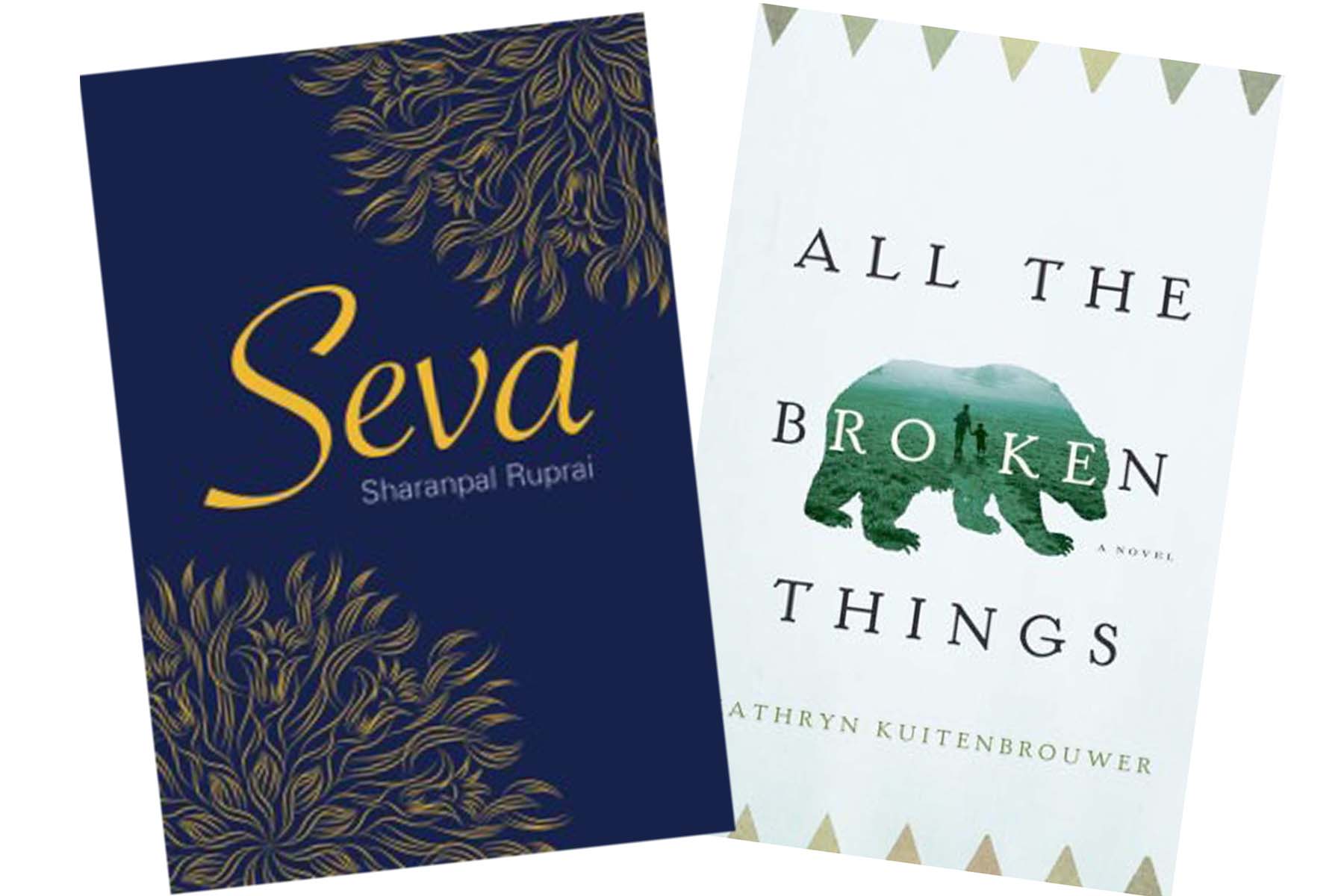
    This year, Natalee will teach Sharanpal Ruprai’s “Seva” and Kathryn Kuitenbrouwer’s “All The Broken Things.”

    I have my dream job. I write, review and teach Canadian literature and creative writing. When I think about why I am so happy teaching new CanLit I recall when, a few years back, my friend, writer Andrew Pyper, asked me in an interview what had changed for me as I evolved from an aspiring writer to an established author.

    The truth is everything has changed. In the beginning my desire to write was about me. It was about trying to see who I could be, what I might be good at and where I might find a community to belong to. Now, being a writer, being a parent and being a professor are all part of participating fully in the culture that sustains me. I feel that there is no better way to demonstrate how varied and valuable I think Canadian culture is than to devote my life to producing, promoting and teaching CanLit.

    Now, being a writer, being a parent and being a professor are all part of participating fully in the culture that sustains me.

    Because it is so important to me that students see the books they read as part of something familiar and real, something that they are already impacting and being impacted by, I often use brand new books. I also teach some of the canon: Atwood, Ondaatje, Munro. After all, these are writers who have helped to raise awareness of Canada as a significant site for cultural production (teaching Alice Munro the week she won the Nobel Prize was incredibly moving). But I also teach books that are literally printed days before classes begin.

    …teaching Alice Munro the week she won the Nobel Prize was incredibly moving.

    Designing my syllabus a few weeks ago, I realized that there are only two major drawbacks to this style of teaching. The first is that I am constantly redesigning my courses, which means new lectures, new assignments and research on what is coming out. The second is that I feel a lot of anxiety about the books arriving on time. But in spite of the extra work and anxiety, there are so many benefits to teaching contemporary literature within the context of the now. Here is a list of some of them.

    • The books are never out of print.
    • Pre-ordering books helps to let the publisher and the bookstore know that the titles are desired.
    • The material is often quite relevant to students’ daily lives. This allows students to identify better with the settings, characters and scenarios.
    • Authors are accessible, alive and often available to Skype into the classroom so that students can ask them questions directly.
    • Student presentations are much better. Instead of Googling a biography and retyping a handful of academic quotes they have to read the whole book (they do complain about this).
    • Student essays are much better. Their close reading skills really improve because that is all they have to rely on.
    • Student confidence in their own readings improves. Because they don’t have to compete with the scholarly opinions of experts they learn that it is okay to rely on and develop faith in their own readings. This causes them to engage more deeply and so…
    • Students get better marks. When they see this they start to appreciate the work they did.
    • Students become more willing to take risks in thinking.
    • Plagiarism is greatly reduced. In fact, because a brand new book is so unlikely to have essays on it in circulation, to plagiarize really means paying someone to create an essay. Far fewer students are willing to take this extra step as it requires more planning and seems somehow more actively dishonest.
    • Canadian culture is reinforced as real and ongoing, lively, diverse and present.
    • Book sales show up in a timely fashion for authors. Titles get circulating at a time when it is most beneficial. We all know that numbers have become incredibly important to the sale of future books and that there is some self-fulfilling prophesy there.
    • I get to stay engaged with my peers in the writing community. I am giving them my support and staying on top of my field.
    • I get to read all the books I wanted to anyway and call it work! Did I say that it is my dream job?

    For the teachers out there: why do you – or don’t you – teach new CanLit?


    Natalee Caple’s latest novel, In Calamity’s Wake, was published by HarperCollins in Canada and by Bloomsbury in the US. She is a professor of English, teaching Canadian literature and Creative Writing at Brock University. www.nataleecaple.com